
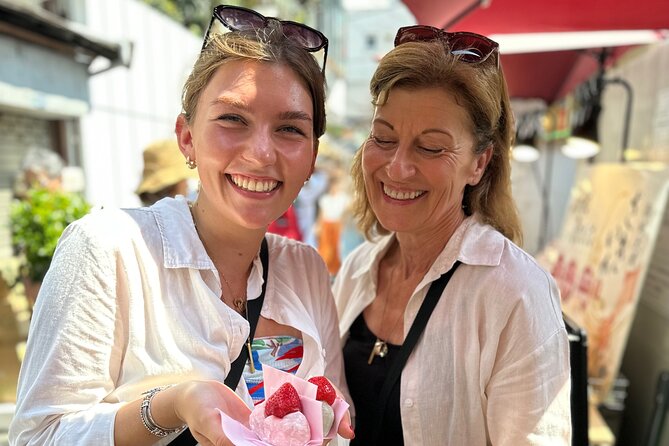
Reviewed · TSUKIJI MARKET TOURS
Tokyo Tsukiji Fish Market Food and Walking Tour
Tsukiji is best understood with a guide who can explain what you are seeing and point out stalls you might otherwise walk past. This two-hour walk begins at Tsukiji Hongwanji Temple, then moves through the old fish market area and Tsukiji Jogai Market, where around 400 shops sell seafood, produce, snacks, and cooking goods.
I like the small group limit of 10 people, which makes it easier to hear explanations and ask questions. I also like the practical food advice, from tuna cuts and wagyu types to local customs, vendor etiquette, and the places worth considering for a morning bite.
The main catch is that food and drinks are not included. Some guides and groups have sampled several market foods, while others received mostly guidance and a few small snacks, so you should treat this as a guided market walk rather than a prepaid tasting tour.
In This Review
- What makes this Tsukiji walk worth your morning
- Starting at Tsukiji Hongwanji Temple
- Understanding the old Tsukiji fish market
- Tsukiji Jogai Market and its 400 shops
- What you might eat, and what you should budget for
- The small-group setup and guide quality
- Two hours is a useful length
- What is included, and what is not
- Who should book this experience
- Practical booking advice
- Should you book the Tsukiji market walk?
- FAQ
- How long does the Tokyo Tsukiji Fish Market Food and Walking Tour last?
- How much does the tour cost?
- Is food included in the tour price?
- Where does the tour begin?
- Where does the tour end?
- Is the tour available by mobile ticket?
- How many people can join the tour?
- What places are visited?
- Are admission fees included?
- Are photos included?
- Can most people participate?
- What is the cancellation policy?
What makes this Tsukiji walk worth your morning
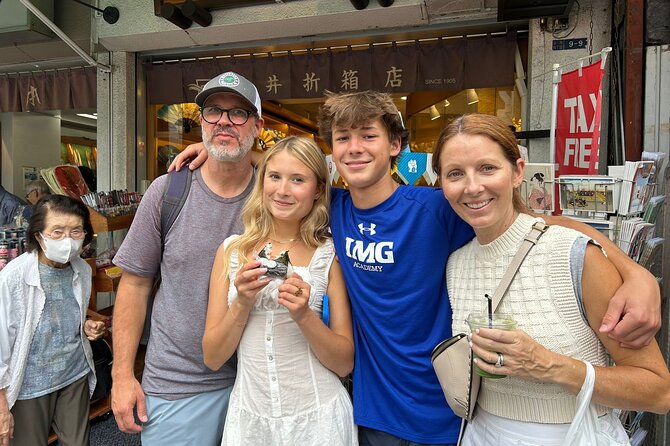
- Hongwanji Temple first: Start with a peaceful look at Tsukiji’s Indian-style Buddhist temple and its customs before entering the market.
- A guide through 400 market shops: Get help finding useful stalls and avoiding aimless wandering in Tsukiji Jogai Market.
- Practical food advice: Learn about tuna, sushi, oysters, rolled omelet, eel, wagyu, seaweed snacks, and sweets, with purchases made separately.
- Small-group format: The advertised maximum is 10 people, a sensible size for narrow market lanes.
- Photos included: Your guide takes digital photos during the experience, giving you a record of the morning.
- Low headline price: At $21.14 per person, the tour is inexpensive if you mainly want orientation, history, and recommendations.
Starting at Tsukiji Hongwanji Temple
Meet at the Starbucks by Tsukiji Station in Chuo City. The temple is the first stop, about a 15-minute visit, and it gives the tour a useful cultural opening instead of sending you straight into a food queue.
Tsukiji Hongwanji Temple has more than 400 years of history. The tour uses this short stop to explain Buddhist customs and local practices, with attention to the way religion and food traditions fit into daily life in Japan.
The building is especially interesting because of its Indian-style appearance. It does not look like the typical wooden temple many people picture before visiting Japan, which makes the stop a good reminder that Tokyo’s religious buildings come in many forms.
You should not expect a long temple tour or a quiet morning meditation. Fifteen minutes is enough for an introduction, a look around, and some context before the market portion begins. That short pause is valuable because it gives you a cultural reference point for the customs discussed later.
Guides have included Yayoi, Shino, Jim, Nao, Yota, Riki, Hayden, Shingo, and others. Names and assignments can vary, but the strongest guide experiences described in the supplied material shared local etiquette, food customs, and personal suggestions rather than simply leading the group from one address to another.
A few more Tokyo tours and experiences worth a look

Understanding the old Tsukiji fish market
The next stop is Tsukiji Fish Market, with about 50 minutes set aside for its history and main sights. The market is tied to an 80-year period as one of Japan’s largest and most important fish markets, and your guide explains how the district became known around the world for seafood.
This is not the famous wholesale tuna auction area that many people associate with Tokyo fish markets. The tour focuses on Tsukiji’s public-facing market district, where you can see shops and food stalls operating for shoppers and diners.
That distinction matters. If your sole goal is to watch a wholesale auction, this is not the right experience. If you want to understand Tsukiji as a food neighborhood, with retail stalls and eating options, the route fits much better.
The guide’s role is most useful here. A market lane can look like a jumble of signs, seafood, kitchen tools, and passing customers. A good explanation helps you understand what is being sold, how the district developed, and what local manners to follow.
The experience is also useful for first-time visitors who do not know how to choose among unfamiliar foods. Guides have explained different tuna cuts, types of wagyu, and the customs connected with Japanese food. You may also hear about how to approach vendors respectfully and how to decide what deserves your time and money.
Tsukiji Jogai Market and its 400 shops
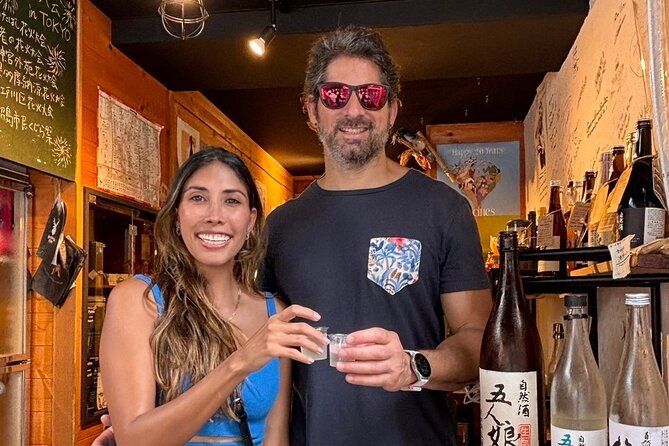
The longest part of the walk takes place in Tsukiji Jogai Market, where roughly 400 street shops and vendors sell fresh tuna, seafood, snacks, ingredients, and related goods. This is where the tour becomes most practical.
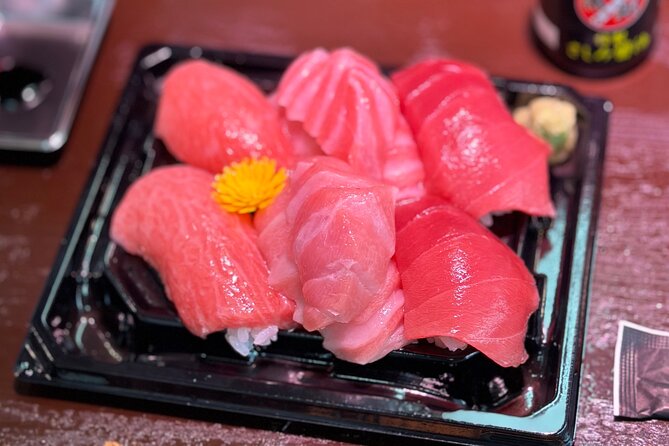
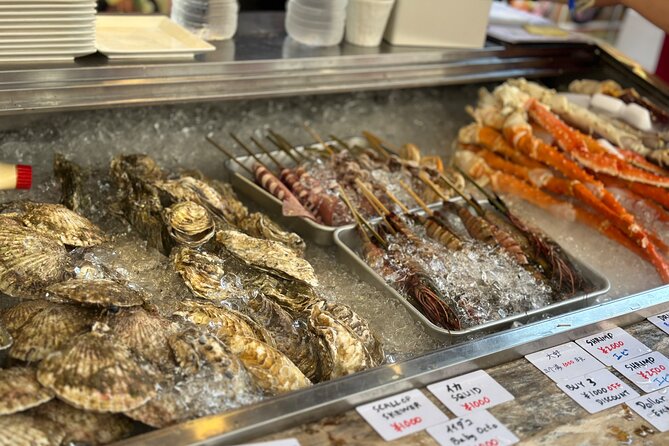
You may pass stalls offering sushi, oysters, Japanese rolled omelet, eel, wagyu beef, sweets, nuts, and seaweed snacks. The exact food available depends on the day and the individual shops, so do not book this expecting a fixed tasting menu.
Some guides have led groups to several food vendors and helped them try many items. One described morning included sushi, oysters, rolled omelet, eel, whiskey, wagyu, and sweet treats. Another group found the fresh food and vendor suggestions to be the best part of the walk.
At the same time, you need to read the inclusions carefully. Food and drinks are not included in the price. Some people may buy or sample food during the walk, while another group may receive only a few small snacks and recommendations. That difference appears to depend on the guide, the vendors, and what each person chooses to purchase.
I would plan to carry extra money and arrive ready to eat, but I would not skip breakfast solely because a full meal is promised. The safest expectation is a guided introduction to food choices, with optional purchases along the way.
If you are not a serious food fan, the tour can still work. The history, customs, and market setting give the walk wider appeal. One especially useful point from the experience is that even people who did not think of themselves as food-focused enjoyed learning how the market worked and trying a few unfamiliar items.
What you might eat, and what you should budget for
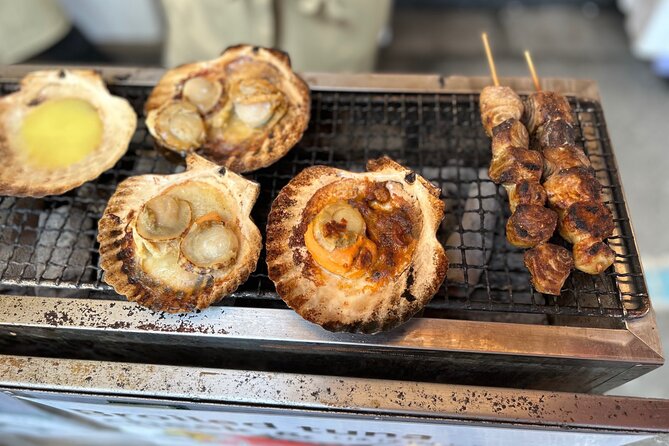
Tsukiji offers a broad range of small bites, but the tour price does not cover them. The $21.14 fee pays for the local guide, the walking experience, historical explanations, market and temple admission as listed, and digital photos.
That is a low price for a guided introduction in Tokyo. You are paying for direction and context, not for a large meal. If the guide helps you avoid a poor choice or leads you to a shop you would not have found, the value can be strong.
The food itself can add up quickly. Seafood, sushi, oysters, wagyu, and specialty snacks are not all priced alike. You control the spending, which is useful if you want only a few tastes, but you need to remember that an inexpensive tour can become a more costly morning once you start buying at several stalls.
The supplied information also points to a possible market option that is not part of the planned route: buying food at the back of the market and renting a grill on top of the market. This can make a distinctive meal, but it is an extra idea rather than a guaranteed tour stop. Ask your guide about it if that setup interests you.
For the best value, use the walk to learn what you want to eat, then make deliberate purchases instead of buying at every stall. The guide’s recommendations are most useful when you treat them as a way to narrow your choices.
The small-group setup and guide quality
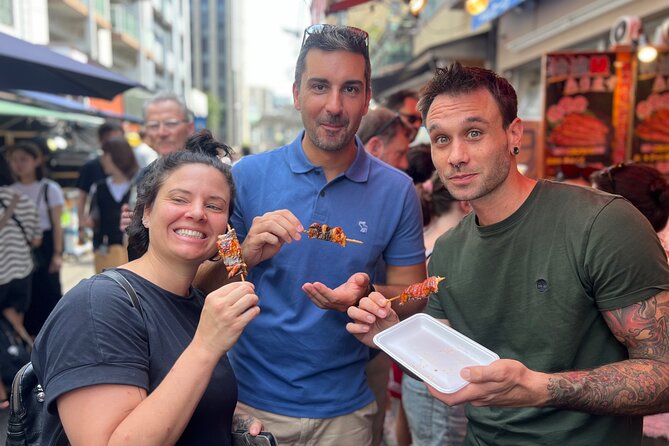
The group maximum is 10 people. That is a good size for a market, where narrow lanes and food counters can make a larger group awkward. You should have a better chance of hearing the guide and asking about unfamiliar ingredients.
Guide quality matters greatly on a tour like this. The strongest experiences came from guides who explained the district, answered questions, offered vendor advice, and adjusted to the group’s needs. Guides such as Yayoi, Shino, Jim, Nao, and Yota were praised in the supplied comments for their warmth, cultural explanations, and food suggestions.
There is one practical warning. On at least one occasion, a late partner meant one guide handled what was effectively a larger group. The guide still managed the walk well, but that situation shows why the advertised group cap matters. If the group is not divided as planned, the market can feel less personal.
The tour is offered by Traveling Tokyo, and confirmation arrives when you book. It is near public transportation, begins at the Starbucks meeting point by Tsukiji Station, and returns to that same meeting point at the end.
Other walking tours we've reviewed in Tokyo
Two hours is a useful length
The full experience lasts about two hours. The listed timing gives roughly 15 minutes at the temple, 50 minutes at Tsukiji Fish Market, and 50 minutes at Tsukiji Jogai Market.
That makes this a good morning orientation rather than an all-day food expedition. You get enough time to learn the district and identify places to return to, but not enough time to browse every shop or settle into a long meal.
A morning start also works well for visitors who want to continue sightseeing elsewhere in Tokyo. One group chose a 9 a.m. start specifically to finish early and keep the afternoon open. The market can still fill much of your appetite, so plan later meals accordingly if you buy several samples.
The two-hour format may feel brief if you want extensive shopping. It is also possible that you will wish the guide had more time to explain every stall or cover extra market options. For most people, though, the limited length keeps the experience focused and easy to fit into a busy Tokyo schedule.
What is included, and what is not
The package includes:
- A local professional guide
- Photos taken during the walk
- Historical information about the district
- Admission to Tsukiji Fish Market
- Admission to Tsukiji Jogai Market
- Admission to Hongwanji Temple
Food and drinks are excluded. This point deserves emphasis because the activity is described as a food and walking tour, and the market setting naturally encourages eating. Consider the food portion self-directed unless your guide clearly explains that a particular tasting is included.
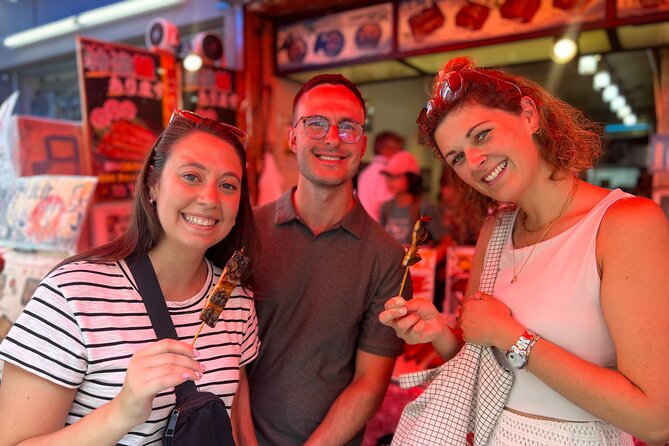
The digital photos are a pleasant extra. You can concentrate on the market instead of asking someone in your group to take every picture, though the number and style of photos may vary by guide.
Most people can participate, and the meeting point is close to public transportation. The tour returns to where it starts, which makes it simple to continue your day from Tsukiji or head elsewhere.
Who should book this experience
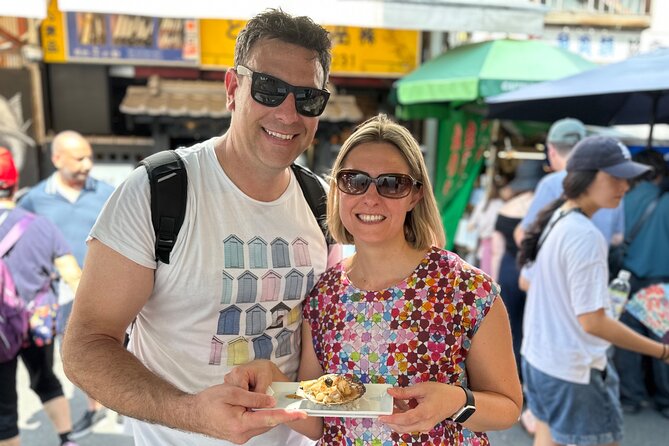
I would recommend it to you if this is your first visit to Tsukiji and you want a quick, friendly introduction. It is also a good fit if you enjoy local food but are unsure how to choose stalls, understand seafood terms, or follow market etiquette.
The walk suits independent visitors who normally plan their own days but want help with one complicated district. A guide can save you research time and give you a practical route without taking over the rest of your Tokyo schedule.
It also works for mixed groups. One person can focus on history and culture while another looks forward to sushi, seafood, snacks, or wagyu. The temple stop gives the experience more range than a simple vendor crawl.
I would be cautious about booking if you expect a prepaid tasting menu, a long sit-down meal, or access to the wholesale auction. The exact food experience is not fixed, and the low price does not include meals.
You should also consider your comfort with market eating. The available foods can include raw seafood and strong flavors, and one person particularly enjoyed sushi but did not care for scallops. A guide can explain choices, but you decide what to eat.
Practical booking advice
Book with the cancellation rule in mind. You can cancel for a full refund up to 24 hours before the start time. Changes or cancellations made less than 24 hours before the experience are not accepted for a refund, and the cut-off follows Tokyo local time.
Keep the meeting address handy: Starbucks Coffee by Tsukiji Station, at 2-chome 12-8 in Tsukiji, Chuo City. The tour ends at the same meeting point.
Since the tour lasts about two hours and food is extra, bring a payment method for anything you want to buy. It is also sensible to leave room in your schedule after the walk, because the guide may introduce you to stalls you want to revisit.
Should you book the Tsukiji market walk?
Book it if you want clear orientation, local context, and food advice for about $21.14. The small group, included photos, temple visit, and guide-led market route give the experience more substance than wandering through Tsukiji without a plan.
Do not book it expecting a guaranteed feast. Food purchases are separate, and the amount of sampling can vary. If you arrive with that understanding, this is a useful, affordable way to get your bearings and make better choices in one of Tokyo’s most tempting food districts.
FAQ
How long does the Tokyo Tsukiji Fish Market Food and Walking Tour last?
The experience lasts approximately two hours. The planned visits include about 15 minutes at Hongwanji Temple, 50 minutes at Tsukiji Fish Market, and 50 minutes at Tsukiji Jogai Market.
How much does the tour cost?
The listed price is $21.14 per person.
Is food included in the tour price?
No. Food and drinks are not included. You must pay separately for anything you choose to eat or drink at the market.
Where does the tour begin?
The meeting point is Starbucks Coffee by Tsukiji Station, at 2-chome 12-8, Tsukiji, Chuo City, Tokyo 104-0045.
Where does the tour end?
The activity ends back at the meeting point.
Is the tour available by mobile ticket?
Yes. The experience includes a mobile ticket.
How many people can join the tour?
The maximum group size is 10 people.
What places are visited?
The route includes Tsukiji Hongwanji Temple, Tsukiji Fish Market, and Tsukiji Jogai Market.
Are admission fees included?
Yes. Admission to Tsukiji Fish Market, Tsukiji Jogai Market, and Hongwanji Temple is included in the activity.
Are photos included?
Yes. The local guide takes digital photos during the tour, and photos are included with the experience.
Can most people participate?
Yes. The additional information says most people can participate, and the meeting point is near public transportation.
What is the cancellation policy?
You can cancel up to 24 hours before the experience start time for a full refund. Cancellations or changes made less than 24 hours before the start time are not accepted for a refund.
More Food Experiences in Tokyo

More Walking Tours in Tokyo
More Tsukiji Market Tours in Tokyo
More tours in Tokyo we've reviewed











Tsukiji Market Tours, compared.
 ★ 5.0Tokyo Tsukiji Fish Market Food and Culture Walking TourFrom $99
 ★ 5.0Tokyo: Tsukiji Fish Market Food and Walking tourFrom $30
 ★ 4.9Tokyo: Tsukiji Fish Market Guided Walking TourFrom $222 hours
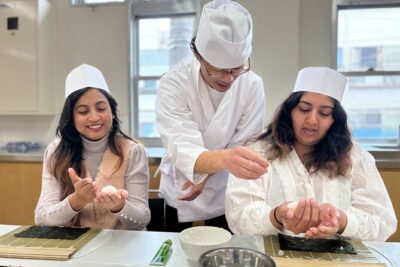 ★ 5.0Tokyo Sushi Making Class in Tsukiji with Professional ChefFrom $49
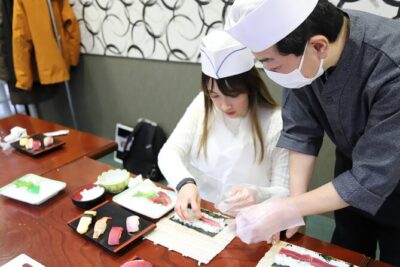 ★ 5.0Tsukiji Fish Market Guided Tour and Sushi Making with Pro ChefFrom $104
★ 4.7Tokyo: Tsukiji Fish Market Food and Culture Walking TourFrom $963 hours
★ 5.0Tsukiji Fish Market Guided Tour and Sushi Making with Pro ChefFrom $104
★ 4.7Tokyo: Tsukiji Fish Market Food and Culture Walking TourFrom $963 hours