
Reviewed · SUMO EXPERIENCES
Tokyo: Challenge Sumo Wrestlers and Enjoy Meal
Tokyo sumo is more than two large men pushing each other around a ring. This 90-minute session introduces the sport through former wrestlers, a demonstration, simple explanations in English, and a chance to test your strength in a padded sumo costume. The hands-on bout is the main draw, especially for families.
I like the clear cultural link and the friendly tone. You learn terms and watch real techniques before trying them yourself, then sit down to a Japanese meal. I also like that the retired wrestlers make time for questions and photos. The main drawback is the short schedule: the food, demonstration, costume bout, photos, and questions can make the session feel closer to two hours, and seats farther back may make the commentary harder to hear.
In This Review
- Key points to know before booking
- What this Tokyo sumo session really offers
- Getting to the hall from Kikukawa Station
- The opening explanation: sumo with useful context
- Watching former wrestlers demonstrate their skill
- Putting on the sumo suit and taking your turn
- Lunch or dinner: tonkatsu, sukiyaki, and meal expectations
- Photos, questions, and the final few minutes
- Is $117 good value for 90 minutes?
- Who should book this sumo activity?
- Practical booking advice for a smoother visit
- Should you book it?
- FAQ
- Where does the Tokyo sumo activity begin?
- How long does the sumo activity last?
- What meal is included?
- Is the activity offered in English?
- Can I try sumo wrestling myself?
- Do I have to wrestle to take a photo?
- Is transportation included?
- Can I bring my own food or drink?
Key points to know before booking
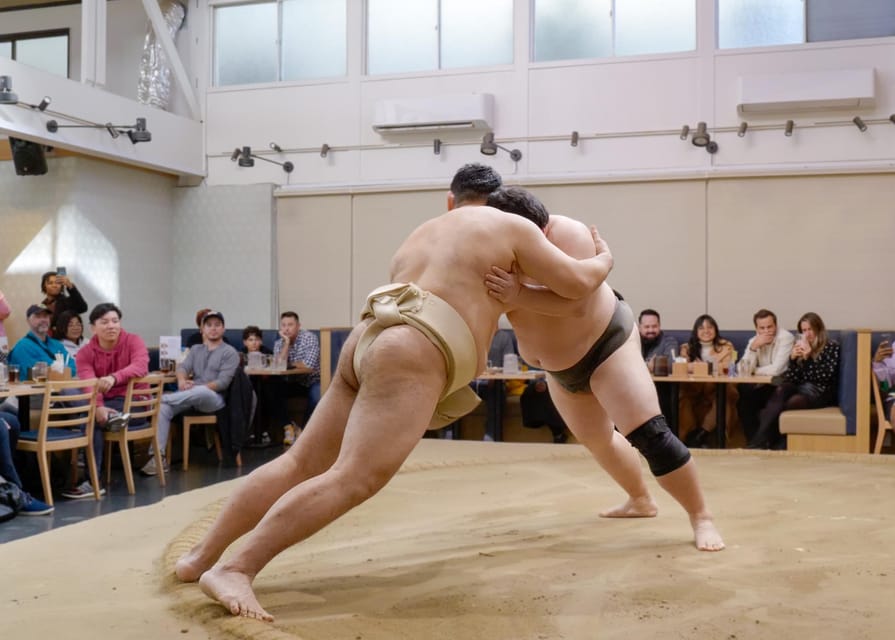
- Former professionals lead the demonstration: You see trained wrestlers, not actors staging a generic Japanese show.
- You can enter the ring: A sumo costume lets you try a friendly match without taking the full impact of the sport.
- The meal is part of the cultural lesson: Select tonkatsu for lunch or sukiyaki for dinner when you book.
- Kikukawa Station is the practical starting point: The hall is about a five to eight-minute walk from Exit A1.
- English explanations are provided: A host or greeter works in English and Japanese, with terminology explained as the action unfolds.
- Front seats are worth requesting early: Seating is assigned by booking order, and loud conversation can make the question-and-answer portion difficult to follow.
What this Tokyo sumo session really offers
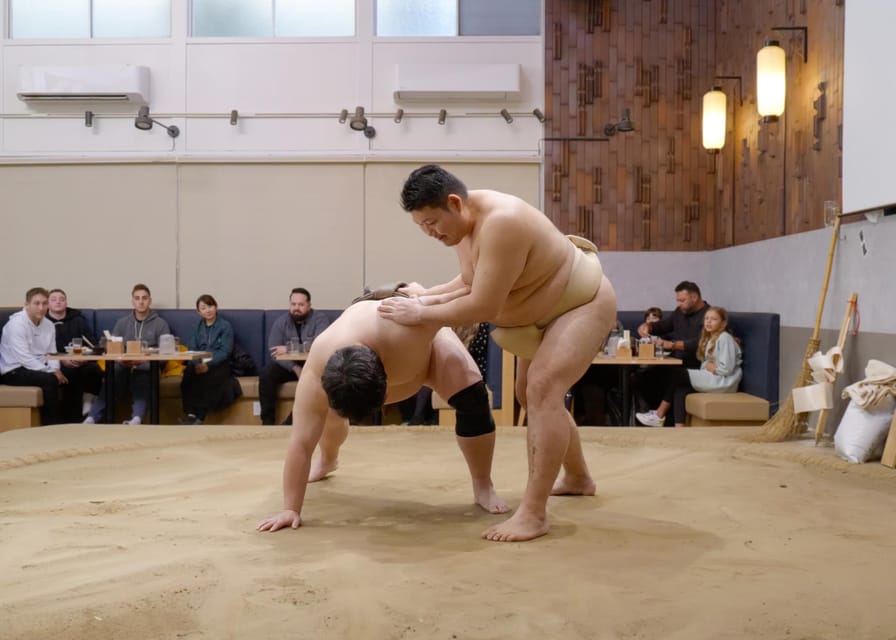
This is a stage-style introduction to sumo led by retired wrestlers. You are not attending an official grand tournament, and you are not watching a live stable practice. Instead, you get a compact presentation built for people who want to understand the sport and have a little fun with it.
That distinction matters. Official sumo can be hard to arrange, particularly when tournaments are not taking place. Stable visits can also have strict age rules. This activity offers a more open and family-friendly way to see the sport up close, including children who may not be allowed into a training area.
The demonstrations are presented in English and Japanese. The host explains common sumo words and describes what the wrestlers are doing, so you are not left watching a series of forceful collisions without context. Expect humor as well as instruction. The tone is light, but the athletes still show the balance, footwork, and strength that make sumo such a demanding sport.
The listed duration is 1.5 hours. In practice, the full sequence may run longer depending on the pace of the meal, photos, questions, and audience participation. Plan your day with a little breathing room rather than scheduling a train or reservation immediately afterward.
A few more Tokyo tours and experiences worth a look
Getting to the hall from Kikukawa Station
The meeting point is near Kikukawa Station on the Toei Shinjuku Line. Leave through Exit A1, then allow roughly five to eight minutes on foot.
This is a useful location for a timed activity because the directions are simple, but you still need to allow for Tokyo station navigation. The Shinjuku Line is not the same as every subway route labeled with the word Shinjuku, so check your route before leaving. Aim to arrive with enough time to find the hall without rushing.
There is no hotel pickup or drop-off. Transportation to and from the restaurant is also not included, so the $117 price covers the hosted sumo program and the selected meal, not your subway fare.
The activity ends back at the meeting point. That makes it easy to continue elsewhere in Tokyo, though you will need to make your own plans for the next stop.
The opening explanation: sumo with useful context
The session begins with an introduction to sumo and its place in Japanese culture. The presentation explains basic terms and gives you a framework for watching the demonstration.
That opening is valuable for first-time viewers. Sumo has its own vocabulary, rules, gestures, and formal movements. Even a short explanation helps you notice more than size and strength. You begin to see why a wrestler’s stance, timing, and first push matter.
The English presentation is a strong point. One audience member specifically praised the emcee’s ability to explain the activity clearly to an international audience. The language support also makes this a better choice for mixed-age groups, since children can follow the broad action while adults pick up more of the cultural detail.
Do not expect a university lecture on sumo. This is an entertaining introduction, not a specialist seminar. The information is kept accessible, and jokes are used to keep the room involved.
Watching former wrestlers demonstrate their skill
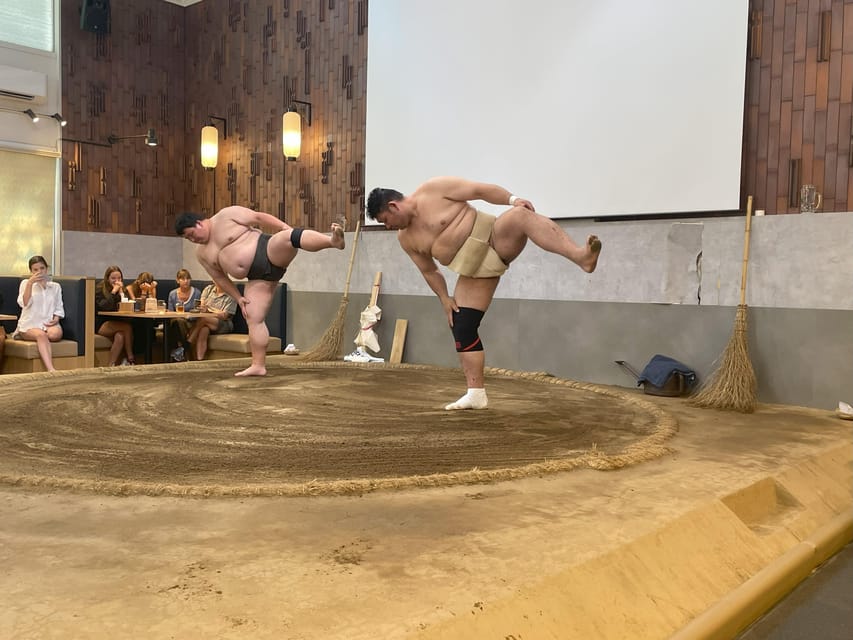
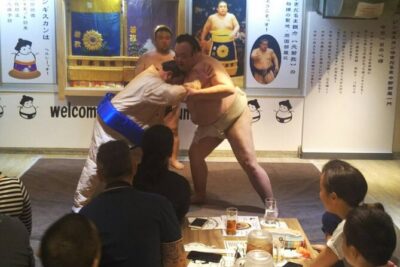
After the introduction, the retired wrestlers face each other in the dohyo, the sacred sumo ring. Their match gives you the clearest sense of what the sport looks like when performed by trained athletes.
The demonstration is more useful than a simple photo opportunity because you first see the techniques at full scale. The wrestlers show how a bout starts, how competitors try to control position, and how quickly the action can turn. Their size is striking in person, but so is their movement.
The former professionals are also part of the entertainment. They are described as kind and accommodating, and the presentation includes humor that keeps the atmosphere relaxed. This helps children and adults feel comfortable when the participation portion begins.
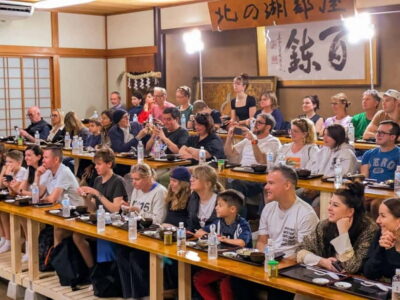
The ring is the visual center of the room, but seating still matters. The best available seats are arranged according to booking order. Try to reserve early if hearing the spoken explanation is important to you. A seat near the front may not transform the view, but it can make the commentary and questions easier to catch. Loud conversations in the audience can be distracting, particularly during the explanation.
Putting on the sumo suit and taking your turn
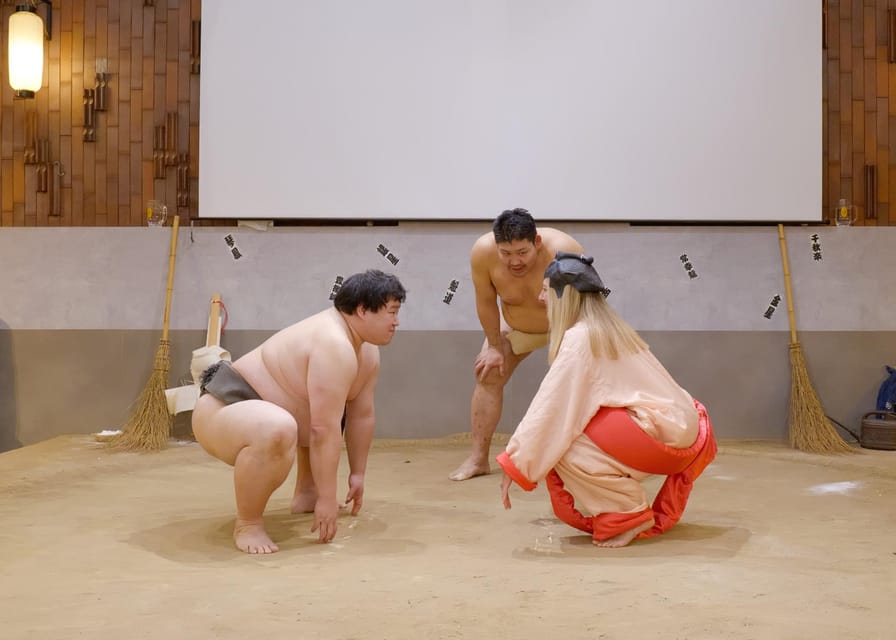
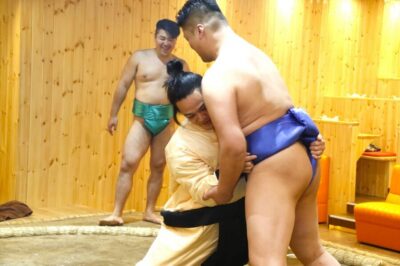
The most memorable part for many people is the chance to wear a sumo costume and enter the ring. You then test your technique against one of the wrestlers in a friendly bout.
This is not a serious contest. The point is to feel the stance, the scale, and the comic difficulty of moving in a sumo suit. Even a strong adult will quickly understand that sumo is not just about pushing hard. Balance and position matter, and the retired wrestlers control the activity so it remains good-natured.
Families are well served here. Two children can watch the demonstration, understand the basic idea, and then see adults or other participants attempt the costume bout. Several families found the activity particularly enjoyable because it gave children something active to do rather than asking them to sit through a long cultural talk.
You do not have to wrestle to take part in the photo session. This is an important practical point. If you prefer to skip the bout, you can still have a picture with the wrestlers at the end. That makes the activity workable for people who have mobility concerns, feel shy about performing, or simply want to watch.
Follow the staff’s instructions closely. The hall expects sensible behavior, and disruptive conduct can lead to removal without a refund. That is reasonable for a live, close-range activity, but it is worth knowing before you book.




Lunch or dinner: tonkatsu, sukiyaki, and meal expectations
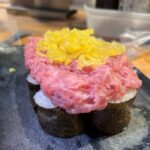
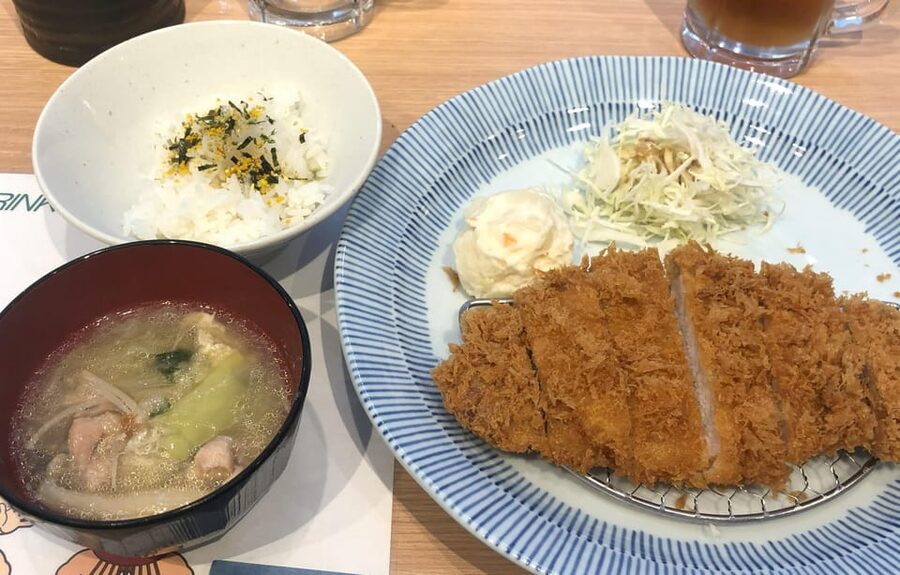
Food is built into the booking rather than added as an optional extra. For lunch, the listed meal is tonkatsu, a breaded and deep-fried pork cutlet. For dinner, the listed option is sukiyaki, a hot pot of beef and vegetables in a sweetened soy broth.
That pairing works well with the sumo theme. A substantial Japanese meal gives the session a social finish and means you do not need to rush off looking for food afterward. One family found the lunch delicious, and another meal description praised a boxed Japanese lunch that included chanko-ba, a dish associated with sumo wrestlers. The exact meal can depend on the option selected, so check the booking choice rather than assuming lunch and dinner are identical.
The supplied details specifically identify tonkatsu for lunch and sukiyaki for dinner. Individual meal descriptions have also referred to a Genghis Khan lunchbox and chanko-ba, so the menu presentation may vary by date or package. If a particular dish matters to you, confirm the selected option before paying.
You may bring your own food and drink. Additional food and drinks are not included. Tell the provider about dietary requirements when you book, but do not assume every request can be met until it is confirmed.
Infant pricing applies when the infant does not occupy a seat, and infant meals are not included. That detail matters for families comparing the total cost.
Photos, questions, and the final few minutes
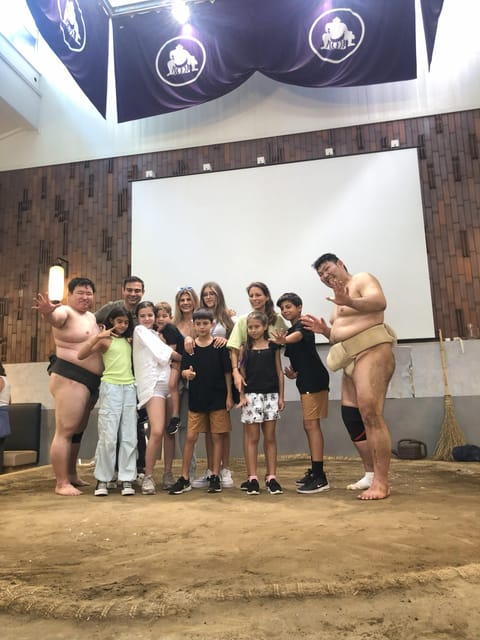
After the bout, you have time for photos with the wrestlers. This is not a rushed snapshot taken while the next group waits. The wrestlers make themselves available for photo opportunities and questions, which gives the session a personal finish.
The photo is also a good reason to join even if you do not want to wrestle. You can wear a sumo costume, stand beside the former athletes, and leave with a clear memory of the day without taking part in the physical challenge.
The question period is another useful feature. It gives you a chance to ask about the sport, the wrestlers’ careers, or details that were not covered in the introduction. Keep your questions concise if the schedule is running long, since the meal and demonstrations share the same 90-minute window.
Again, seating affects this part. If you are far from the front or sitting near people who talk through the presentation, you may miss parts of the English commentary. Booking early is the simplest way to improve your position.
Is $117 good value for 90 minutes?
At $117 per person, this is not a cheap meal or a casual photo stop. You are paying for a hosted cultural presentation, access to retired sumo wrestlers, the costume activity, photos, explanations in English, and lunch or dinner.
I think the value is strongest when you want several elements in one compact booking. A sumo demonstration alone might leave you with limited context. A meal alone would not bring you close to former wrestlers. Here, the presentation, participation, and food are tied together, which saves you from arranging separate activities.
The price also makes more sense for families and small groups who will use the interactive part. Children tend to remember entering the ring more than listening to an explanation, and adults get a better sense of the athletes’ strength and technique. For a solo visitor who only wants to observe sumo quietly, the cost may feel high.
The 1.5-hour length is both an advantage and a limit. You can fit it into a busy Tokyo schedule, but you will not receive a long formal lesson or an extended meal. Think of it as a lively introduction with food, not a full day devoted to sumo.
Who should book this sumo activity?
I would recommend it to first-time sumo fans, families with children, and anyone visiting Tokyo outside the grand tournament season. It is also a sensible alternative for families whose children are too young for a sumo stable training visit.
You will get the most from it if you enjoy participating rather than only watching. The costume bout, photos, and questions make the session social and playful. The program also works for mixed groups because one person can wrestle while another watches.
It may not suit you if you want a quiet, formal cultural performance, a current professional tournament, or a long meal. The room can be lively, and audience noise may interfere with the commentary. Seating is assigned according to booking order, so late booking may leave you farther from the front.
The activity is hosted in English and Japanese. That makes it approachable for international visitors, though the level of detail remains introductory.
Practical booking advice for a smoother visit
Book early if you care about seating. The best available places are assigned in booking order, and groups may be split across different tables when there are many people.
Allow extra time beyond the stated 1.5 hours. The activity may include the introduction, demonstration, costume bout, photos, meal, and question period. If your day includes a fixed train, airport transfer, or theater ticket, leave a comfortable gap.
Tell the provider about dietary needs when booking. Choose carefully between the lunch and dinner options, and remember that extra food and drinks cost more.
The activity is non-refundable, and confirmation is sent within 24 hours, subject to availability. That makes it wise to check your schedule before paying rather than treating the booking as a flexible placeholder.
Should you book it?
Book this Tokyo sumo session if you want a friendly, compact introduction that combines former wrestlers, a live demonstration, and a meal. The hands-on costume bout gives it more personality than a standard talk, while the English explanation helps you understand what you are seeing.
I would choose it for families, first-time visitors, and anyone unable to attend a grand tournament or stable practice. I would skip it if you are seeking serious tournament action or a long, quiet study of sumo. For most people looking for an accessible cultural activity near central Tokyo, the chance to enter the dohyo and pose with retired wrestlers makes the $117 price reasonable.
FAQ
Where does the Tokyo sumo activity begin?
It begins near Kikukawa Station on the Toei Shinjuku Line. From Exit A1, the meeting point is about a five to eight-minute walk.
How long does the sumo activity last?
The stated duration is 1.5 hours. The full program may take closer to two hours when the meal, photos, and question period are included.
What meal is included?
The lunch option includes tonkatsu, a deep-fried pork cutlet. The dinner option includes sukiyaki, beef and vegetables served in a sweetened soy broth.
Is the activity offered in English?
Yes. The host or greeter can communicate in English and Japanese, and the sumo explanation is provided in English.
Can I try sumo wrestling myself?
Yes. You can put on a sumo costume and take part in a friendly bout against one of the former wrestlers.
Do I have to wrestle to take a photo?
No. You can skip the bout and still take a photo with the wrestlers during the photo session.
Is transportation included?
No. Hotel pickup and drop-off are not included, and you are responsible for transportation to and from the restaurant or meeting point.
Can I bring my own food or drink?
Yes, bringing your own food and drink is acceptable. Additional food and drinks are not included in the activity price.
More Sumo Experiences in Tokyo
More tours in Tokyo we've reviewed



Sumo Experiences, compared.
 ★ 4.8Tokyo: Sumo Show Experience with Chicken Hot Pot and a PhotoFrom $1032 hours
 ★ 4.8Tokyo: Sumo Show and Dining ExperienceFrom $7990 minutes - 2 hours
 ★ 5.0the SUMO showFrom $89
 ★ 5.0Tokyo Shinjuku Sumo Show & Experience with PhotoFrom $79
 ★ 4.8Tokyo: Sumo Show and Experience in ShinjukuFrom $691h 30m
 ★ 4.6Tokyo: Sumo Tournament Tour with Chair Seat TicketsFrom $141