
Reviewed · SELF-GUIDED TOURS
Tokyo: Open Top Panoramic Sightseeing Bus with Audio Guide
Tokyo is easiest to understand from above street level, and this 70-minute open-top bus ride gives you a quick look at the city’s grand scale. You pass Tokyo Tower, Ginza, Tokyo Bay, Rainbow Bridge, and major districts without wrestling with a subway map.
I like the low $11 price and the GPS audio guide, which starts commentary as the bus reaches each sight. I also like the choice of two routes: the Bay Course offers bridge and waterfront views, while the City Course focuses on palaces, parks, skyscrapers, and central Tokyo. The catch is simple: weather matters, knee room is limited, and the open roof may close in rain.
In This Review
- Key points to know before you book
- Why this bus is a smart first look at Tokyo
- Picking the Bay Course or City Course
- What you see on the 70-minute Bay Course
- What you see on the 70-minute City Course
- The GPS commentary is useful, with one audio flaw
- Meeting at Tokyo VIP Lounge
- Weather, seating, and comfort
- The best value for short stays
- Who should book this ride
- Should you book the Tokyo open-top bus?
- FAQ
- How long does the Tokyo open-top bus tour last?
- Which routes are available?
- What languages are available for the audio guide?
- Are headphones included?
- Where is the meeting point?
- What happens if it rains?
Key points to know before you book
- Rainbow Bridge is the Bay Course highlight: The bus crosses the bridge and gives you wide views toward Odaiba and Tokyo Bay.
- Choose your route carefully: The Bay Course covers Tokyo Tower, Odaiba, Fuji TV, the Statue of Liberty, and Ginza. The City Course includes Chidorigafuchi, Akasaka State Guest House, Tokyo Midtown, Roppongi, and Hibiya.
- The audio guide uses GPS: Commentary begins according to the bus’s location and is offered in Japanese, English, Chinese, French, Korean, Vietnamese, and Thai.
- The meeting point is near Tokyo Station: Tokyo VIP Lounge is about a five-minute walk from the Yaesu North Exit, but you should confirm the route before departure.
- Arrive 20 to 40 minutes early: The bus leaves on time and does not wait for late arrivals or people at the wrong meeting point.
- Bring a headset if you have one: The optional 100-yen headphones use a standard 3.5mm mini plug.
Why this bus is a smart first look at Tokyo
Tokyo can feel like several cities joined together. Imperial grounds, old temples, office towers, shopping streets, artificial islands, and broad waterfront roads all sit within one huge urban area. A short ride cannot explain everything, but it can give you a useful mental map.
That is the main value here. You are not stopping for long visits at each sight. Instead, you get a moving introduction to the city, with the freedom to note places you may want to revisit later.
I would especially consider this on your first day in Tokyo. One Australian visitor used it that way and found it a good introduction. The timing works well for someone adjusting to a new city, someone with only a short stay, or someone who wants a break from walking and train transfers.
The tour costs $11 per person, which is unusually modest for a 70-minute sightseeing ride in central Tokyo. You should not expect a full guided tour with extended stops at each landmark. Think of it as a scenic orientation ride with commentary, not a substitute for visiting Tokyo Tower, the Imperial Palace grounds, or Odaiba on foot.
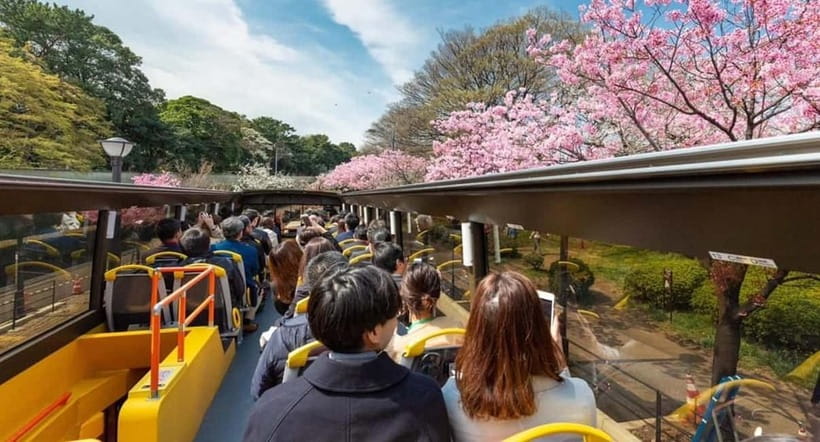
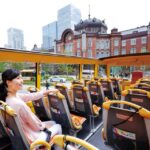
The open top is the fun part. From an ordinary bus, Tokyo’s tall buildings can feel boxed in by windows and other vehicles. From the upper deck, you can look down side streets, up at towers, and across the water with fewer visual barriers.
Other guided tours in Tokyo

Picking the Bay Course or City Course
The two routes cover different sides of Tokyo, so the choice matters more than the small difference in wording might suggest. Both last about 70 minutes and begin at the Tokyo Station area.
The Bay Course is the better pick if you want open views, bridges, and modern Tokyo. The City Course suits you if grand civic buildings, central districts, parks, and skyscrapers interest you more.
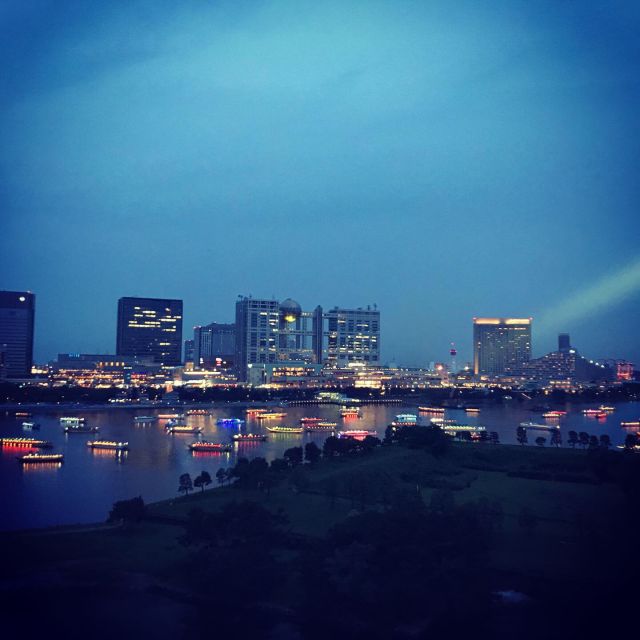
If your schedule allows, taking both routes on the same day gives you a broader look at the city. One person did exactly that and found the evening Bay Course especially appealing when the city lights came on. Still, do not book both simply because they are cheap. The routes overlap around Tokyo Station, Tokyo Tower, and Ginza, so the second ride works best if you value seeing Tokyo from different angles.
What you see on the 70-minute Bay Course
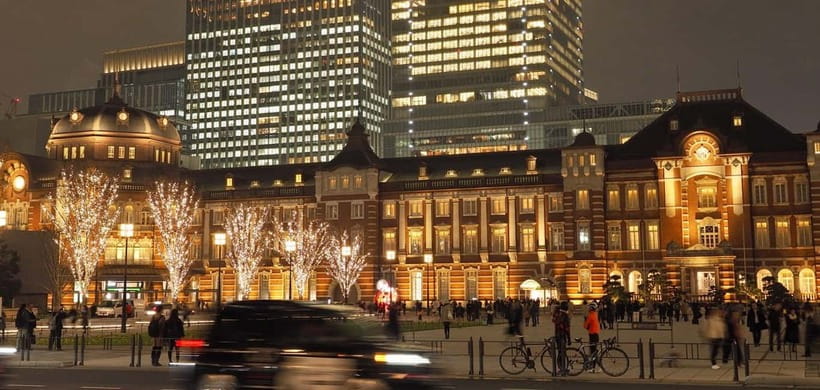
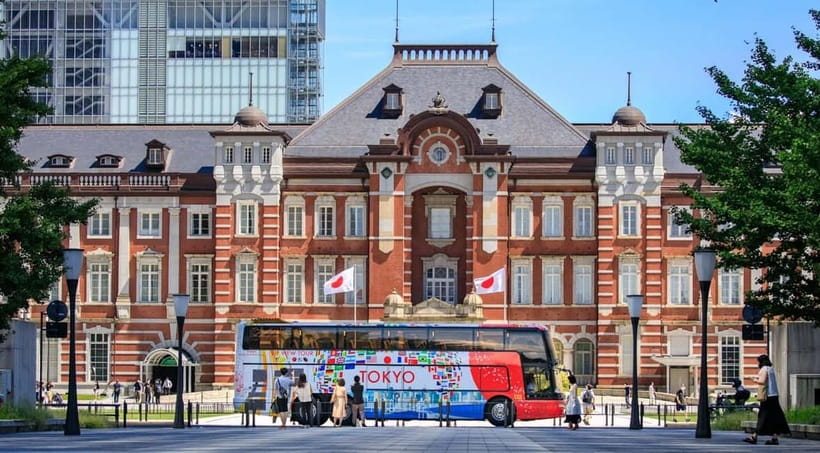
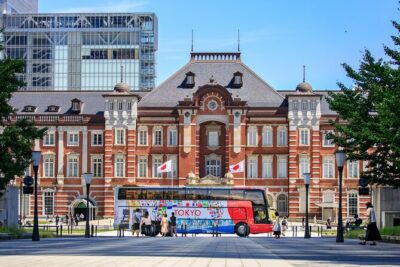
The Bay Course begins at the Tokyo Station Red Brick Station Building, a useful landmark in its own right. From there, the bus moves through Marunouchi, Tokyo’s polished business district, where broad streets and tall office buildings frame the station area.
The route then passes Zojoji Temple and Tokyo Tower. This pairing is one of Tokyo’s classic views: a major Buddhist temple near one of the city’s most recognizable modern towers. You will not have time for a proper temple visit from the bus, but the audio commentary helps explain what you are looking at.
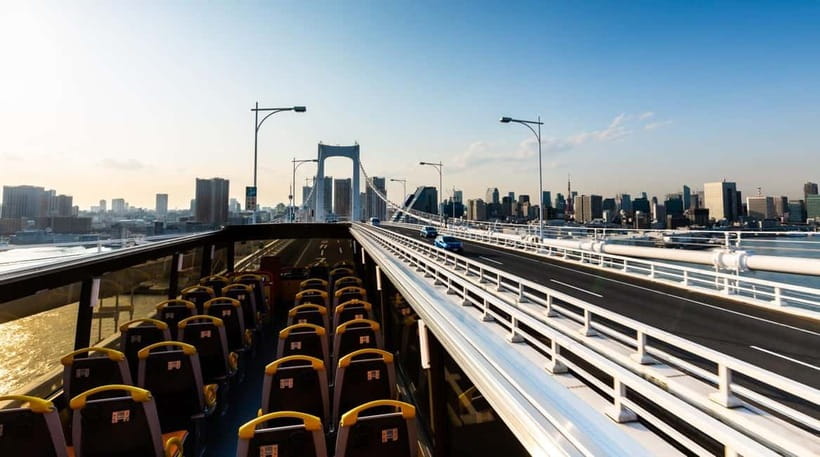
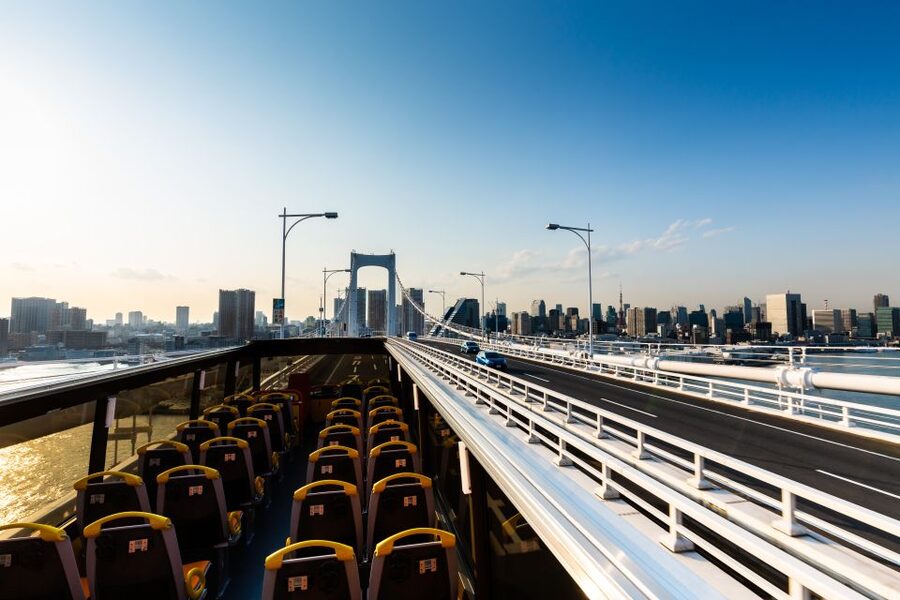
Next comes Shibaura and the first level of Rainbow Bridge. The bridge is the star of this route, though the view changes depending on traffic, weather, and your seat. The crossing gives you a strong sense of Tokyo’s scale, with water, expressways, towers, and distant buildings all in the same frame.
On the Odaiba side, the bus passes the Fuji TV Building, the Statue of Liberty, and Odaiba Seaside Park. The small Statue of Liberty is an amusing sight, and the waterfront district has a very different feel from central Tokyo. It was built as a modern entertainment and shopping area, so this section shows Tokyo’s newer, more spacious side.
The bus then crosses Rainbow Bridge on its second level before returning through Shiodome and Ginza. Shiodome is known for its tall office and hotel buildings, while Ginza offers a polished view of central Tokyo’s department stores and high-end shopping streets.
The Bay Course is at its best on a clear day, especially during the bridge crossing. It is less satisfying if your main goal is old Tokyo, because the route gives you only a passing view of Zojoji Temple and concentrates heavily on modern districts.
What you see on the 70-minute City Course
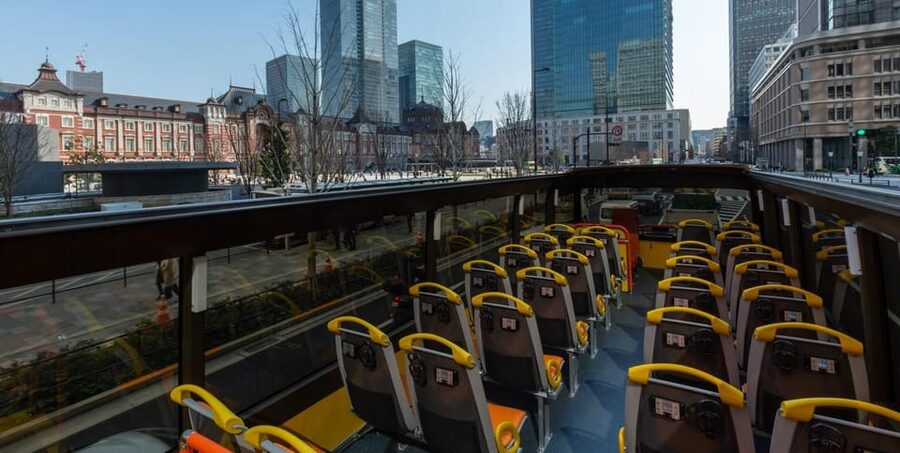
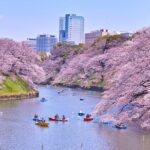
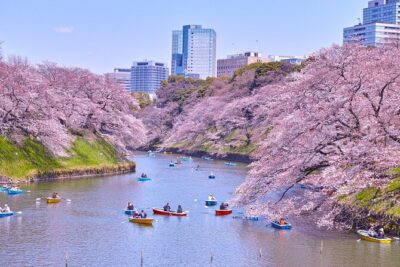
The City Course begins at the same Tokyo Station building and travels through Marunouchi. It then heads toward Chidorigafuchi, the moat area near the Imperial Palace. This is one of the more peaceful central Tokyo scenes, with water, trees, and palace-related surroundings contrasting with the office towers nearby.
The route continues past the Akasaka State Guest House. The building is known for its formal Western-style architecture, a striking contrast to the more familiar Japanese elements elsewhere in the city. You will see it from the road rather than enter it, so this stop is about the view and the context provided by the audio system.
Meiji Jingu Gaien brings another change of pace, with broad park space and tree-lined surroundings. The route then turns toward Tokyo Midtown and Roppongi, where large commercial and office complexes show the city’s contemporary side.
Tokyo Tower appears again on this route, followed by Hibiya and Ginza. The City Course gives you a better sense of central Tokyo’s districts and skyline than the Bay Course, though it lacks the dramatic open-water crossing.
Choose this route if you want to see how Tokyo fits together around its central institutions and business areas. It is also a good choice if you have already visited Odaiba or do not care much about waterfront attractions.
The GPS commentary is useful, with one audio flaw
The automatic guide is one of the strongest parts of the experience. It uses GPS to track the bus and plays information as you approach each area. That means you do not have to guess which building you are seeing, and the commentary can adjust when traffic changes the route or timing.
The language selection is unusually broad: Japanese, English, Chinese, French, Korean, Vietnamese, and Thai are available. The activity information describes automatic commentary in three languages according to the location, so listen for the language arrangement at check-in and make sure your headset is working before the bus moves.
The commentary covers facts about the sights and their background. It is more focused on landmarks than on ordinary Tokyo life. If you want stories about how people live, neighborhood food, or local customs, you will need a walking tour or your own exploring afterward.
A small but repeated irritation is the music between announcements. It can be louder than the spoken information, and silence would be easier on the ears. On some departures, a staff member also gives Japanese announcements over a loudspeaker while the audio guide is playing. That can make the commentary hard to hear, so ask for clarification before setting off if the sound levels seem wrong.
Headphones are not included. You can buy a pair for 100 yen, but the socket accepts only a 3.5mm mini plug. If you have compatible wired headphones, bring them.
A few more Tokyo tours and experiences worth a look
Meeting at Tokyo VIP Lounge
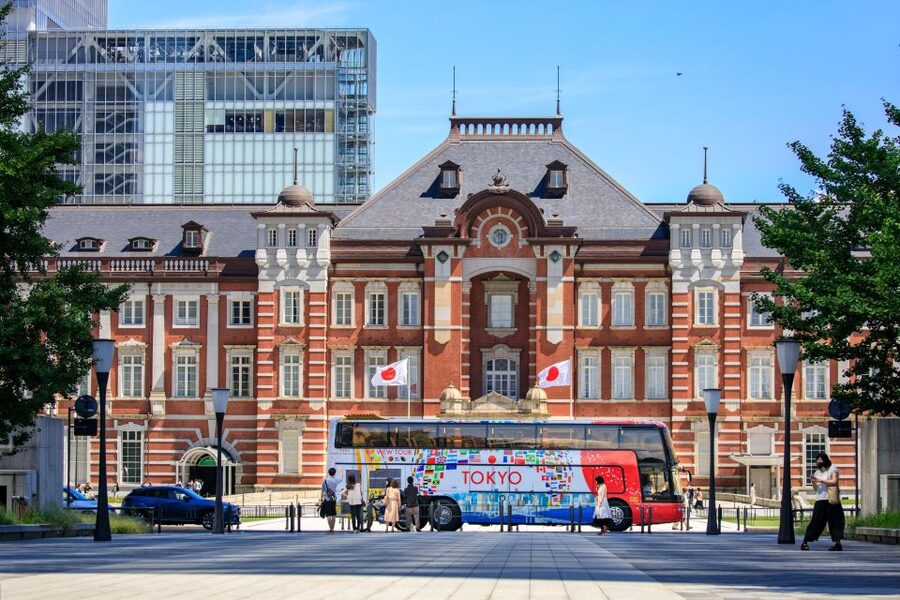
The meeting point is called Tokyo VIP Lounge, but keep your expectations modest. It is a shared facility in a building with Family Mart on the ground floor, about a five-minute walk from Tokyo Station’s Yaesu North Exit. The lounge is on the second and third floors.
The name may suggest a private waiting room with special comforts. In practice, it is a basic shared space used by other customers and companies. Open-top bus customers can use the facilities free of charge from 40 minutes before departure. Outside that window, a facility fee may apply.
The check-in process itself is meant to be orderly. Staff provide a map, and customers are then taken on a short walk to the bus. That short escorted walk is helpful if you have just arrived in Tokyo and are still finding your way around the station.
Give yourself more time than the five-minute walk suggests. Tokyo Station has many exits and large underground passages, and the wrong turn can cost you several minutes. Arrive 20 to 40 minutes before departure, as requested. The bus leaves promptly and cannot wait for late arrivals, even if you contact the operator before departure.
Japanese-speaking staff are available, but English communication may be limited at the meeting point. A past departure went smoothly because the staff member was kind and used a translation app, but you should not count on a fluent English briefing.
Weather, seating, and comfort
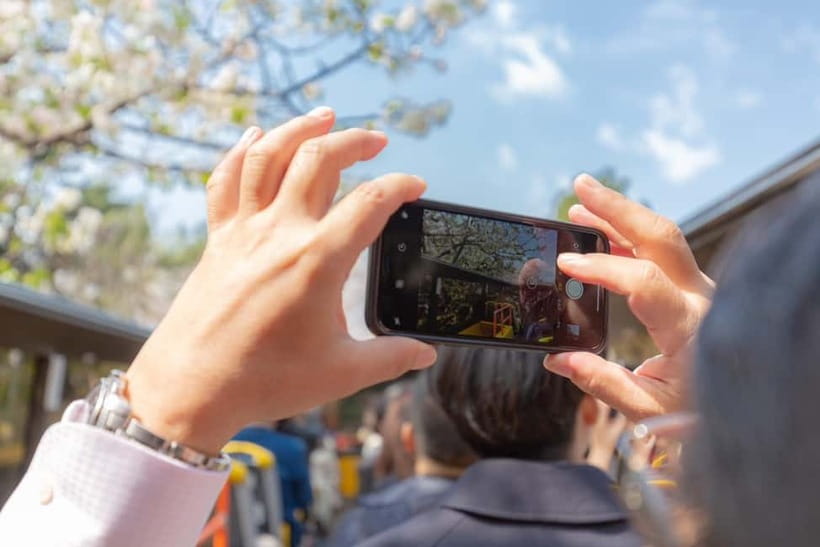
This is an open-top ride, so weather is part of the deal. The tour runs in light rain and other ordinary conditions, but the roof may be closed if it rains. In extreme weather, such as a typhoon, the operator may cancel.
On a hot or cold day, you are exposed for much of the ride. One visitor found the seats short on knee room and felt that the weather made comfort difficult. That is fair warning for anyone who wants a soft, climate-controlled sightseeing bus.
Umbrellas are not allowed on the vehicle, and food, smoking, and selfie sticks are also prohibited. Check the forecast before leaving your hotel and dress for the conditions. If you strongly want an open-air ride, avoid making this your only Tokyo plan on a rainy day.
The bus is also subject to traffic. Tokyo traffic can change the exact timing and may lead to minor route or schedule adjustments. The GPS system is designed to account for road conditions, but no bus tour can guarantee a clear view of every landmark.
The best value for short stays
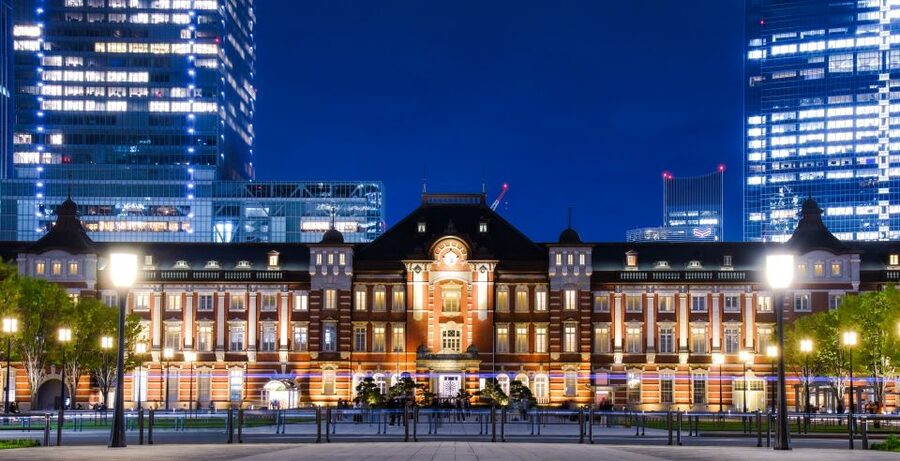
At $11, this experience earns its value through coverage rather than depth. In just over an hour, you can see central Tokyo, Tokyo Tower, Ginza, and either the waterfront or the Imperial Palace area. That would take much longer by foot and require several train connections.
I would not use this as your only sightseeing in Tokyo. You pass places that deserve more time, and the bus does not provide proper stops for temple visits, palace walks, museums, or meals. But as a first look, it saves energy and helps you decide where to spend the next day.
It is also a good option for children or family members who tire easily, since the ride offers a rest from constant walking. The open deck adds a sense of occasion without the cost of a private car or long river cruise.
The overall rating is 3.8 out of 5, which fits the experience neatly. The ride, views, organization, and friendly assistance receive strong praise, while meeting-point confusion, sound quality, weather, and limited legroom hold it back from being perfect.
Who should book this ride
You are a good match if you:
- Have never seen Tokyo and want a quick orientation
- Have only a few hours available
- Want photos of Tokyo Tower, Rainbow Bridge, or the skyline
- Prefer a calm ride to several subway transfers
- Like audio information but do not need a live guide
- Want an inexpensive activity with flexible cancellation up to 24 hours before departure
You may want something else if you:
- Need a fully English-speaking guide in person
- Want to enter and explore each landmark
- Dislike exposed seating or have strict comfort needs
- Are likely to arrive close to departure time
- Need a tour that guarantees an open roof in all weather
Should you book the Tokyo open-top bus?
Yes, if you treat it as a scenic introduction rather than a complete Tokyo tour. I would choose the Bay Course for Rainbow Bridge, Odaiba, and waterfront views. I would choose the City Course for central Tokyo, palace surroundings, parks, Roppongi, and skyscrapers.
Arrive early, check the exact meeting point, bring compatible headphones, and dress for the forecast. At $11, the ride offers a lot of city in a short time, with the biggest payoff coming from the upper-deck views and the Rainbow Bridge crossing.
FAQ
How long does the Tokyo open-top bus tour last?
The tour lasts 70 minutes. Starting times vary, so check availability when booking.
Which routes are available?
You can choose the 70-minute Bay Course or the 70-minute City Course. The Bay Course includes Tokyo Bay, Rainbow Bridge, Odaiba, Tokyo Tower, and Ginza. The City Course includes Chidorigafuchi, Akasaka State Guest House, Meiji Jingu Gaien, Tokyo Midtown, Roppongi, Tokyo Tower, Hibiya, and Ginza.
What languages are available for the audio guide?
The GPS audio guide is available in Japanese, English, Chinese, French, Korean, Vietnamese, and Thai.
Are headphones included?
No. Headphones are optional and cost 100 yen. The headphone jack accepts only 3.5mm mini plugs.
Where is the meeting point?
Meet at Tokyo VIP Lounge on the second and third floors of the building with Family Mart on the ground floor. It is about a five-minute walk from Tokyo Station’s Yaesu North Exit.
What happens if it rains?
The tour operates in ordinary rain, but the open top may be closed. Cancellations are limited to extreme weather conditions, such as typhoons. Umbrellas are not allowed on the vehicle.
More Audio Tours in Tokyo
More Self-Guided Tours in Tokyo
More Guided Tours in Tokyo

More tours in Tokyo we've reviewed




Self-Guided Tours, compared.
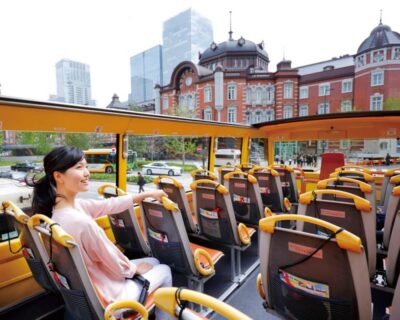 ★ 4.0Tokyo: 60min Panoramic Open Top Bus Tour with Audio GuideFrom $141 hour
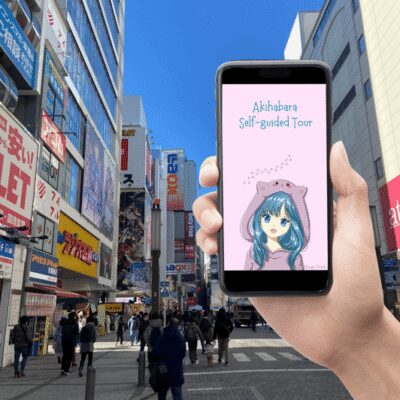 ★ 3.7Akihabara: Self-Guided Tour with a special brochureFrom $61 day
 ★ 3.5Tokyo Self-Guided Audio TourFrom $9
 ★ 4.6Hakone: Self Guided Trip to Mt. Fuji // Made by Local GuidesFrom $31 day
 ★ 4.5Tokyo: Open Top Sightseeing Bus with Audio GuideFrom $11