
Reviewed · SHINJUKU TOURS
Tokyo: Shinjuku Bar Hopping & Night Walking Tour
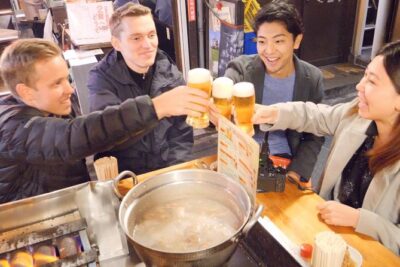
Shinjuku after dark is best understood one narrow alley and one small bar at a time. This three-hour walk takes you through Golden Gai, Omoide Yokocho, and Kabukicho, with stops at three different izakayas for sushi, gyoza, kushikatsu, and sake. The guide helps you find places that are easy to miss and keeps the evening moving.
I like the small maximum of 15 people, which makes conversation and ordering easier than on a large pub crawl. I also like the local focus: the food is hearty and carefully made, not dressed up for a luxury menu. The main drawback is that the $36.33 price covers the guide and the tour itself, but dinner and alcoholic drinks cost extra.
In This Review
- Key points
- Why Shinjuku works best with a local guide
- Golden Gai: tiny bars and a first look at Shinjuku nightlife
- Omoide Yokocho: old-style food in a narrow lane
- Kabukicho: Tokyo nightlife with a guide’s help
- Three izakayas, three ways to eat and drink
- What the $36.33 price really covers
- A three-hour pace that leaves room for conversation
- The guides make or break the evening
- Who should book this Shinjuku night walk?
- Meeting point, booking, and cancellation details
- My call: book it for access, not a free dinner
- FAQ
- How long does the Shinjuku bar-hopping tour last?
- Where does the tour start?
- Where does the tour end?
- What areas does the tour visit?
- How many people can join the tour?
- Are dinner and alcoholic drinks included?
- Can I cancel for a full refund?
Key points
- Three distinct izakayas: Try different styles of Japanese casual dining instead of spending the night in one bar.
- Shinjuku’s famous night districts: Walk through Golden Gai, Omoide Yokocho, and Kabukicho with help from a local guide.
- Food is central: Expect sushi, crispy kushikatsu, juicy gyoza, and other simple dishes made with care.
- Sake tasting can be a highlight: Alcohol is not included, so plan a separate food and drink budget.
- A group capped at 15: The size suits people who want company without joining a huge crawl.
- A useful first-night activity: It gives you a practical introduction to Shinjuku’s nightlife and can help you decide where to return later.
Why Shinjuku works best with a local guide
Shinjuku is not short on nightlife. Its problem is choice. Neon signs, tiny doorways, arcades, alleys, restaurants, and bars fill the area, and the places that look most interesting are not always easy to enter when you do not know the customs or the layout.
This tour gives you a simple plan: meet near the Shinjuku Station East Exit Police Box, walk through three well-known districts, and stop at three different izakayas. You are not left to guess which doorway is open to newcomers or which bar fits a short evening.
That help matters most after dark. The guide does more than point out streets. You can ask about the areas, get help ordering, and move through the nightlife with someone who knows the setting. The tour provider is Local Guide Stars, and past guide names connected with the experience include Sato san and Anaya.
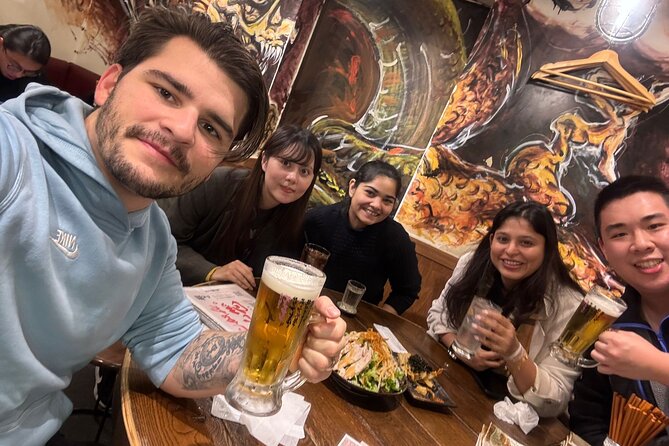
The tone appears to be social rather than formal. You will be with other people, sharing food and drinks while learning about the district. It is a good setup if you want an easy way to meet people in Tokyo without committing to a full dinner with strangers.
A few more Tokyo tours and experiences worth a look
Golden Gai: tiny bars and a first look at Shinjuku nightlife
The first stop is Shinjuku Golden Gai, one of the city’s most famous clusters of narrow lanes and small bars. Its appeal comes from scale. Instead of one large entertainment complex, you get tightly packed little drinking spots, each with its own character and limited seating.
This is the sort of area where a guide earns the tour fee. A visitor walking alone may see dozens of doors and have no clear idea where to start. Some bars can feel made for regular customers, while others may welcome newcomers more easily. The guide can steer the group toward a suitable stop and explain what kind of place you are entering.
Do not expect a polished cocktail lounge or a full restaurant at every doorway. Golden Gai is about atmosphere, compact spaces, and the feeling of being close to the city’s everyday night crowd. The food and drink stop here is part of a larger introduction to how Shinjuku spends its evenings.
You may also find that the small scale limits personal space. A group of up to 15 people is modest for a walking tour, but it can still feel substantial in a tiny bar. The group size is worth keeping in mind if you prefer quiet meals or dislike close seating.
Omoide Yokocho: old-style food in a narrow lane

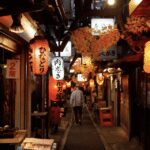
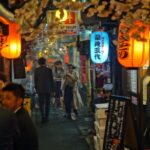
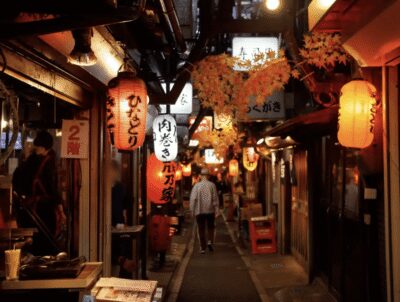
The second stop is Omoide Yokocho, a compact lane near Shinjuku Station filled with small food and drinking spots. Its character is different from Golden Gai. Here, the focus is strongly tied to casual eating, quick dishes, and the pleasure of moving from one small establishment to the next.
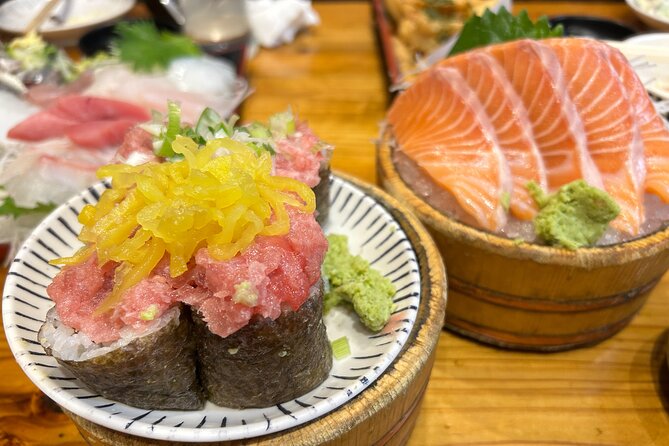
This is a good setting for the tour’s food-first approach. You might sample gyoza, sushi, or kushikatsu, depending on what is arranged on the evening. Gyoza brings a crisp, savory bite. Kushikatsu offers fried skewers. Sushi provides a cleaner contrast, with fresh ingredients and rice at the center.
The experience is not presented as high-end dining. That is a strength if you want ordinary Japanese dishes served in the kind of places people visit for a relaxed meal after work. The appeal is in trying several styles, not in receiving one elaborate tasting menu.
You should also treat the meal as shared eating rather than a private dinner. The tour is designed around a group, and food is part of the social rhythm. If you have a large appetite, remember that dinner is not included in the $36.33 booking price. You will pay for the dishes you order, so the final cost depends on how much you eat and drink.
Kabukicho: Tokyo nightlife with a guide’s help
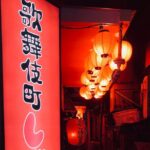
The final district is Kabukicho, Shinjuku’s best-known entertainment area. It is a place of bright signs, late-night businesses, arcades, and busy streets. The tour brings you here as part of the walk, giving you a chance to see a side of Shinjuku that can feel confusing when encountered without local context.
The guide’s presence is especially useful in this district. You can move with the group, understand where you are, and avoid wasting time searching for a suitable place to eat or drink. The stated aim is to tour the area safely at night, and that practical support is one of the stronger reasons to book.
Kabukicho can also feel more commercial than the quieter lanes earlier in the evening. If your main interest is old-style food stalls and intimate bars, Golden Gai and Omoide Yokocho may leave the stronger impression. If you want to see Shinjuku’s wider nightlife, Kabukicho completes the picture.
The route also includes lively arcades and narrow alleys that many foreign visitors might pass without noticing. That detail gives the walk some variety. You are not simply moving between restaurants. You are seeing how the area shifts from a station district into a major night-time entertainment zone.
Three izakayas, three ways to eat and drink
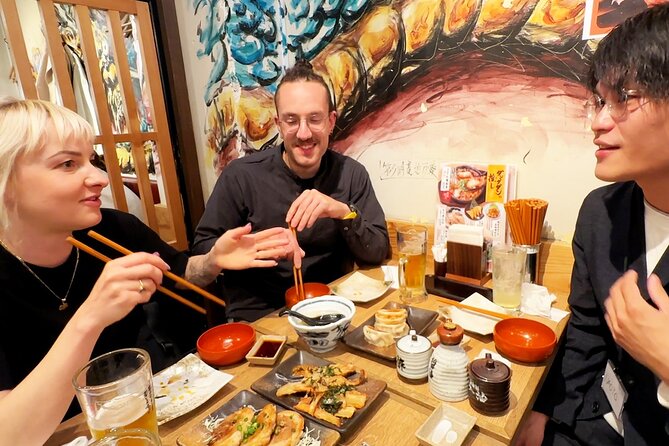
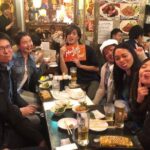
The tour visits three different kinds of izakayas. That variety is more useful than spending three hours in one venue because it lets you compare the mood, dishes, and pace of Japanese casual dining.
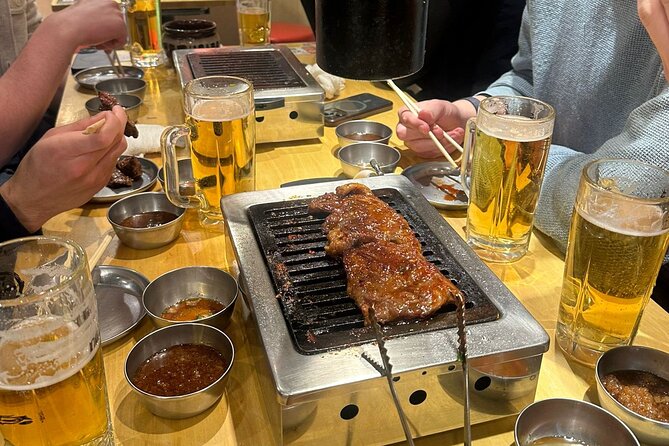
An izakaya is not quite a pub and not quite a standard restaurant. It is a place to order several dishes for the table while drinking. Food is meant to be shared, and the menu often rewards trying a few small portions rather than choosing one main course.
The food named for this experience includes:
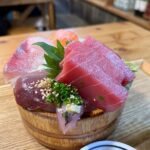
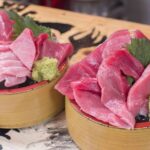
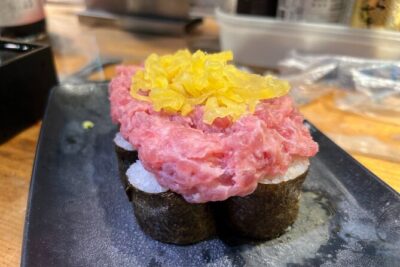
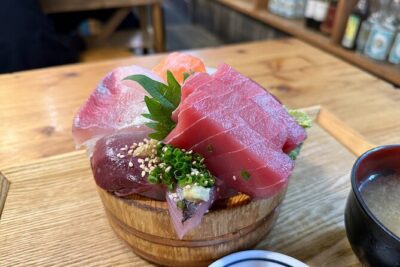
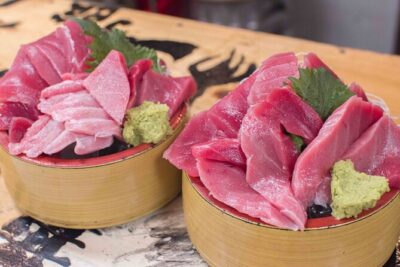
- Fresh sushi
- Crispy kushikatsu
- Juicy gyoza
- Sake and other alcoholic drinks
The descriptions point toward straightforward, satisfying food rather than elaborate presentation. You can expect dishes made with care, but this is not a luxury food tour. That distinction matters. I would choose this activity for a taste of everyday nightlife, not for a formal lesson in Japanese cuisine or a restaurant with a fixed chef’s menu.
Sake tasting may be the evening’s highlight if you enjoy trying Japanese drinks. Since alcoholic beverages are not included, you will need to pay as you order. This arrangement gives you some control over spending, but it also means the advertised price is not the full cost of the night.
If you do not drink alcohol, the tour may still work because the food and district walk are central parts of the program. The supplied details do not promise a special nonalcoholic tasting, so you should not book it expecting a dedicated alcohol-free menu.
A few more Tokyo tours and experiences worth a look
What the $36.33 price really covers
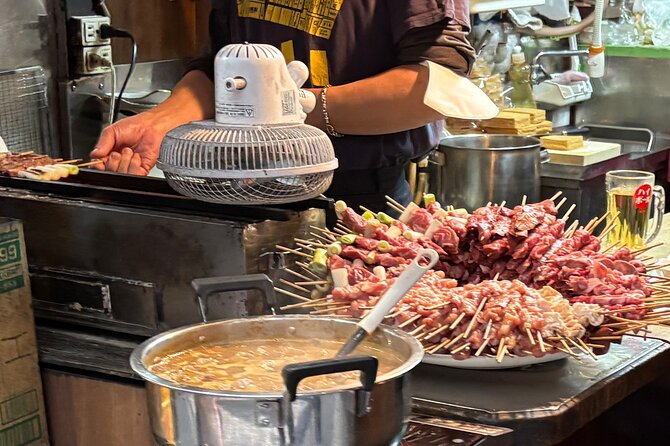
At $36.33 per person, this is priced as an affordable guided introduction rather than a prepaid dinner. The fee includes the guide and the organized walking experience. Admission is listed as free, while dinner and alcohol are separate expenses.
That pricing can be good value if you are new to Shinjuku and want someone to handle the route and venue choices. You are paying for access to local know-how, group coordination, and a three-hour introduction to several districts. You are not paying for a set meal or unlimited drinks.
The final bill depends on your choices. Someone who eats lightly and skips alcohol can keep the additional cost lower. Someone who samples several dishes and orders sake will spend more. I would set aside money for at least the food you want to try, then treat drinks as optional rather than assuming they are part of the booking.
The value is strongest for a first visit to Tokyo. If you already know Shinjuku well, can read Japanese menus comfortably, and enjoy choosing your own bars, you may prefer to explore independently. For everyone else, the fixed price removes some uncertainty from a district that can be hard to read at night.
A three-hour pace that leaves room for conversation
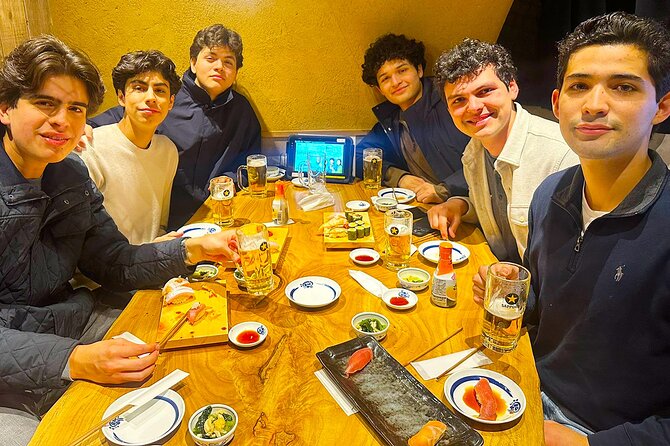
The experience lasts about three hours. That is enough time to visit the three districts and stop at three izakayas without turning the evening into an exhausting marathon.
The schedule is likely to feel active. You will walk between venues, spend time eating and drinking, and hear about the neighborhoods along the way. Comfortable shoes are sensible, since the tour combines city walking with bar visits.
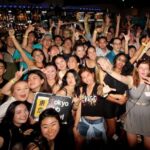
A small group capped at 15 people keeps the format manageable. You may not get the intimacy of a private guide, but the group is small enough for a social evening and direct questions. If you are traveling alone, this is one of the better reasons to choose a group activity. The stops give conversation a natural focus, so you do not need to force introductions.
The evening also suits couples and friends. A birthday or other special occasion could work well, provided everyone understands that food and drinks are paid separately and that the tour is shared with other participants.
The guides make or break the evening
The guide is the most important variable in an activity like this. The route itself is useful, but the quality of the night depends on how well the guide explains the neighborhoods, handles the group, and creates an easy mood at the tables.
Sato san is described as friendly, helpful, and strong on local information. Anaya is described as fun, engaging, and familiar with the area. Those details suggest that the guide is expected to participate rather than simply lead from one address to another.
That matters in an izakaya. A good guide can explain what you are ordering, keep the table involved, and help the group make the most of unfamiliar dishes. The guide can also answer practical questions about the districts and suggest places you might revisit later.
Guiding styles can vary, of course. The listed experience does not promise a particular guide, so you should not book on the assumption that Sato san or Anaya will lead your date. Their names are useful examples of the friendly, local approach you can hope for, not a guarantee.
Who should book this Shinjuku night walk?
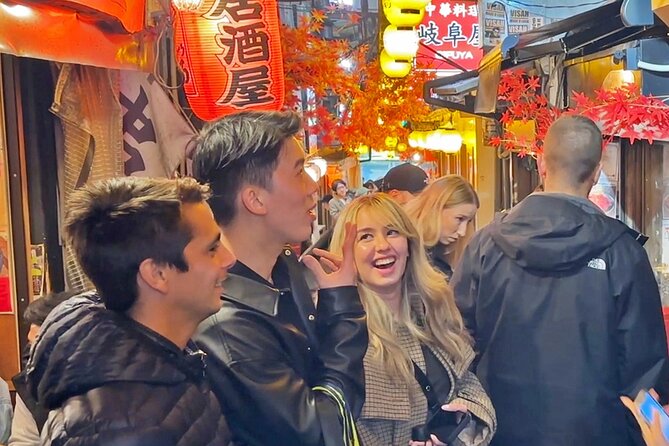
I would recommend this tour to first-time visitors who want an introduction to Shinjuku without spending the evening guessing where to go. It also suits solo visitors who would like company, food-focused visitors who enjoy sampling several dishes, and anyone curious about Japanese drinking culture.
It is particularly useful early in your Tokyo stay. You can learn the shape of Golden Gai, Omoide Yokocho, and Kabukicho, then return to the district later with a better sense of direction. One person booked it on a final night and wished it had been done earlier, which is a fair point. The activity can serve as both an evening out and a guide to future evenings.
I would be more cautious if you want a full dinner included in the price. You should also think twice if you dislike shared tables, small bars, or making plans around a group. The tour is social by design, and the food is casual rather than refined.
Meeting point, booking, and cancellation details
The meeting point is the Shinjuku Station East Exit Police Box at 3-chōme-38-1 Shinjuku, Shinjuku City, Tokyo 160-0022. The activity ends back at the meeting point, which makes it easier to continue exploring Shinjuku afterward or return to your hotel.
A mobile ticket is provided, and booking confirmation arrives at the time of booking. The meeting point is near public transportation, and most people can participate.
You can cancel for a full refund if you do so at least 24 hours before the start time. Changes or cancellations made less than 24 hours before the start time are not accepted for a refund. The cut-off uses Tokyo local time, so check the clock carefully if you are booking from another country.
My call: book it for access, not a free dinner
Book this tour if you want a friendly guide, three different izakayas, and a safe, organized way to see Shinjuku after dark. The strongest reasons are the manageable group size, the mix of famous districts, and the chance to try sushi, gyoza, kushikatsu, and sake without having to find each place yourself.
Do not book it expecting dinner and drinks to be covered. Add those costs to your budget, and think of the $36.33 fee as payment for the route, guide, and local access. If that sounds fair, this is a practical and enjoyable introduction to Shinjuku’s night side.
FAQ
How long does the Shinjuku bar-hopping tour last?
The tour lasts approximately three hours.
Where does the tour start?
It starts at the Shinjuku Station East Exit Police Box, located at 3-chōme-38-1 Shinjuku, Shinjuku City, Tokyo 160-0022, Japan.
Where does the tour end?
The activity ends back at the meeting point.
What areas does the tour visit?
The route includes Shinjuku Golden Gai, Omoide Yokocho, and the Kabukicho District.
How many people can join the tour?
The group has a maximum of 15 participants.
Are dinner and alcoholic drinks included?
No. Dinner and alcoholic beverages are not included and must be paid for separately.
Can I cancel for a full refund?
Yes. You can receive a full refund if you cancel at least 24 hours before the experience start time. Cancellations or changes made less than 24 hours before the start time are not accepted for a refund.
More Night Tours in Tokyo



More Bar Hopping & Izakaya Tours in Tokyo
More Shinjuku Tours in Tokyo

More tours in Tokyo we've reviewed





Shinjuku Tours, compared.
 ★ 5.0Tokyo: Shinjuku Food Tour (13 Dishes at 4 Local Eateries)From $86
 ★ 5.0Tokyo Bar Hopping Tour in Shinjuku (All-You-Can-Drink + Dinner)From $106
 ★ 4.9Tokyo: Shinjuku Food Tour (15 Dishes and 4 Eateries)From $853 hours
 ★ 5.0Best of Shinjuku: Izakaya Food Tour (4 Stops, 14+ Tastings)From $92
 ★ 4.9Tokyo: Shinjuku Local Bar and Izakaya Guided Walking TourFrom $343 hours
 ★ 5.0Tokyo Shinjuku Chopsticks Making ClassFrom $20