

Reviewed · SUSHI MAKING CLASSES
Conveyor Belt Sushi & Bar Hopping in Ebisu & Nakameguro
Tokyo nightlife makes the most sense when you stop chasing famous sights and start following the food. This three-hour evening walk with local guide Taku links an izakaya, a conveyor belt sushi restaurant, and Ebisu-Yokocho, giving you a taste of everyday Tokyo in two lively neighborhoods.
I like the small maximum of 10 people and the mix of food styles. I also like that Taku can answer a wide range of questions and shape the evening around the group. The main drawback is simple: the tour moves through three stops in about three hours, so this is a sampler, not a long meal at any one place.
In This Review
- Key points
- Why this Tokyo food walk works
- Stop one: oden and drinks at Nakameguro Koukashita
- Stop two: choosing plates from a Nakameguro sushi belt
- Stop three: the after-work energy of Ebisu-Yokocho
- Taku’s role and the small-group advantage
- What the $65.15 price really buys
- Who should choose this evening
- Meeting point, timing, and cancellation
- Should you book the Nakameguro and Ebisu food walk?
- FAQ
- How long does the experience last?
- Where does the tour begin?
- Where does the tour end?
- How many people can join the tour?
- Is the tour conducted in English?
- What food stops are included?
- Is the ticket mobile?
- Can I cancel for a full refund?
Key points
- Three food-and-drink stops: Try oden in Nakameguro, pick sushi from a moving belt, then finish among the small bars of Ebisu-Yokocho.
- A small group of 10 or fewer: The size should make it easier to ask Taku questions and keep the evening moving.
- English guidance with local context: Taku explains customs, dishes, and neighborhood life as you go.
- Two different Tokyo districts: Nakameguro offers a more relaxed start, while Ebisu brings a louder after-work mood.
- A practical evening length: Three hours gives you a focused introduction without taking over your whole night.
- Optional Shibuya Sky help: Taku can also help arrange a Shibuya Sky ticket, though this is not part of the main tour.
Why this Tokyo food walk works
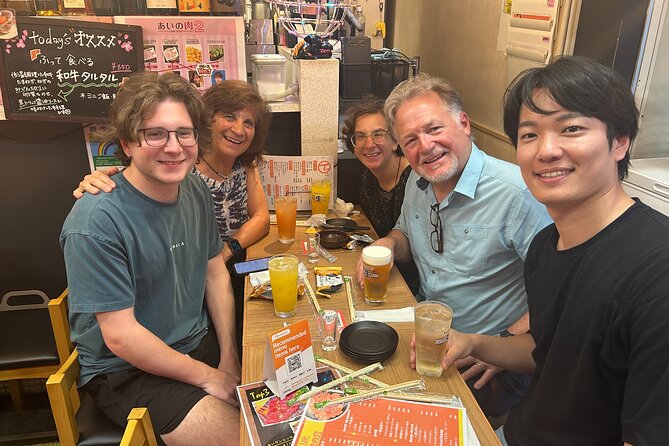
This experience is built around a useful idea: food is often the fastest way to understand a city. Instead of spending the evening in one polished restaurant, you move through three settings and see how people eat and drink after work.
You begin near Nakameguro Station, then stay in the Nakameguro area for the first two stops before moving to Ebisu. That makes the route easy to follow, especially if you are still finding your feet in Tokyo. The tour ends back at the original meeting point, so you do not have to work out a new return location in an unfamiliar part of town.
The evening is fully guided in English. That matters at an izakaya and a kaitenzushi restaurant, where menus, ordering habits, and table customs may not always be clear at first glance. Taku adds cultural tips and stories, so you get more than a meal with directions between stops.
At $65.15 per person, the value depends on what is included in the food and drink bill. The supplied details do not clearly state whether every dish and drink is covered, so I would confirm that before booking. You are paying for the route, the guidance, the local setting, and the convenience of moving between three stops with a small group. If you were already comfortable choosing restaurants and ordering alone, the price may feel less compelling. If you want a friendly introduction to Tokyo nightlife without doing the research yourself, it can make good sense.
A few more Tokyo tours and experiences worth a look

Stop one: oden and drinks at Nakameguro Koukashita
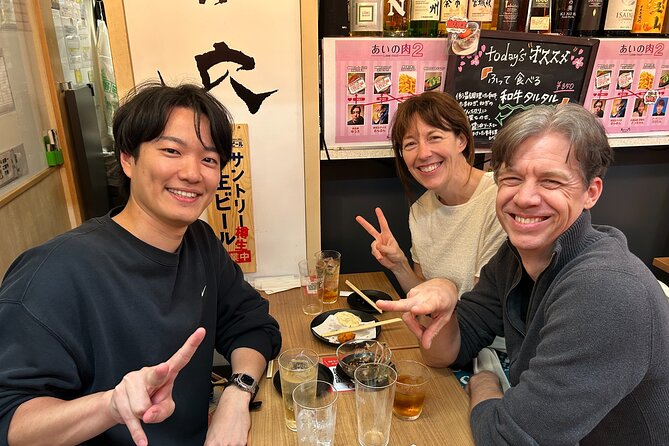
The first stop takes you into a cozy izakaya in Nakameguro Koukashita. An izakaya is a casual Japanese drinking spot where people order several small dishes to share. It is less formal than a restaurant and usually more social, making it a good place to begin an evening with a guide.
The featured dish is oden, a comforting stew of ingredients such as daikon radish, tofu, and fish cakes. The ingredients sit in a warm broth, and the dish is especially suited to a slow first drink. You get a useful introduction to Japanese comfort food rather than starting with something designed mainly for tourists.
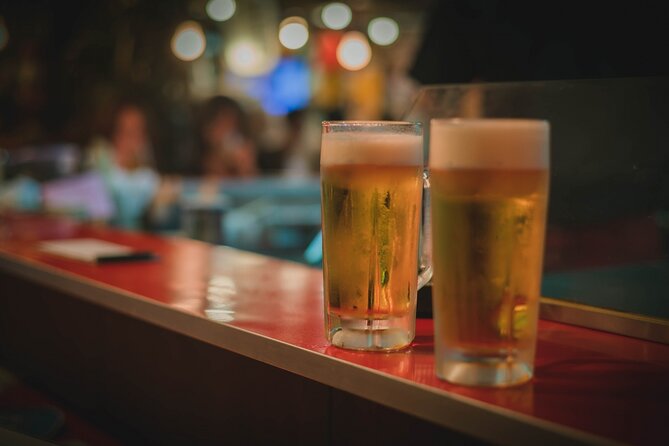
This stop lasts about 50 minutes. That gives you enough time to try the food, have a drink, and ask Taku about what you are eating. The overview also mentions sake and Japanese cocktails, so you can expect the first part of the evening to include traditional and modern drink choices.
I like this as an opening because it sets a calm pace. You are not immediately thrown into a crowded alley or asked to make quick choices from a moving sushi belt. You have time to learn how the evening will work.
The limitation is that 50 minutes is still a short visit. Oden includes several different ingredients, but you may not sample everything. If you have strong food dislikes or dietary restrictions, ask Taku before ordering. The available information does not list allergy, vegetarian, or other menu arrangements.
Stop two: choosing plates from a Nakameguro sushi belt
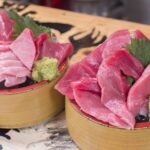
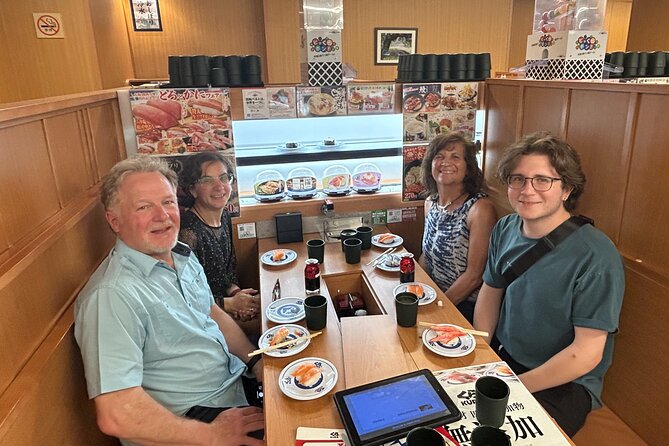
The second stop changes the mood. You visit a kaitenzushi restaurant, the familiar conveyor belt sushi format where plates pass by on a moving belt and you choose what catches your eye.
This is one of the most approachable ways to try sushi in Japan. You can see the dishes before choosing them, and the format feels more casual than sitting down to a formal sushi course. For a first-time visitor, it also makes the meal more visual and less intimidating.
Taku can explain how the system works and help you read the situation. The details provided do not specify the exact ordering method, restaurant name, or number of sushi plates included, so do not assume you will receive an unlimited meal or a fixed tasting menu. The experience is best understood as a guided introduction to kaitenzushi.
The 50-minute timing is well judged for a tasting stop. You can select a few plates, try different styles, and keep enough room for the final stop in Ebisu. If sushi is the main reason you are considering the tour, remember that this is one part of a broader evening, not a dedicated sushi crawl.
There is also a practical advantage to eating sushi in the middle rather than at the end. You have already had the chance to ask questions at the izakaya, and you can compare two very different kinds of Japanese dining in the same neighborhood.
Stop three: the after-work energy of Ebisu-Yokocho
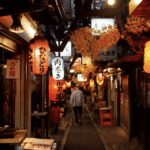
The final stop brings you to Ebisu-Yokocho, a retro-style alley packed with small bars and eateries. This is where the tour becomes most social. Locals come here after work to drink, share food, and unwind, and the compact setting gives you a quick look at Tokyo’s casual evening culture.
The atmosphere will likely feel more animated than the first stop. You may hear conversations from several tiny establishments and see people gathering around drinks and shared plates. The supplied information does not promise a specific bar or exact menu, so the evening may have some flexibility depending on conditions and the group.
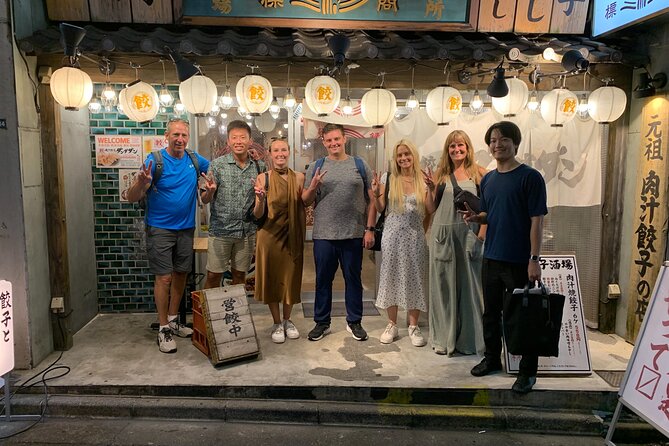
This stop also offers the best chance for informal photographs. The tour includes photos taken at lively street food alleys, and Ebisu-Yokocho provides the strongest setting for that part of the experience. If you enjoy keeping a visual record of your trip, this is a useful extra.
You have about 50 minutes here. That is enough for a drink and some conversation, but it is not a full night out in Ebisu. Think of it as a guided introduction. After the tour ends, you can decide if you want to stay in the area and continue on your own.
The three-stop structure also lets you compare neighborhood moods. Nakameguro begins with warm food and a more relaxed izakaya setting. Ebisu finishes with narrow lanes, small bars, and a stronger after-work buzz. That contrast gives the evening a clear shape.
Taku’s role and the small-group advantage
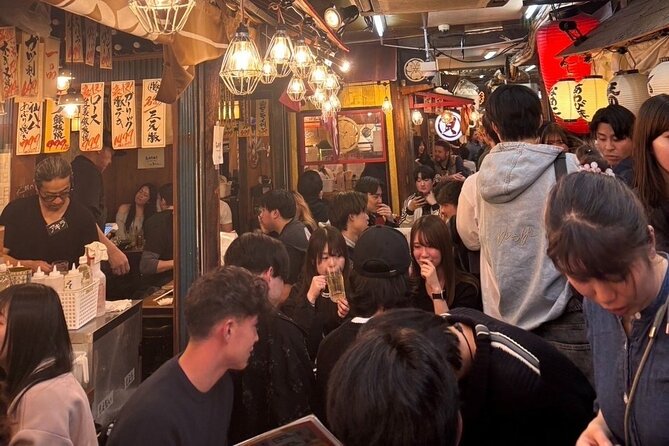
The guide can make or break a food walk, particularly when the tour depends on local restaurants rather than reserved sightseeing sites. Taku leads in English and provides cultural explanations throughout the evening. One useful sign is that he has been able to respond to many kinds of questions and adjust the experience to the group’s needs.
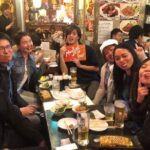
That flexibility is especially helpful for solo visitors and couples. A group of no more than 10 people is small enough for conversation without making the evening feel like a formal bus tour. You can ask about dishes, drinking customs, neighborhood life, or other parts of Tokyo that puzzle you.
A small group does not guarantee a private tour. You may still be sharing tables and decisions with other people. But the size is favorable for this kind of outing, where everyone needs space to order, move between stops, and hear the guide.
I would choose this experience early in a Tokyo visit if I wanted help with food customs. The information you pick up at the first two stops can make later independent meals less stressful. You will have seen an izakaya and kaitenzushi in action, rather than only reading about them.
A few more Tokyo tours and experiences worth a look


What the $65.15 price really buys
At $65.15, this is not the cheapest way to eat in Tokyo. Japan offers plenty of affordable meals, and you could visit a sushi chain or an izakaya without joining a tour.
The value is in the structure. You get three planned stops across two neighborhoods, an English-speaking guide, cultural tips, and a group capped at 10. You also avoid the uncertainty of choosing a place at random, especially on your first evening in Tokyo.
Still, check the food and drink arrangements before you pay. The supplied information describes what you will enjoy but does not clearly say which dishes or drinks are included in the listed price. That detail could change the total cost, particularly if you are ordering sake, cocktails, or several sushi plates.
The tour is usually booked well ahead, with an average booking time of 56 days before the date. That suggests you should reserve early if your Tokyo schedule is tight, though the experience may still have availability closer to the date.
A mobile ticket keeps the booking simple. You should still save the meeting details somewhere easy to reach, since the start point is given as Naka-meguro Station, 3-chōme-4-1 Kamimeguro, Meguro City, Tokyo 153-0051.
Who should choose this evening
I would recommend this tour most strongly to solo visitors, couples, and first-time Tokyo visitors who want a gentle introduction to local nightlife. The small group gives solo participants company without the cost of a private tour. Couples get a ready-made route and a guide who can handle the ordering details.
It also suits people who prefer food variety. You do not stay with one cuisine or one restaurant style. You move from oden to sushi to drinks and small dishes in a retro alley.
The experience may be less suitable if you want a long, quiet dinner or a serious sushi meal. It may also disappoint if you expect a fixed menu with generous servings at every stop. The pace is social and exploratory, with each location receiving roughly 50 minutes.
Families may need to think about the evening setting. The activity is built around izakaya, sake, cocktails, and bars, so it is aimed more at adults. The supplied information says most people can participate, but it does not give a specific child policy.
If nightlife is not your priority, Tokyo has many daytime food options that may suit you better. This tour earns its price through atmosphere and guidance, not through a large meal or famous landmark admission.
Meeting point, timing, and cancellation
The tour lasts about three hours and begins at Naka-meguro Station. It returns to the same meeting point, which makes the route easier to manage than an outing that ends in another part of Tokyo.
The activity is near public transportation, and most people can participate. The group maximum is 10, which is worth noting if you prefer a quieter experience or want a better chance to speak with Taku.
You receive confirmation when booking in most cases. If you book within one day of travel, confirmation arrives as soon as possible and depends on availability. Free cancellation is available until 24 hours before the start time. Cancellations made later are not refunded, and changes inside that 24-hour window are not accepted.
Taku can also help with a Shibuya Sky ticket as an optional extra. Treat that as separate from the three-hour food experience, not as one of the main stops.
Should you book the Nakameguro and Ebisu food walk?
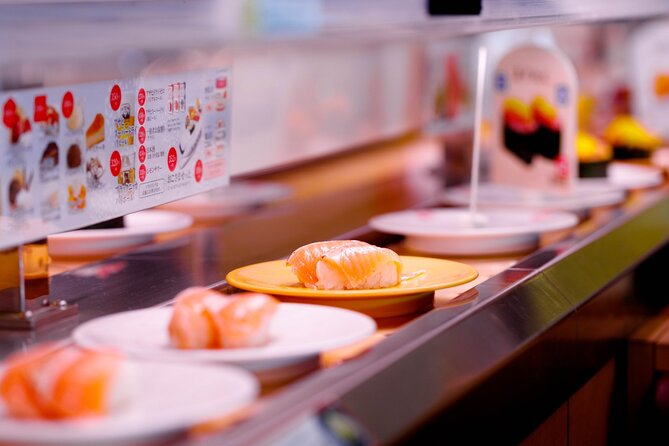
Book it if you want a short, social way to learn how Tokyo eats and drinks. The combination of oden, conveyor belt sushi, sake, cocktails, and Ebisu-Yokocho gives you more range than a single restaurant visit, while Taku’s English guidance removes much of the guesswork.
I would be more cautious if you are focused mainly on getting the most food for your money. Confirm what the $65.15 covers, and remember that the route gives each stop about 50 minutes. For an authentic-feeling introduction to less tourist-focused Tokyo, a small group, and a guide who can respond to your questions, this is a strong choice.
FAQ
How long does the experience last?
The tour lasts approximately three hours.
Where does the tour begin?
It begins at Naka-meguro Station, at 3-chōme-4-1 Kamimeguro, Meguro City, Tokyo 153-0051, Japan.
Where does the tour end?
The activity ends back at the meeting point.
How many people can join the tour?
The group has a maximum of 10 participants.
Is the tour conducted in English?
Yes. The experience is fully guided in English by a local guide, Taku.
What food stops are included?
The route includes an izakaya in Nakameguro Koukashita with oden, a conveyor belt sushi restaurant in Nakameguro, and Ebisu-Yokocho with small bars and eateries.
Is the ticket mobile?
Yes. The experience provides a mobile ticket.
Can I cancel for a full refund?
Yes, if you cancel at least 24 hours before the experience start time. Cancellations made less than 24 hours before the start time are not refunded.
More Nightlife Experiences in Tokyo

More Bar Hopping & Izakaya Tours in Tokyo
More Sushi Making Classes in Tokyo
More tours in Tokyo we've reviewed









Sushi Making Classes, compared.
 ★ 5.0Sushi Making Tokyo Roll and Authentic Japanese Sushi ClassFrom $59
 ★ 4.9Tokyo: Roll and Authentic Sushi Making Class in AsakusaFrom $581h 40m
 ★ 5.0Make Sushi and Create Unforgettable Memories in TokyoFrom $79
 ★ 4.9Tokyo: Sushi Making Class in a Happi Coat near a Famous SpotFrom $421h 30m
 ★ 5.0Tokyo Sushi Making Class in Tsukiji with Professional ChefFrom $49
 ★ 5.0Tokyo Night Foodie Tour in Shinjuku – Seasonal Sushi, Wagyu BeefFrom $111