
Reviewed · MT FUJI DAY TRIPS
From Tokyo: Full-Day Mount Fuji Tour in English or Spanish
Mount Fuji is the star, but this 10-hour day trip gives you several different ways to see it. You get the classic Chureito Pagoda view, a street-level look from Honcho Street, shrine visits tied to Fuji worship, flower gardens at Oishi Park, and a cruise on Lake Kawaguchiko.
I like the mix of famous photo stops and quieter cultural places. I also like the choice of English or Spanish, with guide Luis praised for clear explanations, patience, and useful local suggestions. The main drawback is the long day and the weather risk: Fuji can hide behind clouds, and the climb to Chureito Pagoda is a serious stair workout.
In This Review
- The best parts of this Fuji day trip
- Why this route works for a first Fuji visit
- Arakurayama Sengen Park and the climb to Chureito
- Honcho Street and Fuji through a town view
- Kitaguchi Hongu Fuji Sengen Shrine
- Oishi Park, flowers, and local ice cream
- Cruising Lake Kawaguchiko
- Transport, language, and the pace of the day
- Weather, clothing, and what to carry
- Who should book this Mount Fuji tour?
- Should you book it?
- FAQ
- Where does the Mount Fuji tour begin?
- Where does the tour finish?
- How long does the activity last?
- Is the tour offered in Spanish?
- Is lunch included?
- Is the Lake Kawaguchiko cruise included?
- How difficult is the walk to Chureito Pagoda?
- What happens if Mount Fuji is closed?
- Can I cancel the tour?
The best parts of this Fuji day trip
- Chureito Pagoda and Mount Fuji: Take the classic five-story pagoda photograph from Arakurayama Sengen Park.
- Two ways up the mountain: Climb about 400 steps, or use the longer sloping path without stairs.
- Honcho Street viewpoint: See Fuji framed by a traditional shopping street in Fujiyoshida.
- Kitaguchi Hongu Fuji Sengen Shrine: Visit an important northern gateway and pilgrimage starting point.
- Oishi Park and Lake Kawaguchiko: Pair seasonal flowers and local treats with a 40-minute cruise.
- Spanish-speaking guidance: Luis has received particular praise for explaining the sites and helping Spanish-speaking visitors feel at ease.
Why this route works for a first Fuji visit
A Mount Fuji day trip can easily become a drive to one crowded viewpoint, followed by a long return to Tokyo. This route gives you more range. You see the mountain from high up, from a town street, from the lakeshore, and from the water.
That variety matters because Fuji changes character from every angle. At Chureito, it appears behind a bright red pagoda. On Honcho Street, the mountain rises beyond telephone wires, rooftops, and old-style shopfronts. At Oishi Park, flowers and the lake create a softer view. From the boat, you get room to look back at the whole setting.
The price is $90 per person. For a 10-hour outing, that is a fair package if you value having transport, a guide, entrance fees, and the Lake Kawaguchiko cruise arranged together. You still pay for lunch, snacks, drinks, ice cream, and personal purchases, so bring extra cash.
The tour begins in Shinjuku, in front of the Robert Indiana LOVE sculpture at 6-chōme-5-1 Nishishinjuku. Look for the guide holding a sign for JP Travelers and saying Fuji tour in Spanish for the Spanish departure. The route ends at 1-chōme-8-8 Nishishinjuku, which is convenient if you plan to spend the evening in Shinjuku.
A few more Fujiyoshida tours and experiences worth a look
Arakurayama Sengen Park and the climb to Chureito
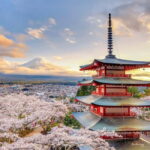
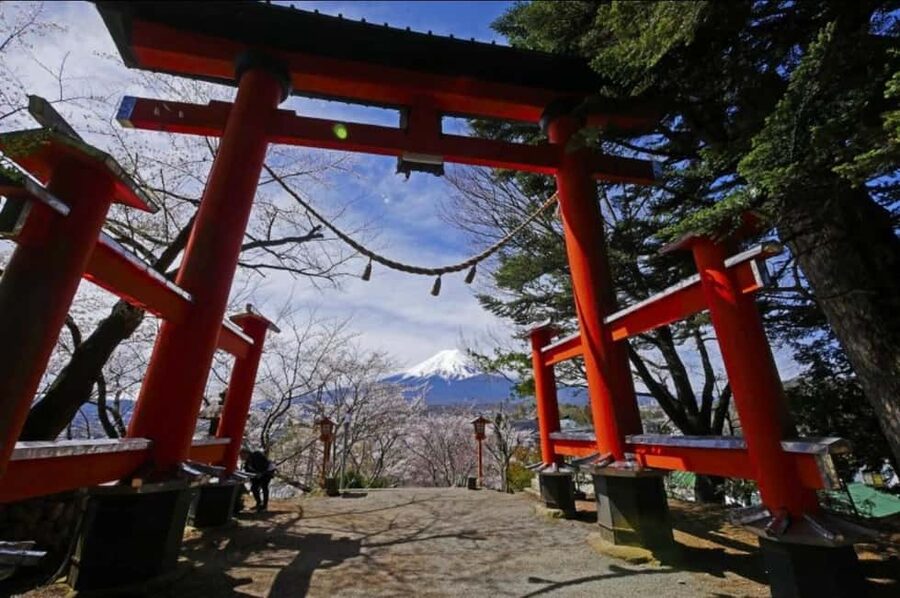
The first major stop is Arakurayama Sengen Park, one of the most photographed Fuji viewpoints. The park includes Arakura Fuji Sengen Shrine and the famous Chureito Pagoda, both on the same mountain.
The standard route from the entrance includes about 400 steps. The first 100 take you toward the shrine, and another 300 lead up to the pagoda. You do not have to use the stairs. A separate sloping path reaches the same area without steps, though it may take more time and still requires walking uphill.
That choice is useful, but do not treat this as a stop for anyone who wants to avoid walking. You will be on your feet, and comfortable shoes are essential. People over 95 are not accepted for the activity, and anyone with limited mobility should consider the climb and the full-day schedule carefully.
At the shrine, your guide can explain the connection between the sacred mountain and local worship. The site is associated with the Lord of Yamanashi, the famous samurai Takeda, and is described as one of the oldest shrines in the area.
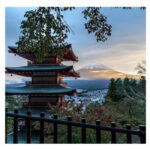
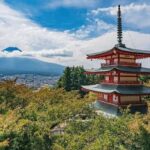
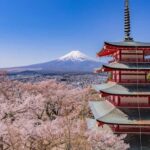
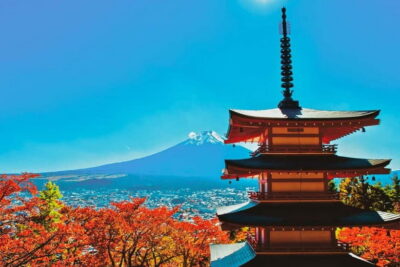
Then comes the pagoda viewpoint. This is the image many people have in mind when they picture Fuji in Japan: the red and white Chureito Pagoda in the foreground, with Mount Fuji rising behind it. The exact view depends on clouds, haze, season, and visibility. Bring a camera, but also leave time to simply look. The stairs and viewpoint can be busy, so an early start may help.
The tour information also highlights views from Mount Fuji’s fifth station. However, the detailed route provided for this departure lists Arakurayama, the shrines, Honcho Street, Oishi Park, and Lake Kawaguchiko rather than a separate fifth station stop. If the fifth station is a must for you, confirm the day’s exact route before booking.
Honcho Street and Fuji through a town view
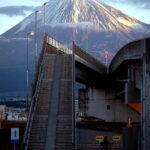
After the mountain, you walk along Shimoyoshida Honcho Street for about 40 minutes. This is not just a quick photo pull-over. The street has traditional architecture, local shops, and a direct view toward Fuji.
Honcho Street is tied to Fuji Michi, the old route leading toward the sacred mountain. Its importance comes from that connection. For centuries, routes through Fujiyoshida carried pilgrims toward Mount Fuji, and the street still gives you a sense of how the town faces the mountain.
The view here has a different feel from the pagoda. Fuji appears beyond the everyday life of the town, not behind a carefully framed temple. You may find shops, signs, rooftops, and traffic in the picture. That is part of the appeal. It shows Fuji as a presence woven into ordinary streets, not only as a postcard backdrop.
Your 40 minutes is enough for photographs and a short walk, but not for a slow shopping afternoon. Keep the group’s meeting time in mind, especially if you see local goods you want to browse.
Kitaguchi Hongu Fuji Sengen Shrine
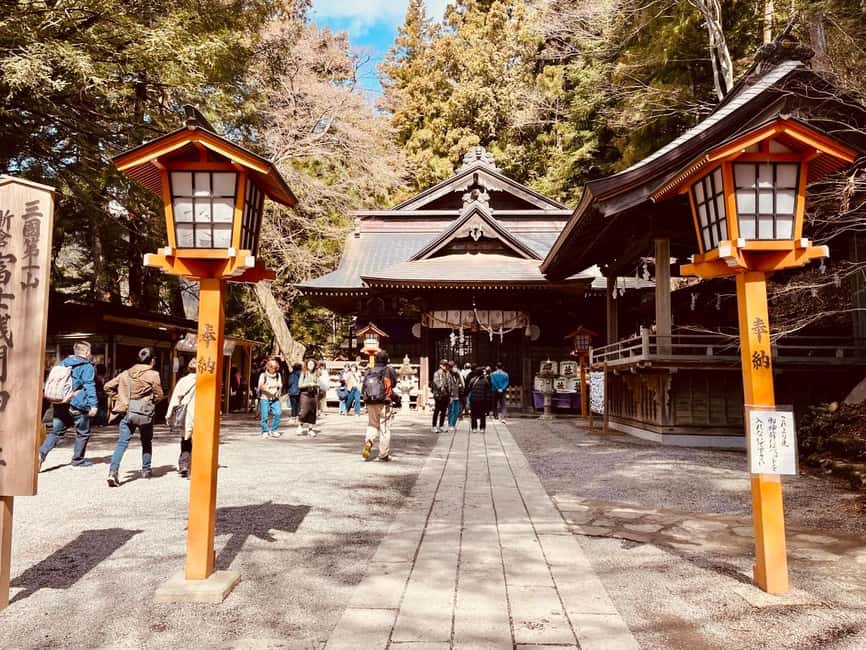
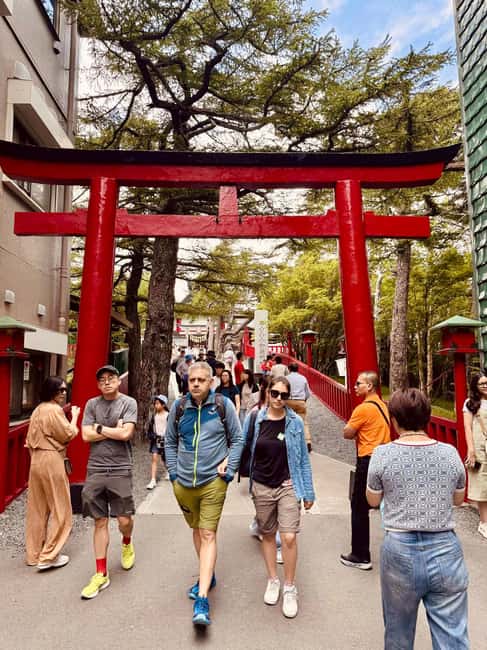
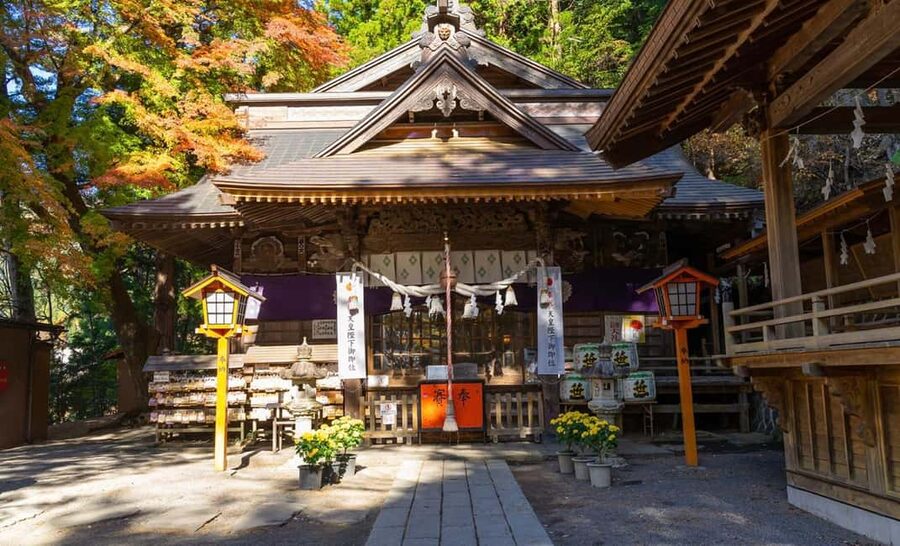
The next stop is Kitaguchi Hongu Fuji Sengen Shrine, with about 50 minutes for sightseeing. This is one of the more meaningful stops for anyone who wants context beyond photographs.
The shrine is linked to the UNESCO World Cultural Heritage designation for Mount Fuji from 2013. It is also described as having more than 1,900 years of history, with origins around 100 AD, when a small shrine honored the legendary prince Yamato Takeru during his passage through the region.
Most important for understanding the route, this is the old northern entrance to Mount Fuji. It marked the beginning of a pilgrimage path toward the sacred mountain. The shrine therefore helps explain why Fuji is not simply a scenic peak. It has long been a religious destination, with paths, rituals, and worship built around it.
The stop is also a welcome change of pace after the crowds and stairs at Chureito. You can focus on the buildings, the forested setting, and the religious purpose of the site. Since the visit lasts less than an hour, listen closely to the guide rather than expecting a long independent exploration.
This shrine also serves as the backup destination if Mount Fuji is closed or entry is not permitted for reasons beyond the operator’s control. That policy makes the shrine especially useful on a day when mountain access changes.
Oishi Park, flowers, and local ice cream
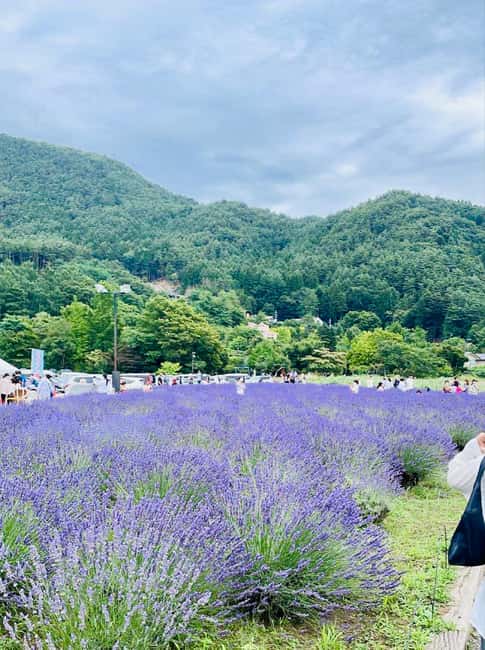
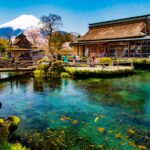
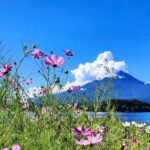
Oishi Park sits beside Lake Kawaguchiko and gives you one of the tour’s easiest scenic walks. You spend about 50 minutes among gardens and seasonal flowers, with Fuji and the lake nearby.
The park was built using stones recovered from Mount Fuji. The local explanation connects those stones with powerful eruptions that sent material around the lake. The park was created in memory of Fuji’s eruptions, so the setting links geology, local memory, and recreation.
The flowers change with the season, which means the exact display will depend on when you visit. You can walk through two gardens, take pictures, and enjoy views without the steep climb required at Chureito.
There are also 14 flavors of creamy ice cream, along with local fruit and souvenirs. Ice cream is not included, so budget for it separately. This is a good place to carry cash, especially if you want small purchases or local snacks.
The time here is generous enough for a relaxed walk, but not for sampling every flavor and shopping at length. If you want a quieter visit, stay focused on the gardens first and use any remaining time for food or souvenirs.
A few more Fujiyoshida tours and experiences worth a look
Cruising Lake Kawaguchiko
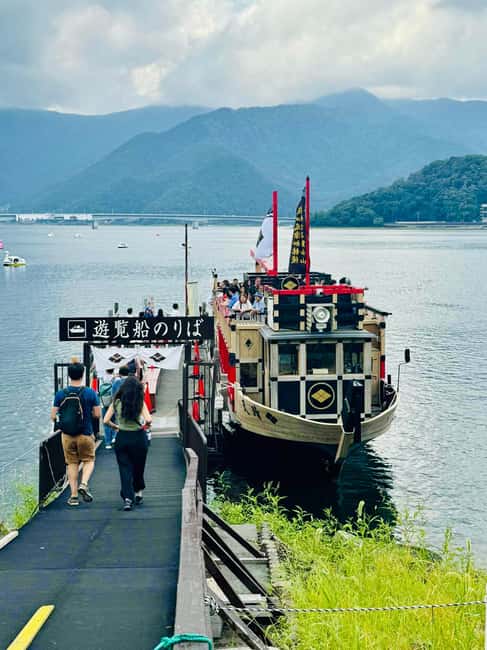
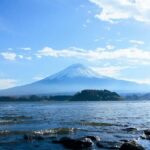
The final listed stop is a 40-minute cruise on Lake Kawaguchiko, the second-largest lake around Mount Fuji. After a long day of walking, the boat gives you a chance to sit down while the view changes around you.
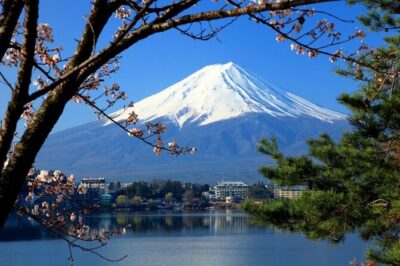
From the water, you see the lake’s surrounding slopes and have another chance to look toward Fuji. The cruise is valuable because it breaks up the sequence of roadside viewpoints. Instead of standing in one place and waiting for the mountain to appear, you move through the scene.
Again, visibility controls the experience. Fuji may be sharp and dramatic, partly covered, or hidden. The lake and surrounding views still provide something to look at, but you should not book this trip expecting a guaranteed clear mountain.
The cruise is included in the price, as are the listed entrance fees. Food and drinks are not included, so carry water and something to eat. The tour specifically recommends bringing food, drinks, and cash.
Transport, language, and the pace of the day
The route includes bus or coach transportation, with an initial transfer listed at about 30 minutes. The total activity lasts 10 hours, so you should expect a full day rather than a quick excursion.
The transport is one of the main reasons the $90 price can make sense. You avoid arranging separate rail, bus, shrine, park, and lake connections. You also have a guide moving the day along, which is useful when several stops have fixed opening or departure times.
One recent Spanish-speaking departure was led by Luis. His role appears to go beyond pointing out landmarks. He explained the history of each place, offered buying suggestions, and adjusted his pace for the group. Several Spanish-speaking bookings specifically praised his patience, explanations, and ability to make communication easy.
The activity runs in both Spanish and English. Confirm that you are joining the language departure you want, since the tour is conducted in both languages.
The schedule is efficient. You visit six main places, but none receives an entire afternoon. If you prefer long meals, quiet temple study, or extensive shopping, this may feel rushed. If you want a strong first look at the Fuji area without planning every connection, the pace is useful.
Weather, clothing, and what to carry
Mount Fuji weather can change quickly. Wear comfortable clothing and shoes, and bring sunscreen, water, and a camera. Layers are sensible because the temperature and wind can differ between viewpoints, streets, parks, and the lake.
The biggest practical issue is visibility. Clear skies are never promised, and the mountain can disappear even when the rest of the day looks pleasant. The tour still gives you shrines, gardens, town views, and a cruise, but Fuji is the reason most people book it.
Bring food or snacks because lunch is not included. You can also buy fruit, ice cream, and souvenirs at Oishi Park, but those purchases are personal expenses.
You may cancel up to 24 hours before departure for a full refund, and you can reserve now and pay later. That flexibility helps when your Tokyo plans depend on weather, though you should still check the available starting time before committing to a full day.
Who should book this Mount Fuji tour?
I would recommend it to you if this is your first visit to the Fuji area and you want more than one famous photograph. The route combines scenery, religious sites, local streets, gardens, and water views in one organized day.
It is especially useful for Spanish-speaking visitors who want detailed explanations in their own language. Luis has been singled out for his clear information and friendly, patient approach, which can make a major difference when the subject includes Japanese religious history and local traditions.
It also suits you if you prefer a planned day with transport included. The 92 percent perfect score for transport suggests that getting around is one of the tour’s stronger features.
I would hesitate if you dislike stairs, long days, or fixed schedules. The non-stair route to Chureito helps, but this remains a walking-heavy outing. I would also reconsider if your only goal is the fifth station, since the detailed stop list does not clearly show it as a separate visit.
Should you book it?
Book this tour if you want a well-packed introduction to Mount Fuji, especially with Spanish-language guiding. The strongest features are the variety of viewpoints, the cultural stops at Arakura and Kitaguchi Hongu, the included lake cruise, and the practical transport from Shinjuku.
Before paying, check the exact route for your date and bring clothes for changing weather. If you accept that clouds may hide Fuji and that the day moves at a steady pace, $90 is a sensible price for the amount of ground covered.
FAQ
Where does the Mount Fuji tour begin?
The meeting point is in front of the Robert Indiana Sculpture LOVE at 6-chōme-5-1 Nishishinjuku. The guide carries a JP Travelers sign and says Fuji tour in Spanish for the Spanish departure.
Where does the tour finish?
The tour finishes at 1-chōme-8-8 Nishishinjuku.
How long does the activity last?
The full activity lasts 10 hours. A bus or coach transfer at the beginning is listed as approximately 30 minutes.
Is the tour offered in Spanish?
Yes. The live tour guide languages are Spanish and English. The tour is conducted in both languages, so select the language you want when booking.
Is lunch included?
No. Lunch, snacks, drinks, and ice cream are not included. Bring food and water, and carry cash for purchases.
Is the Lake Kawaguchiko cruise included?
Yes. The cruise on Lake Kawaguchiko is included and lasts about 40 minutes.
How difficult is the walk to Chureito Pagoda?
The stair route includes about 400 steps, with 100 steps leading to the shrine and another 300 to the pagoda. A second route avoids the stairs by following a sloping path, and both routes reach the same place.
What happens if Mount Fuji is closed?
If Mount Fuji is closed or entry is not permitted for reasons beyond the operator’s control, the tour visits Kitaguchi Hongu Fuji Sengen Shrine instead.
Can I cancel the tour?
Yes. You can cancel up to 24 hours in advance for a full refund. The tour also offers reserve now and pay later booking.
More Full-Day in Fujiyoshida
More Mt Fuji Day Trips in Fujiyoshida
More tours in Fujiyoshida we've reviewed
Mt Fuji Day Trips, compared.
 ★ 5.0Mt Fuji and Hakone 1-Day Bus Tour Return by Bullet TrainFrom $163
 ★ 4.0Mt Fuji & Hakone Cruise, Drum Show Bullet Train 1 Day from TokyoFrom $149
 ★ 4.4Tokyo Mt Fuji 5th St & Hakone Cruise Bus Tour w/Bullet TrainFrom $15410 hours
 ★ 4.5From Tokyo: Mount Fuji Full-Day Sightseeing TripFrom $6810 hours
 ★ 4.7Tokyo: Mt. Fuji Tour, Hakone Ropeway, Owakudani, Lake AshiFrom $5410 hours
 ★ 4.4Tokyo:Mt.Fuji,Kawaguchiko Oishi Park,Arakurayama Sengen ParkFrom $5410 hours