
Reviewed · SHIBUYA TOURS
Tokyo Night Bike Tour: From Shibuya to Tokyo Tower via Roppongi
Tokyo looks different from a bicycle after dark. This two-hour ride links Tokyo Tower, Roppongi, Omotesando, and quiet Aoyama streets, giving you both the famous lights and corners that trains cannot reach.
I like the small maximum of six people, which makes it easier to stay together and ask questions. I also like the summer timing: an 8 p.m. start means cooler air and fewer daytime crowds. The main drawback is that you must be a confident city cyclist, riding at about 15 kilometers per hour through crossings and tight spaces.
- Tokyo after sunset: See illuminated streets, shopping districts, and Tokyo Tower without spending the whole evening underground.
- Small-group format: The tour accepts no more than six people, allowing for personal guidance and a calmer ride.
- A local guide: Taichi is frequently named as the guide, with English conversation and practical help on city streets.
- Less obvious stops: Aoyama Cemetery and Meiji Jingu Gaien add quiet, spacious stretches to the urban route.
- Simple inclusions: Your bicycle and helmet are supplied, but dinner is not.
- Cycling requirement: Bikes fit riders from 155 to 185 centimeters, and you should already be comfortable in traffic.
In This Review
- Why Tokyo Works So Well After Dark on Two Wheels
- Starting Near Yoyogi and Meiji Jingu Gaien
- Omotesando Shows Tokyo’s Polished Side
- Tokyo Tower Brings the Big View
- Roppongi Keyakizaka Dori and Roppongi at Night
- Azabujuban and Nishiazabu Add Neighborhood Texture
- Aoyama Cemetery Is the Quiet Surprise
- What the Small Group Changes
- Safety, Fitness, and Bike Fit
- Is the $56.01 Price Good Value?
- Practical Details Before You Book
- Who Should Book This Night Ride?
- Should You Book the Tokyo Night Bike Tour?
- FAQ
- How long is the Tokyo Night Bike Tour?
- What time does the tour start?
- Where does the tour begin?
- Where does the tour end?
- Are bicycles and helmets included?
- What height range suits the bicycles?
- Do I need to be an experienced cyclist?
- Is dinner included?
- What happens if the weather is poor?
Why Tokyo Works So Well After Dark on Two Wheels
Tokyo’s rail system is superb, but trains cannot show you every change in the city from one neighborhood to the next. On this ride, you move from the bright commercial side of Shibuya and Roppongi into quieter roads, leafy avenues, and places that are awkward to reach by public transport.
The route begins at Umayamichi Park, at 5-chome-24-11 Sendagaya. It is about 10 minutes from Shinjuku Station and one minute from Yoyogi Station, with the meeting point located near public transportation. The start time is 8 p.m., and the ride returns to the same place after roughly two hours.
That timing matters. Tokyo is still active at 8 p.m., but the worst heat and daytime foot traffic have eased. In summer, the moving air is a real benefit. You get a sightseeing outing that is physical without taking up half a day.
The pace is about 15 kilometers per hour. That is a normal cycling speed, but city riding demands more than simply knowing how to balance on a bike. You need to cross traffic lights confidently, ride on pavements where required, and handle crowded or narrow spaces without panic.
Starting Near Yoyogi and Meiji Jingu Gaien
The opening section takes you toward Meiji Jingu Gaien, a broad area known for its spacious avenues and calmer feel compared with central shopping streets. At night, this part of the ride gives you room to settle into the bike before the route moves into denser districts.
Meiji Jingu Gaien is one of the useful contrasts built into the tour. Tokyo is often presented as a wall of signs and people, but this ride lets you see how quickly the city changes. You may pass from commercial streets into a more open setting within a short distance.
I would pay attention during this early section to your guide’s instructions and the riding line. The group is small, but you still need to remain alert. This is not a slow pedal through a park. It is a guided city ride.
A few more Tokyo tours and experiences worth a look
Omotesando Shows Tokyo’s Polished Side
The route continues through Omotesando, one of Tokyo’s best-known shopping areas. Its broad streets, fashion shops, and carefully designed storefronts give the ride a more polished urban character.
At night, you can take in the architecture and shop lighting without stopping at every block. Cycling also lets you cover more ground than walking while staying close enough to notice side streets and changes in the neighborhood.
This is a good point in the route for the guide’s local commentary. Taichi is described as fluent in English, easy to follow, and generous with cultural information. The experience is not just a ride between landmarks. You can ask questions as you go, which helps connect the districts into a clearer picture of Tokyo.
The tradeoff is that cycling does not allow unlimited sightseeing stops. You will see a great deal, but the tour is designed to keep moving. If you want extended shopping time or detailed visits inside buildings, plan those separately.
Tokyo Tower Brings the Big View
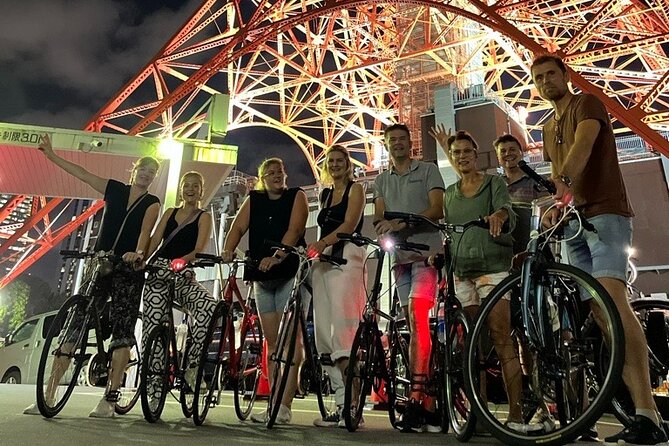
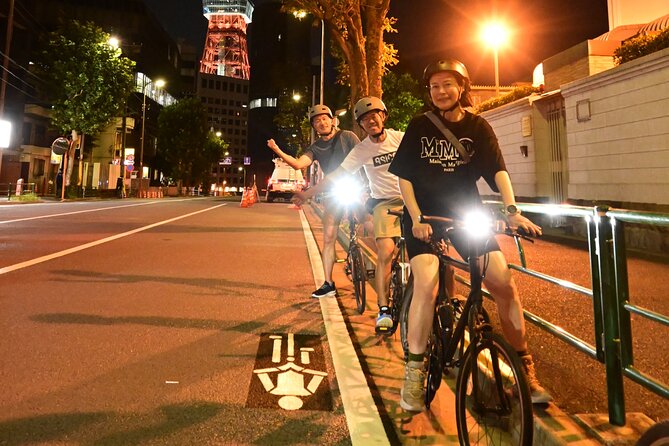
Tokyo Tower is the route’s most recognizable sight and one of its strongest visual moments. Seeing the orange-red structure lit against the night sky gives you the classic Tokyo image, but arriving by bicycle makes the approach part of the experience.
The tour does not function as a tower admission visit. Your time is spent cycling around the city and stopping at selected areas, so you should not expect to go up Tokyo Tower or spend a long period inside the grounds unless the guide’s timing allows a brief pause.
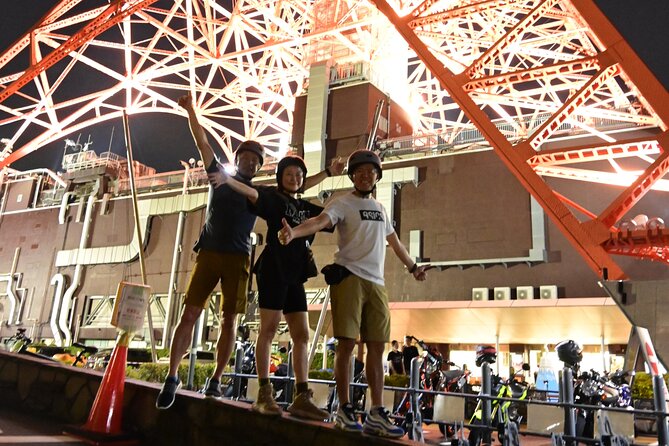
Still, this stop gives the ride a clear anchor. After smaller streets and neighborhood roads, Tokyo Tower reminds you just how large the city is. It is also one of the better places for photographs, and the guide may help with pictures. One rider specifically appreciated being photographed at good spots along the way.
Roppongi Keyakizaka Dori and Roppongi at Night
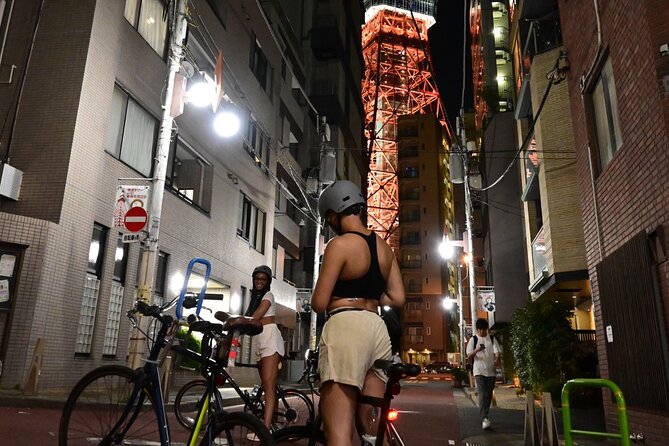
From Tokyo Tower, the ride heads toward Roppongi Keyakizaka Dori and Roppongi. This section brings you back into Tokyo’s late-night energy, with restaurants, bars, and bright streets forming a sharp contrast to Meiji Jingu Gaien and the cemetery later in the route.
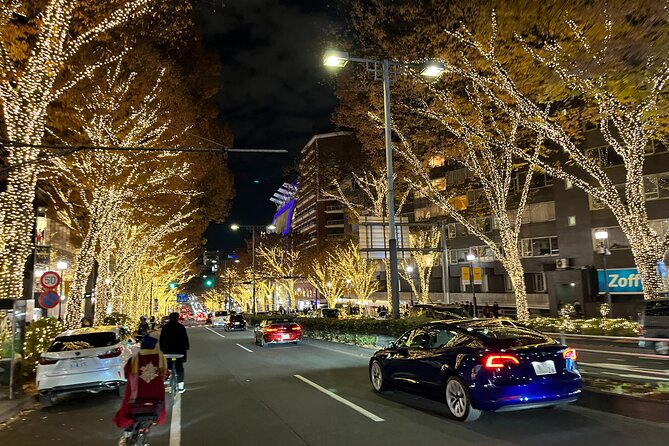
Keyakizaka Dori is particularly appealing during the holiday season, when its lighting can be a major attraction, though the supplied details do not promise seasonal decorations on every departure. In any case, the area offers the kind of illuminated city scenery that makes an evening bike ride worthwhile.
Roppongi is also where the ride can feel most urban and demanding. You may be sharing the road with more traffic and people, so the 15-kilometer-per-hour pace and your ability to follow the guide matter. The benefit is that you see a district famous for nightlife without being confined to one station exit or main avenue.
This is one reason I prefer the tour to a standard night bus outing. You are not simply looking at Tokyo through glass. You are moving through it, with the sounds, air, and changing street scale around you.
Azabujuban and Nishiazabu Add Neighborhood Texture
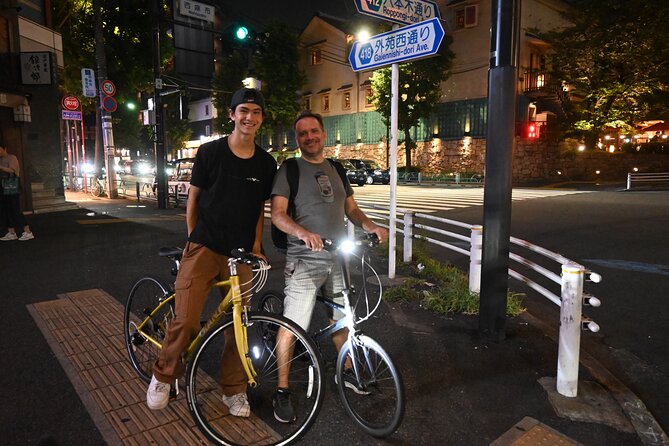
Azabujuban and Nishiazabu show a quieter side of the same general area. These neighborhoods are associated with restaurants and local streets rather than one huge headline sight, so they help fill in the spaces between Tokyo’s famous names.
A guide is especially useful here. Without local direction, you might pass through without knowing why one street feels different from the next. The route is designed to show you areas beyond the standard sightseeing circuit, while the guide keeps you from wasting time on wrong turns.
The two-hour length keeps this section moving. You get an overview rather than an exhaustive neighborhood tour. I would treat the ride as a way to decide where you might return later for a meal or an evening walk, not as a substitute for spending a full night in each district.
Remember to eat before departure. There is no dinner stop, and the tour is active enough that hunger could make the final stretch less enjoyable. A small snack is allowed if you want to bring one.
A few more Tokyo tours and experiences worth a look



Aoyama Cemetery Is the Quiet Surprise
Aoyama Cemetery is perhaps the most unusual stop on the route. A cemetery may not be the first place you associate with Tokyo nightlife, but its quieter roads offer a welcome pause after the bright streets of Roppongi and Omotesando.
At night, the setting is atmospheric and subdued. You should approach it respectfully, and you should not expect a conventional attraction with displays or formal sightseeing facilities. Its value is the change of mood and the chance to see a part of central Tokyo that public transport does not put directly in front of you.
This stop also shows the range of the tour. In two hours, you can see shopping streets, nightlife districts, a major tower, open avenues, and a cemetery. The variety is more useful than simply ticking off several famous addresses.
What the Small Group Changes
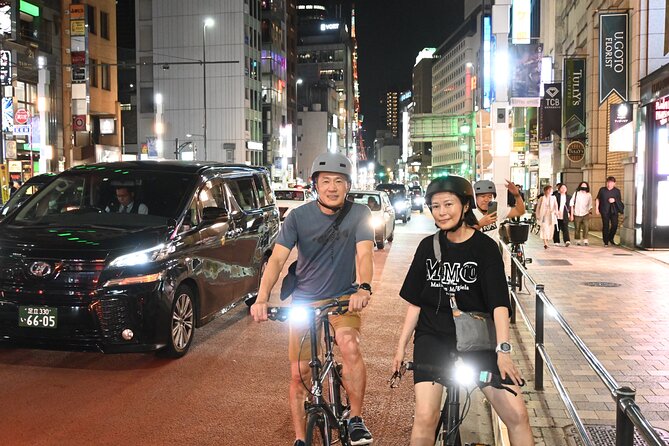
The maximum group size is six. That is a meaningful advantage on a bicycle tour, where a large line of riders can become awkward at traffic lights and intersections.
With a small group, you should find it easier to hear the guide, stay near the front, and ask questions. The guide can also keep a closer eye on the group’s pace. This is particularly helpful for a first visit to Tokyo, when unfamiliar crossings and narrow spaces can add stress.
Taichi is the guide most often identified with this experience. The strongest praise centers on his friendly manner, clear English, cultural conversation, route planning, and attention to safety. One account also names Ikeda, so the guide may vary by departure. You can expect a personal guide, but you should not assume Taichi will lead every single outing.
The ride has also worked for different types of groups, including a solo woman, a family with a 15-year-old grandson, and couples or small groups. That does not remove the cycling requirement. It simply suggests that the experience can suit solo riders and families if everyone can manage the pace and street conditions.
Safety, Fitness, and Bike Fit
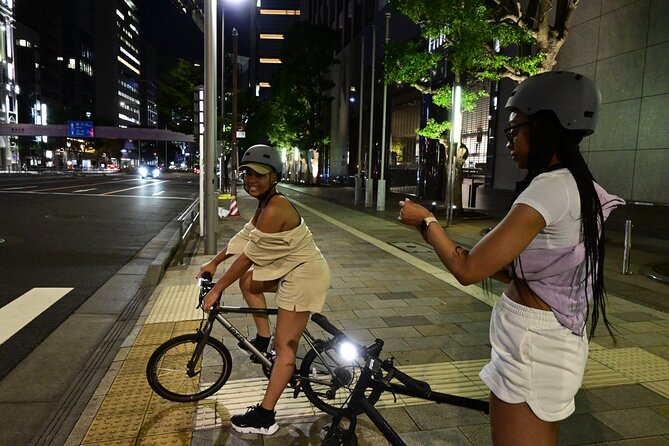
You receive a bicycle and helmet. The supplied bikes are suitable for riders from 155 to 185 centimeters tall. If you fall outside that range, you should check with COG EXPLORER JAPAN before booking rather than assume an adjustment is possible.
You should already be proficient at cycling. The tour expects you to ride on pavements, cross traffic lights with confidence, and pass through crowded or tight areas. This is not the place to relearn basic bike handling.
The ride is described as safe and organized, but safety depends on your own comfort as well as the guide’s planning. If you dislike traffic, have trouble riding in a straight line while looking around, or cannot maintain 15 kilometers per hour, choose a walking tour instead.
Wear clothing suited to movement and bring water. These are practical choices for any two-hour ride, especially in warm weather. The available information confirms that the tour proceeds in light rain, but sudden weather changes can cause cancellation.
Is the $56.01 Price Good Value?
At $56.01 per person, the tour costs more than renting a bicycle and wandering without a plan. The difference is the route, the supplied helmet, the guide, and the ability to cover several districts in a short evening.
For a first Tokyo visit, that can be good value. You see areas near Shibuya, Tokyo Tower, Roppongi, Aoyama, and Azabujuban without working out the safest or most efficient route yourself. You also gain local explanations and help with navigation.
The price is less attractive if you are already an experienced Tokyo cyclist and mainly want an inexpensive bike rental. It also does not include dinner, so budget for a meal before the start or carry a snack.
Group discounts are available, though groups of four or more are asked to contact the organizer directly. With a maximum of six people, the tour keeps its small-scale feel even when booked by a larger family or friend group.
Practical Details Before You Book
The tour is booked, on average, six days ahead, so I would not leave it until the last night of a short Tokyo stay. The confirmation arrives at booking, and the activity begins and ends at Umayamichi Park.
Free cancellation is available if you cancel at least 24 hours before the 8 p.m. start time. Changes or cancellations inside that window are not accepted for a refund. If poor weather cancels the ride, you are offered another date or a full refund.
The tour has a maximum of six people and is near public transportation. Most people can participate, but the cycling rules are important enough to repeat: you need the correct height range, steady city-riding skills, and confidence at the stated pace.
Who Should Book This Night Ride?
I would choose this for an active first-time visitor who wants an overview of western and central Tokyo without spending the whole evening in stations. It is also a good fit for someone who has already seen the major daytime sights and wants a different look at familiar districts.
Solo visitors may appreciate the company and guide support. Families can enjoy it if younger riders are strong enough for the pace. The ride also suits anyone who likes local streets, neighborhood changes, and short photo stops more than long museum visits.
I would skip it if you want a relaxed, stop-and-start sightseeing experience, a full meal included, or a detailed visit to Tokyo Tower. I would also skip it if you are not comfortable cycling in traffic or through narrow spaces.
Should You Book the Tokyo Night Bike Tour?
Book it if you want Tokyo in motion. The route gives you famous sights such as Tokyo Tower and Roppongi, but its real strength is the connection between them: Omotesando’s polished streets, Meiji Jingu Gaien’s open space, Aoyama Cemetery’s quiet roads, and the smaller districts around Azabujuban and Nishiazabu.
The combination of a small group, supplied equipment, a central start, and a guide such as Taichi makes the $56.01 fare reasonable for many first-time visitors. Just eat beforehand, confirm your bike fit, and be honest about your cycling ability. If those points suit you, this is a lively and practical way to see Tokyo after dark.
FAQ
How long is the Tokyo Night Bike Tour?
The tour lasts approximately two hours.
What time does the tour start?
The tour starts at 8 p.m.
Where does the tour begin?
It begins at Umayamichi Park, 5-chome-24-11 Sendagaya, Shibuya, Tokyo 151-0051, Japan.
Where does the tour end?
The activity ends back at the meeting point.
Are bicycles and helmets included?
Yes. The tour includes use of a bicycle and helmet.
What height range suits the bicycles?
The bicycles are suitable for people between 155 and 185 centimeters tall.
Do I need to be an experienced cyclist?
You should be proficient at riding on pavements, crossing traffic lights confidently, and cycling through crowded or tight spaces. The group travels at approximately 15 kilometers per hour.
Is dinner included?
No. The tour does not stop for dinner, so eat before the ride or bring a snack.
What happens if the weather is poor?
The tour can proceed in light rain, but sudden weather changes may cause cancellation. If the activity is canceled because of poor weather, you are offered a different date or a full refund.
More Cycling Tours in Tokyo

More Night Tours in Tokyo
More Shibuya Tours in Tokyo


More tours in Tokyo we've reviewed




Shibuya Tours, compared.
 ★ 5.0Official Street Go-Kart in ShibuyaFrom $76
 ★ 4.9Tokyo: Street Kart Experience in ShibuyaFrom $741 hour
 ★ 5.0Shibuya Meltdown Nightlife Tour: All-You-Can-Drink Bar HoppingFrom $106
 ★ 5.0Shibuya Official Street Go-Kart in Shibuya AnnexFrom $69
 ★ 5.0Tokyo: Shibuya Food Tour (13 dishes and 4 Eateries)From $77
 ★ 5.0Best of Shibuya Food TourFrom $217