
Reviewed · WORKSHOPS
Tsumami Zaiku Japanese Fabric Flower Class
The unusual pleasure here is that you do not simply assemble a ready-made craft. You dye the silk yourself, then pinch and glue those small pieces into a traditional tsumami zaiku flower brooch. You also get a taste of Japanese washi paper folding and dyeing.
I like the tiny class size, with no more than four people, and the patient pace that lets you learn without feeling hurried. I also like the setting in Nihonbashi, where an easy-to-reach Tokyo workshop connects you with a craft linked to the Edo period. The main consideration is the price: at $105.68 per person, this is not a cheap souvenir activity, though the hands-on instruction and finished work make it more worthwhile than a simple craft demonstration.
In This Review
- Key points to know before you book
- Why this two-hour class feels different
- Arriving at somenova in Nihonbashi
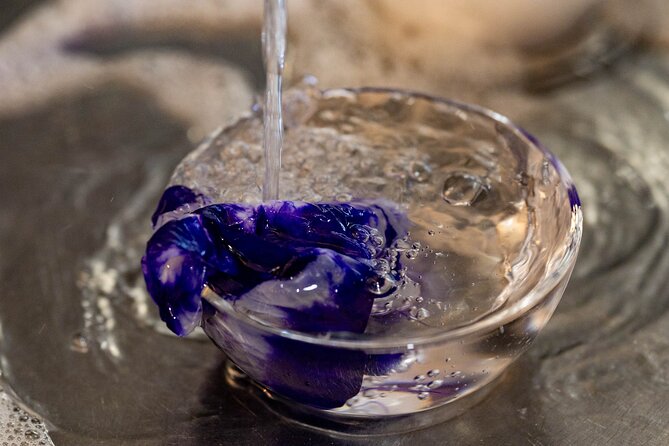
- Choosing color and dyeing the silk
- Pinching silk into a flower brooch
- The extra washi paper activity
- What the instruction is like
- Is $105.68 a fair price?
- Who should book this experience
- Booking, cancellation, and practical planning
- Should you book the tsumami zaiku class?
- FAQ
- Where does the tsumami zaiku class take place?
- What time does the class start?
- How long does the workshop last?
- What will I make during the class?
- Will I dye the fabric myself?
- Is Japanese washi paper included?
- How many people can join the class?
- Can I cancel for a full refund?
Key points to know before you book
- You dye your own silk: Choose one color and try both speckled dyeing and dip-dyeing.
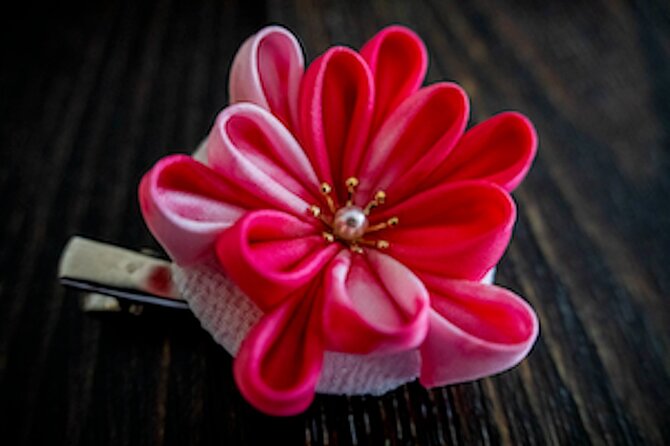
- You make a flower brooch: Pinched silk petals are glued together into a piece inspired by a traditional kanzashi hair ornament.
- You also work with washi: Folding and dyeing Japanese paper adds a second craft to the session.
- The class is limited to four people: This gives the instructor room to guide each participant closely.
- The workshop lasts about two hours: It is short enough to fit into a Tokyo sightseeing day.
- The start time is fixed: Plan to arrive for the 1:00 pm session at somenova in Nihonbashi.
Why this two-hour class feels different
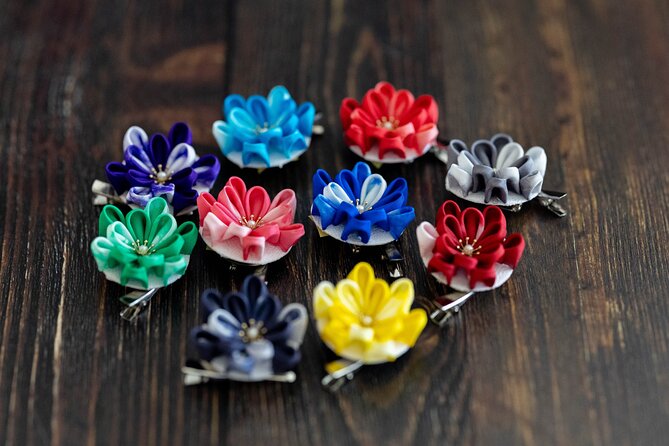
Many craft activities let you decorate or assemble something that has already been prepared. This one takes you closer to the actual making process. You begin with small pieces of silk and work through the color and shape decisions yourself.
That matters because tsumami zaiku is not just a pretty flower-making pastime. It is a traditional Japanese craft handed down from the Edo period. The technique uses small fabric pieces that are folded, pinched, and joined to form flowers, leaves, and other decorative shapes. These pieces were traditionally used for kanzashi, the ornamental hair accessories worn with Japanese hairstyles.
You will not become a professional artisan in two hours. That is not the point. You get a compact lesson in how patient handwork turns a small square of cloth into a recognizable flower. The finished brooch gives you something useful to take home, but the real value is understanding the steps behind it.
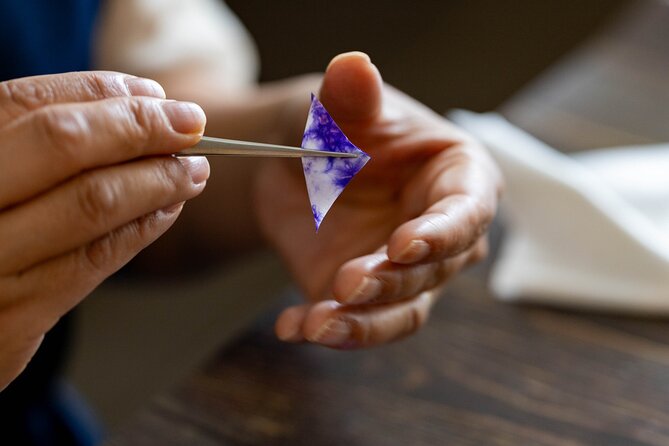
The workshop also includes dyeing, which makes it more unusual. The silk is not simply handed to you in finished colors. You choose one color and try two methods: speckled dyeing and dip-dyeing. The results can have different patterns and coverage, so your fabric begins to feel personal before you even start shaping it.
A few more Tokyo tours and experiences worth a look



Arriving at somenova in Nihonbashi
The class meets at somenova, also identified as a dyeing experience space, at 147 Nihonbashikobunacho, Chuo City, Tokyo 103-0024. The workshop is on the fifth floor, and the activity ends at the same meeting point.
Nihonbashi is a practical location for this kind of class. It is near public transportation and easy to combine with other time in central Tokyo. Since the start is at 1:00 pm, you can plan a morning elsewhere and then head to the workshop after lunch. The fixed start makes timing important, so give yourself enough time to find the building and reach the fifth floor.
This is not a guided walk through Nihonbashi. The neighborhood is mainly your setting and starting point, not part of the teaching program. You should arrive ready to begin the craft rather than expecting sightseeing between stages.
The mobile ticket is useful for keeping the reservation on your phone. Confirmation is sent within 48 hours of booking, subject to availability. Because the class is limited to four people and is often booked about 56 days ahead, I would reserve early if your Tokyo dates are fixed.
Choosing color and dyeing the silk
The first creative decision is your color. You choose one color, then use two different dyeing techniques.
Speckled dyeing gives the cloth a spotted or irregular effect. Dip-dyeing lets you place the fabric into the dye and create a different kind of coverage. The precise final pattern will depend on how the dye meets the cloth, so this is not a perfectly predictable factory process. That small amount of uncertainty is part of the appeal.
I like this stage because it gives you a better sense of traditional textile work than simply selecting from a tray of prepared materials. You can see how color becomes part of the craft before the fabric is folded into petals.
It also means you should not expect every finished flower to look identical. Your choices and handling affect the cloth. That is good news if you want a personal keepsake, but less ideal if you are hoping for a perfectly uniform result.
The materials are connected to a dye store with more than 100 years of history. You are not just using generic craft-store supplies. The workshop presents dyeing as part of the older working method, while keeping the session short enough for a first-time participant.
Pinching silk into a flower brooch
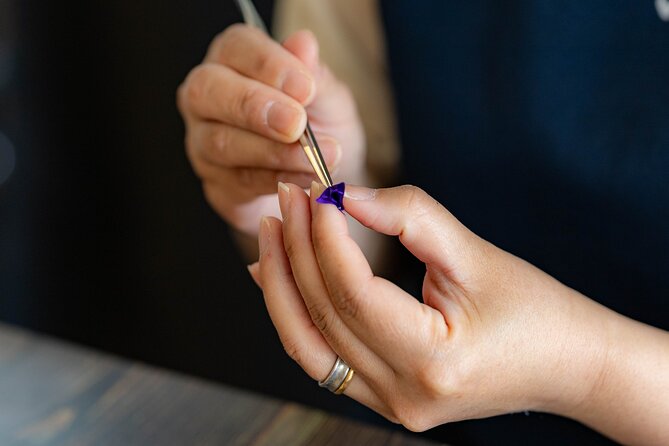
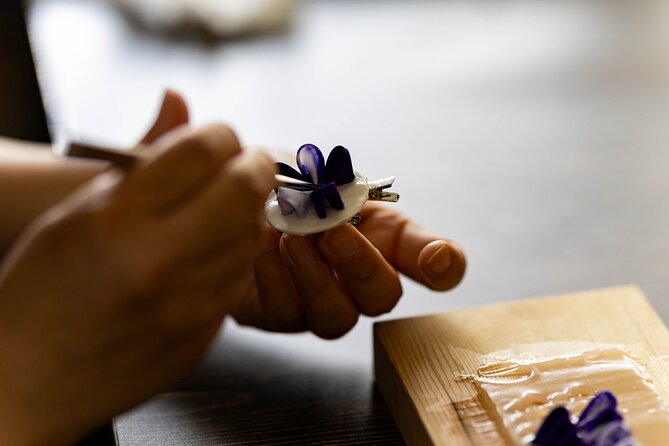
After dyeing, you separate the silk cloth into small pieces. Under professional instruction, you fold, pinch, and glue those pieces together to make a flower-shaped brooch.
This is the point where the craft’s name becomes clear. Tsumami refers to the act of pinching the fabric. Small pieces become petals through repeated folds and careful pressure. It sounds simple, but neat shapes require attention, which is why hands-on guidance matters.
The class has a maximum of four participants. That is a real advantage here. You are working with small fabric pieces and precise movements, so you may need help with the folds, the glue, or the arrangement. A crowded room would make this kind of lesson harder to follow.
The finished item is a brooch, though the form comes from kanzashi hair ornaments. That makes it easier to use as a modern souvenir. You can wear or display it without needing a traditional Japanese hairstyle or special occasion.
One especially useful feature is the pace. The session is designed to take about two hours, and the instruction is meant to be clear and patient rather than rushed. You learn enough of the method to understand the work and make your own piece, but you are not signing up for a full artisan course.
The extra washi paper activity
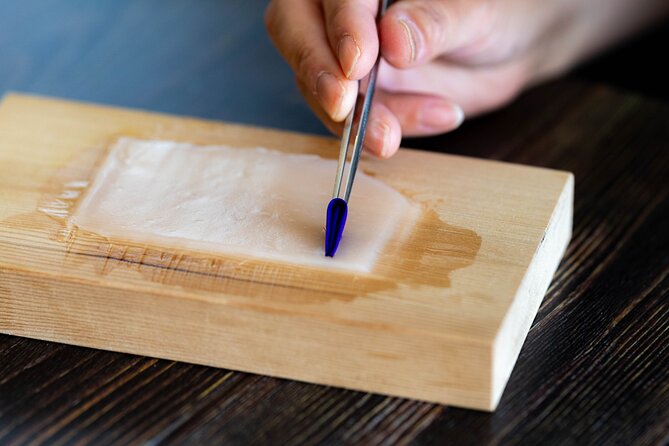
The class also includes folding and dyeing Japanese washi paper. This gives you a second material and a second approach to Japanese decorative craft.
The washi portion is valuable because it breaks up the silk work. You are not spending the full session on one series of tiny folds. It also shows how color and form can be handled differently in paper than in silk.
The available details do not specify the exact paper object you will complete, so you should think of this as an additional folding and dyeing experience rather than a promised second finished souvenir. The main completed project is the flower brooch.
For anyone interested in Japanese materials, this part adds useful variety. Silk is soft and flexible. Washi has a different feel and responds differently to folding and dye. Experiencing both in one short class gives you a broader taste of traditional making than a single-material workshop.




What the instruction is like
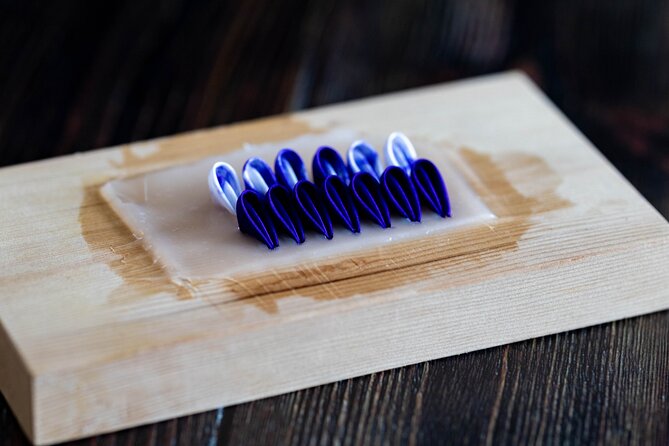
Professional guidance is built into the experience. You are shown how to dye, how to separate the cloth, and how to pinch and glue it into shape. The small group allows the instructor to watch your progress and help when a fold does not behave.
There are no guide names provided for this class, so you should not expect a named personal host as part of the booking information. The important practical point is that the instruction comes from people familiar with the craft, not from a self-guided kit.
A past participant particularly valued the gracious teaching, patient explanations, and comfortable pace. That matches what this workshop needs. Tsumami zaiku is delicate work, and a hurried teacher could turn a pleasant activity into a frustrating one.
You should still bring a little patience of your own. Pinching tiny cloth sections and attaching them with glue takes concentration. If you want a fast, high-energy activity, this may feel too quiet. If you enjoy careful handwork, the pace should suit you well.
The class is open to most participants, and service animals are allowed. The provided information does not list specific age guidance or detailed mobility information, so contact the provider if you need help with those points before booking.
Is $105.68 a fair price?
At $105.68 per person, the class costs more than a casual souvenir-making session. The price makes more sense when you consider what is included: professional instruction, silk dyeing, two dye methods, tsumami construction, a finished flower brooch, and Japanese washi folding and dyeing.
You are also paying for a very small group. With a maximum of four people, the experience is closer to a private or semi-private lesson than a large group demonstration. That matters when the work involves tiny folds and precise gluing.
The strongest value is for someone who wants an authentic process, not just an object. If your main goal is to buy an inexpensive flower accessory, shops in Tokyo will offer simpler choices. If you want to understand how the piece is made and leave with something you helped create from the first stages, the cost is easier to justify.
The workshop is also a good use of a short afternoon. At about two hours, it does not consume a full day of sightseeing. The fixed 1:00 pm start does limit your flexibility, but it also makes the class easy to place between other Tokyo plans.
Who should book this experience
I would recommend this class to anyone who enjoys making things by hand, especially visitors interested in Japanese textiles, paper, fashion, or traditional arts. It suits solo visitors, couples, and small groups who prefer a calm activity with direct instruction.
It is also a good choice if you want a souvenir with a story. You select the color, dye the cloth, and shape the flower. The finished brooch is linked to the older kanzashi tradition, but it works as a contemporary keepsake.
Families and mixed groups may also find it approachable because the class is short and most people can participate. Still, the activity involves small pieces and careful pinching, so it is better for anyone who can comfortably follow detailed handwork.
I would be more cautious about booking if you dislike crafts, have very limited time around the 1:00 pm start, or expect a broad cultural tour with several stops. This is a focused workshop. Its strength is concentration, not variety in sightseeing.
Booking, cancellation, and practical planning
Reserve ahead if possible. The experience is often booked about 56 days in advance, and the maximum of four participants means spaces can be limited.
You receive confirmation within 48 hours of booking, subject to availability. The mobile ticket makes it easy to keep your booking information with you, but you still need to reach the fifth-floor meeting space at somenova on time.
Free cancellation is available if you cancel at least 24 hours before the local start time. Cancellations or changes made less than 24 hours before the 1:00 pm session are not accepted for a refund. That policy is reasonable for a very small class, but it means you should avoid booking the workshop before your Tokyo schedule is settled.
Should you book the tsumami zaiku class?
Book it if you want a small, hands-on look at Japanese craft rather than a quick craft souvenir. The combination of dyeing, pinching, gluing, and washi work gives you more than one simple activity, while the two-hour format leaves room for the rest of your Tokyo day.
The best reasons to choose it are the maximum group size of four, the chance to dye your own silk, and the patient instruction that helps beginners finish a real flower brooch. The price is the main hurdle, but it can be fair for visitors who value close teaching and an item made through their own work.
Skip it if you want a low-cost purchase, a sightseeing tour, or a completely relaxed activity with no small-scale handwork. For the right person, though, this is a thoughtful way to spend an afternoon in Nihonbashi and take home a piece of Japanese craft that you shaped yourself.
FAQ
Where does the tsumami zaiku class take place?
The class takes place at somenova, a dyeing experience space at 147 Nihonbashikobunacho, Chuo City, Tokyo 103-0024. The workshop is on the fifth floor.
What time does the class start?
The class starts at 1:00 pm.
How long does the workshop last?
The workshop lasts approximately two hours.
What will I make during the class?
You will make a flower-shaped brooch from dyed silk. The design is based on tsumami zaiku, a craft traditionally used for kanzashi hair ornaments.
Will I dye the fabric myself?
Yes. You choose one color and try both speckled dyeing and dip-dyeing before using the cloth to make the brooch.
Is Japanese washi paper included?
Yes. The workshop includes an experience of folding and dyeing Japanese washi paper.
How many people can join the class?
The activity has a maximum of four participants.
Can I cancel for a full refund?
Yes, if you cancel at least 24 hours before the experience start time. Cancellations or changes made less than 24 hours before the start are not accepted for a refund.
More Workshops & Classes in Tokyo

More tours in Tokyo we've reviewed









Workshops, compared.
 ★ 5.0Sushi Making Tokyo Roll and Authentic Japanese Sushi ClassFrom $59
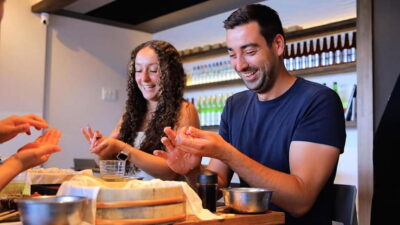 ★ 4.9Tokyo: Roll and Authentic Sushi Making Class in AsakusaFrom $581h 40m
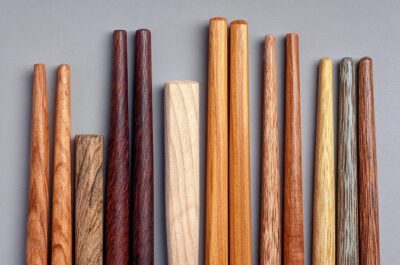 ★ 5.0Tokyo Shinjuku Chopsticks Making ClassFrom $20
 ★ 4.9Tokyo: Sushi Making Class in a Happi Coat near a Famous SpotFrom $421h 30m
 ★ 4.8Chopstick Making Workshop in GinzaFrom $251 hour
 ★ 5.0Tokyo Sushi Making Class in Tsukiji with Professional ChefFrom $49