
Reviewed · TSUKIJI MARKET TOURS
Tokyo: Private Tsukiji Street Food & Sake with Local Guide
Tsukiji is at its best when you eat your way through it, and this tour gives you a useful guide through the market’s maze of smells, stalls, and small bites. You begin at the unusual Tsukiji Hongwanji Temple, then move into the Outer Market for wagyu, tamagoyaki, teas, beans, dashi, sake, and scallops.
I like the way the food stops cover several sides of Japanese cooking, from a charcoal-grilled beef skewer to the gentle flavor of dashi broth. I also like that the sake tasting is a real flight, with three types plus a special selection, rather than one quick sample poured at the end.
The main thing to consider is pace. Two hours passes quickly, and the tour includes walking, tasting, temple sightseeing, and a sake lesson. If you want time to shop or add many extra snacks, you will need to return to Tsukiji on your own.
In This Review
- Key points at a glance
- Why Tsukiji works so well for a food walk
- Tsukiji Hongwanji: an unexpected first stop
- Wagyu and tamagoyaki in the Outer Market
- Tea, beans, peanuts, and the taste of dashi
- The sake flight and baby scallops
- What the two-hour timing really means
- Who gets the most from this Tsukiji experience
- Price, flexibility, and simple planning tips
- Should you book it?
- FAQ
- Where does the tour meet?
- How long does the experience last?
- What food is included?
- How many sake samples are included?
- Is the sake tasting included in the $99 price?
- Do I need identification?
- Is transportation included?
- Can I buy additional food at Tsukiji?
- What happens if it rains?
Key points at a glance
- Start with striking architecture: Visit Tsukiji Hongwanji, a temple with Indian-inspired stone details, animal carvings, and stained glass.
- Taste two classic market bites: Your price includes one charcoal-grilled wagyu skewer and one portion of dashi-seasoned tamagoyaki.
- Pause at a century-old specialty shop: Sample chilled Japanese teas, black beans, peanuts, and dashi broth.
- Compare four sake pours: The guided tasting includes three sake types and one special selection, paired with baby scallops.
- Use the guide to cut through the confusion: English and Japanese support helps you understand which tastings are included and how the market works.
- Plan for a compact visit: The tour lasts about two hours, with roughly 20 minutes at the temple and 100 minutes in the Outer Market.
Why Tsukiji works so well for a food walk
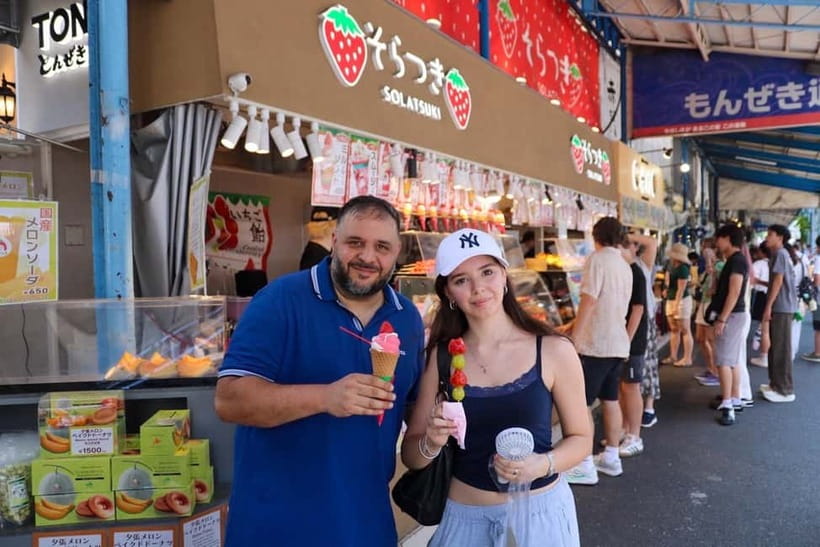
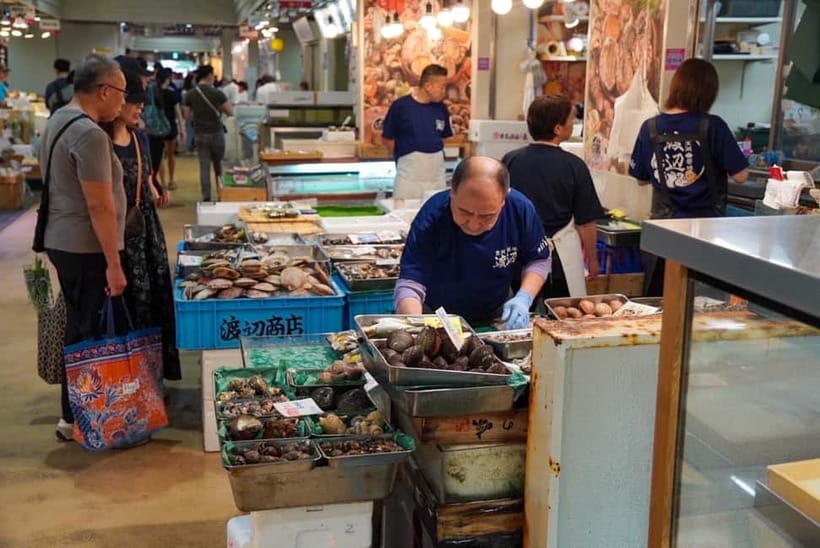
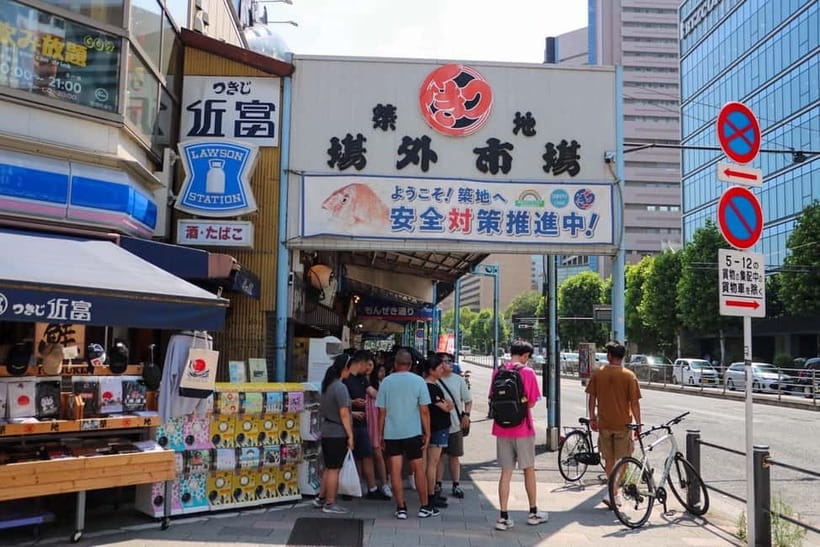
Tsukiji Outer Market is not the wholesale fish market it once was. That operation moved to Toyosu, but Tsukiji’s network of food shops, counters, stalls, and specialty stores remains in place. The move is an important part of the story you hear on this walk, since it explains why Tsukiji feels both historic and current.
You are not simply checking off a famous Tokyo address. You are seeing how a market district adapts after a major change. The Outer Market still gives you the chance to watch food being prepared close to the street, but it also rewards a bit of guidance. There are many choices, and the short tour helps you spend your time on the included tastings rather than guessing where to go.
The tour costs $99 per person. That is not cheap for a two-hour activity, but the price includes several separate food experiences: a wagyu skewer, tamagoyaki, tea, black beans, peanuts, dashi, and a four-part sake tasting with scallops. The value is strongest if you want an organized introduction and plan to sample drinks and foods that could cost extra when ordered separately.
You should still bring some cash. Extra snacks, drinks, and market purchases are not included, and the tour price does not cover transportation to or from the meeting point.
A few more Tokyo tours and experiences worth a look

Tsukiji Hongwanji: an unexpected first stop
Meet your guide in front of the main gate of Tsukiji Hongwanji Temple. Look for a person holding a smartphone showing AlvaJapan. This is a simple meeting point, but give yourself enough time to find the main gate without rushing.
The temple stop lasts about 20 minutes. Its appearance is one of the more unusual parts of the experience. Instead of looking like the classic wooden temple many people picture from Kyoto, Tsukiji Hongwanji uses Indian-inspired stone architecture alongside Japanese Buddhist purpose. Animal carvings and stained glass add to the mix.
The building’s past also gives the guide something worthwhile to explain. A major fire in the Meiji era led to its reconstruction, and the result is a landmark that does not fit neatly into one visual category. This is a short introduction, not a full temple visit, so you should treat it as context for the market walk rather than the main event.
I like this opening because it gives you a pause before the food stops begin. You get a little architecture, local history, and orientation, then move into the market with a better sense of place. If your main goal is eating, the temple may feel like a brief detour. If you appreciate unusual buildings, it adds welcome variety.
Wagyu and tamagoyaki in the Outer Market
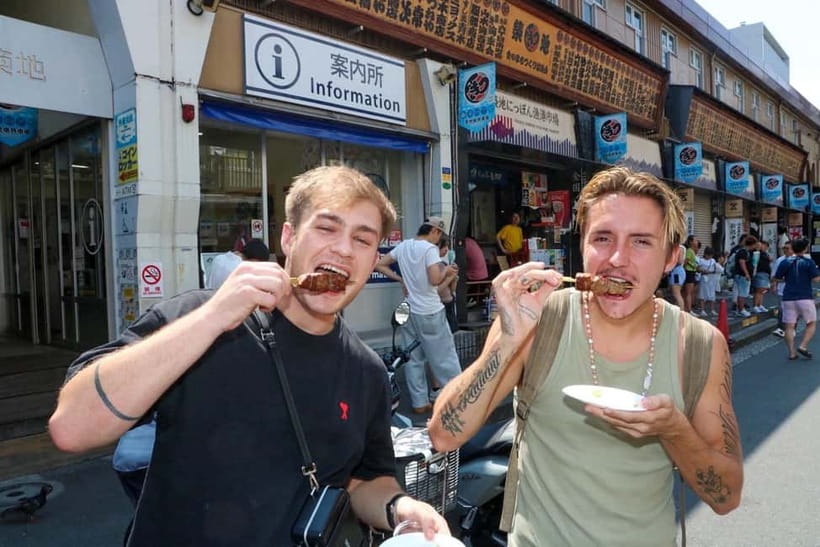
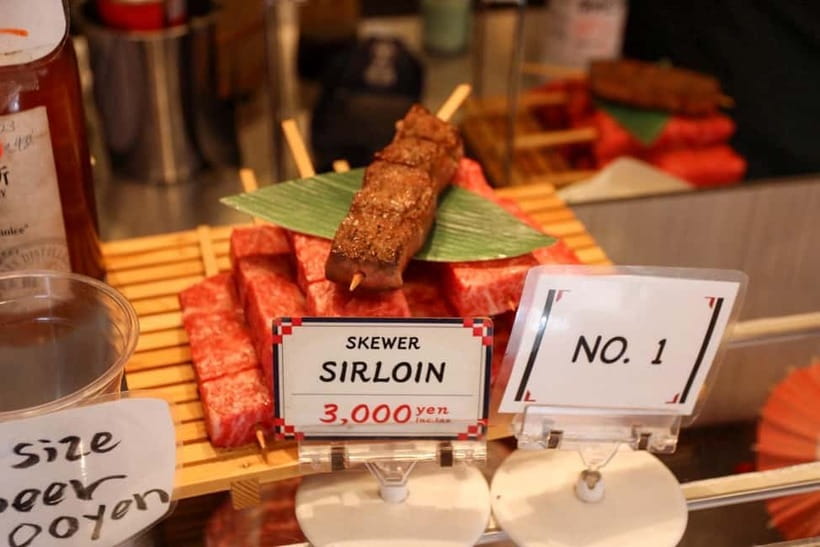
The market section takes about 100 minutes, including sightseeing, guided walking, tasting, and time around the stalls. Your first major food stop features one wagyu beef skewer and one portion of tamagoyaki, both included in the price.
The wagyu is charcoal-grilled, so you can expect the appeal to come from the cooking method as much as the beef itself. A skewer is a small portion, not a full meal, but it lets you taste a prized ingredient without committing to a large dish. The charcoal aroma also fits the market setting better than a formal restaurant meal would.
Tamagoyaki is the soft Japanese rolled omelet often seasoned with dashi. Here, the focus is on a fluffy texture and savory flavor. It makes a nice contrast with the beef: one bite is smoky and meaty, the other is light, tender, and gently seasoned.
This is where a guide earns their keep. The market can be crowded, and the tour is designed to steer you away from random choices and toward selected stops. You also avoid the awkwardness of trying to explain dietary concerns without much Japanese. One recent booking included two guides for one person, with the team asking about food restrictions and shaping the experience around personal preferences.
There is one practical point to keep clear. A small criticism raised in the feedback was that the guides did not make it fully clear which market food was included. Ask at the start which items are covered. That removes confusion and lets you budget for anything else that catches your eye.
Tea, beans, peanuts, and the taste of dashi
After the market’s louder food stops, the tour moves to a specialty store that has served customers for more than 100 years. This 20-minute pause changes the rhythm. Instead of eating something hot from a grill, you sample products tied to everyday Japanese cooking and snacking.
The tea tasting features chilled traditional Japanese teas. Cold tea is a useful choice in Tokyo’s warmer months, and the tasting gives you a chance to compare the drink with the stronger flavors from the market. You also sample black beans and peanuts, two modest foods that help show the range of a specialty shop.
Dashi broth is the key savory note here. Dashi forms the base of many Japanese dishes, including the seasoning that gives tamagoyaki its gentle depth. Tasting it on its own helps you recognize a flavor that can otherwise disappear inside soups, omelets, and sauces.
I like this stop because it avoids turning the tour into a parade of expensive bites. Food culture is also about pantry staples, long-running shops, and small tastes that locals recognize. The store provides a calmer setting amid the market activity, though anyone expecting another large serving should adjust their expectations. These are samples, not a second lunch.
The sake flight and baby scallops
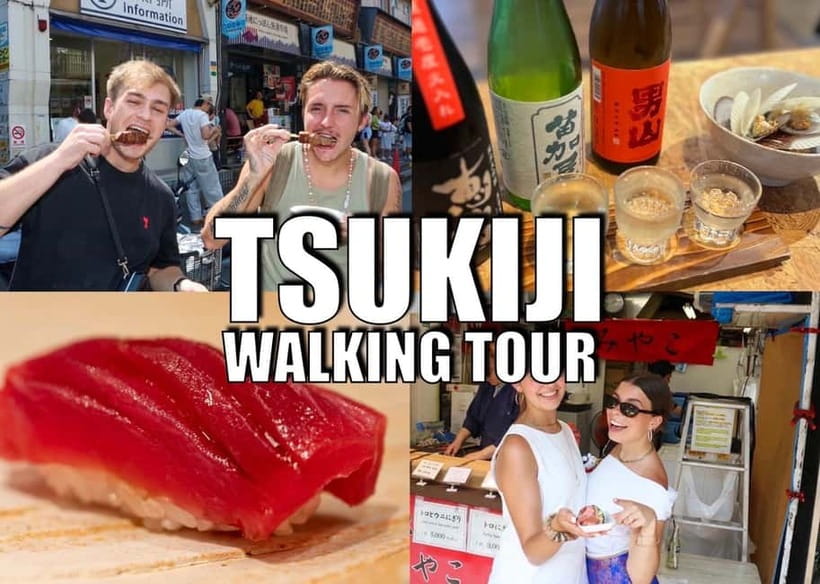
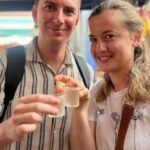
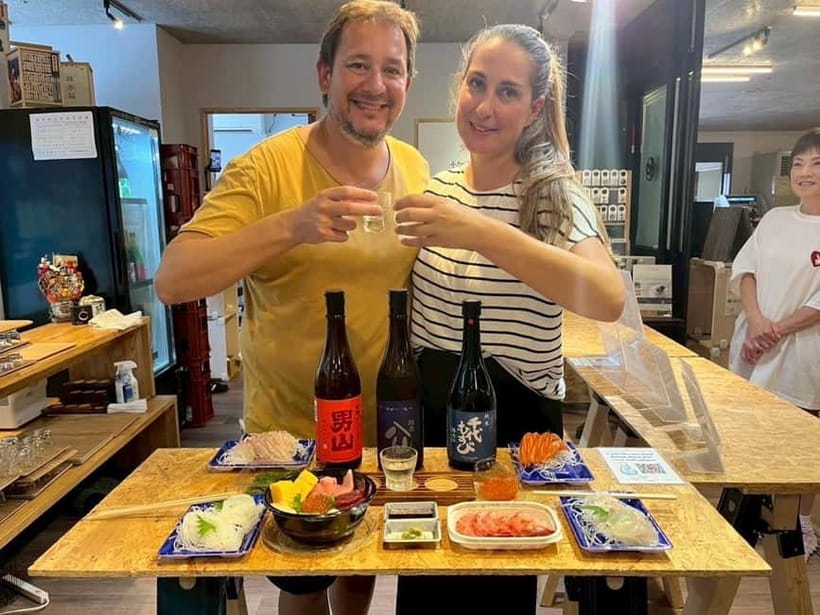
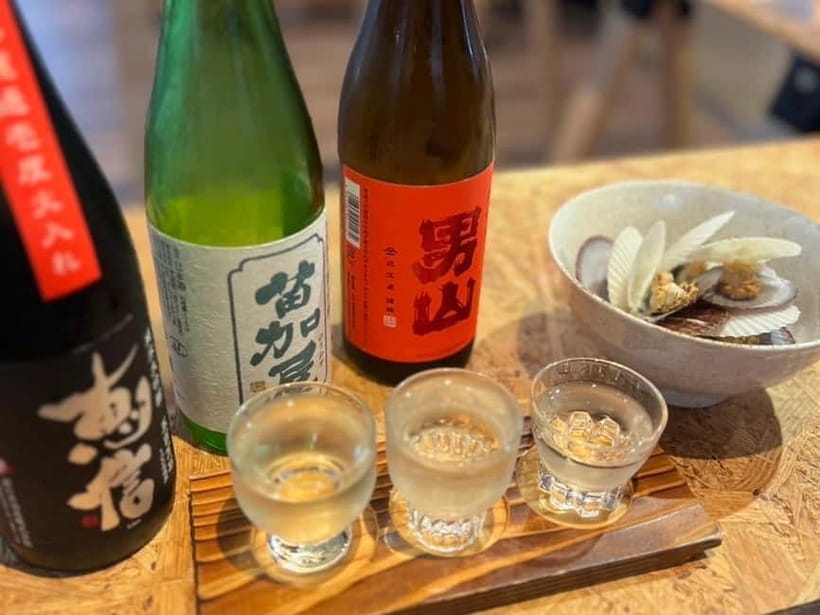
The final 40 minutes belong to sake. A certified sake sommelier leads the tasting, explaining the differences among three types and one special selection. The point is comparison. Four small pours let you notice how sake can change from one bottle to the next, rather than treating it as one uniform drink.
The tasting comes with sake-steamed baby scallops. This pairing matters because food changes how a drink tastes, and the scallops give you something savory to try with each selection. The tasting is also a pleasant finish to the market walk, since you can sit with the flavors instead of continuing from stall to stall.
You must be at least 20 to drink alcohol in Japan, and an ID is required for the sake tasting. That rule applies even if you look older, so bring identification rather than risking a missed part of the tour.
The sake portion received especially strong praise in the available feedback, along with the scallops. One person described the tasting as excellent, while another appreciated finding several types of sake in a relaxed setting. I would book this tour partly for that reason if you want an introduction to sake but do not know how to compare bottles on your own.
The sommelier-led format also gives you more than four drinks. You receive an explanation of what you are tasting, then can ask questions in English. At the end, the guides offer lunch suggestions and tips for the rest of your Tokyo visit. That final advice can be useful if Tsukiji is your first food stop in the city.
A few more Tokyo tours and experiences worth a look

What the two-hour timing really means
The tour lasts about two hours, with 20 minutes at Tsukiji Hongwanji and about 100 minutes around the Outer Market. That makes it easy to fit before another Tokyo activity, but it also means the schedule is fairly compact.
You should arrive ready to walk. Comfortable shoes are a good idea, especially because the market portion involves moving between stops and handling crowds. The experience runs in rain or shine, with most stops covered or indoors, but weather can still affect how comfortable it feels between locations.
This is not a free afternoon in Tsukiji. You will not have unlimited time to browse every shop, and purchases are separate from the tour. Think of it as a guided introduction followed by a chance to return later if you want more food or shopping.
The English and Japanese format is another practical advantage. The live tour guide speaks English, and bilingual support helps with ordering, explanations, and local etiquette. Group size is not specified, so you should not book this expecting a guaranteed private guide unless your reservation confirms it. One booking happened to receive two guides for one person, but that should be viewed as a special circumstance rather than a promised arrangement.
Who gets the most from this Tsukiji experience
I would recommend this tour to first-time Tokyo visitors who want a quick, organized introduction to Tsukiji. It is also a good match if you like food but feel unsure about choosing stalls, reading menus, or ordering in a crowded market.
The tour suits adults interested in sake, since the tasting is a central part of the final hour. It can work for people with food restrictions too, because the guide asks about them and can tailor the experience, but you should share those needs when booking and confirm what can be served.
It is less suitable if you want a large meal. The included food is varied, but the portions are tasting portions: one skewer, one tamagoyaki serving, samples at the specialty shop, and scallops with the sake. You may want to plan a separate lunch afterward.
It may also disappoint serious market shoppers who want to browse at their own pace. The guide helps you move efficiently, but the schedule favors explanation and selected tastings over open-ended wandering.
The current score is 5 out of 5 from three verified bookings. The strongest themes are friendly guides, clear explanations, personal attention, and the quality of the sake tasting. The only specific caution is the need to clarify which market items are included.
Price, flexibility, and simple planning tips
At $99 per person, the tour offers good value if you would otherwise pay for a guided market walk, several food samples, and a sake flight separately. The inclusion of the four-part sake tasting with scallops makes the price easier to justify than a basic sightseeing walk.
The value is weaker if you do not drink alcohol or plan to skip the sake. Since the final 40 minutes are built around that tasting, non-drinkers should confirm how the experience handles their participation before booking.
Cancellation is free up to 24 hours in advance, and you can reserve now and pay later. That helps if your Tokyo schedule is still changing. Starting times vary, so check availability for the date you want.
Bring comfortable shoes, an ID for the sake tasting, and cash for anything beyond the included food. Meet at the main gate of Tsukiji Hongwanji and identify the guide by the phone showing AlvaJapan.
Should you book it?
Book this tour if you want a compact food-and-culture introduction with a guide handling the market choices, language support, and sake explanations. The mix is better than a simple snack crawl: you get a temple, a market story, hot foods, traditional pantry samples, and a proper tasting flight.
Skip it if you want a full meal, extensive shopping time, or a tour centered only on the wholesale fish trade. Tsukiji’s wholesale operation moved to Toyosu, and this experience focuses on the Outer Market and its food traditions.
For most first-time visitors, the strongest plan is to take the tour early in your Tokyo stay, use the guide’s lunch tips, then return to Tsukiji later if you want more shopping. That gives you both structure and freedom.
FAQ
Where does the tour meet?
Meet in front of the main gate of Tsukiji Hongwanji Temple. Your guide will hold a smartphone displaying AlvaJapan.
How long does the experience last?
The tour lasts about two hours. The temple portion takes about 20 minutes, and the Tsukiji Outer Market portion takes about 100 minutes.
What food is included?
The price includes one charcoal-grilled wagyu beef skewer, one portion of tamagoyaki, chilled tea samples, black beans, peanuts, dashi broth, and a sake tasting with baby scallops.
How many sake samples are included?
You receive three types of sake plus one special selection, for four guided pours in total.
Is the sake tasting included in the $99 price?
Yes. The full sake tasting flight with scallops is included, along with the listed food and drink samples.
Do I need identification?
Yes. An ID is required for the sake tasting, and the legal drinking age in Japan is 20.
Is transportation included?
No. Transportation to and from the meeting point is not included.
Can I buy additional food at Tsukiji?
Yes, but extra snacks, drinks, and market purchases are separate from the tour price. Cash is recommended for those purchases.
What happens if it rains?
The tour operates in rain or shine, and most stops are covered or indoors. Comfortable shoes are recommended because the experience involves walking.
More Guided Tours in Tokyo

More Food Experiences in Tokyo
More Tsukiji Market Tours in Tokyo
More tours in Tokyo we've reviewed




Tsukiji Market Tours, compared.
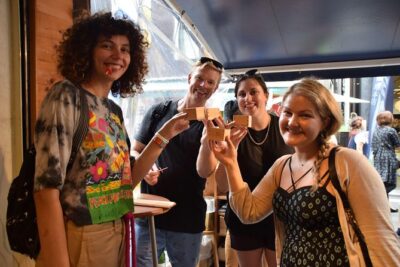 ★ 5.0Tokyo Tsukiji Fish Market Food and Culture Walking TourFrom $99
 ★ 5.0Tokyo: Tsukiji Fish Market Food and Walking tourFrom $30
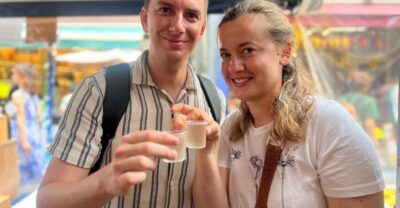 ★ 4.9Tokyo: Tsukiji Fish Market Guided Walking TourFrom $222 hours
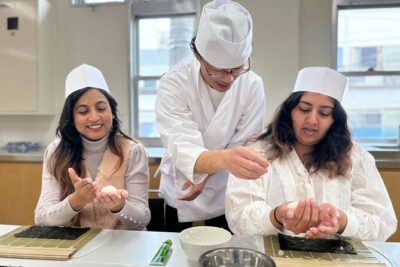 ★ 5.0Tokyo Sushi Making Class in Tsukiji with Professional ChefFrom $49
 ★ 5.0Tsukiji Fish Market Guided Tour and Sushi Making with Pro ChefFrom $104
★ 4.7Tokyo: Tsukiji Fish Market Food and Culture Walking TourFrom $963 hours