
Reviewed · TOKYO
Studio Kimono Photo
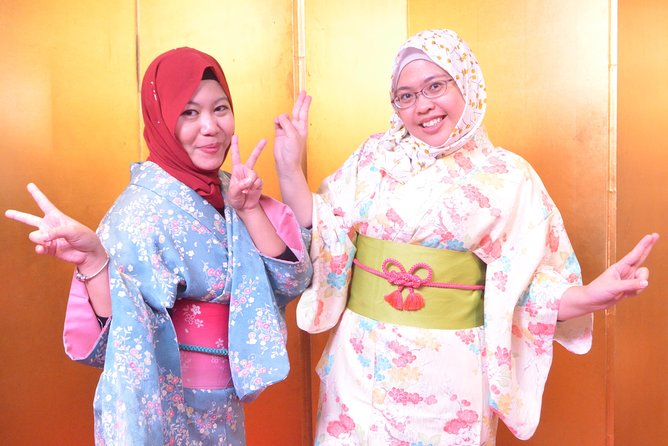
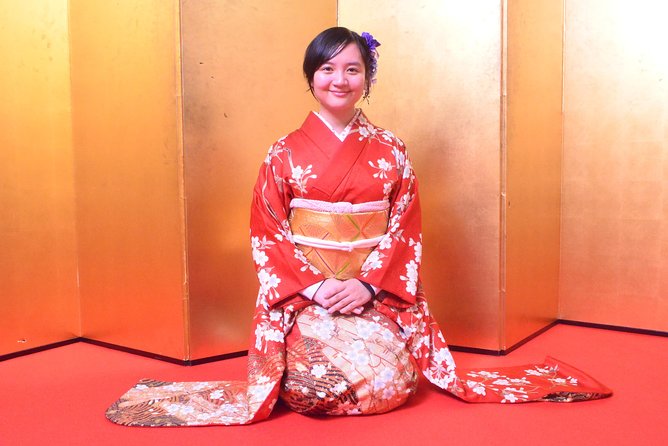
The appealing part of this Tokyo experience is its focus: you dress in a traditional outfit, pose in a studio, and leave with a proper souvenir in about 20 minutes. You can choose a kimono, hakama, or samurai costume, with accessories added to complete the look.
I like the helpful dressing service and the fact that photographer Jiro gives posing advice, which matters if you feel stiff in front of a camera. I also like the private format and included SD card. The main catch is the meeting point, which can be hard to find, so allow extra time.
In This Review
- Key points at a glance
- A fast kimono portrait in the heart of Asakusa
- Choosing between kimono, hakama, and samurai style
- Getting dressed by a studio assistant
- Posing with photographer Jiro
- What your Asakusa souvenir includes
- Why the private format matters
- The location near Asakusa attractions
- Is $65.89 a fair price?
- Weather, cancellations, and age limits
- Who will enjoy this photoshoot most?
- Should you book Studio Kimono Photo?
- FAQ
- Where does the Studio Kimono Photo experience take place?
- How long does the photoshoot last?
- What costumes can I choose?
- Does the price include help getting dressed?
- Do I receive the photographs?
- Can I wear the kimono outside the studio?
- How many people can participate?
- What happens if I need to cancel?
Key points at a glance
- Choose your costume: Pick from kimono styles, traditional hakama trousers, or a samurai outfit.
- Professional dressing included: A studio assistant helps arrange the clothing, hair, and accessories.
- Jiro guides the poses: The photographer helps you look natural and creates individual and couple shots.
- Asakusa location: Yumenoya Studio is near Asakusa’s famous shrine and public transportation.
- Short and private: The advertised session lasts about 20 minutes and is limited to your own group.
- Take home your photos: Your images are provided on an SD card at the end.
A fast kimono portrait in the heart of Asakusa
Tokyo offers many ways to wear a kimono, but this one is built for people with limited time. You do not spend the day walking around in rented clothing. Instead, you change at Yumenoya Studio, take a set of posed photographs, and return the costume before heading back into Asakusa.
That distinction is important. A full kimono rental lets you explore streets and temples in traditional dress, but it also takes more time and can involve walking in unfamiliar footwear. This studio session gives you the visual souvenir without asking you to rearrange half your day.
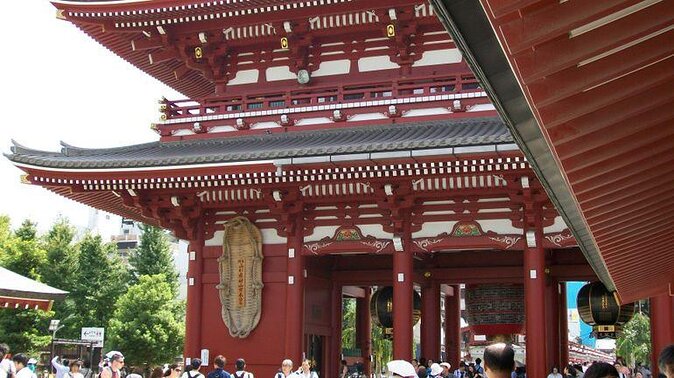
The experience takes place at 2-chōme-2-5 Hanakawado in Taito City, close to Asakusa. The area is a useful choice because you can pair the photoshoot with Senso-ji, Asakusa’s major temple complex, along with the neighborhood’s food shops and traditional streets.
The studio itself is called Yumenoya. That name matters because it may not be obvious from the experience title when you are looking for the entrance. Several people had trouble locating the building, and one person arrived late after following unclear directions. You will do yourself a favor by reading the arrival instructions carefully and reaching the area early.
If you're still narrowing it down, here are other tours in Tokyo we've reviewed.
Choosing between kimono, hakama, and samurai style
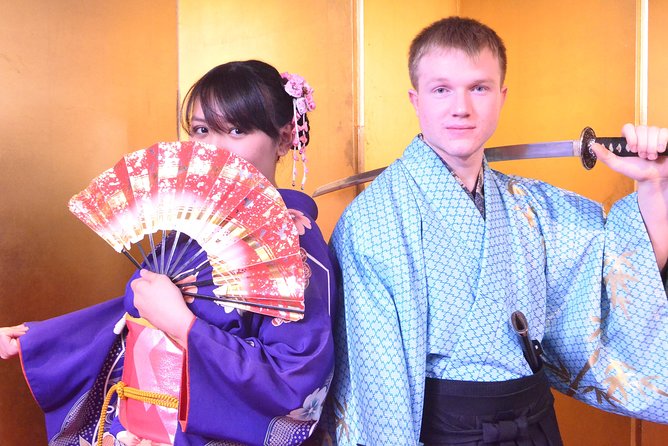
Your first decision is the costume. The available choices include standard kimono styles, hakama, and samurai costume. The selection appears broad, with many colors, patterns, and accessories available.
A kimono makes the most classic choice. It works well for an individual portrait, a mother and daughter session, or a couple’s photograph. You can ask for help choosing a color and pattern if the options feel excessive.
Hakama are traditional trousers often associated with formal Japanese dress. They give your portrait a different shape from a standard kimono and may appeal to anyone who wants something less expected.
The samurai option changes the mood entirely. It can be especially fun for children, couples, or a mixed group where one person wants a more theatrical costume. Samurai swords may be used as props during the session, adding variety to the photographs.
You need to provide your gender when booking so the studio can prepare a suitable costume. The information supplied does not specify the full range of sizes or exact costume inventory for every appointment, so do not assume that every pictured outfit will be available on your date.
Getting dressed by a studio assistant
Once you arrive, a studio assistant helps you put on the chosen garment. This is more useful than it may sound. Traditional clothing has layers, ties, and precise adjustments, and trying to handle it yourself would waste much of a short appointment.
The staff also help with accessories. Hair styling and a small hair ornament are described in the experience feedback, and one French-speaking customer specifically noted that Jiro adjusted the kimono, arranged the hair, and added a rose. The exact styling will depend on your costume and session, but the goal is a finished portrait rather than a quick costume change.
The dressing process is also where the staff can make you feel comfortable. Several people praised the assistants for being attentive, patient, and polite. That is important for first-time kimono wearers, since the clothing can feel formal and unfamiliar.
Plan on standing still while the outfit is adjusted. The session is short, and the studio works efficiently. If you are bringing children, remember that the minimum age is two and children must stay with an adult.
Posing with photographer Jiro
After dressing, you move into the photography portion. Jiro is named as one of the photographers, and his work is a major part of the experience’s appeal. He gives directions for poses instead of leaving you to guess what to do with your hands and feet.
That guidance makes a real difference. Traditional clothing looks best when the pose is deliberate, and most people do not naturally know how to sit or stand in a kimono. Jiro’s advice can help you relax, turn slightly toward the camera, and create a more polished portrait.
You can expect a mix of individual and couple photographs. Couples have used the session for posed shots together, while families and children have selected different outfits and photographed themselves separately. The staff may also take several variations so you have images to choose from later.
The stated duration is about 20 minutes. That is enough for a compact set of poses, but it is not a long fashion session. You should arrive ready to use the time well. Decide before the appointment if you want a formal portrait, playful samurai photographs, couple shots, or some combination.
One detailed account describes a session lasting about an hour, with additional individual, couple, candid, and video images. This suggests that the length can vary with group size and what is arranged on the day, but you should plan around the official approximate duration rather than count on a longer appointment.
What your Asakusa souvenir includes
At the end, you receive an SD card containing the photographs. This is a strong practical feature. You are not limited to one printed portrait, and you can share the images with family or post them online after your trip.
The exact number of final images is not specified, so you should not book expecting a guaranteed quantity. The photographs are taken with professional digital equipment, and one detailed account noted that phone images uploaded separately were not the final professional photographs.
Some extra candid photographs and videos have also been provided in individual sessions, but those extras are not listed as a guaranteed inclusion. The reliable promise is the studio photoshoot and an SD card with your images.
Bring a way to store or transfer the files later. The experience provides the card, but the information does not state whether a card reader or digital download is included. If your phone or computer cannot read an SD card, you may need an adapter after the session.

Why the private format matters
This is a private activity, with only your group participating. The maximum is five people per booking. That setup gives you more control than a large costume demonstration and lets the photographer focus on your poses.
For one person, the private format can reduce the awkwardness of posing in front of strangers. For a couple, it allows individual portraits and photographs together. For a family, it keeps the session more manageable, though five people is still a tight limit for a short appointment.
A group of six has been accommodated at a larger location, but that arrangement is not part of the stated maximum. If your party has more than five people, contact the provider before booking rather than assuming the same solution will be available.
The private setting also makes this a good choice for anyone who wants a keepsake rather than a general cultural lesson. The focus is photography and costume, not a long explanation of Japanese clothing, ceremony, or history.
The location near Asakusa attractions
Yumenoya Studio is near public transportation and close to Asakusa’s famous shrine area. That makes it easy to place the photoshoot within a morning or afternoon of sightseeing.
Still, the final walk may be less simple than the neighborhood map suggests. Directions have been described as unclear, and the entrance can be easy to miss. One useful detail is that the business name is Yumenoya, and a sign with the customer’s name may be placed outside a nearby shoe store.
I would not arrive at the exact appointment time and expect to search calmly. Reach the general area early, keep the phone number and confirmation details handy, and allow time to identify the correct entrance. This is the one recurring practical weakness attached to an otherwise well-organized short activity.
The meeting point and return point are the same. Hotel pickup and drop-off are not included, and you do not go out into Asakusa wearing the kimono.
Is $65.89 a fair price?
At $65.89 per person, the experience is not the cheapest way to put on a kimono. You are paying for the costume, dressing assistance, studio access, photographer direction, and finished image files.
I think the price is fair for someone who wants a professional souvenir and has only a short window in Tokyo. A normal rental can take much longer and may not include a dedicated photographer. Here, the staff handle the difficult clothing details, and you leave with photographs instead of relying on hurried phone snapshots.
The value is weaker if your main goal is to walk through Asakusa in traditional dress. This activity does not include going out in a kimono, so you would need a separate rental for that. It is also less useful if you only want a single casual picture and already have someone in your group who takes good photographs.
For couples, the value improves because you can receive both individual portraits and photographs together. For families, the private setup and costume choices may justify the price, though the five-person limit and short session require realistic expectations.
The activity is booked an average of 63 days ahead, so popular appointment times may fill early. That lead time also makes it wise to confirm costume details and group size before you reserve.
Weather, cancellations, and age limits
The activity requires good weather. If poor weather causes a cancellation, you are offered another date or a full refund. This matters even though the main photography takes place indoors, since the provider may have operational reasons for stopping service during bad conditions.
You can cancel at least six full days before the start time for a full refund. Cancellation two to six full days ahead receives a 50 percent refund, while cancellations less than two full days before the appointment are not refunded. The cut-off follows Tokyo local time.
Confirmation is sent within 48 hours of booking, subject to availability. Most people can participate, and children age two or older may join when accompanied by an adult.
Who will enjoy this photoshoot most?
I would choose this for:
- A couple wanting a shared Tokyo keepsake
- A solo visitor who wants more than a self-timer photograph
- Parents looking for a short, memorable activity with children
- Anyone with a tight Tokyo schedule
- People interested in a samurai portrait rather than a standard kimono image
- Visitors who prefer professional photos over a full-day clothing rental
It may not suit you if you want an extended cultural workshop, a detailed lesson about kimono traditions, or the freedom to wear the outfit outdoors. The experience is a compact portrait session, not a walking tour or a full costume-and-culture program.
The staff may also offer related experiences such as samurai training or an Oiran and geisha program, but those are separate activities. Do not assume they are part of this booking.
Should you book Studio Kimono Photo?
I would book it if your priority is a polished kimono or samurai portrait without giving up half a day. The dressing help, posing guidance from Jiro, private format, and SD card make this more useful than simply renting clothes and taking a few hurried pictures.
Book early, especially if your Tokyo dates are fixed. Then allow extra time to find Yumenoya, provide accurate gender and group details, and decide what kind of photographs you want before you arrive.
Skip it if your dream is to spend the day walking around Asakusa in a kimono. For everyone else, this is a focused, friendly, and reasonably priced way to bring home a traditional Japanese photograph.
FAQ
Where does the Studio Kimono Photo experience take place?
It starts and ends at 2-chōme-2-5 Hanakawado, Taito City, Tokyo 111-0033, Japan. The studio is Yumenoya, near Asakusa’s shrine area.
How long does the photoshoot last?
The advertised duration is approximately 20 minutes. Some sessions may take longer depending on the group and photographs arranged during the appointment.
What costumes can I choose?
You can choose a kimono style, traditional hakama trousers, or a samurai style costume.
Does the price include help getting dressed?
Yes. A kimono dresser or studio assistant helps you put on the chosen garment and provides requested accessories.
Do I receive the photographs?
Yes. An SD card with your photos is included and provided at the end of the session.
Can I wear the kimono outside the studio?
No. Going out in a kimono is not included in this experience.
How many people can participate?
The maximum is five people per booking, and the activity is private for your group. Children must be accompanied by an adult, and the minimum age is two.
What happens if I need to cancel?
Cancel at least six full days before the start time for a full refund. Cancellation two to six full days ahead receives a 50 percent refund. Cancellation less than two full days before the start time is not refunded.
More tours in Tokyo we've reviewed


Tokyo, compared.
 ★ 5.0Mt Fuji and Hakone 1-Day Bus Tour Return by Bullet TrainFrom $163
 ★ 5.01-Day Tokyo Bus TourFrom $129
 ★ 4.6Tokyo: teamLab Planets TOKYO Digital Art Museum Entry TicketFrom $251 day
 ★ 4.0Mt Fuji & Hakone Cruise, Drum Show Bullet Train 1 Day from TokyoFrom $149
 ★ 5.0Tokyo: Shinjuku Food Tour (13 Dishes at 4 Local Eateries)From $86
 ★ 4.4Tokyo Mt Fuji 5th St & Hakone Cruise Bus Tour w/Bullet TrainFrom $15410 hours