
Reviewed · WORKSHOPS
Japanaese tradtional Tsugaru Shamisen music lesson in Tokyo
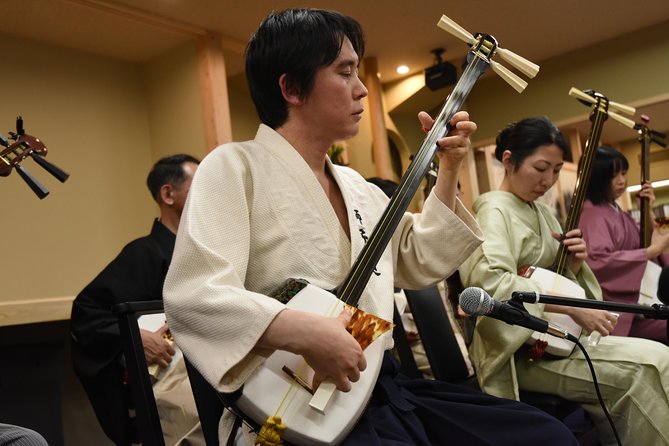
The star of this Tokyo experience is the Tsugaru shamisen, a three-stringed instrument with a forceful, almost percussive sound. You first hear a champion performer play, then learn to hold the instrument, use the bachi pick, and work through a simple song yourself.
I like the mix of live music and hands-on practice. I also like that the lesson is private to your group, with patient instruction designed for complete beginners. The main drawback is the short one-hour format: you will get a satisfying introduction, but not a full music course.
In This Review
- Key points at a glance
- Why the Tsugaru shamisen makes a strong first lesson
- From holding the instrument to using the bachi
- Learning an easy song in one hour
- Advanced techniques and the professional performance
- A private Shinjuku activity for families and first-timers
- What the one-hour program feels like in practice
- How much value do you get for $77.26?
- Who should book this workshop?
- Timing, booking, and cancellation details
- My call: book it for a hands-on cultural hour
- FAQ
- How long does the Tsugaru shamisen lesson last?
- Where does the experience take place?
- Is the lesson suitable for complete beginners?
- Is the shamisen included?
- Is the activity private?
- Can I cancel for a full refund?
Key points at a glance
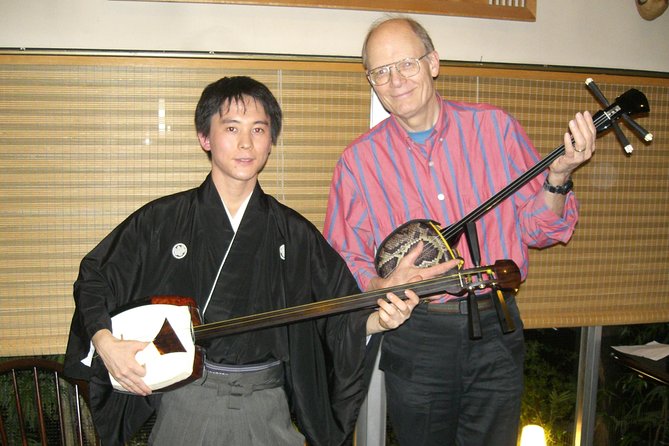
- Hear a tournament-winning performance: Your instructor has won the group championship at the Tsugaru Shamisen World Tournament.
- Play the instrument yourself: You learn posture, pick technique, and a simple song rather than only watching a demonstration.
- Private group format: Only your party takes part, making it easier to ask questions and receive direct help.
- English instruction is available: French and Spanish can also be requested.
- Family-friendly and educational: Children, families, schools, language programs, and corporate groups can use the lesson.
- Convenient Shinjuku location: The meeting point is at 14-28 Yochōmachi, Shinjuku City, with public transportation nearby.
Why the Tsugaru shamisen makes a strong first lesson
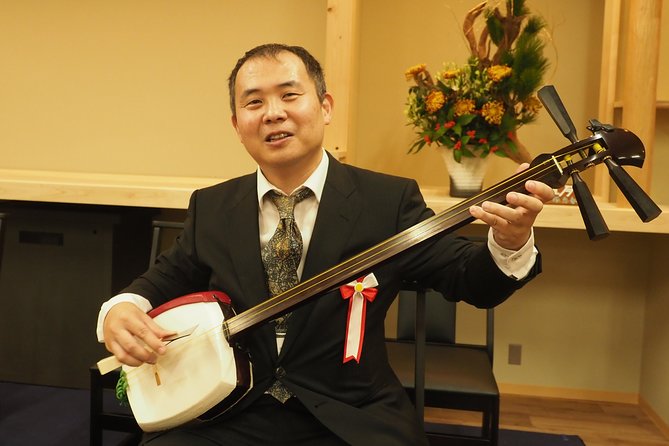
The shamisen is Japan’s three-stringed instrument, but the Tsugaru style has a sound and playing method all its own. It is often described as a Japanese banjo, though that comparison only gets you partway there. The broad body, taut strings, and large bachi pick produce a tone that can be sharp, booming, or surprisingly delicate.
This lesson focuses on the Tsugaru shamisen, the most powerful-sounding and widely recognized style of shamisen. That matters because you are not being shown a quiet museum piece. You hear the instrument at full force, then try to create that sound with your own hands.
The opening performance gives you a useful target. A professional who has won the Tsugaru Shamisen World Tournament group championship plays before instruction begins. You can hear the speed, rhythm, and control that are possible, then appreciate how much technique goes into even a basic phrase.
Do not expect to reproduce that performance in an hour. The value is in feeling the instrument respond to your hands. Even a simple song can help you understand how the pick strikes the strings and why the shamisen has such a distinctive voice.
A few more Tokyo tours and experiences worth a look



From holding the instrument to using the bachi
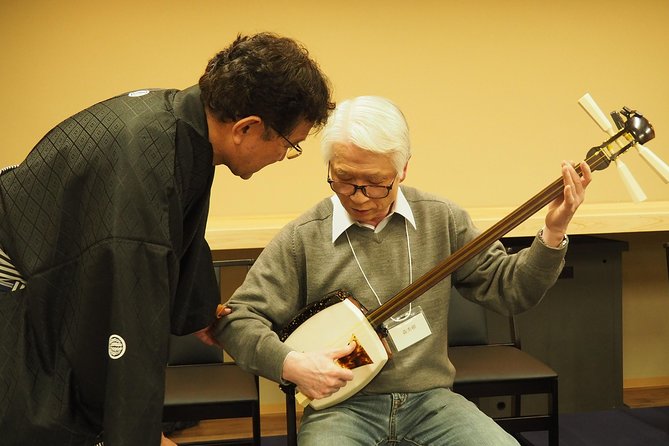
The program begins with the basics of handling the shamisen. You learn how to hold the instrument and how to position the bachi, the traditional pick used to strike the strings.
This first stage may sound simple, but it is the part that makes the rest of the lesson work. A new player can easily grip a pick too tightly or hold the instrument awkwardly. Gentle instruction is provided, and beginners are welcome, so you are not expected to arrive with musical training.
The bachi is a key part of the experience. It is not just a small guitar pick. Learning how to use it gives you a direct sense of the shamisen’s physical style. The motion is part of the sound, and you will likely spend some of your limited lesson time getting comfortable with the basic strike.
The instructor also explains the structure of the shamisen. This gives the lesson more depth than a quick try at an unusual instrument. You learn what you are holding and how its parts work together, not only which strings to touch.
Learning an easy song in one hour
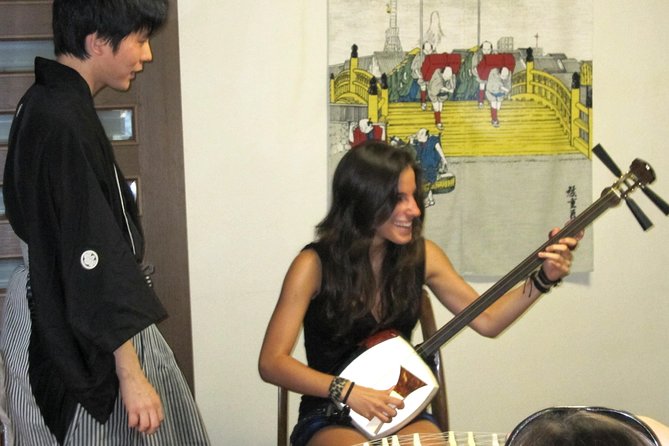
Once you have the basic grip and pick motion, the lesson moves to an easy song. The goal is for you to play a piece by yourself, then play one song together with the teacher.
That progression is well judged for a short session. Playing alone gives you a clear sense of what you have learned. Playing with the instructor adds support and helps keep the rhythm moving when your technique is still rough.
A one-hour lesson needs modest expectations. You will not master the Tsugaru shamisen, read a large body of music, or learn advanced performance skills in this time. You can, however, leave with a basic understanding of the instrument and a small piece you have actually played.
The private format helps here. The activity is limited to your own group, so the instructor can give attention where it is needed. If one person needs extra help with the bachi while another is ready to move on, the lesson can respond more directly than a large public class.
Advanced techniques and the professional performance
The schedule includes an introduction to advanced techniques, but this should be understood as a short look rather than a full lesson in difficult playing. The instructor can show you what experienced shamisen players do and give you a glimpse of the skill behind the performance.
This is one of the best reasons to book the workshop instead of simply attending a concert. You see the instrument in expert hands, then handle it yourself. The contrast is useful. After trying a basic phrase, you can better hear the control and timing in the professional demonstration.
The instructor is an award-winning musician, with a group championship from the Tsugaru Shamisen World Tournament. No instructor name is provided, but the qualification gives you a clear idea of the musical level involved.
The performance element also gives the hour a good shape. You are not asked to spend the whole time repeating exercises. Music, explanation, practice, and a final shared song are built into the session.
A private Shinjuku activity for families and first-timers
The meeting point is at 14-28 Yochōmachi in Shinjuku City, near public transportation. The activity begins and ends at the same location, which keeps the logistics simple. You need to arrange your own transportation to the venue, and food and drinks are not included.
The private format makes this a practical choice for a family or a small group with different ages and abilities. Children are welcome, and the program is also suitable for schools, academic institutions, language programs, and corporate training.
For families, the strongest part is that everyone can take an active turn. This is not a performance where younger children must sit quietly for the full hour. They can learn the basic handling of the instrument and take part in the song, with the instructor offering gentle guidance.
For educational groups, the lesson connects music, language, and Japanese culture in a compact format. The program can be delivered in English, and French or Spanish instruction is available upon request. If language access matters to your group, request the preferred language when arranging the booking.
The activity is listed as suitable for most people, and service animals are allowed. The supplied information does not describe the physical demands in detail, so you should ask the operator directly if someone in your group needs a particular accommodation.





What the one-hour program feels like in practice
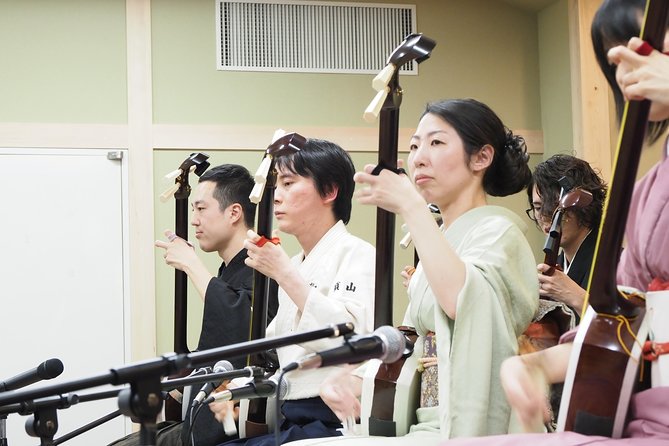
The stated flow gives you a clear picture of the session:
- You learn how to hold the shamisen.
- You practice striking it with the bachi.
- You work through an easy song.
- You receive an introduction to advanced techniques.
- You listen to shamisen music by the instructor.
- You learn about the shamisen’s structure.
- You play one song together with the teacher.
- You have time for photos and video.
The order may feel slightly different in practice, but the experience is designed to move from demonstration to participation. That makes it approachable even if you have never touched a Japanese instrument before.
The photo and video time is a useful final touch. You can record your own performance and share it on social media. Since this is a short lesson, the recording is less about creating a polished concert and more about preserving a memorable first attempt.
The instructor’s patience is an important part of the experience. A family booking reported learning a simple song, trying harder techniques, and watching the instructor perform impressive pieces. That combination suggests the session can offer more than the minimum basics, especially when the group is attentive and ready to practice.
How much value do you get for $77.26?
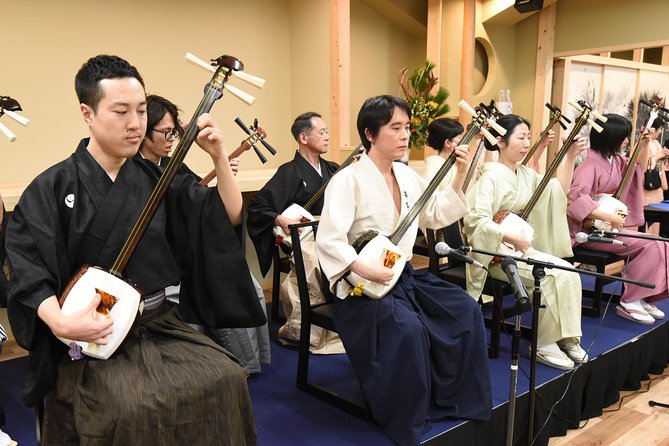
At $77.26 per person, this is not a casual free-time activity. The lesson lasts about one hour, so the cost per minute is higher than for a long sightseeing tour. You are paying for a specialist instructor, instrument rental, a professional performance, and private attention rather than for duration alone.
I think the price makes the most sense if you value direct participation. You are not just watching a cultural show. The shamisen is placed in your hands, and you receive instruction on a song. The rental is included, so you do not need to arrange an instrument or know what to bring.
The private setup also affects the value. Only your group takes part, which is useful for families, couples, school groups, and small parties that want a more focused session. Group discounts are available, though the specific discount amount is not provided.
For a solo visitor who mainly wants a low-cost introduction to Japanese music, the price may feel high for one hour. For a group splitting the attention of a professional musician, the cost is easier to justify. You should also compare it with what you want from the activity: a quick cultural encounter, or serious musical study. This is clearly the first option.
Private lessons are available for an additional charge. Choose that route only if you want more time with the instrument or need instruction tailored to one player. The standard program is better suited to a first taste.
Who should book this workshop?
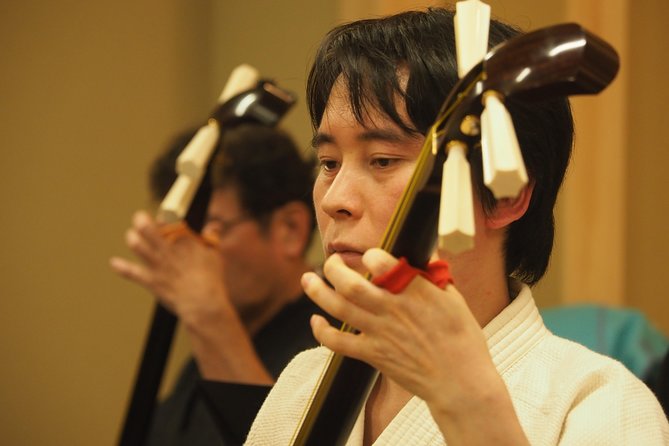
I would recommend this lesson to several kinds of visitors:
Families: Children can take part, and the session gives parents and children a shared activity with a clear result.
Music lovers: You get both a professional performance and a chance to test the instrument yourself.
Culture-focused visitors: The lesson explains the shamisen’s structure and playing method instead of treating it as a decorative object.
School and language groups: English instruction is available, with French and Spanish possible by request.
People who prefer private activities: Your group has the room to ask questions and work at its own pace.
You may want to skip it if you need a long, technically demanding lesson. The one-hour schedule is built for introduction and enjoyment. It will not replace a series of private music classes.
It is also less useful if you only want to watch a concert. A large part of the experience is learning the basic technique, so come prepared to participate.
Timing, booking, and cancellation details
The activity is generally booked about 42 days in advance, which is a useful planning signal. You do not necessarily need to reserve that far ahead, but popular dates may fill before a last-minute plan comes together.
The listed operating period runs from January 5, 2026, through January 19, 2027. The supplied hours show Monday availability from 9:00 a.m. to 6:00 p.m. Confirm the exact start time and date before paying, since confirmation is sent within 48 hours and depends on availability.
Free cancellation is available if you cancel at least 24 hours before the local start time. Cancellations made inside that window are not refunded, and changes made less than 24 hours before the activity are not accepted.
Plan to arrive with enough time to find the Yochōmachi meeting point. Since transportation is not included, check your route before leaving. The class returns to the same place, so you can plan your next Shinjuku stop without arranging a second pickup.
My call: book it for a hands-on cultural hour
Book this Tsugaru shamisen workshop if you want a compact Tokyo activity that lets you hear, handle, and play a traditional Japanese instrument. The award-winning performance gives the session musical weight, while the patient teaching and private format keep it friendly for beginners.
The best value comes when two or more people share the experience, especially a family or small group that wants something beyond temples, shopping, and food. The price is harder to justify if you want only a short performance or a full music course.
Reserve ahead, confirm the language and operating time, and arrive ready to use the bachi. You will not become a shamisen master in an hour, but you can leave having played a real song on one of Japan’s most powerful traditional instruments.
FAQ
How long does the Tsugaru shamisen lesson last?
The activity lasts approximately one hour.
Where does the experience take place?
It takes place at 14-28 Yochōmachi, Shinjuku City, Tokyo 162-0055, near public transportation. The activity ends back at the meeting point.
Is the lesson suitable for complete beginners?
Yes. Gentle instruction is provided, and beginners are welcome. The program teaches how to hold the shamisen, use the bachi, and play an easy song.
Is the shamisen included?
Yes. Shamisen rental and the playing lesson are included in the price.
Is the activity private?
Yes. This is a private activity, and only your group participates.
Can I cancel for a full refund?
Yes, if you cancel at least 24 hours before the local start time. Cancellations made less than 24 hours before the start are not refunded.
More Workshops & Classes in Tokyo

More tours in Tokyo we've reviewed







Workshops, compared.
 ★ 5.0Sushi Making Tokyo Roll and Authentic Japanese Sushi ClassFrom $59
 ★ 4.9Tokyo: Roll and Authentic Sushi Making Class in AsakusaFrom $581h 40m
 ★ 5.0Tokyo Shinjuku Chopsticks Making ClassFrom $20
 ★ 4.9Tokyo: Sushi Making Class in a Happi Coat near a Famous SpotFrom $421h 30m
 ★ 4.8Chopstick Making Workshop in GinzaFrom $251 hour
 ★ 5.0Tokyo Sushi Making Class in Tsukiji with Professional ChefFrom $49