
Reviewed · SHOW
Tokyo: KABUKI Show at Kabukiza Theatre Admission Ticket
Kabuki at Kabukiza Theatre is not a quick cultural sampler. It is a full afternoon or evening of Japanese theater, with dramatic poses, elaborate costumes, live music, dance, and stories drawn from historical and domestic life. The program changes each month, so the exact experience depends on your date.
I especially like the theater’s setting in Ginza and the chance to see Kabuki in its permanent home, rather than in a shortened tourist presentation. The English or simplified Chinese caption service also makes a major difference when old Japanese stories and stylized dialogue would otherwise be hard to follow.
The main drawback is the length. Plan on about four hours, with intermissions, and remember that you cannot choose your seat through this booking. Seats may feel tight, and some performances require sustained attention, so this suits curious theatergoers more than anyone seeking a quick evening show.
In This Review
- Key points to know before booking
- Why Kabukiza is the right place to see Kabuki
- What the four-hour program feels like
- The visual language of the stage
- Captions make the old stories easier to follow
- Intermissions, food, and the practical rhythm of the day
- Getting your ticket at Basement Level 2
- Seats, comfort, and choosing the right expectations
- Is $106 good value?
- Who will enjoy Kabukiza most
- My final call: book it for the full cultural experience
- FAQ
- Where is Kabukiza Theatre located?
- How long does the Kabuki experience last?
- Is the show performed in English?
- Can I use my mobile or PDF voucher to enter the theater?
- Where do I collect my ticket?
- What are the box office hours?
- When do the theater doors open?
- Can I choose my seat?
- Can I eat or drink during the performance?
- Are children under four allowed?
- Does the Kabuki program stay the same all year?
- When do tickets for the following month become available?
Key points to know before booking
- Four hours of traditional theater: Expect a complete Kabuki program with several sections, not one short performance.
- A new program each month: The plays, dances, and historical themes change regularly.
- Captions are included: English or simplified Chinese captions help you follow the action and story.
- Ticket pickup is required: Exchange your mobile or PDF voucher at the Basement Level 2 box office.
- Live music and visual spectacle: Costumes, painted curtains, stage sets, singing, dancing, and shamisen music are central to the experience.
- Come prepared for intermissions: Food and drinks are allowed, and snacks and alcohol are sold inside the theater.
Why Kabukiza is the right place to see Kabuki
Kabuki can appear unfamiliar at first. Performers use highly stylized movement, strong facial expressions, formal poses, and a delivery that is far removed from ordinary conversation. At Kabukiza, these details are not watered down for a short introduction. You are watching the art form in the theater built around it.
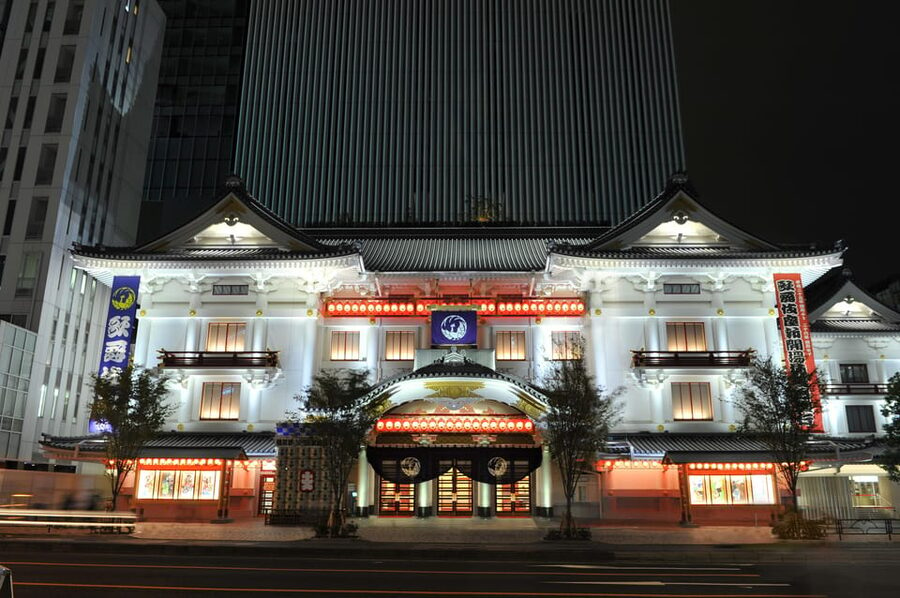
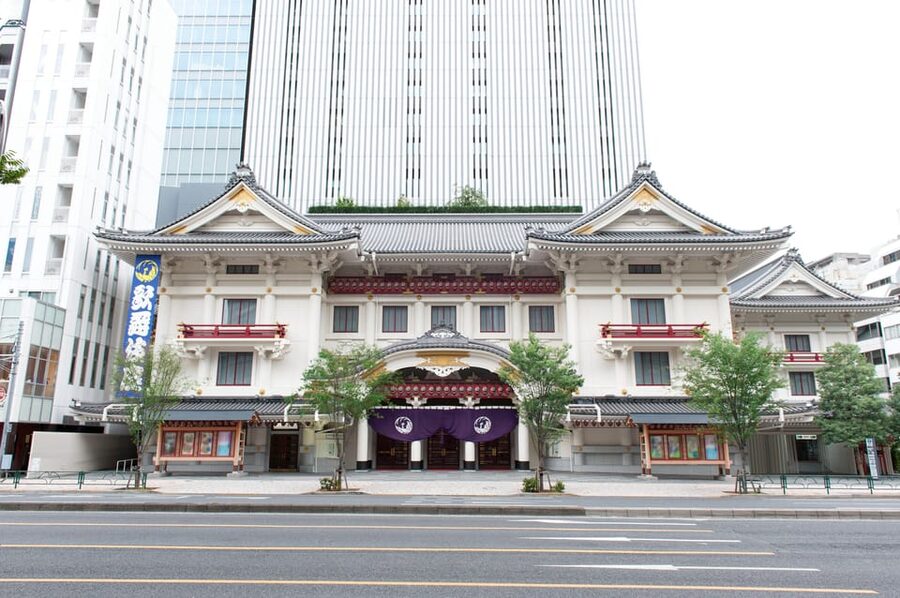
Kabukiza is the only theater in the world dedicated exclusively to Kabuki. That fact matters because the building, audience, stage traditions, and surrounding shops all support the performance. Even before the curtain rises, you are entering a place designed for this one Japanese art form.
The theater is in Ginza at 4-12-15 Ginza, Chuo-ku. That makes it easy to pair with time in central Tokyo, though you should not squeeze the performance between tightly scheduled sightseeing stops. A four-hour program can occupy most of an afternoon or evening.
A few more Tokyo tours and experiences worth a look

What the four-hour program feels like
The advertised duration is about four hours, but the shape of the show is not four unbroken hours of action. Kabuki programs are divided into separate plays, dances, or sections, with intermissions between them. Depending on the month, you may see three or four distinct pieces.
That variety is one of the best parts of the experience. A historical drama may be followed by a dance, then a domestic story or a modern Kabuki work. The mood, characters, setting, and rhythm can change sharply from one section to the next.
For example, a February matinee program includes O-EDO MIYAGE, a modern Kabuki piece, followed by TONBI YAKKO, a dance, a domestic play set in front of the Saruwakaza Theatre, and TSUMORU KOI YUKI NO SEKI NO TO, another dance. The listed matinee time is 11:00 a.m. to about 3:21 p.m.
A February evening program begins at 4:30 p.m. and is planned to finish around 9:02 p.m. It includes sections from The Chronicle of the Battle of Ichinotani, the dance The Fox Praying for Rain, and the modern work Tanjirō’s Love Triangle.
March offers a different structure. The matinee presents The Return of the Evil Lady-in-Waiting Iwafuji, while the evening program includes a spring dance and sections of Three Thieves Named Kichisa. These examples show why you should check the official Kabuki Web program before paying. You are booking a particular month’s repertoire, not a fixed show.
The visual language of the stage
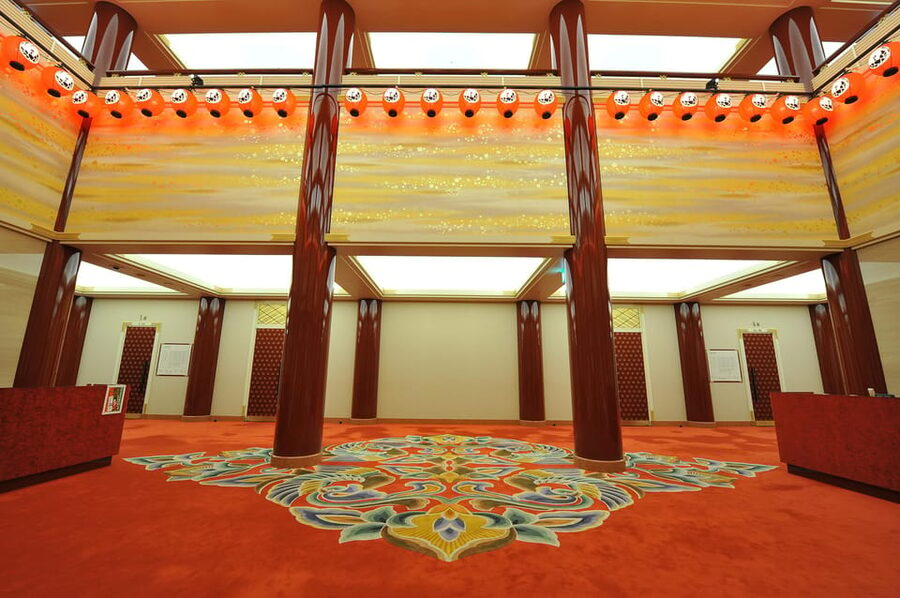
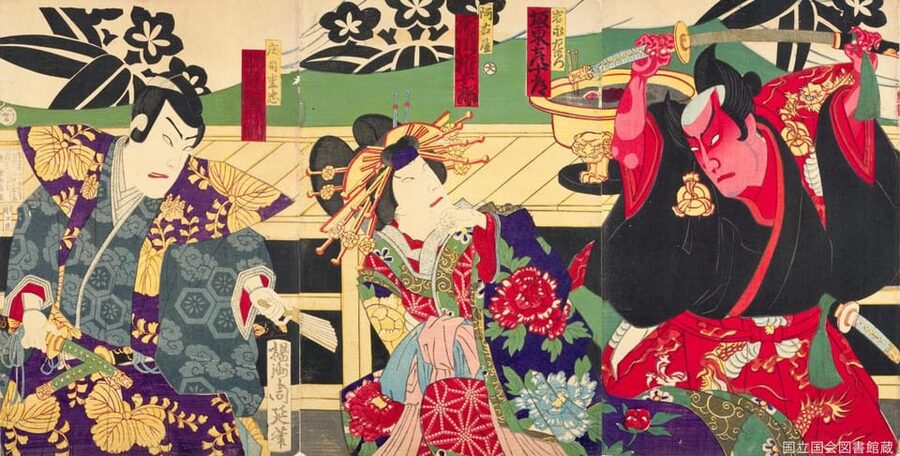
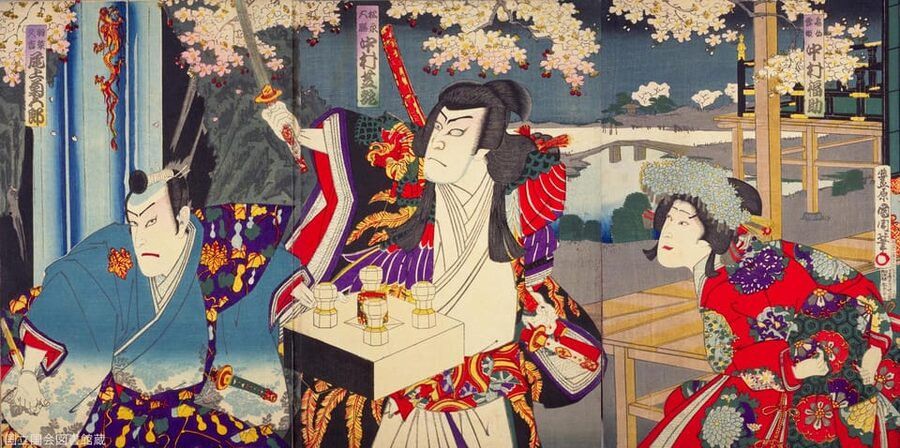
Kabuki is a feast for the eyes, but its beauty is not only about ornate clothing. Stage entrances, gestures, painted screens, curtains, music, and moments of stillness all carry meaning.
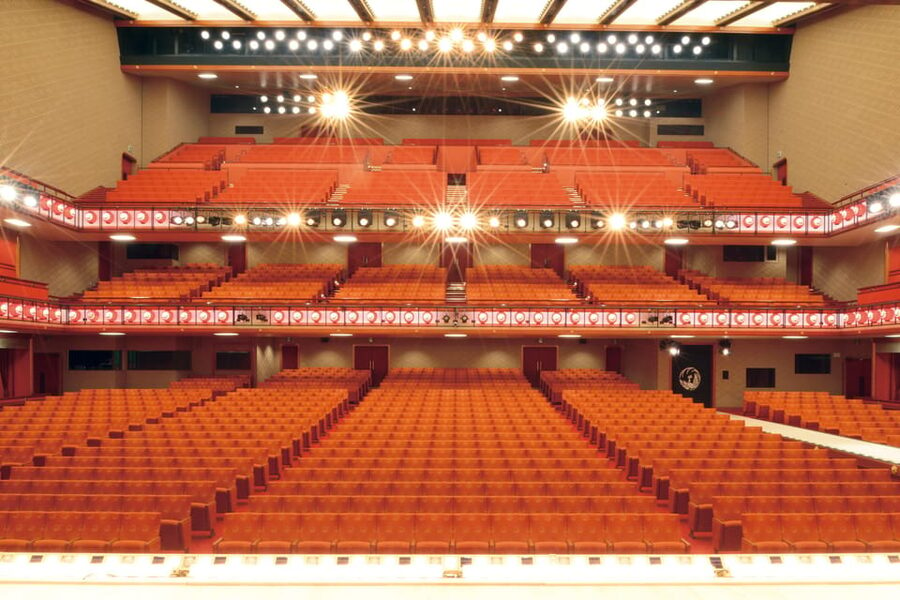
The costumes can be sumptuous, especially in historical pieces. Stage sets create a strong sense of place without relying on modern realism. Curtains and screens are carefully designed, and even a simple stage change can feel ceremonial.
The performers combine acting, singing, dancing, and, in some sections, acrobatic movement. You may find one piece gripping and another slower or less accessible. That is normal. Kabuki programs are built from different theatrical forms, and the dance sections may appeal more to some people than the long dramatic scenes.
I would think of the experience as something between opera, ballet, and highly stylized drama, although it does not fit neatly into any of those categories. The acting is controlled and precise rather than casual. A single pose or facial expression can hold the audience’s attention for a long moment.
Captions make the old stories easier to follow
Your ticket includes English or simplified Chinese captions. This is one of the most practical features of the booking.
Kabuki often draws on historical events, traditional tales, family conflict, romance, loyalty, revenge, and social duty. Without language help, you could still appreciate the movement and costumes, but the story may be difficult to track. The caption service gives you the basic plot, character relationships, and spoken content.
The captions are useful, but they require some attention. You will be looking between the stage and the caption display, and the timing may not always feel perfectly regular. If you focus only on the text, you can miss an important gesture. If you watch only the stage, you may lose the plot.
I suggest reading enough to understand who is who, then returning your eyes to the performers. Kabuki communicates a great deal through movement, expression, music, and staging. You do not need to catch every line to understand the emotional direction of a scene.
For bookings made in Japan, the caption service is still part of this package. You cannot exchange it for a Japanese earphone guide or receive a partial refund if you decide not to use it.
Intermissions, food, and the practical rhythm of the day
The breaks are not an afterthought. They give you time to stretch, visit facilities, check the caption equipment, and take in the theater atmosphere.
You may bring food and drinks into the theater, and snacks and alcohol are available for purchase inside. This is worth planning for, especially if you attend the evening performance. A small meal or snack during an intermission can make the long program much more comfortable.
Do not assume that every shop will be open after the final curtain. The Kabuki-related souvenir shop can close before the performance ends, particularly for an evening show. If gifts matter to you, visit the shopping area before taking your seat or during an early break.
The permanent interactive exhibition is another useful stop before the show. It introduces Kabuki’s background and theatrical features, giving first-time viewers a framework for what they are about to see. You do not need to become an expert, but a little preparation helps you recognize why certain gestures, costumes, and stage movements matter.
A few more Tokyo tours and experiences worth a look




Getting your ticket at Basement Level 2
Your mobile or PDF GYG voucher is not an admission ticket. You must exchange it at the Kabukiza box office on the day of the performance.
The box office is on Basement Level 2 and is listed as open from 10:00 a.m. to 6:00 p.m. Bring the voucher on your phone or as a PDF and allow plenty of time for the exchange. If you arrive after 6:00 p.m., go directly to the theater entrance as instructed.
This step is simple, but it is the detail most likely to cause stress if overlooked. Do not head straight to the auditorium expecting to scan the booking voucher. Pick up the physical ticket first unless you are arriving after the stated box-office closing time.
The theater doors open 30 minutes before the performance. I would use that window to collect the ticket, locate the auditorium, find your seat, and get comfortable with the caption service. You do not want to discover how the captions work after the first scene has started.
Seats, comfort, and choosing the right expectations
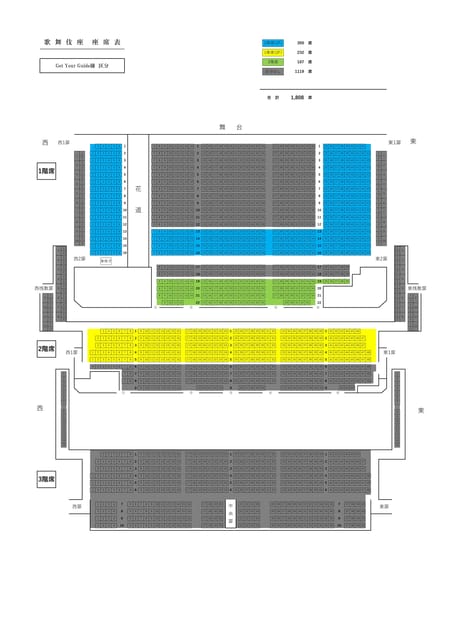
Seats are assigned by the booking, and you cannot specify your seat through this reservation. That means the view and comfort level are not fully in your hands.
Some people find the seats tight or old-fashioned, and bringing a small cushion may help if you are sensitive to firm seating. A seat farther from the stage can still let you follow the overall action, costumes, and sets, but close viewing is helpful for facial expressions and subtle acting.
This is especially true in Kabuki, where a controlled look or fixed pose may carry as much force as a spoken line. If close detail matters greatly to you, consider checking whether another ticket type or direct theater booking offers more seat choice. With this option, accept that the assigned location is part of the tradeoff.
Dress is flexible. You do not need formal clothing, although you may see audience members dressed up for the occasion. The theater welcomes a range of styles, so focus on comfort for the long sitting time.
Children under four are not suitable for this activity. Older children may enjoy the costumes and movement, but the four-hour length and formal pace require patience. For families, I would explain in advance that this is not a fast-moving theme-park show.
Is $106 good value?

At $106 per person, this is an expensive theater ticket, especially if you are traveling alone or watching your total Tokyo spending. The value depends on what you want from your trip.
You are paying for a full Kabuki program in the art form’s most famous dedicated theater, plus the English or simplified Chinese caption service. You also receive access to a serious cultural performance with professional actors, live music, elaborate costumes, stage sets, and a changing monthly program.
The price makes less sense if you only want to see what Kabuki looks like for 30 minutes. This booking is designed for someone willing to give the art form a full afternoon or evening. If you enjoy classical theater, dance, opera, historical drama, or traditional music, the time and cost are easier to justify.
I also see value in the fact that each month brings new material. If you return to Tokyo, you are not simply repeating the same fixed production. The exact content remains important, though, so check the official program before booking.
Reservations for the following month begin on the 14th of each month. That date may matter if you have a short trip and want a specific performance time.
Who will enjoy Kabukiza most
I would recommend this experience to you if you want a substantial cultural evening and are open to theater that follows its own rules. You do not need prior Kabuki knowledge, but curiosity helps.
It is particularly suitable for:
- People interested in Japanese arts and traditions
- Fans of opera, ballet, classical drama, or live music
- Visitors who want a serious cultural activity in central Tokyo
- First-time Kabuki viewers who need English or simplified Chinese captions
- People comfortable sitting through a long program with intermissions
I would hesitate to recommend it if you dislike formal theater in general. One performance includes dance, another may focus on historical drama, and a modern Kabuki piece may feel more accessible than an older work. Still, the pace remains deliberate.
The experience also requires flexibility. You cannot choose the seat through this booking, programs change monthly, and the caption display adds a second point of attention. These are manageable issues, but they are worth knowing before you commit.
My final call: book it for the full cultural experience
Book this Kabukiza ticket if you want to see Kabuki as a living theater tradition, not a quick demonstration. The strongest reasons are the dedicated Ginza venue, the changing monthly programs, the excellent visual design, and the included captions.
Before booking, check the month’s program and confirm that a four-hour performance fits your schedule. Pick up your ticket early, bring or buy something to eat, and visit the souvenir area before the shops close.
If you want a memorable, distinctly Japanese night and can accept assigned seating and a long formal program, this is a strong choice. If you prefer short attractions or need a tightly timed evening, choose something less demanding.
FAQ
Where is Kabukiza Theatre located?
Kabukiza Theatre is at Ginza 4-12-15, Chuo-ku, Tokyo, in the Ginza area.
How long does the Kabuki experience last?
The activity lasts about four hours. Exact running times vary by monthly program and performance.
Is the show performed in English?
The performance is not described as an English-language show. Your ticket includes an English or simplified Chinese caption service to help you follow it.
Can I use my mobile or PDF voucher to enter the theater?
No. You must exchange the GYG voucher for a physical ticket at the venue box office. After that exchange, use the issued ticket for entry.
Where do I collect my ticket?
The box office is on Basement Level 2 of Kabukiza Theatre.
What are the box office hours?
The box office is listed as open from 10:00 a.m. to 6:00 p.m. If you arrive after 6:00 p.m., proceed directly to the theater entrance.
When do the theater doors open?
The theater doors open 30 minutes before the performance begins.
Can I choose my seat?
No. Seats cannot be specified through this reservation.
Can I eat or drink during the performance?
There are intermissions, and you may bring food and drinks into the theater. Snacks and alcohol are also available for purchase inside.
Are children under four allowed?
Children under four are not suitable for this activity.
Does the Kabuki program stay the same all year?
No. Kabukiza presents a new program each month. Check the official Kabuki Web site for the details of the month you plan to visit.
When do tickets for the following month become available?
Reservations for the next month’s program begin on the 14th of each month.
More Tickets in Tokyo


More Shows & Performances in Tokyo
More Tickets & Passes in Tokyo


More tours in Tokyo we've reviewed











Show, compared.
 ★ 4.0Mt Fuji & Hakone Cruise, Drum Show Bullet Train 1 Day from TokyoFrom $149
 ★ 4.8Tokyo: Sumo Show Experience with Chicken Hot Pot and a PhotoFrom $1032 hours
 ★ 4.8Tokyo: Sumo Show and Dining ExperienceFrom $7990 minutes - 2 hours
 ★ 5.0the SUMO showFrom $89
 ★ 5.0Tokyo Shinjuku Sumo Show & Experience with PhotoFrom $79
 ★ 4.5Tokyo: Samurai Restaurant Show Ticket with 2 DrinksFrom $551h 30m