
Reviewed · WORKSHOPS
Tokyo: Knife Making Workshop (Sharpening, Engraving)
The most rewarding part of this Asakusa workshop is that you do not simply buy a Japanese knife, you help finish one. You learn the basics of sharpening, engrave your name or a small design, attach the handle with a traditional hammer, and leave with a useful souvenir rather than another Tokyo trinket.
I like the hands-on sharpening lesson, which turns a familiar kitchen tool into a quiet, focused project. I also like the easy cultural introduction to Japanese knives and swords, followed by tea, snacks, and friendly help from English-speaking staff such as Lisa, Joe, Mori, and Agata.
The main consideration is price. At $161 per person, this is not a cheap souvenir stop, and the standard knife is fairly basic. Bigger knife styles cost extra, and the handle finish may not satisfy someone seeking a high-end chef’s knife. Still, for a practical craft lesson and a personalized object, the value is good.
In This Review
- Key points to know before you book
- What the 90-minute Tokyo knife workshop really involves
- Starting with a haori, tea, and a short lesson
- Choosing between five knife types
- Sharpening is the heart of the activity
- Engraving your name and attaching the handle
- Packaging, snacks, and the finished souvenir
- Is $161 a fair price?
- Who will enjoy this workshop most?
- Making it fit into an Asakusa day
- My verdict: book it if the process matters as much as the knife
- FAQ
- Where is the Tokyo knife-making workshop held?
- How long does the activity last?
- Do I need previous knife-sharpening experience?
- What kind of knife is included?
- Can I bring someone who does not want to make a knife?
- How should I take the knife home?
Key points to know before you book
- You sharpen the blade yourself: Staff guide your hand and correct your technique, so beginners can take part without prior experience.
- The standard knife is a multitasking kitchen knife: You can upgrade to styles such as usuba, deba, or petit yanagiba for an additional charge.
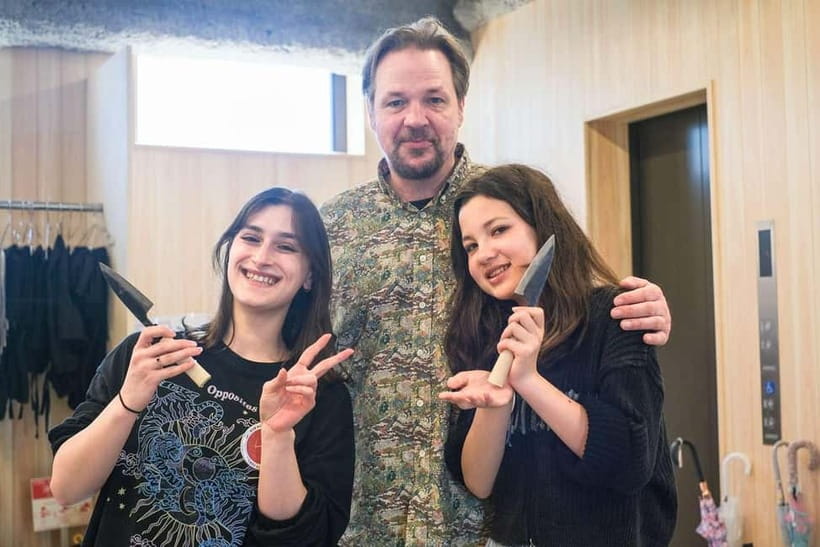
- Your name becomes part of the souvenir: Engrave it in Japanese on the handle, or try a simple picture or other design.
- The workshop takes place in Asakusa: Find BUB Activity Center at 2 Chome 6-11 in Taito-ku and take the elevator to the fifth floor.
- An observation ticket can help couples save money: A friend or partner may watch without making a knife, but an observation fee is paid on site.
- Pack the finished knife correctly: Put the knife box in checked luggage, or ask the staff about shipping it.
What the 90-minute Tokyo knife workshop really involves
This is best understood as a knife-finishing and sharpening workshop, not a blacksmith class. You will not forge hot steel or shape a blade from raw metal. Instead, you select a prepared knife, sharpen it, personalize the handle, and put the final parts together.
That distinction matters. If you want sparks, furnaces, and swordsmith theatrics, this is not the right activity. If you want a manageable craft session that teaches a useful skill and gives you something you can use at home, it makes much more sense.
The workshop is held at BUB Activity Center in Asakusa, a handy part of Tokyo for combining a class with sightseeing. The address is Heiwa Building, 2 Chome 6-11, Taito-ku, Tokyo. The activity center is on the fifth floor, so do not waste time looking for a street-level shopfront. Take the elevator.
The session lasts about 90 minutes, though the pace can vary. One participant found the work took longer than expected, while another group needed help finishing because of a later appointment. I would avoid scheduling anything urgent immediately afterward.
A few more Tokyo tours and experiences worth a look


Starting with a haori, tea, and a short lesson
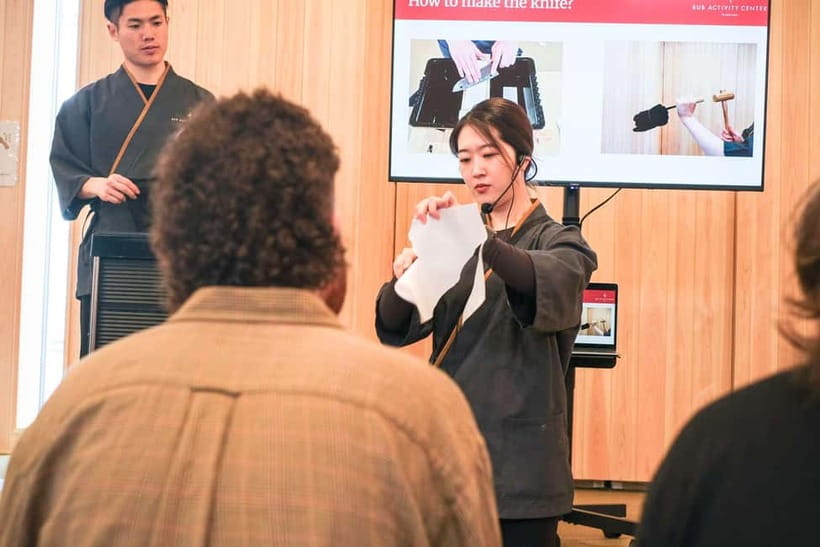
When you arrive, the staff provide a light haori, a Japanese kimono-style jacket worn here to protect your clothes from stains. You also receive a small badge with your name written in Japanese letters. It is a simple touch, but it sets the tone for a workshop that mixes practical work with Japanese language and custom.
You then sit down with tea, juice, or another soft drink while the instructor explains Japanese knives and swords. The introduction covers cultural background, the differences between Japanese katanas and Western swords, and the role of different kitchen knives.
This opening is not a long lecture. It gives you enough context to make an informed choice later. You begin to see that a deba, usuba, and yanagiba are not just different shapes for display. They are designed for different kitchen tasks, and the blade you select should match how you plan to use it.
English is the working language, and the bilingual staff keep explanations simple. Lisa, Joe, Mori, and Agata are among the instructors praised for clear English, energy, and patient guidance. The team also keeps the atmosphere relaxed, with jokes and casual conversation rather than a stiff classroom mood.
Choosing between five knife types
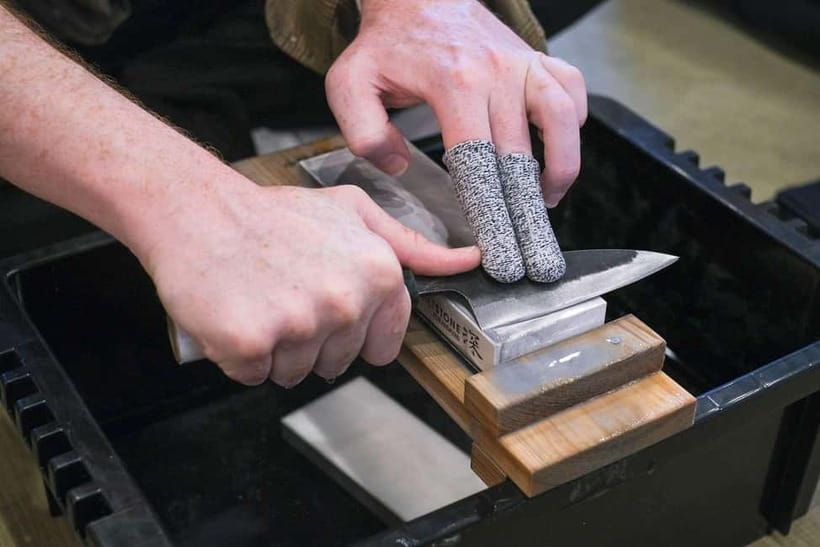
The standard booking includes a multitasking knife. This is the sensible choice if you want one practical blade for general kitchen use and do not already have a specific Japanese style in mind.
You can also choose from as many as five knife types. Some require a small extra payment, including larger styles such as usuba, deba, and petit yanagiba. The precise upgrade cost is not provided, so check it before committing to a more specialized blade.
Here is the basic way to think about the options:
- A standard multitasking knife makes the most sense for everyday use.
- An usuba is associated with vegetable preparation and has a more specialized purpose.
- A deba is a heavier style suited to particular food preparation tasks.
- A petit yanagiba offers a smaller version of a knife style often linked with precise slicing.
You do not need prior knife experience to choose. The staff explain the available blades and help match the size and type to your interests. If the knife is mainly a keepsake, appearance may guide you. If you hope to use it regularly, ask questions before paying for an upgrade.
Sharpening is the heart of the activity
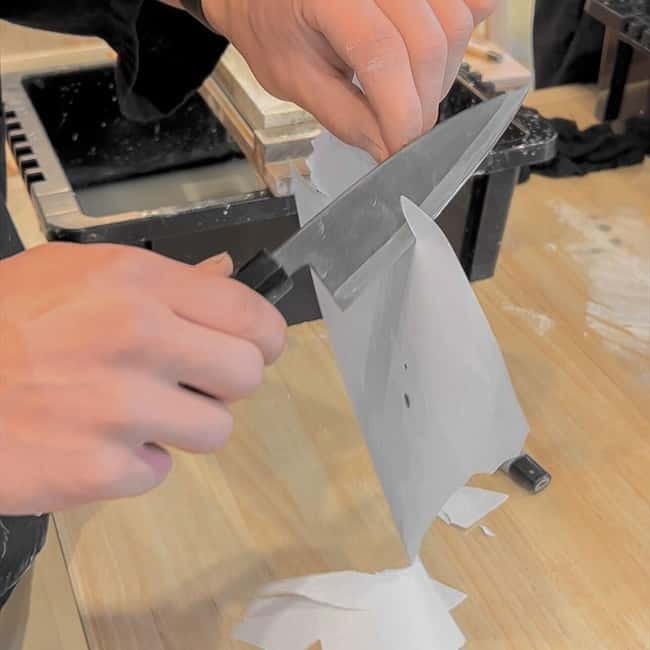
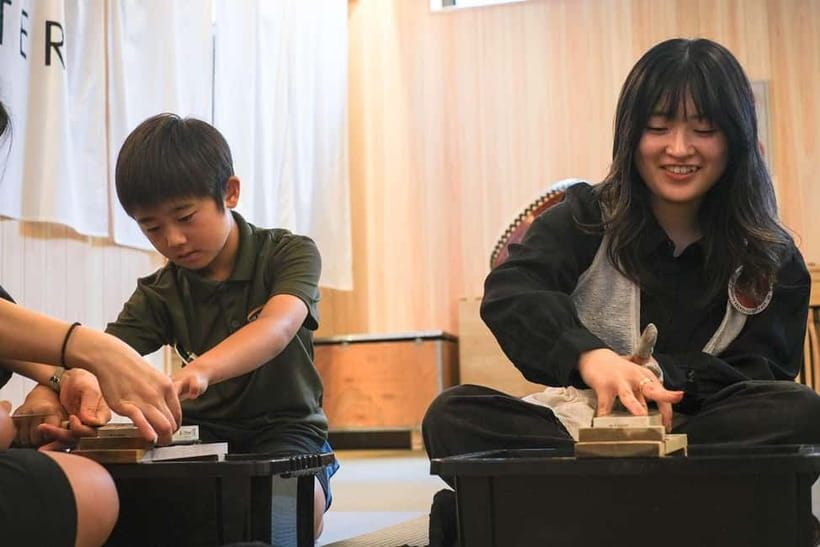
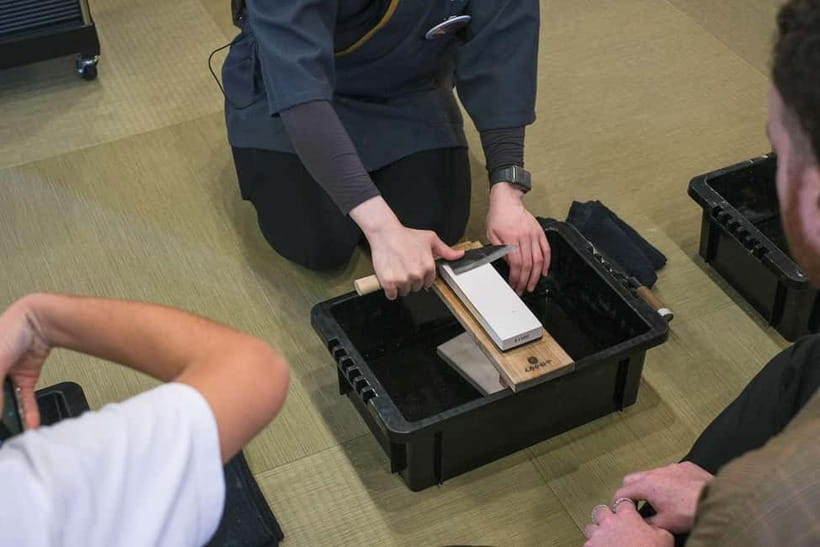
The sharpening stage is where this experience earns its place on a Tokyo itinerary. You work the blade across a sharpening stone, concentrating on the angle and movement. It takes more effort than a quick souvenir activity, but that physical work is exactly what makes the finished knife feel personal.
The process has a quiet, repetitive quality. You need to focus on keeping your movements steady rather than rushing to see results. That makes it a surprisingly calming break from Tokyo’s noise and crowds.
Do not expect to master Japanese knife sharpening in one session. You are learning the basic motion, not becoming a professional sharpener in 20 minutes. The instructors watch closely, offer corrections, and help you when your angle or pressure is off. The staff are patient with beginners, including children, and one family particularly enjoyed the class with a 10-year-old participant.
I would treat the lesson as an introduction you can build on at home. You will leave with a sharper knife and a better sense of how sharpening works, but continued practice is needed for real confidence.
The tactile nature of the task is a major strength. You can feel the blade change as the work progresses, and the result is visible. Several participants found the effort worthwhile because they could see their hard work turn into a finished object.
Engraving your name and attaching the handle
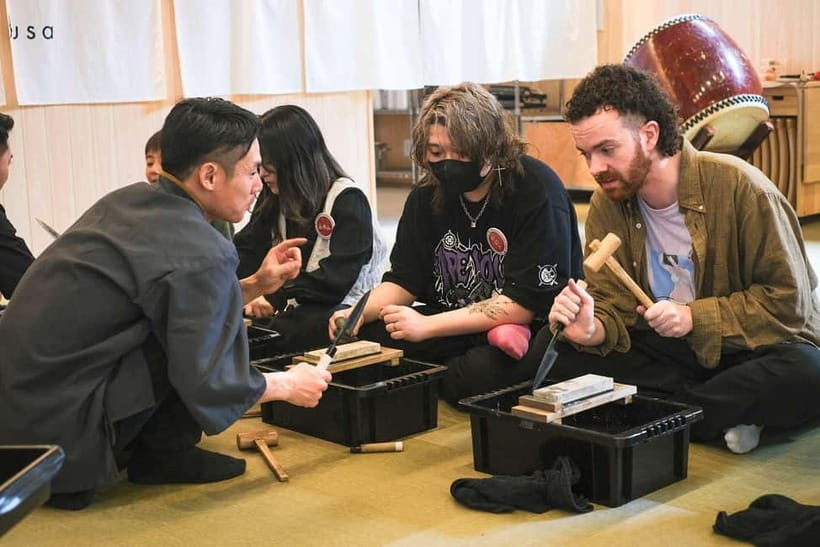
Once the blade is sharpened, you personalize the handle. The usual choice is your name written in Japanese characters, but the workshop also allows room for a picture or another simple idea. Staff help with the Japanese basics if you want to understand what you are engraving.
This is not delicate calligraphy on a polished luxury handle. It is a hands-on craft step, and your result may look a little uneven. That is part of the charm, though it also explains why some people would prefer more engraving methods or a better-quality handle.
After engraving, you attach the handle using a traditional hammer. The sound and physical action make this feel like an important final step, even though the staff guide you carefully. You are not left to guess how the pieces fit together.
The handle is one area where expectations should stay realistic. One participant felt the handle quality could be improved, and that is a fair point for a workshop priced at $161. The knife is designed to be a personalized memento and working tool, not necessarily a premium Japanese chef’s knife purchased from a specialist retailer.




Packaging, snacks, and the finished souvenir
At the end, the staff package the knife attractively and provide Japanese snacks and tea. The presentation helps turn the finished item into a gift, especially if you made a knife for a friend or family member.
You also receive a customized key holder with a unique design. It is a smaller extra, but it gives you something easy to carry during the rest of your trip while the knife stays packed away.
The finished knife has a useful story attached to it. You selected the blade, sharpened it, engraved the handle, and helped assemble it. That makes it more memorable than a ready-made kitchen tool bought from a shop.
If you plan to fly with it, pay attention to the packing instructions. Put the knife box into your checked luggage, or ask the staff about shipping it. Do not place it casually in your carry-on bag.
Is $161 a fair price?
The cost is high compared with simply buying a kitchen knife in Tokyo. You are paying $161 per person before any upgrade charge, transportation, or food outside the included snacks and drinks.
The better comparison is with a guided craft activity. The fee covers the knife, instruction, sharpening practice, engraving, handle assembly, drinks, snacks, packaging, and a key holder. You also get help in English throughout the process.
For someone who only wants a good Japanese knife, a specialist shop may offer better choice and perhaps better value. Asakusa and nearby kitchen districts have places where you can compare knives without paying for a workshop.
For someone who wants to learn a skill and take home an object made with personal effort, the calculation changes. The instruction is the point, and the knife becomes proof of what you did. The strong 4.9 rating from 153 reviews reflects how consistently the staff create a fun, well-supported class.
I think the experience offers fair value for a couple, family, or cooking enthusiast who will use the lesson and appreciate the story behind the knife. It is less appealing if you are watching every yen or only want the highest-grade blade.
Who will enjoy this workshop most?
You should consider booking if you fit one or more of these descriptions:
- You like cooking, kitchen tools, or Japanese craft.
- You want a souvenir with a personal connection to your trip.
- You enjoy hands-on activities more than passive sightseeing.
- You are traveling with a partner and want one person to participate while the other observes.
- You are curious about Japanese knives but do not have previous sharpening experience.
- You want an activity that works for older children who can follow careful instructions.
It also suits repeat visitors to Tokyo who have already seen the major sights. A craft workshop gives you a different way to spend part of the day and connects you with local traditions without requiring a full-day excursion.
I would be more cautious if you dislike repetitive handwork, have limited time, or need a luxury-quality knife. The sharpening is real work, and the engraving may not come out perfectly. That is normal, but it may bother someone expecting a flawless professional finish.
Wheelchair access is listed, and English-speaking assistance is available. Alcohol and drugs are not allowed. Friends and relatives who only want to watch must pay an observation fee on site, so factor that into the cost if you are not booking a knife for everyone.
Making it fit into an Asakusa day
The central Asakusa location makes this easy to pair with other Tokyo plans. Allow time to reach the building, find the fifth-floor activity center, and settle in before the 90-minute session begins.
The workshop itself can run longer than the advertised approximate duration, especially if the group needs extra help with sharpening or engraving. I would leave a generous gap before your next reservation.
The experience also works well before visiting Tokyo’s kitchen district. After learning how different knives are used, you may find yourself looking at shop displays with a sharper eye. One participant used the workshop as a starting point before buying another knife afterward.
Keep your luggage plans in mind. A knife box is not something you want to carry through airport security in hand luggage, so leave room in your checked bag or ask about shipping at the center.
My verdict: book it if the process matters as much as the knife
I recommend the BUB Activity Center workshop if you want a personal, useful souvenir and enjoy learning by doing. The strongest parts are the patient English-speaking instruction, the chance to sharpen a real blade, and the small cultural lesson that explains why Japanese knives come in different forms.
The weaknesses are clear too. The price is substantial, upgraded knives cost extra, and the handle may feel less refined than the blade-focused presentation suggests. This is a craft memory, not a bargain shopping trip or a full knife-forging class.
Book it for the experience, the conversation, and the satisfaction of taking home something you helped create. Skip it if you only want to purchase a top-quality knife at the lowest possible price.
FAQ
Where is the Tokyo knife-making workshop held?
It is held at BUB Activity Center in the Heiwa Building at Tokyo, Taito-ku, Asakusa, 2 Chome 6-11. Take the elevator to the fifth floor.
How long does the activity last?
The activity takes approximately 90 minutes, or about 1.5 hours. It may take longer if extra help is needed during sharpening or engraving.
Do I need previous knife-sharpening experience?
No. The workshop is suitable for beginners, and English-speaking staff guide your movements and provide corrections.
What kind of knife is included?
The booking includes a standard-size, multitasking knife to take home. You can choose from several knife types, with some larger styles requiring an additional fee.
Can I bring someone who does not want to make a knife?
Yes. Friends or relatives may observe, but an observation fee is paid on site. The observer does not receive the included knife.
How should I take the knife home?
Place the knife box in your checked luggage, or ask the staff to ship it. Do not put the knife in your carry-on luggage.
More Workshops & Classes in Tokyo

More tours in Tokyo we've reviewed











Workshops, compared.
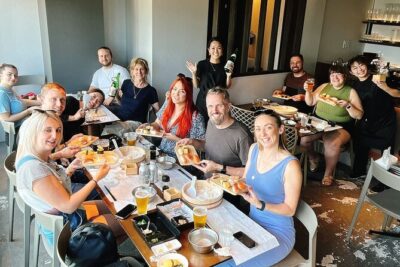 ★ 5.0Sushi Making Tokyo Roll and Authentic Japanese Sushi ClassFrom $59
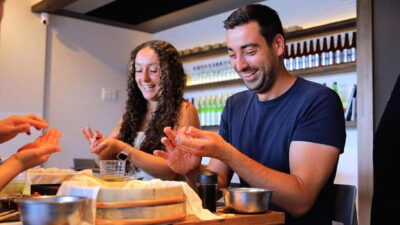 ★ 4.9Tokyo: Roll and Authentic Sushi Making Class in AsakusaFrom $581h 40m
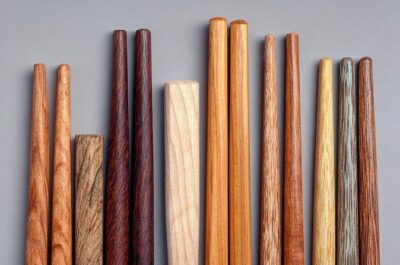 ★ 5.0Tokyo Shinjuku Chopsticks Making ClassFrom $20
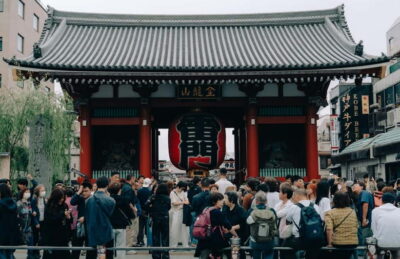 ★ 4.9Tokyo: Sushi Making Class in a Happi Coat near a Famous SpotFrom $421h 30m
 ★ 4.8Chopstick Making Workshop in GinzaFrom $251 hour
 ★ 5.0Tokyo Sushi Making Class in Tsukiji with Professional ChefFrom $49