
Reviewed · SAMURAI & NINJA EXPERIENCES
Samurai themed Entertainment show in Shinjuku
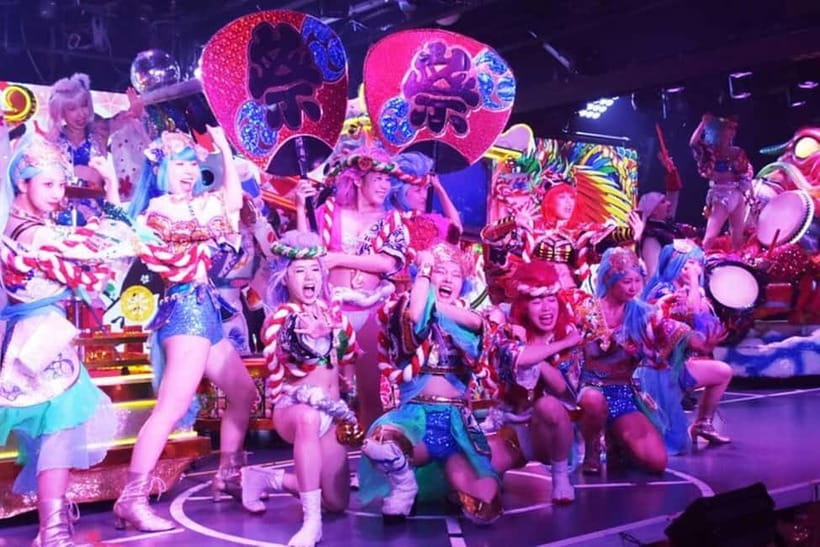
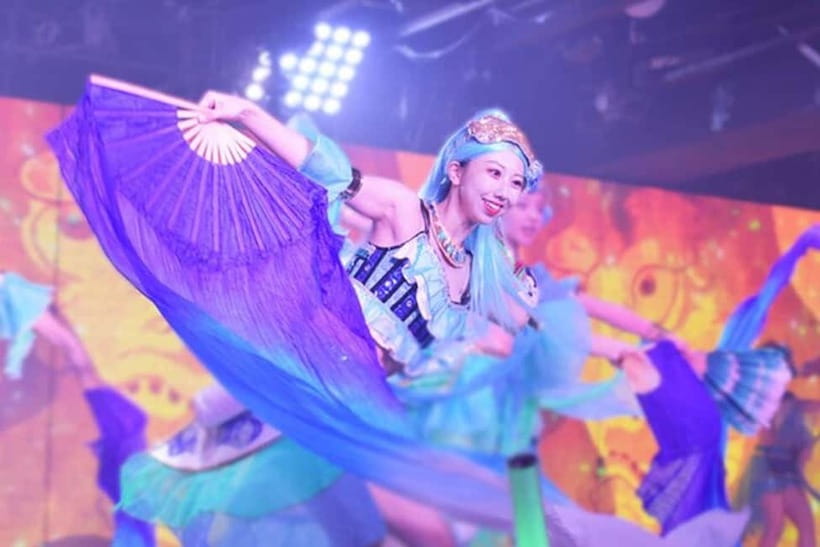
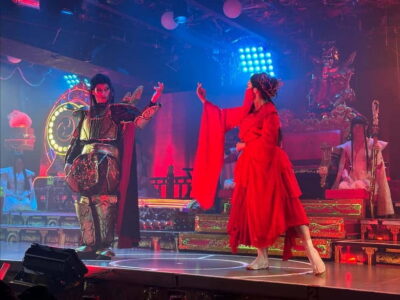
Shinjuku’s Samurai Restaurant show is less a lesson in samurai history than a full-throttle stage spectacle. Expect musicians, performers, bright costumes, and a string of strange, high-energy scenes in a theatrical space that feels intentionally disconnected from old Japan. The mood is crazy and colorful, with talent and enthusiasm carrying the performance.
I like the way the show gives you a distinctly Japanese night out without requiring a long excursion from central Tokyo. I also like the simple ticket choice: a lunch box or two drinks are included, so you can settle in without buying a separate meal. The main caution is the price. At $102 per person, the extended breaks between short scenes can make the show feel expensive if you expect nonstop action.
In This Review
- Key points to know before booking
- What the Samurai Restaurant show really is
- Arriving in Shinjuku’s Kabukicho area
- The first impression inside the venue
- How the 90-minute performance unfolds
- The performers bring the night to life
- Food and drinks included with admission
- Is the spectacle authentic Japanese culture?
- Photography rules and comfort tips
- The price, cancellation terms, and booking value
- Who should book this unusual Shinjuku night out?
- Should you book the Samurai Restaurant show?
- FAQ
- Where is the Samurai Restaurant show held?
- How long does the show last?
- How much does the experience cost?
- What does the ticket include?
- Are souvenirs included?
- Can children attend the show?
- Is smoking allowed inside the venue?
- Can I take photographs or videos?
- Can I wear sunglasses inside?
- Can I cancel the booking for a refund?
Key points to know before booking
- The show lasts 90 minutes, but the actual performance comes in several short sections with pauses between them.
- The mood is deliberately over-the-top, mixing samurai imagery, music, costumes, and modern entertainment rather than presenting a serious historical production.
- Your ticket includes one lunch box or two drinks, which helps explain part of the cost.
- The strongest feature is the performers’ energy, especially the musicians and stage artists.
- The Shinjuku setting can feel rough around the edges, so plan your route and keep your expectations realistic.
- Entry is limited to people aged 18 and over, and flash photography, sunglasses, and smoking inside are not allowed.
What the Samurai Restaurant show really is
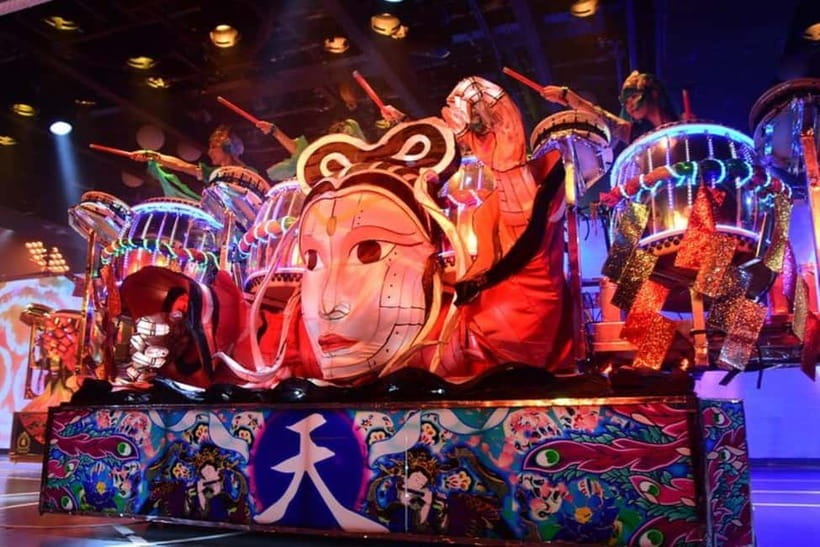
The name may lead you to expect a formal display of swordsmanship or a polished account of samurai life. That is not the right frame. This is neo-entertainment, a flashy stage show that borrows Japanese symbols and turns them into a loud, playful performance.
You will see a quirky version of Japan rather than a careful recreation of its past. The appeal comes from the collision of old-looking costumes and modern theatrical energy. It is knowingly excessive, sometimes odd, and designed to leave you thinking, What did I just see?
That makes the show a good match for you if you enjoy unusual nightlife and theatrical surprises. It is less suitable if you want quiet cultural interpretation, detailed historical context, or a restrained performance.
A few more Tokyo tours and experiences worth a look

Arriving in Shinjuku’s Kabukicho area
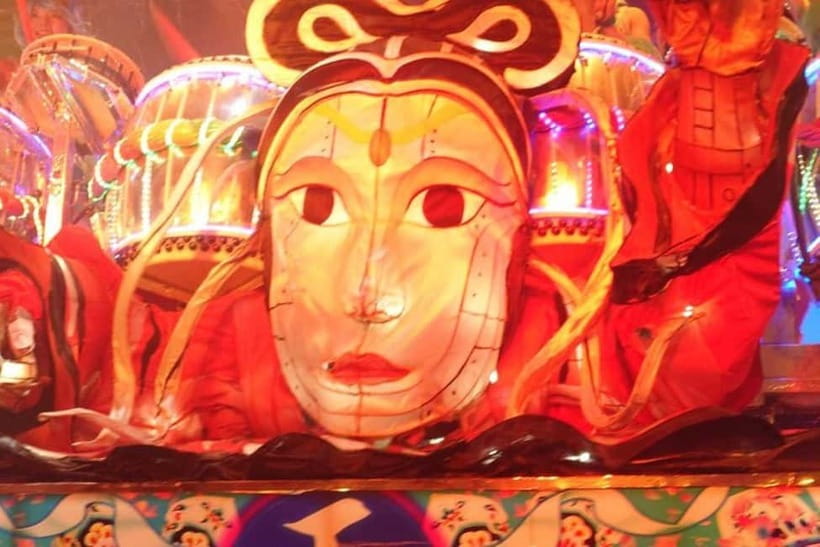
The venue is in Shinjuku, one of Tokyo’s best-known entertainment districts. The wider area is crowded with restaurants, bars, neon signs, and businesses aimed at late-night visitors. Some streets can feel seedy or uncomfortable, especially if you are not used to Tokyo’s nightlife districts.
That does not mean the show itself is unsafe or dishonest. It does mean you should treat the approach as part of the practical calculation. Walk directly to the venue, keep your belongings close, and do not let aggressive touts steer you into another business.
The entrance and waiting arrangements matter because smoking is allowed in the ground-floor waiting area, while smoking is not allowed inside the show venue. If you dislike smoke, you may want to spend as little time as possible in that waiting area.
A passport scan has also been reported at entry. This can feel unusual, especially for a performance that includes drinks, so bring the identification required for your booking and allow a little patience at the door. The supplied information does not explain the reason for the scan or state that every booking receives identical treatment.
The first impression inside the venue
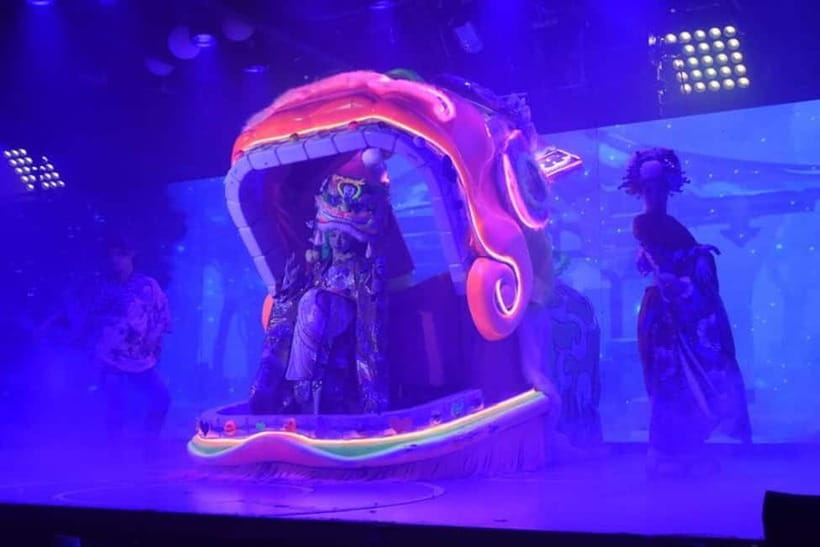
The room is designed to make an impact before the performance begins. The setting is not a museum-like space or a traditional theater that asks you to sit quietly and admire historical detail. It is a purpose-built entertainment environment, full of theatrical Japanese references and a deliberately strange tone.
You might find the design exciting or garish. That split reaction is important. The show’s visual style is part of the product, not a minor decoration. If you enjoy colorful costumes, loud stage presentation, and a sense of controlled chaos, the room prepares you for the right kind of evening.
If you prefer subtle design, natural materials, or a careful presentation of Japanese culture, the venue may feel like a tourist production from the moment you enter. There is no point booking this and hoping it will turn into a traditional cultural recital.
How the 90-minute performance unfolds
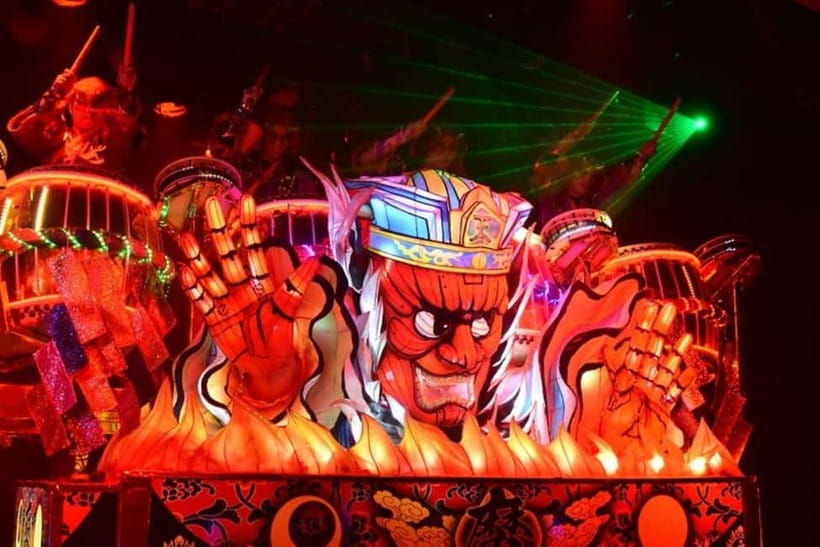
The advertised duration is 90 minutes. The production is not one continuous scene. Instead, the performance moves through short sections, with some scenes lasting only around five minutes and pauses that can reach about 15 minutes.
This structure is the biggest issue to understand before paying $102. When the performers are on stage, the show can be highly entertaining. The musicians and performers bring strong energy, and the colorful staging creates the kind of spectacle that is easy to remember.
The pauses change the rhythm. You may use them to eat your lunch box, enjoy a drink, take photographs, or talk with your companions. But if you expect 90 minutes of continuous music and action, the gaps may feel too long.
I would think of the ticket as a 90-minute venue visit with several performance blocks, not as a 90-minute concert. That distinction makes the schedule easier to accept. It also helps explain why some people find the experience excellent while others consider it poor value.
The performers bring the night to life
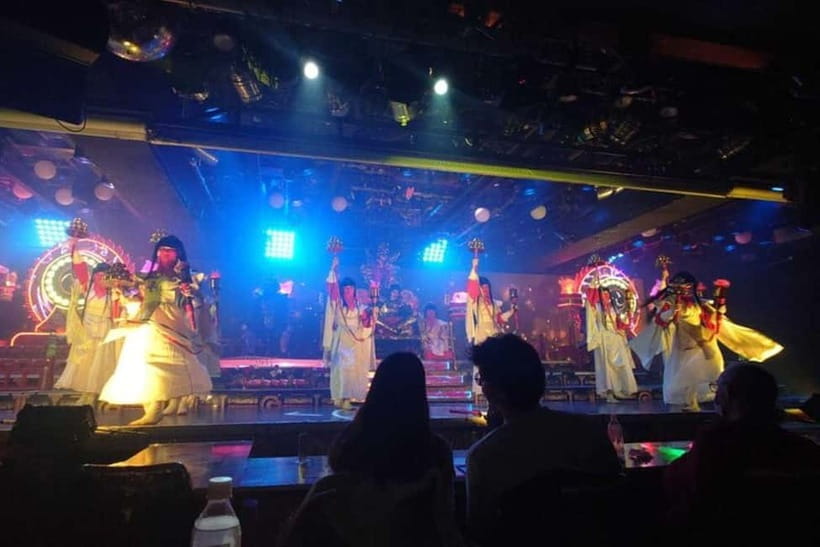
The most consistently praised part of the show is the human energy on stage. The musicians and performers are talented, enthusiastic, and committed to the exaggerated tone. Their work gives the production its charge, even when the staging feels too loud or the costumes look cheap to some eyes.
The performance appears to depend more on attitude and momentum than on a carefully developed story. You are not going to follow a detailed historical plot. Instead, you will watch a series of visual and musical moments built to surprise you.
That can be freeing. You do not need background knowledge of Japanese history to understand the basic appeal. You simply watch the performers throw themselves into the spectacle.
It can also be frustrating. Without a clear story or strong historical explanation, the show may feel like a succession of unrelated set pieces. The production asks you to enjoy the sensation rather than search for a serious message.
A few more Tokyo tours and experiences worth a look
Food and drinks included with admission
The $102 ticket includes one food option: a lunch box, or two drinks. This is useful, but it should not be treated as the main reason to book. The food and drinks add convenience and help turn the performance into a complete evening activity, yet the stage show remains the central purchase.
The lunch box is practical if you want something to eat during the longer pauses. Two drinks may suit you better if you have already eaten in Shinjuku or prefer to keep the evening lighter. The supplied details do not specify the menu, portion size, or drink selection, so do not book based on a particular dish.
The timing of the food matters. Because the performance includes breaks, you may have a chance to eat without missing a major continuous scene. Still, listen for venue instructions and be prepared for the show to restart after a pause.
At this price, I would compare the ticket with the cost of a normal Shinjuku dinner and a separate performance. If you want an unusual night out and would otherwise spend money on food and drinks, the package may feel reasonable. If you are mainly paying for stage time, the gaps make the value less convincing.
Is the spectacle authentic Japanese culture?
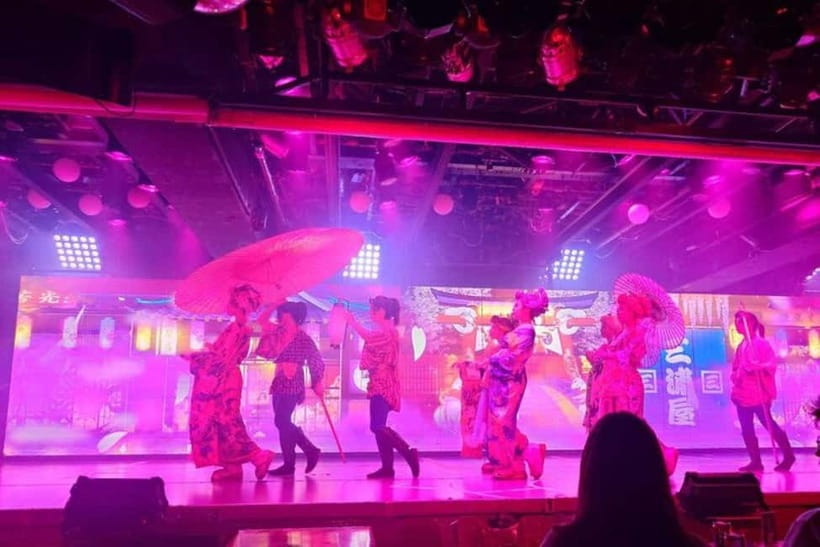
The show uses samurai imagery and traditional Japanese references, but it should not be your only encounter with Japanese culture. It presents a playful, commercial version of the country, with history used as a visual starting point rather than as a subject for careful explanation.
That does not make it worthless. Japan has a long tradition of theatrical exaggeration, comic performance, costume, music, and visual surprise. This show taps into that appetite for spectacle, then adds a modern entertainment style built for an international audience.
I would describe it as cultural-flavored entertainment rather than cultural education. You will get a memorable look at one side of Tokyo’s nightlife economy. You will not leave with a stronger understanding of samurai life, military history, or traditional theater forms.
That distinction is useful when planning your schedule. Pair the show with a museum, temple, historic district, or guided cultural visit if you want a fuller picture of Japan. Book this event for its eccentric stage personality.
Photography rules and comfort tips
Photography and video are allowed, which is a real advantage for a show built around costumes and visual effects. Flash photography is not allowed, so use your phone or camera without flash and follow staff instructions.
Do not wear sunglasses inside. This rule is easy to follow, but it is worth noting because the show’s lighting may be intense and colorful. If you need prescription glasses, the restriction specifically concerns sunglasses.
Smoking is forbidden inside the show venue. Smoking is allowed in the ground-floor waiting area, so the building may not be completely smoke-free even though the theater itself is nonsmoking.
The age limit is firm: no one under 18 may enter. This is an adult-only night activity, not a family show. The supplied information does not provide a separate child ticket or an exception for younger children accompanied by adults.
The price, cancellation terms, and booking value
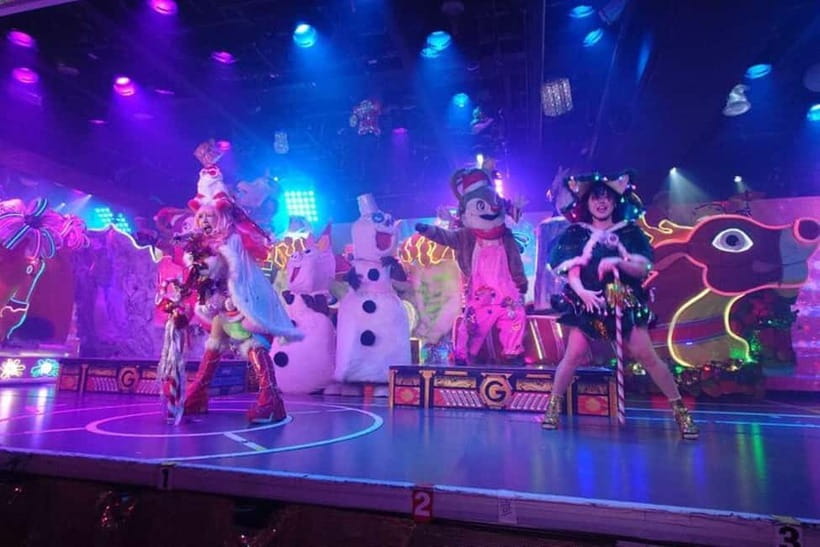
At $102 per person, this is a premium entertainment choice. You are paying for a central Shinjuku production, a 90-minute booking, and either a lunch box or two drinks. The ticket can make sense if you value novelty and want a ready-made evening plan.
The value is weaker if you judge the admission by continuous stage time. Short scenes followed by pauses of about 15 minutes can make the production feel padded. One lower-priced booking without food has also been noted, so check the available ticket types carefully before you pay.
That comparison is especially important for couples and groups. The difference between a food-and-drink package and a show-only option can become large when multiplied across several people. If you plan to eat elsewhere, the cheaper choice may fit your evening better.
Free cancellation is available up to 24 hours in advance for a full refund. You can also reserve now and pay later, which helps if you are arranging a Tokyo schedule before your plans are final. Check the starting time and current availability when booking, since the supplied details do not give one fixed daily start.
Who should book this unusual Shinjuku night out?
I would recommend the show to you if you like:
- Oddball theatrical productions
- High-energy musicians and performers
- Colorful costumes and exaggerated stage design
- Nightlife in Shinjuku
- Events that are more memorable than refined
- Photography without flash
- Adult-only entertainment
You may want to skip it if you want a serious samurai story, a traditional Japanese performance, or 90 minutes of uninterrupted action. You should also think twice if a garish venue, a rough entertainment district, or a premium ticket price will bother you.
The show has enough personality to be a highlight for the right audience. It has enough excess and downtime to disappoint the wrong one. Your expectations will matter as much as the performers.
Should you book the Samurai Restaurant show?
Book it if you want a loud, strange, distinctly commercial slice of Shinjuku nightlife. The performers’ energy, strong musicianship, and colorful stage moments are the reasons to go. The show can be a memorable break from temples, gardens, and formal cultural attractions.
Before booking, check the exact ticket type. At $102, the food-and-drink package is easier to justify when you want a full evening activity, but a cheaper show-only option may be the smarter choice if you have already made dinner plans.
My practical verdict: book for spectacle, not history; for surprise, not subtlety; and for the performers, not nonstop action. If that sounds like your kind of night, the Samurai Restaurant is a reasonable Shinjuku splurge. If you want value measured in continuous performance or serious cultural insight, spend your money elsewhere.
FAQ
Where is the Samurai Restaurant show held?
The show is held in Shinjuku, in Tokyo on Honshu, Japan.
How long does the show last?
The experience lasts 90 minutes.
How much does the experience cost?
The listed price is $102 per person.
What does the ticket include?
The ticket includes admission to the Samurai Restaurant show and either one lunch box or two drinks.
Are souvenirs included?
No. Souvenirs are not included in the ticket price.
Can children attend the show?
No. The experience is not suitable for anyone under 18.
Is smoking allowed inside the venue?
No. Smoking is not permitted inside the show venue. Smoking is allowed in the waiting area on the ground floor.
Can I take photographs or videos?
Yes. Photography and video are allowed, but flash photography is not permitted.
Can I wear sunglasses inside?
No. Sunglasses are not allowed inside the show.
Can I cancel the booking for a refund?
Yes. You can cancel up to 24 hours in advance for a full refund. The activity also offers a reserve-now, pay-later option.
More Shows & Performances in Tokyo


More Samurai & Ninja Experiences in Tokyo
More Shinjuku Tours in Tokyo

More tours in Tokyo we've reviewed




Samurai & Ninja Experiences, compared.
 ★ 4.5Tokyo: Samurai Restaurant Show Ticket with 2 DrinksFrom $551h 30m
 ★ 4.6Tokyo: Samurai Ninja Museum Guided tour and ExperienceFrom $27
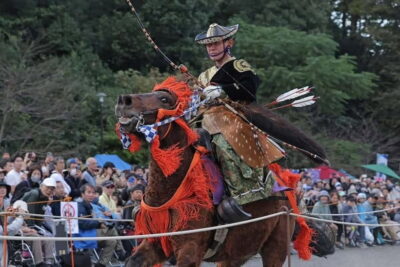 ★ 5.0Tokyo: Samurai Sword & Archery Class from Samurai DescendantFrom $1933 hours
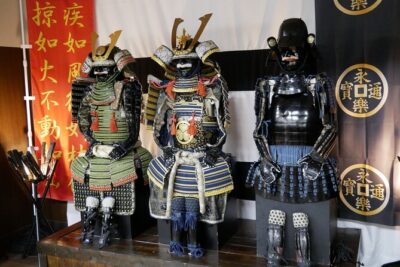 ★ 5.0Best Samurai Experience in TokyoFrom $65
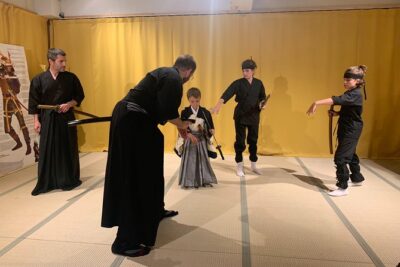 ★ 5.0Ninja Experience (Family Friendly) at Samurai Ninja Museum TOKYOFrom $47
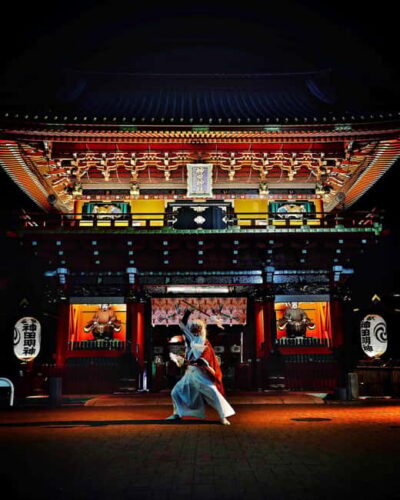 ★ 4.6Tokyo: Samurai Entertainment Night Show in Kanda ShrineFrom $412 - 3 hours