
Reviewed · SUMO EXPERIENCES
the SUMO show with Dinner
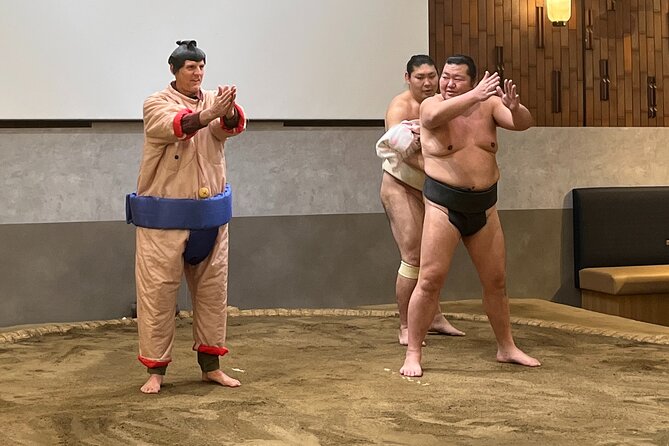
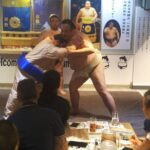
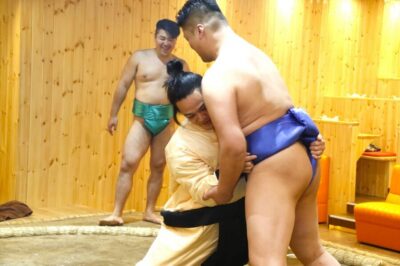
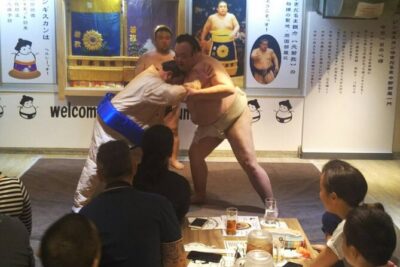
A sumo dinner show gives you something a tournament ticket cannot: close contact with the wrestlers. In about 90 minutes, you learn the basic rituals, watch three exhibition bouts, eat sukiyaki and chanko-style soup, and may even climb into the ring area in a costume for a playful match.
I like the friendly, hands-on format and the meal, which is cooked at the table and includes rice, soup, and ice cream. The show also works well for mixed-age families, with children often keen to challenge a retired wrestler. The main drawback is value: at $118.89 per person, the food may feel ordinary if you are paying mainly for dinner, and seating can affect your view.
In This Review
- Key points at a glance
- Meeting retired wrestlers in Tokyo’s sumo district
- What the 90-minute program actually includes
- Sukiyaki, chanko soup, and a meal cooked at your table
- Why the show works for families
- Seating, timing, and the view
- The atmosphere: part lesson, part comedy show
- Is $118.89 a fair price?
- Who should book this sumo dinner?
- Booking and cancellation details worth knowing
- Should you book the SUMO show with Dinner?
- FAQ
- Where does the sumo dinner show take place?
- What time does the experience start?
- How long does the activity last?
- Does the experience include dinner?
- Are drinks included?
- Are the sumo wrestlers active professionals?
- Can I try sumo myself?
- Is the show presented in English?
- Can I request a vegetarian meal or report an allergy?
- Does the activity return to the starting point?
- Can I cancel for a full refund?
Key points at a glance
- Three live exhibition bouts: Retired professional wrestlers demonstrate real sumo actions and techniques.
- A rare chance to participate: You can try sumo yourself while wearing a costume supplied by the organizers.
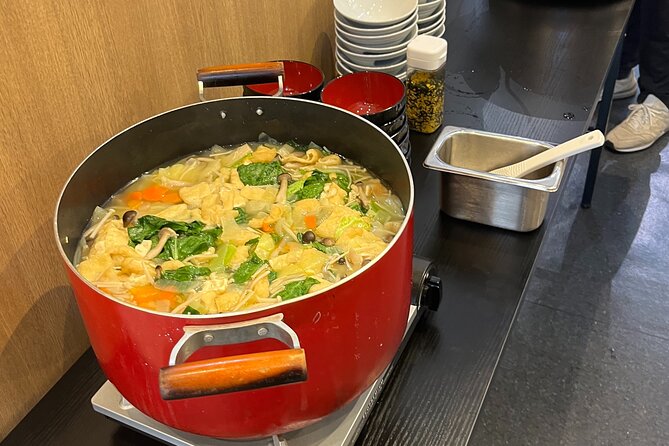
- Traditional-style dinner: Sukiyaki and chanko-style soup arrive with rice and ice cream.
- English explanations: A host covers sumo history, etiquette, training, rules, and forbidden techniques.
- Family-friendly entertainment: Children and adults can join the demonstrations, questions, and photo session.
- Compact evening plan: The 7:00 pm show lasts about 1 hour 30 minutes and returns you to the starting venue.
Meeting retired wrestlers in Tokyo’s sumo district
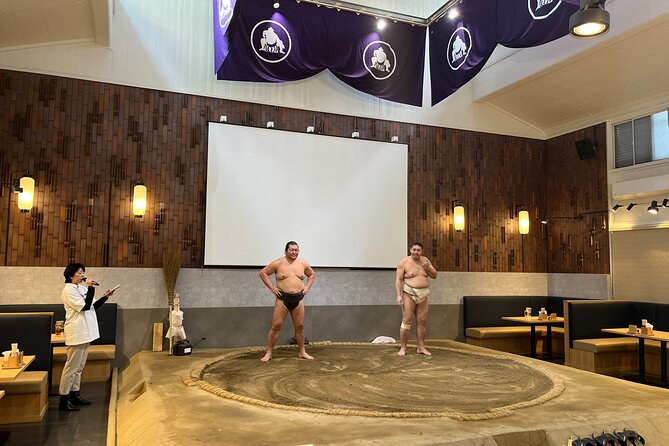
The evening begins at Yokozuna Tonkatsu, also identified as Sumo lunch, at 3-chome-1-11 Tatekawa in Sumida City. The activity is associated with Ryogoku, Tokyo’s best-known sumo area, and ends at the same meeting point.
You meet retired wrestlers rather than watching active competitors in a formal tournament. That distinction matters. A tournament asks you to sit quietly and observe a highly traditional contest. This show is built around explanation, conversation, laughter, and participation.
The wrestlers explain what they are doing as they demonstrate the sport’s basic actions. You hear about sumo history, daily life, training, manners, match rules, and techniques that are not allowed. The explanations are in English, which makes the evening useful even if you know little about sumo beyond the familiar shikiri, or pre-match preparation.
The setting is near public transportation, but the supplied directions do not specify a single station route. Check the address carefully before leaving your hotel, and allow time to find the venue. The start time is 7:00 pm, so this fits neatly after a day of sightseeing, though I would not schedule a distant evening reservation immediately afterward.
A few more Tokyo tours and experiences worth a look
What the 90-minute program actually includes
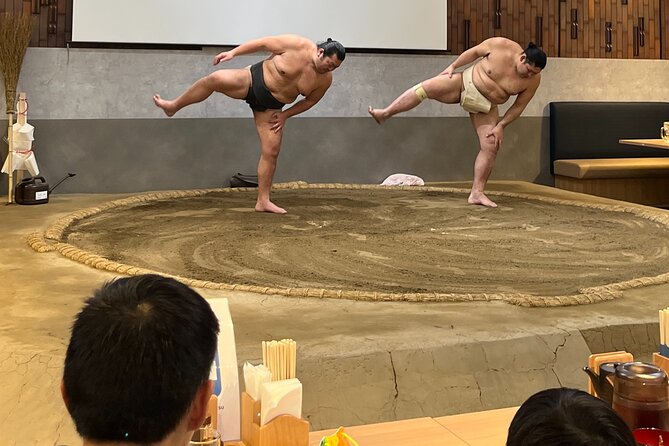
The program follows a clear sequence. First comes an introduction to sumo fundamentals, with two retired wrestlers showing the basic movements. This is more useful than a quick photo opportunity because it gives you a way to understand the bouts that follow.
Next, the wrestlers demonstrate several techniques, including prohibited moves. That small detail adds context. Sumo is not simply two large men pushing until one steps out. It has a set of actions, boundaries, rituals, and rules, and the demonstration helps you see the difference between an accepted technique and a foul.
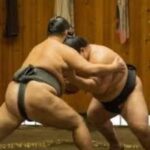
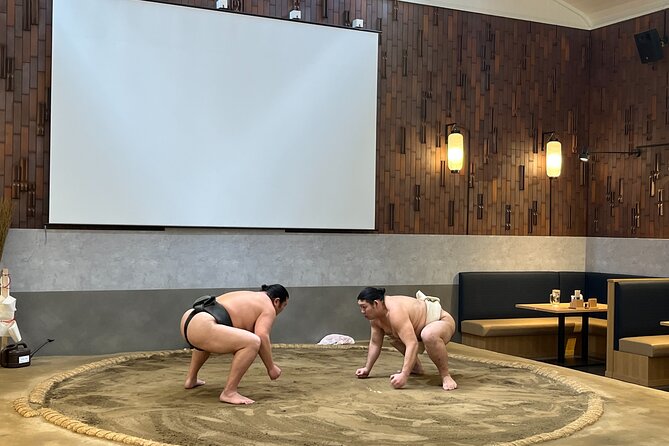
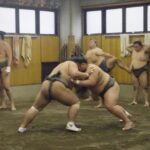
The main performance includes three real exhibition matches. These are not tournament bouts, and the atmosphere is lighter, but you still get the physical force and quick movement that can be hard to appreciate on a screen. The matches are short enough to keep the pace moving, and the host explains what is happening for newcomers.
After the bouts, audience participation becomes a major part of the evening. You may be invited to try sumo against one of the wrestlers, wearing a costume provided by the organizers. Adults can take part, but children often make enthusiastic opponents. The point is fun rather than competition, and the retired wrestlers are described as both strong and gentle.
The program also includes questions and souvenir photos. Each group has an opportunity to pose with the wrestlers, making this more personal than a standard stage performance. If you prefer to watch rather than participate, you can do that, but the evening is designed to involve you.
Sukiyaki, chanko soup, and a meal cooked at your table
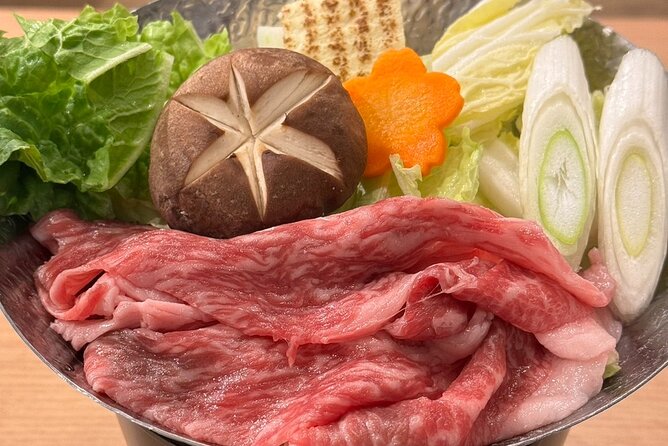
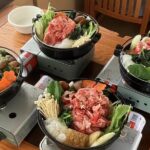
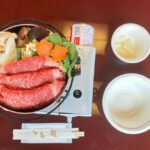
Dinner is a central part of the booking, not an afterthought. You receive sukiyaki and chanko-style soup, along with rice and ice cream. Chanko is associated with the sumo world, so this meal gives you a direct connection to the wrestlers’ daily food culture.
The sukiyaki is prepared in front of you on the table. That makes the meal feel active and communal, and it also means the food arrives fresh and hot rather than as a pre-plated dinner. The portions are described as filling, with several people particularly enjoying the fresh, simple ingredients.
I would keep your expectations sensible. Several diners found the food delicious and plentiful, while one felt it was mediocre for the price and another cared more about the sumo than the meal. The dessert is a simple cup of vanilla ice cream, not a special Japanese sweet. Drinks are not clearly included, so budget extra for them. At least one detailed account described the drinks as reasonably priced, but the exact cost is not provided.
Dietary needs can be noted when you book. Vegetarian meals have been accommodated, but requests made less than five days before the event may not receive a response. Put allergies and restrictions in the reservation notes well ahead of time, and do not assume that a late request can be handled.
Why the show works for families
This is one of the better sumo options for a family with different ages and interests. The explanations give adults some cultural background, while the matches, comedy, and audience challenges keep younger children involved.
Children as young as four and eight have enjoyed the program, and families with children aged five and up have found something to like. That does not mean every child will sit quietly through the full presentation. The interactive portions help break up the explanations, and the host keeps the event moving.
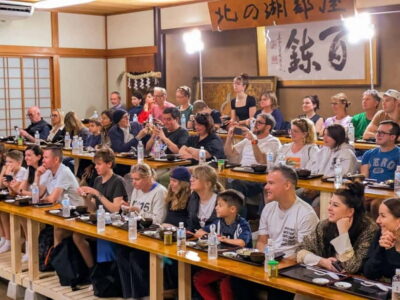
You should also know that this is a social dinner setting. You may share a table with another group, and larger parties may not all sit together. That can be a drawback if your group expects a private meal, but it also suits the friendly, communal spirit of the evening.
The show has a maximum of 60 participants. That is large enough for a lively room, but small enough for the wrestlers and host to work directly with the audience. The atmosphere is not a formal theater performance. Expect people to laugh, ask questions, volunteer, and take photos.
Seating, timing, and the view
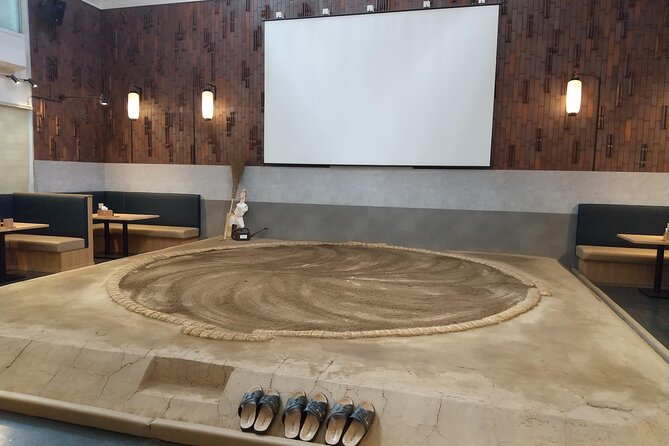
Seating is assigned according to the order reservations are received. Arriving early does not guarantee a better seat, so do not build your entire evening around arriving far ahead of time.
Most seating appears to offer a reasonable view, but one party arrived early and still found that a table blocked part of the action. They had to stand for much of the show. That is the clearest practical warning about the room: your view may depend on the table arrangement, and the venue is not presented as a theater with raised rows.
If you have mobility concerns, the supplied information says most people can participate, but it does not give detailed information about steps, aisle width, or accessible seating. Contact the provider before booking if you need a specific arrangement. The activity ends where it begins, which makes the return simple once the show is over.
The advertised duration is approximately 1 hour 30 minutes. That is enough time for the explanations, three bouts, audience matches, meal, questions, and photos, but it is not a full evening-long cultural course. If you want a long formal sumo lecture or a complete tournament day, this is not a substitute.
A few more Tokyo tours and experiences worth a look


The atmosphere: part lesson, part comedy show
The host plays an important role. The program needs someone to explain rules and customs, bring people into the action, manage questions, and keep the pace moving. The host is described as informative, patient, and funny, while the wrestlers are personable and comfortable with the audience.
Comedy is a real part of the appeal. The exhibition bouts have a playful edge, and the audience challenges often produce the biggest laughs. The wrestlers’ size makes the demonstrations impressive, but their relaxed manner keeps the evening approachable.
That tone may not suit you if you want a solemn or highly traditional presentation. This is an introduction built for international visitors, not a quiet lesson in ceremonial detail. It presents sumo accurately enough to explain its fundamentals, while using humor to make the sport accessible.
The balance works best when you arrive ready to participate. You can learn the rules, watch the wrestlers, ask questions, and then test your own courage. Even if you decline the wrestling challenge, the photo session gives you a chance to meet the performers directly.
Is $118.89 a fair price?
At $118.89 per person, this is not a cheap dinner or a budget cultural stop. You are paying for several parts at once: a hosted English-language presentation, retired professional wrestlers, live demonstrations, three bouts, audience participation, photos, and dinner.
The value is strongest if you want a single, easy-to-book evening that combines entertainment and cultural background. Buying a tournament ticket can be difficult, and a tournament does not guarantee the same access to wrestlers or explanations. This show gives you a more personal introduction without asking you to understand the sport in advance.
The value is weaker if you are judging it as a restaurant meal. The dinner is fresh and filling, but it is simple. The ice cream is basic, and drinks cost extra unless your booking says otherwise. If food quality is your top priority, you may find the price high.
I would compare it with the cost of a Tokyo evening show, a meal, and another cultural activity combined. For a family, the interactive sections and group photos may justify the price. For a solo diner who mainly wants excellent sukiyaki, it probably will not.
Who should book this sumo dinner?
I would recommend it most strongly to:
- First-time visitors who want a clear introduction to sumo
- Families with children who enjoy joining demonstrations
- People who could not obtain tournament tickets
- Visitors who prefer an informal, interactive show to a formal performance
- Anyone interested in Japanese food culture as well as the sport
- Groups looking for a memorable final evening in Tokyo
I would be more cautious if you dislike audience participation, shared tables, or simple set meals. You should also reconsider if you expect active grand champions, a full tournament atmosphere, or a private dinner table.
The experience is particularly useful early in a Tokyo visit because it gives you context for sumo. If you later see a match on television or visit a tournament, you will recognize the movements, rituals, and rules more easily.
Booking and cancellation details worth knowing
A mobile ticket is provided, and booking confirmation is issued within 48 hours, subject to availability. The event has a maximum of 60 people, so popular dates may fill.
Dietary restrictions and allergies should be entered at the time of booking. Requests received fewer than five days before the event may not be answered.
You can receive a full refund if you cancel at least six full days before the local start time. Cancelling two to six full days ahead brings a 50 percent refund. Within two full days, there is no refund, and changes are not accepted. Date changes are also not allowed within three days of the event, including for flight delays or illness.
You must follow staff instructions and behave considerately. Anyone causing trouble may be asked to leave without a refund. The rules are reasonable for a shared hall, especially when audience members are invited to participate.
Should you book the SUMO show with Dinner?
Book it if you want an entertaining first look at sumo, a filling Japanese-style meal, and the chance to meet retired wrestlers face to face. The three exhibition matches, audience wrestling, questions, and group photos make this much more personal than simply watching a sport from a seat.
Go in knowing what you are buying. The dinner is part of the package, but the show is the real reason to pay the price. If you value cultural context, family participation, and a memorable evening over a refined meal, this is a strong choice. If you want a serious tournament or a gourmet sukiyaki dinner, spend your money elsewhere.
FAQ
Where does the sumo dinner show take place?
The meeting point is Yokozuna Tonkatsu, also listed as Sumo lunch, at 3-chome-1-11 Tatekawa, Sumida City, Tokyo 130-0023, Japan. The activity is associated with the Ryogoku area.
What time does the experience start?
The show starts at 7:00 pm.
How long does the activity last?
The advertised duration is approximately 1 hour 30 minutes.
Does the experience include dinner?
Yes. Dinner includes sukiyaki and chanko-style soup, along with rice and ice cream.
Are drinks included?
The supplied information says food and drinks are not included unless specified. Check your booking details for the exact drink arrangement.
Are the sumo wrestlers active professionals?
The wrestlers taking part are retired professional sumo wrestlers. The activity includes demonstrations, exhibition matches, audience participation, and photos.
Can I try sumo myself?
Yes. You may be able to try sumo with one of the retired wrestlers. Participants wear a costume provided for the activity.
Is the show presented in English?
Yes. The explanations about sumo history, manners, training, techniques, and matches are given in English.
Can I request a vegetarian meal or report an allergy?
Yes. Enter dietary restrictions or allergies in the special notes when booking. Requests made fewer than five days before the event may not receive a response.
Does the activity return to the starting point?
Yes. The show ends back at the meeting point.
Can I cancel for a full refund?
Yes, if you cancel at least six full days before the experience start time. Cancellation two to six full days ahead receives a 50 percent refund, while cancellations less than two full days before the start receive no refund.
More Dining Experiences in Tokyo

More Shows & Performances in Tokyo
More Sumo Experiences in Tokyo
More tours in Tokyo we've reviewed






Sumo Experiences, compared.
 ★ 4.8Tokyo: Sumo Show Experience with Chicken Hot Pot and a PhotoFrom $1032 hours
 ★ 4.8Tokyo: Sumo Show and Dining ExperienceFrom $7990 minutes - 2 hours
 ★ 5.0the SUMO showFrom $89
 ★ 5.0Tokyo Shinjuku Sumo Show & Experience with PhotoFrom $79
 ★ 4.8Tokyo: Sumo Show and Experience in ShinjukuFrom $691h 30m
 ★ 4.6Tokyo: Sumo Tournament Tour with Chair Seat TicketsFrom $141