
Reviewed · PRIVATE DRIVERS
Tokyo Private Sightseeing Tour by Car and English Speaking Driver
Tokyo is a huge city, and this private car tour gives you a practical way to connect its far-flung highlights in one long day. You can move from the old temple district of Asakusa to fashionable Omotesando, with the driver waiting while you explore each stop.
I like the hotel pickup and drop-off, which removes much of Tokyo’s train-planning work. I also like the flexible pace, especially for families or anyone with limited mobility. The tradeoff is clear: ten stops in about nine hours is ambitious, and adding a Skytree observation-deck visit may mean cutting something else.
In This Review
- Key points to know before booking
- A smart way to cover a very large city
- Senso-ji gives you Tokyo’s old face
- Skytree offers the biggest view, at an extra cost
- Tsukiji is best for eating, not the old wholesale market
- Ginza shifts the mood to polished Tokyo
- Imperial Palace gardens provide a pause
- Tokyo Tower brings a classic city view
- Meiji Jingu is the day’s calmest walk
- Takeshita Street shows Harajuku’s youthful side
- Omotesando is the polished counterpoint
- Shibuya Crossing is a fitting final scene
- What the private car really adds
- How to plan the nine hours without racing
- Who gets the best value
- Should you book this Tokyo car tour?
- FAQ
- How long does the private Tokyo sightseeing tour last?
- How many people can join the private tour?
- Is hotel pickup and drop-off included?
- What does the tour vehicle include?
- Are Tokyo Skytree and Tokyo Tower admission tickets included?
- Is this a walking tour with a guide at every sight?
- Can the tour be canceled for a full refund?
Key points to know before booking
- A full Tokyo sampler: See Senso-ji, Tokyo Skytree, Tsukiji, Ginza, the Imperial Palace area, Tokyo Tower, Meiji Shrine, Harajuku, Omotesando, and Shibuya in one day.
- A private group of up to three: The $273.90 price is per vehicle and not per person.
- Your car stays useful between stops: The driver drops you near each area, waits, and collects you afterward.
- Flexible, but not unlimited time: Plan on roughly an hour at the major sights if you want to reach most of the route.
- English help from the front seat: Drivers named in bookings have included Ken, Bek, Louis, Jeffrey, Ali, Aki, Bob, and Adam.
- Walking guidance is limited: You receive assistance and sightseeing information mainly during the drives, not a full walking tour at every stop.
A smart way to cover a very large city
Tokyo is not one compact sightseeing center. Its best-known places spread across several districts, and changing trains between them takes time, especially when you are still learning the system. A private vehicle cannot remove traffic, but it can reduce the repeated work of finding stations, changing lines, and navigating crowded platforms.
The day lasts about nine hours and is designed for a small private group of up to three people. That makes the price easier to judge. At $273.90 per group, the cost works out to $91.30 per person if three people share it, before any paid admissions. For a couple, the per-person cost is higher, but you are paying for a private car, fuel, parking, tolls, bottled water, hotel pickup, and a driver rather than simply buying transport.
The route is customizable. You can tell the driver which sights matter most, and you can spend more or less time at each place. In practice, flexibility works best when you choose priorities before the car arrives. If you try to give every stop equal attention, you will mostly be taking quick looks and photos.
Drivers have been described as friendly, punctual, patient, and easygoing. Ken, Bek, Louis, Jeffrey, Ali, Aki, Bob, and Adam are among the names associated with bookings. The exact driver is important because the experience is built around that person’s communication and local assistance, but the service includes an English-speaking chauffeur rather than a separate walking guide.
Other private tours in Tokyo

Senso-ji gives you Tokyo’s old face
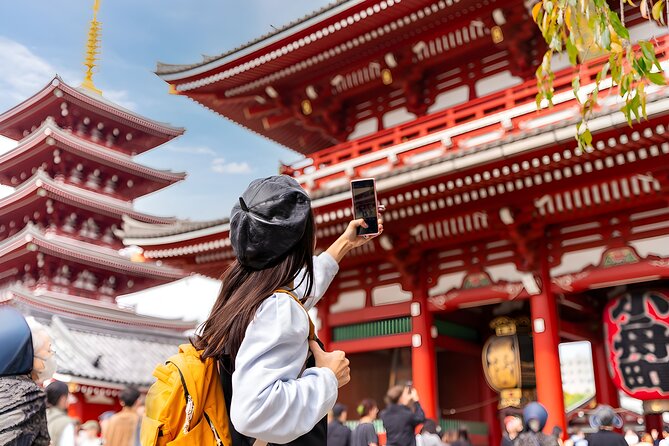
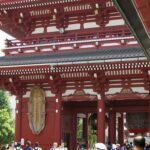
Begin in Asakusa at Senso-ji, Tokyo’s oldest and best-known Buddhist temple. The first sight is Kaminarimon, or Thunder Gate, with its large lantern and guardian figures. From there, Nakamise shopping street leads toward the temple grounds, lined with souvenir shops and traditional snacks.
You receive about an hour here, which is enough to see the main approach, enter the temple area, and get a feel for Asakusa. It is not enough for a slow exploration of every side street, shop, and nearby attraction. If this district matters deeply to you, ask to protect extra time here and shorten a later stop.
Admission to the temple is free. The setting can be crowded, particularly along the main approach, so this is a place where a private car helps before and after the walk but does not make the temple itself quiet. Your driver can drop you close to the sightseeing area and arrange a meeting point for the next leg.
Skytree offers the biggest view, at an extra cost
Tokyo Skytree rises 634 meters above Sumida and has two observation levels, the Tembo Deck and Tembo Galleria. On a clear day, the height gives you a broad view across Tokyo, while the adjacent shopping complex adds food and retail options.
The basic stop lasts about an hour, but the observation decks require a separate ticket. That ticket is not part of the tour price. You should also treat this as one of the day’s main choices, not a quick add-on. Security, ticketing, elevators, and time at the top can easily use more than the planned hour.
If you want to go up Skytree, tell the driver at the start of the day. A booking that includes every listed stop may no longer be realistic, especially if you want time for the view rather than a rushed visit. The tower is a strong choice for first-time visitors who value a city panorama, but the ground-level stop is enough if your main goal is to see many neighborhoods.
Tsukiji is best for eating, not the old wholesale market
Tsukiji is now known mainly for its outer market. The former wholesale operation is no longer the focus, but the streets still offer seafood, Wagyu, snacks, and other food stalls. This is one of the more useful places to build in a lunch break.
You have about an hour, so arrive with a simple plan. Pick a few things to try rather than attempting to inspect every stall. The market is a food stop first, and the cost of eating is extra. Your driver can suggest how to use the time, but you should not expect a formal food tour or a reserved meal.
Tsukiji also shows a different side of Tokyo from the polished shopping districts. It is active, crowded, and more casual. If your group cares more about local food than luxury retail, this may deserve more time than Ginza.
Ginza shifts the mood to polished Tokyo
Ginza is the city’s premier shopping and entertainment district, with luxury brands, department stores, fine dining, and modern buildings. It is a useful contrast after Tsukiji, which is nearby but feels far less polished.
The suggested hour lets you walk through the main shopping area and absorb the architecture. It is not enough for serious shopping or a long meal. You might find Ginza most useful as a short orientation stop, particularly if you want to see how Tokyo moves from market streets to high-end retail within a short distance.
There is no admission fee for simply exploring the district. Purchases and meals are, of course, your responsibility. If you are not interested in shopping, ask the driver to reduce this stop and give that time to Asakusa, Harajuku, or the Imperial Palace grounds.
A few more Tokyo tours and experiences worth a look
Imperial Palace gardens provide a pause
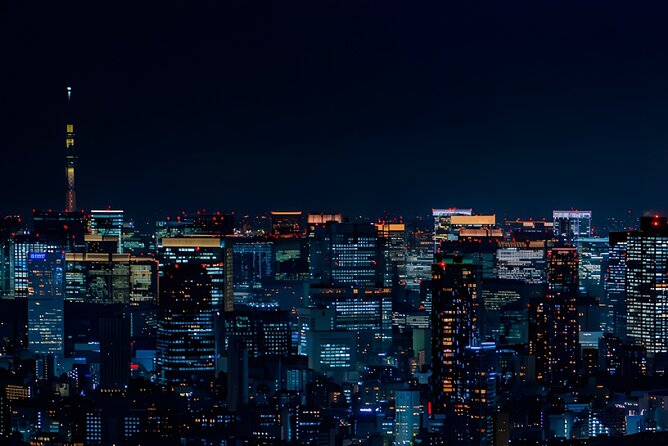
The public gardens around the Imperial Palace offer a quieter hour, with stone walls, moats, seasonal flowers, and views toward the palace grounds. This is less about entering an indoor attraction and more about seeing a historic center of Tokyo with room to breathe.
The grounds can be a welcome break in a packed schedule. After several crowded commercial areas, the open spaces and moats change the pace. Keep expectations measured, though. This is not a guaranteed palace interior visit, and the itinerary describes the public garden areas.
For many groups, this is a good place to slow down, take photographs, and walk without trying to shop or eat. If mobility is a concern, mention it early. One driver, Bek, was able to bring a passenger close to each destination and collect the group from a convenient point, though exact vehicle access depends on the location.
Tokyo Tower brings a classic city view
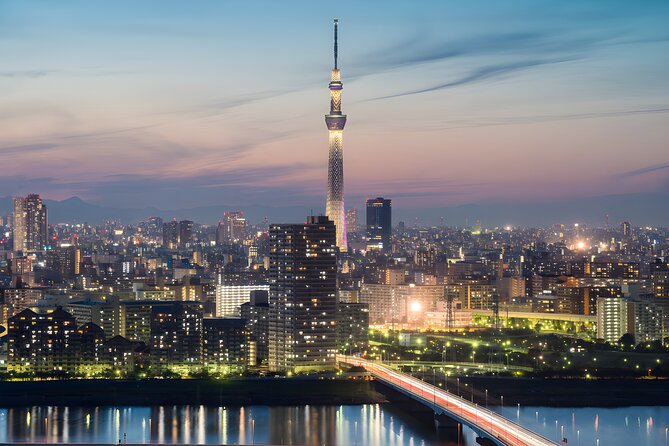
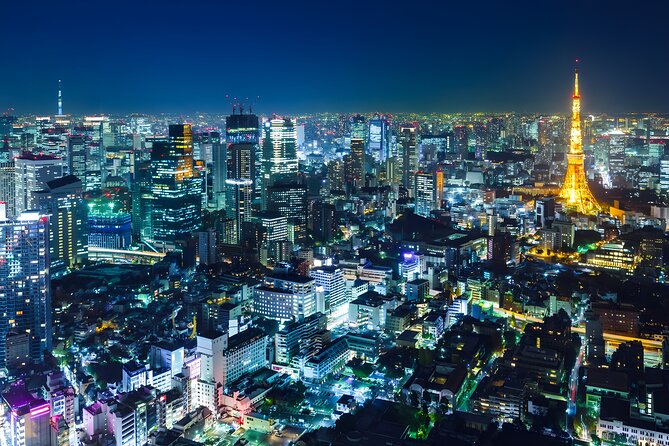
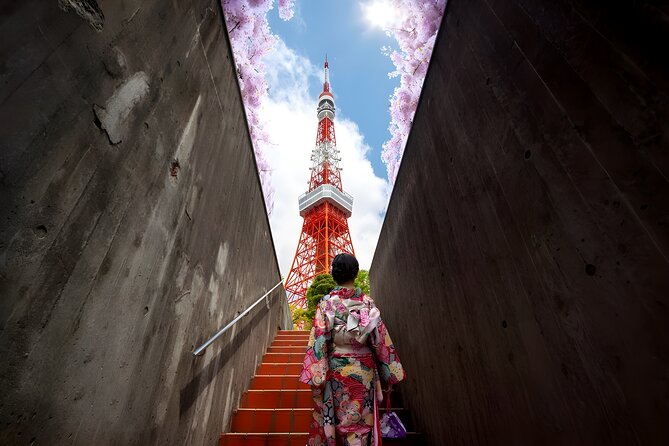
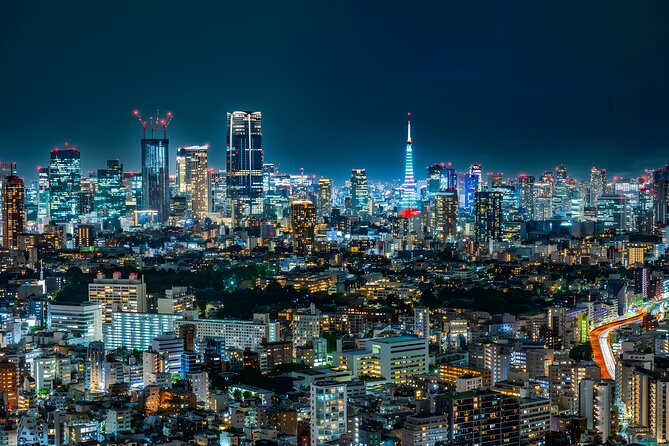
Tokyo Tower is a 333-meter communications and observation tower in Minato. Its design was inspired by the Eiffel Tower, and it remains one of Tokyo’s most recognizable structures. The observation areas provide city views, with night especially appealing according to the experience description.
Like Skytree, Tokyo Tower has paid observation areas, and admission is not included. Visiting both towers in one day may be unnecessary unless comparing them is a major goal. Skytree gives you greater height, while Tokyo Tower offers the classic Tokyo image and a different position in the city.
A one-hour stop works well for seeing the tower, photographing it, and deciding if you want to pay for the view. If you already plan to go up Skytree, I would usually use Tokyo Tower as an exterior stop and save the paid admission and time.
Meiji Jingu is the day’s calmest walk
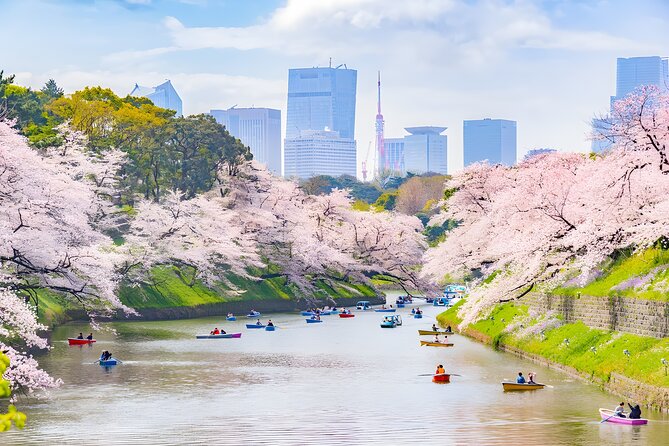
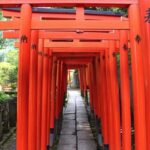
Near Harajuku, Meiji Jingu honors Emperor Meiji and Empress Shoken. Its forested setting and large torii gates create a sharp change from the dense streets around Shibuya and Takeshita Street.
The shrine itself is free to enter, but the walk through the grounds is the point. You should wear comfortable shoes and allow the full hour if you want the approach to feel unhurried. Your driver can explain basic context in the car, but this is not a guided religious tour.
The shrine is also one of the stops that benefits from a respectful pace. Keep voices low near worship areas, follow posted rules, and remember that this is an active shrine rather than a stage set for sightseeing. The forest makes it one of the most restful parts of the route.
Takeshita Street shows Harajuku’s youthful side
Takeshita Street is a pedestrian shopping street known for colorful fashion, snack shops, quirky boutiques, pet and animal cafés, and youth culture. It is compact compared with the city as a whole, but the crowds can make a short walk feel slow.
An hour gives you time to walk part of the street, look at the shops, and try a snack. It is not the place for a calm stroll. Stay aware of your meeting time and confirm the pickup location before leaving the car.
This stop works especially well for families with teenagers and anyone curious about Tokyo street fashion. If your interests are temples, gardens, and architecture, Takeshita may be less important than Meiji Jingu or the Imperial Palace area.
Omotesando is the polished counterpoint
Omotesando is a fashionable avenue lined with luxury brands, modern architecture, and cafés. It is often compared with the Champs-Élysées, though the experience here is distinctly Tokyo: clean-lined buildings, careful storefront design, and a mix of shopping and people-watching.
The planned visit is only 30 minutes, so think of it as a look rather than a shopping session. You can walk a short stretch, see the architecture, and decide if the district deserves a return visit on your own.
Its location near Harajuku makes it an efficient pairing with Meiji Jingu and Takeshita Street. Still, the route may feel retail-heavy if you also spend time in Ginza. This is an easy stop to trim when the day starts running late.
Shibuya Crossing is a fitting final scene
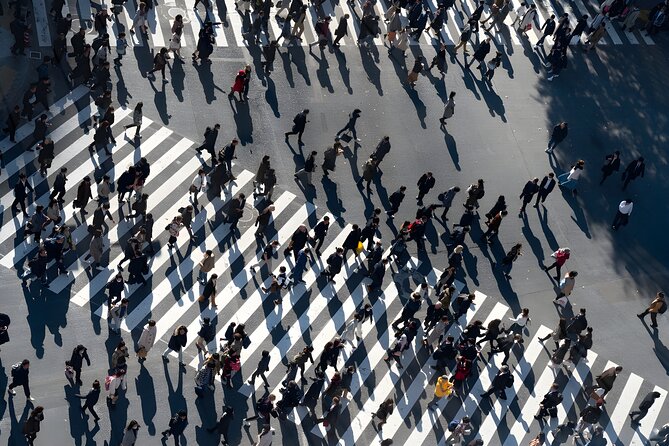
Shibuya Crossing, in front of Shibuya Station, captures Tokyo’s famous sense of motion. People cross from several directions beneath bright signs, and the scene is best understood by stepping into the flow rather than only viewing it from a distance.
The schedule allows 30 minutes. That is enough to cross, take photographs, and get a quick look at the surrounding streets. It is not enough for a full Shibuya shopping trip or a long stop in one of the nearby buildings.
The driver’s waiting arrangement is useful here, since Shibuya can be confusing for a first visit. Confirm exactly where you will meet the car. This is one of the busiest areas on the route, and a little planning prevents a stressful finish.
What the private car really adds
The most praised part of this experience is not a special entrance or a rare attraction. It is the simple fact that the car is ready after each stop. You do not need to find the next station, manage a transfer, or lead your group through an unfamiliar neighborhood.
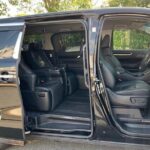
That matters most for families, couples with limited time, and anyone with mobility concerns. Drivers have adjusted drop-off points to bring people closer to sights when possible, and they provide hotel pickup and return in Tokyo. The air-conditioned vehicle is also a useful break between walks.
The driver gives information mainly while you are in the car. You should think of this as a private sightseeing service with local assistance, not a traditional guided tour where someone walks beside you at every temple, market, or shrine. If you want detailed interpretation at each site, you may need to arrange that separately.
English ability varies by individual, but the service is specifically offered with an English-speaking chauffeur. Past drivers such as Ken, Bek, Louis, Jeffrey, Ali, Aki, Bob, and Adam have been described as polite, entertaining, flexible, and helpful. Your best experience will come from explaining your interests clearly at pickup.
How to plan the nine hours without racing
The itinerary lists about an hour at most major stops, 30 minutes at Omotesando, and 30 minutes at Shibuya Crossing. Driving time sits between those visits, and Tokyo traffic can affect the order and pace. You should not assume that every stop will receive a perfect sixty minutes.
I would choose three priority stops before the day begins. For example:
- Choose Senso-ji, Tsukiji, and Meiji Jingu if food, tradition, and shrine culture matter most.
- Choose Skytree, Tokyo Tower, and Shibuya if city views and famous images come first.
- Choose Ginza, Omotesando, Takeshita Street, and Shibuya for a shopping and modern-city focus.
The flexible format lets you adjust as you go, but flexibility is not the same as unlimited time. Some bookings have managed most of the route by moving efficiently, while others have found the schedule too ambitious once a tower visit was added. If you want to linger, say so early and accept that another stop may disappear.
Who gets the best value
At $273.90 per group of up to three, this makes the most sense when you value time and convenience over the lowest possible transport cost. A couple pays more per person, but gets a private day and a driver who waits. Three people share the fixed vehicle price more favorably.
I would consider this a strong fit for:
- First-time visitors with only one full day in Tokyo
- Families who want hotel pickup and fewer train changes
- Small groups with mobility concerns
- People who prefer choosing their own pace
- Anyone who wants to connect distant districts efficiently
It is less suitable if you want a slow, detailed temple tour, a dedicated food guide, or long shopping sessions. The car gets you to the doors, but most sightseeing still happens on foot and on your own.
The tour includes fuel, parking, tolls, bottled water, and an air-conditioned vehicle. Skytree and Tokyo Tower admission are not included, and food at Tsukiji is extra. Free cancellation is available up to 24 hours before the start time, which gives you a useful safety margin if your plans change.
Should you book this Tokyo car tour?
Book it if your goal is to see Tokyo’s main districts in one day without spending that day mastering the train network. The strongest reasons are the private vehicle, hotel pickup, flexible route, and driver waiting at each stop.
Before booking, decide how much you care about going up Skytree or Tokyo Tower. Adding either tower can squeeze the route, and adding both is likely to turn the day into a series of brief visits. I would also tell the driver your top three sights, mention any walking limits, and treat the itinerary as a menu rather than a promise to complete every stop.
For a first Tokyo visit, a small family group, or a short stay, this is a useful and comfortable way to get oriented. For deeper cultural learning, pair it with a separate walking guide or return later to the neighborhoods that deserve more time.
FAQ
How long does the private Tokyo sightseeing tour last?
The tour lasts approximately nine hours, including sightseeing and travel between destinations.
How many people can join the private tour?
The listed price of $273.90 covers a private group of up to three people.
Is hotel pickup and drop-off included?
Yes. Hotel pickup and drop-off in Tokyo are included.
What does the tour vehicle include?
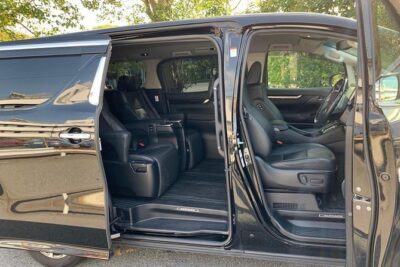
The tour provides an air-conditioned vehicle, bottled water, an English-speaking chauffeur, fuel, parking, and toll fees.
Are Tokyo Skytree and Tokyo Tower admission tickets included?
No. Admission tickets for Tokyo Skytree and Tokyo Tower are not included in the tour price.
Is this a walking tour with a guide at every sight?
No. There is no separate walking guide. Sightseeing information and assistance are provided mainly from the car between destinations.
Can the tour be canceled for a full refund?
Yes. You can cancel at least 24 hours before the experience start time for a full refund. Cancellations or changes made less than 24 hours before the start time are not accepted for a refund.
More Private Drivers in Tokyo
More Private Tours in Tokyo

More tours in Tokyo we've reviewed


Private Drivers, compared.
 ★ 5.0Mt Fuji Private Tour with English Speaking DriverFrom $415
 ★ 4.5Mt. Fuji & Hakone Private Day Tour with English-Speaking DriverFrom $453
 ★ 4.5Haneda Airport (HND) Private Transfer to Central TokyoFrom $104
 ★ 4.5Mt. Fuji, Hakone Full-Day Private Tour with English Driver GuideFrom $495
 ★ 5.0Mt. Fuji Day Trip from Tokyo with English Speaking Driver GuideFrom $497
★ 4.5Mt. Fuji Private Tour with English Speaking DriverFrom $464
★ 5.0Mt. Fuji Day Trip from Tokyo with English Speaking Driver GuideFrom $497
★ 4.5Mt. Fuji Private Tour with English Speaking DriverFrom $464