
Reviewed · JDM & CAR CULTURE
Tokyo JDM Night: 600hp C63s AMG Edition 1 (Private)
Tokyo’s car culture makes the most sense after dark, when the expressways glow, tunnels echo with engine notes, and Daikoku Parking Area fills with everything from Nissan GT-Rs to carefully built Supras. This private tour puts you in the passenger seat of a 2016 Mercedes C63s AMG Edition 1, professionally tuned from 510 horsepower to more than 600.
I like two things right away: you ride with Akira, an owner-driver who clearly cares about cars, and you get a private experience for your group rather than sharing a vehicle with strangers. I also like the mix of driving, car spotting, parts shopping at APIT Shinonome, and night photography around Tokyo Tower.
The main consideration is that Daikoku PA is a working parking area, not a guaranteed car show. The number and type of cars can change from night to night, and traffic can stretch the drive. At $119 per person, the value is strongest when two to four people share the private car.
In This Review
- Key points at a glance
- Why the Mercedes is part of the experience
- Meeting Akira in central Tokyo
- The first 45 minutes: C1, Wangan, and Rainbow Bridge
- Daikoku Parking Area: the main event
- APIT Shinonome and Japan’s tuning culture
- Tokyo Tower and the ride back
- What the $119 price really buys
- Who will enjoy this most
- Practical tips for a better night
- FAQ
- How long does the Tokyo JDM Night tour last?
- How many people can join?
- Who drives the Mercedes?
- Where can I be picked up?
- What car will I ride in?
- Is racing or drifting included?
- Is Daikoku Parking Area guaranteed to have a large meet?
- What does the price include?
- Should you book this Tokyo JDM night?
Key points at a glance
- A rare 600hp AMG: Ride in a limited-edition Mercedes C63s AMG with an ECU tune that pushes output beyond 600 horsepower.
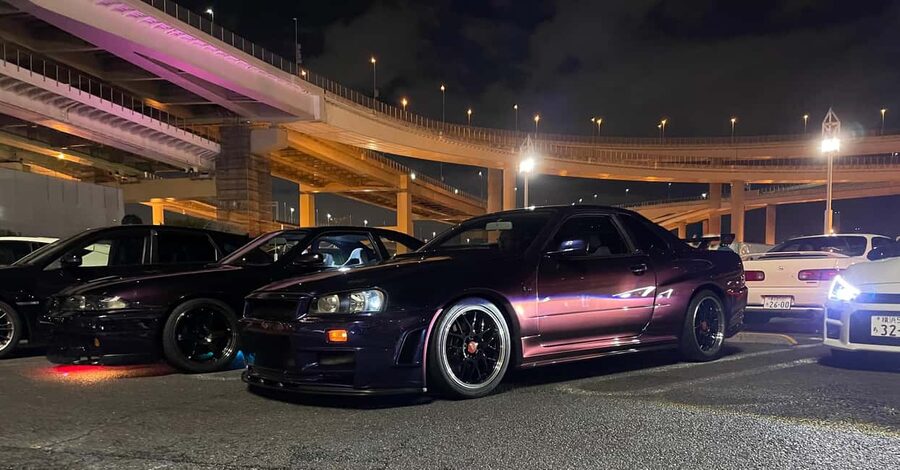
- Daikoku PA after dark: Spend about an hour at Japan’s best-known car gathering spot, with possible sightings of GT-Rs, Supras, RX-7s, and unusual imports.
- A private owner-driver: Akira drives and guides your group, with English and Japanese available and Google Translate useful when needed.
- Tokyo’s best motoring views: Cross the Rainbow Bridge and use the C1 and Wangan expressways for city lights, bridges, and skyline views.
- APIT Shinonome included: Browse performance parts, wheels, aero pieces, and souvenirs at a major Japanese tuning store.
- Small-group value: The car takes a maximum of four passengers, with pickup and drop-off in Shibuya, Shinjuku, or Nakano.
Why the Mercedes is part of the experience
This is not simply a transfer to a car meet. The Mercedes is the central attraction.
The C63s AMG Edition 1 combines the polished feel of a luxury sedan with a large, powerful V8. This particular car has been ECU-tuned from its factory 510 horsepower to more than 600 horsepower. You are not being promised a race or a drift session. The point is the sound, the response, and the feeling of moving through Tokyo in a very special machine.
I appreciate the distinction. The tour follows traffic laws and does not include racing or drifting. You can still feel the car’s strength during legal acceleration, especially on open expressway sections and through the city’s tunnels, without turning the ride into a reckless stunt.
The Edition 1 details also matter to car fans. This is a limited-edition AMG rather than an ordinary rental sedan, and the vehicle is described as being carefully maintained. If you spend your trip looking at Japanese performance cars, riding in a tuned German performance car gives the evening a fun twist.
The car carries one to four passengers. For one person, $119 buys a very personal experience, but the price becomes much better for a couple or small group sharing the private booking. Four adults will need to be comfortable in a performance sedan for several hours, particularly if everyone brings camera equipment.
A few more Tokyo tours and experiences worth a look
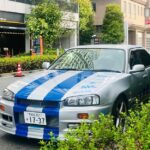
Meeting Akira in central Tokyo
Pickup is available at three street-level meeting points:
- Tesla Shibuya
- McDonald’s Nakano Minamiguchi
- Onitsuka Tiger Shinjuku South Store
These are not hotel pickups. You need to reach your selected meeting point and look for Akira at the stated location. At Nakano, he waits on the street in front of McDonald’s. At Shinjuku, he waits in front of Onitsuka Tiger. At Shibuya, he waits on the street beside the Tesla store.
Give yourself extra time to find the exact spot. Tokyo’s station areas are large, crowded, and full of similar-looking streets. Bring your passport or another ID card, since that is listed as required, and do not smoke in the car.
Akira is both driver and guide. His English is usable, though not always fluent, and some people have relied on Google Translate to discuss car culture and ask questions. I would not treat this as a formal lecture with long technical explanations. It is better suited to casual conversation, pointing out cars, and sharing enthusiasm for the scene.
That personal connection is one of the strongest parts of the experience. Akira owns the car, drives it himself, and knows why people come to Daikoku. If you want a guide who is also a real enthusiast, this setup makes sense.
The first 45 minutes: C1, Wangan, and Rainbow Bridge
After pickup, the route heads onto Tokyo’s expressways. The scenic driving portion lasts about 45 minutes, though traffic can affect the timing.
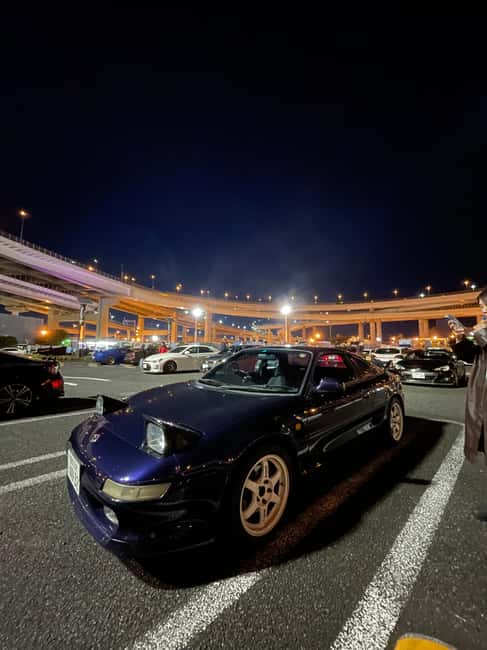
The C1 Inner Loop and Wangan expressways are more than practical roads here. They are part of Tokyo’s car culture. You pass through tunnels, sweep across elevated roadways, and see the city from angles that are hard to reach on a normal sightseeing bus. The Rainbow Bridge is a major visual moment, with Tokyo Bay and the city lights spread around the route.
This is where the AMG earns its place. You feel the car settle into the highway, hear the V8 in the enclosed sections, and watch the city slide by from a low, fast-moving viewpoint. The effect is exciting without requiring the driver to break rules.
Traffic is the weak point. Tokyo’s expressways can slow down, and one account of the experience described a drive to Daikoku taking about an hour because of heavy traffic. That is not necessarily a failure. It simply means the advertised three to four hours should be treated as an approximate evening schedule rather than a stopwatch-perfect program.
You should also keep your camera ready, but do not expect every moving shot to be perfect. Rolling photography depends on traffic, light, and where the car can safely stop. The tour includes photo-friendly locations, yet safety and road rules come first.
Daikoku Parking Area: the main event
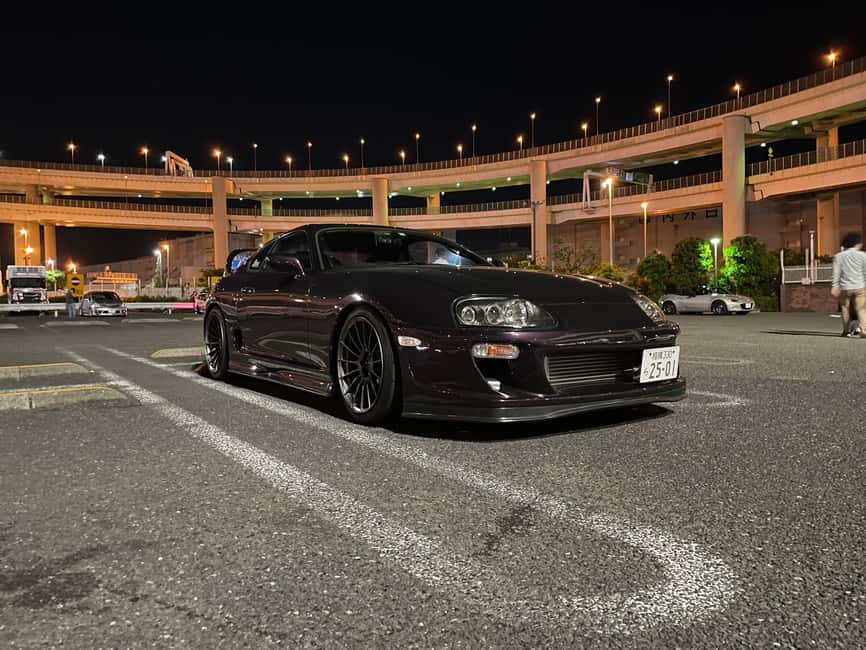
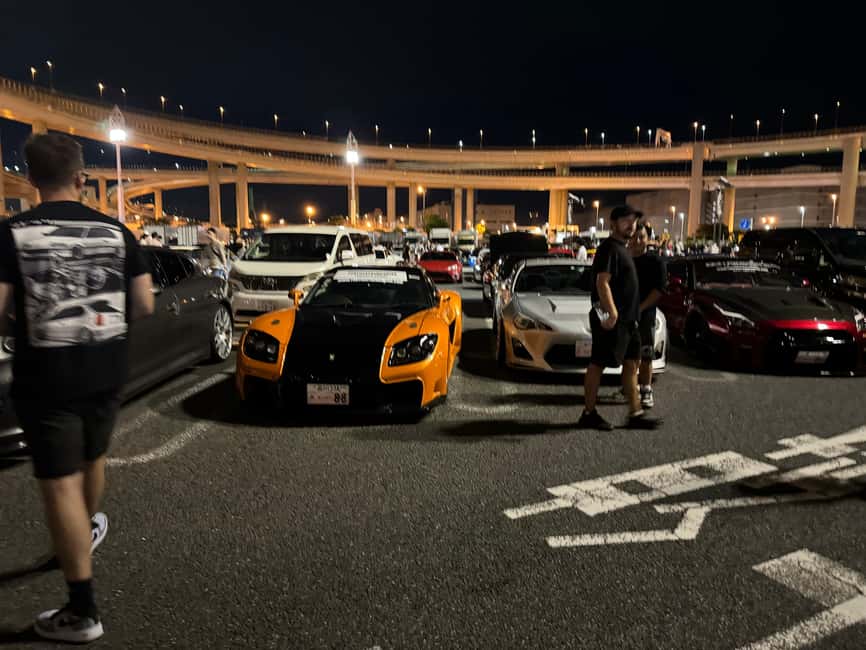
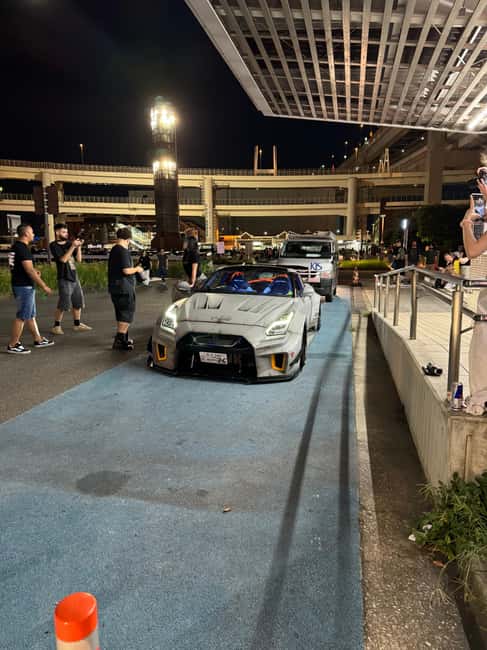
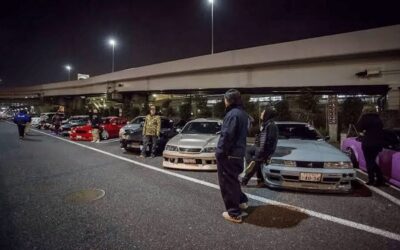
Daikoku Parking Area in Yokohama is the reason most people book this outing. It is one of Japan’s best-known meeting points for modified and performance cars, and the tour allows about an hour of free time there.
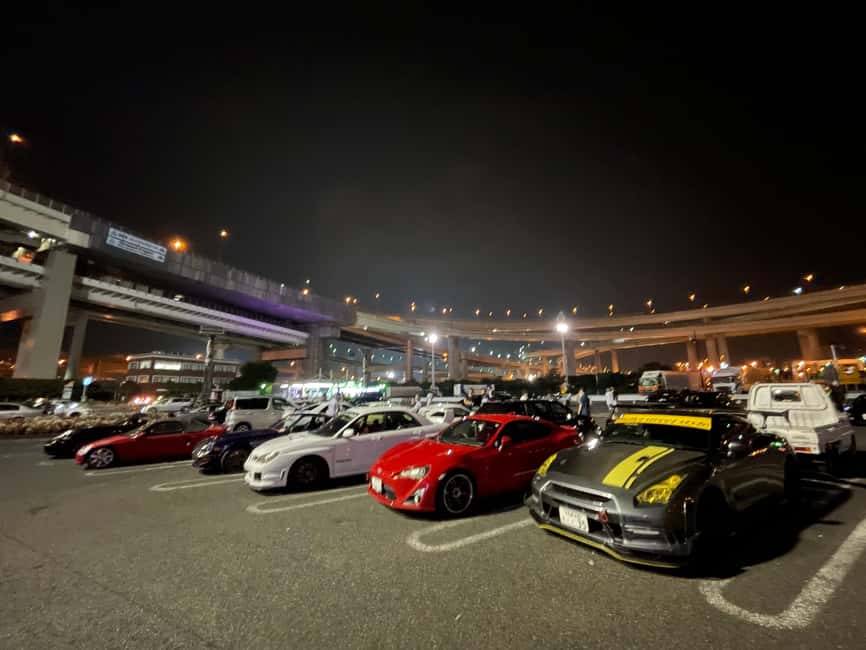
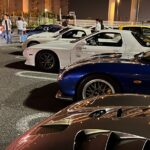
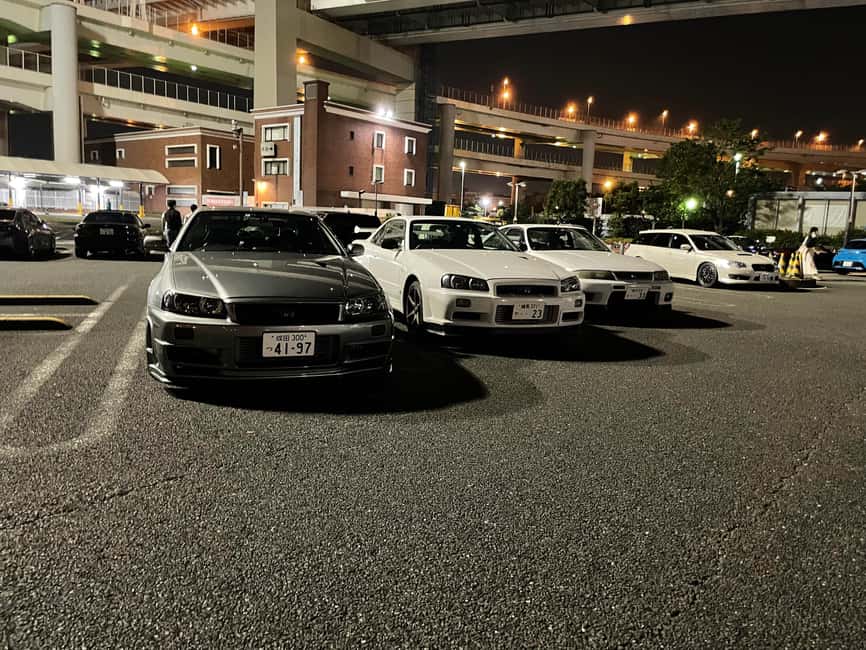
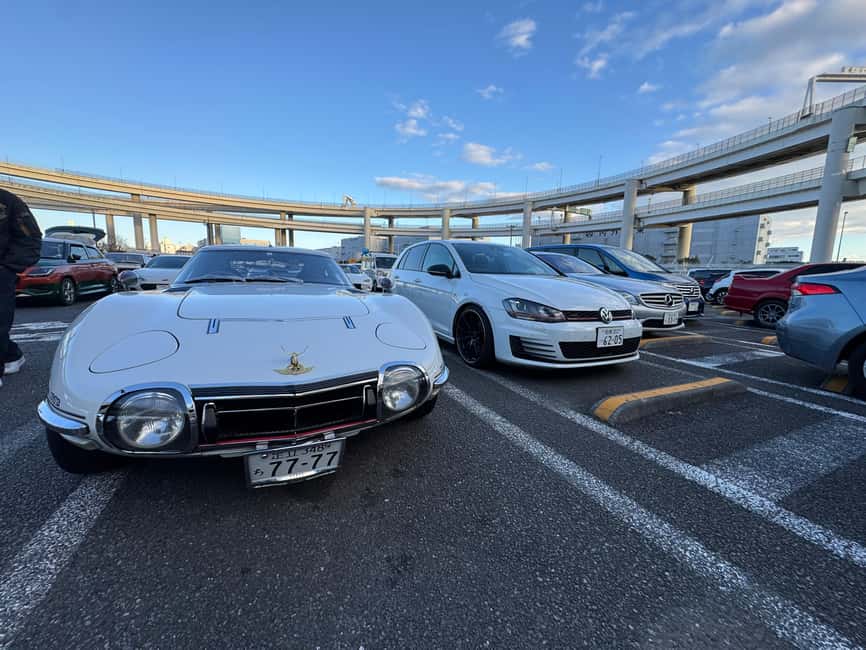
On a good night, you might find Nissan GT-Rs, Toyota Supras, Mazda RX-7s, rare imports, classic Japanese models, and heavily modified builds. The appeal is not only the cars themselves. You get a look at how owners present, maintain, and discuss their machines in a real public setting.
The atmosphere can change. You may see dozens of interesting cars, or a quieter selection, depending on the night, weather, timing, and who happens to gather. The tour does not guarantee a particular model or a huge meet. That uncertainty is part of visiting an active car spot rather than attending a ticketed motor show.
I like the hour-long stop because it gives you time to do more than step out, snap one picture, and leave. You can walk around, look closely at unusual builds, speak with owners when appropriate, and take night photographs with the parking area and Tokyo Bay expressway loops behind you.
Be polite with cameras and conversations. Car owners may be happy to discuss their builds, but this is still a public parking area. Avoid blocking traffic, touching vehicles, or treating private cars as props. A little courtesy goes a long way in a community that welcomes genuine interest.
Daikoku is also best for people who already enjoy cars. If you are only mildly curious about Japanese vehicles, an hour spent studying wheel fitment, engine swaps, body kits, and tuning choices may feel long. If you can tell a GT-R from a Supra and enjoy comparing factory and modified parts, you will have plenty to look at.
APIT Shinonome and Japan’s tuning culture
After Daikoku, the route returns toward Tokyo and stops at Shinonome for about 30 minutes. The usual destination is APIT Shinonome, formerly associated with Super Autobacs.
Think of it as a very large automotive parts and lifestyle store. You might browse performance equipment, wheels, aero parts, accessories, and souvenirs. It shows the commercial side of Japanese tuning culture, where modification is supported not only by small specialist workshops but also by major retail spaces.
This stop gives the evening more depth. Daikoku shows you the finished cars and social side of the scene. APIT shows you the products and choices that help owners build them. You can see how Japanese enthusiasts shop for parts, compare brands, and keep the modification culture going between car meets.
The time is limited, so do not expect a long shopping session. Thirty minutes is enough to look around and buy a few items, but not enough for a slow technical inspection of every department. If you want parts or souvenirs, decide what interests you before entering.
For a car fan, this can be one of the surprise highlights. One person compared the store to a Japanese discount superstore for JDM products, which is a useful way to picture its size and range. You get a much better sense of the scene than you would from only visiting a car meet.
A few more Tokyo tours and experiences worth a look


Tokyo Tower and the ride back
The final photo stop is Tokyo Tower, with about 15 minutes set aside for pictures. At night, the tower gives you a familiar Tokyo image after an evening spent in less conventional places.
It is a short stop, so think of it as a closing photograph rather than a full visit. You will not have time for an extended observation deck experience or a long walk around the neighborhood. The value is in seeing the AMG with the illuminated tower nearby and ending the route in central Tokyo.
The return drive lasts about 40 minutes. By this point, the excitement settles into a comfortable cruise back toward the city. That change of pace suits the C63s well. It is powerful enough to make the expressways memorable but refined enough to carry you home without feeling like a track-day session.
Drop-off is available at the same general meeting points: Onitsuka Tiger Shinjuku South Store, McDonald’s Nakano Minamiguchi, or Tesla Shibuya. Confirm your preferred point when booking, especially if you are planning dinner, a train connection, or a late-night walk afterward.
What the $119 price really buys
At $119 per person, this is not the cheapest way to see Tokyo at night. You are paying for a private car, an enthusiast driver, highway tolls, access to Daikoku PA, the APIT stop, and a route that would be difficult to arrange smoothly on your own.
The price is easier to justify when you fill the car. Four people would bring the effective private-car cost to about $476 total, or $119 each. For one person, the same fee buys privacy and a much more personal ride, but the value depends on how strongly you care about the car itself.
The included highway tolls help. You also avoid the hassle of working out the route to Daikoku, which can be awkward for visitors unfamiliar with the expressway system. Meals, drinks, personal purchases, and hotel transfers are extra, so budget for transport to the meeting point and anything you buy at APIT.
I would choose this over a generic night drive if your main goal is Japanese car culture. I would not choose it as a broad Tokyo sightseeing tour. You see skyline views, Rainbow Bridge, and Tokyo Tower, but the evening is built around engines, modified cars, and expressway travel.
Who will enjoy this most
This tour is a particularly good fit for:
- JDM fans who want to see cars in a real local meeting place
- AMG and performance-car enthusiasts
- Photographers looking for night car shots and city lights
- YouTubers and collectors who want a private setting for filming
- Couples or small groups who can share the four-seat vehicle
- Visitors who want to see parts of Tokyo beyond the usual central districts
It is less suitable for young children, since children under six are not allowed, and the tour is not suitable for wheelchair users. It also may not suit anyone who dislikes late-night driving, loud engine sounds, or uncertain meet conditions.
The language setup is workable rather than polished. Akira speaks English and Japanese, but communication may sometimes happen through Google Translate. For many people, that is a minor issue because the cars provide plenty to talk about. If you need detailed technical commentary in fluent English, keep your expectations modest.
Practical tips for a better night
Choose your group carefully. The private format is a major advantage, and it works best when everyone wants the same mix of driving, car spotting, photos, and shopping.
Wear comfortable shoes for walking around Daikoku and APIT. Bring your passport or ID card, keep camera batteries charged, and avoid bringing food or drinks that could spill inside the car. Smoking is not allowed.
A Thursday, Friday, or weekend night may offer better odds of seeing a busy gathering, but the exact mix of cars is never fixed. The tour is most appealing when you enjoy the possibility of discovery rather than needing one specific model to appear.
Keep the schedule flexible. The listed drive times can change with traffic, and Daikoku activity can vary. If you have a fixed evening reservation immediately afterward, leave a generous buffer.
Finally, ask before photographing people or close-up details of their cars. Enthusiasm is welcome, but respectful behavior keeps the experience pleasant for everyone.
FAQ
How long does the Tokyo JDM Night tour last?
The experience lasts about three to four hours, usually at night. The listed route includes scenic drives, about one hour at Daikoku PA, about 30 minutes at Shinonome, and a 15-minute Tokyo Tower photo stop.
How many people can join?
The private vehicle accepts a maximum of four passengers. Only your own group joins the booking, with no ride-sharing with strangers.
Who drives the Mercedes?
Akira is the owner-driver and local guide. The tour is offered in English and Japanese, and Google Translate may help with longer conversations.
Where can I be picked up?
Pickup is available at Tesla Shibuya, McDonald’s Nakano Minamiguchi, or Onitsuka Tiger Shinjuku South Store. Hotel pickup and drop-off are not included.
What car will I ride in?
You will ride in a 2016 Mercedes-Benz C63 AMG Edition 1. The car has an ECU tune that increases its output from 510 horsepower to more than 600 horsepower.
Is racing or drifting included?
No. The tour follows traffic laws and does not include drifting or racing. The appeal is the car, legal expressway driving, city views, and car culture stops.
Is Daikoku Parking Area guaranteed to have a large meet?
Daikoku PA is included, but the number and type of cars can vary by night. You might see GT-Rs, Supras, RX-7s, rare imports, and modified builds, but no specific vehicle is guaranteed.
What does the price include?
The $119 per-person price includes the private ride in the Mercedes, the Daikoku PA visit, a famous tuning shop or parts-store visit, and highway tolls. Meals, drinks, personal expenses, and hotel transfers are not included.
Should you book this Tokyo JDM night?
Book it if cars are a serious part of your Japan trip. The private format, tuned AMG, Rainbow Bridge drive, Daikoku stop, and APIT Shinonome visit create a focused evening that ordinary sightseeing tours cannot match.
I would especially recommend it for two to four people sharing the booking. You get a better per-person deal, more room for conversation, and the freedom to spend the evening with your own group.
Skip it if you want a guaranteed car exhibition, a fluent technical presentation, or a standard Tokyo highlights tour. Daikoku can be quiet, traffic can interfere with the schedule, and the language exchange may require a translation app.
For the right audience, this is one of the more distinctive ways to see Tokyo after dark. You are not just looking at famous cars in a showroom. You are riding through the city, visiting the places where enthusiasts gather, and seeing the shops and roads that support Japan’s tuning culture.
More Private Tours in Tokyo

More Night Tours in Tokyo
More JDM & Car Culture in Tokyo
More tours in Tokyo we've reviewed

JDM & Car Culture, compared.
 ★ 4.7FAST&FURIOUS EXPERIENCE Tokyo Car Club membershipFrom $138
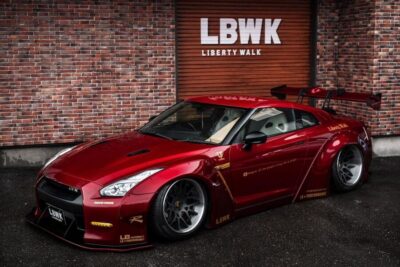 ★ 4.8GT-R35 800hp Club Membership – secret underground car meetFrom $205
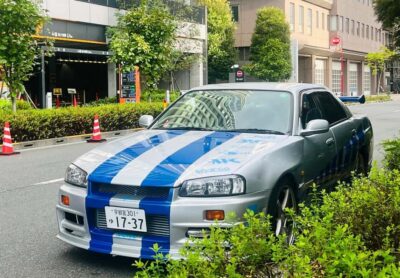 ★ 4.8Tokyo: Fast & Furious Tokyo Drift 3 Experience (Kaila Yu SP)From $157
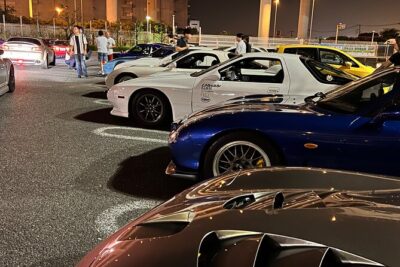 ★ 4.8Tokyo: Daikoku JDM Car Meet & Night Car Culture TourFrom $984 hours
 ★ 4.8Secret Car Meet: R34 Skyline Car Club MembershipFrom $236
 ★ 4.7Tokyo Drift: Daikoku PA Supreme Car Experience 大黒PAFrom $583 hours