
Reviewed · JDM & CAR CULTURE
Tokyo: Legendary JDM CAR Daikoku Underground Meetup
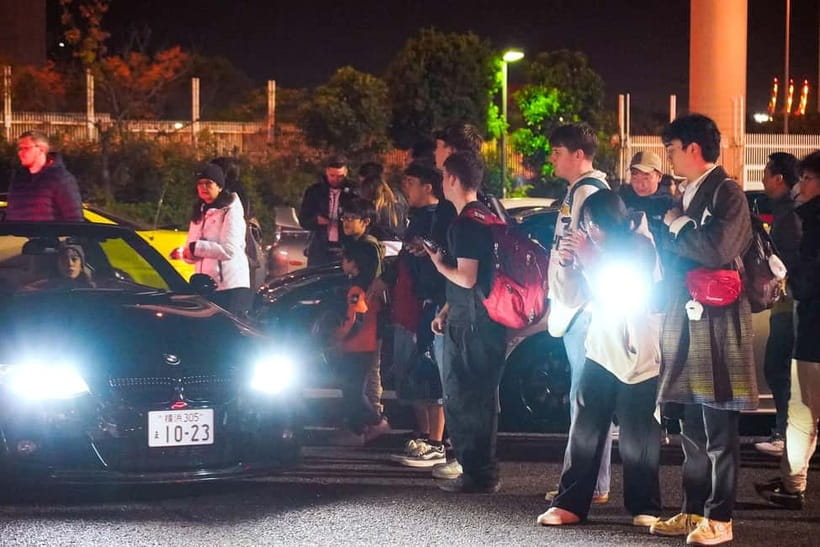
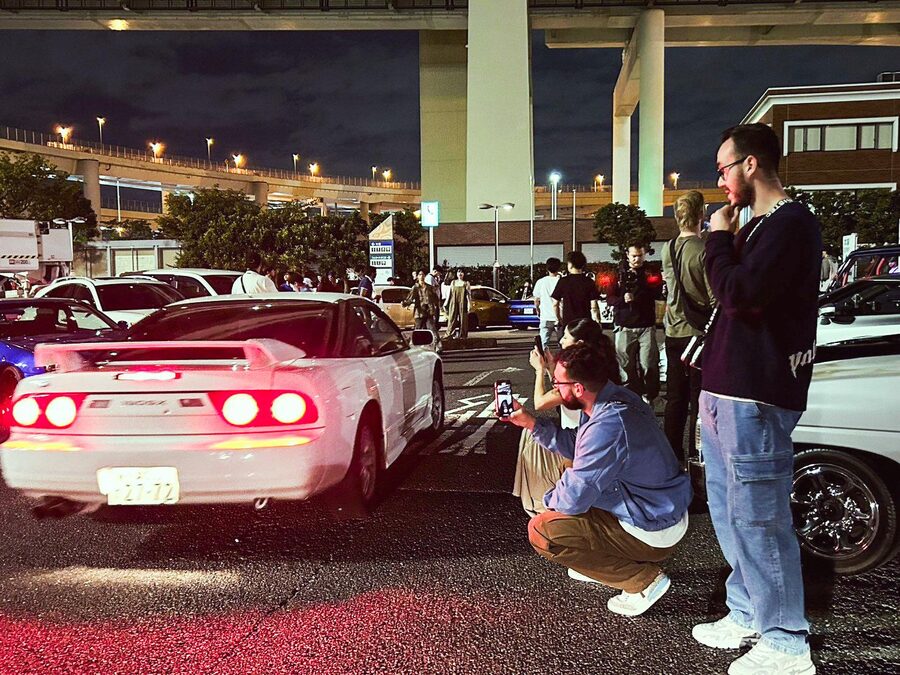
Tokyo’s Daikoku Parking Area is where Japan’s car culture leaves the garage and gathers under the expressway lights. Modified JDM cars, supercars, luxury vehicles, and roaring exhausts make this four-hour night outing far more than a simple drive around town.
I like the mix of car culture and Tokyo views, especially the run across Rainbow Bridge and the final photo stop at Tokyo Tower. I also like the human side: guides such as Hana, Ryu, Jay, Jun, and Bin are active car fans who explain what you are seeing and help with photos. The main catch is that Daikoku is not guaranteed. Police closures, rain, and changing conditions can mean fewer cars or a replacement stop, with no refund for that reason.
In This Review
- Key points to know before booking
- Why Daikoku PA is worth the late-night outing
- Tokyo Station is a practical starting point
- The night drive through Tokyo’s expressway system
- A-PIT Shinonome turns looking into learning
- Tokyo Tower closes the evening on a high note
- The guides shape the night
- What happens if Daikoku is closed?
- Is $82 good value?
- Who will enjoy this most?
- Booking details worth checking
- Should you book the Daikoku JDM experience?
- FAQ
- Where does the tour meet?
- How long does the experience last?
- Is Daikoku Parking Area guaranteed to be open?
- What vehicle options are available?
- Is Tokyo Tower admission included?
- Can I meet the group directly at Daikoku?
- What languages do the guides speak?
Key points to know before booking
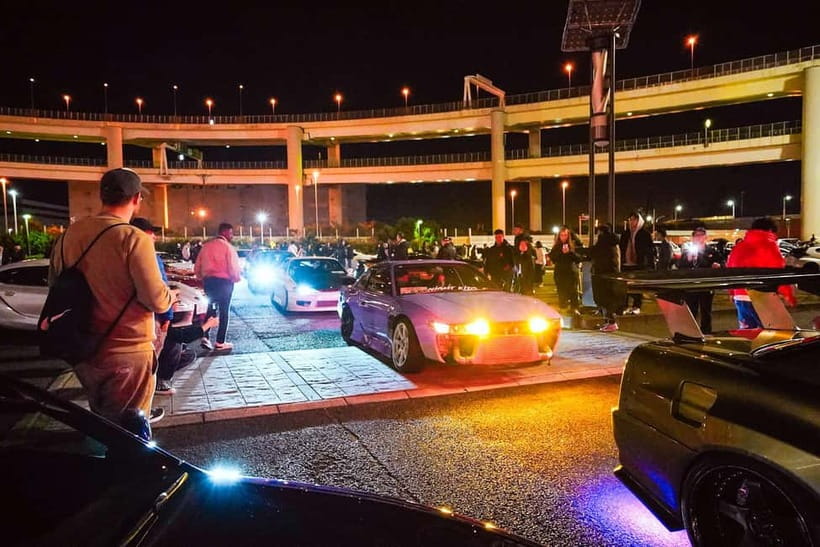
- Daikoku PA is the main event: Expect free time to walk around and inspect modified cars, sports cars, and luxury models.
- The route is part of the experience: You travel through the C1 Inner Loop, across Rainbow Bridge, and along the Bayshore Route.
- A-PIT Shinonome adds real car-shop context: Browse tuning parts, performance gear, and accessories at one of Tokyo’s best-known automotive stores.
- The guide matters: English, Japanese, and Vietnamese are offered, and guides help explain local car culture and take photographs.
- The vehicle choice changes the feel: Basic and sports car options are mixed-group rides, while the Toyota Alphard option is private.
- Bad weather and closures are possible: The outing can adapt, but the core car meet cannot be promised every night.
Why Daikoku PA is worth the late-night outing
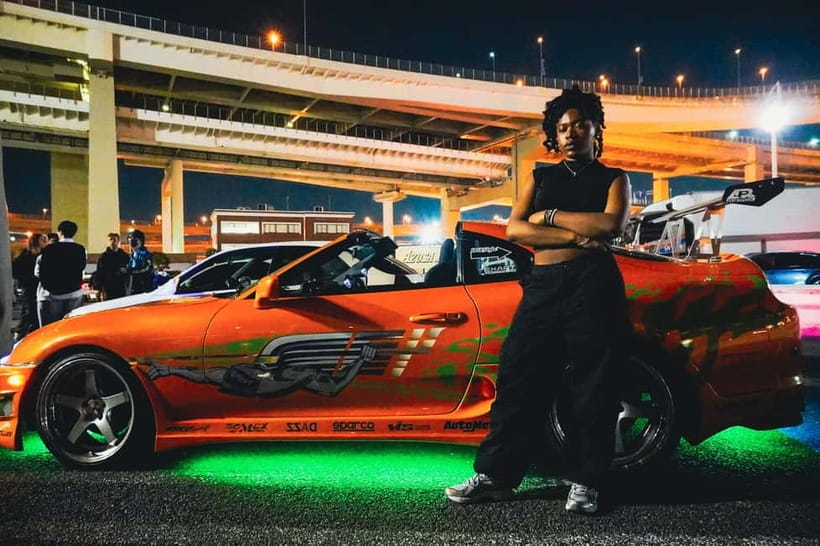
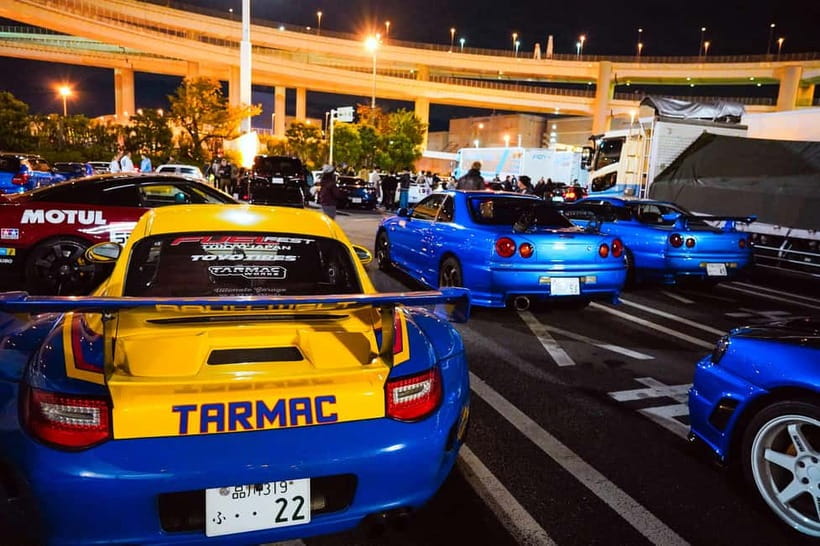
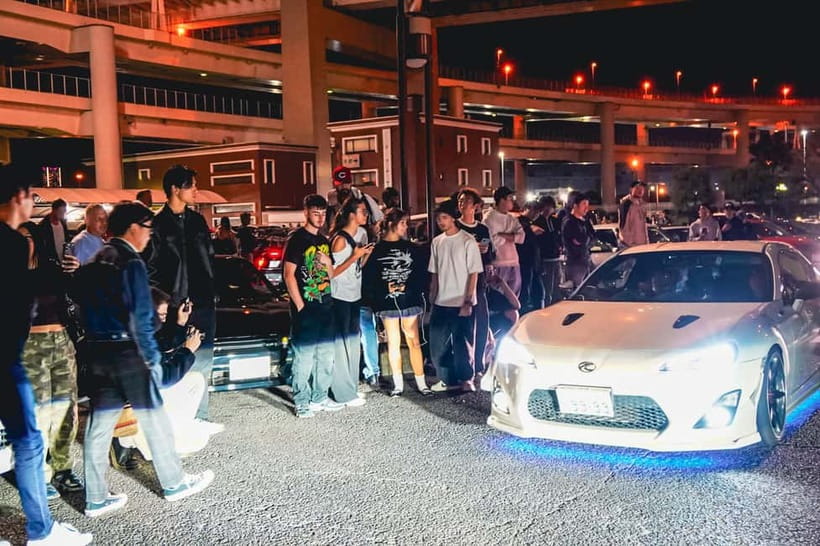
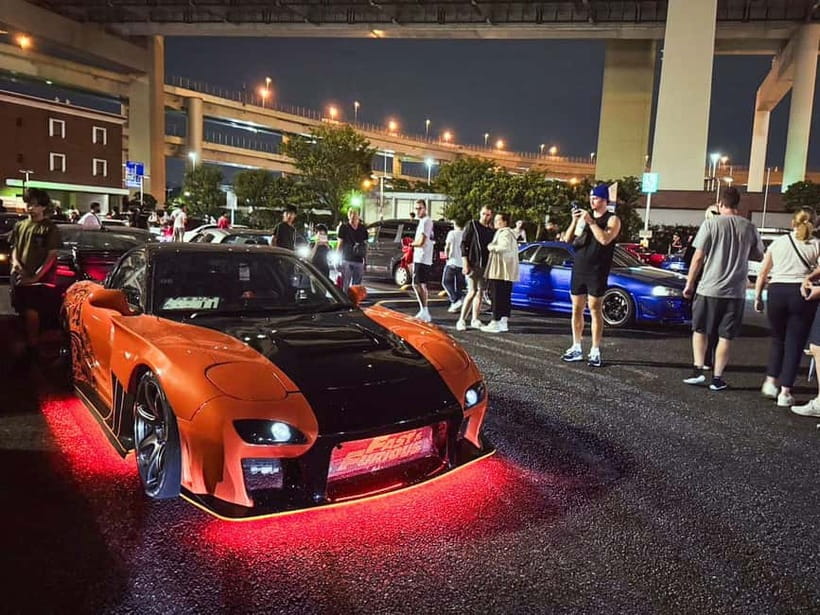
If you know Japanese cars from games, films, tuning magazines, or the Fast & Furious era, Daikoku Parking Area has a special pull. It is not a museum or staged display. You see cars arriving, leaving, idling, and gathering in a working roadside stop beside Tokyo’s huge expressway network.
That difference matters. The cars are not lined up for a formal show, so the mix can change from one evening to the next. You might see carefully built Japanese sports cars alongside McLarens, Maseratis, Aston Martins, Bentleys, and Lamborghinis. The attraction is the uncertainty and the sound of the place.
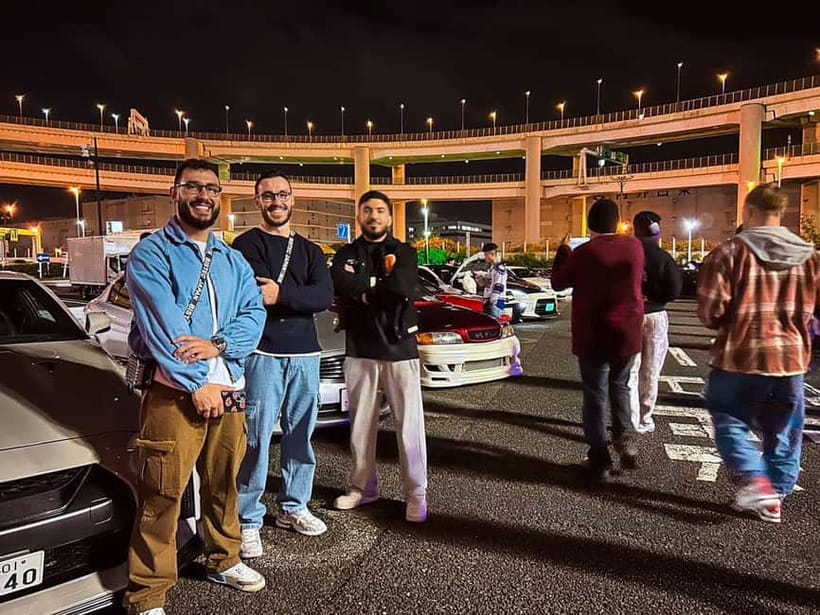
You get about an hour at Daikoku, enough time to walk, look closely, take pictures, and watch cars pull away. The departure moments can be particularly exciting, with engines and exhausts echoing across the parking area. If you are mainly interested in seeing as many cars as possible, use your time here well.
This is also a place where expectations need a little adjustment. Daikoku is a public parking area, not an amusement park attraction. Police may close it or restrict access. On rainy nights, fewer owners may show up. The tour does not provide access to illegal street racing, and it does not promise a certain car model or number of vehicles.
A few more Tokyo tours and experiences worth a look

Tokyo Station is a practical starting point
The usual meeting point is the taxi rank in front of Tokyo Station’s Marunouchi North Exit. Look for the yellow sign marked Epic Japan Experience or JDM TOUR TOKYO. Tokyo Station is large, so give yourself extra time to find the correct exit and taxi area.
Late arrivals are a serious concern here. The tour offers no refund for missed departures, although some guides have made efforts to contact or wait for people delayed by confusion around the station. I would still treat that as good fortune, not a policy. Arrive early, especially if you are carrying luggage or coming from another part of Tokyo.
Pickup can be available from a hotel in the area, depending on the chosen option. The operator explains that transport is provided as part of the guide service rather than as a taxi or transport operation. Under Japan’s Road Transport Law, pickup and drop-off must be at the same location, so check the exact arrangement before you book.
The tour can also arrange a direct meeting at Daikoku PA on request. That may suit someone already traveling by car, but the Tokyo Station meeting point is the standard choice for most people.
The night drive through Tokyo’s expressway system
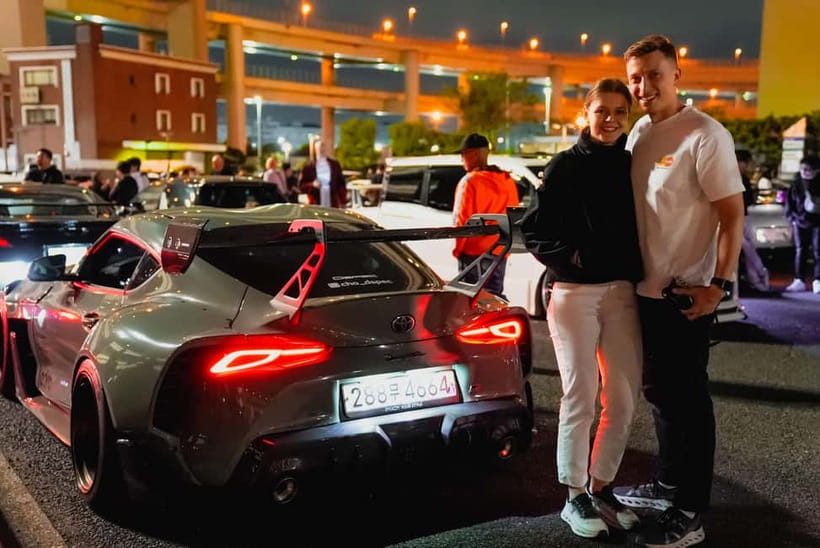
The drive begins near Tokyo Station and heads onto the C1 Inner Loop. You are not simply being taken from point A to point B. The route gives you a moving view of Tokyo after dark, with elevated roads, office districts, bridges, and industrial waterfront areas passing by the windows.
The trip continues across Rainbow Bridge and along the Bayshore Route. Rainbow Bridge is only listed as a short pass-by rather than a long viewing stop, so do not expect time to get out and set up a tripod. Its value is the sense of motion: Tokyo lights, the dark bay, and the expressway curves become part of the car experience.
The exact timing can shift with traffic. Tokyo’s expressways can move quickly one minute and slow down the next, so keep the rest of your evening open after the advertised four-hour duration. The finish may run late, and the operator specifically advises allowing extra time.
Your vehicle depends on the option you choose:
- The basic car is clean and comfortable, but it is a non-private mixed-group ride.
- The sports car option gives you the thrill of riding in a JDM sports car, also in a non-private mixed group.
- The Toyota Alphard is the private, first-class comfort choice.
The sports car option is likely the best fit for a serious enthusiast who wants the ride itself to feel special. The basic car makes more sense if you mainly want the meet and city sights. The Alphard is the practical choice for people who want privacy, extra comfort, or a more relaxed setting.
A-PIT Shinonome turns looking into learning
The roughly 30-minute stop at A-PIT Shinonome gives the tour a useful change of pace. This is Tokyo’s largest car parts and tuning shop, with rows of components, accessories, performance equipment, and modification gear.
You do not need to be planning a build to enjoy this stop. It shows how car culture functions beyond the parking area. At Daikoku, you see the finished machines. At A-PIT, you see the parts and products that help owners create them.
I would not plan a major shopping mission around a 30-minute visit. The time is better used for browsing and asking your guide about the products or styles you recognize. If you have a specific part in mind, the short stop may feel rushed.
For someone new to Japanese tuning culture, A-PIT may be the most informative stop. Guides can add useful context about the cars and modifications, making the visit feel less like a random retail break.
Tokyo Tower closes the evening on a high note
The final planned stop is Tokyo Tower, with about 15 minutes for photos and sightseeing. The tower is lit at night and provides an instantly recognizable Tokyo backdrop, a nice contrast to the anonymous expressway and industrial setting around Daikoku.
Fifteen minutes is enough for quick photographs, but not for a slow visit. The observation deck is not included, so you would need to pay separately if you want to go up. In practice, this stop is designed as a photo finish rather than a full Tokyo Tower visit.
Guides have helped participants take pictures at the tower and at the car meet. That small service can make a real difference when you are traveling alone or want group photos without handing your phone to a stranger.
The tour ends with drop-off options in Tokyo, including the taxi rank at Tokyo Station’s Marunouchi North Exit. Confirm your exact return point, especially if you have dinner plans or a train to catch.





The guides shape the night
The strongest part of this experience is not only the cars. It is the guide who connects the cars, roads, and city. The team includes English, Japanese, and Vietnamese speakers, and individual guides have different personalities and strengths.
Hana is noted for clear English, friendly conversation, car knowledge, and taking good photos. Ryu has been praised for keeping the evening comfortable and adapting when Daikoku was closed. Jay is especially suited to guests who want to talk about sports cars and modifications. Jun is described as warm, helpful, and good at creating a relaxed atmosphere.
Bin has also guided many outings, often explaining the history of the areas along the route. Kazu has handled alternate routes and additional meet locations when access changed. These details tell you something useful: the guide is not just a driver pointing toward the parking lot.
The experience works for people who know little about cars because the guide can explain what makes a model, engine, or modification interesting. It also works for committed enthusiasts who want local context rather than a generic sightseeing loop.
Some outings use both a guide and a driver. Others may have one person doing both jobs. The exact arrangement can vary, so ask if that distinction matters to you.
What happens if Daikoku is closed?
This is the most important practical limitation. Daikoku can be closed by police, and the operator cannot control how many cars appear. Rain can also reduce the turnout. Refunds are not provided when poor weather or a closure changes the experience.
The good news is that guides have adapted by visiting alternative spots. Some outings have included Umihotaru Parking Area or another meetup location when Daikoku was unavailable. That can still produce a strong night, but it is not the same as getting the full Daikoku experience.
I would book this for the overall evening, not as a guaranteed ticket to a particular car show. The drive, A-PIT, guide, and Tokyo Tower remain valuable parts of the plan, but Daikoku is the variable at the center.
If seeing Daikoku itself is your main reason for booking, check the weather forecast and consider choosing a night known for stronger car activity. Several outings have found Thursday evenings especially busy, though no day can guarantee a particular turnout.
Is $82 good value?
At $82 per person, the price is fair if you value the complete four-hour package: local guidance, a scenic night drive, time at Daikoku, A-PIT Shinonome, and Tokyo Tower. You are paying for access to a car-focused evening that is difficult to arrange independently, not for admission to a formal attraction.
The value improves if you are traveling without a rental car. Reaching Daikoku independently can be awkward because it is designed around expressway traffic and vehicle access. The guide also saves you from having to work out the route and gives you someone to explain what is happening.
The mixed-group basic and sports car options keep the cost more manageable, but you give up privacy. The private Alphard option should suit couples, families, or small groups who want a quieter ride and more control over the evening.
There are limits. Tokyo Tower’s observation deck costs extra, and the tour does not include entry to illegal racing areas, nor should it. The car count is unpredictable, and a police closure does not trigger a refund. Those points are not deal breakers, but they belong in your value calculation.
Who will enjoy this most?
You should consider booking if you:
- Want to see Japan’s car scene without renting a car.
- Enjoy modified JDM cars, supercars, tuning, or exhaust sounds.
- Prefer a small-group outing with a local enthusiast.
- Want Tokyo night views along with the main car meet.
- Are happy to treat Daikoku as an unpredictable gathering rather than a fixed show.
- Need an English, Japanese, or Vietnamese-speaking guide.
You may want a different activity if you dislike loud engines, shopping stops, or long periods in a vehicle. It is also not ideal if you need a fixed return time, because traffic can extend the evening.
Families can enjoy it too, especially if one member is car-mad and the others want a different view of Tokyo. The Alphard option may be more comfortable for a private family outing. People who are only mildly interested in cars can still enjoy the city drive and Tokyo Tower, but the hour at Daikoku will naturally matter less to them.
Booking details worth checking
The experience lasts four hours, but starting times vary. Cancellation is free up to 24 hours in advance, and you can reserve now and pay later. Those terms help if your Tokyo schedule is still moving.
Choose your vehicle carefully. A non-private mixed-group ride is not the same product as a private Alphard outing. Also check the pickup arrangement if you are staying outside the stated hotel area, since pickup and drop-off rules are specific.
Plan warm clothing for an evening at an open parking area, though no special clothing requirement is stated. At Daikoku, you will want freedom to walk around, listen, and take pictures. Keep your phone charged, and leave room in your schedule after the tour.
Should you book the Daikoku JDM experience?
Book it if the idea of seeing real Japanese car culture at night excites you. The best parts are the hour at Daikoku, the guide’s personal car knowledge, the expressway ride, and the contrast between tuning-shop shelves and finished cars in the parking area.
I would choose the sports car option for a dedicated enthusiast, the basic car for a lower-cost mixed-group evening, and the Alphard for private comfort. Just accept the central uncertainty: weather and police activity can change the plan, and the advertised car meet is never fully guaranteed.
For the right person, $82 buys an unusual Tokyo night that combines engines, bridges, city lights, and local conversation. It is not a standard sightseeing tour, and that is precisely its appeal.
FAQ
Where does the tour meet?
The usual meeting point is the taxi rank in front of Tokyo Station’s Marunouchi North Exit. The guide holds a yellow Epic Japan Experience or JDM TOUR TOKYO sign.
How long does the experience last?
The scheduled duration is four hours. The end time can vary with Tokyo traffic, so leave extra time afterward.
Is Daikoku Parking Area guaranteed to be open?
No. Police may close the area, and rain or bad weather may result in fewer cars. Refunds are not provided in these situations, though the guide may take you to an alternative location.
What vehicle options are available?
You can choose a basic car in a mixed group, a JDM sports car in a mixed group, or a private Toyota Alphard for greater comfort.
Is Tokyo Tower admission included?
No. The tour includes a short photo and sightseeing stop at Tokyo Tower, but admission to the observation deck is not included.
Can I meet the group directly at Daikoku?
Yes, direct meetings at Daikoku PA can be arranged on request. Confirm the details before booking.
What languages do the guides speak?
Guides are available in English, Japanese, and Vietnamese. The specific guide and driver arrangement can vary by departure.
More JDM & Car Culture in Tokyo
More tours in Tokyo we've reviewed

JDM & Car Culture, compared.
 ★ 4.7FAST&FURIOUS EXPERIENCE Tokyo Car Club membershipFrom $138
 ★ 4.8GT-R35 800hp Club Membership – secret underground car meetFrom $205
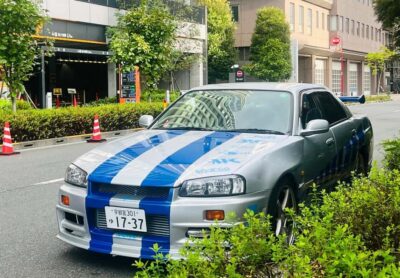 ★ 4.8Tokyo: Fast & Furious Tokyo Drift 3 Experience (Kaila Yu SP)From $157
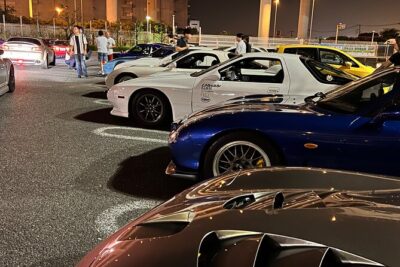 ★ 4.8Tokyo: Daikoku JDM Car Meet & Night Car Culture TourFrom $984 hours
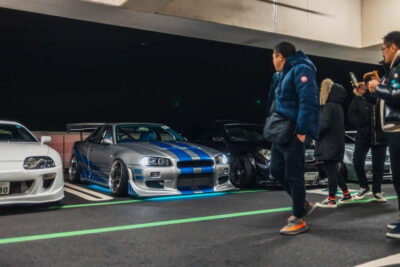 ★ 4.8Secret Car Meet: R34 Skyline Car Club MembershipFrom $236
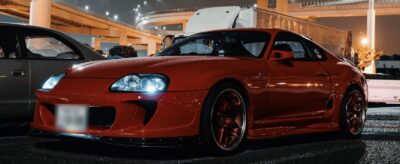 ★ 4.7Tokyo Drift: Daikoku PA Supreme Car Experience 大黒PAFrom $583 hours