
Reviewed · JDM & CAR CULTURE
Daikoku: R34 Skyline Night Private JDM Daikoku Experience
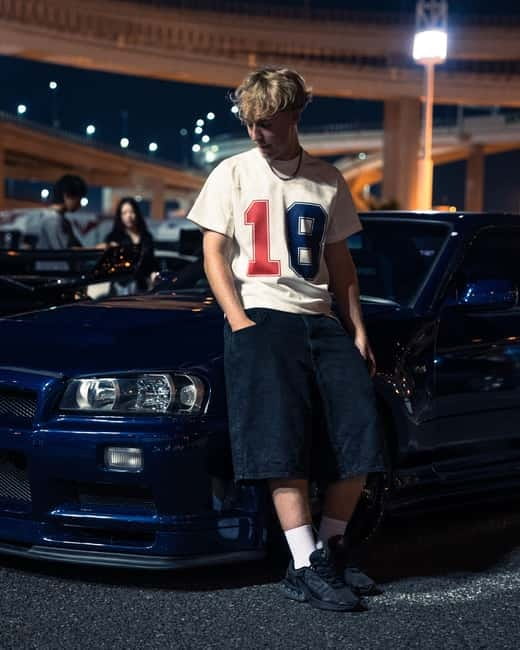
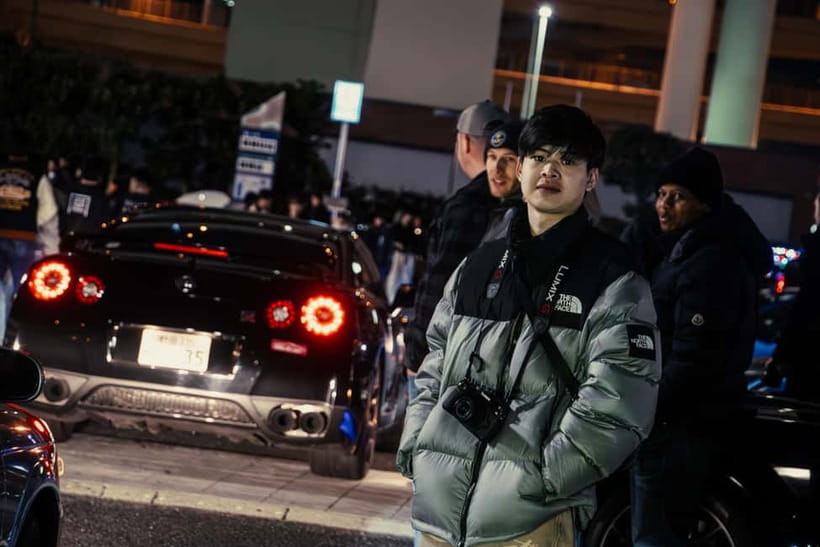
Daikoku is not a normal sightseeing stop. It is a late-night meeting place where Japan’s car culture becomes very real: tuned Skylines, Supras, Porsches, Lamborghinis, and rows of enthusiast cars gathered beside the highway. You reach it in a Nissan R34 Skyline, with an English-speaking local guide explaining what you are seeing along the way.
I like the private format for small groups, and I like the mix of car culture with Tokyo’s night scenery. The 40-minute stop at Autobacs Shinonome adds useful context before Daikoku, while the return past Umihotaru and Rainbow Bridge gives the evening some variety.
The main thing to consider is that Daikoku Parking Area can close or become unavailable. In that case, the plan changes and an extra 5,000 yen per person may apply for the longer Umihotaru option. One recent booking also lasted three hours rather than the advertised four.
In This Review
- Key points to know before booking
- Why Daikoku feels different from a car museum
- Starting in Shibuya in an R34 Skyline
- Autobacs Shinonome, 40 minutes of tuning culture
- Daikoku Parking Area, about 90 minutes among the cars
- Umihotaru and Tokyo’s night views
- The guide makes the difference
- Is $309 good value for up to three people?
- Timing, closures, and practical details
- Who should book this Tokyo night experience?
- Should you book the Daikoku R34 experience?
- FAQ
- Where does the tour start and finish?
- How long does the experience last?
- How many people can join the private group?
- Which car will I ride in?
- Who leads the tour?
- What happens if Daikoku Parking Area is closed?
- Is food included?
- What should I bring?
- Can I cancel the booking?
Key points to know before booking
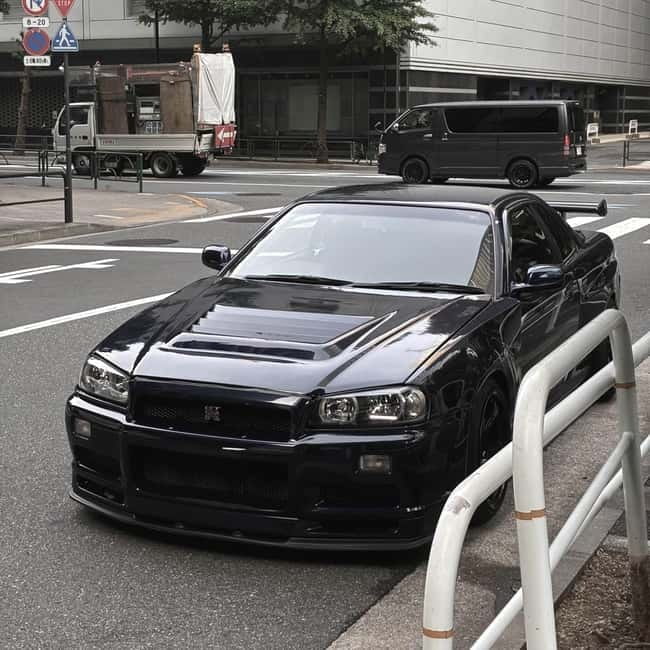
- A real R34 Skyline is part of the evening: You ride in the car rather than simply viewing one at a showroom.
- Daikoku is the main event: Allow about 90 minutes to walk around the parking area and see the cars gathered that night.
- The guide leads from the first minute: Yuto and Yuki have hosted outings, with English and Japanese offered.
- Autobacs Shinonome is more than a shopping stop: Its tuning and performance-car focus helps explain the local scene.
- The group is private and small: The $309 price covers up to three people, making it easier to ask questions and set the pace.
- The schedule depends on the carmeet: Daikoku can close, and the alternative costs more because of the added tolls and distance.
Why Daikoku feels different from a car museum
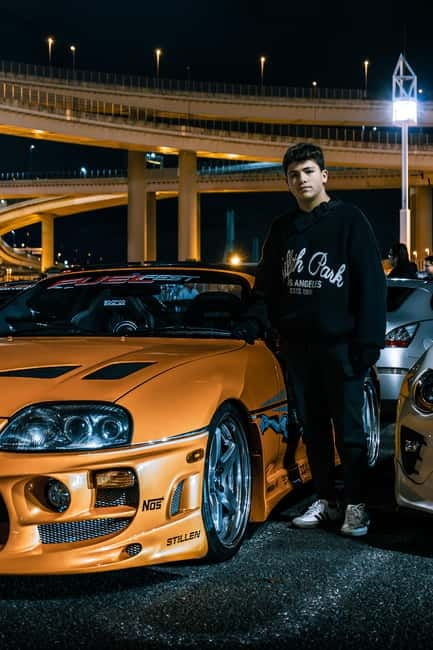
A museum gives you polished cars behind barriers. Daikoku gives you a working slice of car culture, and the appeal is the uncertainty. The cars present depend on the night, the weather, local events, and who decides to drive out.
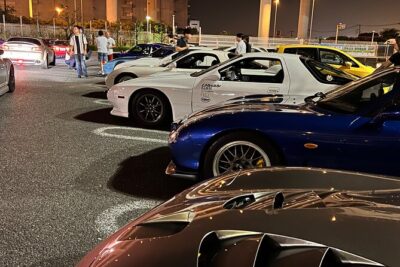
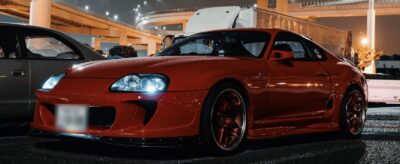
The parking area is known for Japanese performance cars, but you should not expect only Skylines. The evening may include Supras, Porsches, Lamborghinis, and many other modified or high-performance vehicles. One particularly busy night included more than 100 cars, around 30 Skylines, several MK4 Supras, and a Lamborghini.
That variety matters. You are not simply checking off a famous model. You are watching how owners gather, compare cars, talk, photograph vehicles, and leave together. The mood can shift from quiet inspection to a dramatic highway departure when several cars head back toward Tokyo at once.
I would keep your expectations sensible. No one can promise a certain car will appear, and Daikoku is not a guaranteed show with a fixed program. The draw is the local, changing character of the meeting. If you need a set display of specific models, a museum or dedicated car exhibition may suit you better.
A few more Tokyo tours and experiences worth a look
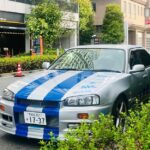
Starting in Shibuya in an R34 Skyline
Pickup and drop-off are arranged in Shibuya, which makes this easy to fit into a Tokyo evening. The experience lasts about four hours, with the drive itself forming a major part of the tour rather than serving as a simple transfer between stops.
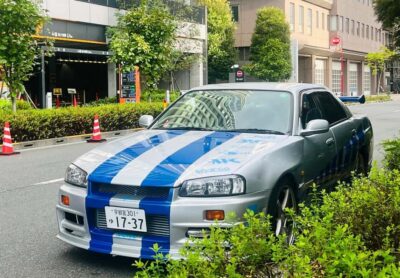
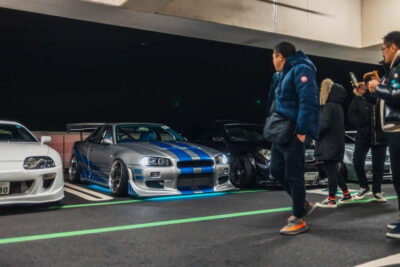
The Nissan R34 Skyline is a major reason to book. For many people, this is the car they have seen in films, games, magazines, and tuning videos. Riding in one changes the experience from looking at JDM culture from the outside to sitting inside a working example while a local guide talks through the scene.
The tour provider describes the booking fee as payment for the guide’s cultural and historical commentary. The ride in the R34 is presented as a complimentary part of the guided experience, not as a taxi service. In practical terms, you should think of this as a guided car-culture outing with transport included, not as a private point-to-point ride.
The guide begins talking from the moment you get into the car. The discussion can cover Japanese car culture, tuning, roads, local geography, and everyday life in Japan. Yuto has hosted many of the outings and is described as speaking excellent English, while Yuki has also led tours and handled communication in English. Since both names appear among the hosts, confirm who is driving your date if that matters to you.
Autobacs Shinonome, 40 minutes of tuning culture
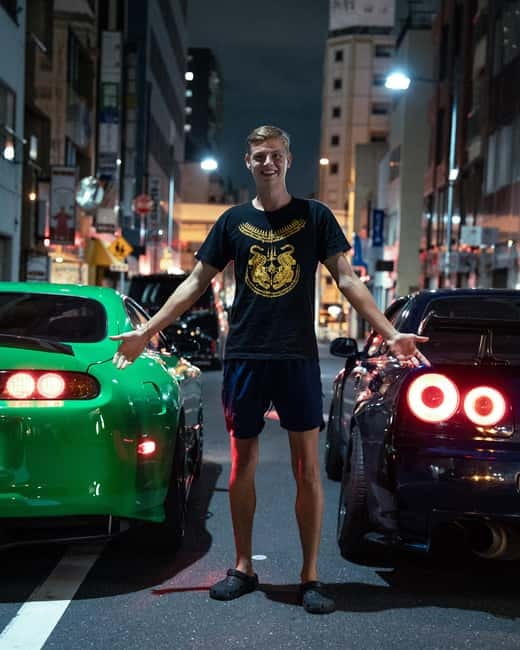
The first stop is Autobacs Shinonome, where you have about 40 minutes for a guided visit and shopping. This is not just a place to buy souvenirs. It is a large automotive retailer with performance and tuning products, giving you a look at the practical side of Japan’s car scene.
You might find parts, accessories, maintenance products, and car-themed items. The exact stock can change, so do not book this expecting one particular product. Still, the stop helps explain why tuning culture has such a strong presence in Japan. Cars are not only admired as finished objects. They are adjusted, improved, personalized, and treated as ongoing projects.
I like this stop because it gives the night some structure. Daikoku can feel overwhelming if you arrive without context, especially if the parking area is busy. At Autobacs, you can ask the guide what certain products do, how Japanese owners approach modifications, and which details to watch for later.
It is also the most useful stop if someone in your group likes cars but is not already an expert. You do not need to recognize every engine code or know the difference between every Skyline generation to enjoy the evening. The store gives you a friendly starting point before the bigger gathering.
Daikoku Parking Area, about 90 minutes among the cars
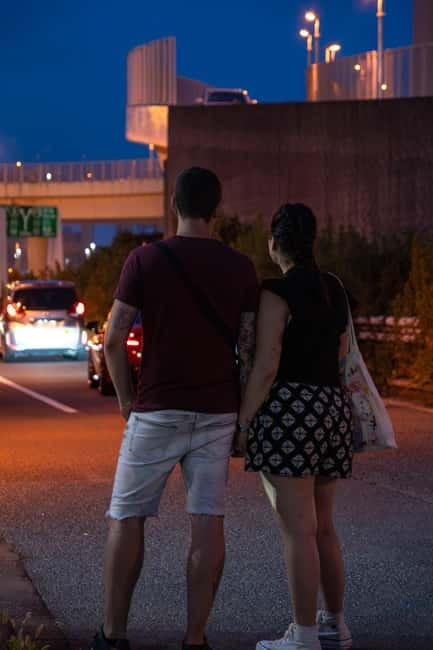
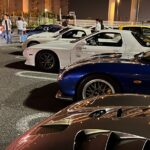
Daikoku Parking Area is the heart of the experience. The scheduled visit lasts about an hour and a half, enough time to walk around, take photographs, and speak with the guide without rushing from one car to the next.
The atmosphere changes from night to night. You might see a strong showing of Japanese performance cars, or you might find a broader mix with European exotics and American or luxury vehicles. The supplied examples include R34 Skylines, MK4 Supras, Porsches, and a Lamborghini, but those are snapshots rather than promises.
Your guide adds value here by helping you understand what is worth noticing. Ask about tuning choices, model history, local driving habits, and the difference between a factory car and a modified one. A good guide can also explain the social side of the meeting, not just identify badges.
Photography is welcome as part of the experience, but bring a charged phone or camera and remain respectful around the cars. The information provided does not promise private access, test drives, or permission to touch vehicles. Treat the parking area as a public gathering, and follow the guide’s advice about where to stand and when to leave.
The departure can be the most memorable part. Several owners may head back onto the highway around the same time, creating a convoy-like scene of Japanese performance cars moving through tunnels and across bridges. You may hear the engines and see cars traveling together, but this is still public-road driving. The guide’s safe, responsible driving matters more than trying to recreate a film scene.
Umihotaru and Tokyo’s night views
After Daikoku, the itinerary includes about 90 minutes at Umihotaru. This sea-crossing service area is a useful contrast to the parking-area meet. Here, you can take a break, look at the night views, and continue talking with the guide about the roads and geography around Tokyo.
The stop adds breathing room after the noise and crowds of Daikoku. If your main goal is cars, you may find the time at Umihotaru less exciting than the carmeet. If you enjoy city lights, bridges, tunnels, and the unusual design of Tokyo’s highway system, it rounds out the night well.
The route then includes sightseeing at Rainbow Bridge before returning to Shibuya. The bridge is not listed as a long stop, so think of it as a view from the road rather than a separate attraction visit. That is enough to give you a sense of Tokyo after dark without turning the outing into a standard city tour.
The route is one of the tour’s strengths. You get a performance-car retail stop, a major car gathering, a highway service area, and a bridge view in one evening. You also see why roads are central to the culture: Tokyo’s highways are not just a way to get somewhere, but part of the setting for the cars themselves.
A few more Tokyo tours and experiences worth a look


The guide makes the difference
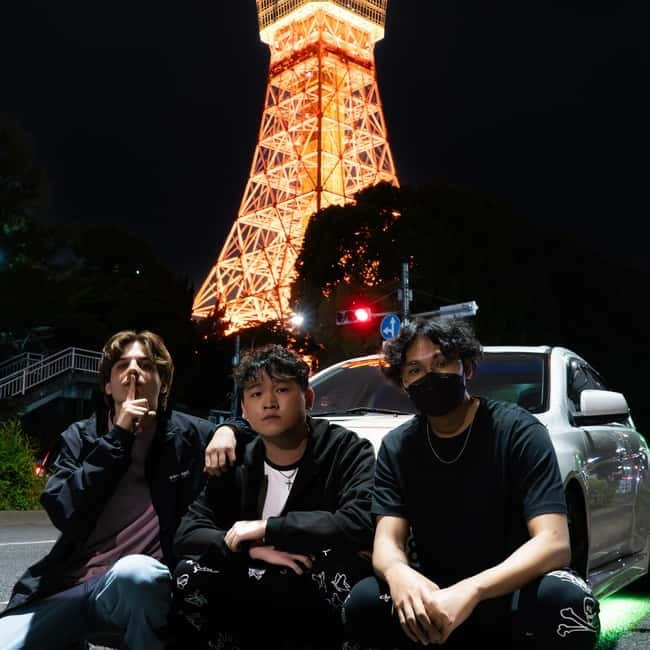
This experience depends heavily on the person behind the wheel. The most praised qualities are friendly conversation, strong English, flexibility, and genuine enthusiasm for cars and Japan.
Yuto is the main name associated with the outing. He has taken time to discuss automotive topics and Japanese culture, adjust the pace, and help with photographs. One account describes him using his own camera to take pictures during the Tokyo portion of the night. Yuki has also been praised for clear communication and a welcoming manner.
The private format helps. With up to three people in your group, you can ask specific questions instead of listening to a fixed speech aimed at a busload of people. You can talk about Skyline generations, tuning, Japanese highways, Tokyo neighborhoods, or whatever catches your attention.
Do remember that the guide is not only a driver. The provider frames the outing around guiding and cultural explanation, with the ride included as part of that service. That distinction reflects the legal setup described for professional guides using private vehicles for incidental transport under current MLIT guidance.
Is $309 good value for up to three people?
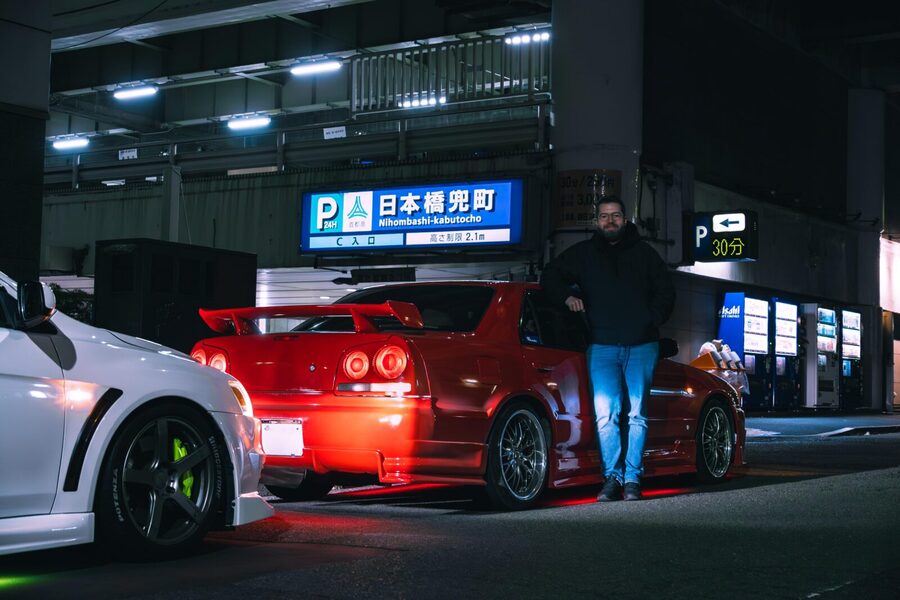
The listed price is $309 per group of up to three people. For one person, that is a costly evening. For three people sharing the booking, it works out to $103 each before personal spending, which is more reasonable for a four-hour private outing in a rare performance car.
The value comes from the combination. You are not paying only for a ride in an R34, and you are not paying only for entry to a parking area. You receive hotel pickup and drop-off, a private guide, the Autobacs stop, time at Daikoku, Umihotaru, and the return through Tokyo’s night scenery.
I would compare it with the cost of arranging the same evening independently. Reaching Daikoku by ordinary public transport is not straightforward, and a standard taxi would not provide car-culture commentary or the R34 experience. The private price makes the most sense for a small group that would otherwise split several transport costs.
The value is weaker if you are only mildly interested in cars. The tour spends much of its time driving, discussing automotive culture, and looking at vehicles in a parking area. Someone seeking a general Tokyo night tour could find better use for the money elsewhere.
Also budget for shopping and snacks yourself. Cash is listed among the recommended items, and the price does not mention food, drinks, or purchases. Alcohol and drugs are not allowed.
Timing, closures, and practical details
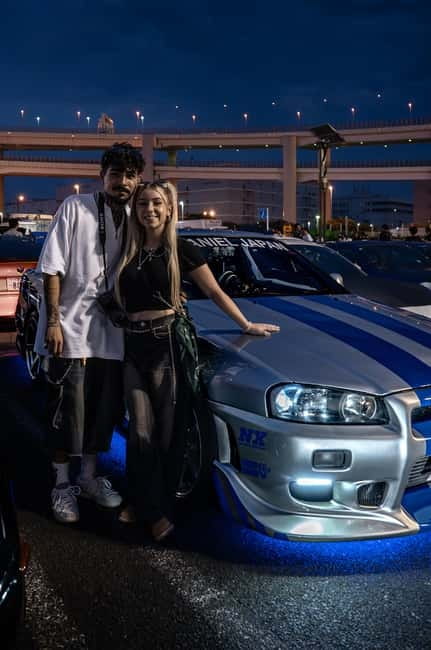
The experience lasts four hours, but the actual night can be shaped by traffic, the carmeet, and site conditions. Daikoku may close or become unavailable. If that happens, the stated alternative involves an additional 5,000 yen per person for the longer Umihotaru route because of tolls and distance.
Ask about the current plan before setting up another fixed booking afterward. A recent customer reported an outing of three hours instead of four, while the advertised schedule is four hours. That appears to be an exception, but it is worth leaving a little space in your evening.
You should bring:
- A passport
- A camera
- Cash
- A fully charged smartphone
The passport requirement is listed among the items to bring, so follow it even if you expect not to need it. You will also receive an email within 48 hours and are asked to check your mailbox and reply. Do not ignore that message, since it may contain the final meeting details.
The tour is not suitable for children under 10 or people over 95. It is a private group activity, and the available languages are English and Japanese. Free cancellation is available up to 24 hours in advance, and you can reserve now and pay later.
Who should book this Tokyo night experience?
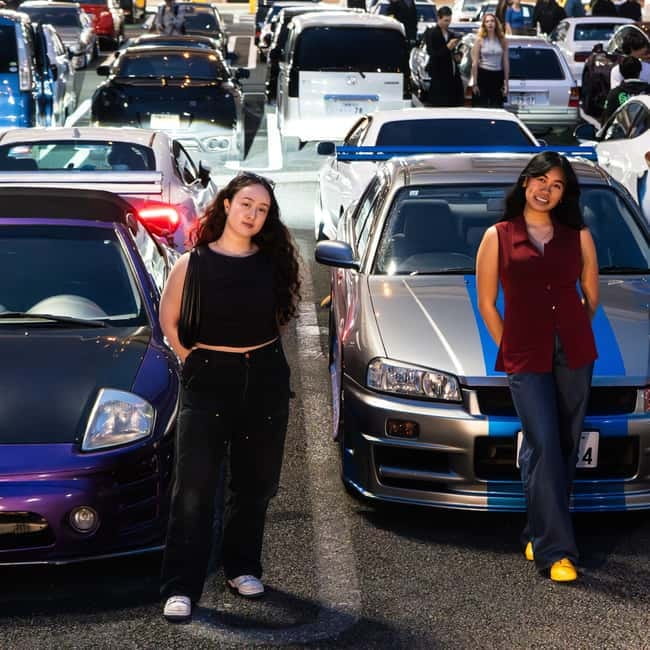
I would put this near the top of the list for anyone who already knows the difference between a Skyline and a Supra, follows Japanese tuning culture, or simply dreams of riding in an R34. It also suits a couple or a small group of friends who want something more personal than a large arranged tour.
You do not need to be a technical expert. The guide’s explanations make the outing accessible, and the mix of cars can appeal to people who enjoy design, photography, Japanese popular culture, or night drives.
I would think twice if you dislike late-night driving, loud engines, parking areas, or plans that depend on local conditions. Daikoku is not a formal attraction with guaranteed displays. It is a real gathering, and real gatherings can be unpredictable.
Should you book the Daikoku R34 experience?
Book it if the idea of riding in a Nissan R34 Skyline to a changing Japanese carmeet sounds exciting. The strongest parts are the small private group, the English-speaking guide, the time at Daikoku, and the chance to see the cars leave together on Tokyo’s highways.
For the best value, bring two friends and treat the night as a guided look at Japanese car culture rather than a simple photo stop. Confirm the guide, pickup details, and Daikoku plan before departure, then keep your schedule flexible enough for traffic or a site change.
If that sounds like your kind of evening, $309 for up to three people is a fair price for a focused, unusual Tokyo experience. If you want guaranteed models, a quiet sightseeing trip, or a full four hours with no changes, choose a more structured attraction.
FAQ
Where does the tour start and finish?
Pickup and drop-off are in Shibuya. The route returns to Shibuya after the stops and sightseeing.
How long does the experience last?
The advertised duration is four hours. The planned route includes Autobacs Shinonome, Daikoku Parking Area, Umihotaru, Rainbow Bridge, and return to Shibuya.
How many people can join the private group?
The price covers one private group of up to three people.
Which car will I ride in?
The experience is based around a Nissan R34 Skyline. The ride is described as a complimentary part of the guided JDM culture experience.
Who leads the tour?
Guides named in the available information include Yuto and Yuki. Tours are offered in English and Japanese. Confirm your guide when the provider contacts you.
What happens if Daikoku Parking Area is closed?
If Daikoku is closed, an alternative Umihotaru plan may be offered. An extra charge of 5,000 yen per person applies because of the additional tolls and distance.
Is food included?
Food and drinks are not listed as included. Bring cash for personal purchases and any food or drinks you choose to buy.
What should I bring?
Bring your passport, camera, cash, and a charged smartphone.
Can I cancel the booking?
You can cancel up to 24 hours in advance for a full refund. The experience also offers a reserve-now, pay-later option.
More Private Tours in Tokyo

More Night Tours in Tokyo
More JDM & Car Culture in Tokyo
More tours in Tokyo we've reviewed

JDM & Car Culture, compared.
 ★ 4.7FAST&FURIOUS EXPERIENCE Tokyo Car Club membershipFrom $138
 ★ 4.8GT-R35 800hp Club Membership – secret underground car meetFrom $205
 ★ 4.8Tokyo: Fast & Furious Tokyo Drift 3 Experience (Kaila Yu SP)From $157
 ★ 4.8Tokyo: Daikoku JDM Car Meet & Night Car Culture TourFrom $984 hours
 ★ 4.8Secret Car Meet: R34 Skyline Car Club MembershipFrom $236
 ★ 4.7Tokyo Drift: Daikoku PA Supreme Car Experience 大黒PAFrom $583 hours