
Reviewed · IMPERIAL PALACE & SHOGUN TOURS
Imperial Palace or Edo Castle Time Trip Learning Walking Tour
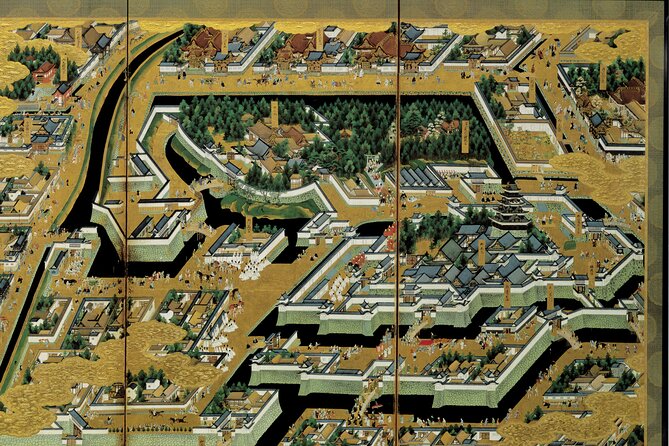
The most interesting part of this tour is the way it turns today’s Imperial Palace grounds into a vanished castle town. With an illustrated map of Edo from the 1650s, your guide helps you picture the gates, moats, bridges, guard huts, and stone walls that once protected the shogun’s seat. I like the clear historical frame and the chance to connect the site to people such as the shogun, emperor, samurai, castle women, and ordinary residents of Edo.
I also like the small group limit of eight and the very low price of $3.25 per person. Guide Blanca is singled out for her excellent English, pleasant manner, and strong command of the subject. The main consideration is the 5.4-kilometer walk, which takes about two and a half hours and requires good weather.
In This Review
- Key points at a glance
- Start at Tokyo Station with an Edo map
- Sakurada Gate and the Imperial Palace bridges
- Walking through the former Edo Castle
- Understanding shogun, emperor, and samurai power
- Hirakawa-mon Gate and the final recap
- What the guide adds to the experience
- Is $3.25 good value?
- Who should book this Edo Castle walk?
- Practical details before you book
- Should you book the Imperial Palace time trip?
- FAQ
- How long does the Imperial Palace and Edo Castle tour last?
- How far do you walk during the tour?
- Where does the tour begin and end?
- Is an English-speaking guide included?
- What is included in the $3.25 price?
- What happens if the weather is poor?
Key points at a glance
- A 1650s Edo map sets the scene: You get a visual guide to the city as it was during the shogun’s era.
- The route covers 5.4 kilometers: Expect a steady walking tour rather than a short palace photo stop.
- The Imperial Palace and former Edo Castle are the focus: See Sakurada Gate, the famous double bridges, the Eastern Garden, and Hirakawa-mon Gate.
- A government-licensed English guide leads the way: Blanca is one named guide, praised for her clear English and friendly approach.
- Only up to eight people join: The small group should make questions and explanations easier.
- The price is unusually low: At $3.25 per person, the value comes mainly from the guided historical context.
Start at Tokyo Station with an Edo map
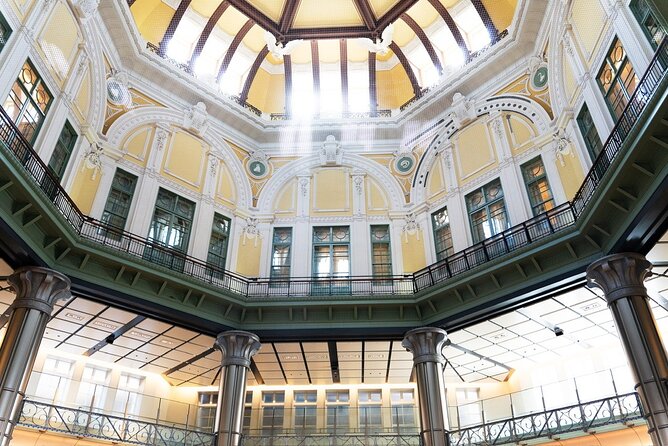
The tour begins at Tokyo Station’s Marunouchi South Gate Dome, in the Marunouchi district. The meeting point matters here because Tokyo Station is large, and an earlier description caused some confusion about the exact starting place. The meeting instructions have been revised to point guests toward the Marunouchi South Exit on the ground floor, so use that wording carefully when finding the group.
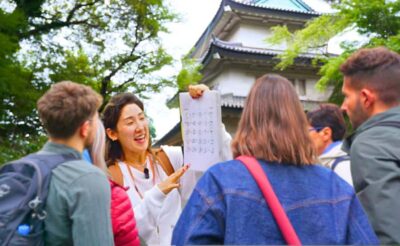
Your guide presents an illustrated map of Edo in the 1650s before the walking begins. This is more than a quick orientation. The map gives you a way to understand how the castle sat at the center of political power and how the surrounding city related to it.
I find this a smart way to begin because much of the original castle is gone or changed. Without a visual reference, you may see gates, walls, bridges, and open grounds without knowing how they once worked together. The map helps you read the remains as parts of a planned defensive and political center.
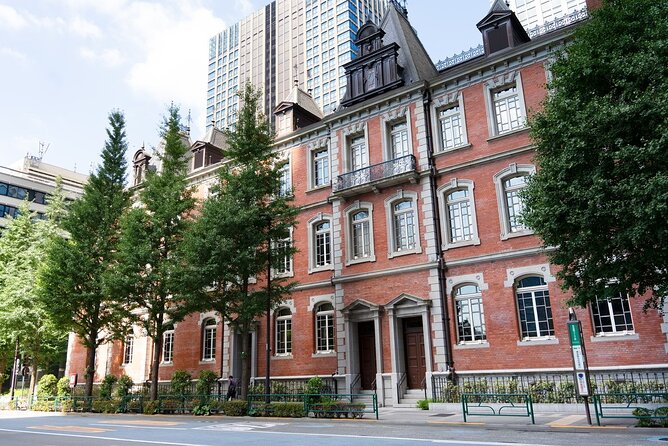
The first stop is the Mitsubishi Ichigokan Museum area, where the guide spends about five minutes explaining the Mitsubishi Group and its major role in Japan’s economy. Admission is free, and this brief stop provides a link between the country’s older political order and its later business history.
This is not the main reason to book the walk, and the stop is short. Still, it gives the route a wider frame. You are not only looking at a former castle. You are also moving through a part of Tokyo shaped by powerful institutions across different periods.
A few more Tokyo tours and experiences worth a look

Sakurada Gate and the Imperial Palace bridges
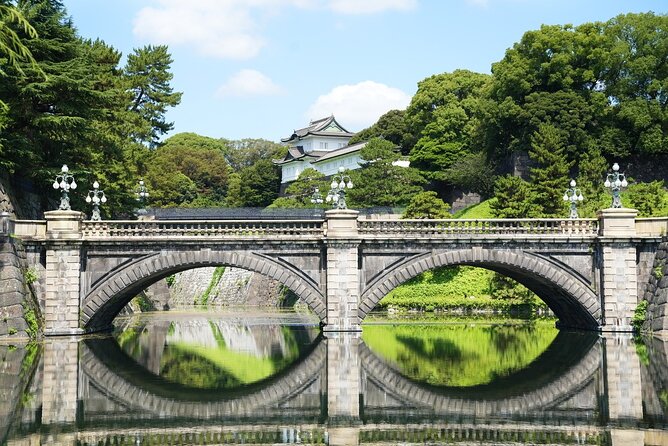
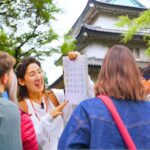
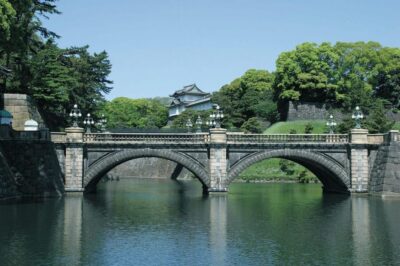
From the station area, the walk continues toward the Imperial Palace. One of the first memorable views is the familiar pair of bridges near the palace entrance. These bridges provide an iconic view, but the guide’s explanation gives the scene more meaning than a quick photograph would.
The route also includes Sakurada Gate. Gates were not simply openings in a wall. They controlled movement, marked status, and formed part of the castle’s defense. Seeing a gate in place helps you imagine how visitors, officials, guards, and supplies would have been managed around the shogun’s compound.
Your guide may use the map while pointing out how the castle area related to the wider city. That connection is one of the tour’s best features. The experience is not limited to grand rulers. It also introduces the structure of Edo society, including the samurai ruling class, the shogun, the emperor, women connected with the castle, and the people who lived in Edo city.
The palace views are attractive, but the walk is not designed as a formal interior palace visit. The supplied details focus on exterior gates, bridges, walls, moats, and gardens. If you want rooms, palace ceremonies, or an indoor museum program, this is not that kind of experience.
Walking through the former Edo Castle
The main portion lasts about two hours and takes you into the former Edo Castle area, now called the Imperial Eastern Garden. Admission is free according to the tour details, so your payment goes toward the guide and the historical interpretation rather than a separate entry ticket.
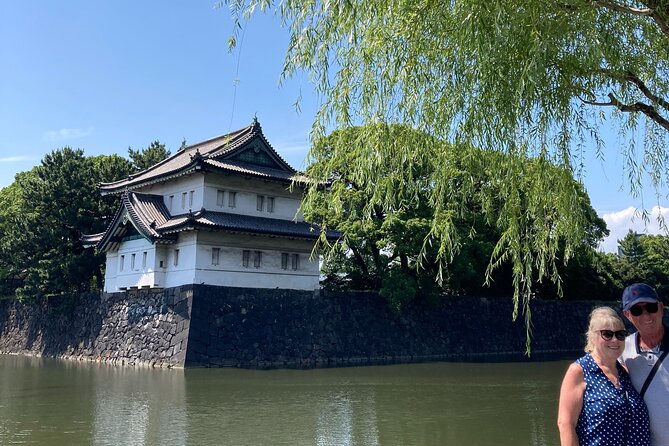
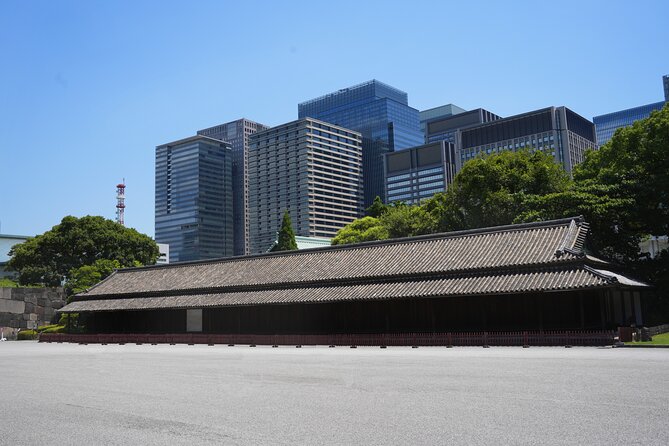
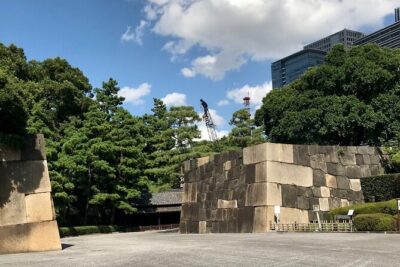
The Eastern Garden is where the tour’s time-trip idea works best. The castle itself is no longer present in its original form, but the remaining structures can help you reconstruct its scale and purpose. Stone walls, moats, bridges, gates, and guard huts are the physical clues.
You will walk from one feature to another while the guide explains how the pieces fit together. A moat is no longer just water beside a path. A guard hut becomes part of a system for watching access. A thick stone wall suggests the labor and planning required to protect the castle. The route asks you to use your imagination, but it gives you real structures to work from.
This is also the section where the pace matters. At 5.4 kilometers, the walk covers a fair amount of ground in 150 minutes. That works out to a moderate pace with time for explanation, but it is still a walking tour, not a short guided stroll. Wear comfortable shoes and consider the weather before you commit.
The tour requires good weather. If poor weather cancels it, you are offered another date or a full refund. A mobile ticket makes the booking simple, but you should still keep your phone available for the confirmation and meeting instructions.
Understanding shogun, emperor, and samurai power
A major benefit of this walk is the chance to sort out political terms that can blur together during a first visit to Japan. The guide explains the roles of the shogun, the emperor, and the samurai ruling class, using the castle grounds as a practical setting.
The castle gives the conversation a physical anchor. Instead of hearing a general lecture in a classroom, you are standing among the routes, walls, and gates that supported the ruling system. That makes the explanation easier to follow, especially if you are still learning how Edo-period society was organized.
The tour also looks beyond the men who held formal power. You hear about women of the Edo Castle and about people who lived in Edo city. This wider view matters because a castle was not only a military headquarters. It was also a place tied to household life, administration, social rank, and the daily work of a large city.
I would choose this experience for someone who wants context more than spectacle. The remaining structures are meaningful, but they do not tell the whole story by themselves. The guide’s narration and map are what turn the walk into a historical lesson.
Hirakawa-mon Gate and the final recap
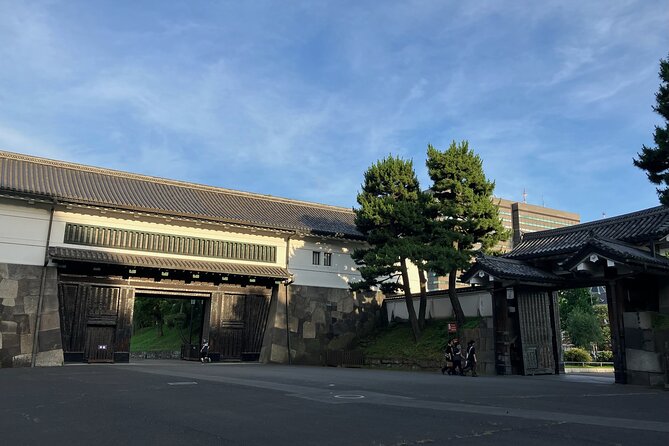
The route ends at Hirakawa-mon Gate. After seeing the palace area and former castle grounds, this final stop gives the guide a place to review the main ideas from the walk.
The recap is useful because the tour covers several themes at once: the layout of Edo Castle, the relationship between the castle and city, defensive features, and the roles of different groups in Japanese society. A final explanation can help you organize those details instead of leaving with a collection of disconnected sights.
The ending is also practical. You finish at Hirakawa-mon Gate in Chiyoda City rather than returning to Tokyo Station. That is worth noting when planning the rest of your day. The tour begins near a major transport hub but ends elsewhere, so allow time to orient yourself after the final explanation.
Other walking tours we've reviewed in Tokyo



What the guide adds to the experience
The tour includes an English-speaking guide, and the guide’s ability matters more here than any ticket feature. Much of the castle is reconstructed through explanation, so clear English and a good sense of place are central to the experience.
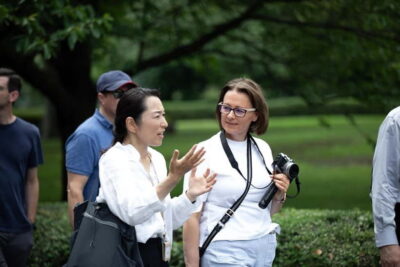
Blanca is the only guide named in the available information. She is praised for her wealth of knowledge, very good English, and pleasant manner. Another participant described the woman guide as an excellent history teacher. Those details point to the tour’s strongest quality: the human explanation behind the physical site.
The small group limit is eight people. That is a useful size for a walking route with several stops. You can usually hear the guide more easily than in a large group, and there is a better chance to ask about a gate, moat, or social role when something catches your attention.
Still, guide quality can vary from one departure to another because Blanca may not lead every tour. The company is Happy Tour, and the experience is described as led by a government-licensed guide. If the guide is your main reason for booking, keep in mind that the named guide is not guaranteed in the supplied details.
Is $3.25 good value?
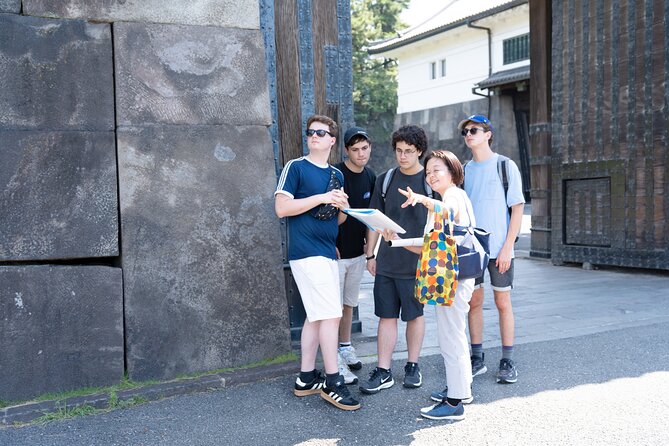
At $3.25 per person, this is an exceptional price for a two-and-a-half-hour guided walk. You are paying very little for a government-licensed English guide, a small group setting, and a route through one of Tokyo’s most important historic areas.
The value is strongest if you would otherwise walk around the Imperial Palace without understanding what you see. The gates and walls are free to view, but the map and explanation supply the meaning. You also receive a small gift, adding a modest extra touch.
The price does not include meals or bottled water. That is easy to manage, but plan ahead because the walk lasts 2.5 hours. Bring your own water and eat before or after the tour. Since neither is included, the low headline price should not be mistaken for an all-inclusive outing.
There is also no mention of a private tour. The group can have up to eight people, which keeps it fairly intimate but does not guarantee a one-on-one experience. For the price, that is a fair trade.
Who should book this Edo Castle walk?
I would recommend this tour to first-time visitors who want a readable introduction to Tokyo’s political past. It also suits history-minded visitors who prefer to learn while walking rather than spend the whole day indoors.
Families and mixed-age groups may find the map and visible castle remains easier to follow than a long abstract lecture. The small group can help keep the tour personal, though the 5.4-kilometer distance may not suit everyone.
You should also consider it if you have already seen the famous palace bridges and want to understand the ground around them. The route adds depth to a familiar Tokyo view by explaining how the former Edo Castle worked.
I would hesitate if you dislike long walks, need a weather-proof activity, or want access to palace interiors. The experience centers on outdoor interpretation, and poor weather can force a date change or cancellation.
Practical details before you book
The tour lasts approximately two hours and thirty minutes and covers about 5.4 kilometers. Comfortable footwear is a must, and you should check the forecast because the activity requires good weather.
The meeting point is at Tokyo Station’s Marunouchi South Gate Dome, with the updated guidance pointing to the Marunouchi South Exit on the ground floor. The end point is Hirakawa-mon Gate in Chiyoda City. Keep both locations visible on your phone so you do not assume the walk returns to the station.
A mobile ticket is provided, and confirmation is received at booking. The tour is near public transportation, and most people can participate according to the supplied information. The group size is capped at eight.
Free cancellation is available if you cancel at least 24 hours before the start time. Cancellations or changes made inside that 24-hour window are not refunded or accepted. If weather cancels the experience, you can choose another date or receive a full refund.
Should you book the Imperial Palace time trip?
Book it if you want an affordable, outdoor history lesson that helps you make sense of the Imperial Palace and former Edo Castle. The 1650s map, licensed English guide, and surviving castle features work together well, and the price is hard to beat.
Skip it if you are looking for an indoor palace tour, a short photo walk, or a meal-inclusive activity. For everyone else, especially visitors who want to understand the shogun-era setting behind Tokyo’s central sights, this is a practical choice. Just meet at the corrected station location, bring water, wear good shoes, and leave enough time for the full 5.4-kilometer route.
FAQ
How long does the Imperial Palace and Edo Castle tour last?
The tour lasts approximately two hours and thirty minutes.
How far do you walk during the tour?
The route covers about 5.4 kilometers.
Where does the tour begin and end?
It begins at Tokyo Station’s Marunouchi South Gate Dome, with updated instructions directing you to the Marunouchi South Exit on the ground floor. It ends at Hirakawa-mon Gate in Chiyoda City.
Is an English-speaking guide included?
Yes. The tour includes an English-speaking, government-licensed guide. Blanca is one of the named guides.
What is included in the $3.25 price?
The price includes the English-speaking guide and a small gift. Meals and bottled water are not included.
What happens if the weather is poor?
The activity requires good weather. If it is canceled because of poor weather, you are offered another date or a full refund. You can also cancel for a full refund up to 24 hours before the start time.
More Walking Tours in Tokyo
More Imperial Palace & Shogun Tours in Tokyo

More tours in Tokyo we've reviewed










Imperial Palace & Shogun Tours, compared.
 ★ 5.0Tokyo: Imperial Palace and Shogun Historical Walking TourFrom $22
 ★ 4.9Tokyo: Imperial Palace Japanese History Walking TourFrom $32
 ★ 4.9Tokyo: Imperial Palace and Shogun Walking TourFrom $162 hours
 ★ 5.0Imperial Palace East Garden and Edo Castle Walking Tour in TokyoFrom $25
 ★ 4.8Tokyo: Imperial Palace East Gardens Walking TourFrom $192h 30m
 ★ 4.5Tokyo: Imperial Palace, Sensō-ji Temple, & Tokyo Tower TourFrom $404 hours