
Reviewed · IMPERIAL PALACE & SHOGUN TOURS
Tokyo: Imperial Palace East Gardens and Tokyo Station Tour
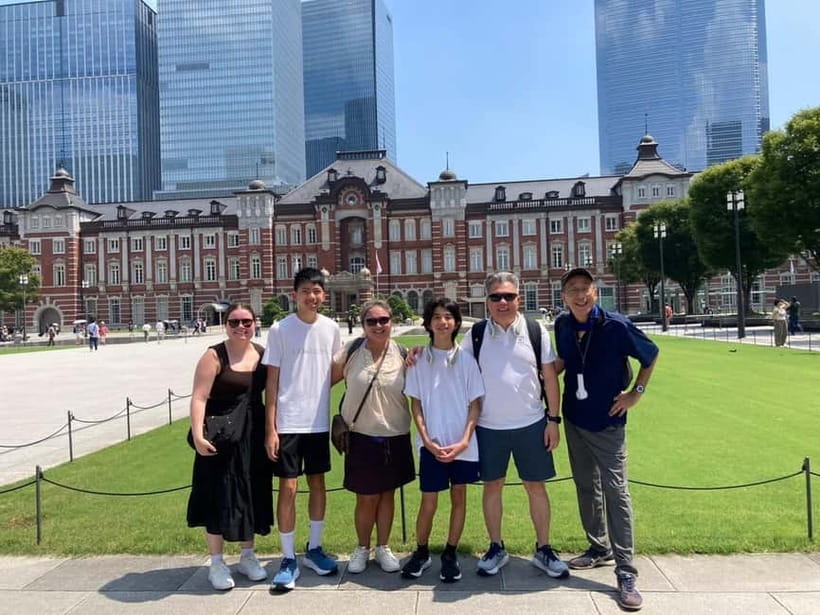
The best part of this tour is the way it connects two very different Tokyos. You begin among moats, guardhouses, gardens, and Edo Castle ruins, then walk into Marunouchi’s polished office district and finish at red-brick Tokyo Station. Guide Yuki has earned particular praise for making 400-year-old events easy to picture, often with a joke or two.
I like the clear route and the useful historical context. Ninomaru Garden and the old castle grounds give you a real sense of the shogunate era, while the final walk shows how quickly Tokyo changed into a modern capital. The main consideration is the moderate amount of walking in an open setting, so comfortable shoes, water, sunscreen, and weather-ready clothing matter.
In This Review
- Key points at a glance
- From Edo Castle to modern Tokyo
- Starting at Wadakura Fountain Park
- Ote-mon Gate and the castle approach
- Ninomaru Garden and the East Gardens
- Edo Castle ruins and Fujimi-yagura
- Nijubashi and the imperial setting
- The ten-minute walk through Marunouchi
- Tokyo Station provides a strong finish
- How much value do you get for $38?
- Who will enjoy this walk most?
- Practical tips for a smoother visit
- Should you book the Imperial Palace to Tokyo Station walk?
- FAQ
- How long does the tour last?
- Where does the tour start?
- Where does the tour finish?
- Is admission to the Imperial Palace East Gardens included?
- Which sights are included?
- What languages are available?
- Is the tour wheelchair accessible?
- What should I bring?
Key points at a glance
- A history-to-modernity route: Move from Edo Castle ruins and samurai-era sites to Marunouchi’s contemporary buildings and Tokyo Station.
- A lively guide makes the difference: Yuki is noted for clear, humorous explanations that help you imagine Tokyo as it looked 400 years ago.
- Ninomaru Garden adds breathing room: The garden offers a calm contrast to the stone walls, moats, and city streets.
- Important palace sights are built into the walk: See Ote-mon Gate, Hyakunin Bansho Guardhouse, Fujimi-yagura, and the Honmaru area.
- The tour ends at a major Tokyo landmark: Tokyo Station provides a memorable finish and an easy point for continuing your day.
- Good value for a short introduction: At $38 for 150 minutes, the tour bundles a guide, palace grounds, and a well-planned central Tokyo route.
From Edo Castle to modern Tokyo
This is a useful tour if you want Tokyo’s past and present in one compact outing. The Imperial Palace East Gardens occupy part of the old Edo Castle grounds, once tied to the Tokugawa shogunate. By the end, you are looking at Tokyo Station and the high-rise Marunouchi district, where commerce and modern architecture replace castle walls.
I like this contrast because it gives the walk a clear story. You are not simply moving from one attraction to another. You are following the change from military stronghold to imperial center to modern business capital.
The experience lasts 150 minutes. That is long enough to provide real context without taking over your whole day. It is also short enough to fit neatly into a morning or afternoon plan. You begin at the Starbucks Coffee Imperial Palace Gaien Wadakura Fountain Park branch, then make your way through the East Gardens and Marunouchi before finishing at Tokyo Station.
The tour is guided rather than self-paced. That matters here. Much of the palace area is made up of walls, gates, foundations, and open ground. Without explanation, you might see attractive scenery but miss why a particular stone base, tower, or guardhouse mattered.
A few more Tokyo tours and experiences worth a look

Starting at Wadakura Fountain Park
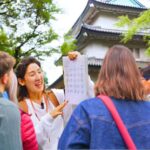
The meeting point is at Starbucks Coffee in Wadakura Fountain Park, near the Imperial Palace outer grounds. Starting here places you close to the palace moat and the broad open spaces of Kokyo Gaien National Garden.
This is a sensible place to begin because you can get oriented before entering the historical core. It also gives the group a clear public meeting point rather than asking you to search for a small gate or obscure street corner.
From here, expect an outdoor walk. There is no admission fee for the East Gardens, but the experience still depends on weather and your ability to walk at a steady pace. Bring water, a hat, sunscreen, and clothing suited to the forecast. Flash photography and smoking are not allowed, and backpacks are not permitted, so pack lightly.
Ote-mon Gate and the castle approach
The route includes Ote-mon Gate, one of the key entrances associated with the old castle complex. A gate like this is more than a photogenic stone and timber structure. It helps you understand how access was controlled and how much planning went into protecting the castle.
You will also see the Hyakunin Bansho Guardhouse. Its name refers to a guardhouse associated with a large group of guards, and it offers a practical way to discuss castle security and the power of the shogunate. These details give the early part of the walk a human scale. Instead of only hearing about rulers, you begin to think about the people who watched gates, checked visitors, and maintained order.
The guide’s role is especially useful here. Yuki’s explanations are described as clear and easy to follow, with stories that make the old castle feel more imaginable. That style suits this setting because the physical remains alone do not explain how the site functioned.
Ninomaru Garden and the East Gardens
The East Gardens are the central part of the tour, with about 30 minutes set aside for guided sightseeing. This is where the route slows down and the mood changes.
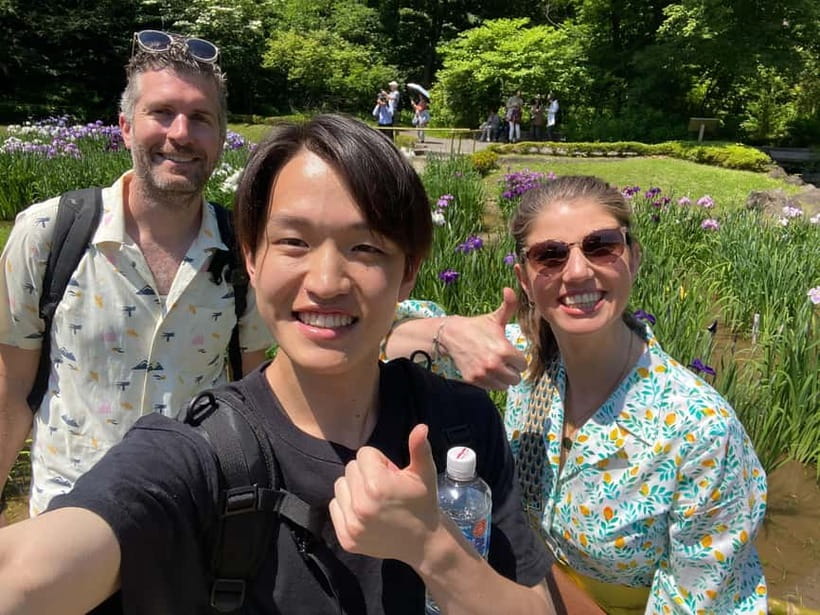
Ninomaru Garden brings a softer side of the former castle grounds. Its design offers a chance to discuss Japanese garden principles, seasonal planting, and the way gardens were used within a powerful residence. You are still inside a site tied to military government, but the garden shows that the castle was also a place of ceremony, taste, and controlled beauty.
I like this stop because it prevents the tour from becoming a march through fortifications. The moats, stonework, and old foundations tell you about defense. Ninomaru shows another side of court and castle life.
The garden may also be the most relaxing section of the walk. Take your time with the views, but stay aware of the guide and group. Since the tour has a set duration, this is not the place for a long solo wander.
Edo Castle ruins and Fujimi-yagura
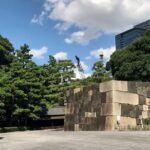
The East Gardens preserve important traces of Edo Castle, including castle foundations and the Fujimi-yagura watchtower. The tower is a reminder that the site was designed for both authority and defense, even when the surrounding gardens appear peaceful.
The tour also includes a scale model of the former Edo Castle main keep. This is valuable because the present-day ruins can be hard to read at street level. A model helps you picture the scale of the original structure and understand what has disappeared.
That visual aid should be particularly helpful if this is your first visit. You do not need prior study to follow the basic story, and you can ask questions as the guide points out how the old castle was arranged.
The route passes through the Honmaru area, the central portion of the former castle grounds. Here, the open space and remaining stone foundations encourage you to imagine a complex that once carried enormous political weight. The experience does not recreate the castle, but it gives you enough evidence to see the site as more than a public garden.





Nijubashi and the imperial setting
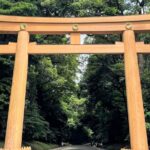
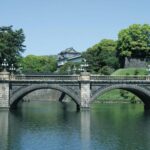
The walk also takes in views connected with Nijubashi and the Imperial Palace setting. These views are among the most recognizable in central Tokyo, pairing palace grounds, stonework, water, and formal bridges.
This portion adds the imperial chapter to the earlier Edo story. The site is not only about the Tokugawa shogunate. It also helps explain Japan’s later shift toward an imperial capital and the continuing symbolic role of the palace.
Your guide can provide the links between these periods, which is one of the strongest reasons to choose a guided walk instead of simply visiting the gardens alone. The tour is designed to explain the changes in power and purpose that shaped the area.
Do not expect access to every part of the Imperial Palace complex. The experience focuses on the East Gardens and surrounding public areas, with views rather than a general palace interior visit. That is an important distinction when you compare this with palace-related activities elsewhere in Tokyo.
The ten-minute walk through Marunouchi
After the palace grounds, the tour moves on foot through Marunouchi. The listed transfer takes about 10 minutes, but the wider route includes sightseeing and commentary in the district, so this is not simply a quick passage between attractions.
Marunouchi gives you a sharp visual change. Stone walls and planted gardens give way to offices, broad streets, public art, and modern architecture. The district shows how Tokyo’s center has been reshaped for business while still sitting directly beside one of the city’s most important historic sites.
I like this section because it keeps the tour from treating old Tokyo as a sealed-off museum piece. You see how the palace area fits into daily city life. Workers, commuters, shoppers, and office buildings are part of the present-day setting, while the castle grounds remain close by.
The tour includes architectural and art-focused commentary, though the available information does not specify individual buildings or artworks. Think of this as an introduction to the district rather than a specialist architecture walk. If modern design is your main interest, you may want more time afterward to explore Marunouchi independently.
Tokyo Station provides a strong finish
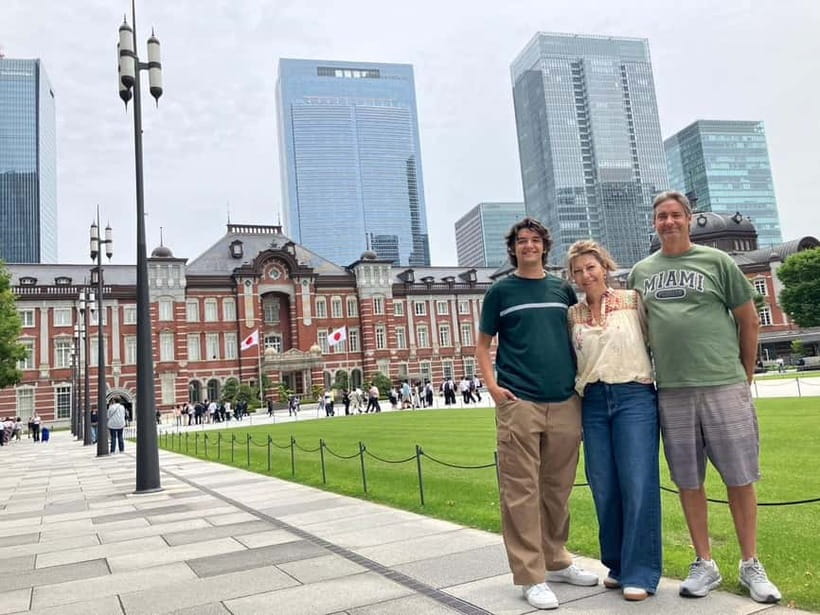
The route ends at Tokyo Station, where you receive a guided look at the station exterior. The restored red-brick facade makes a fine closing image after the palace’s stone walls and gardens.
The station represents a different stage in Tokyo’s development. It points to the city’s railway age, its modern national connections, and the transformation from castle center to major urban hub. Ending here gives the tour a satisfying visual and historical arc.
The finish is also practical. Tokyo Station is a useful place to continue sightseeing, find food, or connect with another part of the city. The tour does not include a separate station departure or onward transport, so you are free to make your own plans after the guide finishes.
Keep your expectations focused on the exterior and the surrounding district. The experience is not presented as a full indoor station tour. Its value comes from seeing the building as the final chapter in the route from Edo Castle to modern Tokyo.
How much value do you get for $38?
At $38 per person, this is a fair price for a 150-minute guided walk in central Tokyo. The East Gardens do not charge admission, so you are mainly paying for the guide’s time, route planning, explanations, and the connection between several sights.
That can be good value if you want context. A solo visit lets you see the gates, gardens, ruins, and station at your own speed, but you may not understand how they fit together. Here, the guide gives you a framework covering samurai-era architecture, castle security, garden design, the shogunate, imperial history, and modern Tokyo.
The price is less compelling if you prefer to linger. This is a structured walk with a fixed finish, not an open-ended garden visit. You may want extra time at Ninomaru Garden, the palace outer grounds, or Tokyo Station after the tour.
The strong praise for Yuki’s teaching style is worth noting. Her explanations are described as original, humorous, and realistic, with enough detail to help you picture Tokyo centuries ago. A good guide can turn a pile of stones and an old gate into a readable story, and that is the central value of this experience.
Who will enjoy this walk most?
I would choose this tour for a first visit to the Imperial Palace East Gardens, especially if you want more than photographs. It suits history fans, cultural explorers, and anyone who likes to understand how a city changed over time.
It is also a good fit if you are unsure how to combine the palace area with Marunouchi and Tokyo Station. The route handles that connection for you, so you do not spend time planning the order or finding the most sensible transition.
Families and mixed-interest groups may appreciate the variety. Gardens, old gates, castle remains, architecture, art, and a famous station give the walk several different subjects. The guide can also make the material approachable through humor and stories.
You should think twice if you dislike walking tours, need frequent breaks, or want a detailed visit inside palace buildings. The experience is outdoors, includes a moderate amount of walking, and focuses on public grounds and exterior sights.
The tour is listed as wheelchair accessible, but the route still includes outdoor paths and a moderate walking requirement. If you have specific mobility needs, confirm the practical route details before booking.
Practical tips for a smoother visit
Wear shoes you can comfortably walk in for two and a half hours. Even a well-paced route feels tiring if your footwear is poor, particularly in warm weather.
Bring water, sunscreen, and a hat. Weather-appropriate clothing is important because much of the experience takes place outside, with limited shelter implied by the garden and open-ground setting.
Pack light. Backpacks are not allowed, and flash photography is prohibited. A small camera or phone is enough for the main views, including the gardens, Nijubashi area, and Tokyo Station exterior.
The activity offers free cancellation up to 24 hours before the start time, with a full refund, and you can reserve now and pay later. Those terms are useful when Tokyo weather or a packed sightseeing schedule makes advance planning uncertain.
Guiding is available in English, Japanese, Spanish, Chinese, and French. If you want the kind of historical explanation highlighted by the English-language feedback about Yuki, check the available language and starting time before you reserve.
Should you book the Imperial Palace to Tokyo Station walk?
Book it if you want a compact, guided introduction to the old castle grounds and the modern city around them. The route is well chosen, the price is reasonable, and the transition from Ninomaru Garden to Marunouchi and Tokyo Station gives you a clear story in one outing.
I would especially recommend it for first-time visitors and anyone who finds palace ruins difficult to interpret alone. Yuki’s clear, humorous style appears to be a real strength, and the scale model, guardhouses, garden, watchtower, and castle areas give the commentary plenty to work with.
Skip it if you want a slow, private garden visit or a full indoor tour of the Imperial Palace and Tokyo Station. For most people seeking history, scenery, and an easy central Tokyo route, though, this is a practical $38 introduction with a strong sense of place.
FAQ
How long does the tour last?
The tour lasts 150 minutes, or two and a half hours.
Where does the tour start?
It starts at Starbucks Coffee Imperial Palace Gaien Wadakura Fountain Park.
Where does the tour finish?
The tour finishes at Tokyo Station, written as 東京駅 in the meeting information.
Is admission to the Imperial Palace East Gardens included?
There is no admission fee required for entry to the Imperial Palace East Gardens.
Which sights are included?
The route includes Ote-mon Gate, Hyakunin Bansho Guardhouse, Ninomaru Garden, Edo Castle ruins, Fujimi-yagura, the Honmaru area, Kokyo Gaien National Garden, Marunouchi, Nijubashi views, and the exterior of Tokyo Station.
What languages are available?
Live guiding is available in English, Japanese, Spanish, Chinese, and French.
Is the tour wheelchair accessible?
Yes, the activity is listed as wheelchair accessible.
What should I bring?
Bring comfortable shoes, a hat, a camera, sunscreen, water, and clothing suited to the weather. Backpacks, smoking, and flash photography are not allowed.
More Imperial Palace & Shogun Tours in Tokyo

More tours in Tokyo we've reviewed








Imperial Palace & Shogun Tours, compared.
 ★ 5.0Tokyo: Imperial Palace and Shogun Historical Walking TourFrom $22
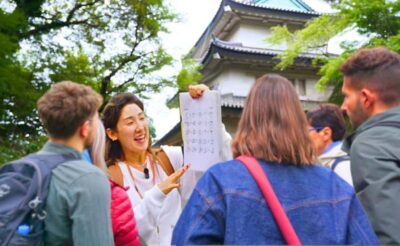 ★ 4.9Tokyo: Imperial Palace Japanese History Walking TourFrom $32
 ★ 4.9Tokyo: Imperial Palace and Shogun Walking TourFrom $162 hours
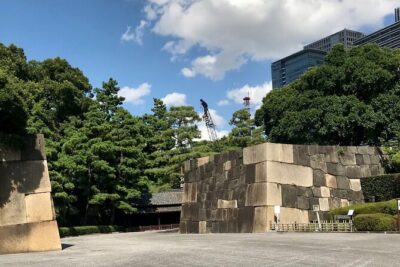 ★ 5.0Imperial Palace East Garden and Edo Castle Walking Tour in TokyoFrom $25
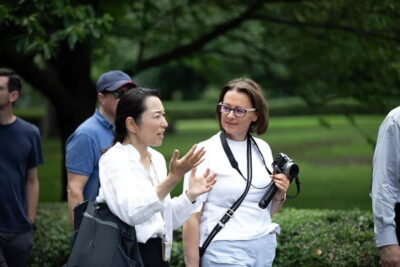 ★ 4.8Tokyo: Imperial Palace East Gardens Walking TourFrom $192h 30m
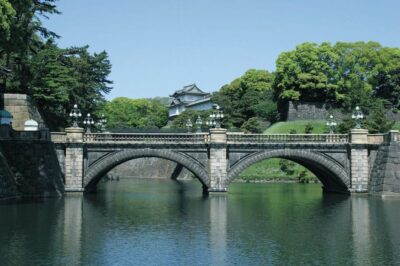 ★ 4.5Tokyo: Imperial Palace, Sensō-ji Temple, & Tokyo Tower TourFrom $404 hours