
Reviewed · WORKSHOPS
Tokyo: Edo Kiriko Traditional Glass Carving Class
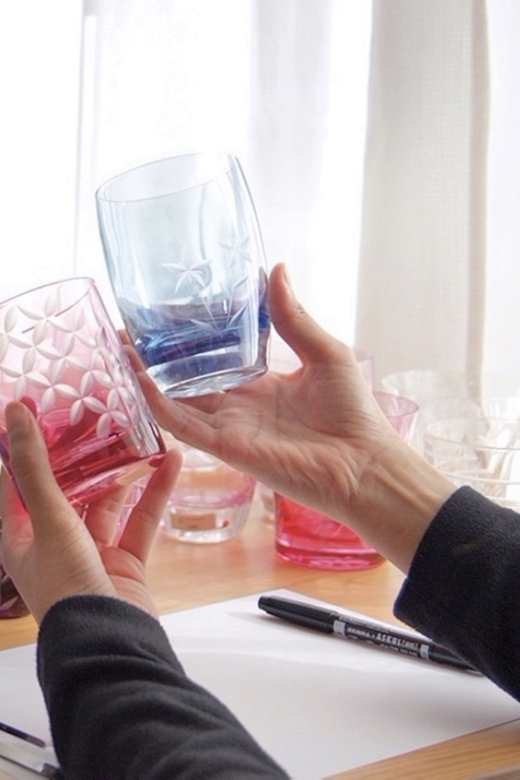
The best part of this Asakusa workshop is that you do not just admire Edo Kiriko in a display case. You sit at a work station, practice traditional cutting techniques, choose your own glass and pattern, and make a piece to carry home. Instructor Ze is known for calm, clear help, especially when your first cuts wander.
I like the thoughtful choice of more than 20 glass designs and dozens of pattern samples, and I like the 30-second walk from Asakusa Station. The main consideration is simple: making a clean, even carving takes practice. Your finished glass may have a few crooked lines, though the instructor can help refine it.
In This Review
- Key points to know before booking
- What Edo Kiriko lets you make in 90 minutes
- Finding Sokichi near Asakusa Station
- Choosing your glass and pattern
- Practice cuts before the final design
- Cutting the glass with an English-speaking instructor
- Taking home a handmade Asakusa souvenir
- Why the $30 price works
- Who will enjoy this class most
- Planning the class around Asakusa
- What I would want you to know before booking
- Should you book the Edo Kiriko class?
- FAQ
- How long does the Edo Kiriko class last?
- How much does the class cost?
- Where does the activity begin?
- Is instruction available in English?
- What colors of glass can I choose from?
- Can beginners take part?
- What should I bring?
Key points to know before booking

- Practice comes first: You work on sample designs before touching your final glass.
- Six glass types are available: Choose among clear glass and colored options including blue, pink, and yellow.
- Patterns shape the result: Dozens of samples help you pick a design suited to your skill level.
- The class is close to Asakusa sights: Sokichi is a short walk from Senso-ji and about 15 minutes from Tokyo Skytree.
- English instruction is available: The lecturer teaches in English or Japanese, with instructor Ze praised for patient guidance.
- Your souvenir is handmade: You take home the glass you carve, with the small imperfections that prove you made it.
What Edo Kiriko lets you make in 90 minutes

Edo Kiriko is Japan’s traditional cut-glass craft, with more than 180 years of history. The method is direct but demanding: you cut lines and shapes into the surface of a glass, revealing the clear layer beneath colored glass or creating patterns in transparent glass.
This class gives you a compact introduction rather than a long formal lesson. In 90 minutes, you learn the basic motion, test your hand, select a design, and work on your final piece. That short format is useful in Tokyo, where you can fit the class between sightseeing stops without giving up most of a day.
I like activities that give you something more lasting than a photograph. Here, your finished glass becomes a small reminder of Asakusa, even if the lines are not perfectly straight. The point is not to produce a museum-quality piece in one sitting. The point is to understand the craft by trying it yourself.
The workshop is beginner-friendly, but it is not effortless. The class offers levels from beginner to expert, and the instruction is arranged so first-timers can take part. You can expect the lecturer to explain the process, demonstrate the cutting method, and correct mistakes as you work.
A few more Tokyo tours and experiences worth a look

Finding Sokichi near Asakusa Station
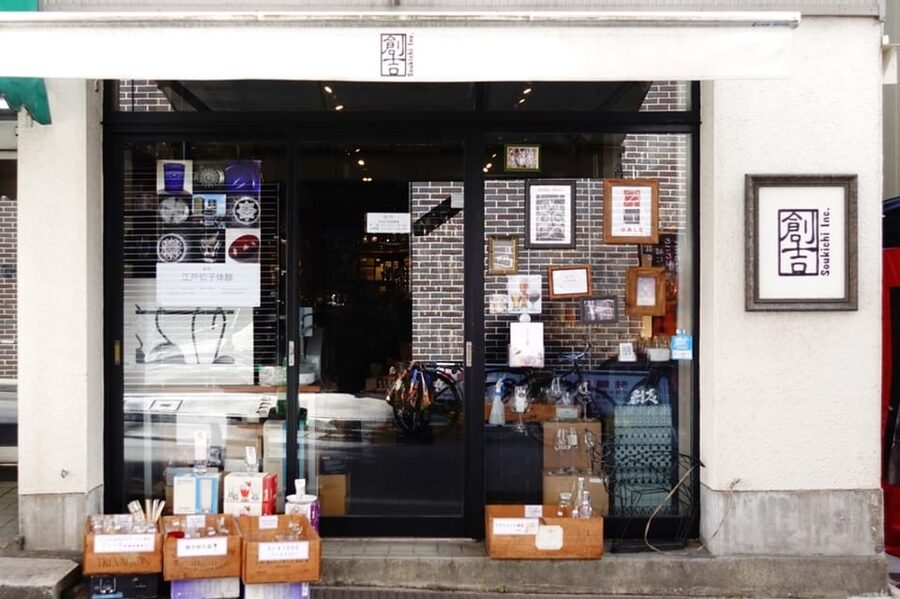
You start at Sokichi, a glassware shop only about 30 seconds from Asakusa Station. Speak with a staff member inside the shop, and you will be escorted to the room used for the class.
That arrangement makes the meeting point easier than a large station entrance or a crowded public square. Still, Asakusa has several station exits and plenty of foot traffic, so give yourself a little extra time to locate the shop. The class room is on a small side street above the glassware shop, not on a major tourist avenue.
The location is one of the strongest practical features. Senso-ji is about five minutes away, and Tokyo Skytree is roughly 15 minutes away according to the class details. You can schedule the workshop before or after temple sightseeing, then continue around Asakusa without crossing the city.
Transportation is not included, but you do not need a separate transfer once you reach Asakusa Station. That makes the $30 price easier to assess, since the activity itself covers the lecturer, glass, and class time.
Choosing your glass and pattern
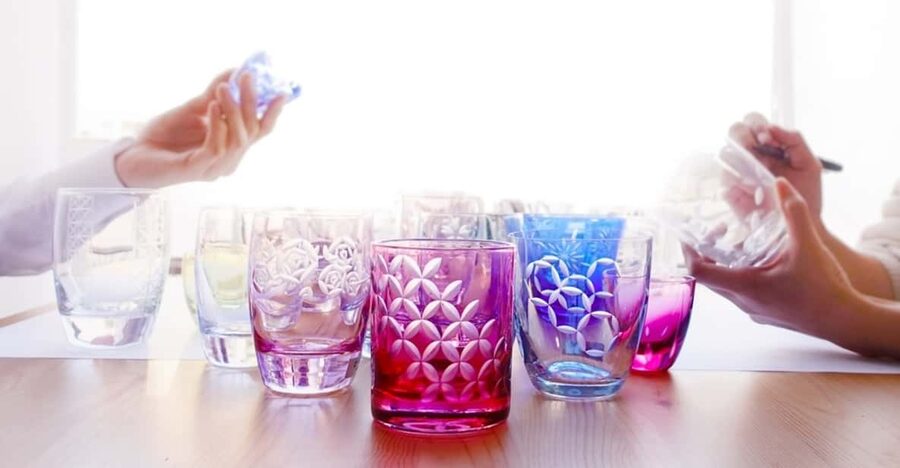
The first creative decision is the glass itself. You can select from more than 20 kinds of glass, with six clear and colored glass types available in the course. The listed colors include blue, pink, and yellow.
Color changes the way the carving appears. On colored glass, your cuts reveal a contrasting clear surface, so patterns can look crisp and graphic. Clear glass gives you a different effect, with the carved areas catching light rather than creating the same bold contrast.
Do not rush this choice. A pattern that looks simple on paper may be harder to cut cleanly around a curved glass. The class provides dozens of pattern samples, giving you a practical way to compare shapes before you begin.
You might see stars, lines, flowers, or other traditional-style arrangements among the samples, though the exact selection is not specified. The useful point is that you are not forced to invent a design from scratch. You can choose a pattern that matches your taste and ability.
The instructor can also explain how different designs may look on different glasses. That advice matters because a pattern that suits a blue glass may not have the same effect on a clear or pink one.
Practice cuts before the final design
The practice stage is where the class earns its beginner-friendly label. You first get a chance to make sample cuts, including simple star shapes. This lets you feel how the tool meets the glass and shows you how difficult accuracy can be.
The movement itself is straightforward. The challenge is controlling it. A slight change in pressure or direction can make a line crooked, and curved surfaces do not give you the same control as a flat sheet.
I would treat the practice glass seriously rather than trying to hurry toward the finished piece. Use this time to ask how firmly to hold the glass, how to follow a curve, and how much detail is realistic for your skill level. The instructor is there to correct your technique before small errors become part of the final design.
This is also where the class feels more personal than a simple craft demonstration. You are not watching an expert make the object while you stand behind a rope. You are given time to try, make mistakes, and try again.
Cutting the glass with an English-speaking instructor
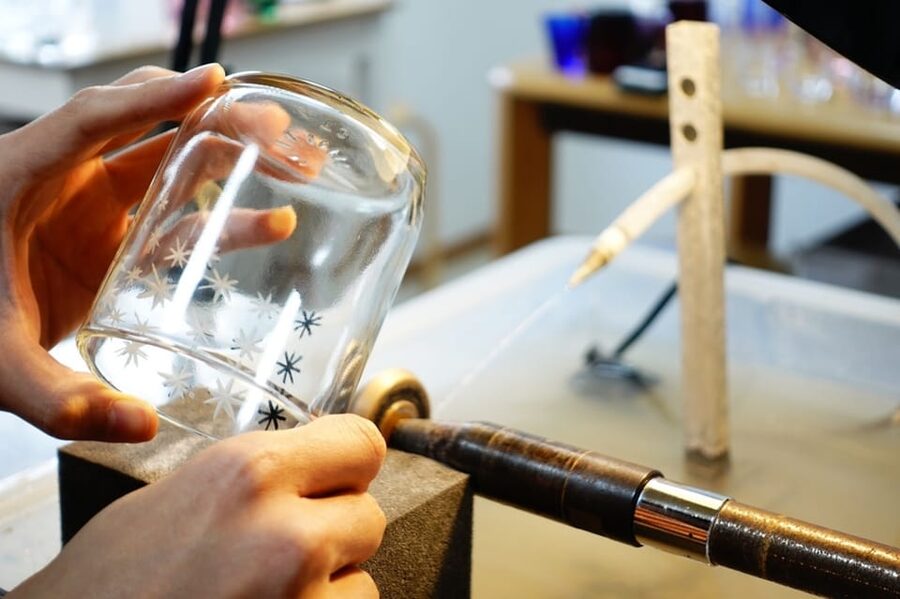
Once you choose your glass and pattern, you begin the final carving. The lecturer stays nearby to offer support, explain the traditional method, and help you judge your progress.
English and Japanese instruction are available. Instructor Ze has been singled out for clear, patient teaching, and the class is designed for people with no previous glass-cutting experience. English ability can vary by lecturer, but the activity specifically offers English instruction, and Ze is described as speaking English very well.
The atmosphere can be quiet and focused. One group described working in a small class of four, which allowed time for individual help. Class size may vary, so do not assume every session will have exactly four people, but the format is built around hands-on support rather than a large lecture.
The instructor may refine part of your work if a cut needs correction. That is worth understanding before you book. Your glass remains your own project, but the final result may include a little expert help. This is a benefit if you want to take home a good-looking souvenir, though purists may prefer every line to be entirely untouched.
The expert demonstrations also give you a clearer sense of the craft’s difficulty. A professional’s clean cuts can look almost effortless. Your own piece will likely be less exact, and that contrast helps you appreciate the skill behind finished Edo Kiriko objects.





Taking home a handmade Asakusa souvenir
The finished glass is the main reward. You do not leave with a generic item selected from a shelf. You take home the glass you chose and carved, with its particular pattern and small signs of your learning process.
Some people have completed two glasses during the session, but you should not assume that will be possible for every booking. The stated duration is 90 minutes, and your pace depends on the design, the amount of practice you need, and how much instructor assistance you use.
A handmade souvenir also travels well in spirit, but you should think about packing it safely for the rest of your trip. The supplied details do not specify packaging or shipping, so ask the staff about protection if you have a long journey ahead.
I like this kind of souvenir because it carries a story. You can remember the station-side shop, the first practice star, the difficult curved cut, and the decision to choose blue, pink, yellow, or clear glass. It is a modest object, but it connects you to something you actually did in Japan.
Why the $30 price works
At $30 per person, this is a good-value Tokyo activity if you want more than sightseeing. The fee includes the glass carving class, a lecturer, and colored glass. You also get 90 minutes of instruction and a finished object to keep.
Compare that with a short demonstration where you only watch an artisan work. Here, the material and instruction are part of the experience, and you leave with a personal result. The value is especially strong for couples, friends, or families who want a shared activity that does not depend on perfect weather.
The price does not include transportation, but the location near Asakusa Station keeps that extra cost low. You can pair the class with Senso-ji, nearby Asakusa streets, or a visit toward Tokyo Skytree.
The main limit is artistic expectation. If you want a flawless Edo Kiriko masterpiece, $30 and 90 minutes will not deliver that. If you want an accessible introduction and a handmade keepsake, the price is much easier to justify.
Who will enjoy this class most
This workshop suits you if you like making things with your hands, want a cultural activity with a physical result, or need a break from temples and shopping. It also works well for visitors who want a quieter activity in Asakusa.
Families may enjoy the clear goal and short length, though the supplied information does not specify a minimum age. Ask before booking if you plan to bring young children. The class includes tools and glasswork, so each participant needs to follow the lecturer’s directions carefully.
Couples can choose matching glasses or different colors and patterns. Friends can compare results without turning the class into a competition. Solo participants can focus on the craft and receive direct help from the instructor.
It is also a good choice for repeat visitors to Tokyo. You do not need another famous viewpoint or a second visit to the same shrine. Edo Kiriko gives you a different way to spend time in the city, with a clear link to Japanese craft.
You should reconsider it if you dislike detailed handwork or feel frustrated by imperfect results. The cuts are not dangerous in the supplied description, but accuracy takes patience. A hair tie is listed as something to bring, which is useful if you have long hair and want it kept away from your work.
Planning the class around Asakusa
The 90-minute duration is easy to build into a sightseeing day. You could visit Senso-ji first, reach Sokichi for the class, then continue toward Skytree. Or you could start with the workshop and spend the rest of the day exploring Asakusa with your new glass safely packed away.
Starting times vary, so check availability when selecting a date. The booking allows cancellation up to 24 hours in advance for a full refund, and you can reserve now and pay later. Those terms help if your Tokyo plans are still shifting, though you should still allow enough time to reach the meeting point.
The exact class room is reached through the shop. Tell the staff you have arrived, and they will escort you upstairs or to the appropriate room. Look for Sokichi rather than trying to find a separate workshop entrance.
Because no transportation is included, plan your own route to Asakusa Station. The station-side location is convenient once you are in the neighborhood, and the class does not require a long walk through unfamiliar streets.
What I would want you to know before booking
Bring a hair tie if you need one, and arrive ready to concentrate. Wear something comfortable for sitting and working with your hands, although the supplied information does not list a specific dress code.
Ask questions during the practice period. You may want to know which pattern is easiest to control, how the design will look on your chosen color, or when to stop correcting a line. This is your chance to get help before the final glass is involved.
Keep your expectations realistic. The most praised part of this activity is the instructor’s patience and support, not a promise that every participant creates a flawless work of art. Your piece may need a small correction from the lecturer, and that is part of learning the technique.
The cultural side is present through the Edo Kiriko method and its long history, but the class is primarily hands-on. If you want a full lecture on Japanese glass production, you may need to ask questions or request the available pamphlet. The workshop gives you an introduction through practice rather than a long museum-style explanation.
Should you book the Edo Kiriko class?
I would book this class if you want a reasonably priced, well-located activity that gives you a genuine handmade souvenir. The combination of pattern choice, colored glass, practice time, and patient English instruction makes it a strong fit for first-timers.
Book it especially if you are already planning time around Asakusa. The short walk from the station and the nearby Senso-ji and Skytree make the class easy to add to a full day.
Skip it if you want a passive experience or have no patience for careful handwork. Edo Kiriko looks simple until you try to make an even cut. That is also the reason to choose it: in 90 minutes, you gain a small but real sense of the craft, and you leave with a glass that carries your own mark.
FAQ
How long does the Edo Kiriko class last?
The class lasts 90 minutes.
How much does the class cost?
The listed price is $30 per person.
Where does the activity begin?
You begin at Sokichi, a glassware shop about 30 seconds from Asakusa Station. Speak with a staff member, and they will escort you to the class room.
Is instruction available in English?
Yes. The listed instruction languages are English and Japanese.
What colors of glass can I choose from?
The course includes six types of clear and colored glass. The listed colored choices include blue, pink, and yellow.
Can beginners take part?
Yes. You can choose from beginner through expert levels, and all levels are described as beginner-friendly.
What should I bring?
Bring a hair tie. Transportation is not included in the activity.
More Workshops & Classes in Tokyo
More tours in Tokyo we've reviewed




Workshops, compared.
 ★ 5.0Sushi Making Tokyo Roll and Authentic Japanese Sushi ClassFrom $59
 ★ 4.9Tokyo: Roll and Authentic Sushi Making Class in AsakusaFrom $581h 40m
 ★ 5.0Tokyo Shinjuku Chopsticks Making ClassFrom $20
 ★ 4.9Tokyo: Sushi Making Class in a Happi Coat near a Famous SpotFrom $421h 30m
 ★ 4.8Chopstick Making Workshop in GinzaFrom $251 hour
 ★ 5.0Tokyo Sushi Making Class in Tsukiji with Professional ChefFrom $49