
Reviewed · CRAFT WORKSHOPS
Tokyo: Chopstick Making Workshop with Artisan
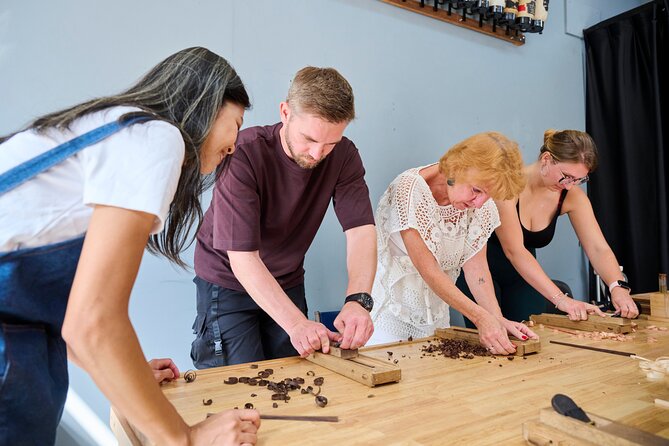
Making chopsticks by hand turns an everyday Japanese object into a personal souvenir. At Hashiyuki Chopsticks Shop in Taito, you’ll shape wood with traditional tools, smooth the surface, and learn why chopsticks carry such meaning in Japanese life. I especially like the hands-on work and the fact that you take home something useful, not just decorative. The workshop is calm, affordable, and friendly to beginners.
I also like the small groups of up to 10, which lets staff such as Yuki, Angie, Chihiro, and Victoria offer plenty of help. The only real caution is timing: one hour can feel tight if the room is full or groups begin at different times. You can finish faster, but careful makers may want to work at an easy pace.
In This Review
- Key points at a glance
- Why a chopstick workshop works so well in Tokyo
- Starting with wood, tools, and a simple lesson
- Shaving the wood without rushing your hands
- Sanding and smoothing the finished pair
- Finishing, wrapping, and optional engraving
- The value of a $16 Tokyo activity
- Small groups, friendly teachers, and the one-hour limit
- Who should book this workshop
- Practical details before you go
- Should you book the chopstick workshop?
- FAQ
- How long does the chopstick-making workshop last?
- How much does the workshop cost?
- Where does the workshop take place?
- Can I make personalized chopsticks?
- Is engraving included?
- What languages are spoken?
- Is the workshop suitable for beginners?
- How many people can join a session?
- Can I cancel for a full refund?
Key points at a glance
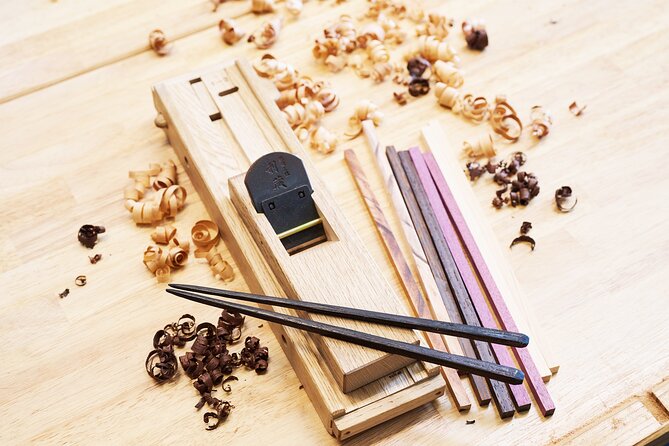
- Shape a useful souvenir: Make a pair of wooden chopsticks you can use at home or give as a gift.
- Choose your wood: Three wood types are included, while higher-grade options cost extra.
- Learn by doing: Staff show you how to shave, sand, and finish the chopsticks, then help correct mistakes.
- Add a personal touch: Optional engraving is available, with one recent participant paying an extra ¥1,000.
- Good for mixed ages: A family group ranging from age 8 to 42 enjoyed the activity together.
- Plan around the clock: The workshop lasts one hour, and some sessions may feel rushed near the end.
Why a chopstick workshop works so well in Tokyo
Tokyo offers no shortage of grand sights, but the city is also made up of small acts of craftsmanship. This workshop gives you a short, practical look at that side of Japan. Instead of only buying a finished object, you take part in making one.
Chopsticks are closely tied to daily life in Japan. They are used at nearly every meal, yet their shape, wood, finish, and decoration can reflect care and personal taste. The workshop explains this cultural role while giving you a simple task to focus on. That mix makes the experience more meaningful than a standard souvenir stop.
I see this as a good choice when your sightseeing schedule needs a quiet hour. Several people found the activity calming, especially as a break from the fast pace of central Tokyo. It is creative without being demanding, and you do not need previous woodworking experience.
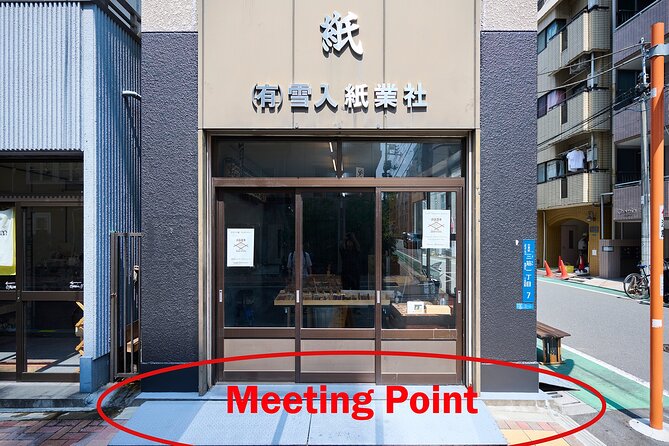
The setting in Taito adds to the appeal. The meeting point is Hashiyuki Chopsticks Shop & Workshop at 1-7-1 Misuji, Taito-ku. The location is also identified by the Japanese name 雪入紙業社, or Yukiirishigyosya, and the listed coordinates are 35.7032168, 139.7853879. Use the full address and Japanese name when finding the shop, since small Tokyo streets can be confusing.
A few more Tokyo tours and experiences worth a look

Starting with wood, tools, and a simple lesson
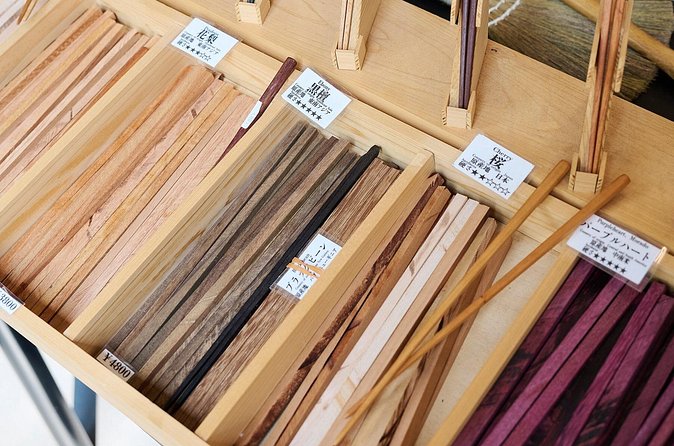
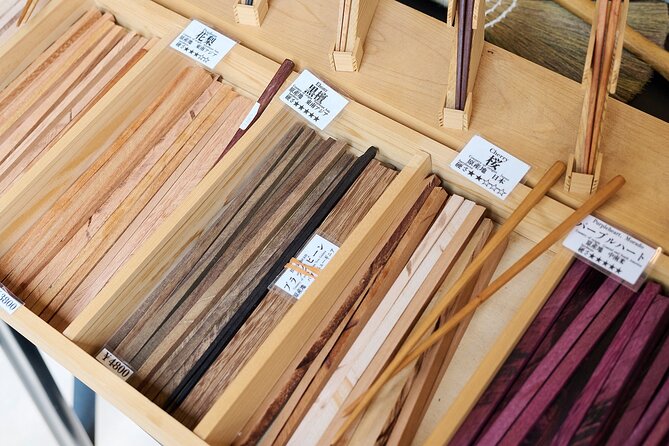
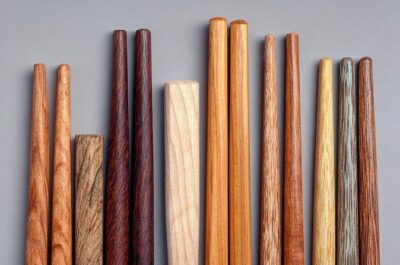
The workshop begins with the basic choices. You can select from more than 10 types of wood, though the standard price includes three types. Higher-grade woods are available for an added fee, so ask about the cost before choosing if you are watching your budget.
This is a small but worthwhile decision. Different woods give the chopsticks a different look and feel, and choosing your own material makes the finished pair more personal. At $16 per person, the included choices offer good value. The extra charge only matters if you want a premium wood or special finish.
An English-speaking staff member explains the process in English or Japanese. Names that appear in the workshop team include Yuki, Angie, Chihiro, Victoria, Tomo, Kaana, Rad, and Anthony. You should not expect a formal lecture. The teaching is practical, with the artisan showing you what to do and then watching as you try it yourself.
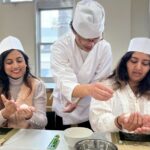
The instructions are simple enough for first-time makers. You work with the wood, remove material gradually, and check the shape as you go. The staff are there to keep you on track, not to take over. This matters because the pleasure comes from seeing your own rough piece become a finished pair.
Shaving the wood without rushing your hands
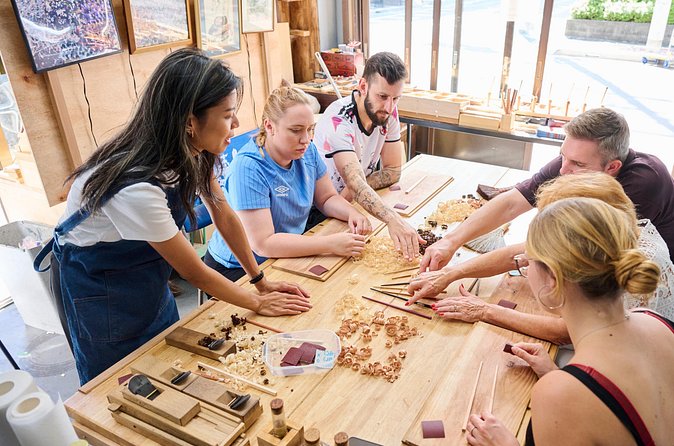
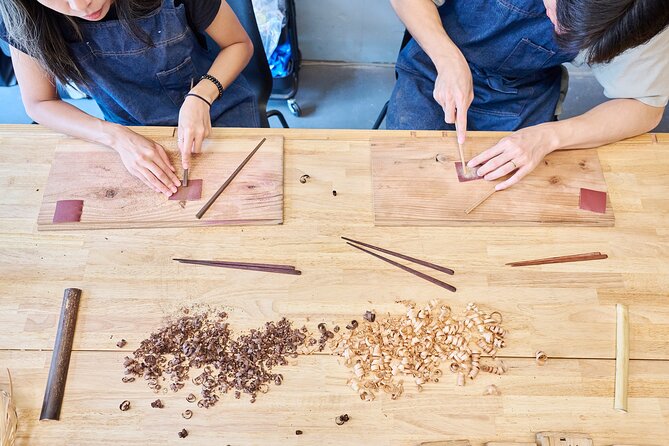
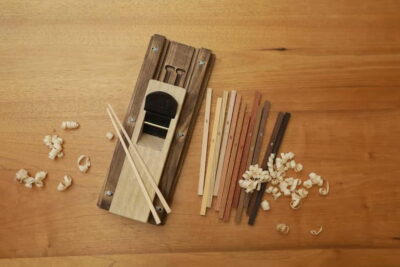
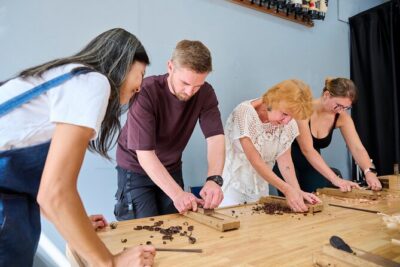
The first active stage is shaping. You use traditional tools to shave the wood and bring the chopsticks toward their final form. This is where the workshop feels most like a craft lesson rather than a souvenir purchase.
You will need to pay attention to how much material you remove. A light touch is useful, and the staff can help if you make an uneven cut or are unsure about the next step. The guidance is especially helpful for children and anyone who has never handled craft tools before.
The task is challenging enough to hold your attention, but it is not presented as a technical woodworking class. One person found the process just difficult enough to be fun without becoming stressful. That is a fair description of the experience. You have something to concentrate on, but staff remain close by when a mistake needs correcting.
A family group with children as young as eight completed the activity successfully. That makes it a strong option for families who want an activity beyond temples, shopping, and food stops. Still, parents should remain attentive during the tool work, particularly with younger children.
Sanding and smoothing the finished pair
Once the general shape is right, you smooth the chopsticks. Sanding takes patience because small rough spots become easier to feel than to see. This stage gives the workshop its quiet rhythm, and it is one reason several people found the hour peaceful.
The staff explain how to get a clean result and help you notice places that need more work. Tomo and Angie, for example, were praised for explaining the shaving, sanding, and differences between wood types in detail. That kind of guidance is useful because handmade objects rarely look perfect after the first pass.
You should also expect some variation in the final shape. These are your chopsticks, made during a short workshop, not factory-matched items. Small differences are part of the point. If you want a perfectly uniform pair, buy one from a shop. If you want a souvenir with a story behind it, keep working carefully and accept a little character.
The process can take about 30 minutes for someone moving quickly, but the scheduled session is one hour. The full hour gives you time to shape and smooth the wood with help. A slower pace is better if you want the result to feel polished.
Finishing, wrapping, and optional engraving
The final stage is finishing the chopsticks and preparing them to take home. Your completed pair is wrapped beautifully, so it can serve as a gift as well as a personal keepsake.
Engraving is an optional extra worth considering if the chopsticks are for someone special. One participant had a best friend’s name engraved as a gift, while another specifically recommended spending the extra ¥1,000 for the engraving. The activity information does not list engraving as part of the base price, so treat it as an added cost.
A name or short personal marking changes the item from a handmade object into a clear memento of your time in Tokyo. I would consider engraving for a birthday gift, a family souvenir, or a pair made for someone who could not join you. If you are making chopsticks only for yourself, the wood and handmade finish may be enough.
You leave with the chopsticks the same day. That is an important advantage over craft activities that ship the finished item later. You can use them during the rest of your Japan trip, pack them for the flight home, or give them away before you leave.
A few more Tokyo tours and experiences worth a look



The value of a $16 Tokyo activity
At $16 per person, this is a modest expense by Tokyo activity standards. The fee covers the workshop, tools, materials, three included wood choices, instruction, and your personalized chopsticks. You are paying for both the object and the hour spent making it.
The value is strongest if you enjoy practical souvenirs. A mass-produced pair may cost less, but it will not carry the same connection to a specific place or day. The workshop also avoids the problem of buying something attractive that sits unused in a drawer. Chopsticks are compact, light, and made for regular use.
Budget a little extra if you want a higher-grade wood or engraving. The base price remains reasonable, but the final cost can rise depending on your choices. Ask about add-ons before the work begins so you know exactly what you are selecting.
The rating of 4.8 from 122 reviews supports the idea that this is a reliable short activity. The strongest praise centers on the staff, the clear instructions, the relaxed pace, and the finished product. Those are the parts that matter most here. This is not a major sightseeing attraction, but it delivers a personal result for a low price.
Small groups, friendly teachers, and the one-hour limit
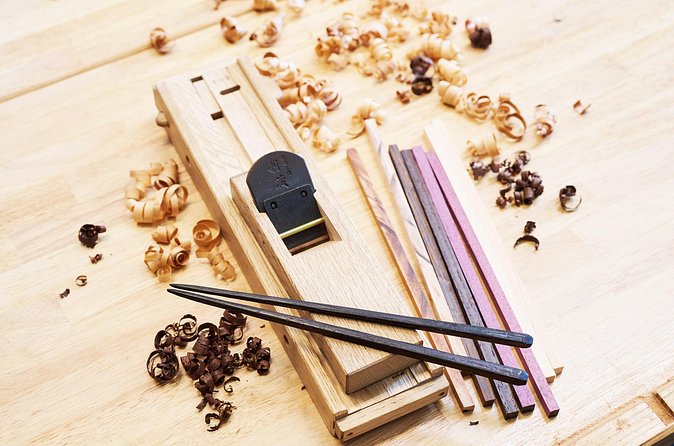
The workshop limits attendance to 10 people, which helps keep the instruction personal. Sessions may be smaller. One morning booking had only two participants, and the shop still ran the workshop rather than canceling or combining the experience.
That flexibility can make the session feel warm and informal. Staff have chatted with participants about Japan, Scotland, Tokyo restaurants, and solo travel. Yuki even provided a ramen recommendation that became a highlight for one group. These conversations are not guaranteed, but the small setting gives them room to happen.
The main weakness is the physical size and timing of the workshop. One participant felt rushed because there were about 10 people, only two employees, and groups did not begin at the same time. Staff had to move quickly between people in a small room, leaving less time to enjoy the process.
I would book with this in mind. Arrive ready to begin, listen closely to the first demonstration, and do not spend too long debating wood choices. If you are a careful maker, treat the hour as a firm limit. The staff can help, but they cannot extend every session.
Who should book this workshop
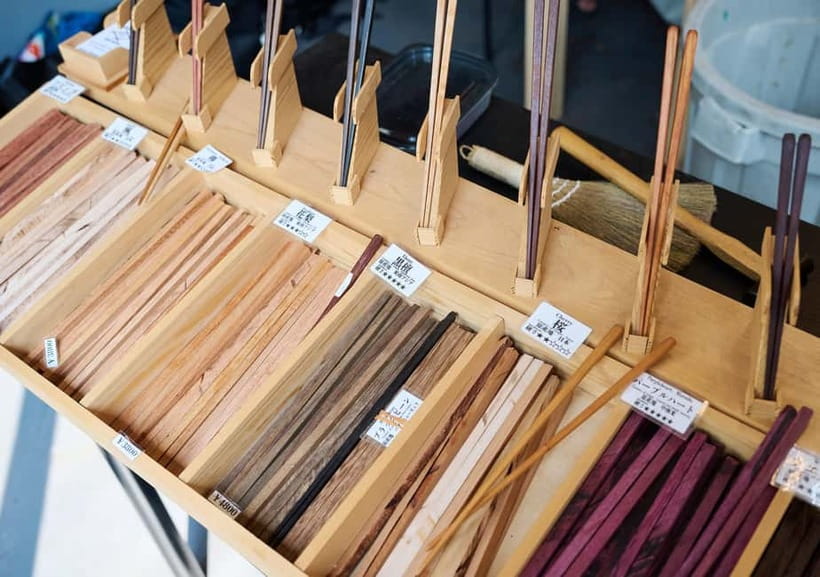
I would recommend it to solo visitors, couples, families, and small groups of friends. Solo participants can enjoy a quiet project while receiving direct help. Couples can make matching pairs or engrave names. Families get an activity that works across a fairly wide age range.
It is also a good fit for anyone who wants a souvenir with a clear connection to Japanese daily culture. You do not need to know anything about woodworking, and English-speaking staff are available. Japanese-speaking participants can also take part comfortably.
This may not suit you if you dislike hands-on work, have very limited time, or want a polished luxury product without making it yourself. The workshop requires attention and some patience. Your chopsticks will be personal and handmade, not identical to a premium retail pair.
The listed activity is wheelchair accessible, but the supplied information does not describe the exact workbench arrangement or tool setup. If you need a particular accommodation, confirm the details before booking.
Practical details before you go
The session lasts one hour, with starting times available according to the date you choose. Because the timing can feel tight, I would avoid building an important timed attraction immediately afterward. You will have a better experience if you leave a little breathing room.
The meeting point is:
- Hashiyuki Chopsticks Shop & Workshop
- 1-7-1 Misuji, Taito-ku, Tokyo
- Japanese name: 雪入紙業社, Yukiirishigyosya
- Coordinates: 35.7032168, 139.7853879
The group size is limited to 10, and instruction is offered in English and Japanese. Tools and materials are supplied, so you do not need to bring craft equipment.
Cancellation is free up to 24 hours before the activity for a full refund. You can also reserve now and pay later, which helps if your Tokyo plans are still changing. Check the available starting times when you book.
Should you book the chopstick workshop?
Book it if you want a low-cost, hands-on Tokyo experience that produces something useful. The staff are consistently helpful, the process is easy for beginners, and the finished chopsticks make a compact souvenir with a real connection to Japanese craft.
I would especially choose it for a family day, a rainy-weather plan, or a quiet break between larger attractions. Add engraving if the pair is a gift, and consider a higher-grade wood only if the extra cost fits your budget.
Skip it if you need a completely unhurried craft session or dislike working within a fixed one-hour schedule. For most people, though, the short format is part of the appeal. You get a taste of traditional making, a chance to talk with local staff, and a pair of chopsticks you can use long after Tokyo is behind you.
FAQ
How long does the chopstick-making workshop last?
The scheduled duration is one hour. Some people may finish in about 30 minutes, but the full hour allows time for shaping, sanding, finishing, and staff guidance.
How much does the workshop cost?
The listed price is $16 per person. Three wood types are included, while higher-grade woods cost extra.
Where does the workshop take place?
It takes place at Hashiyuki Chopsticks Shop & Workshop, 1-7-1 Misuji, Taito-ku, Tokyo. The Japanese name provided for the location is 雪入紙業社, or Yukiirishigyosya.
Can I make personalized chopsticks?
Yes. You make your own wooden chopsticks during the workshop and take them home the same day.
Is engraving included?
Engraving is not listed among the included features. One participant paid an additional ¥1,000 for engraving, so ask about the current extra charge before choosing it.
What languages are spoken?
The workshop is offered in English and Japanese. English-speaking staff are available to guide participants through the process.
Is the workshop suitable for beginners?
Yes. The activity is designed for beginners, and staff explain the steps and help correct mistakes while you work.
How many people can join a session?
The workshop is a small-group activity limited to 10 participants.
Can I cancel for a full refund?
Yes. You can cancel up to 24 hours in advance for a full refund. Reserve now and pay later is also available.
More Workshops & Classes in Tokyo
More Craft Workshops in Tokyo

More tours in Tokyo we've reviewed







Craft Workshops, compared.
 ★ 5.0Tokyo Shinjuku Chopsticks Making ClassFrom $20
 ★ 4.8Chopstick Making Workshop in GinzaFrom $251 hour
 ★ 5.0Kintsugi Experience: Art of Golden Joinery in TokyoFrom $59
 ★ 5.0Tokyo Chopstick Making Workshop with ArtisanFrom $26
Tokyo: Shinjuku Chopstick Making ClassFrom $121 hour
Tokyo: Chopstick-Making WorkshopFrom $61 hour
★ 5.0Tokyo Chopstick Making Workshop with ArtisanFrom $26
Tokyo: Shinjuku Chopstick Making ClassFrom $121 hour
Tokyo: Chopstick-Making WorkshopFrom $61 hour