
Reviewed · SHIBUYA TOURS
Tokyo: Calligraphy Experience at Japanese Room in Shibuya
Japanese calligraphy is less about producing perfect characters than learning to slow your hand and your mind. In this one-hour Shibuya workshop, Sowa guides you through ink preparation, basic strokes, kanji, and the small manners that give the practice its shape.
I like two things here: you make ink the traditional way with an inkstone, and you leave with a personal piece of calligraphy rather than a souvenir bought in a shop. The small group, capped at eight, should also allow for useful individual guidance.
The main limitation is time. One hour is enough for a friendly introduction and a final character, but not for a full study of Japanese calligraphy. You will need to arrive at the stated Shibuya meeting point, 2-chōme-14-13 Shibuya, rather than expect hotel pickup.
In This Review
- Key points to know before you book
- What happens during the one-hour calligraphy class
- Why grinding ink makes this more than a quick craft
- Learning strokes, kanji, and calligraphy etiquette
- Sowa’s teaching style and the value of a small group
- Choosing a kanji for your decorative paper
- Is $32.84 a fair price in Tokyo?
- Meeting in Shibuya and planning your hour
- Who will enjoy this calligraphy experience?
- Should you book the Shibuya calligraphy workshop?
- FAQ
- How long does the Japanese calligraphy experience last?
- Where does the calligraphy workshop meet?
- Who teaches the calligraphy class?
- What will I do during the workshop?
- Can I choose my own character?
- How many people can join the class?
- What is the cancellation policy?
Key points to know before you book
- Traditional ink preparation: Begin by grinding and mixing ink on an inkstone before touching the paper.
- Guidance from Sowa: Sowa, also called Soba or Sowa-san in the class setting, explains strokes, kanji, etiquette, and cultural background.
- A calm Japanese-room setting: The workshop is designed as a quiet, relaxed pause from the pace of central Tokyo.
- Your choice of character: Select from a prepared list or use a character based on your own name.
- Small group size: The maximum is eight people, a useful detail for a brush-based activity that benefits from feedback.
- Take-home artwork: Your final character is written on decorative paper and becomes a personal keepsake.
What happens during the one-hour calligraphy class
You start with an introduction to Japanese calligraphy and the tools on the table. This matters because the brush, ink, paper, and inkstone are not simply art supplies. Each has a place in the process, and learning how they fit together makes the activity feel like a practice rather than a quick craft session.
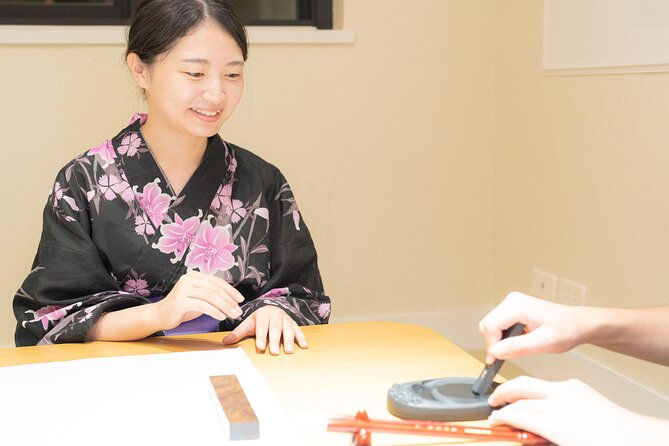
The class takes place in a Japanese room in Shibuya. That gives you a quieter setting for an hour, a welcome change if your day has included crowded streets, shops, and train stations. The atmosphere is meant to be calm, and the pace allows you to focus on small movements instead of rushing toward the finished sheet.
You then prepare the ink using a traditional inkstone. You learn how to grind the ink and mix it correctly, an old-fashioned step that many short cultural activities would skip. It takes a little patience, but that is part of the point. The preparation slows you down before the brushwork begins.
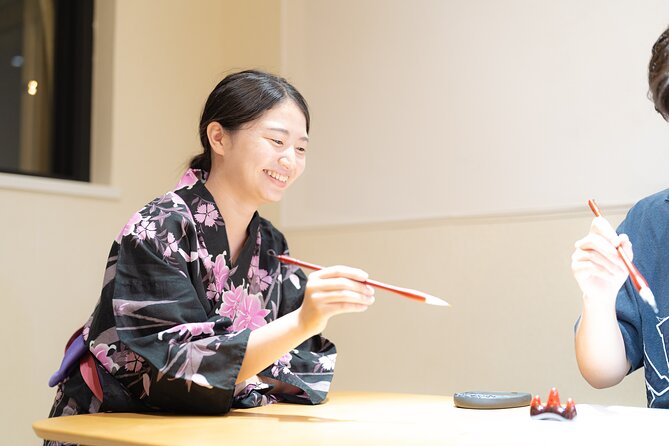
After the ink is ready, Sowa introduces basic techniques and proper etiquette. You practice strokes before making the final piece, so you are not asked to produce your first character on decorative paper with no warm-up. That practice time makes the workshop approachable for people who have never held a calligraphy brush.
The final stage is choosing and writing one character. You can pick from a prepared list or choose a character connected to your own name. You then write it on decorative paper and take it home.
That final choice gives the class a personal edge. A prepared list is useful if you are unsure what to write, while a name-based character can make the keepsake feel more closely tied to your trip. The activity information does not promise a long phrase or several finished pieces, so you should think of this as one carefully guided final work, supported by practice.
A few more Tokyo tours and experiences worth a look


Why grinding ink makes this more than a quick craft
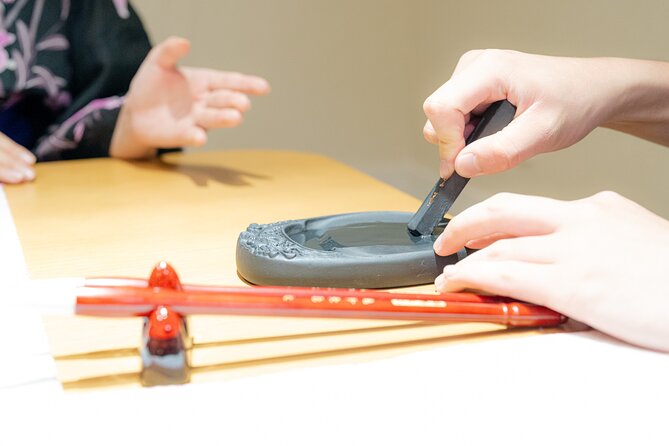
The inkstone is one of the most appealing parts of the experience. In many introductory activities, you receive prepared materials and move straight to the entertaining part. Here, you begin by learning how ink is made ready for use.
That small ritual changes the rhythm of the class. You are not simply trying to copy a symbol. You are taking part in a sequence that includes preparation, concentration, controlled movement, and presentation.
I also like that the process gives you a better sense of why calligraphy can feel meditative. Grinding ink does not produce an instant result. It asks you to pay attention to pressure, motion, and consistency before the brush reaches the page.
Do not book this expecting a formal art course with extended theory or advanced technique. The class is an introduction. Its value comes from letting you handle the tools, learn the basic steps, and understand the mood of the practice in a short period.
Learning strokes, kanji, and calligraphy etiquette
Sowa’s teaching is built around a step-by-step approach. You learn basic strokes first, then work toward a complete character. This is sensible for beginners because kanji can look intimidating when viewed as a whole.
The class also includes an introduction to Japanese scripts and cultural context. The focus is not only on how a character looks, but on what it means and how it connects to the Japanese language. If you are curious about kanji, this adds useful context to the brushwork.
The explanation of individual characters is another strength. Sowa has been praised for making characters clear and linking them to real-life examples. That can help you remember your chosen character after the class, rather than treating it as a decorative shape with no meaning.
Etiquette is part of the lesson as well. The supplied details do not list every rule you will learn, so I would not expect a full guide to formal calligraphy manners. You can expect an introduction to the correct way to approach the tools and the practice.
The class includes time to make mistakes. You practice before the final work, and the teaching style is encouraging rather than intimidating. That is especially useful if you are worried about producing an imperfect result. Calligraphy depends on control, but the activity is designed for ordinary beginners, not trained artists.
Sowa’s teaching style and the value of a small group
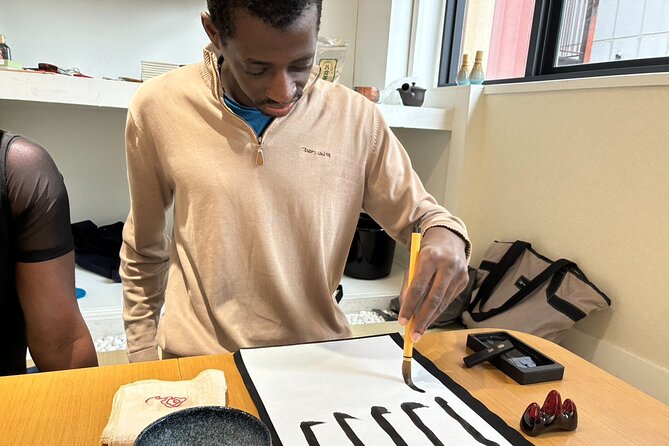
Sowa is the named instructor for this experience. The teaching approach is friendly, personal, and patient, with explanations of both technique and cultural background.
That combination is important. A class can show you how to hold a brush while leaving you unsure why a stroke matters. Here, the instruction also covers kanji meaning, Japanese scripts, and some of the history of the art. You get a better sense of what you are doing, not just what your hand should copy.
The maximum group size is eight people. That is not a private lesson, but it is small enough to keep the activity from feeling like a large demonstration. You should have a reasonable chance to receive direction while practicing your strokes.
The small-group format also suits families and friends. One person can work on a character while others watch and practice, though the supplied information does not specify special child pricing or a minimum age. If you want to bring children, confirm suitability when booking rather than assuming every age group is accepted.
Sowa’s encouraging manner is useful for people who are hard on themselves. A first brush character may not look like the example, and the class works best if you treat the process as the main event. The final sheet is a keepsake, not an exam.
Choosing a kanji for your decorative paper
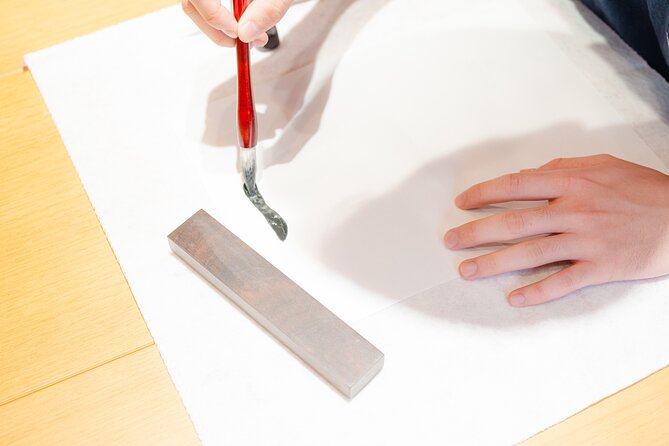
Your final character is the part you will probably think about most before booking. You can choose from a prepared list, which removes pressure if you do not know Japanese, or select something based on your own name.
A prepared list may include characters with familiar themes, but the exact options are not specified. Ask Sowa about the meaning and pronunciation before you settle on one. A character that looks attractive may carry a meaning you do not intend, so a quick explanation is worth your time.
Using a character related to your name makes the finished paper more personal. It also gives you a connection to the Japanese writing system, since names do not always map neatly from one language to another. The instructor can help with the intricacies around kanji, which is one reason this is more useful than simply copying a symbol from a souvenir stall.
You should have time to practice the chosen character before making the final version. Keep your expectations realistic. In an hour, the aim is to produce one meaningful piece with guidance, not a portfolio of polished calligraphy.
The decorative paper adds a finishing touch and makes the work easier to take home. It gives your final character a presentation suitable for displaying, though the exact paper size and protective packaging are not stated. If you are carrying it through the rest of a long trip, bring a folder or ask the provider how it will be protected.
A few more Tokyo tours and experiences worth a look


Is $32.84 a fair price in Tokyo?
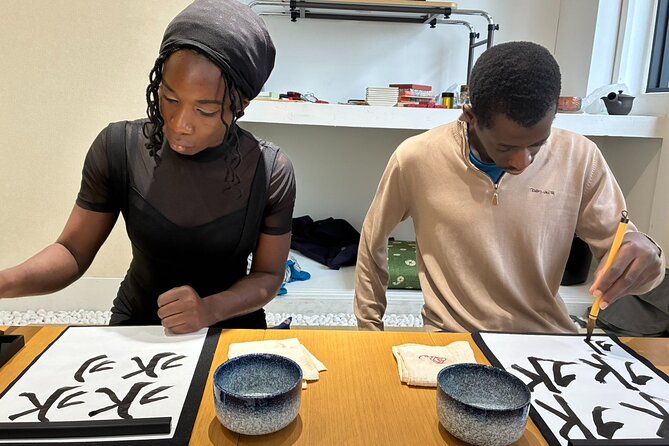
At $32.84 per person, the workshop sits in the affordable range for a one-hour cultural activity in central Tokyo. The value is not in the amount of time alone. You are paying for instruction, access to traditional tools, ink preparation, practice materials, a final decorative piece, and a chance to ask about kanji and Japanese calligraphy.
I would consider it good value if you want a hands-on cultural activity rather than a quick photo stop. The final work gives you something tangible, and the traditional inkstone step adds substance to the hour.
The calculation is less attractive if you want a long lesson or advanced artistic training. One hour passes quickly, especially once you include the introduction, ink preparation, practice, and final work. If your main goal is to study brush technique in depth, look for a longer class.
For a first encounter, the price makes sense. You get enough structure to understand the practice without giving up half a day of sightseeing. That balance works well in Tokyo, where you may want to fit the workshop between time in Shibuya and other parts of the city.
Meeting in Shibuya and planning your hour
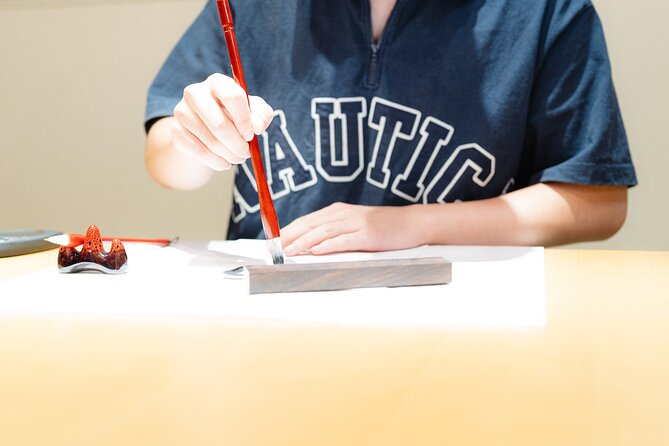
The meeting point is 2-chōme-14-13 Shibuya, Tokyo 150-0002, Japan. The activity is near public transportation, but no station or walking route is specified, so check the map carefully before leaving your hotel.
The class ends back at the meeting point. That makes it easier to plan your day, since you do not need to arrange a separate return transfer or wonder where the workshop finishes.
The mobile ticket is practical. Keep the booking available on your phone, and arrive with enough time to find the address. The supplied information does not state a required arrival window, so use the meeting time on your confirmation as your guide.
Most people can participate, according to the activity information. Still, calligraphy involves sitting, holding tools, and making controlled brush movements. If you have a physical concern that could affect those tasks, ask the provider before booking.
Free cancellation is available if you cancel at least 24 hours before the local start time. Cancellations or changes made inside that window are not accepted for a refund. That policy is fairly flexible, but it is worth remembering if your Tokyo schedule is still shifting.
Who will enjoy this calligraphy experience?
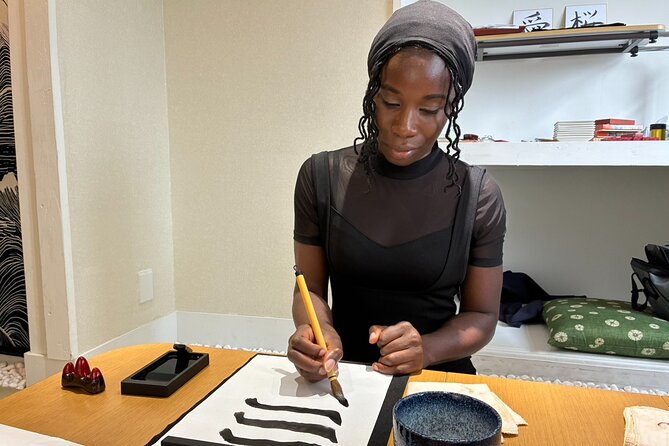
I would choose this for you if you want a quiet cultural break with a clear beginning, middle, and end. You prepare the ink, learn the strokes, practice, and make a final piece. There is no need to arrive with artistic skill or Japanese language ability.
It also suits first-time Japan visitors who want more context behind kanji. The explanations connect the characters to meaning and use, so you can leave with more than a decorative sheet.
Families may find it appealing because the activity is short and hands-on. The provider states that most people can participate, and the maximum group size is eight. Since no age policy is provided, check the details if you are booking for young children.
Couples and friends can use it as a slower shared activity. It is less physically demanding than a walking tour and more personal than watching a cultural demonstration.
I would hesitate if you dislike slow, careful work. Grinding ink and repeating strokes require patience. I would also look elsewhere if you want a long list of completed artworks, a private teacher, or an advanced lesson in brush technique.
Should you book the Shibuya calligraphy workshop?
Book it if you want to spend an hour making something with your hands and learning why the process matters. The inkstone, guided practice, kanji explanations, and final decorative paper give the class more substance than a simple brush-painting photo opportunity.
The strongest reason to choose it is Sowa’s personal instruction. His role covers the practical details, such as strokes and etiquette, as well as the cultural side of the characters. The small group limit should help keep that guidance useful.
Skip it if your schedule is too tight to reach the Shibuya meeting point on time, or if you expect a full calligraphy course. This is a compact introduction, not a specialist workshop.
At $32.84, I think it is a sensible choice for a first taste of Japanese calligraphy. You leave with a character connected to your own choice, a better feel for kanji, and a keepsake that reflects time spent learning rather than simply shopping.
FAQ
How long does the Japanese calligraphy experience last?
The activity lasts approximately one hour.
Where does the calligraphy workshop meet?
It begins at 2-chōme-14-13 Shibuya, Tokyo 150-0002, Japan, and ends back at the same meeting point.
Who teaches the calligraphy class?
The instructor is Sowa, also referred to as Soba or Sowa-san in the class information.
What will I do during the workshop?
You will learn about Japanese calligraphy and its tools, prepare ink with an inkstone, practice basic strokes and etiquette, choose a character, and write a final piece on decorative paper.
Can I choose my own character?
Yes. You can choose a character from a prepared list or select one based on your own name.
How many people can join the class?
The maximum group size is eight people.
What is the cancellation policy?
You can cancel at least 24 hours before the local start time for a full refund. Cancellations or changes made less than 24 hours before the experience are not accepted for a refund.
More Craft Workshops in Tokyo
More Shibuya Tours in Tokyo



More tours in Tokyo we've reviewed








Shibuya Tours, compared.
 ★ 5.0Official Street Go-Kart in ShibuyaFrom $76
 ★ 4.9Tokyo: Street Kart Experience in ShibuyaFrom $741 hour
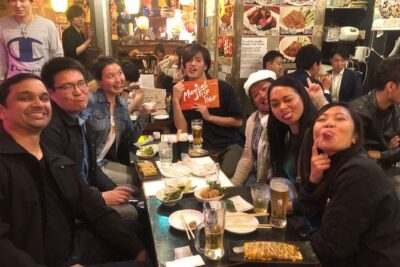 ★ 5.0Shibuya Meltdown Nightlife Tour: All-You-Can-Drink Bar HoppingFrom $106
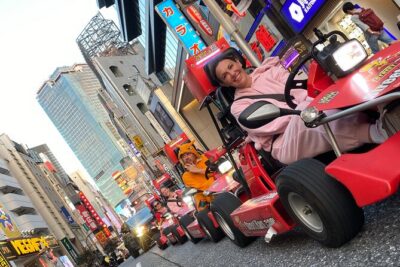 ★ 5.0Shibuya Official Street Go-Kart in Shibuya AnnexFrom $69
 ★ 5.0Tokyo: Shibuya Food Tour (13 dishes and 4 Eateries)From $77
 ★ 5.0Best of Shibuya Food TourFrom $217