
Reviewed · JDM & CAR CULTURE
Tokyo/Yokohama: Private JDM Daikoku/大黒 Car Meet With Driver
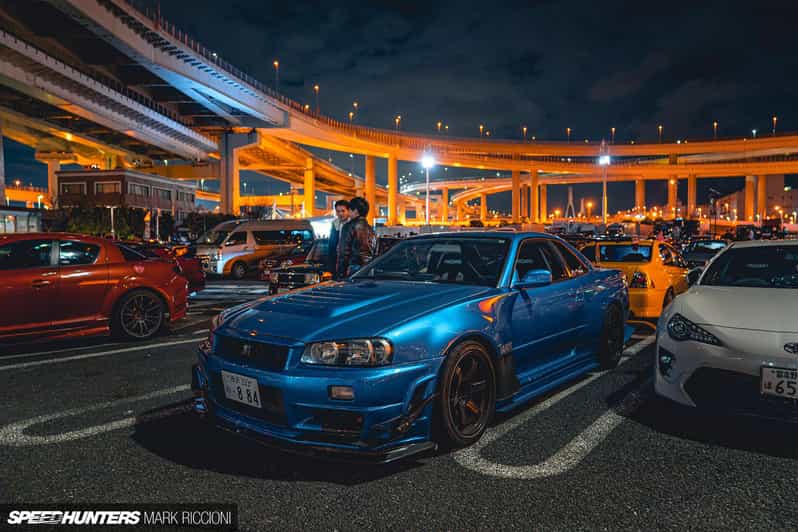
Daikoku Parking Area is the main event: a highway rest stop inside the looping roads of Yokohama where Japan’s modified-car scene gathers. I like that you reach it by van with a local driver, rather than trying to decode the expressway system yourself, and I like the added night views across Tokyo Bay.
The second strong point is the private format, which gives you room to ask about JDM cars, local driving culture, and the landmarks along the way. The main catch is practical: Umihotaru may cost an extra 5,000 yen per person, and the listed stop times add up to longer than the advertised four-hour duration, so confirm the exact plan before booking.
In This Review
- Key points to know before you book
- Why Daikoku PA matters to JDM fans
- The ride from your hotel to Autobacs Shinonome
- The main stop: 90 minutes at Daikoku Parking Area
- Passing Yokohama Bay Bridge and the Aqua-Line
- Umihotaru, the parking area in the sea
- Four hours, private transport, and the real value
- Who will enjoy this evening most
- Booking advice and cancellation flexibility
- Should you book this Daikoku car meet?
- FAQ
- How long does the Tokyo and Yokohama car meet experience last?
- What is the price?
- Is hotel pickup included?
- What happens if Daikoku PA is closed?
- Is Umihotaru included in the main price?
- Which languages can the driver speak?
- Is this a private tour?
- What should I bring?
- Can children join?
Key points to know before you book
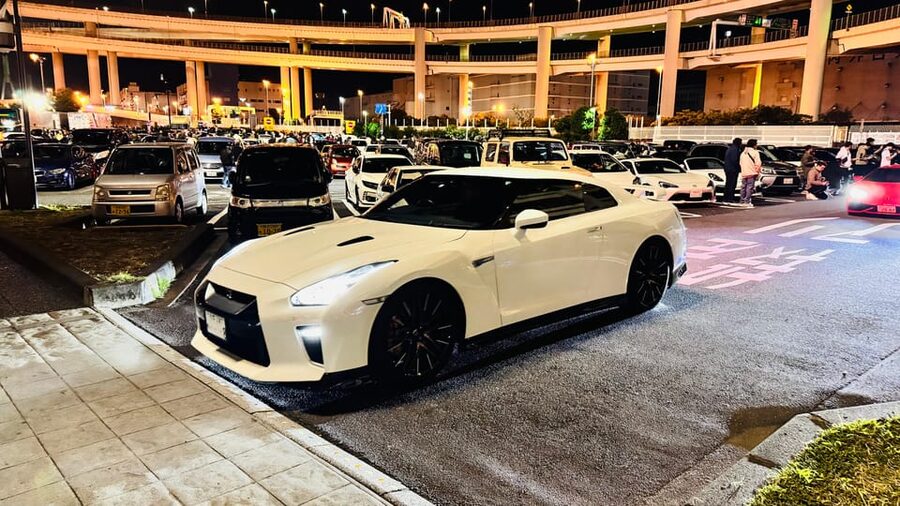
- Daikoku PA is the centerpiece: Expect about 1.5 hours for photos, walking, and a guided look at the cars when the parking area is open.
- The route uses major Tokyo Bay roads: You pass Yokohama Bay Bridge and the Tokyo Bay Aqua-Line, adding scenery to the car-focused outing.
- Umihotaru is the backup or add-on stop: This unusual parking area sits in the middle of Tokyo Bay, but it may involve a 5,000-yen supplement.
- Private hotel pickup keeps the evening simple: Pickup and drop-off are offered in Tokyo’s 23 wards, Tokyo, and Yokohama, subject to the stated location rules.
- The guides have earned strong praise for care and flexibility: Taro, David, Imran, and Sam are among the guides named in past bookings.
- This is best for car fans aged 10 to 95: Children under 10 and people over 95 are not accepted.
Why Daikoku PA matters to JDM fans
Daikoku PA is not a normal tourist attraction with a ticket booth and a display hall. It is a parking area between highway circles, and its appeal comes from the cars that gather there and the setting that makes the meeting feel local.
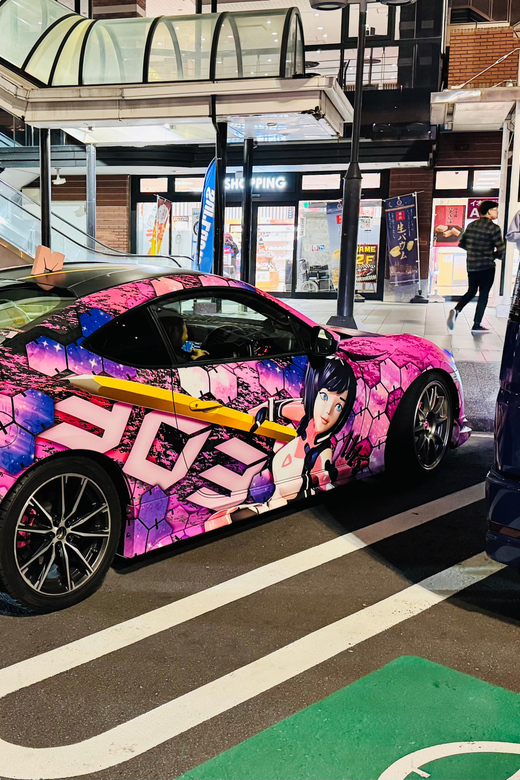
The term JDM means Japan Domestic Market. In practical terms, that points to Japanese cars and Japanese-style modifications, from carefully altered street cars to machines built around a strong personal taste. The experience is less about looking at a fixed museum collection and more about seeing what happens when owners bring their cars out.
That difference matters. You do not get a guaranteed list of makes, models, or modifications. The mix changes from night to night, and Daikoku PA can close frequently. When it is open and the timing works, though, you may see a wide variety of modified Japanese cars in one place, which is exactly what makes the stop exciting.
I also like the chance to ask questions in the moment. A local English-speaking driver can explain what you are seeing and help you understand why car culture has taken root in Japan. The driver languages listed are English, Hindi, Japanese, Punjabi, and Urdu.
Past bookings have named Taro, David, Imran, and Sam as guides. Taro was praised for answering questions and taking care of the group. David was noted for safe driving and for pointing out major landmarks between stops. Imran was described as flexible with arrangements, while Sam was part of an evening that also included Tokyo Tower and Roppongi illumination.
Those names do not mean you can automatically request a particular person, but they give you useful questions to ask when booking. If having an English-speaking guide is important, confirm the assigned driver and language before you pay.
A few more Yokohama tours and experiences worth a look
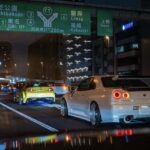
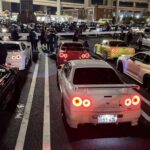
The ride from your hotel to Autobacs Shinonome
The tour begins with pickup from one of the stated areas: Tokyo, Tokyo’s 23 wards, or Yokohama. The information specifically asks people outside Tokyo’s 23 wards to contact the provider, so you should not assume every address around greater Tokyo is included.
The first drive is listed at about 40 minutes. That gives you time to settle into the van and start asking about Japanese car culture, the evening route, and what may be open at Daikoku PA.
Autobacs Shinonome is scheduled for about 40 minutes. Autobacs is one of Japan’s major car-related retail chains, so this stop gives you a different view of the country’s car scene. Daikoku shows the social side, while Autobacs shows the retail and equipment side.
You can shop and walk around, though the available information does not promise particular products or brands. I would treat this as a useful warm-up, not the reason to book the tour. If you are interested in Japanese car accessories, parts, or automotive goods, it may be a worthwhile stop. If you only want the meet, those 40 minutes may feel like a long prelude.
One point needs clarification before booking. The included benefits also mention a visit to the Great Shibuya Crossing, but the detailed route supplied here lists Autobacs Shinonome and does not show a separate Shibuya stop. Ask the provider if Shibuya is part of your specific departure, an alternate route, or general tour information.
The main stop: 90 minutes at Daikoku Parking Area
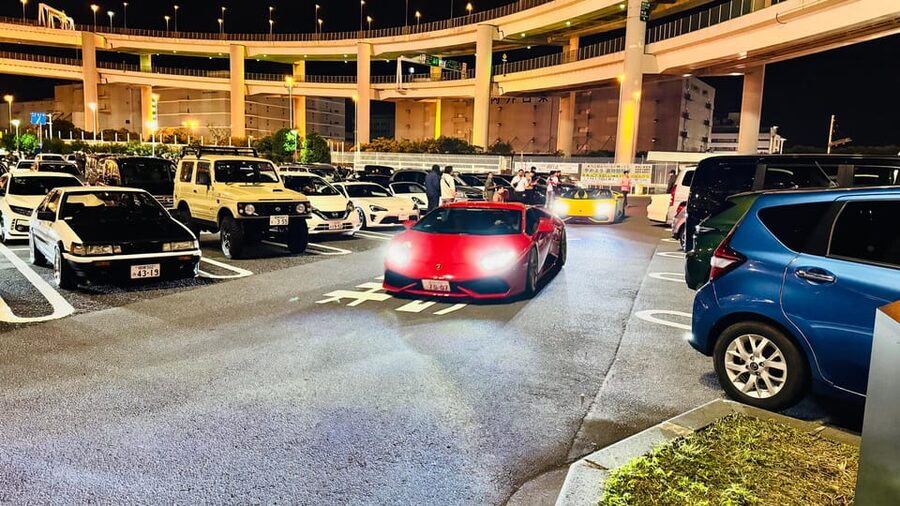
The van then heads toward Daikoku PA, with the drive listed at about 30 minutes. The stop itself is planned for 1.5 hours, giving you a reasonable amount of time to walk, take photographs, and look at the cars without making the whole evening a quick roadside pause.
This is where the tour earns its keep for serious car fans. You are not simply being dropped at a scenic overlook. The stated plan includes a guided visit, and the driver can help connect the cars with the local street-racing history and wider Japanese car culture.
You should bring a camera and a charged smartphone. Those are not filler suggestions here. The cars are the visual focus, and the industrial roads, highway curves, and nighttime setting add to the photographs.
Bring cash and a credit card as well. The tour information does not promise that every possible purchase will accept one payment method, and Autobacs and Umihotaru both include shopping time. A passport is also listed among the items to bring.
Keep your expectations flexible. Daikoku PA closes frequently, and the presence of a private van does not change that. If the parking area is closed, the route changes to Umihotaru PA, described as the only parking area in Japan located in the middle of the sea.
That backup is not equivalent for a dedicated JDM fan. Umihotaru may offer an unusual setting, views, shopping, and photographs, but it is not the same as seeing a car meet at Daikoku. If Daikoku is the sole purpose of your booking, ask how often the provider checks its status and what happens if the main stop is unavailable.
Passing Yokohama Bay Bridge and the Aqua-Line
After Daikoku, the van passes Yokohama Bay Bridge. This is a scenic part of the ride rather than a walking stop, so you will see the bridge and surrounding night views from the vehicle.
The route then uses the Tokyo Bay Aqua-Line, with about 30 minutes listed as a scenic drive. This road connection is part of what makes the experience more than a simple transfer to a parking lot. You get a look at the large-scale roads that connect Tokyo, Yokohama, and the bay area.
For me, this driving time is valuable because it places the car meet in its real setting. You are not looking at Japanese car culture in isolation. You are riding on the broad expressways and bridge routes associated with the scene, while also seeing Tokyo Bay after dark.
The trade-off is that road conditions and traffic can affect how much scenery you actually see. Since this is a private vehicle tour, you can ask the driver questions along the way, but the route is still a drive, not a dedicated sightseeing cruise.
Umihotaru, the parking area in the sea
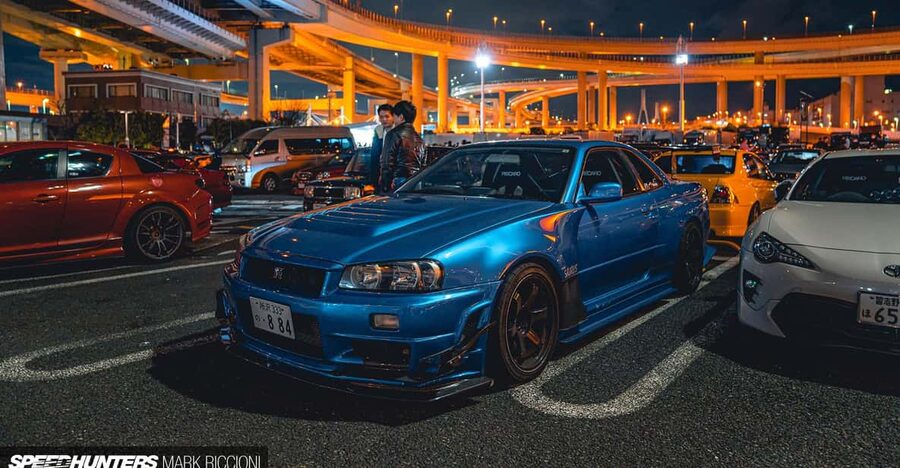
Umihotaru is listed as a 40-minute stop for photographs, shopping, and sightseeing. Its unusual location in the middle of Tokyo Bay is the reason it has a place on this route. It offers a very different atmosphere from Daikoku PA, with the novelty of stopping at a large parking facility surrounded by water.
The pricing note is important and easy to miss. Unless Daikoku PA is closed, there is an extra charge of 5,000 yen per person to go to Umihotaru, due to the additional tolls and greater distance. The wording can be read in more than one way, so ask for the exact charge for your date and route.
If Daikoku is closed, Umihotaru becomes the stated alternative. If Daikoku is open, you need to decide if the extra payment is worth it. I would say it makes more sense for visitors who enjoy the road trip itself, want Tokyo Bay views, or like unusual infrastructure. It is less essential for someone who wants only the JDM meet.
The listed route includes both Daikoku and Umihotaru, but the additional-charge note suggests that the final plan depends on the night and the provider’s decision. Get this confirmed in writing if the bay stop matters to you.
Other private tours in Yokohama

Four hours, private transport, and the real value
The advertised duration is four hours, and the private group format is a genuine advantage. You avoid joining a large bus group, and you have a driver who can focus on your party’s questions and pickup arrangements.
The price is $128 per person. That is not a low-cost way to reach Daikoku, especially if you are traveling alone. For two or more people who want a private vehicle, hotel pickup, an English-speaking driver, and a guided visit to a difficult-to-reach location, the price becomes easier to justify.
Daikoku PA is not presented as a standard central Tokyo attraction. The route uses expressways, a van, and several distant bay-area stops. You are paying for transport and local help as much as for the time spent walking around.
Still, check the timing closely. The supplied stop estimates are 40 minutes for the first van ride, 40 minutes at Autobacs, 30 minutes for the next van ride, 1.5 hours at Daikoku, a pass by Yokohama Bay Bridge, 30 minutes on the Aqua-Line, 40 minutes at Umihotaru, and another 40-minute van ride. Those segments total more than four hours even before allowing for pickup and drop-off.
This may reflect approximate timings, overlapping route information, or a longer version of the experience. I would ask two direct questions: What is the actual door-to-door duration, and are both Daikoku and Umihotaru included in the price? The answers will help you compare this outing fairly with other Tokyo car tours.
Who will enjoy this evening most
You will get the most from this experience if you already care about Japanese cars, modifications, street-racing history, or the way local car communities gather. The private format is also helpful if your group wants to ask many questions or take photos without keeping pace with a large party.
It can work for a general visitor too. The bay roads, bridge views, Autobacs stop, and unusual Umihotaru setting provide more than cars. Several guides have also added city information and major landmarks during the drives, so you may gain a wider evening tour of Tokyo and Yokohama.
This is not suitable for children under 10 or people over 95. Alcohol and drugs are not allowed. Bring a passport, camera, charged smartphone, cash, and credit card, and dress for walking around an outdoor parking area at night, since the schedule includes a guided walk and photo stop.
The experience is less suitable if you need a fixed attraction with guaranteed access. Daikoku closes frequently, the car selection changes, and the Umihotaru charge needs checking. You should also avoid booking it on a night when a precisely timed return is critical until the provider confirms the actual duration.
Booking advice and cancellation flexibility
You can cancel up to 24 hours in advance for a full refund, and the reserve-now-pay-later option keeps money out of the transaction until later. Those terms are useful when your Tokyo plans are still moving, though they do not remove the need to check the pickup area and possible Umihotaru supplement.
The tour has a private-group setup and hotel pickup. When selecting Tokyo, use an address within the stated Tokyo area rules, and contact the provider if you are outside Tokyo’s 23 wards.
I would also send a short message before booking with these questions:
- Is Daikoku PA expected to be open on my date?
- Is Umihotaru included, optional, or an extra 5,000 yen per person?
- Is the total time four hours or longer?
- Is the Great Shibuya Crossing part of this departure?
- Which language will the driver speak?
That small check can prevent the most common surprises.
Should you book this Daikoku car meet?
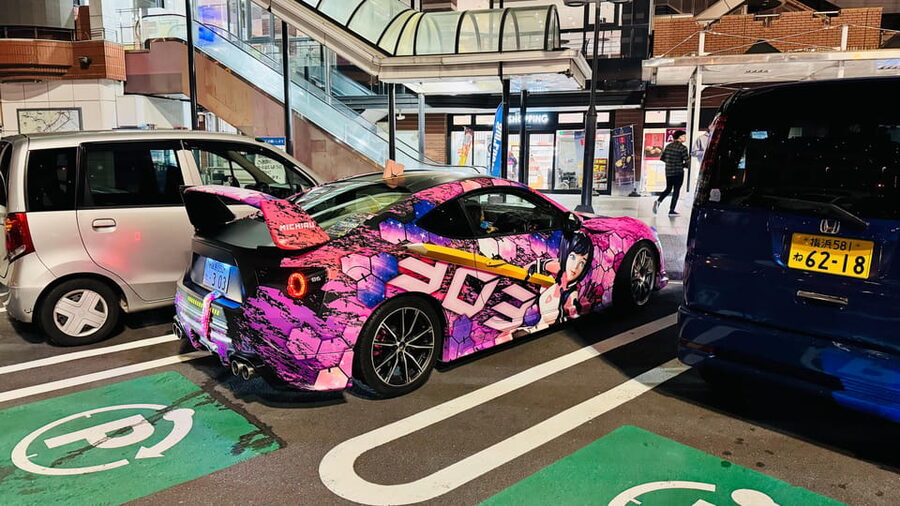
Book it if Daikoku PA is high on your Tokyo wish list and you want private transport to a difficult highway location. The strongest parts are the guided 1.5-hour car-meet stop, the chance to ask a local driver about JDM culture, and the road route through Yokohama Bay and the Aqua-Line.
Skip it if you need guaranteed access to a fixed collection, a short and exact four-hour schedule, or a low price for a solo outing. The closure risk and possible 5,000-yen Umihotaru fee are real considerations.
For car fans, I think the price can make sense when shared with companions. Confirm the timing, driver language, Shibuya detail, and Umihotaru cost first. If those answers fit your plans, this is a practical way to see a side of Tokyo that is hard to reach by ordinary sightseeing tours.
FAQ
How long does the Tokyo and Yokohama car meet experience last?
The advertised duration is four hours. The listed drive and stop times appear to total longer than four hours, so confirm the actual door-to-door schedule with the provider before booking.
What is the price?
The stated price is $128 per person. Umihotaru may require an additional 5,000 yen per person, depending on the route and Daikoku PA’s availability.
Is hotel pickup included?
Yes. Pickup and drop-off are offered for Tokyo, Tokyo’s 23 wards, and Yokohama, subject to the stated location rules.
What happens if Daikoku PA is closed?
The tour goes to Umihotaru PA, described as a parking area in the middle of the sea in Japan. Daikoku closes frequently, so access is not guaranteed.
Is Umihotaru included in the main price?
The supplied details state that there can be an extra 5,000-yen charge per person to visit Umihotaru unless Daikoku PA is closed. Confirm the exact arrangement for your booking.
Which languages can the driver speak?
The available driver languages are English, Hindi, Japanese, Punjabi, and Urdu.
Is this a private tour?
Yes. It is arranged as a private group experience.
What should I bring?
Bring your passport, camera, credit card, cash, and a charged smartphone.
Can children join?
Children under 10 are not permitted. People over 95 are also listed as not suitable for the experience.
More Private Drivers in Yokohama
More Private Tours in Yokohama
More JDM & Car Culture in Yokohama
More tours in Yokohama we've reviewed
JDM & Car Culture, compared.
 ★ 4.7FAST&FURIOUS EXPERIENCE Tokyo Car Club membershipFrom $138
 ★ 4.8GT-R35 800hp Club Membership – secret underground car meetFrom $205
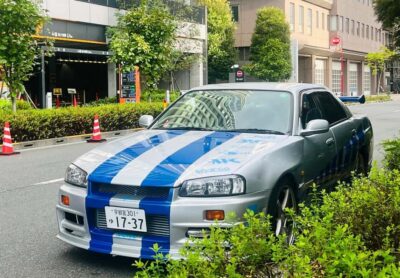 ★ 4.8Tokyo: Fast & Furious Tokyo Drift 3 Experience (Kaila Yu SP)From $157
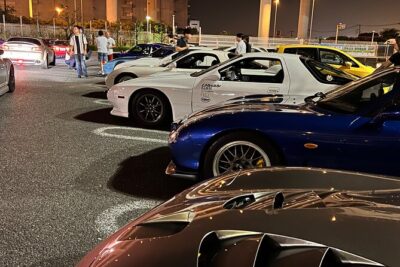 ★ 4.8Tokyo: Daikoku JDM Car Meet & Night Car Culture TourFrom $984 hours
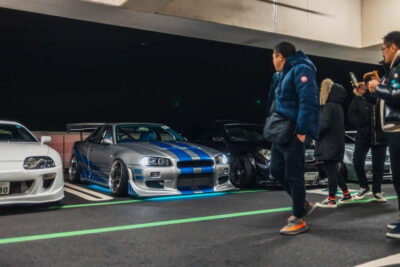 ★ 4.8Secret Car Meet: R34 Skyline Car Club MembershipFrom $236
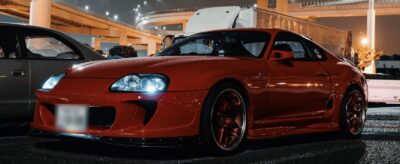 ★ 4.7Tokyo Drift: Daikoku PA Supreme Car Experience 大黒PAFrom $583 hours