
Reviewed · GINZA TOURS
Tokyo: Discover the Art of Kintsugi in Ginza
Kintsugi turns a broken ceramic into a piece whose cracks become part of its design. In this 90-minute Ginza workshop, you repair a supplied plate or bowl with synthetic lacquer and metallic powder, then pack it for the trip home.
I like the small setting, limited to eight people, and the clear, hands-on teaching. I also like the easy location, just three minutes from Ginza Station, with a soft drink included. The main thing to understand is that this is a modern shortcut, not traditional kintsugi: natural lacquer and real gold take about a month, while this workshop lets you finish in one sitting.
In This Review
- Key points
- Why kintsugi makes a good Ginza activity
- Finding the workshop three minutes from Ginza Station
- The first stage: choose a ceramic piece
- Applying the repair, one careful step at a time
- What the instructor adds to the experience
- A soft drink and a quiet pause in Ginza
- Taking the repaired piece home
- Is $75 a fair price?
- Who should book this activity?
- Timing, cancellation, and useful planning tips
- Should you book the Ginza kintsugi workshop?
- FAQ
- How long is the kintsugi workshop?
- How much does the experience cost?
- Where does the workshop meet?
- How far is the venue from Ginza Station?
- Is the workshop held in English?
- How many people can join the class?
- Are tools and materials provided?
- Can I take my repaired ceramic home?
- Is the repaired ceramic safe for regular tableware use?
Key points
- Make your own repaired ceramic: You work on a supplied cracked plate or bowl and take the finished piece home.
- Learn in a small private room: The workshop is held near Ginza Station, with space for no more than eight participants.
- Follow careful step-by-step guidance: An English or Japanese-speaking instructor explains the process and helps when the repair gets tricky.
- Enjoy a calm break in central Tokyo: The room is inside or near Cafe AOU Ginza forest, on the ground floor of the Daiwa Ginza Building.
- Pack it safely for your luggage: The finished item is packaged for transport, a useful touch if you are still touring Japan.
- Know the limits of the technique: The repaired piece is for decoration only and is not microwave-safe.
Why kintsugi makes a good Ginza activity
Kintsugi is the Japanese practice of repairing broken ceramics so the damage becomes visible rather than hidden. The repaired lines form part of the object’s character. That idea gives this workshop more weight than a simple souvenir craft, especially if you are looking for a quiet activity between Tokyo’s shops, restaurants, and department stores.
The work also gives you a physical way to think about imperfection. Instead of throwing away a damaged object, you help give it another life. You are not just watching a demonstration, either. You handle the tools, apply the materials, and make choices about the final look.
The workshop uses a synthetic lacquer and metallic powder in place of natural lacquer and gold. This matters. Traditional kintsugi takes roughly a month because the natural materials need time to cure between stages. Here, the method is adapted for a short cultural activity, so you can complete the piece in 90 minutes and carry it home the same day.
I see this as an introduction to the idea and basic technique, not professional restoration. That is not a criticism. It simply helps you book with the right expectations.
A few more Tokyo tours and experiences worth a look

Finding the workshop three minutes from Ginza Station
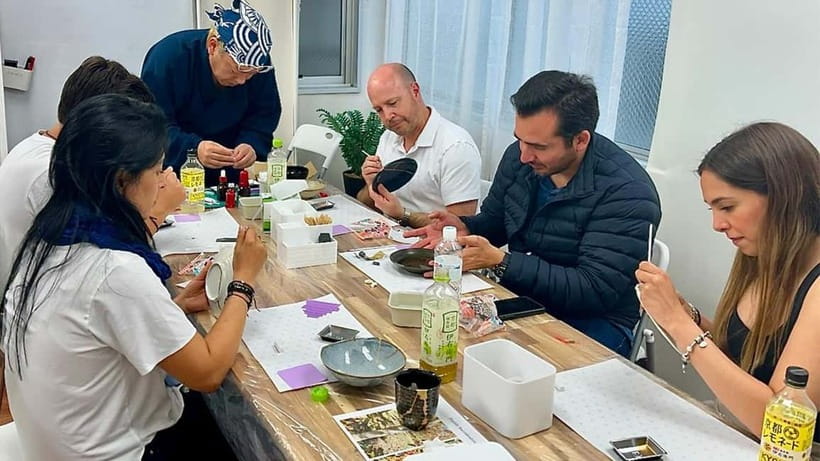
The meeting point is Cafe AOU Ginza forest, located on the ground level of the Daiwa Ginza Building. The room is private and close to Ginza Station, which makes this a practical choice if you are already exploring the district.
Ginza is known for polished department stores, high-end shops, galleries, and restaurants. This class offers a different reason to spend time here. You can step away from the busy streets and spend an hour and a half working with your hands.
The venue may change if reservations or room availability require it. You will be notified by email one day before the workshop if the location changes, so check your messages before setting out. Since the class is in a central area, allow time to confirm the exact room rather than relying only on the original meeting point.
The workshop room is described as cozy and private. That is useful for a craft that needs attention. You will not be trying to hear instructions across a large classroom or keep pace with a crowd of dozens.
The first stage: choose a ceramic piece
Once the session begins, you receive a ceramic item to restore. Some participants have been offered a choice between two cracked plate colors, while the exact selection may depend on the session. You should expect to work on a prepared piece rather than bringing your own broken heirloom.
That is a sensible arrangement for a short class. A supplied item lets the instructor control the size, shape, and condition of the ceramic. It also means you can focus on learning instead of worrying about damaging something with personal value.
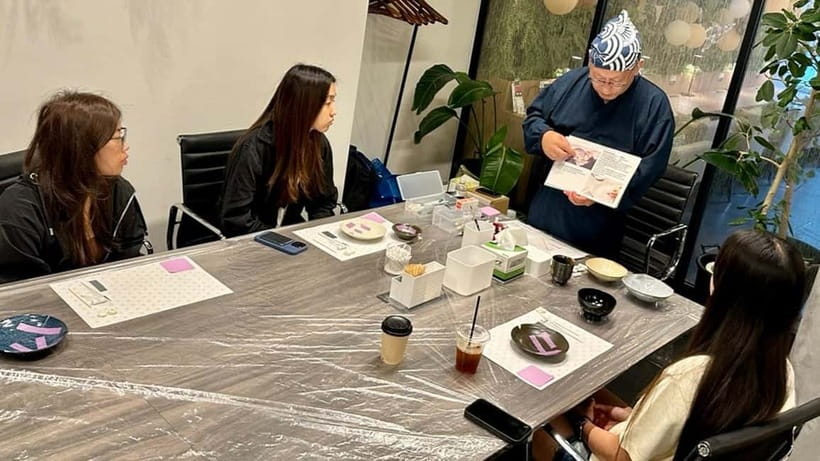
Your instructor introduces the background of kintsugi and explains how the repair process works. One instructor named in the activity feedback is Tatsu, who also shared stories about Ginza during the session. The teaching is available in English or Japanese, and the group size is capped at eight.
The small number matters here. Kintsugi is detailed work, and you may need someone to check your application or help you move to the next step. With a larger group, the class could feel rushed or impersonal. With eight or fewer, the instructor can give individual help, though the pace may still depend on how quickly everyone works.
Applying the repair, one careful step at a time
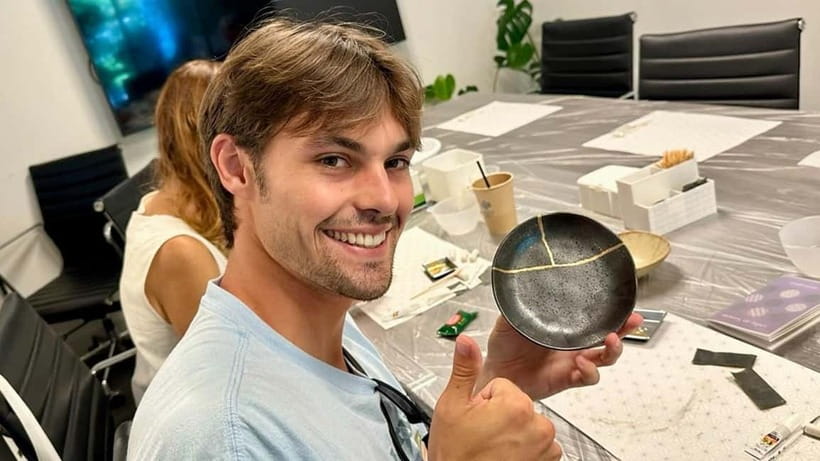
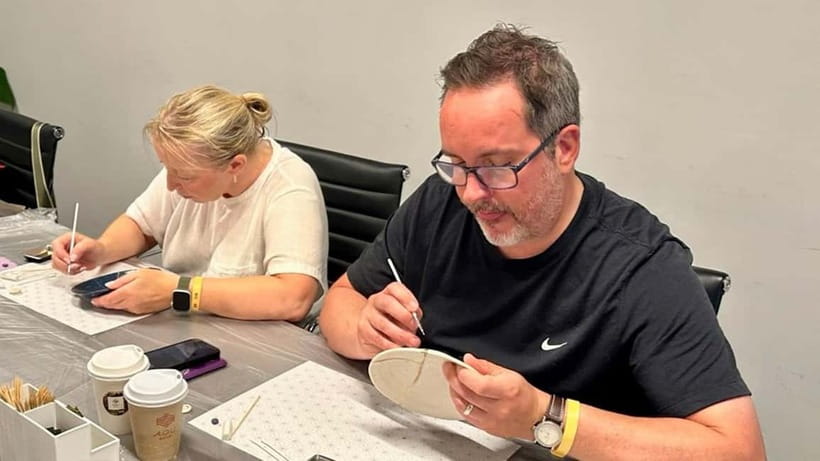
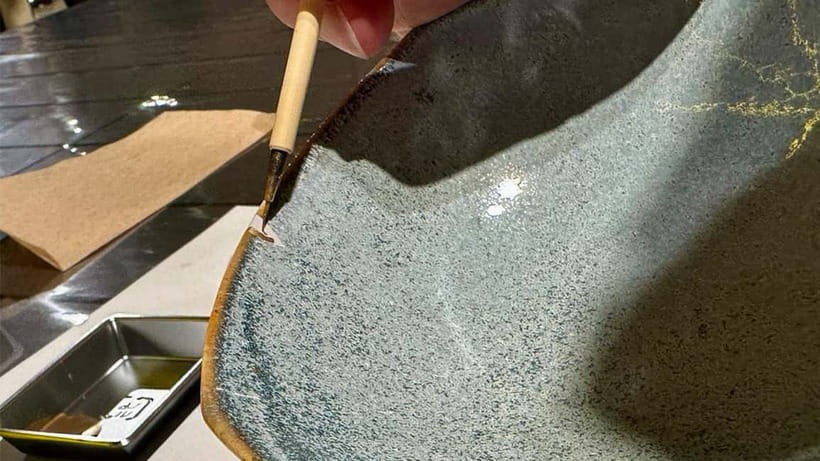
The main part of the session is hands-on. You follow instructions for joining or covering the damaged areas, then use the supplied materials to create the visible seam. The instructor explains each stage before you proceed, so you are not expected to arrive with craft experience.
This is where the class earns its value. You are not simply told what kintsugi means. You see how the concept becomes a physical line across a ceramic surface. Your finished design will be one of a kind because the cracks, placement, and handwork vary from piece to piece.
Take your time with the details. One participant wanted more time to work independently because another person in the group was moving slowly. That is a fair consideration for a shared class. The instructor may need to help someone catch up, and the group will sometimes wait before moving to the next stage.
I would treat the 90 minutes as a focused introduction rather than an open studio session. You have enough time to make a meaningful object, but not enough time for long experiments or several different pieces. If you prefer a relaxed, unhurried craft class, the fixed duration may feel a little tight.
What the instructor adds to the experience
A good teacher matters more here than fancy surroundings. The instructor needs to explain a careful process, spot mistakes early, and help without taking over your work.
Tatsu has been praised for explaining the craft, helping participants through difficult steps, and making conversation. The class can also include stories about Ginza, which gives the activity a local connection rather than treating the neighborhood as a simple backdrop.
The teaching covers the origins and background of kintsugi, and the material can include an explanation of how lacquer is used with tableware. That makes the session useful for anyone who wants more than a decorative project.
Language should be manageable for many international visitors because instruction is offered in English and Japanese. Still, the craft depends on watching demonstrations and following visual steps, so you will be working with your hands as well as listening.
The instructor may also help speed up a participant who falls behind. This keeps the whole group moving, but it means the class is not completely self-paced.
A few more Tokyo tours and experiences worth a look



A soft drink and a quiet pause in Ginza
A complimentary soft drink is included. In some sessions, coffee has also been offered while the instructor explains how the class will proceed. The exact drink may vary, but the refreshment adds a pleasant start to the workshop.
I like this small touch because it helps the class feel personal rather than strictly instructional. You can settle into the room before handling the materials, and the conversation gives you a chance to ask about the craft or the Ginza area.
Do not book this as a café meal or a food activity. The drink is a minor inclusion, not the focus. The point is the ceramic work and the chance to slow down in central Tokyo.
Taking the repaired piece home
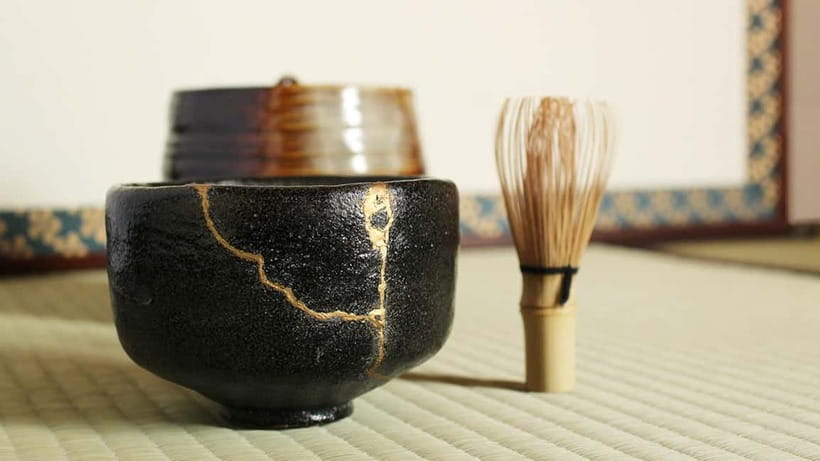
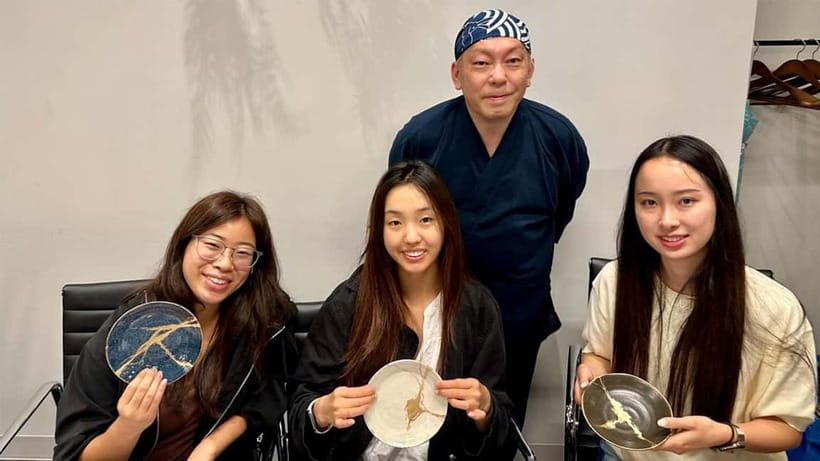
At the end, you keep the ceramic you repaired. That makes the activity more lasting than a demonstration or a photograph. The piece can serve as a decorative reminder of Japan, or as a thoughtful gift if you can protect it during the rest of your trip.
Packaging is one of the strongest practical details. The finished plates and bowls have been packed carefully for the journey home, which reduces the worry of placing a newly repaired item in your suitcase.
Even so, pack with care. The item is not microwave-safe, and you are advised to use it for decoration only. Do not treat it as an everyday serving dish or assume the repaired seams can handle heat.
The material also differs from traditional kintsugi. Since synthetic lacquer and metallic powder are used for the quick format, the finished piece should be understood as a workshop souvenir and an introduction to the craft. It is not a substitute for a month-long restoration using natural lacquer and gold.
Is $75 a fair price?
At $75 per person, this is not the cheapest creative activity in Tokyo. You are paying for a central Ginza location, a private room, a small group of up to eight, the ceramic piece, all tools and materials, instructor guidance, and a drink.
The value improves if you want a finished object rather than a class demonstration. Buying a small souvenir in Ginza might cost less, but it would not carry the story of having repaired it yourself. You also avoid sourcing materials, finding suitable ceramics, or learning the process alone.
The price makes the most sense for someone who values personal instruction and a take-home item. It is less appealing if you want a long, traditional course or a functional piece of tableware. The class is a compact cultural activity, not a full apprenticeship.
I would compare it with other paid craft workshops in Tokyo by asking three questions: Is the group small? Are materials included? Do you leave with something you made? This experience scores well on all three.
Who should book this activity?
I would recommend it to adults, couples, friends, and families with children aged 10 or older. One family used the workshop with children aged 10 and 14, and the format worked well because the instructor could offer direct help.
It suits you if you enjoy handwork, Japanese design, or small cultural activities that fit neatly into a sightseeing day. It also works well if high-end shopping is not your reason for visiting Ginza but you still want a good excuse to explore the district.
The class is not suitable for children under 10, babies under one year, or people with mobility impairments. The supplied information also says it is not suitable for people with a cold or people with hearing impairments. If any of those conditions apply, choose another activity.
The small group helps create a calm mood, but it does not guarantee that every minute will be yours alone. You may wait while another participant receives help. That is a normal tradeoff in a shared workshop.
Timing, cancellation, and useful planning tips
The activity lasts 90 minutes, with several possible starting times depending on availability. Check the schedule before planning a tight connection with a meal, show, or train.
The meeting point is close to Ginza Station, but confirm the building details and watch for an email about a possible venue change. If the address changes, notification is sent one day before the workshop.
You can cancel up to 24 hours before the start time for a full refund. The reserve-now, pay-later option also helps if your Tokyo plans are still shifting.
I would place this activity on a day when you are already in Ginza. The workshop does not include hotel pickup or drop-off, so you make your own way there and onward to your next stop. Its central location makes that simple, but it is still your responsibility to allow time for arrival.
Should you book the Ginza kintsugi workshop?
Book it if you want a thoughtful, hands-on introduction to a Japanese craft and a small object to carry home. The friendly instruction, small group, central location, and careful packaging make the $75 fee reasonable for the right person.
Skip it if you need a fully traditional kintsugi course, a usable piece of tableware, or a completely self-paced studio session. The synthetic materials and short schedule are practical compromises.
For most visitors, I would treat this as a calm break from Tokyo’s speed. You learn the idea behind kintsugi, make something with your own hands, and leave with a souvenir that shows its repair instead of hiding it.
FAQ
How long is the kintsugi workshop?
The workshop lasts 90 minutes.
How much does the experience cost?
The price is $75 per person.
Where does the workshop meet?
The meeting point is Cafe AOU Ginza forest, on the ground level of the Daiwa Ginza Building near Ginza Station.
How far is the venue from Ginza Station?
The workshop room is about three minutes from Ginza Station.
Is the workshop held in English?
Yes. The instructor can teach in English or Japanese.
How many people can join the class?
It is a small-group activity limited to eight participants.
Are tools and materials provided?
Yes. The workshop includes all necessary tools and materials, along with a ceramic piece to restore.
Can I take my repaired ceramic home?
Yes. You take home the ceramic piece you repair, and it is packaged for safe transport.
Is the repaired ceramic safe for regular tableware use?
No. The repaired item is recommended for decorative use only and is not microwave-safe because of a risk of ignition.
More Craft Workshops in Tokyo
More Ginza Tours in Tokyo



More tours in Tokyo we've reviewed










Ginza Tours, compared.
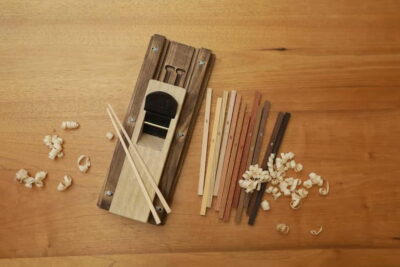 ★ 4.8Chopstick Making Workshop in GinzaFrom $251 hour
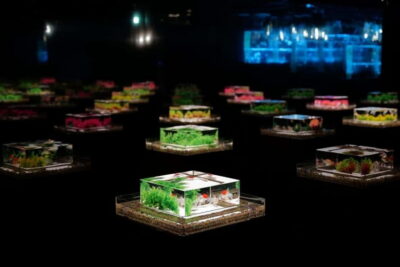 ★ 4.5Tokyo: Art Aquarium Museum GINZA Entry TicketFrom $171 day
 ★ 4.5Official Japan Go-Kart Through Tokyo Bay / Ginza (IDP Required)From $85
 ★ 5.0Private Ginza Architecture Walking TourFrom $132
 ★ 4.5【SUMO FESTIVAL】Tokyo Ginza: Sumo Show & Photo ExperienceFrom $63
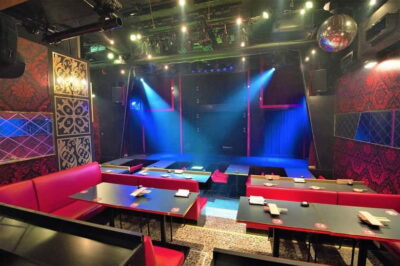 ★ 4.8Tokyo GINZA: KONPARU Japanese Cabaret Show with DrinkFrom $502 hours