
Reviewed · COOKING CLASSES
Private Gluten-Free Japanese Cooking Class in Tokyo Japan
Japanese food can look naturally gluten-free, with its rice, fish, vegetables, tofu, and seaweed. The catch is in the details: soy sauce, miso, mirin, tempura coatings, fish cakes, and noodles may contain wheat. Morimi’s private class tackles that problem in a useful, hands-on way, teaching you how to spot hidden gluten and cook familiar Japanese dishes without it.
I like the choice of three menus, especially the basic course, which gives you a broad taste of home cooking. I also like the personal format: only your group attends, and Morimi teaches in English. The main consideration is that this is a cooking lesson in a local Tokyo neighborhood, not a sightseeing tour, so you’ll need to make your own way to Meidaimae Station unless you arrange the offered pickup.
In This Review
- Key points
- Why gluten-free Japanese cooking needs careful checking
- Starting at Meidaimae Station at 11 a.m.
- Choosing the basic course for the broadest meal
- The tofu course gives the class a different center
- The sushi course keeps the menu focused
- Seasonal sweets add a Japanese finish
- Morimi’s teaching style is personal and clear
- What you take home besides lunch
- Is $84.54 a fair price?
- Who should book this cooking class?
- Should you book Morimi’s gluten-free class?
- FAQ
- Where does the gluten-free cooking class take place?
- What time does the class start?
- How long does the experience last?
- Is the activity private?
- Is transportation included?
- What cooking menus can I choose from?
- Is lunch included?
- Are Japanese sweets available?
- Can I cancel for a full refund?
Key points
- Three different gluten-free menus: Choose basic Japanese home cooking, a tofu-focused menu, or temari and pressed sushi.
- Practical label-reading advice: Learn why common Japanese seasonings and prepared foods can be risky for a gluten-free diet.
- A full lunch is included: You cook several dishes, then sit down to eat what you made.
- Private instruction with Morimi: Only your group participates, allowing the class to fit your pace and questions.
- Seasonal Japanese sweets: Add strawberry daifuku, chilled red bean soup, chestnut yokan, or shiratama zenzai, depending on the season.
- A useful souvenir: Recipes are provided so you can recreate the dishes at home.
Why gluten-free Japanese cooking needs careful checking
Rice is the easy part of Japanese cooking. It appears in onigiri, sushi, and many home-style meals, and it is naturally free of wheat. Tofu, vegetables, fish, seaweed, and eggs also give you plenty of good ingredients to work with.
The tricky part is the seasoning cupboard. Standard soy sauce often contains wheat, and miso and mirin can also require label checks. Fried foods may use wheat-based coatings, while fish cakes and noodles can contain ingredients that are not obvious from the dish itself.
That makes this class useful beyond the three-hour meal. You are not simply copying a recipe. You are learning how to examine ingredients and adapt familiar Japanese food for a gluten-free kitchen. For anyone with celiac disease or a serious wheat allergy, that practical skill matters far more than a single safe lunch.
The class also gives you a better sense of how Japanese cooking is put together. Instead of treating gluten-free food as a narrow set of substitutions, Morimi shows how rice, tofu, vegetables, soup, omelets, and carefully chosen seasonings can form a complete Japanese menu.
Other cooking classes in Tokyo
Starting at Meidaimae Station at 11 a.m.
The meeting point is near Meidaimae Station at 2 Chome-45 Matsubara in Setagaya City. The class starts at 11 a.m. and finishes back at the meeting point after about three hours.
This timing works well for a cooking lesson. You arrive in the morning, prepare lunch, and eat the finished dishes around midday. You do not lose a full sightseeing day, but you should allow time to reach western Tokyo and find the meeting point without rushing.
Pickup is offered, but private transportation is not included. Read those details together: you may have a pickup option, but you should confirm how it works when booking rather than assume a car transfer is part of the price. The activity is also near public transportation, so Meidaimae Station is the practical anchor.
Because the class is private, only your own group takes part. That changes the feel of the lesson. You can ask about ingredients, repeat a technique, or slow down when a recipe is new to you without worrying about a large class moving ahead.
Choosing the basic course for the broadest meal
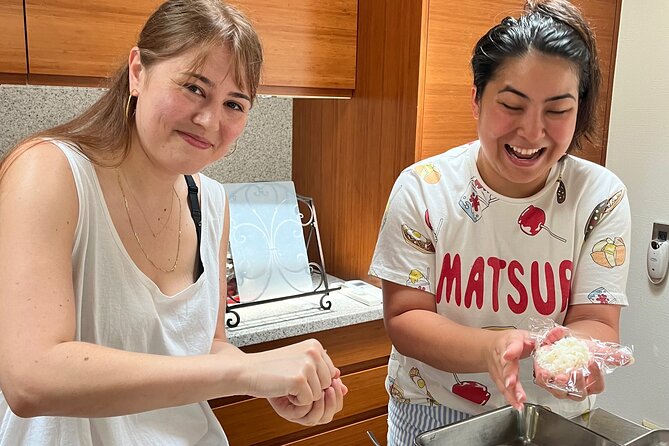
The basic course is the best choice if you want a little of everything. You prepare two onigiri, chicken karaage, dashimaki tamago, shiraae, kinpira, and miso soup.
Onigiri are rice balls, one of the simplest and most recognizable Japanese foods. They are also a good starting point because you learn how plain rice becomes a portable meal with the right shaping and fillings or additions.
Chicken karaage is Japanese fried chicken. It is a particularly useful dish to learn in a gluten-free class because fried food often involves wheat-based coatings. Here, the lesson can show you how to approach the dish with gluten-free ingredients rather than simply avoid it.
Dashimaki tamago is a rolled Japanese omelet. The softly layered shape takes more care than an ordinary scrambled egg, making it a nice technique lesson. You also prepare shiraae, a tofu and vegetable salad, plus kinpira, a stir-fried dish of potatoes and carrots.
The menu ends with miso soup. Since miso itself can require label checking, this is another chance to connect the finished dish with the ingredient lessons from the class.
I would choose this course if you have only one Japanese cooking class in Tokyo. It covers rice, frying, eggs, tofu, vegetables, stir-frying, and soup. The drawback is simple: it offers less focus than the specialist menus, so you will not make as much sushi or tofu-based food as you would in the other options.
The tofu course gives the class a different center
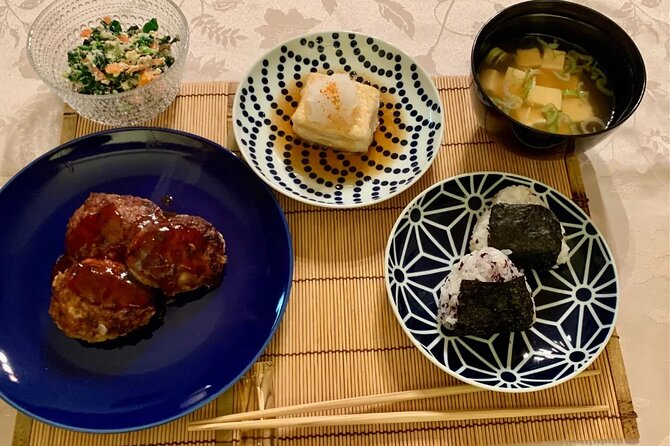
The tofu course is a good pick if you want to see how one humble ingredient can carry a meal. You make two onigiri, tofu hamburger steak, shiraae, agedashi tofu, tofu miso soup or clear soup, and freshly made oboro-tofu.
Tofu hamburger steak turns tofu into the main body of a familiar meal. It is a useful example of how Japanese cooking can use plant-based ingredients without making the food feel like a side dish.
Shiraae is a tofu and vegetable salad, while agedashi tofu is deep-fried tofu served in broth. Those two dishes show different textures and cooking methods. One is cool and soft, the other has a fried exterior and a warm broth.
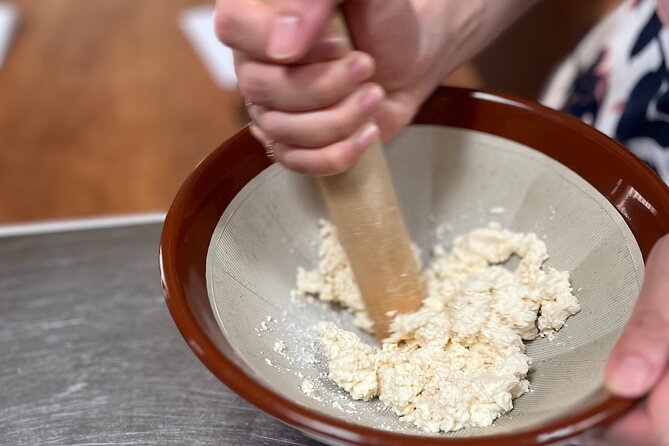
The course also includes oboro-tofu, freshly made soft tofu. That is likely to be one of the most distinctive parts of the class because you are working with tofu in a fresh, delicate form rather than only using a packaged block.
You can choose tofu miso soup or clear soup. The clear soup may suit you if you prefer to avoid miso or want to compare a different Japanese soup style. Since the class centers on tofu, this course may appeal to vegetarians, but the supplied information does not state that every ingredient is vegetarian, so ask Morimi about your dietary needs before booking.
The sushi course keeps the menu focused
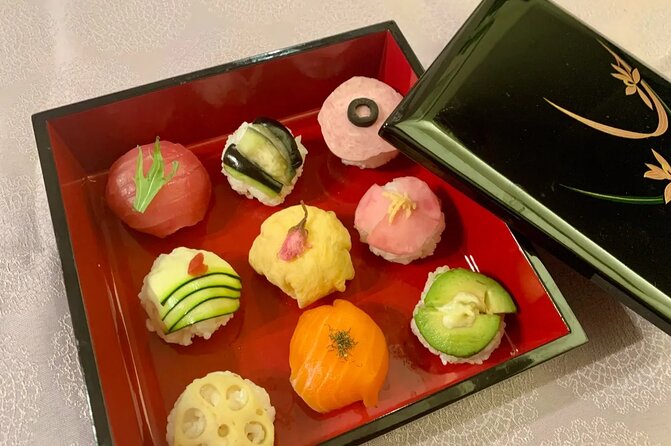
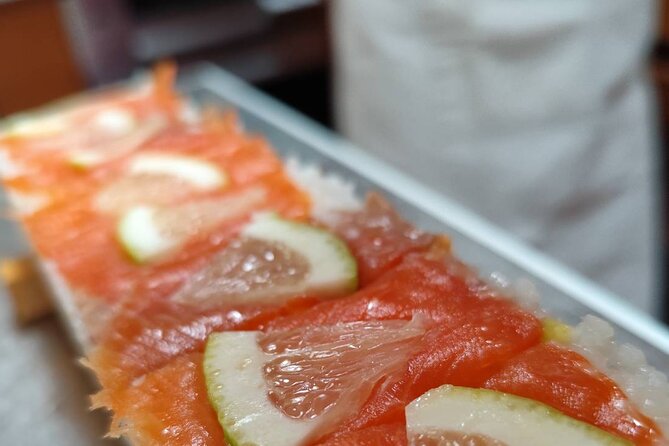
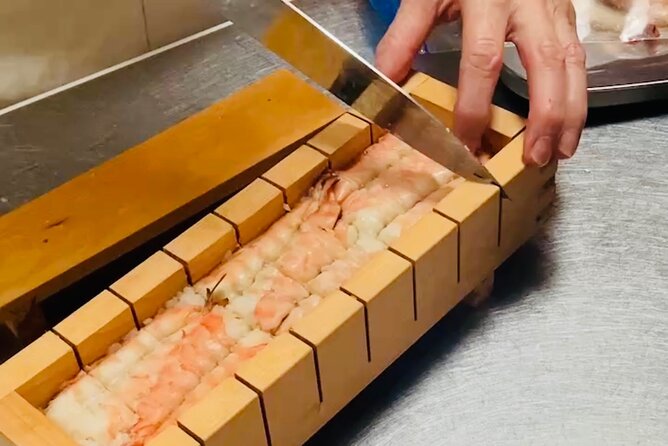
The sushi course is the most specialized option. You prepare six pieces of temari sushi and oshi sushi, then make tofu miso soup or clear soup.
Temari sushi are rounded, ball-shaped pieces. Oshi sushi is pressed sushi, formed by pressing rice and toppings into shape. Both give you something different from the long, familiar rolls often associated with sushi classes.
This menu makes sense if sushi is the main reason you want a cooking lesson. It keeps the preparation centered on shaping, pressing, rice, and toppings rather than spreading your attention across several unrelated dishes.
The trade-off is variety. Compared with the basic course, you will not prepare chicken karaage, omelet, stir-fried vegetables, or several tofu dishes. You also should not assume that every sushi topping or seasoning is automatically gluten-free. The class is designed to address those concerns, but ingredient checking remains part of the lesson.
The choice between miso soup and clear soup gives you a small amount of flexibility. If you are particularly cautious about seasonings, discuss the soup and sushi ingredients with Morimi before the class begins.
Other private tours in Tokyo




Seasonal sweets add a Japanese finish
You can also choose an optional Japanese sweet. The choice changes with the season:
- Spring brings strawberry daifuku, mochi filled with sweet red bean paste and strawberry.
- Summer brings chilled sweet red bean soup with shiratama dumplings.
- Autumn brings chestnut yokan, a sweet bean jelly.
- Winter brings shiratama zenzai, sweet red bean soup with rice flour dumplings.
These are not generic Western desserts added to the end of lunch. They introduce classic Japanese ingredients such as red beans, mochi, rice flour, chestnuts, and seasonal fruit.
The seasonal timing also gives the class a small connection to Japanese food culture. If you have a preference, check what is available for your visit before you book. The sweets are optional, so the main class does not depend on choosing one.
Morimi’s teaching style is personal and clear
Morimi leads the class, and English is available. Her English has been described as very good, even though she has worried about it herself. That matters in a lesson built around ingredient labels and dietary safety, where clear questions are more important than polished presentation.
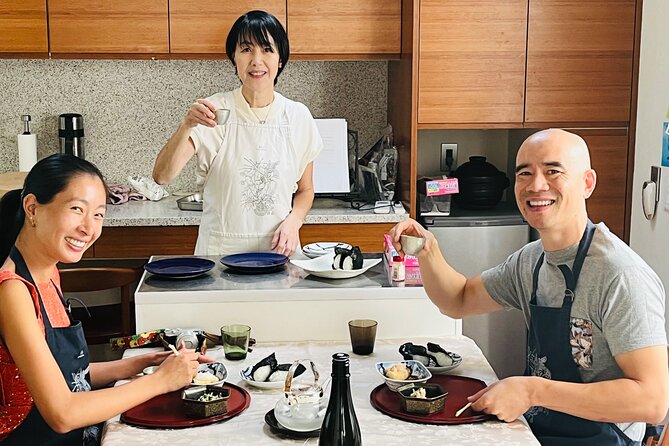
You should expect an instructor who explains how to adapt traditional ingredients and lets you try the cooking yourself. This is not a demonstration where you sit and watch a professional do everything. The point is to prepare the dishes, then taste them together.
The private format makes the lesson especially suitable for a family, couple, or small group with different cooking abilities. One person can ask about celiac concerns while another works on shaping onigiri or rolling the omelet. A beginner should not feel out of place. The class is designed to teach techniques, not assume that you already cook Japanese food.
The strongest praise connected with this experience centers on three things: Morimi’s kind and welcoming manner, the large amount of food, and the fact that even an inexperienced cook could prepare delicious dishes. That gives you a useful expectation. Come hungry, and do not treat the class as a tiny tasting session.
What you take home besides lunch
Lunch is included, but the recipes may be the most useful takeaway. You receive recipes after the class, which gives you a way to repeat the dishes at home rather than letting the meal remain a one-day memory.
The label-reading advice may prove even more valuable. Japanese supermarkets and restaurant menus can be difficult to interpret when you are avoiding gluten. Learning which seasonings, coatings, processed foods, and noodles need extra attention gives you a better base for future meals in Japan and in your own kitchen.
You also gain a framework for building a gluten-free Japanese menu. Onigiri can serve as a staple, tofu and vegetables can add texture and protein, soup can round out the meal, and carefully checked seasonings can provide the familiar Japanese flavor you may otherwise miss.
For people with celiac disease, this is the sort of information worth discussing directly with Morimi before arrival. The class is specifically presented as gluten-free, but individual medical needs can vary. Ask about your concerns at booking rather than waiting until the cooking starts.
Is $84.54 a fair price?
At $84.54 per person, the class is not the cheapest way to eat lunch in Tokyo. It is also more than a short cooking demonstration. You receive about three hours of instruction, a private class, a full lunch, several dishes, recipe guidance, and practical information about gluten-free Japanese ingredients.
The value is strongest if you have celiac disease, a gluten allergy, or a close interest in cooking. A regular restaurant meal may cost less, but it will not teach you how to check soy sauce, miso, mirin, fried coatings, fish cakes, and noodles. A standard cooking class may offer more menu choices, but it may not address gluten with the same care.
The private format also matters for the price. You are paying for attention directed to your group, rather than a seat in a large class. If several people attend together, the lesson can become a shared activity as well as a meal.
This experience is commonly booked about 70 days ahead. That suggests you should plan early, especially if your Tokyo dates are fixed or you need a particular seasonal sweet. Confirmation arrives within 48 hours of booking, subject to availability, so do not treat the reservation as final until it is confirmed.
Who should book this cooking class?
I would recommend it most strongly to:
- People with celiac disease or gluten allergies who want a careful introduction to Japanese food.
- Families who enjoy cooking together and want a private activity.
- Beginners who would like hands-on instruction without a large class.
- Visitors who want recipes they can use after returning home.
- Sushi fans choosing the focused sushi course.
- Anyone curious about tofu, Japanese home cooking, and seasonal sweets.
It may be less suitable if you want a general Tokyo sightseeing experience, a market visit, or a class centered on restaurant-style presentation. The activity stays focused on cooking and eating at the meeting point.
It is also worth checking the menu before booking if you have other allergies, follow a vegetarian diet, or need to avoid particular ingredients. The provided choices are detailed for gluten-free cooking, but they do not list every possible dietary substitution.
Cancellation is free if you cancel at least 24 hours before the 11 a.m. start time. Changes or cancellations inside that window are not accepted for a refund, and the cut-off uses Tokyo local time.
Should you book Morimi’s gluten-free class?
Book it if you want more than a safe meal. The real strength is practical knowledge, from checking Japanese labels to preparing familiar dishes with gluten-free ingredients.
Choose the basic course for the widest look at Japanese home cooking, the tofu course for fresh tofu and plant-based dishes, or the sushi course if shaping temari and pressed sushi is your main goal. Add the seasonal sweet if you want a fuller meal and a taste of Japanese dessert traditions.
The class asks for about three hours and requires planning your route to Meidaimae Station. In return, you get a private lesson, lunch, recipes, and a better understanding of how to eat and cook Japanese food without relying on guesswork. For a gluten-free visitor, that is a solid use of a Tokyo morning.
FAQ
Where does the gluten-free cooking class take place?
The class meets at Meidaimae Station, at 2 Chome-45 Matsubara, Setagaya City, Tokyo 156-0043, Japan.
What time does the class start?
The class starts at 11 a.m.
How long does the experience last?
The cooking class lasts approximately three hours.
Is the activity private?
Yes. Only your group participates in the activity.
Is transportation included?
Private transportation is not included. Pickup is offered, and the meeting point is near public transportation.
What cooking menus can I choose from?
You can choose a basic course, a tofu course, or a sushi course.
Is lunch included?
Yes. Lunch is included in the experience.
Are Japanese sweets available?
Yes. Optional sweets are available by season. Choices include strawberry daifuku in spring, chilled sweet red bean soup with shiratama dumplings in summer, chestnut yokan in autumn, and shiratama zenzai in winter.
Can I cancel for a full refund?
Yes. You can cancel at least 24 hours before the start time for a full refund. Cancellations or changes made less than 24 hours before the start time are not accepted for a refund.
More Cooking Classes in Tokyo
More Private Tours in Tokyo
More Cooking Classes in Tokyo
More tours in Tokyo we've reviewed










Cooking Classes, compared.
 ★ 5.0Ramen & Gyoza Cooking Class in Tokyo with Local Supermarket VisitFrom $122
 ★ 5.0Ramen and Sushi Cooking Class with Sake Pairing Set in TokyoFrom $79
 ★ 4.9Tokyo: Wagyu and 7 Japanese Dishes Cooking ClassFrom $673 hours
 ★ 5.0Tokyo Washoku 4-hour Cooking Class: From Market to TableFrom $79
 ★ 5.0Professional Ramen & Gyoza with Ramen Chef in a restaurant!From $159
 ★ 5.0Small-Group Wagyu Beef and 7 Japanese Dishes Tokyo Cooking ClassFrom $72