
Reviewed · SUSHI MAKING CLASSES
Small Group Sushi roll and Tempura Cooking Class in Nakano
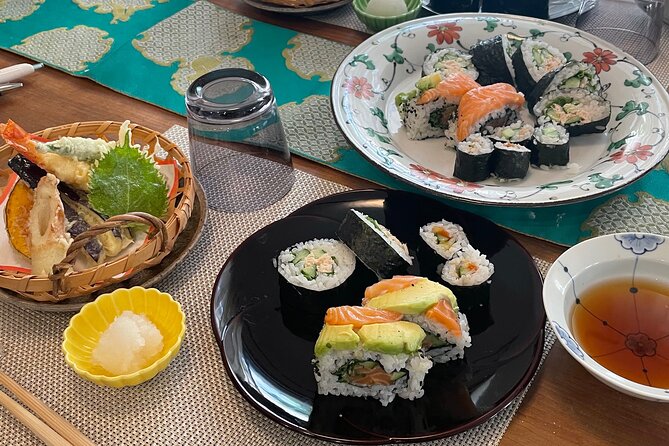
Tokyo food is easy to admire from a restaurant table. This class lets you get your hands into the process. In a private home near Nakano, host Eri explains rice, dashi, and nori before helping you prepare three types of sushi rolls and light, crisp tempura.
I like the personal setting, where you see a slice of everyday Tokyo life, and the practical format, which gives you techniques and recipes to use after your trip. The chance to choose ingredients for both sushi and tempura also makes the meal more flexible. The main consideration is the price: at $160 per person for about two and a half hours, it is a special-interest activity rather than a cheap meal.
In This Review
- Key points at a glance
- Meeting Eri at Asagaya Station
- A Tokyo home instead of a restaurant table
- Japanese ingredients before the cooking begins
- Rolling three kinds of sushi
- Tempura with a crisp, fluffy finish
- Sitting down for the meal
- How much value does $160 provide?
- Who will enjoy this class most?
- Timing, confirmation, and cancellation
- Should you book the Asagaya sushi and tempura class?
- FAQ
- Where does the cooking class meet?
- Where does the activity end?
- How long does the class last?
- Is the class private?
- What will I learn to cook?
- Can the menu accommodate dietary restrictions?
- How much does the experience cost?
- Can I cancel for a refund?
Key points at a glance
- A home kitchen near Asagaya: You meet Eri at NewDaysJapan outside the JR Asagaya Station ticket gates, then continue to the cooking setting.
- Three sushi rolls: You learn how to season sushi rice, choose fillings, roll neatly, and cut the finished rolls cleanly.
- Tempura from scratch: You prepare seafood and vegetables with guidance, aiming for a fluffy inside and crisp coating.
- A private class: Only your own group participates, making it easier to ask questions and work at a comfortable pace.
- Recipes for home: The class is built around skills you can repeat after returning home, not just watching a demonstration.
- Dietary flexibility: Adjustments can be made for vegetarian diners and other dietary restrictions for both dishes.
Meeting Eri at Asagaya Station
The class begins at NewDaysJapan, located outside the ticket gates on the second-floor concourse of JR Asagaya Station in Suginami City. The listed address is 3-chome Asagayakita, with the location identified in Japanese as 南3361. This is an important detail because Tokyo station areas can have several exits and large concourses.
Eri provides meeting instructions before the class and is expected to meet you on time. One practical tip: keep the meeting point details available on your phone, especially if you are arriving during a busy part of the day. A mobile ticket is included with the booking, and the activity is close to public transportation.
The class ends back at the meeting point. The exact route from the station to Eri’s home is not specified, so allow yourself enough time to find NewDaysJapan rather than rushing in at the last minute.
A few more Tokyo tours and experiences worth a look

A Tokyo home instead of a restaurant table
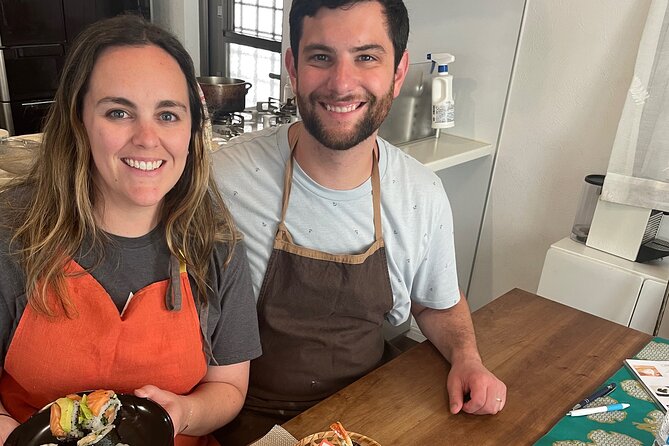
The setting is one of the strongest reasons to book this class. You are welcomed into Eri’s home, where the meal takes place in a Japanese-style setting. That gives the experience a more personal feel than sitting at a sushi counter and watching someone else work.
You will set the table, say itadakimasu, and eat the food you have prepared. The ritual is simple, but it gives the meal a clear rhythm: learn, make, set the table, and enjoy. You are not only tasting Japanese food. You are seeing how a home meal can be organized around shared preparation.
A home class also means the tone is likely more conversational. Eri’s communication before the class was praised for being clear, and her warm welcome helped create an easy start. She also responded personally after the class, encouraging her student to make sushi and tempura at home with family.
Do keep your expectations sensible. This is not a professional restaurant kitchen or a formal culinary school. The reward is personal instruction and local connection, not restaurant-level staging.
Japanese ingredients before the cooking begins
The lesson starts with an explanation of key ingredients, including rice, dashi, and nori. This opening matters because sushi and tempura can seem simple on a plate. Their flavor depends heavily on small choices made before the rolling and frying begin.
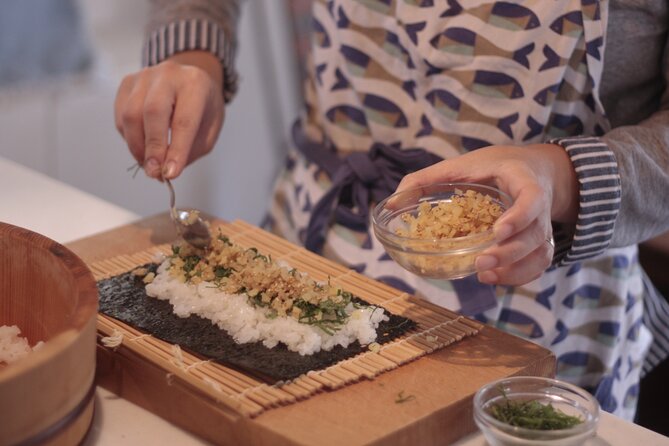
Sushi rice is the first major lesson. Eri shows you tips for making the rice tasty, then explains how to roll it neatly. You will also learn how to cut the rolls so the pieces look attractive rather than crushed or uneven.
Dashi, a Japanese stock, helps place the dishes in a broader food context. Nori, the dried seaweed sheet used around or within sushi rolls, is another ingredient that can be easy to overlook when you only order prepared sushi. Learning what these ingredients do gives you a better chance of repeating the recipes at home.
The class does not present cooking as a mystery. You receive explanations, then practice with Eri’s support. That balance is useful for beginners who want to try the techniques themselves but may not know how to correct a loose roll, poorly seasoned rice, or an awkward cut.
Rolling three kinds of sushi
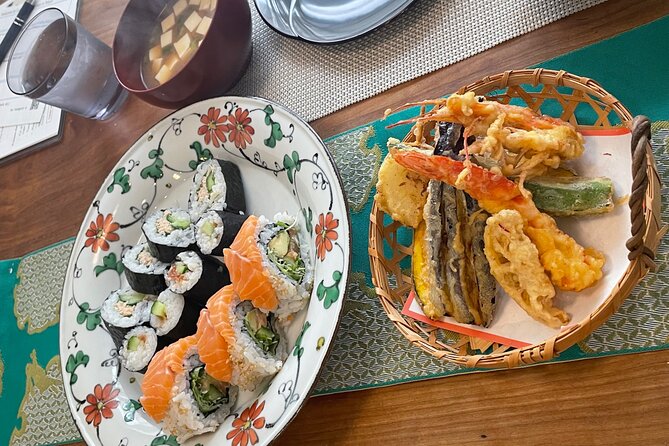
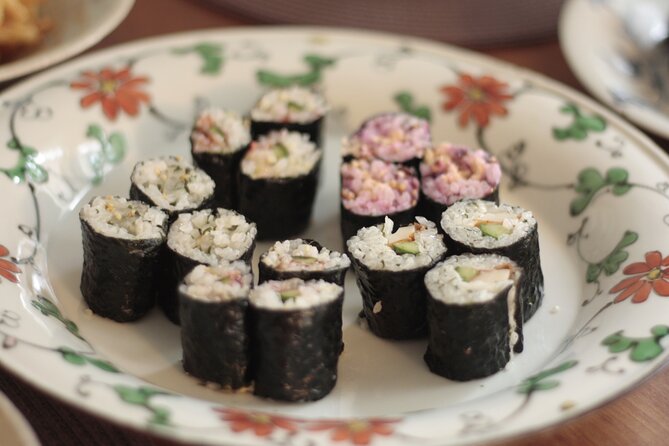
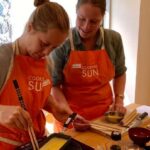
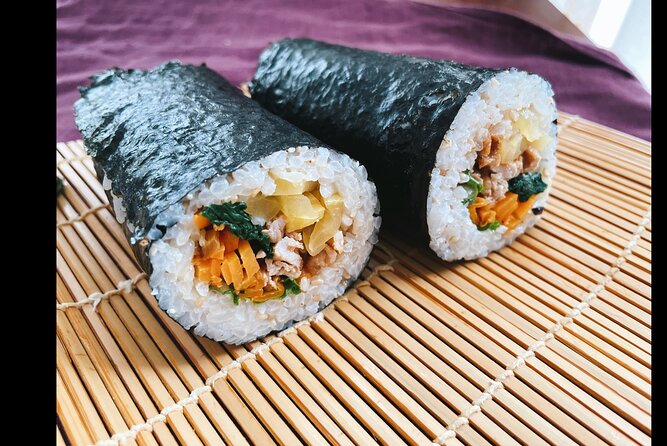
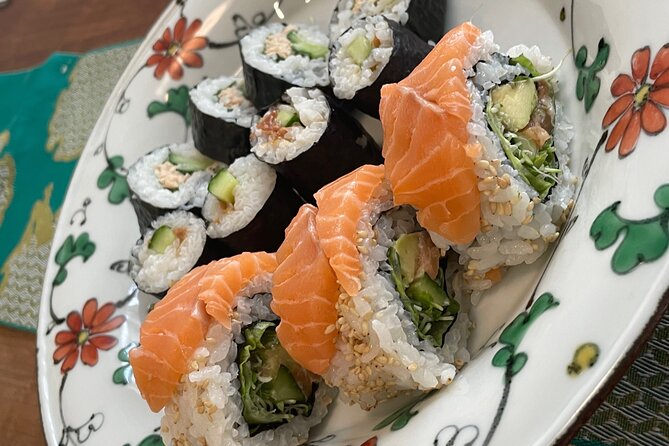
The sushi portion is hands-on. You choose what to use for your rolls and decide how to roll them, with Eri guiding you through the process. The class covers three kinds of sushi rolls, giving you more variety than a single basic maki exercise.
The best part is the combination of choice and structure. You are not simply copying one fixed recipe from start to finish. You get room to select fillings while still learning the basic mechanics of rice placement, rolling pressure, and cutting.
Rolling sushi takes a little coordination. Too much filling can make the roll difficult to close. Too much pressure can push the rice out, while too little pressure can leave a loose roll. Eri’s support is especially useful here because you can correct your technique while the roll is still in your hands.
The cutting lesson is worth attention. Even a tasty sushi roll can look messy if the knife work is rough. Eri shows you how to cut beautifully, helping you produce pieces that are easier to serve at home.
You should not expect a long lesson on every style of Japanese sushi. The focus is on rolls, rice, fillings, and practical technique. For someone who wants to understand the basic construction of home sushi, that is a sensible use of the available time.
Tempura with a crisp, fluffy finish
Tempura brings a second set of skills. You can choose seafood and vegetables, then prepare them with Eri’s help. The stated aim is a fluffy and crispy result, with a savory flavor that has made this part popular with many people who take the class.
The value here is learning the process rather than ordering a plate of assorted pieces. Tempura batter, ingredients, and frying all affect the final texture. Even without a detailed minute-by-minute cooking schedule, the class gives you a chance to work through the dish alongside Eri.
The choice of ingredients is helpful if your group has different tastes. One person may prefer vegetables, while another may want seafood. Dietary adjustments can also be made for vegetarians and other restrictions for both the sushi rolls and tempura. You should still explain your needs when booking or before the class so the arrangements can be made properly.
There is a practical limit to what a two-and-a-half-hour class can cover. You will learn the main method and practice it, but you should not expect advanced restaurant frying techniques or a large survey of every tempura style in Japan. The strength is a clear, approachable introduction.
Other cooking classes in Tokyo

Sitting down for the meal
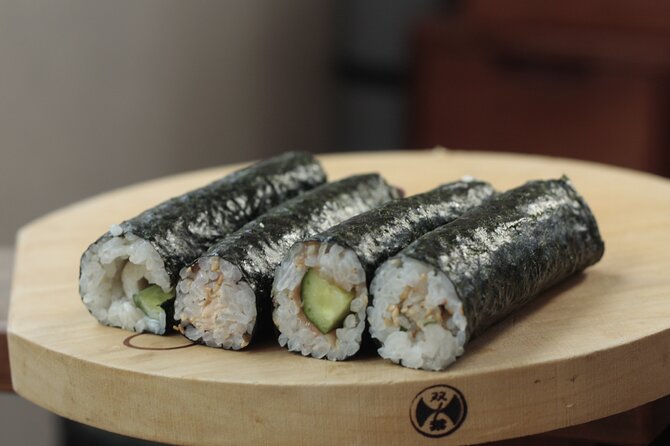
After the preparation, you set the table in Japanese style and say itadakimasu before eating. This shared meal is more than a final reward. It lets you see how the dishes work together and gives you time to talk with Eri about the food.
Because you have made the sushi and tempura yourself, you can pay attention to details that are easy to miss in a restaurant. You might notice the texture of the rice, the balance of a filling, or the difference between a crisp piece of tempura and one that has softened.
The meal also gives the class a relaxed ending. You are not being hurried from one station to another. In a private activity, your group can ask questions as they come up and spend more time on a difficult step if needed.
Still, this is not a restaurant tasting menu. The food is the result of your group’s work, so the final appearance and texture may vary. That is part of the point. You leave with a better sense of what it takes to prepare these dishes, including the small mistakes that a professional kitchen hides.
How much value does $160 provide?
The $160 price is high for a meal, but that is the wrong comparison. You are paying for about two and a half hours of private instruction, access to a home setting, ingredient explanations, hands-on preparation, and the meal at the end.
The price makes more sense for people who value personal attention. A private class means you are not sharing the kitchen with an unrelated group, and Eri can support your group directly. If you have always wanted to make sushi but felt unsure about rice or rolling, that guidance has real value.
It is also more useful than a one-time demonstration because you practice the techniques. You can leave with recipes and try the dishes at home. That future use helps justify the cost, especially if you are planning a food-focused Tokyo trip or want a memorable activity for a family or small group.
Group discounts are available, though the exact discount is not specified. Check the final price for your party before booking. If your main goal is simply to eat sushi and tempura, a restaurant will cost less. If you want to understand how the dishes are made and spend time in a local home, this class offers something a restaurant cannot.
Who will enjoy this class most?
This experience suits curious eaters, first-time home cooks, and people who prefer active activities over sightseeing from a distance. It also works well for families or friends who want a shared project during a Tokyo stay.
You do not need to arrive as an expert. The format begins with basic ingredients and moves into guided practice. Eri’s support is useful if you are nervous about rolling sushi or cutting it neatly.
The class is also a good match for anyone who wants to recreate Japanese food at home. Recipes and practical tips give the experience a life beyond the trip. You can try the rolls again with your family, as Eri specifically encourages.
It may be less suitable if you want a polished, high-end culinary performance, a large professional kitchen, or a broad tour of Nakano’s food scene. This is a focused lesson in two dishes, held in a private home.
Timing, confirmation, and cancellation
The activity lasts approximately two hours and 30 minutes. That is enough time for an ingredient introduction, sushi preparation, tempura preparation, and the shared meal, but the pace may feel full if your group asks many questions or needs extra help.
Confirmation is normally received when you book. If you book within nine hours of the start time, confirmation is sent as soon as possible and depends on availability. The activity is confirmed as a private tour, so only your group participates.
Free cancellation is available if you cancel at least 24 hours before the local start time. Cancellations within 24 hours are not refunded, and changes made during that period are not accepted. This rule is worth noting if your Tokyo schedule is still shifting.
Should you book the Asagaya sushi and tempura class?
Book it if you want to do more than order familiar Japanese dishes. The home setting, Eri’s personal guidance, three sushi rolls, and hands-on tempura work give you a practical look at Japanese cooking. The recipes and techniques are useful long after your flight home.
Think twice if $160 feels too high for a cooking lesson or if you mainly want a large meal. The price rewards participation, not quantity. You are paying for time, instruction, and a private setting.
For a small group that enjoys food and wants a personal Tokyo memory, I would put this class on the shortlist. Arrive at the Asagaya meeting point prepared, share any dietary needs in advance, and treat the meal as the final part of the lesson rather than the only goal.
FAQ
Where does the cooking class meet?
The meeting point is NewDaysJapan outside the JR Asagaya Station ticket gates, on the second-floor concourse in Asagayakita, Suginami City, Tokyo.
Where does the activity end?
The activity ends back at the meeting point.
How long does the class last?
The class lasts approximately two hours and 30 minutes.
Is the class private?
Yes. Only your own group participates in the activity.
What will I learn to cook?
You will learn to make three types of sushi rolls and seafood and vegetable tempura.
Can the menu accommodate dietary restrictions?
Yes. Adjustments can be made for vegetarian diners and other dietary restrictions for both the sushi rolls and tempura.
How much does the experience cost?
The listed price is $160 per person. Group discounts are available, though the exact discount is not specified.
Can I cancel for a refund?
You can receive a full refund if you cancel at least 24 hours before the experience start time. Cancellations and changes made within 24 hours are not accepted for a refund.
More Cooking Classes in Tokyo
More Cooking Classes in Tokyo
More Sushi Making Classes in Tokyo
More tours in Tokyo we've reviewed








Sushi Making Classes, compared.
 ★ 5.0Sushi Making Tokyo Roll and Authentic Japanese Sushi ClassFrom $59
 ★ 4.9Tokyo: Roll and Authentic Sushi Making Class in AsakusaFrom $581h 40m
 ★ 5.0Make Sushi and Create Unforgettable Memories in TokyoFrom $79
 ★ 4.9Tokyo: Sushi Making Class in a Happi Coat near a Famous SpotFrom $421h 30m
 ★ 5.0Tokyo Sushi Making Class in Tsukiji with Professional ChefFrom $49
 ★ 5.0Tokyo Night Foodie Tour in Shinjuku – Seasonal Sushi, Wagyu BeefFrom $111