
Reviewed · ASAKUSA TOURS
Get to know the secret of Asakusa! Shrine and Temple Tour
Asakusa’s best secret is not really a secret at all: it is the string of smaller shrines and temples beyond famous Senso-ji. This private tour connects seven places tied to the Seven Gods of Fortune, giving you a much fuller picture of old Asakusa than a quick visit to Kaminarimon and Nakamise Street.
I like the private format, since your guide can adjust the pace and answer your questions without a large group slowing things down. I also like the stamp-collecting idea, a simple free souvenir that turns the religious sites into a personal journey.
The main catch is the amount of walking. Five and a half hours, nine listed stops, and several transportation segments make this a full morning or afternoon, not a relaxed temple photo stop. Costs at the teahouse, for food, transport, and optional activities also need careful checking before you book.
In This Review
- Key points to know before you book
- Why this private Asakusa route is different
- The first three stops: fortune, cats, and Edo-era design
- Honryuin Matsuchiyama Shoden
- Imado Shrine
- Hashiba Fudoson
- Lunch at Ishihama Saryo Raku
- Yoshiwara and Otori: the route’s more unusual religious sites
- Yoshiwara Shrine
- Otori Shrine
- Asakusa Shrine and Senso-ji bring the big sights
- Asakusa Shrine
- Senso-ji Temple
- Nakamise Shopping Street and the end of the walk
- What the private format is worth
- Who will enjoy this Asakusa tour most
- Should you book the Seven Gods of Fortune tour?
- FAQ
- How long does the Asakusa shrine and temple tour last?
- Is this a private tour?
- How many shrines and temples are included?
- Where does the tour start?
- Does the tour include admission fees?
- Is lunch included?
- Is the teahouse open every day?
- Can I cancel for a full refund?
Key points to know before you book
- Seven lucky deities: Visit the shrines and temples associated with the Seven Gods of Fortune and collect stamps along the route.
- Private guiding: Only your party takes part, with guides such as Kazumi, Nanako, Nobu, Eric, and Harada Taketsugu assigned on different departures.
- A wider Asakusa: The route reaches quiet religious sites, including Hashiba Fudoson and Yoshiwara Shrine, before finishing near Senso-ji and Nakamise.
- Local food stop: Ishihama Saryo Raku offers dishes such as tempura bowls, soba, and sweets, but meal costs are not included.
- Flexible pacing: Guides have adjusted routes, helped with photos, and tailored the experience to requests.
- Bring stamina: The tour lasts about 5 hours 30 minutes and includes considerable walking, with some public transport costs paid by you.
Why this private Asakusa route is different
Many first visits to Asakusa follow a short path from Kaminarimon Gate through Nakamise Shopping Street to Senso-ji Temple. That route gives you the district’s famous sights, but it leaves out much of the quieter neighborhood and the beliefs that still shape local worship.
This tour takes a broader view. The Seven Gods of Fortune tradition links different temples and shrines to blessings such as health, marriage, business success, artistic ability, protection, and good fortune. You visit each site, hear the local story, and collect a stamp as a record of the stop.
The private setup matters here. Religious sites can be hard to understand if you only see a gate, incense burner, or statue without context. A guide can explain what you are looking at and help you move respectfully through each place. Guides named in the tour feedback include Nanako, Harada Taketsugu, Kazumi, Nobu, Eric, and Tom Harada. The assigned guide will vary, but the strongest pattern is clear: the experience depends heavily on having a good interpreter of the area.
I especially value the route’s mix of major sights and modest neighborhood temples. Senso-ji is the grand finale, but the smaller stops are where the tour feels less like a standard sightseeing circuit.
A few more Tokyo tours and experiences worth a look


The first three stops: fortune, cats, and Edo-era design
Honryuin Matsuchiyama Shoden
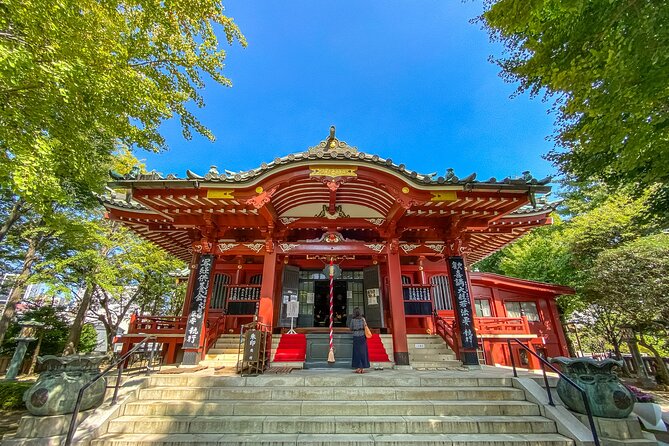
The tour begins at Honryuin Matsuchiyama Shoden, a temple linked with health, good relationships, marriage, and prosperous business. Bishamonten, one of the Seven Gods of Fortune, is worshipped here.
You spend about 25 minutes at the temple, enough time for an explanation, a look around, and stamp collecting without making the stop feel rushed. This is a useful opening because it introduces the pattern followed throughout the day: each place has its own deity, visual symbols, and hopes attached to it.
Imado Shrine
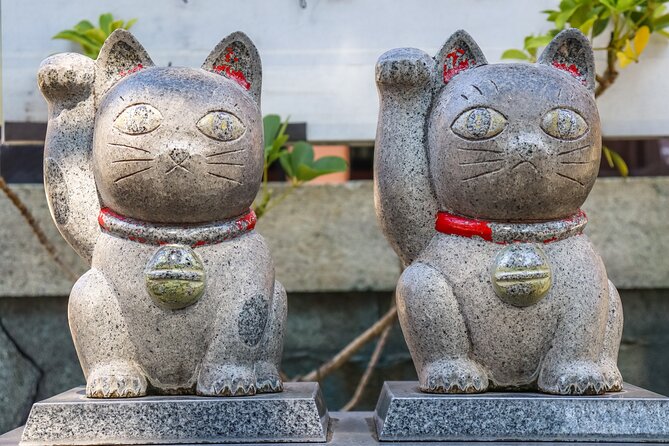
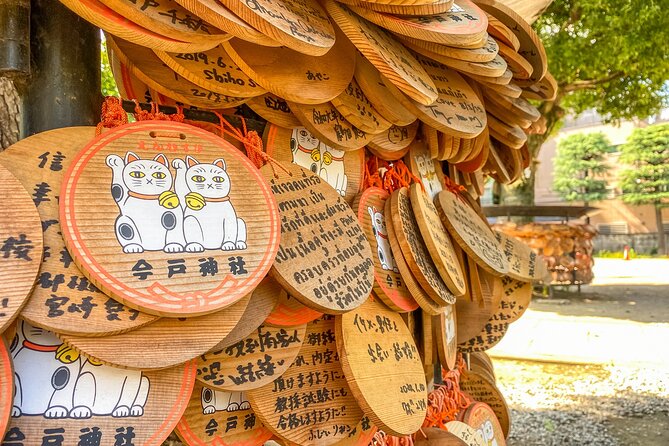
Imado Shrine takes about 20 minutes and is one of the route’s most distinctive stops. It is associated with the origin of Maneki Neko, the familiar beckoning cat figure often connected with good fortune and business success.
You will find Maneki Neko throughout the shrine, giving it a strong visual identity. The shrine is also linked with marriage luck and attracts many women seeking help with relationships. Even if you are not visiting for a specific blessing, the site gives your guide a natural way to explain how popular religious customs fit into daily Japanese life.
This is one of the better stops for photographs, though the private format is more valuable than simply having time to take pictures. A guide such as Kazumi may also help with group photos, something that can be surprisingly useful when you are traveling as a couple or family.
Hashiba Fudoson
Hashiba Fudoson is a small, simple temple where you can see the beauty of Edo-period architectural style. The visit lasts about 15 minutes, making it the shortest stop on the route.
The temple is associated with Hotei, the cheerful deity of good fortune and good relationships. Do not expect the visual drama of Senso-ji here. Its appeal is scale and atmosphere. A short explanation from your guide can make a plain-looking temple much more meaningful than it might seem at first glance.
This stop also shows why sturdy shoes matter. The route moves through several parts of Asakusa rather than keeping you on one compact plaza.
A few more Tokyo tours and experiences worth a look
Lunch at Ishihama Saryo Raku
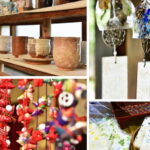
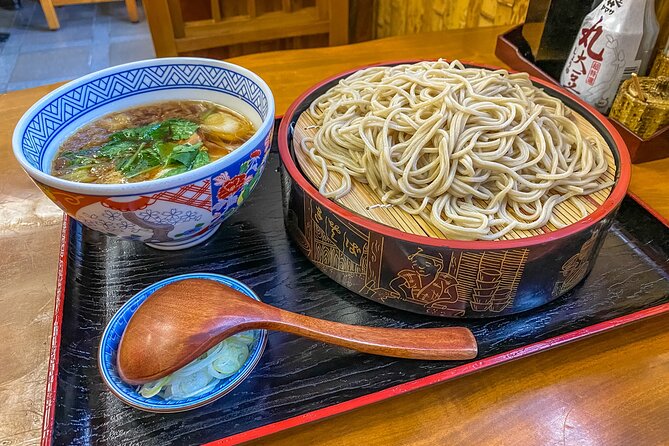
The scheduled food break is about 40 minutes at Ishihama Saryo Raku, a restaurant within the grounds of Ishihama Shrine. The menu includes tempura bowls, soba, and sweets, giving you both proper meal choices and lighter options.
A local restaurant stop helps break up the religious visits. It also gives you a chance to sit down, since the rest of the outing involves walking between sites. One person described lunch at a local restaurant as a highlight, and that fits the practical value of this pause.
Food and drink are not included. The supplied cost details are confusing: one section estimates meal costs at 1,000 yen per person, while another lists an admission charge of 4,800 yen for Raku Ishihama Teahouse. You should confirm exactly what the 4,800 yen refers to before departure. It may be a separate experience or a listed cost rather than an ordinary meal charge, but the information provided does not make that clear.
Raku is closed on Wednesdays. On that day, the guide will take you to an alternative location. If the teahouse is important to you, avoid Wednesday or ask in advance what replaces it.
Yoshiwara and Otori: the route’s more unusual religious sites
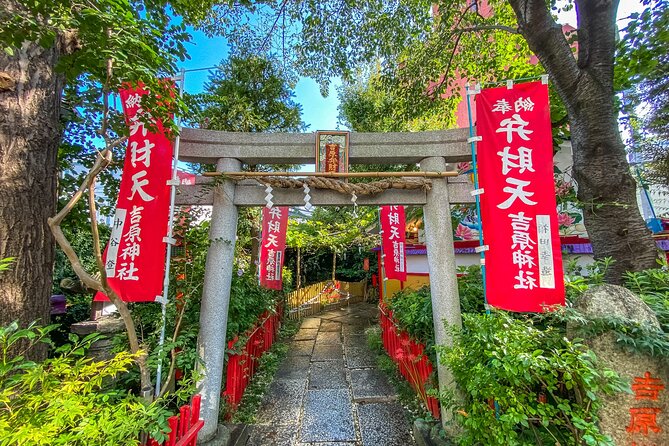
Yoshiwara Shrine
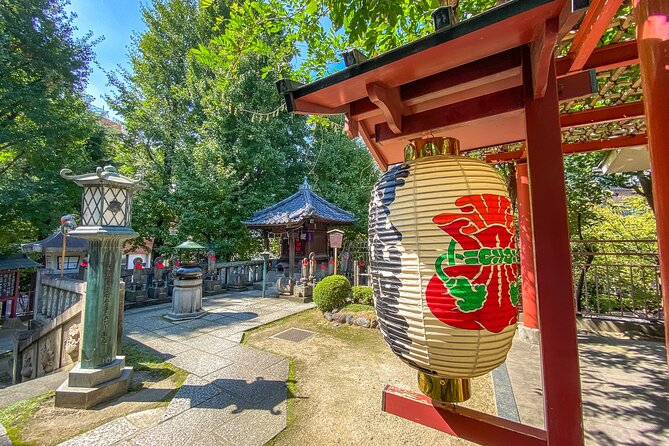
Yoshiwara Shrine is associated with Benzaiten, the only female deity among the Seven Gods of Fortune. Benzaiten is linked with artistic ability and marriage, as well as wishes connected with women.
You spend about 20 minutes here. The stop adds a different angle to the tour because it is not only about wealth or business luck. Your guide can help connect the deity’s role with the wishes people bring to shrines today.
This is also a reminder that the route is about living customs, not only old buildings. You are not simply ticking off monuments. You are seeing how specific hopes, symbols, and rituals are attached to particular places.
Otori Shrine
Otori Shrine takes another 20 minutes. It is known for its large decorative rakes, sold during the Rooster Market, a festival connected with good fortune and business success.
The shrine’s symbol is Okame-san, a mask from Japanese Noh theater. That detail gives your guide plenty to explain, especially if you are interested in how theater, folk belief, and seasonal events overlap in Japan.
The large rakes are the kind of detail that can be easy to miss on your own. They also make this a good stop for people who enjoy objects with a story behind them, rather than only grand architecture.
Asakusa Shrine and Senso-ji bring the big sights
Asakusa Shrine
Asakusa Shrine is closely connected with Senso-ji and is dedicated to Ebisu, one of the Seven Gods of Fortune. The visit lasts about 15 minutes.
Because Asakusa Shrine sits near the district’s best-known temple, it is easy for independent visitors to blur the two together. Your guide can explain the difference between a Shinto shrine and a Buddhist temple, along with the relationship between these two important sites.
This is one of the tour’s most useful educational moments. You see two major religious traditions in the same district, but they are not interchangeable. A clear explanation can make the rest of your time in Japan easier, since you will recognize basic features at other shrines and temples.
Senso-ji Temple
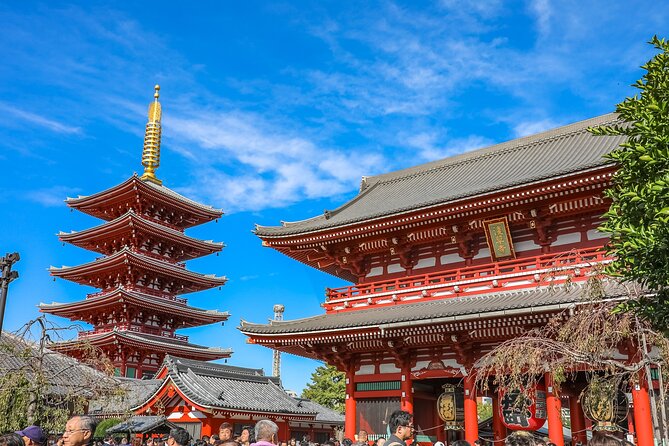
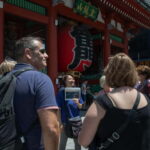
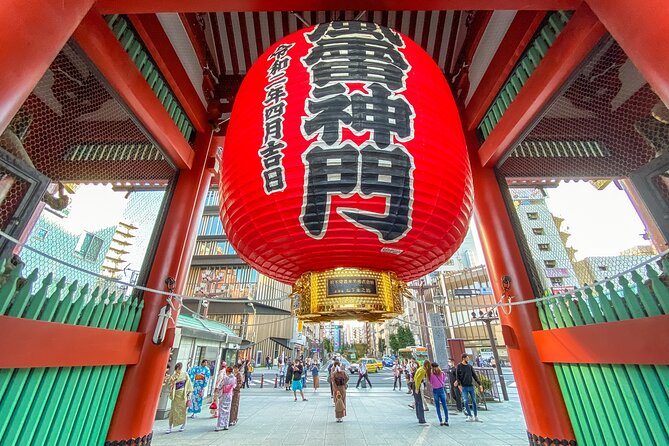
Senso-ji receives about 30 minutes and provides the route’s most famous view: the large red lantern at Kaminarimon Gate and the vermilion temple buildings beyond it.
Senso-ji is considered Tokyo’s oldest temple and is one of Asakusa’s essential sights. It can be crowded, so having a guide who knows the route and can set a sensible pace is useful. One guide, Nobu, began with the history and meaning of Kaminarimon before continuing through the temple area. That approach gives the famous entrance more meaning than a quick photograph.
You may also encounter ceremonies during the visit, depending on the day and timing. The tour cannot promise a particular ceremony, but the schedule allows enough time to see more than the gate alone.
The 30-minute stop is enough for orientation and key sights, but not for a slow, detailed exploration of every corner. If Senso-ji is your main interest, plan to return independently after the tour.
Nakamise Shopping Street and the end of the walk
The final listed stop is Nakamise Shopping Street, which takes about 20 minutes. This is Asakusa’s busiest shopping stretch, lined with souvenir shops and food stalls.
Your guide can point out recommended places for gifts and snacks. That is more useful than wandering without a plan, especially if you want traditional souvenirs but are unsure which items are practical or genuine. The short stop also gives you a chance to note shops you may want to revisit later.
The meeting information needs attention. The activity is described as starting at Asakusa Station, at 1-chome-1-3 Asakusa, and ending back at the meeting point. Elsewhere, the details say the finishing point is different from the starting point and that you should tell the guide if you want to change it. Confirm the exact ending location when you book. That small check can save trouble if you have dinner, a train, or another booking afterward.
What the private format is worth
The listed price is $103.92 per person. For a private five-and-a-half-hour tour, that can be reasonable if you value personal attention and cultural explanation. You are not paying only for transport between buildings. You are paying for someone to connect the sites, explain the Seven Gods of Fortune, handle the pace, and adapt the route to your interests.
The private format is especially useful for families, couples, and small groups who want to ask questions. Guides have adjusted routes to requests, helped with photographs, and offered practical advice such as buying drinks or snacks before setting out.
The price does not cover all on-the-ground spending. The stated estimate is 4,800 yen per person, with transportation listed at 300 yen, meals at 1,000 yen, and optional experiences at 3,500 yen. Admission to the shrines and temples is listed as free. Since the Raku teahouse entry is separately shown as 4,800 yen, ask for a clear cost breakdown before you commit.
Group discounts are available, and the tour is offered with a mobile ticket. Confirmation arrives at booking. Public transport is nearby, and most people can participate, but the walking load remains the main physical consideration.
Who will enjoy this Asakusa tour most
I would choose this experience if you have already seen the basic Asakusa sights and want more context. It also works well as a first visit if you prefer a guide to explain customs rather than simply lead you from one photo stop to another.
It suits you best if you:
- Like local religion, folklore, and traditional architecture
- Want a private guide rather than a fixed large group
- Enjoy collecting small souvenirs such as shrine stamps
- Are comfortable walking for several hours
- Want help with photos, food suggestions, and route changes
- Prefer smaller temples and shrines alongside famous sights
I would hesitate if you have limited mobility, dislike long walks, or want a slow afternoon centered only on Senso-ji. The schedule has nine listed stops, so the day has purpose and momentum. It is not designed for lingering at every site.
Rain does not automatically ruin the outing. The route can continue in wet weather, and one rainy-day visit still covered all the shrines and produced a set of different souvenirs. Still, bring suitable footwear and rain protection if the forecast looks poor.
Should you book the Seven Gods of Fortune tour?
Book it if you want Asakusa explained rather than merely photographed. The strongest reasons are the private guide, the unusual smaller shrines, the Seven Gods of Fortune theme, and the chance to collect stamps as you go.
Before paying, confirm three things: the guide assigned to your date, the exact food and optional costs, and the final meeting location. If you are ready for plenty of walking and want a personal, story-led look at Asakusa, this is a worthwhile use of half a day. If you only need Kaminarimon, Nakamise, and Senso-ji, you can see those on your own for far less.
FAQ
How long does the Asakusa shrine and temple tour last?
The tour lasts approximately 5 hours and 30 minutes.
Is this a private tour?
Yes. The activity is private, and only your party participates.
How many shrines and temples are included?
The route includes seven religious sites connected with the Seven Gods of Fortune, plus the Raku Ishihama Teahouse and Nakamise Shopping Street.
Where does the tour start?
The stated meeting point is Asakusa Station, at 1-chome-1-3 Asakusa, Taito City, Tokyo 111-0032, Japan.
Does the tour include admission fees?
The listed shrines and temples have no admission charge. Costs at visited locations, including food, drinks, transportation, and optional activities, are paid by you.
Is lunch included?
No. The meal at Raku Ishihama Teahouse is not included. The menu includes options such as tempura bowls, soba, and sweets.
Is the teahouse open every day?
No. Ishihama Saryo Raku is closed on Wednesdays. An alternative stop is provided on that day.
Can I cancel for a full refund?
You can cancel at least 24 hours before the local start time for a full refund. Cancellations or changes made less than 24 hours before the start time are not accepted for a refund.
More Temples & Meditation in Tokyo
More Asakusa Tours in Tokyo

More tours in Tokyo we've reviewed





Asakusa Tours, compared.
 ★ 4.8Tokyo: Japanese Dance Cabaret Theater Asakusa-Kaguwa TicketFrom $492 hours
 ★ 4.7Tokyo: Meiji Shrine, Asakusa, Skytree Bus Tour and CruiseFrom $12210 hours
 ★ 4.9Tokyo: Roll and Authentic Sushi Making Class in AsakusaFrom $581h 40m
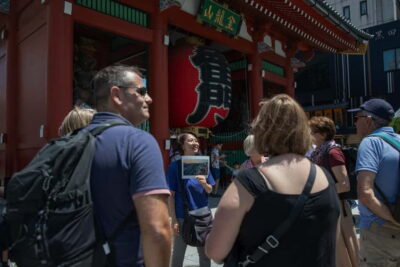 ★ 4.8Tokyo: Asakusa Walking Tour with Sensoji Temple VisitFrom $222 hours
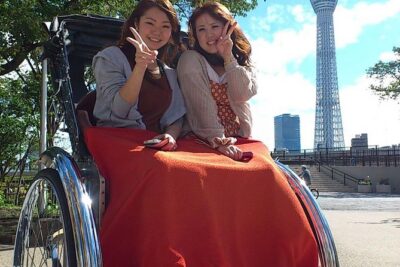 ★ 5.0Tokyo Asakusa Rickshaw TourFrom $42
 ★ 4.5Tokyo Panoramic 1 Day: Meiji Shrine, Asakusa, Odaiba and SKYTREE®From $85