
Reviewed · GUIDED
Private Tokyo with Exceptional Guide Tailored to Your Needs
Tokyo is easiest to enjoy when someone helps you make sense of its size. This private tour lets you build the day around your interests, from Senso-ji and Shibuya Crossing to neighborhood markets, small temples, anime shops, or local food. I like the freedom to choose two or three stops in four hours, or four or five in eight hours.
I also like that you can travel by public transport instead of staying inside a private vehicle. Guides such as Miyuki, Hitomi, Kaz, and Miho have helped visitors learn Tokyo’s train and subway system, which can save money and make the rest of your stay much easier. The main consideration is pace: Tokyo is spread out, and too many distant stops can turn a custom day into a race.
In This Review
- Key points to know before booking
- A private Tokyo day that changes with your priorities
- Four hours or eight hours in a city this large
- Tsukiji Market for food and street life
- Senso-ji and the old streets of Asakusa
- Meiji Jingu, then the energy of Shibuya
- The Imperial Palace area and former Edo Castle
- Akihabara and Tokyo’s pop culture
- Yanaka Ginza and Tokyo’s older neighborhood feel
- Omotesando and Takeshita Street
- Ueno and several more personal choices
- Public transport or private car
- The guides make the custom plan work
- What the $151.54 price really buys
- Practical details and the best match
- Should you book this private Tokyo tour?
- FAQ
- How long does the private Tokyo tour last?
- How many places can I visit?
- Is hotel pickup included?
- Is the tour private?
- Can I use public transportation?
- Is a private car available?
- Is lunch included?
- Are entrance fees included?
- Are public transportation costs included?
- What is the cancellation policy?
Key points to know before booking
- Your day is built around your interests: Choose major sights, shopping, food, museums, anime, gardens, or quieter neighborhoods.
- Hotel pickup makes the first day easier: You meet the guide at your hotel instead of finding a meeting point in an unfamiliar station.
- Public transport is part of the experience: Your guide can show you how to use Tokyo’s trains and subway system for the rest of your trip.
- Guides bring different strengths: Miyuki, Hitomi, Kaz, and Miho are named guides associated with this experience, and past visitors especially valued their communication and flexibility.
- Four hours is selective, eight hours is fuller: You can generally plan two or three places in a half-day, or four or five in a full day.
- Budget for extras: Lunch, public transport, and admission fees are not included in the base price.
A private Tokyo day that changes with your priorities
The great strength here is not a fixed sightseeing route. You tell the guide what matters to you, and the day is shaped around that.
A first-time visitor might choose Meiji Jingu, Senso-ji, the Imperial Palace area, and Shibuya Crossing. A family with a teenager might focus on Akihabara, Takeshita Street, shopping, and a museum. You could also ask for smaller shrines, local food streets, or a neighborhood that most visitors would never reach on their own.
Before the tour, communication through WhatsApp helps you explain your interests and sort out the plan. The guides have also helped with later plans, restaurant ideas, and special activities. One mother and son received help arranging a samurai sword experience and securing difficult Ghibli Museum tickets, though those extras are not part of the standard tour.
The private format matters. You are not waiting for a large group to take photographs or adjusting your day to strangers’ children, shopping habits, or walking speed. If you want more time at a temple, less time at a shopping street, or a meal in a local neighborhood, you can discuss it directly with your guide.
Other guided tours in Tokyo

Four hours or eight hours in a city this large
A four-hour tour works best as an introduction. Plan two or three nearby sights, not a wish list of every famous Tokyo district.
For example, Senso-ji, nearby Asakusa streets, and perhaps Ueno can make a sensible eastern Tokyo day. Meiji Jingu, Takeshita Street, and Shibuya Crossing create a compact western Tokyo plan. The guide can advise you on what fits, but you should still be realistic about train rides, walking, photographs, snacks, and restroom stops.
An eight-hour tour gives you room for four or five places and a proper lunch break. Even then, Tokyo’s size makes grouping important. A day that jumps from Yanaka to Shibuya to Tsukiji to Akihabara may look exciting on paper but can spend much of its time in transit.
I would choose the half-day option if you have limited energy, a late arrival, or only want help with your first taste of Tokyo. I would choose the full day if you want orientation, history, food, and several districts without working out every train connection yourself.
The tour requires a moderate level of physical fitness. You should expect walking through stations, streets, temple grounds, markets, and shopping areas. Comfortable shoes matter more than an ambitious list of stops.
Tsukiji Market for food and street life
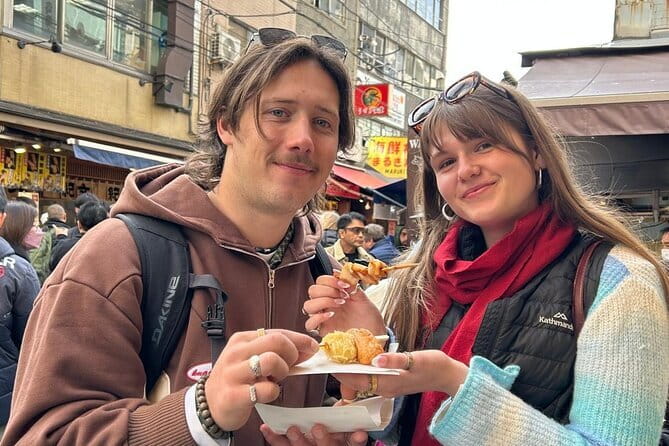
Tsukiji is a good choice if you want to start with food. The market area offers fresh seafood, prepared dishes, and local snacks, with people shopping and eating as part of their daily routine.
A guide can help you understand what you are seeing and point out foods that might be hard to identify on your own. You can also set the pace around your appetite. One hour is enough for a look and a few snacks, but it is not enough for a slow meal, extensive shopping, and several other distant stops.
Keep in mind that food purchases are your responsibility. Lunch is not included, and if you eat with the guide, you are expected to pay for the guide’s portion as well. That is a normal arrangement for a private food-focused day, but it belongs in your budget.
Senso-ji and the old streets of Asakusa
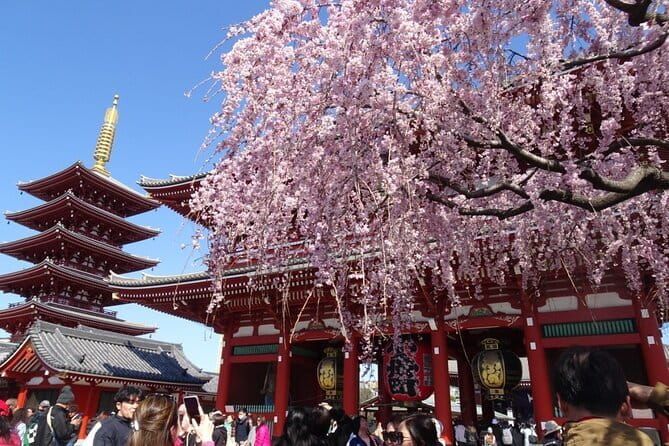
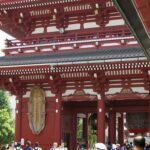
Senso-ji offers one of Tokyo’s clearest introductions to traditional Japanese religious spaces. The large red lantern at the entrance makes an immediate impression, while the surrounding streets add food stalls, souvenirs, and plenty of photo opportunities.
The value of having a guide here is the explanation. You can learn how to approach the temple, what the different areas mean, and how to use fortune slips and other small customs without treating them as decoration alone.
Asakusa can be crowded, especially around the main approach. A private guide cannot remove the crowds, but can help you move beyond the obvious photo stop and explain the area in context. If you want a quieter experience, ask about nearby streets or less prominent temples.
Meiji Jingu, then the energy of Shibuya
Meiji Jingu gives you a striking change of mood. After Tokyo’s traffic and tall buildings, you enter a broad wooded approach leading to a major shrine with a calm, formal atmosphere.
The visit is especially useful for first-time visitors who want help understanding shrine customs and the connection between the grounds, Japanese tradition, and the imperial family. The guide can provide background while you walk, rather than leaving you with only a quick photograph at the entrance.
From there, Shibuya Crossing delivers the city’s modern side. You can watch the waves of people cross, make a short video, and visit the bronze Hachiko statue. The stop is brief, usually around 30 minutes, and that is enough for the main experience.
Shibuya Crossing is famous, but it is not a full afternoon attraction by itself. I would pair it with Meiji Jingu, Omotesando, or Takeshita Street instead of treating it as a stand-alone destination.
Other private tours in Tokyo


The Imperial Palace area and former Edo Castle
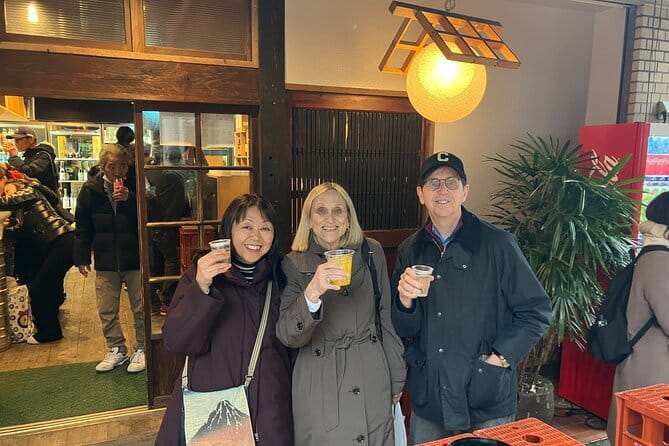
The Imperial Palace area gives you open parkland, moats, and massive stone walls on the site of the former Edo Castle. It is a useful stop for understanding Tokyo’s political and historical center.
The grounds can feel more spacious than the surrounding city, though not every part of the palace complex is open at all times. The experience is mainly about the exterior setting, stonework, moats, and gardens rather than entering a grand palace building.
This stop suits you if you enjoy history, architecture, and a calmer walk. It may be less satisfying if you want an indoor attraction or a long list of rooms and exhibits. Ask your guide which areas fit the day and current access conditions.
Akihabara and Tokyo’s pop culture
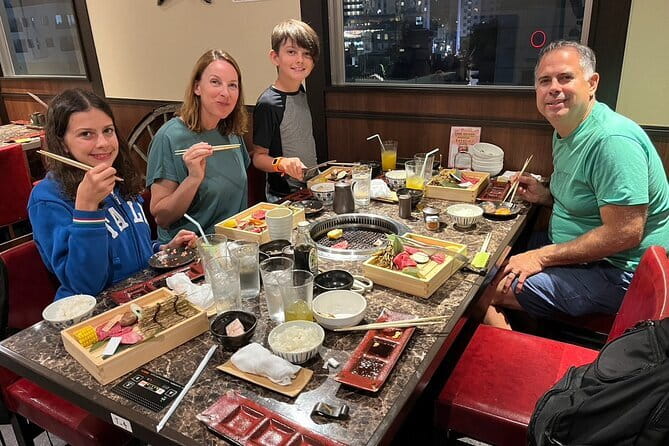
Akihabara is the clear choice for anime, manga, games, electronics, and otaku culture. A short stop can introduce the district, but enthusiasts may want more time to browse shops and compare prices.
If you are not deeply interested in anime or games, tell the guide. The district can feel narrow in purpose compared with Tokyo’s temples, markets, and parks. On the other hand, for a teenager or collector, it may be the most important stop of the day.
The guides can also take you beyond the obvious Akihabara experience. One suggested break involved contemporary art and a cafe linked with artist Takashi Murakami. That option shows why it helps to describe your interests before the tour rather than simply requesting a list of famous names.
Yanaka Ginza and Tokyo’s older neighborhood feel
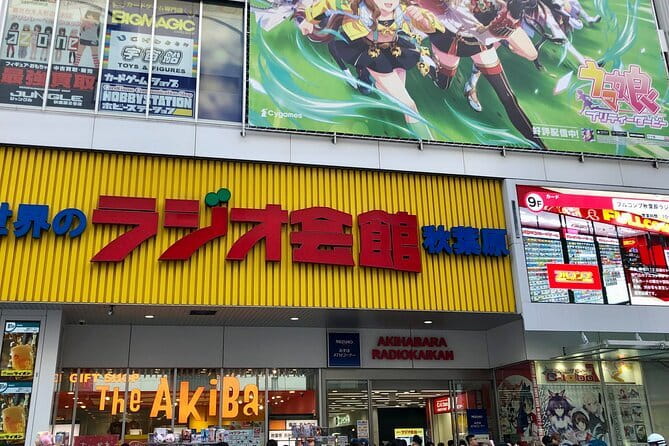
Yanaka Ginza Shopping Street offers a slower walk through narrow streets that retain a sense of older Tokyo. You can browse local shops, eat casual snacks, and see a side of the city far removed from Shibuya’s giant screens.
This is one of the best choices if you want everyday neighborhood life rather than another major landmark. The street is also a good place to combine food and shopping without making either the entire focus of the day.
Shopping time can expand quickly, especially if you like vintage clothing, small gifts, or local food. On a four-hour tour, Yanaka works best with nearby Yanaka sights rather than a long cross-city route.
Omotesando and Takeshita Street
Omotesando gives you Tokyo’s polished design and fashion side. The avenue is lined with unusual buildings by well-known architects, galleries, and shops popular with younger shoppers.
Takeshita Street has a different mood, with cute goods, youth fashion, and colorful snacks such as oversized rainbow cotton candy. It is a fun choice for families and teenagers, though the narrow street can feel intense if you dislike dense shopping crowds.
These two areas pair naturally with Meiji Jingu and Shibuya. You can compare traditional shrine grounds, high-end architecture, youth culture, and one of the world’s most famous crossings within one western Tokyo day.
Ueno and several more personal choices
Ueno Park is known for cherry blossoms, but its museums and religious sites make it useful in any season. The area includes seven museums and Ueno Toshogu, known for its ornate Tokugawa mausoleum.
You should not try to cover all of Ueno in a short private tour. Choose one museum or temple area, then let the guide help you decide how much time remains. This is a strong option for art, culture, and history, especially when rain makes outdoor sightseeing less appealing.
Other suggested choices add a more personal side to the city. You might visit long shopping streets, stop at a weather shrine to pray for sunshine, or see a temple associated with beckoning cats. Another option is Teishakuten Temple, with detailed sculptures, a Japanese garden, dumplings, and scenery connected with the film Otoko wa Tsuraiyo.
These alternatives are the reason I would not book this tour with a rigid checklist. The best day may include one famous sight and one place chosen because it matches your particular curiosity.
Public transport or private car
The public transport option is more than a way to move between stops. It gives you a practical lesson in Tokyo’s train and subway system.
Several people who toured with Miyuki, Hitomi, Kaz, or Miho were shown how to navigate public transport and later used that skill to move around Tokyo independently. That can save a substantial amount compared with relying on taxis or a car for every outing.
The operator recommends buying a Tokyo Subway 24-hour, 48-hour, or 72-hour ticket in advance. Public transport itself is not included, so you should plan for that cost.
A private car is available if you select that option, and the vehicle is included with that choice. A car may suit you if your group has mobility concerns, young children, heavy shopping, or a strong preference for door-to-door travel. It can also reduce the physical strain of changing trains, though Tokyo traffic can affect the pace.
For most first-time visitors who are able to walk comfortably, I see public transport as the better value. You learn a skill you can use after the guide leaves, and the train ride becomes part of your introduction to the city.
The guides make the custom plan work
The named guides associated with this experience include Miyuki, Hitomi, Kaz, and Miho. Their styles may differ, but the consistent strength is advance communication and personal attention.
Miyuki has helped shape days around local food, neighborhood restaurants, temples, shopping, and special cultural activities. Hitomi has been praised for warmth, humor, historical explanations, and practical help with first-day navigation. Kaz has worked with must-see lists while adding suggestions and keeping a full day organized. Miho has been described as particularly organized when fitting a four-hour plan to a group’s priorities.
You should send your must-see list before arrival, along with your interests, walking limits, food preferences, and any children’s or teenagers’ priorities. The more useful information you provide, the less time the guide spends guessing.
The guide can also advise you on the rest of your stay. That may include transport, food areas, cultural activities, or places that fit your pace. This extra orientation is a major reason to schedule the tour early in your visit, ideally on your first or second full day.
What the $151.54 price really buys
At $151.54 per person, the price is not simply payment for entrance to Tokyo’s free outdoor sights. It pays for a private English-speaking guide, hotel pickup, planning help, and a day shaped around your group.
That can be good value for families or couples who would otherwise lose hours figuring out routes, customs, and neighborhood choices. The value rises if you use the guide to learn public transport and then explore independently for the rest of your stay.
The price does not include lunch, public transport, or admission fees. If the guide accompanies you inside a paid facility, you must also cover the guide’s entrance fee. Ask about the private car option before booking if vehicle transport is important to you, since the base information presents it as an upgrade or selected option.
Group discounts are available, but the tour remains private, with only your own group participating. The experience is booked, on average, about 40 days ahead, so popular dates may require planning.
Practical details and the best match
Hotel pickup is offered, and confirmation arrives within 48 hours, subject to availability. The experience is near public transportation and requires moderate physical fitness.
Free cancellation is available up to 24 hours before the start time for a full refund. Changes made inside that 24-hour window are not accepted, and a weather cancellation offers either a new date or a full refund because the experience requires good weather.
I would recommend this tour most strongly for:
- First-time visitors who want a calm introduction to Tokyo
- Families with different interests
- Couples who dislike fixed group schedules
- Visitors who want local food and shopping alongside major sights
- Anyone nervous about using Tokyo’s trains and subways
- Repeat visitors looking for quieter districts and less familiar temples
I would think twice if you already know Tokyo well, prefer to sightsee completely alone, or want a specialist tour focused on only one subject. You may also find a fixed district tour better value if your plans are already settled and you do not need planning help.
Should you book this private Tokyo tour?
Book it if you want Tokyo to feel manageable from the start. The best use is not cramming in every famous address. It is choosing a sensible group of places, learning how to move around, and asking the guide to add one or two personal stops that you would not have found alone.
For four hours, keep the plan tight and choose two or three nearby places. For eight hours, mix major sights with a market, local shopping street, or neighborhood temple, and leave room for lunch.
I especially like this experience for a first or second day in Tokyo, when public transport and the city’s scale can feel daunting. The strongest value comes from the combination of a private guide, hotel pickup, flexible planning, and practical advice you can continue using after the tour ends.
FAQ
How long does the private Tokyo tour last?
You can choose a half-day tour of about four hours or a full-day tour of about eight hours.
How many places can I visit?
The suggested plan is two to three places during four hours, or four to five places during eight hours. Your guide can recommend a suitable combination.
Is hotel pickup included?
Yes. Hotel pickup is offered for added convenience.
Is the tour private?
Yes. Only your group participates in the private activity.
Can I use public transportation?
Yes. You can travel like a local by public transport, and the guides can help you learn how to use Tokyo’s system.
Is a private car available?
Yes. A private car is included if you choose the private car option.
Is lunch included?
No. Lunch is not included. If you eat with the guide, you must also pay for the guide’s portion.
Are entrance fees included?
No. Entrance fees are not included. If you want the guide to enter a paid facility with you, you must pay the guide’s entrance fee as well.
Are public transportation costs included?
No. Public transportation is not included. The operator recommends purchasing a Tokyo Subway 24-hour, 48-hour, or 72-hour ticket in advance.
What is the cancellation policy?
You can cancel at least 24 hours before the start time for a full refund. Cancellations or changes made less than 24 hours before the start time are not accepted for a refund. If poor weather cancels the experience, you are offered another date or a full refund.
More Private Tours in Tokyo
More Guided Tours in Tokyo

More tours in Tokyo we've reviewed




Guided, compared.
 ★ 5.0Tokyo 6hr Private Tour with Government-Licensed GuideFrom $155
 ★ 4.9Tokyo: Shinjuku Local Bar and Izakaya Guided Walking TourFrom $343 hours
 ★ 4.8Tokyo: Private City Highlights Tour with Local GuideFrom $1064 - 8 hours
 ★ 4.9Tokyo: Tsukiji Fish Market Guided Walking TourFrom $222 hours
 ★ 5.0Tokyo 4hr Private Tour with Government-Licensed GuideFrom $109
 ★ 5.0Tokyo Guided Small-Group Biking TourFrom $106