
Reviewed · GUIDED
Kawagoe 6hr Private Tour with Licensed Guide (Tokyo/Kawagoe dep)
Kawagoe gives you old Japan without sending you far from Tokyo. In about six hours, a private licensed guide can lead you through warehouse streets, castle remains, shrines, temples, food stops, and even a hot spring. You choose three or four sights, so the day can fit your interests instead of following a fixed bus tour.
I like the personal setup and the practical help with trains, buses, and translation. I also like the chance to meet at a Tokyo hotel or another agreed spot, then make the trip with a guide such as Taka, Isao, or Show. The tradeoff is that transport, meals, and most admission fees cost extra, and Kawagoe can feel crowded on a Saturday.
In This Review
- Key points to know before booking
- Why Kawagoe works as a six-hour escape from Tokyo
- The private guide makes the route practical
- Toki no Kane and the old-town streets
- Castle remains and the Naka no Mon gate
- Hikawa Shrine and Kitain Temple
- The City Museum and Matsuri Kaikan
- Kawagoe Onsen for a slower finish
- Price, transport, and what the $153.11 covers
- Who will get the most from this Kawagoe tour
- Cancellation and small practical details
- Should you book the Kawagoe private tour?
- FAQ
- How long is the Kawagoe private tour?
- Is the tour private?
- How many attractions can I choose?
- Can the guide meet me in Tokyo?
- Is transportation included?
- Is a private vehicle provided?
- Are entrance fees included?
- Is lunch included?
- Can I cancel for a full refund?
Key points to know before booking
- A private six-hour plan: You get the guide to yourself, with no unrelated group joining the day.
- Choose only three or four sights: The long list of possible stops is a menu, not a promise that you will visit all ten.
- Public transport is part of the outing: Your guide helps with local trains and buses, but fares are not included.
- Good for a first Kawagoe visit: Translation and navigation make a short trip from Tokyo easier to manage.
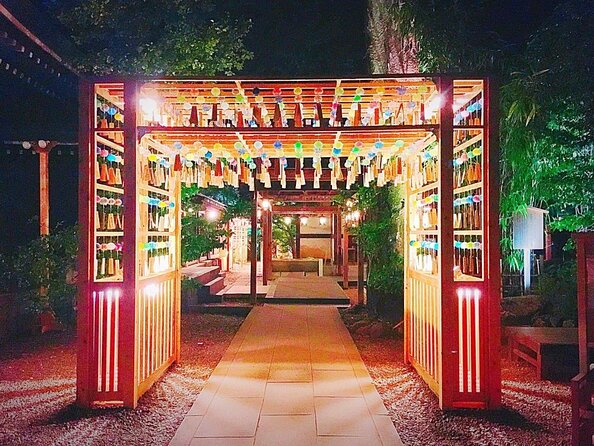
- Pick your mood: Combine temples and castle sites with food, a festival museum, or Kawagoe Onsen.
- Weekend timing matters: Saturday can bring heavy crowds, especially around the central old-town streets.
Why Kawagoe works as a six-hour escape from Tokyo
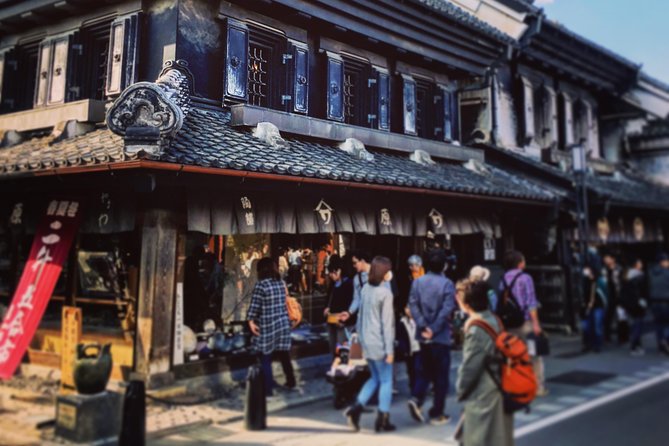
Kawagoe is often called Little Edo because parts of the city preserve the look of an old castle town. The most recognizable streets are lined with dark warehouse-style buildings, called kurazukuri, built to protect goods from fire. Today, many house shops and restaurants, so this is not a preserved museum town frozen in time. It is a working city with a historic center.
That mix is the appeal. You can look at an old merchant building, step inside for sweets or noodles, then walk to a shrine or temple. The experience is less about one grand monument and more about seeing several pieces of old Kawagoe fit together.
The tour lasts about six hours, which is enough for three or four substantial stops if you keep moving. You will not have time to treat every attraction on the list as a full visit. I would plan one main theme, then add two or three nearby sights.
For example, a first visit could combine Toki no Kane, the warehouse district, Hikawa Shrine, and Kitain. A history-focused day could use the castle palace, the castle gate remains, the city museum, and the Kawagoe Matsuri Kaikan. If your idea of a good day in Japan includes soaking in a bath, replace one museum with Kawagoe Onsen.
Other guided tours in Tokyo

The private guide makes the route practical
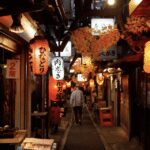
The strongest reason to choose this tour is not simply the guide’s commentary. It is the help with movement. You meet your licensed English-speaking guide on foot at an agreed location in Tokyo or Kawagoe, and the guide helps you manage the trip by public transport and on foot.
That matters because the experience does not include a private vehicle. You pay your own train and bus fares, and the route may involve fixed bus schedules. One guide specifically thanked a group for keeping to the timetable because bus departures were fixed. In plain terms, do not assume you can linger at every shop and still reach every planned stop.
A private guide also lets you adjust the pace. Isao took mobility limits into account for one group, walking slowly and helping avoid stairs with elevators and escalators. That does not make the tour a guaranteed step-free experience, but it shows the value of discussing mobility needs before the day begins.
The guide names connected with past bookings include Show, Taka, and Isao. You cannot assume which person will lead your tour, but these accounts show that the service can include hotel meeting arrangements, public transport support, and a slower pace when needed.
The meeting point deserves careful attention. Pickup is on foot, not by a tour vehicle, and the included service says you meet within a designated Tokyo or Kawagoe area. Confirm the exact location and allow time to reach it.
Toki no Kane and the old-town streets
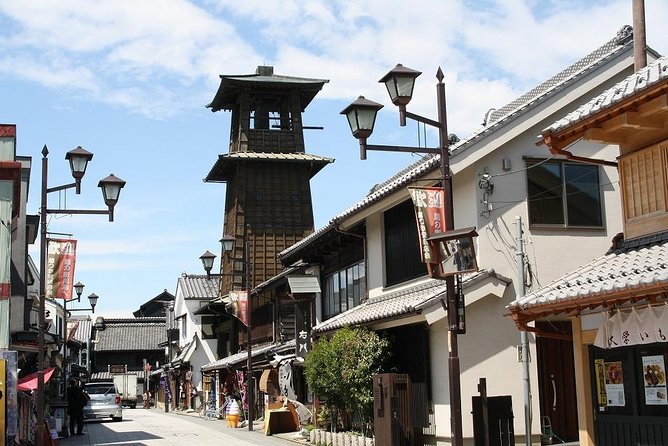
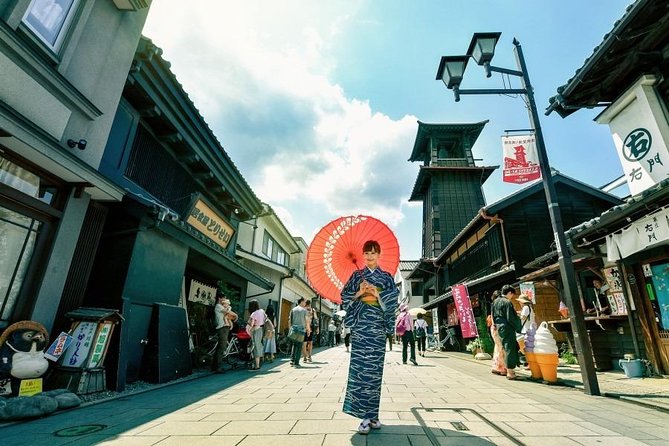
Toki no Kane, the Bell of Time, is one of Kawagoe’s clearest symbols. In the Edo period, when household clocks were not common, the tower’s bell marked the hours for local people. It still rings at set times, including 6 a.m., noon, and 3 p.m., according to the schedule provided for the stop.
The listed visit is only about five minutes, so treat the tower as a quick orientation point rather than a full attraction. It is useful at the start of a walk because it places you in the old commercial center and gives you a reason to look up at the skyline above the low shopfronts.
Koedo Yokocho offers a practical break. The warehouse-style building contains restaurants serving Japanese dishes such as kamameshi, a rice, meat, and vegetable meal cooked in a small pot, along with ramen. There is also a free rest area.
I would use this stop for lunch or a pause, not as the main reason to book the outing. A meal here can help you sample local food without spending time hunting for a restaurant, but lunch is not included. If handmade noodles appeal to you, one past booking particularly valued a superb udon meal, so asking your guide about food options is sensible.
The Kawagoe Kurazukuri Museum gives more meaning to the streets outside. Kawagoe prospered as a castle town, and wealthy merchants built fire-resistant warehouse buildings. The museum helps explain why the black-and-gray facades look different from ordinary wooden Japanese houses.
The visit is listed at about 30 minutes, with admission extra. You may find the museum more useful after walking the shopping streets, because you can connect the building style to what you have just seen. The drawback is that the old buildings now contain shops, so you should not expect every facade to be an untouched relic.
Castle remains and the Naka no Mon gate
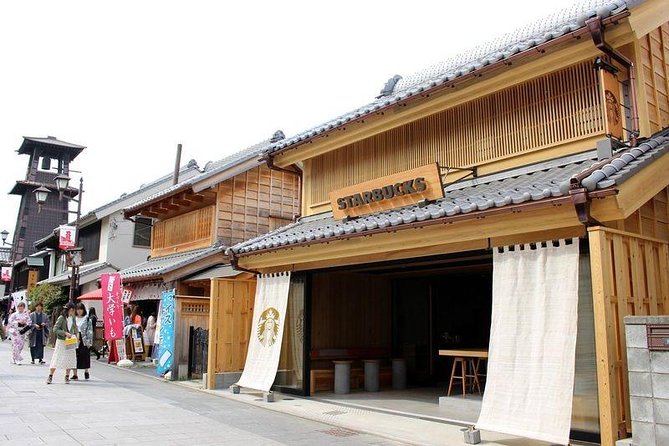
Kawagoe Castle once shaped the city’s role during the Edo period. Much of the castle is gone, but the Naka no Mon remain preserves the entrance and a few rooms open to the public. The visit is listed at 30 minutes, and admission is not included.
This stop suits anyone who wants physical evidence of Kawagoe as a castle town rather than only a pretty shopping street. The site is smaller than the grand castle complexes found in cities such as Himeji or Matsumoto, so set your expectations accordingly. Its value is in the surviving pieces and the guide’s ability to explain how the castle fit into the city.
Kawagoejyo Honmaru Palace offers another look at the castle grounds. Japanese castles are popular because their rooms and structures make past political power easier to picture. The palace is an optional stop, with entry fees extra, and the listed visit lasts about 30 minutes.
You will probably want to choose either the Naka no Mon remain or the Honmaru Palace if you also hope to see a shrine and temple. You can ask the guide which one fits the day’s route and opening arrangements. Trying to squeeze in both, along with every central attraction, could make the tour feel rushed.
Hikawa Shrine and Kitain Temple
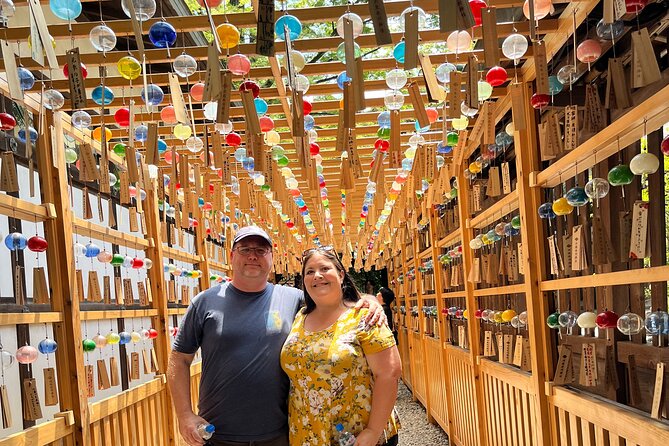
Kawagoe Hikawa Shrine is known for love and good fortune. Its Enmusubi dama, described as a lucky love stone, is tied to successful relationships. The shrine is free to enter and the suggested visit lasts about 30 minutes.
You do not need to be part of a couple to enjoy Hikawa Shrine. Its appeal comes from the chance to see a working Shinto religious site and learn how local beliefs shape popular visits. A guide can also help you understand customs and explain the purpose of amulets, which is useful if you are unfamiliar with Japanese shrine etiquette.
Kitain is the stronger choice for visitors who want a temple atmosphere. The Buddhist temple has been standing for about 1,200 years and remains one of Kawagoe’s major sights. Entry is listed as free, with a suggested visit of 30 minutes.
The contrast between Hikawa Shrine and Kitain makes them a good pair. One introduces Shinto practice and relationship blessings, while the other gives you a Buddhist setting with a long institutional past. Add Toki no Kane or the Kurazukuri Museum and you have a well-rounded first visit.
As with any religious site, keep the pace respectful. The tour is not just a photo circuit. You will get more from these stops if you allow a little quiet time instead of treating each one as another item to check off.
Other private tours in Tokyo


The City Museum and Matsuri Kaikan
Kawagoe City Museum explains why the city earned its Little Edo nickname. The city has many historic buildings, and the museum provides context for the town’s development and surviving architecture. Admission is extra, and the suggested visit lasts 30 minutes.
This is a useful choice when you prefer explanation to shopping. It can also help on a hot or wet day, though the tour description does not promise a weather-specific route. Pairing the museum with the castle remains creates a clear history-focused half day.
Kawagoe Matsuri Kaikan looks at local festival culture. Japan has many regional festivals, and this museum offers a way to learn about Kawagoe’s own traditions without visiting during the festival itself. Admission is not included, and the planned visit is about 30 minutes.
Choose this stop if you want a more local subject than castle architecture. Festivals reveal how neighborhoods organize, celebrate, and pass customs along. It is also a good alternative if your group has already seen enough temples and old buildings.
Both museums require a little planning. With only six hours, you need to decide if indoor exhibits matter more to you than food, shopping streets, or the onsen. Your guide can help arrange the order, but the tour cannot make ten stops fit into one afternoon.
Kawagoe Onsen for a slower finish
Kawagoe Onsen is the tour’s most relaxing option. It is a natural hot spring facility with several wood and stone baths. The suggested visit is 30 minutes, though the practical amount of time you want to spend bathing may affect the rest of your schedule. Admission is extra.
I would not choose the onsen as a quick afterthought. Bathing is best when you are prepared for the customs and willing to give it proper time. If your main goal is to see old buildings and museums, a 30-minute slot may feel too short. If you want a break from Tokyo’s pace, it can change the whole character of the day.
The information provided does not spell out the facility’s bathing rules, so ask the guide about current procedures before you go. You should also make clear that an onsen is your priority when choosing the other three stops. A castle, museum, shrine, and bathhouse can easily become too much for one six-hour route.
Price, transport, and what the $153.11 covers
At about $153.11 per person, this is not a budget sightseeing outing, especially because transport, entrance fees, lunch, and personal expenses are separate. The price makes more sense for a small private group that values time, translation, and a flexible plan.
You are paying for the licensed local English-speaking guide and the private format. You are not paying for a vehicle or an all-inclusive ticket. That distinction is important. A solo visitor may find the cost hard to justify, while a couple, family, or group can spread the value across several people. Group discounts are offered, though the specific discount is not provided.
The guide entry fee is covered only for sights included under the tour’s expected stops. Your own admission fees are still listed as not included, so confirm the exact arrangement for the places you select. Do not treat the advertised price as the final cost of the day.
The tour is a walking activity with public transport. You should be comfortable walking between sights and boarding local trains or buses. Near-public-transport access and guide assistance make it easier than planning alone, but this is not a chauffeur-driven excursion.
Who will get the most from this Kawagoe tour
I would recommend it most strongly to a first-time visitor staying in Tokyo who wants to see a smaller historic city without spending a full day working out the route. The guide helps remove the friction of ticket machines, transfers, directions, and language questions.
It also fits families and small groups with different interests. One person can prioritize temples, another can choose food, and the group can still share one private guide. The ability to choose three or four stops is the key benefit.
This tour also suits anyone who wants help at a slower pace. Tell the provider about mobility needs in advance. The experience is on foot, but previous arrangements included slower walking and the use of elevators and escalators to reduce stairs.
I would be more cautious if you dislike crowds or expect a quiet historic village. A Saturday can turn the central streets into a tourist mob scene. The old buildings also house shops, so the center feels commercial rather than purely preserved. A weekday may be a better choice if your schedule allows.
I would also be cautious if you want a tightly packaged day with no extra costs. The guide fee does not cover meals, transport, and most admissions. A do-it-yourself visit may cost less, but you will handle the route and translation yourself.
Cancellation and small practical details
You receive confirmation at booking, and free cancellation is available up to 24 hours before the local start time for a full refund. Changes or cancellations made less than 24 hours ahead are not accepted for a refund.
Service animals are allowed, and most people can participate. The activity is private, so only your group joins, but separate tour groups cannot be combined. Mobile tickets are available, and pickup means an on-foot meeting within the designated Tokyo or Kawagoe area.
Should you book the Kawagoe private tour?
Book it if you want a guided introduction to Kawagoe and value having someone handle the public transport, translation, and route. I would choose Toki no Kane, the Kurazukuri Museum, Hikawa Shrine, and Kitain for a first visit, or replace one of those with Kawagoe Onsen if rest matters more than museums.
The tour is less appealing if you want a cheap outing, a private car, or a complete sightseeing sweep. You will need to pay extra for transport, food, and admissions, and six hours is not enough for every listed stop.
For the best value, bring a clear plan, keep the group small, and avoid Saturday if possible. Kawagoe is close enough to Tokyo for an easy escape, but the guide is what turns the trip from a confusing side journey into a focused day in Little Edo.
FAQ
How long is the Kawagoe private tour?
The tour lasts approximately six hours.
Is the tour private?
Yes. Only your group participates, and separate tour groups cannot be combined.
How many attractions can I choose?
You can customize the outing by choosing three to four sites from the listed Kawagoe attractions.
Can the guide meet me in Tokyo?
Yes. You can meet the guide at a location within the designated Tokyo area, or at a location in Kawagoe. Pickup is on foot.
Is transportation included?
No. Transportation fees are not included. The tour uses walking and public transportation, and the guide helps with navigation and translation.
Is a private vehicle provided?
No. The experience does not include a private vehicle.
Are entrance fees included?
Your entrance fees are not included. Guide entry fees are only covered for sights listed under the tour’s expected attractions.
Is lunch included?
No. Lunch and other personal expenses are separate.
Can I cancel for a full refund?
Yes, if you cancel at least 24 hours before the experience start time, based on local time. Cancellations or changes made less than 24 hours in advance are not accepted for a refund.
More Private Tours in Tokyo
More Guided Tours in Tokyo

More tours in Tokyo we've reviewed






Guided, compared.
 ★ 5.0Tokyo 6hr Private Tour with Government-Licensed GuideFrom $155
 ★ 4.9Tokyo: Shinjuku Local Bar and Izakaya Guided Walking TourFrom $343 hours
 ★ 4.8Tokyo: Private City Highlights Tour with Local GuideFrom $1064 - 8 hours
 ★ 4.9Tokyo: Tsukiji Fish Market Guided Walking TourFrom $222 hours
 ★ 5.0Tokyo 4hr Private Tour with Government-Licensed GuideFrom $109
 ★ 5.0Tokyo Guided Small-Group Biking TourFrom $106