
Reviewed · BAR HOPPING & IZAKAYA TOURS
Private Tokyo food scene 6 hour experience: Depatika, street food, izakaya
Tokyo’s best food experiences often happen away from the famous sights. This six-hour private tour moves from Ikebukuro department-store food halls to Jujo’s old-fashioned shopping arcade, then finishes in Akabane’s lantern-lit bar lanes. I like the range, and I like that one guide can shape the day around your appetite. The main catch is simple: you walk a lot, and the $247.45 price is easier to justify if you plan to eat and drink generously.
I especially like the local focus. Simon, the guide named in the tour details, has been praised for making the day feel like an outing with a friend rather than a fixed sightseeing march. You also get food, dinner, snacks, and alcoholic drinks included, which makes budgeting easier. Smoking is allowed in some Japanese bars and restaurants, so this is not a good fit for pregnant visitors or anyone sensitive to smoke.
In This Review
- Key points
- Why this Tokyo food tour feels different
- Ikebukuro’s department-store food halls
- Jujo Ginza and old-school street food
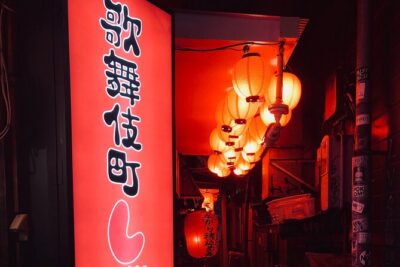
- Akabane’s lantern-lit izakaya lanes
- What the private format adds
- Is $247.45 per person a fair price?
- Who should book this experience?
- Booking and cancellation details to know
- Should you book this Tokyo food tour?
- FAQ
- Where does the tour start?
- Where does the tour end?
- How long does the experience last?
- Are food and drinks included?
- Is the tour suitable for people under 20?
- Is hotel transportation included?
Key points
- Three very different neighborhoods: Move from Ikebukuro’s polished food halls to Jujo’s neighborhood shopping street and Akabane’s small-bar district.
- A private format: Your group receives personal attention, with room to adjust the food stops and pace.
- A full six hours of eating: The experience includes snacks, dinner, alcohol, and soft drinks for guests under 20.
- A strong local angle: Jujo and Akabane offer a look at everyday Tokyo beyond the city’s best-known visitor districts.
- Plan for plenty of walking: Comfortable shoes matter, and transport to the starting station is your responsibility.
- A useful evening finish: The tour ends at JR Akabane Station, making it easy to continue on your own or return to your hotel.
Why this Tokyo food tour feels different
Many Tokyo food walks focus on one market, one street, or one famous dish. This one works differently. It treats the city as a series of food neighborhoods, each with its own mood and eating habits.
You begin in Ikebukuro, head north to Jujo, and end in Akabane. That route gives you a useful lesson in how Tokyo changes from polished department-store shopping to a traditional neighborhood arcade and then to a late-day drinking district.
I like this format because the food is only half the point. You are also seeing where people shop for gifts, where locals grab a snack, and where small bars pack into narrow streets. The private setup matters here. A guide can explain what you are looking at, help you order, and adjust the pace if your group wants more food or a little less alcohol.
The tour runs for about six hours, from noon until 6 p.m. The timing takes you from lunch-hour food browsing into the afternoon and early evening. Come hungry, but do not arrive starved. You will be eating in stages, and the first stop is more about sampling and orientation than sitting down to a full meal.
A few more Tokyo tours and experiences worth a look

Ikebukuro’s department-store food halls
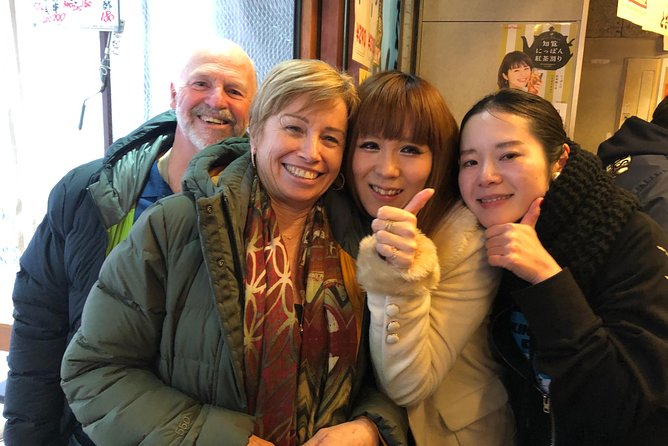
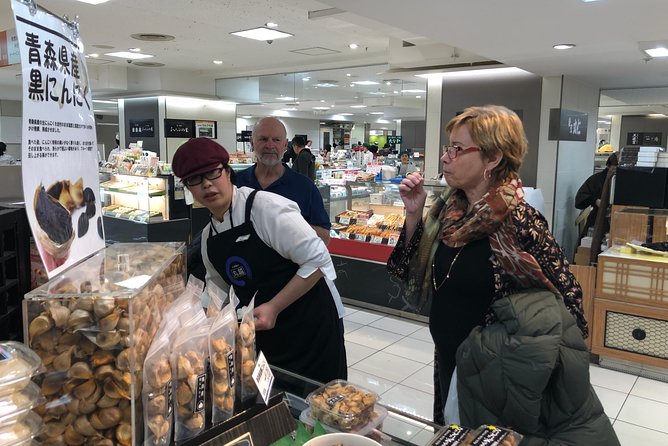
The tour starts at Seibu Ikebukuro Main Store near Ikebukuro Station. The first stop lasts about 45 minutes and includes admission.
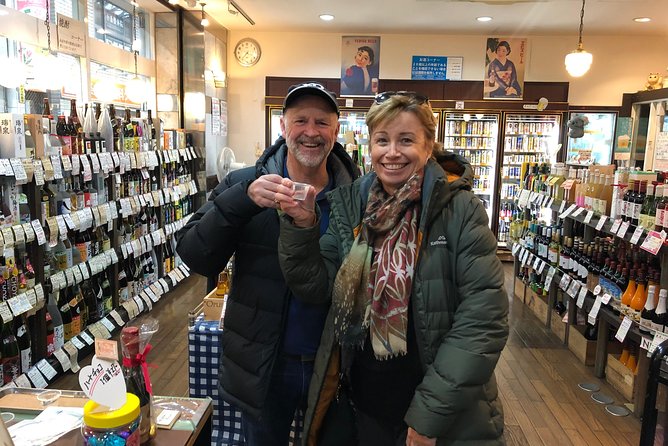
Department-store food halls are one of the easiest places in Japan to see the country’s food culture in a compact space. They are polished, carefully presented, and full of items meant for both daily eating and gift giving. You can expect an introduction to gourmet treats and the customs surrounding food gifts, a useful way to understand why presentation matters so much in Japan.
This is not the same as wandering into a supermarket for a quick sandwich. Food halls in major Japanese department stores are designed to make even ordinary purchases feel special. Packaged sweets, prepared foods, pastries, and other delicacies are displayed with care. The selection can give you a quick survey of Japanese tastes before the tour moves into more casual neighborhoods.
The short time here is a plus and a limitation. Forty-five minutes is enough to look around and taste several items without using up the whole afternoon. It is not enough for a slow, detailed visit to every counter. If you are hoping to buy gifts, tell your guide early so you do not spend all your time sampling and then rush your shopping.
Starting at a station is practical, but Ikebukuro can be confusing. Meet at the specified point near Ikebukuro Station at 1 Chome-28 Minamiikebukuro. Your guide will provide the exact meeting details, and one visitor specifically appreciated the clear communication about where to meet.
Transportation to the meeting point is not included. You need to get to Ikebukuro on your own, and the tour does not include hotel pickup. Build in extra time if you are unfamiliar with the station.
Jujo Ginza and old-school street food
The middle stop takes about two hours at Jujo Ginza Shopping Arcade. This is where the tour shifts from department-store polish to a more everyday Tokyo setting.
Jujo’s shoutengai, or traditional shopping street, is made for grazing. Small shops and food counters line the arcade, and the pace is more local than what you find around Tokyo’s best-known sightseeing areas. I like this section because it lets you sample Tokyo food in the way many residents do, one small purchase at a time instead of sitting down immediately for a large meal.
The exact dishes can vary because the experience is customizable. That is helpful if you have strong preferences or want to try something new. Your guide can steer you toward street foods that suit your group and explain how to eat them. If you are new to Japanese food, this is also a good place to ask basic questions without feeling rushed.
You should expect a mix of browsing, short walks, and tastings rather than a formal cooking lesson. There is no promise of one signature dish, and that is part of the appeal. The goal is to see how a neighborhood shopping street works and sample several things along the way.
Two hours gives you enough time to slow down. You can look at the shops, watch the daily rhythm of the arcade, and avoid treating each stop as a race. Still, this is an active tour. Six hours on foot, with multiple food stops and station connections, may feel tiring if you have just arrived in Tokyo or are dealing with jet lag.
Jujo is also a good counterpoint to Ikebukuro. The first stop shows you Tokyo’s high-end food presentation. Jujo shows you the casual side, where affordability and convenience matter more than elaborate packaging. Together, the stops explain more than either one could on its own.
Akabane’s lantern-lit izakaya lanes
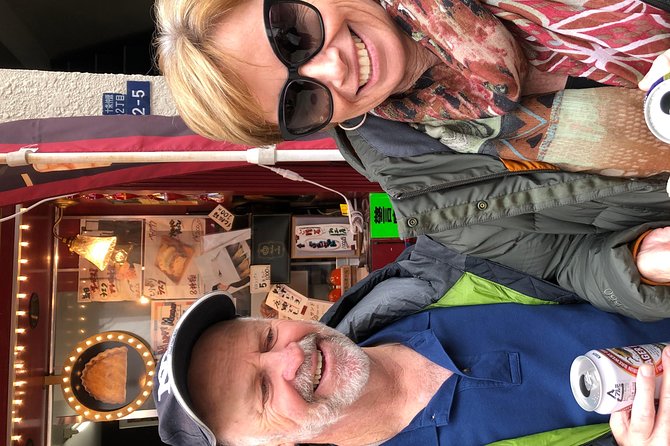
The final stop lasts about three hours in Akabane, ending at the Akabane Ichiban-gai Shopping District Promotion Association Office area. This is the longest section and the part most likely to appeal to people who want a traditional Japanese evening out.
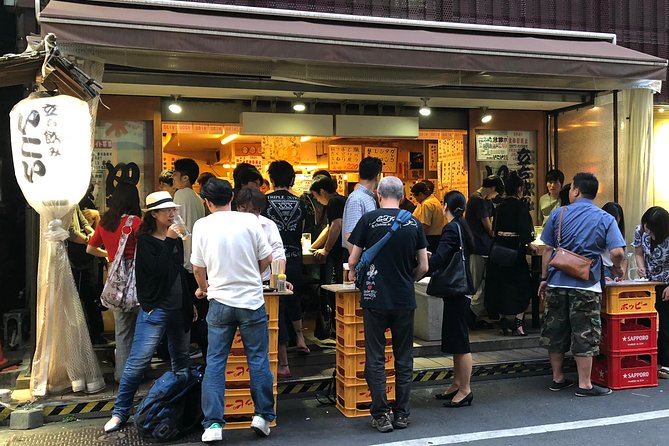
Akabane is known here for narrow entertainment lanes packed with tiny bars and izakayas. An izakaya is a casual Japanese drinking spot where people order several small dishes to share with drinks. The setting is more intimate than a large restaurant, and the food tends to arrive in rounds rather than as one formal meal.
This portion includes dinner and alcoholic beverages. Since you have already sampled food in Ikebukuro and Jujo, the evening meal works best as a gradual finish rather than a single enormous sitting. Your guide can help you navigate the local style, which is useful when menus are unfamiliar or when a bar feels too small to enter without local guidance.
Akabane is also where the private format earns its keep. Small bars can be hard to approach if you do not speak Japanese or do not know local customs. With a guide, you have someone to handle the practical details and explain what is happening. The tour can feel more personal than a large group food crawl, especially in compact spaces.
There are two points to consider. First, the atmosphere may not suit everyone. Smoking is allowed in bars and restaurants in Japan, so the experience is not recommended for pregnant women. If you are sensitive to smoke, ask about the conditions before booking and be prepared for this to affect your enjoyment.
Second, alcohol is part of the package, but you do not have to drink alcoholic beverages if you prefer not to. Guests under 20 receive soft drinks, since Japan’s legal drinking age is 20. The tour data does not promise a nonalcoholic discount, so the value may feel different for someone who does not drink.
The tour finishes at JR Akabane Station. That is convenient because you do not need to retrace the route to Ikebukuro. It also gives you a clear endpoint after an evening of food and drinks.
What the private format adds
A private tour means only your group participates. That is a major advantage for families, couples, and small groups with different food interests.
You can ask for more explanation, slow down at a shop, or make your preferences clear without holding up strangers. The tour is described as customizable, though the supplied details do not list a set menu or guaranteed dishes. Think of it as a guided route with room to respond to what your group enjoys.
The guide’s role is especially useful at the food halls and izakayas. Department-store counters can feel overwhelming because there are many choices and few obvious clues for first-time visitors. Small bars create the opposite problem: limited space, unfamiliar ordering habits, and a sense that you should know what to do. A local guide helps bridge both situations.
The personal approach also matches the strongest praise connected with this experience. Simon is described as an excellent host who communicated clearly and brought together several different kinds of food in one afternoon. The useful takeaway is not simply that the guide is friendly. It is that good communication matters when a tour crosses three neighborhoods and ends in small local drinking places.
A few more Tokyo tours and experiences worth a look

Is $247.45 per person a fair price?
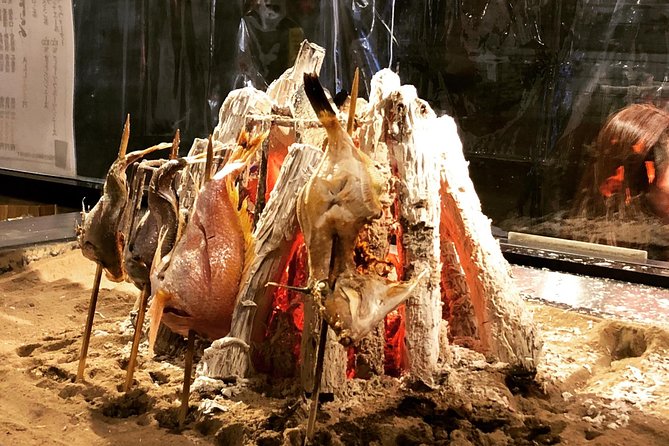
At $247.45 per person, this is not a budget food walk. The price makes more sense when you count what is included: six hours of private guiding, snacks, dinner, alcoholic beverages, and tastings across three areas.
You are also paying for decisions that would take effort to make on your own. You would need to choose suitable food halls, find Jujo’s shopping arcade, work out how to order street food, locate Akabane’s bar lanes, and decide which small izakaya feels approachable. The guide compresses that planning into one afternoon.
The value is strongest for people who want a broad introduction to Tokyo food culture and would otherwise spend freely on several meals and drinks. It is weaker for visitors who only want one specialty meal, do not drink, or prefer to explore independently.
Group discounts are available, which may improve the price for larger private groups. Since the tour is booked about 40 days in advance on average, planning ahead is sensible if your dates are fixed.
Who should book this experience?
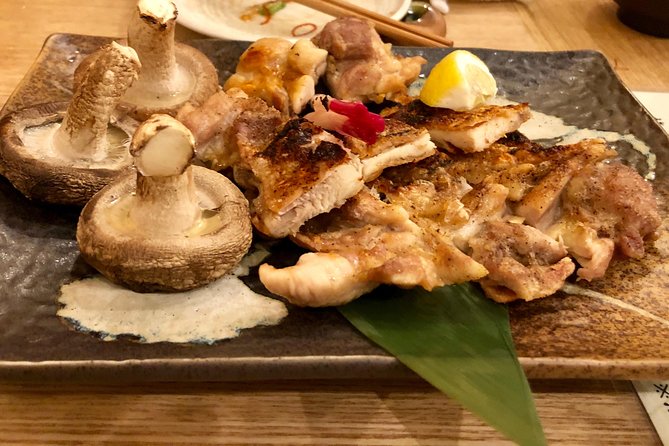
I would recommend it to food-focused visitors who want more than famous restaurants and major sights. It suits people who enjoy walking, trying small portions, and letting a guide make the food decisions.
It is especially useful on a first Tokyo visit if you want a basic map of how different food settings fit together. The tour gives you a department-store introduction, casual street food, and an izakaya evening in one route.
You should also consider it if you have already seen central Tokyo and want neighborhoods with fewer familiar tourist stops. Jujo and Akabane provide the strongest local feel, while Ikebukuro gives the day a convenient and polished starting point.
This tour is less suitable if you have mobility limits, dislike long walks, need a strict meal schedule, or are uncomfortable around cigarette smoke. Dietary requirements should be shared when booking. The tour can be adjusted, but the available information does not guarantee that every restriction can be handled at every stop.
Wear comfortable shoes and keep your schedule open. You will be moving through stations, shopping streets, and bar districts, and the experience works best when you are not watching the clock.
Booking and cancellation details to know
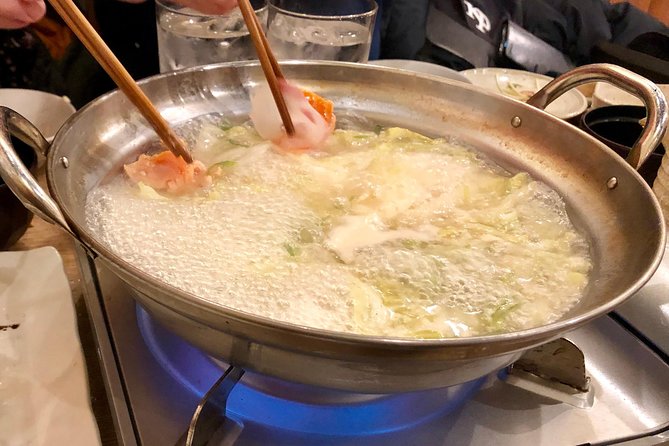
The tour is offered on Mondays from noon to 6 p.m. The listed operating dates run through February 20, 2027. Confirmation is provided at booking, and the experience is near public transportation.
Free cancellation is available if you cancel at least 24 hours before the local start time. Changes or cancellations made inside that 24-hour window are not accepted for a refund.
The tour is open to most people who can manage a moderate amount of walking. Hotel pickup and drop-off are not included, so you need to reach Ikebukuro Station and arrange your own transport after reaching Akabane.
Should you book this Tokyo food tour?
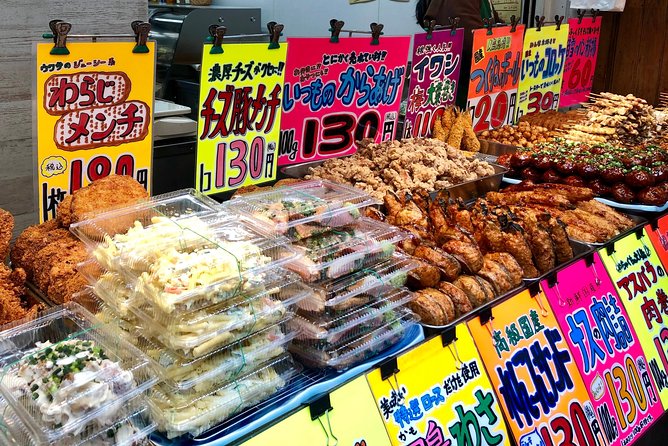
Book it if you want a guided food adventure that moves beyond central Tokyo’s obvious dining areas. The best parts are the contrast between the three neighborhoods, the private attention, and the chance to enter the food world of Jujo and Akabane with someone who knows how the places work.
The price is high, but the package includes a full afternoon of food, dinner, snacks, drinks, and personal guiding. I would book it for a small group that values ease and local context, especially if you enjoy alcohol and are comfortable with a lot of walking.
Skip it if you want a cheap tasting tour, a fixed list of famous dishes, or a smoke-free evening. For the right eater, though, this is a practical way to spend six hours seeing how Tokyo shops, snacks, and socializes beyond its headline districts.
FAQ
Where does the tour start?
The tour starts at Ikebukuro Station, at 1 Chome-28 Minamiikebukuro, Toshima City, Tokyo 171-0022, Japan.
Where does the tour end?
Your guide drops you at JR Akabane Station, at 1 Chome-1 Akabane, Kita City, Tokyo 115-0045, Japan.
How long does the experience last?
The private walking tour lasts approximately six hours, from 12 p.m. to 6 p.m. on Mondays.
Are food and drinks included?
Yes. The experience includes snacks, dinner, alcoholic beverages, and food tastings. Soft drinks are served to guests under 20.
Is the tour suitable for people under 20?
Yes, most travelers can participate, and guests under 20 receive soft drinks. Japan’s legal drinking age is 20.
Is hotel transportation included?
No. Hotel pickup and drop-off are not included. You must make your own way to the Ikebukuro starting point, and the tour ends at Akabane Station.
More Private Tours in Tokyo



More Food Experiences in Tokyo
More Bar Hopping & Izakaya Tours in Tokyo
More tours in Tokyo we've reviewed










Bar Hopping & Izakaya Tours, compared.
 ★ 5.0Tokyo Bar Hopping Tour in Shinjuku (All-You-Can-Drink + Dinner)From $106
 ★ 5.0Best of Shinjuku: Izakaya Food Tour (4 Stops, 14+ Tastings)From $92
 ★ 4.9Tokyo: Shinjuku Local Bar and Izakaya Guided Walking TourFrom $343 hours
 ★ 5.0Shibuya Meltdown Nightlife Tour: All-You-Can-Drink Bar HoppingFrom $106
 ★ 4.5Tokyo: Pub Crawl and Bar TourFrom $275 hours
 ★ 5.0Tokyo: Shinjuku Local Bar & Izakaya Crawl TourFrom $39