
Reviewed · TEMPLES & MEDITATION
Tokyo: Buddhism and Shinto Temple Tour with a Real Local
The fire ceremony at Naritasan Fukagawa Fudo-do is the heart of this two-hour walk. Powerful drums, flames, chanting, and strict temple manners make it far more meaningful than a quick photo stop. I especially like the small group of no more than six and Manami Watanabe’s careful explanation of Buddhism, Shinto, and local customs. The main drawback is that photography and video are restricted inside, so this suits you best if you want understanding rather than a large collection of pictures.
I also like the respectful seating approach. You will not be pushed into the best central seats simply for a clear view, since those places are meant for the Buddhist community. The tour costs $62, which is fair for a specialist guide, temple admission, and a rare chance to see the ceremony explained scene by scene, though the short two-hour format leaves little time for lingering.
In This Review
- Key points about this Monzennakacho tour
- Why the fire ceremony is the main event
- Starting at Monzen-nakacho Station
- Along the Oyoko River
- Tatsumi-shindo and the shift from street to shrine
- Entering Naritasan Fukagawa Fudo-do
- Learning how Buddhism and Shinto fit together
- Tomioka Hachimangu Shrine and its local ties
- What makes Manami’s guiding style useful
- Is $62 a fair price?
- Who should book this experience?
- Practical details that shape the day
- Should you book the Monzennakacho temple tour?
- FAQ
- Where does the tour meet?
- How long does the tour last?
- Is the fire ceremony admission included?
- Is the tour offered in English?
- Can I take photos or record inside the temple?
- What should I wear and bring?
Key points about this Monzennakacho tour
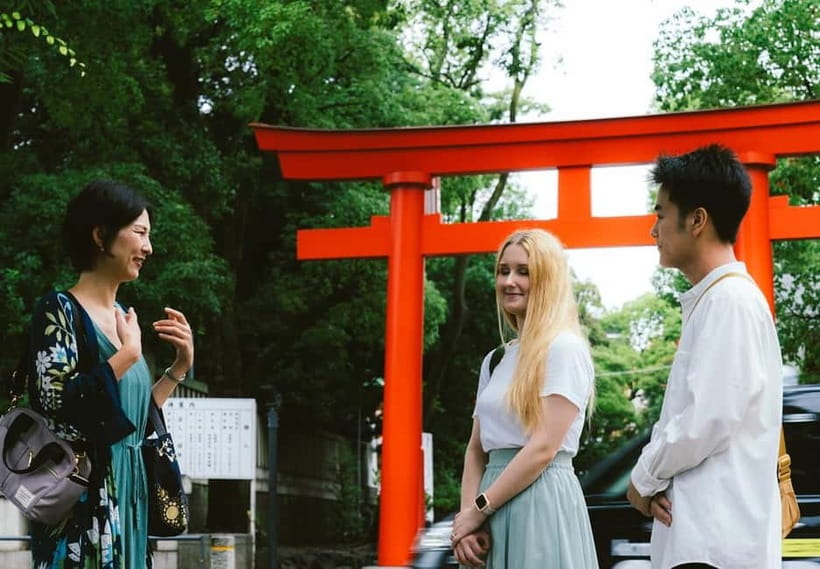
- A fire ceremony with context: Watch the Fukagawa Fudo-do ritual while Manami explains what is happening and why silence matters.
- Two religions in one walk: Learn how Buddhism and Shinto differ, and how many Japanese people take part in both.
- A local guide with academic training: Manami Watanabe was born and raised in the area and holds a Ph.D. in cultural heritage protection.
- A less touristy East Tokyo setting: Walk through Monzennakacho, a historic Shitamachi district rather than Tokyo’s famous central sights.
- Useful temple and shrine manners: Learn about coins, bows, fortune papers, wish plaques, goshuin stamps, clothing, seating, and photography.
- A genuinely small group: With a limit of six people, you can ask questions without shouting over a crowd.
Why the fire ceremony is the main event
Many temple visits in Tokyo are visual. You see the rooflines, incense burners, statues, and bright details, then move on. At Naritasan Fukagawa Fudo-do, the focus shifts to sound, movement, and ritual.
The ceremony includes a strong drumbeat and a large fire. It is an active religious practice, not a performance arranged for sightseeing. That distinction shapes the whole experience. You watch in silence, follow the temple’s rules, and let the guide explain what you are seeing without turning the ritual into a photo opportunity.
Manami provides explanation sheets as you observe. That is useful because a fire ritual can be hard to follow if you do not know its order or purpose. Instead of guessing what each sound or action means, you get a scene-by-scene guide while the ceremony unfolds.
Photography is not allowed inside, and neither are video or audio recordings. Hats are also not allowed, and shoes cannot be worn indoors. These rules may feel strict if you expected a standard sightseeing stop, but they are part of the point. You are being asked to behave as someone entering a working place of worship, not as someone watching a show.
The seating policy is another thoughtful detail. Some organized groups take the middle front seats for the clearest view. This tour does not do that. The best seats are left for members of the Buddhist community, which is a small but important sign of respect.
One note for comfort: the ceremony lasts about 40 minutes within the route. You will need to stay attentive and quiet during that time. If you prefer to move constantly or take photographs at every stop, this may feel restrictive. If you want to understand how a religious ceremony works, it gives the visit weight.
A few more Tokyo tours and experiences worth a look

Starting at Monzen-nakacho Station
The meeting point is outside Exit 4 of Monzen-nakacho Station, served by the Oedo and Tozai subway lines. Look for the Kusuri no Fukutaro drugstore with a red sign just outside the exit.
Use Exit 4, not another station exit. There is another Kusuri no Fukutaro in the area, and following the shop name alone can send you to the wrong place. The instructions also advise using the stairs instead of the elevator, since the drugstore is easier to identify from there.
This is a practical place to begin because you start right in the neighborhood rather than spending part of the tour on a bus or in a taxi. Wear comfortable shoes and bring a drink. Cash is useful for optional temple and shrine offerings, since small coins are not included.
The group is limited to six people, which matters in a neighborhood like this. You can hear explanations in quieter streets and ask Manami about details that would be lost in a large group. The tour is offered in English.
Along the Oyoko River
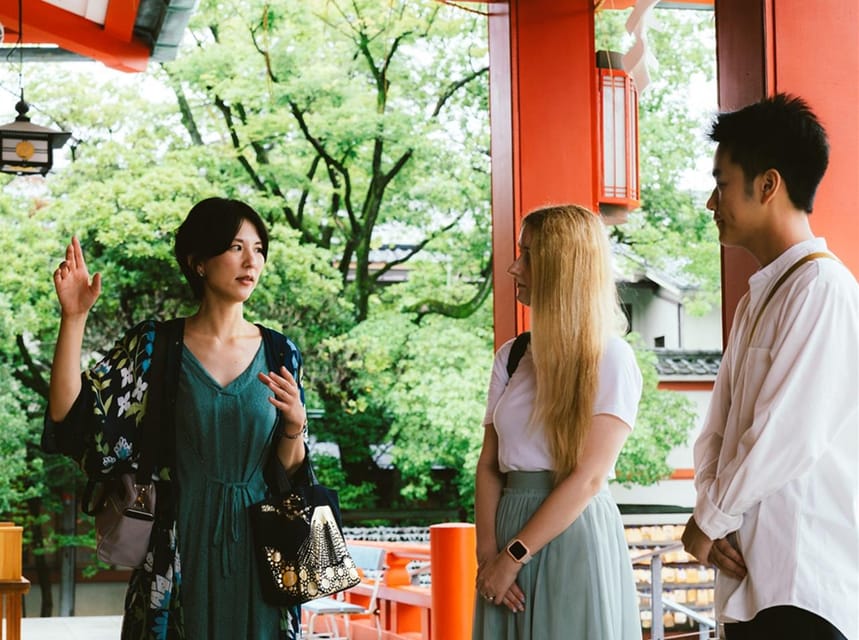
The first guided stop is the Oyoko River, with about 10 minutes for orientation. This section helps you see Monzennakacho as a local district rather than a string of isolated religious buildings.
The walk introduces the area known as Shitamachi, or old downtown Tokyo. The appeal here is not a single grand monument. It is the sense of an ordinary neighborhood with long-standing ties to temples, shrines, and community life.
A 10-minute river stop is brief, so do not expect a long riverside walk or an extended history lecture. Its value is the setting and the transition. You begin to understand that the religious sites are part of daily local life, not detached attractions.
Tatsumi-shindo and the shift from street to shrine
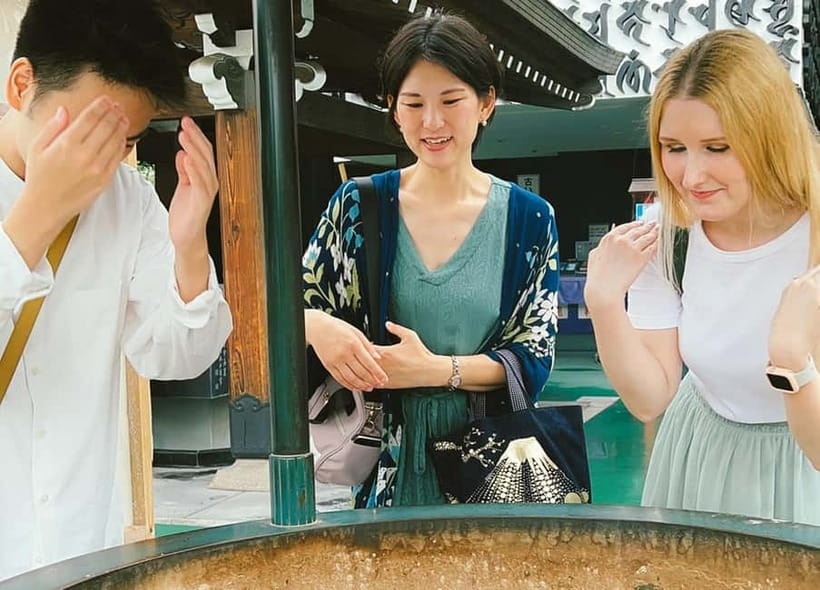
The next guided stop is Tatsumi-shindo, also planned for about 10 minutes. This adds another local point of interest before the main temple visit.
The short stop keeps the pace moving, but it also means the tour is tightly timed. If you like long pauses for photography, you may wish for more time. The guide’s role here is to connect the neighborhood to its religious customs and prepare you for the more formal etiquette at Fukagawa Fudo-do.
That progression works well. You first walk through the local area, then enter a Buddhist temple, and later compare it with a Shinto shrine. The difference becomes easier to grasp because you encounter both traditions during one compact route.
Entering Naritasan Fukagawa Fudo-do
The temple visit takes roughly 40 minutes, making it the longest stop. Admission to the fire ceremony is included in the $62 price.
Before the ritual, Manami explains how to behave. You learn about photography restrictions, the need for silence, and the proper way to sit. One unusual etiquette point concerns crossing your legs on chairs, which is regarded as rude to Buddha and the monks. This is exactly the sort of detail many short sightseeing walks leave out.
You should dress with the temple in mind. Short skirts, sleeveless shirts, see-through clothing, and hats are not allowed. Shawls are available for anyone who needs to cover shoulders or knees, which is helpful if you are visiting Tokyo in casual warm-weather clothing.
The ceremony itself is likely to be the most memorable section. The drums give it a physical force, while the fire adds drama without turning the event into entertainment. Manami’s explanations help you pay attention to the ritual’s order rather than simply watching the flames.
You will not be able to take pictures inside. That may disappoint anyone hoping for dramatic fire images, but it also removes the pressure to keep checking a screen. You can listen, watch, and follow the ceremony as it happens.
The temple stop is best for people who appreciate boundaries. You need to follow the rules, stay quiet, and accept that the local community’s needs come before your view. In return, you get a more respectful encounter with a living religious practice.
Learning how Buddhism and Shinto fit together
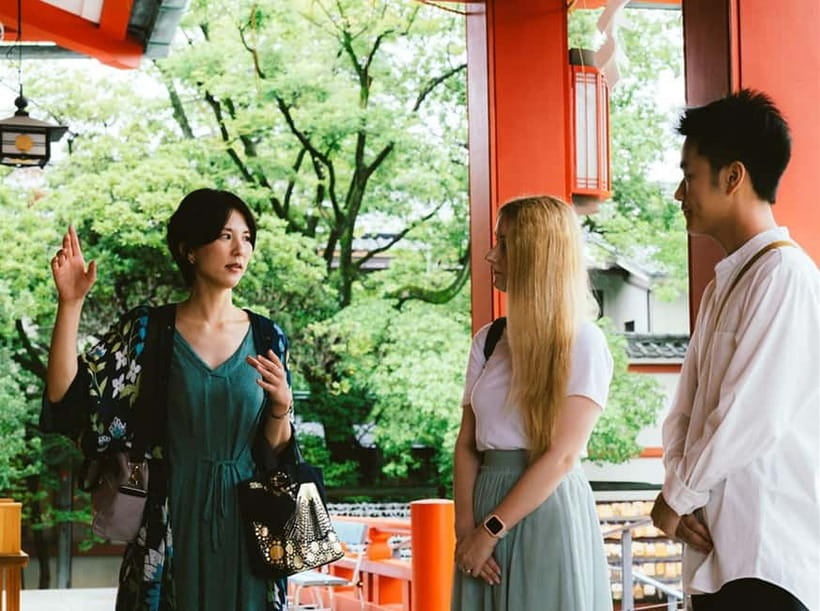
A major strength of this tour is its clear comparison of Buddhism and Shinto. Tokyo can make the two traditions appear interchangeable because temples and shrines often sit close together, and many people take part in practices linked to both.
Manami explains the difference without treating Japanese spirituality as a simple either-or choice. You learn how Japanese people may be involved with both religions and how each tradition shapes customs, buildings, symbols, and rituals.
That explanation is especially useful if you have already visited a few Japanese temples but still feel unsure about what you were seeing. You will learn practical distinctions as well as broad religious ideas. The goal is not to turn a short walking tour into a university course. It is to give you enough background to behave properly and notice more during the rest of your time in Japan.
Manami’s academic background in cultural heritage protection adds another layer. More important than the title itself is how it serves the tour: she can connect physical places with the customs that keep them meaningful. Her warm, patient style also leaves room for questions, which several visitors have praised.
Tomioka Hachimangu Shrine and its local ties
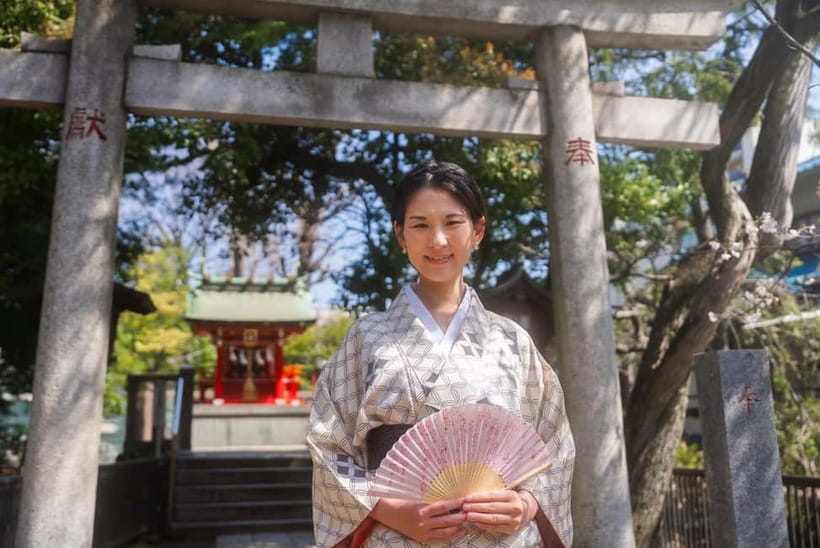
The final major stop is Tomioka Hachimangu Shrine, with about 25 minutes of guided time. Here the mood changes from the force of the Buddhist fire ceremony to a calmer Shinto setting.
Manami explains the meaning of several familiar shrine items and customs:
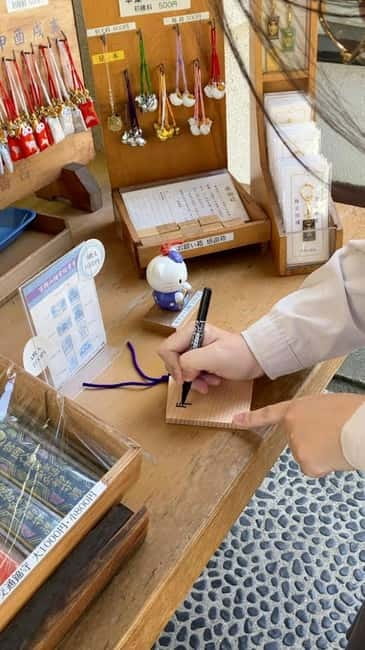
- White fortune-telling papers and what you do with them
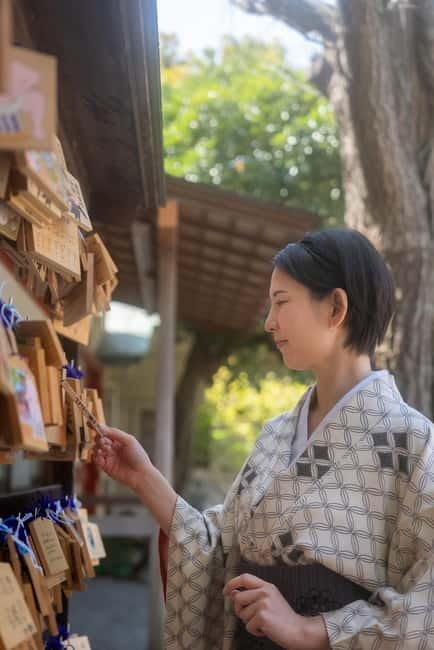
- Wooden wish plaques
- Goshuin stamps
- Shinto symbols
- Sake and its role in Shinto
- Sumo and the impressive Sumo rocks
These details give you a practical way to read the shrine. Instead of seeing white paper, wooden plaques, or sake as decoration, you learn how they connect to religious practice and community traditions.
The Sumo rocks are a memorable local detail because they show how Shinto, sake, and sumo connect in Japanese culture. You also hear family stories about Manami’s strong relationship with this shrine. That personal connection gives the final stop a human scale. You are not simply looking at an old structure. You are hearing how a local family relates to the place.
The 25-minute visit is enough for a guided introduction, though not enough for a long independent exploration. You return to Monzen-nakacho Station after the shrine, making the route easy to connect with the rest of your day.
What makes Manami’s guiding style useful
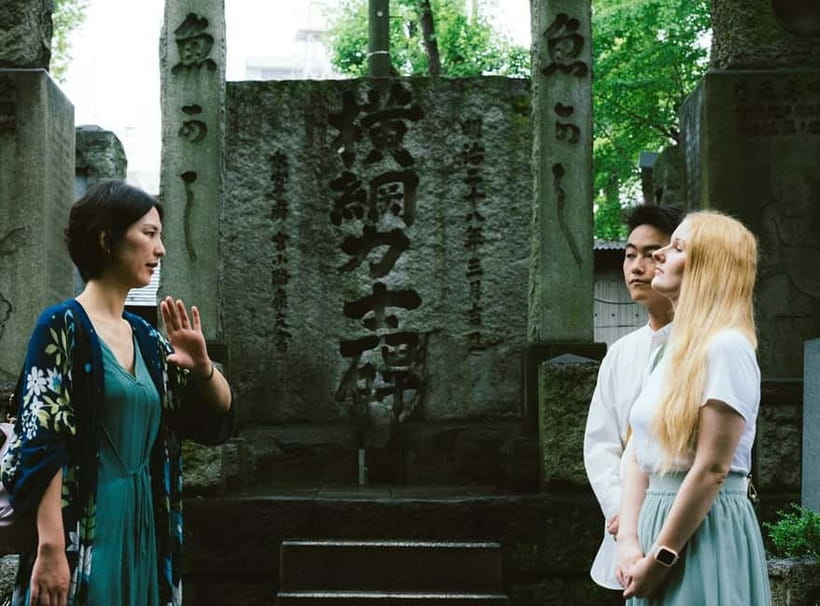
The most praised part of this experience is Manami herself. She was born and raised in the area, speaks English, and has a Ph.D. in cultural heritage protection. That combination is unusual for a short neighborhood tour.
Her local background matters because the route includes family stories and places tied to everyday community life. Her academic training matters because she can explain the meaning behind customs rather than offering only dates and names.
The feedback from people who joined the tour repeatedly highlights her kindness, patience, and ability to answer questions. One person described receiving a large amount of information about Japanese religions and rituals in a short time. That is a fair description of the tour’s character.
You should still know what kind of guide-led experience this is. It is not a casual food walk with a few temple photos added. It focuses on religious practice, etiquette, and interpretation. You will get the most from it if you arrive ready to ask questions and pay attention.
Is $62 a fair price?
At $62 per person, this is not the cheapest way to see a Tokyo temple. You can enter many religious sites on your own for little or no cost. The price makes sense because you are paying for three things that are hard to arrange alone: access to the fire ceremony, a very small group, and detailed English explanations from a local specialist.
The value is strongest if Buddhism and Shinto are important to your Japan plans, or if you have already seen major Tokyo sights and want a quieter district with more context. It is weaker if you only want fast sightseeing, good photographs, or a general introduction to Tokyo.
Admission to the Fukagawa Fudo-do fire ceremony is included. Small coins for optional offerings are not, so carry cash. The tour lasts two hours, which keeps the cost manageable and fits neatly into a morning or afternoon, but it also means the route does not allow much free time.
The high rating of 4.9 from nine ratings fits the tour’s clear strengths: Manami receives repeated praise for her insight, kindness, and patience, while the fire ceremony is singled out as especially impressive. Since the number of ratings is small, I would treat that score as encouraging rather than as proof that every person will enjoy the format.
Who should book this experience?
I would recommend it to you if you want to understand the manners behind Japanese religious sites. It is also a good fit for repeat visitors to Tokyo, people interested in cultural heritage, and anyone who prefers a small group over a large coach tour.
It suits adults and older children who can remain quiet during a religious ceremony. Children under five are not suitable, and the experience is not intended for people over 80. The tour involves walking and requires comfortable shoes.
You should think twice if your priority is photography. There is no photography, video, or audio recording inside the temple, and the shrine portion is also shaped by proper etiquette. The experience asks you to observe first and document later.
You should also allow extra time before the start to find Exit 4. The warning about the two drugstores is worth taking seriously. Meet outside the correct Kusuri no Fukutaro, use the stairs, and do not rely on simply asking for a drugstore near the station.
Practical details that shape the day
The tour offers free cancellation up to 24 hours before the start, and you can reserve now and pay later. Starting times vary, so check availability when you choose your date.
Bring:
- Comfortable shoes
- A drink
- Cash for optional offerings
- Clothing that covers shoulders and knees
Smoking is not allowed. Shoes cannot be worn indoors, and hats must be removed. Shawls are supplied if you need extra coverage.
The route ends back at Monzen-nakacho Station, so you do not need to arrange a separate ride from the shrine. The two-hour length is convenient, but the compact schedule means you should not expect a long break for food, shopping, or independent wandering.
Should you book the Monzennakacho temple tour?
Book it if you want a respectful, well-explained look at Buddhism and Shinto in an actual local setting. The strongest reasons are the small group, Manami Watanabe’s local and academic background, and the chance to watch the Fukagawa Fudo-do fire ceremony with clear guidance.
Skip it if you mainly want temple photography, a relaxed food stop, or a broad tour of Tokyo’s famous sights. The rules are firm, the ceremony is quiet viewing rather than a staged attraction, and the schedule is short.
For the right visitor, $62 buys more than admission and a walk. It gives you a better sense of how religious places function in Japanese life, plus practical manners you can use at other temples and shrines during your trip.
FAQ
Where does the tour meet?
Meet outside Exit 4 of Monzen-nakacho Station, served by the Oedo and Tozai subway lines. Look for the Kusuri no Fukutaro drugstore with a red sign.
How long does the tour last?
The experience lasts two hours and finishes back at Monzen-nakacho Station.
Is the fire ceremony admission included?
Yes. Admission to the fire ceremony at Naritasan Fukagawa Fudo-do is included in the price.
Is the tour offered in English?
Yes. The live tour guide speaks English.
Can I take photos or record inside the temple?
No. Photography, video recording, and audio recording are not allowed inside. Hats are also not allowed.
What should I wear and bring?
Wear comfortable shoes and clothing that covers your shoulders and knees. Bring a drink and cash for optional coins used during temple and shrine rituals. Shawls are available if you need extra coverage.
More Temples & Meditation in Tokyo
More tours in Tokyo we've reviewed











Temples & Meditation, compared.
 ★ 4.7Tokyo: Meiji Shrine, Asakusa, Skytree Bus Tour and CruiseFrom $12210 hours
 ★ 4.8Tokyo: Asakusa Walking Tour with Sensoji Temple VisitFrom $222 hours
 ★ 4.6Nikko: Kegon Falls, Lake Chuzenji & Toshogu TempleFrom $8911 hours
 ★ 4.5Tokyo: Kamakura & Enoshima Day Trip including Temple TicketsFrom $589 hours - 570 minutes
 ★ 4.5Tokyo: Nikko Toshogu Shrine and Kegon Waterfall TourFrom $8410h 30m
 ★ 4.5Tokyo Panoramic 1 Day: Meiji Shrine, Asakusa, Odaiba and SKYTREE®From $85