
Reviewed · AKIHABARA & ANIME TOURS
Private Akihabara anime Tour(walking Tour with photography)
Akihabara can feel like ten shopping districts stacked on top of one another. This private walk gives you a friendly guide, Nao, who helps you find the right anime shops, retro games, arcades, and cultural stops without wasting half your afternoon on trial and error.
I like the personal attention and the useful extras: Nao takes and edits photos, and the price includes taiyaki, lunch, and a souvenir. I also like that he can adjust the route for families, teens, casual fans, or serious collectors.
The main consideration is cost. At $197.06 for up to two people, it is good value for a pair who want expert help, but shopping, arcade games, and maid cafés cost extra. Expect plenty of walking and a route that may shift with weather and your interests.
In This Review
- Key points to know before you book
- Why a private Akihabara guide helps
- Starting at Akihabara Electric Town
- Yanagimori Shrine and the quieter side of Akihabara
- Lashinbang for secondhand anime finds
- Gee Store for T-shirts and cosplay items
- Kotobukiya for figures and model-building supplies
- Super Potato and the pull of retro games
- Akihabara GiGO for Japanese arcade culture
- Taito Station and the art of winning prizes
- A souvenir, taiyaki, and a proper lunch
- Photos that preserve more than your shopping list
- Price, group size, and who gets the best value
- Who should book this Akihabara walk?
- Should you book it?
- FAQ
- How long does the private Akihabara anime tour last?
- How many people can join the tour?
- Who is the guide?
- What food is included?
- Are photos included?
- Do arcade games and maid cafés cost extra?
- What is the cancellation policy?
Key points to know before you book
- Nao is the main reason to book: He focuses on your interests, from obscure figures and gaming cards to manga, history, and shrine culture.
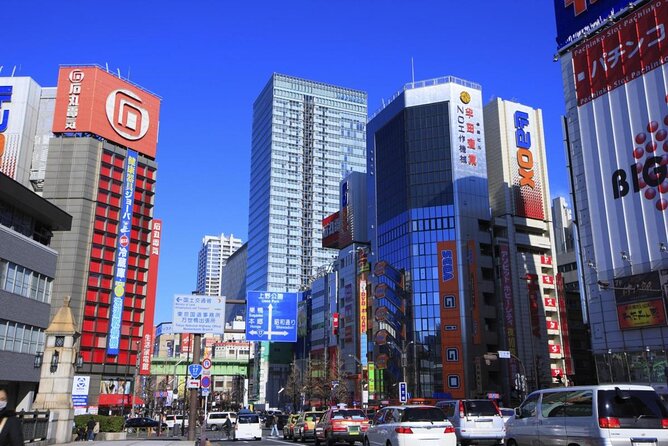
- The route covers several sides of Akihabara: You visit a shrine, anime and cosplay shops, a retro game store, arcades, and a figure shop.
- Photos are part of the package: Your guide takes photos during the walk and edits them afterward.
- Food is included: You receive Japanese taiyaki and either ramen or katsudon for lunch.
- It is private for up to two people: You get the guide’s full attention, with no unrelated group sharing the walk.
- Bring a shopping budget: Store purchases, arcade play, and maid café charges are not included.
Why a private Akihabara guide helps
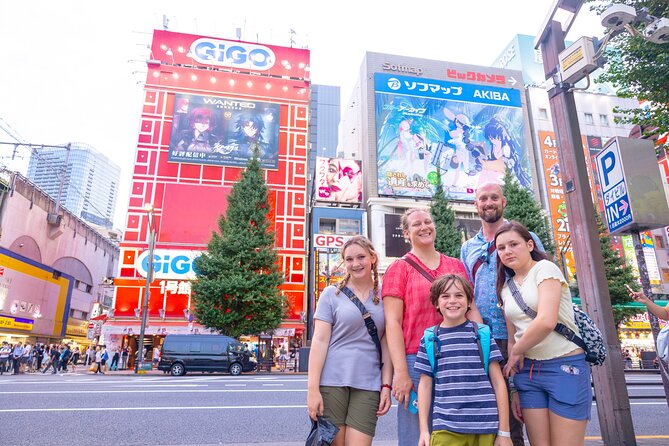
Akihabara, often called Tokyo’s Electric Town, is easy to visit but harder to read. Its shops can occupy several floors, products are often sorted by character or category, and the best place for one interest may be completely wrong for another.
That is where Nao adds value. He can point you toward figures, manga, cosplay clothing, T-shirts, gaming cards, or retro consoles instead of sending you into every store on the main road. For a first visit, this saves time. For a repeat visit, it can help you find smaller shops and more specialized items.
The private format also matters if your group has mixed interests. A family can spend time on anime and games while still getting some local culture. One child might want Pokemon, another might prefer arcade games, and a parent might care more about food or the shrine. The route is designed to respond to that mix.
The experience lasts roughly two and a half to three hours. The stated schedule allows travel time between stops, so do not expect three full hours inside shops. That is sensible in Akihabara, where a few blocks can take longer than expected once escalators, crowded displays, and browsing enter the picture.
A few more Tokyo tours and experiences worth a look



Starting at Akihabara Electric Town
The meeting point is near Jonathan’s Akihabara at 1-17-4 Sotokanda, Chiyoda City. Another meeting instruction places the start by the Akihabara Electric Town entrance, outside the Starbucks on the first floor. If the weather is cold or wet, you meet inside instead.
This is a practical place to begin because you quickly reach the district’s bright signs and anime-themed storefronts. Confirm the exact meeting detail with the provider before setting out, since the information gives both the restaurant area and the Electric Town entrance as reference points.
The tour ends back at the meeting point. There is no private transportation, so you should be comfortable walking through busy streets and moving between buildings. Public transportation is nearby, but it is not needed as part of the tour itself.
Yanagimori Shrine and the quieter side of Akihabara
The first stop, Yanagimori Shrine, gives the walk a welcome change of pace. It is linked with the anime Steins;Gate, making it relevant to fans while still offering a look at traditional Japanese religious culture.
Nao explains the shrine’s connection with a rare tanuki figure. The Japanese word for tanuki also relates to the idea of overtaking others, which gives the shrine a special meaning for people hoping to get ahead. This is the sort of small cultural detail that is easy to miss if you only visit Akihabara for shopping.
The stop lasts about 10 minutes and admission is free. It is brief, but useful. You begin with context rather than immediately entering a store, and the contrast helps you see that Akihabara is not only about electronics, figures, and flashing game screens.
Lashinbang for secondhand anime finds
Lashinbang Akihabara New Store is scheduled for about 30 minutes. This is a good stop if you are looking for anime goods at Japanese prices, particularly secondhand items and products that may be much more costly in your home country.
The advantage of having Nao with you is practical rather than simply informational. He can help you understand what you are looking at and guide you toward less obvious items. One of the strongest parts of this experience is the focus on obscure figures and small shops, not just the famous chain stores that are easy to find alone.
Give yourself room to browse. Thirty minutes can pass quickly in a shop packed with character goods, manga-related items, and collectibles. If you have a particular series in mind, tell Nao before the walk so he can shape the visit around it.
Gee Store for T-shirts and cosplay items
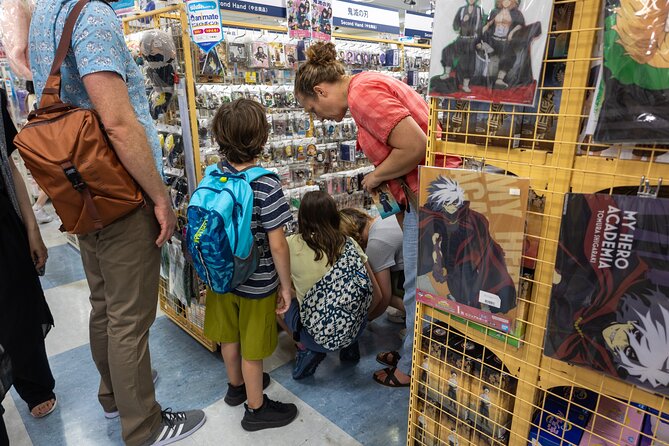
Gee Store is a useful stop for wearable souvenirs. The shop carries many anime T-shirts, a category that can be surprisingly limited in other Akihabara stores. It also sells cosplay items, so this is a better match for someone who wants something to wear rather than another boxed figure.
The planned time is about 30 minutes. That is enough for a focused look, but not necessarily a long fitting or shopping session if you have several interests. Parents shopping with teens may find this stop easier than a purely collectible-focused store, since clothing gives younger fans a practical souvenir.
Remember that purchases are separate from the tour cost. The guide can help you choose, but you pay the shop directly.
Other walking tours we've reviewed in Tokyo



Kotobukiya for figures and model-building supplies
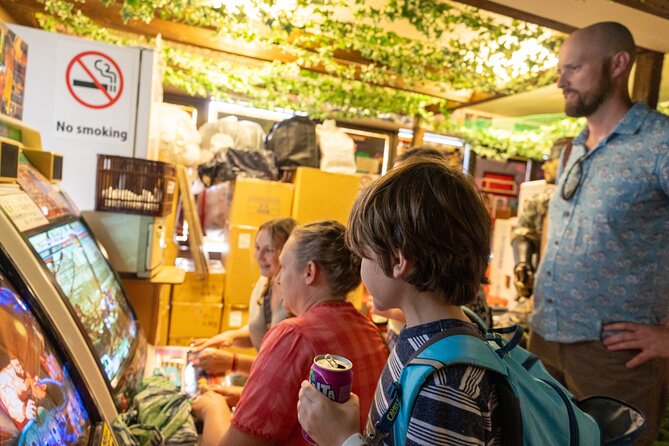
Kotobukiya Akihabara offers a different shopping experience. Anime goods fill the first and second floors, while the third floor carries plastic modeling tools. You may find products connected with Final Fantasy, Pokemon, Street Fighter, and other well-known titles.
The stop is planned for 15 minutes, so think of it as a targeted visit. If you are a model builder, collector, or fan of a specific franchise, mention that early. Otherwise, the shelves may feel like a quick survey rather than enough time for careful comparison.
This stop works well because it shows how specialized Akihabara retail can be. The district is not just one giant anime shop. Different floors and buildings serve different hobbies, and a guide can help you decide where your limited time is best spent.
Super Potato and the pull of retro games
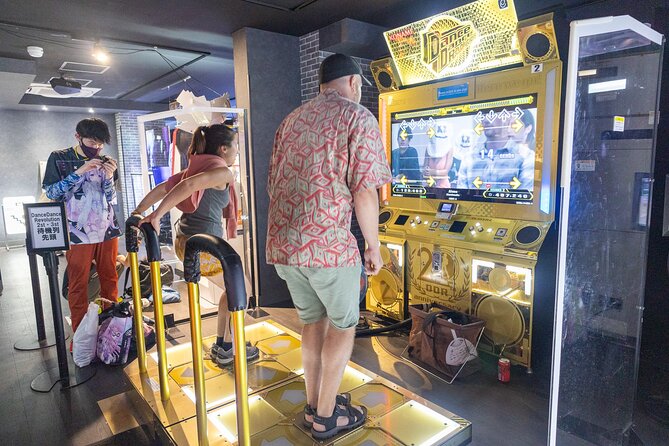
Super Potato is devoted to retro games, including older Nintendo systems such as the NES and SNES. Seeing discontinued games gathered in one place can bring back the simple pleasure of browsing old cartridges and consoles, even if you do not plan to buy anything.
The visit lasts about 15 minutes. That is short, but it gives you a clear taste of Akihabara’s older gaming culture. It also adds variety to the route, especially for parents and children who may not share the same anime interests.
Prices and stock can vary, and the tour does not include purchases. If you are hunting for a particular game, ask Nao about it before the tour rather than assuming every classic title will be available.
Akihabara GiGO for Japanese arcade culture
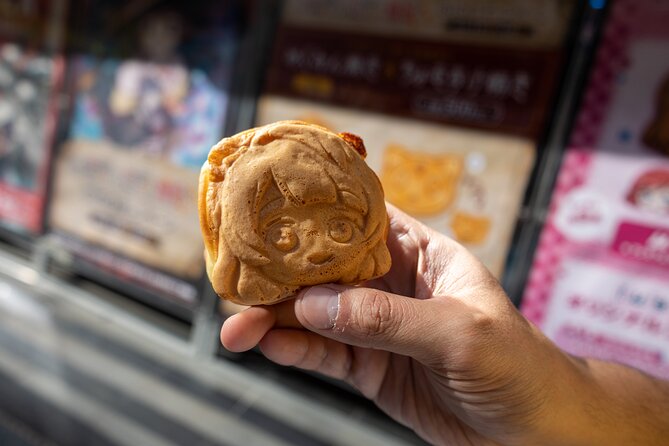
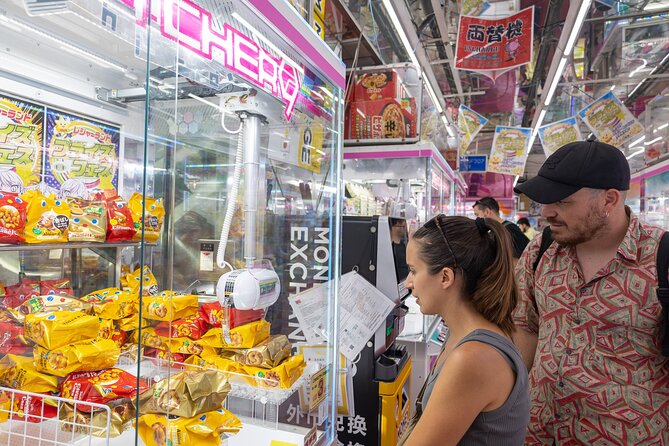
The roughly 30-minute visit to Akihabara GiGO is one of the more active parts of the walk. Japanese arcades are known for UFO catchers, fighting games, music games, quiz games, and purikura photo booths that turn pictures into decorated stickers.
This is not a demonstration-only stop. You can play, but the cost of arcade games is not included. Bring some extra yen if you want to try machines, and set a spending limit if you are tempted by claw games. They can eat a budget faster than a small bowl of ramen.
For families, this may be a highlight. It gives children and teens something to do, while Nao can explain how the different machines fit into Japanese arcade culture. The timing is long enough to try a few things, but not so long that the entire tour turns into an arcade visit.
Taito Station and the art of winning prizes
Taito Station Akihabara is aimed at people who want figures, stuffed animals, and other prizes. Nao has extensive experience with anime goods and can show you how to approach the machines.
That advice is useful because claw games are not as simple as dropping the arm and hoping. Even with guidance, success is never guaranteed, so treat the play as entertainment rather than a shopping plan. Your game costs are extra, and the value depends on how much you enjoy the challenge.
The scheduled 30 minutes gives you time to try more than one machine. It is especially suitable for younger children and teens, though anyone who has ever wanted a giant character plush may get hooked.
A souvenir, taiyaki, and a proper lunch
The final stop is listed as 明神下ハイス永眞, where you receive a souvenir and can choose from available items. The exact nature of the gift is not specified, so think of it as a small personal extra rather than a guaranteed piece of merchandise from a particular series.
Taiyaki, a Japanese sweet pancake often shaped like a fish, is also included. It makes a handy snack during a walking tour and gives you a taste of a familiar Japanese street-style treat.
Lunch is included as either ramen or katsudon. That is a real advantage in a short, busy outing. You do not have to stop the tour to work out where to eat, and the meal adds ordinary local food to a route otherwise focused on shops and entertainment.
Photos that preserve more than your shopping list
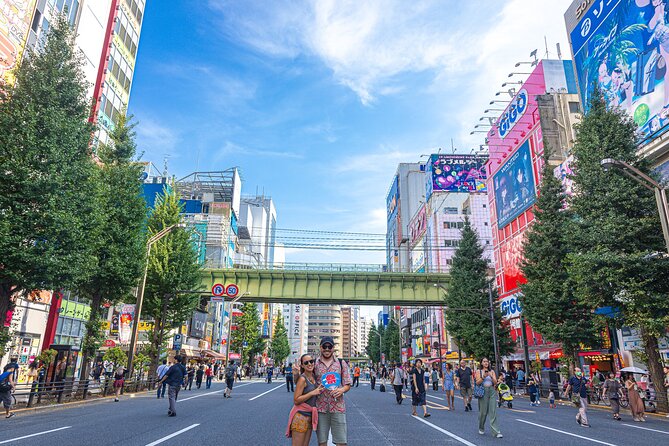
Nao takes photos during the walk and edits them afterward. This is a thoughtful feature for families, couples, or anyone who wants pictures of the experience without constantly holding a phone.
It also helps with group photos. A private guide can take pictures of your party in Akihabara rather than leaving you to ask strangers or rely on quick selfies. The available details do not specify the number of edited images or delivery method, so ask about that if photography is a major reason for booking.
The photos are a bonus, not a professional photo shoot. The main service remains the guided walk and personal help with Akihabara.
Price, group size, and who gets the best value
The price is $197.06 per group of up to two people. For two people, that works out to about $98.53 each before any shopping or arcade spending. You also receive a private three-hour guide, edited photos, snacks, lunch, and a souvenir.
I think the price makes the most sense for two people with clear interests and limited time in Tokyo. If you want help finding specific anime goods, retro games, or gaming cards, the guide may save enough time and wrong turns to justify the cost.
Solo visitors pay the full group price, so the value is less attractive unless the personal attention is especially important. Larger families should also check the booking terms carefully, since the stated group limit is two people.
The experience is booked about 36 days ahead on average, which suggests planning early if your Tokyo dates are fixed. Confirmation normally arrives at booking, but bookings made within 14 hours of departure are subject to availability and may take longer to confirm.
Who should book this Akihabara walk?
This is a strong fit for anime, manga, gaming, cosplay, and retro game fans who want help choosing where to spend their time. It also works well for families with children or teens, since Nao can adjust the route instead of forcing everyone through the same type of shop.
You do not need to be an expert fan. Several parts of the walk cover history, shrine culture, food, arcades, and local shopping, so a curious first-time visitor can enjoy it too.
I would not choose it if you want a long, slow shopping session in one store, a maid café visit included in the price, or a fully independent afternoon. Maid café charges, arcade play, private transportation, and purchases are extra.
Should you book it?
Book this tour if Akihabara feels exciting but confusing, or if one person in your group has a very specific collecting goal. Nao’s flexibility, personal guidance, and ability to connect with both serious fans and younger children are the strongest reasons to choose it.
Skip it if you already know the district well and prefer to browse alone. For a first visit, though, this private walk offers a sensible mix of anime shops, retro gaming, arcades, shrine culture, food, and photographs, all within a compact afternoon.
Free cancellation is available up to 24 hours before the start time. The experience depends on good weather and a minimum number of participants, so a weather or minimum-booking cancellation may lead to a new date or a full refund.
FAQ
How long does the private Akihabara anime tour last?
The experience lasts approximately two and a half to three hours. The schedule notes that some of the remaining time is used for travel between stops.
How many people can join the tour?
The price covers one private group of up to two people. Only your group participates in the activity.
Who is the guide?
The guide is named Nao. The tour information describes him as able to adjust the route to interests such as anime, manga, games, history, food, and arcades.
What food is included?
The tour includes Japanese taiyaki as a snack and a lunch of either ramen or katsudon.
Are photos included?
Yes. Nao takes photos during the tour and edits them. The supplied details do not state how many photos you receive or how they are delivered.
Do arcade games and maid cafés cost extra?
Yes. The cost of playing arcade games and any maid café visit is not included. Shopping purchases are also separate, and private transportation is not included.
What is the cancellation policy?
You can cancel at least 24 hours before the local start time for a full refund. Cancellations or changes made less than 24 hours before the start time are not accepted for a refund. If bad weather or an insufficient number of participants causes cancellation, you can receive a different date or a full refund.
More Private Tours in Tokyo




More Walking Tours in Tokyo
More Akihabara & Anime Tours in Tokyo


More tours in Tokyo we've reviewed






Akihabara & Anime Tours, compared.
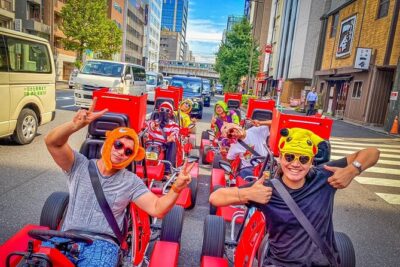 ★ 5.0Official Street Go-Kart Tour – AkihabaraFrom $61
 ★ 5.0Tokyo Go Kart: Asakusa, Skytree, and Akihabara **IDP MUST**From $99
 ★ 4.7Tokyo: Asakusa, Skytree & Akhihabara Go-Kart City ExperienceFrom $961h 10m
 ★ 4.5Tokyo Studio Ghibli Museum and Ghibli Film Appreciation TourFrom $193
 ★ 5.0Akihabara Anime & Game Adventure Walking Tour (Group or Private)From $90
 ★ 5.0Tokyo: Gameboy Mod Workshop at AkihabaraFrom $3602 hours