
Reviewed · MT FUJI DAY TRIPS
Mt Fuji & Hakone Private Tour from Tokyo: Return by Bullet Train
Mount Fuji and Hakone make a big day out from Tokyo, but this private tour gives you more control than a fixed coach route. You can pause at Chureito Pagoda, Oshino Hakkai, or Lake Kawaguchiko, then finish around Hakone and return toward Tokyo by bullet train. I like the private vehicle and the chance to shape the day around your group. I also like having a guide who can explain Japanese culture, suggest lunch, and help with the train plan.
The main catch is time. Ten hours includes driving, and the route lists seven major stops. You may need to choose between lingering at a favorite place and trying to see everything. Also, ropeway and cruise tickets cost extra, and your guide does not accompany you on the bullet train from Odawara.
In This Review
- Key points at a glance
- Why this private Fuji and Hakone route works
- Chureito Pagoda and the first Fuji photographs
- Kitaguchi Hongu Fuji Sengen Jinja, a quieter pause
- Oshino Hakkai and Fuji spring water
- Lake Yamanaka and Lake Kawaguchiko
- Crossing into Hakone by ropeway
- Lake Ashi and Hakone’s volcanic setting
- The bullet train return from Odawara
- Is $295 per person good value?
- What to know before you book
- Who will enjoy this day most?
- Should you book the Mt Fuji and Hakone private tour?
- FAQ
- How long does the tour last?
- What time does the tour begin?
- Is the tour private?
- Does the tour include the Hakone Ropeway and cruise?
- Does the guide ride the bullet train back to Tokyo?
- What happens if the weather is poor?
Key points at a glance
- Chureito Pagoda gives you the classic Fuji view: Allow about an hour for the pagoda and its famous mountain backdrop.
- The private route can bend to your interests: You can focus on lakes, shrines, village scenery, or Hakone rather than follow a rigid group schedule.
- Oshino Hakkai adds a quieter rural stop: Eight clear spring-fed ponds show how Mount Fuji’s water moves through volcanic ground.
- Hakone brings a different setting: The ropeway and Lake Ashi offer volcanic scenery, mountain views, and an optional cruise.
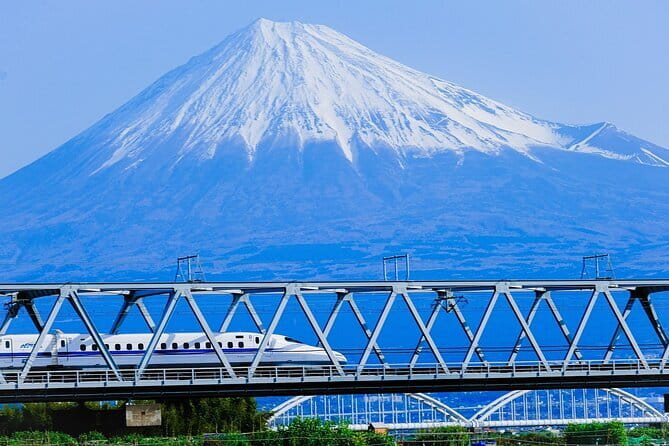
- The return is by bullet train from Odawara: Your guide helps with the arrangement, then you continue to Tokyo Station on your own.
- Extra costs matter: The Hakone Ropeway is listed at ¥3,000 per person and the Hakone cruise at ¥3,000 per person, with meals and train fares also outside the base price.
Why this private Fuji and Hakone route works
The appeal here is not simply seeing Mount Fuji. It is the freedom to make a long day feel more personal. A private group can spend less time at places that do not interest you and more time at a favorite viewpoint, shrine, or lake.
Your day begins with pickup from a Tokyo hotel or apartment by prior arrangement at about 8:00 am. You travel in an air-conditioned private vehicle with a professional guide. That matters because the Fuji Five Lakes area and Hakone are spread out, and driving between them is part of the day.
The tour is priced at $295 per person. For a larger family or group, that can be reasonable because you are paying for a private vehicle, a guide, pickup, and a full day outside Tokyo. For one or two people, the cost feels steeper. The price also does not cover lunch, drinks, snacks, admission fees, the ropeway, the cruise, or transportation from Tokyo Station to your hotel afterward.
Guides named in the feedback include Ryu and Malik Ali. Ryu is praised for taking photos, explaining Japanese culture, offering food suggestions, and helping with the bullet train connection. Malik Ali is described as clear and helpful at the various sites. The quality of your day will depend in part on who leads it, but these details point to the kind of practical help you can expect.
A few more Tokyo tours and experiences worth a look



Chureito Pagoda and the first Fuji photographs
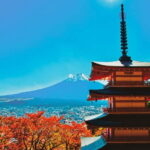
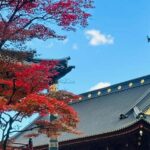
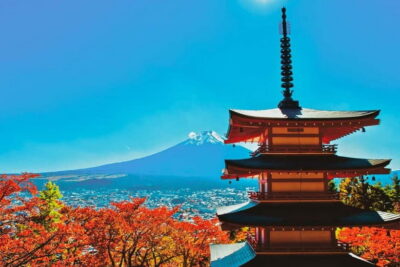
Chureito Pagoda is usually the visual centerpiece of the Fuji portion. Set above the Fuji Five Lakes region, it pairs a red pagoda with a broad view toward Mount Fuji. The setting is especially well known in cherry blossom season, though the mountain itself is the real prize and can disappear behind cloud at any time.
The listed visit lasts about one hour and admission is free. You will want that time for the view, photos, and the climb through the pagoda grounds. The stop is highly rewarding when Fuji is clear, but it is also the sort of place where weather controls the result. A private tour cannot make the mountain appear.
This is a good early stop because it gives you the signature image quickly. If Fuji is hidden, your guide may help you make better use of the remaining stops, but the day still depends on conditions. Wear comfortable shoes, since the pagoda viewpoint involves an uphill approach.
Kitaguchi Hongu Fuji Sengen Jinja, a quieter pause
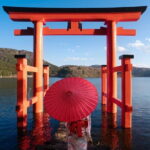
The Kitaguchi Hongu Fuji Sengen Jinja shrine offers a change of pace after the pagoda. Its red torii gates lead into a sacred area with a calm, wooded feel. You get about 30 minutes here, so think of it as a short cultural stop rather than a long shrine visit.
I like this part of the route because it gives Mount Fuji a spiritual setting. Fuji is not only a mountain for photographs. It has long carried religious meaning in Japan, and a Sengen shrine helps you see that connection.
Thirty minutes is enough to walk through the main approach and hear an explanation from your guide. It is not enough for a slow, detailed visit. If your group cares more about lakes or village scenery, this is one of the stops you may want to shorten. Admission is free.
Oshino Hakkai and Fuji spring water
Oshino Hakkai is a collection of eight ponds fed by groundwater filtered through Mount Fuji’s volcanic lava fields. The water is notably clear, and the ponds give you a close look at the natural systems behind the region’s famous lakes and streams.
Plan on about an hour here. The stop has a more local, rural character than a large scenic viewpoint, and it can be a pleasant place to slow down. You can look at the ponds, take photos, and ask your guide about Fuji’s importance to the surrounding communities.
The practical point is that Oshino Hakkai is not just another Fuji photo stop. It shows why water is central to the area. Still, if you want a quiet visit, timing matters. The overall day is ambitious, and this stop can become rushed if traffic or earlier visits run long.
Lake Yamanaka and Lake Kawaguchiko
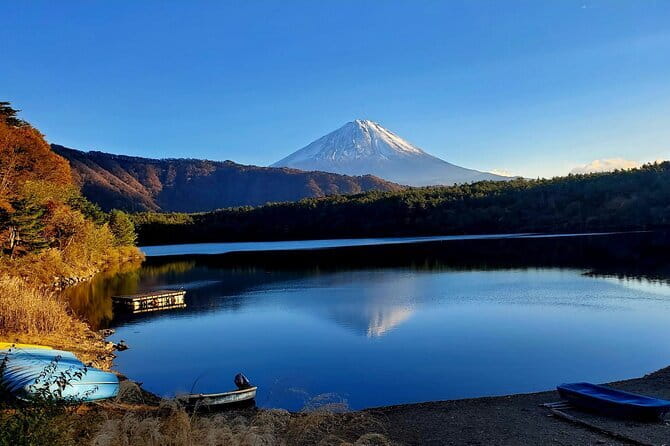
Lake Yamanaka is the largest of the Fuji Five Lakes. It offers open views, forested surroundings, and a calmer setting away from central Tokyo. The planned stop lasts about an hour, which gives you room to enjoy the lakeside scenery rather than simply step out for a photograph.
The lake can be a smart choice for groups who want breathing space. It is also useful if you prefer broad mountain and water views to a busy list of monuments. The exact experience depends heavily on weather, since Fuji may be visible or covered.
Lake Kawaguchiko is one of the best-known Fuji lakes and another strong viewpoint. Its shores combine water, villages, trees, and mountain views. You also have about an hour here. The appeal is variety: you can take in Fuji from a different angle and compare it with Lake Yamanaka.
Seeing both lakes can be worthwhile, but you should discuss priorities with your guide at the start. Chureito, Oshino Hakkai, Yamanaka, and Kawaguchiko already make a full Fuji day before Hakone is added. A private tour gives you flexibility, but it does not remove distance or traffic.
A few more Tokyo tours and experiences worth a look
Crossing into Hakone by ropeway
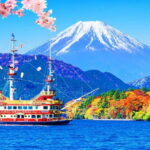
The Hakone Ropeway is the most distinctive transport experience on the route. You ride above Hakone National Park, with views toward Mount Fuji, Lake Ashi, and volcanic terrain. The aerial trip gives you a different sense of the region than the lakeside stops.
The planned visit lasts about an hour, and admission is not included. The stated price is ¥3,000 per person. Confirm the current fare and operating conditions before you go, since transportation services can change.
The ropeway is a strong choice if you enjoy scenery from above and want an active part of the day. It is less important if your main goal is cultural sites or if you have limited time. Weather again matters. Clouds can reduce the view, and an already tight schedule may make the stop feel hurried.
Ask your guide how much time is available before committing to every optional Hakone activity. The ropeway and cruise both sound appealing, but adding them after several Fuji stops can turn the final hours into a race.
Lake Ashi and Hakone’s volcanic setting
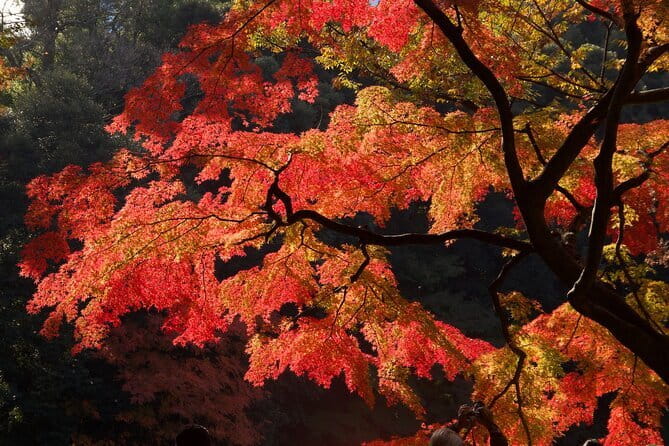
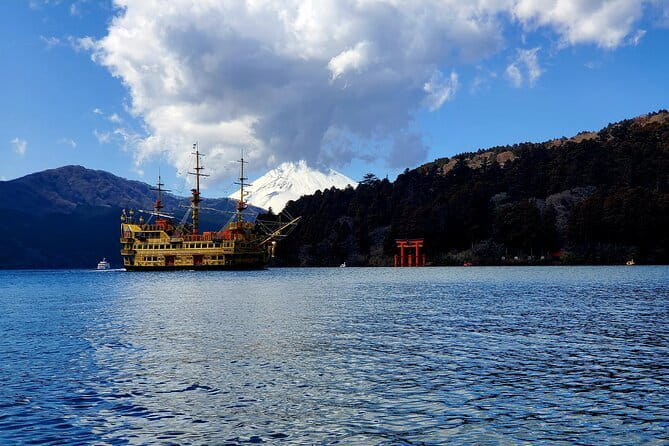
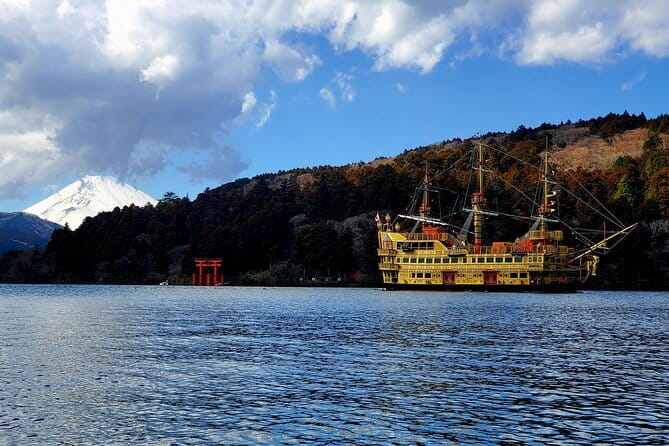
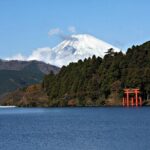
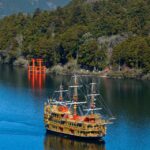
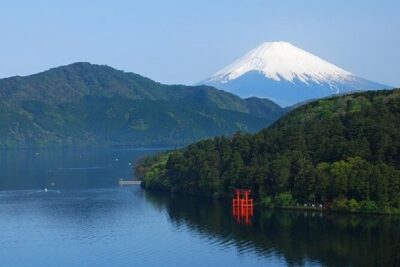
Lake Ashi, also called Lake Ashinoko, fills a volcanic caldera in the Hakone area. Forested slopes and mountains surround the water, and Mount Fuji may appear from selected viewpoints when conditions are good.
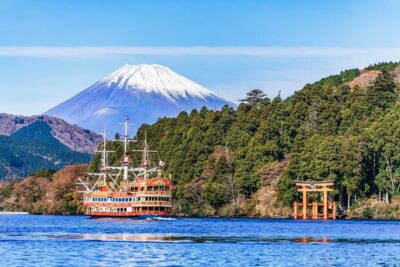
The tour allows about an hour at the lake. A cruise is listed as an option, with an admission cost of ¥3,000 per person. The cruise can make the lake feel like a proper destination rather than a quick roadside stop, but it is not part of the base price.
Lake Ashi works well as the final scenic chapter because it feels different from the Fuji Five Lakes. The day moves from springs, shrines, and open lake views into Hakone’s volcanic country. If you want both the ropeway and cruise, budget for two separate activity fees and ask how they fit into the available time.
The bullet train return from Odawara
The tour ends with drop-off at Odawara Station, where you take the bullet train toward Tokyo Station. Your guide can help arrange or book the shinkansen tickets, but the guide does not ride with you.
That detail is important. During the day, you have a guide handling explanations, suggestions, photos, and route decisions. At Odawara, you must follow the train instructions and manage the final leg yourself. The train is an efficient way to avoid a long drive back to Tokyo, but you should keep your ticket, know your destination, and pay attention to the departure information.
Transportation from Tokyo Station to your hotel or apartment is not included. Plan for that final local journey and its cost. Also confirm exactly what is included in the train arrangement, since activity fees and taxes are not covered in the tour price.
Is $295 per person good value?
The value depends on your group size and priorities. A family of five can spread the private vehicle and guide cost across several people, making the arrangement more attractive. You also avoid the limits of a large coach group and can ask for help with photographs, meals, and cultural questions.
For a couple, $590 before extra tickets, food, and the return train may be harder to justify. You are paying for privacy, pickup, a dedicated vehicle, and a guide who can manage a complicated day. You are not paying for an all-inclusive package.
Set aside money for:
- The bullet train from Odawara to Tokyo, unless separately confirmed as included
- The Hakone Ropeway, listed at ¥3,000 per person
- The Hakone cruise, listed at ¥3,000 per person
- Lunch, drinks, and snacks
- Your trip from Tokyo Station to your accommodation
The strongest value comes when you care about convenience and flexibility. If you only want one Fuji viewpoint, a simpler public transport plan may cost less. If you want Fuji, Hakone, private driving, and a fast return in one day, this package makes more sense.
What to know before you book
Start with a clear list of priorities. Tell the operator if Chureito, Oshino Hakkai, Lake Kawaguchiko, the shrine, the ropeway, or the cruise matters most. You cannot assume every stop will receive equal time, especially with traffic and weather in the equation.
Keep lunch flexible. One guide received praise for recommending food, and another day included a stop for ice cream. Those small choices can make a long outing easier, but lunch is your responsibility and is not included.
Ask for help with photos. Ryu is specifically praised for taking pictures, which is useful at Chureito and the lakes when everyone in your group wants to appear in the frame. It is a small service, but it saves you from handing your phone to strangers.
The tour requires good weather. If poor conditions force cancellation, you are offered another date or a full refund. You can also cancel for a full refund up to 24 hours before the start time. Changes or cancellations inside that window are not accepted.
Most people can take part, and the meeting area is near public transportation, but pickup is arranged from Tokyo hotels and apartments. Confirm the pickup details before the day begins.
Who will enjoy this day most?
I would recommend it most to families, small groups, and first-time visitors who want to see several major sights without working out every transfer. A private vehicle is especially useful when your group has different interests. One person can focus on shrines, another on photographs, and another on lakes and the ropeway.
It also suits people who want cultural context rather than a series of photo stops. The shrine, Fuji’s religious importance, Oshino Hakkai’s water, and Hakone’s volcanic setting give your guide plenty to explain.
It is less suitable if you dislike early starts, long travel days, or extra charges for optional activities. It is also not ideal if your dream is a slow afternoon beside one lake. This is a broad sightseeing day, not a relaxed resort outing.
Should you book the Mt Fuji and Hakone private tour?
Book it if you want to cover a lot of ground, value a private guide, and like the idea of ending with a bullet train rather than returning all the way by road. The strongest reasons are the flexible route, comfortable vehicle, Fuji viewpoints, and help with a complicated return.
Before paying, confirm the train fare, pickup details, and which Hakone activities you want. If your group is large and you can share the $295-per-person cost, the value is easier to see. If you are traveling as a pair and want only Mount Fuji, choose a narrower tour or independent plan.
FAQ
How long does the tour last?
The tour lasts approximately 10 hours, including travel time between Tokyo, the Mount Fuji area, Hakone, and Odawara Station.
What time does the tour begin?
Pickup is scheduled for about 8:00 am from a Tokyo hotel or apartment by prior arrangement.
Is the tour private?
Yes. Only your group participates, and transportation is provided in an air-conditioned private vehicle with a professional guide.
Does the tour include the Hakone Ropeway and cruise?
No. The listed cost for the Hakone Ropeway is ¥3,000 per person, and the Hakone cruise is also listed at ¥3,000 per person. These activity tickets are extra.
Does the guide ride the bullet train back to Tokyo?
No. The guide ends the tour by dropping you at Odawara Station. The guide can help with shinkansen ticket arrangements, but you continue to Tokyo Station without the guide.
What happens if the weather is poor?
The experience requires good weather. If it is canceled because of poor conditions, you can choose another date or receive a full refund. For other cancellations, cancel at least 24 hours before the start time for a full refund.
More Private Tours in Tokyo


More Hakone Day Trips in Tokyo
More Mt Fuji Day Trips in Tokyo
More tours in Tokyo we've reviewed



Mt Fuji Day Trips, compared.
 ★ 5.0Mt Fuji and Hakone 1-Day Bus Tour Return by Bullet TrainFrom $163
 ★ 4.0Mt Fuji & Hakone Cruise, Drum Show Bullet Train 1 Day from TokyoFrom $149
 ★ 4.4Tokyo Mt Fuji 5th St & Hakone Cruise Bus Tour w/Bullet TrainFrom $15410 hours
 ★ 4.5From Tokyo: Mount Fuji Full-Day Sightseeing TripFrom $6810 hours
 ★ 4.7Tokyo: Mt. Fuji Tour, Hakone Ropeway, Owakudani, Lake AshiFrom $5410 hours
 ★ 4.4Tokyo:Mt.Fuji,Kawaguchiko Oishi Park,Arakurayama Sengen ParkFrom $5410 hours