
Reviewed · SHIBUYA TOURS
Shibuya Highlights Hachiko Scramble Meiji Jingu and Sky
Shibuya packs several sides of Tokyo into one fast-moving outing: a famous dog statue, a giant pedestrian crossing, youth fashion, a quiet shrine, and a rooftop view high above the city. This private tour for up to six people gives you a guide to connect those places instead of leaving you to piece them together on your own.
I like the freedom to adjust the route, and I like that the guides can add practical help, such as taking photos, suggesting food, or helping you order. Berkay, Mitsu, and Bernal are named as guides who have provided especially attentive, easygoing service. The main catch is price: at $195.11 per group, the guide fee is reasonable for a full group, but Shibuya Sky costs extra and the walk covers a lot of ground.
- A fast tour of eight Shibuya and Harajuku sights, including Hachiko, Meiji Jingu, Takeshita Street, and Shibuya Sky
- Private guiding for up to six people, with no strangers joining your group
- A flexible route, so you can shape the outing around shopping, photos, food, or culture
- About 10 kilometers of walking may be possible, so comfortable shoes matter
- Shibuya Sky admission is separate, with adult tickets priced at 2,700 yen before 3 p.m. and 3,400 yen after 3 p.m.
- The taxi from Takeshita Street to Shibuya Sky is included, which saves time and tired feet
In This Review
- Why This Tour Works for a First Look at Shibuya
- Meeting Hachiko at the Station
- Watching the Human Flow at Shibuya Crossing
- Center-gai and the Sound of Youth Culture
- Miyashita Park and Shibuya Yokocho
- Walking Cat Street Toward Harajuku
- Omotesando and the Route to Meiji Jingu
- A Green Pause at Meiji Jingu
- Takeshita Street and Harajuku Style
- Finishing Above the City at Shibuya Sky
- What $195.11 Buys Your Group
- Pace, Distance, and Practical Details
- Who Will Get the Most From This Route
- Should You Book It?
- FAQ
- How long does the Shibuya Highlights tour last?
- How many people can join the private tour?
- Where does the tour begin?
- Where does the tour end?
- Is admission to Shibuya Sky included?
- How much does Shibuya Sky admission cost?
- Is transportation included?
- Can the route be customized?
- What happens if the weather is poor?
Why This Tour Works for a First Look at Shibuya
Shibuya can feel like several cities stitched together. One minute you are beside a bronze statue honoring a loyal dog. Soon you are crossing one of the most filmed intersections on earth, walking through youth-fashion streets, and then entering a wooded shrine complex that feels far removed from the surrounding towers.
This tour links those contrasts in roughly three hours. You get a broad first look rather than a slow, specialist visit to one neighborhood. I see it as a useful orientation for a first day in western Tokyo, especially if you want help understanding how Shibuya, Harajuku, and Omotesando fit together.
The private format is important. Your guide can listen to your requests and adjust the pace or focus. If your group cares more about Japanese pop culture than shopping, you can give Takeshita Street and Center-gai more attention. If you prefer a quieter cultural stop, you can spend your time at Meiji Jingu. The route is planned, but it is not meant to feel rigid.
The tradeoff is that the schedule is tight. The listed times add up to about three hours, and several stops are brief. You will see many places, but you will not have long for shopping, a full meal, or a slow look at every street.
Meeting Hachiko at the Station
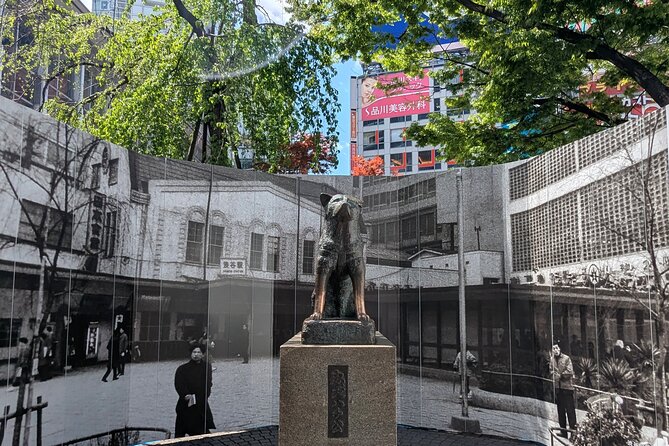
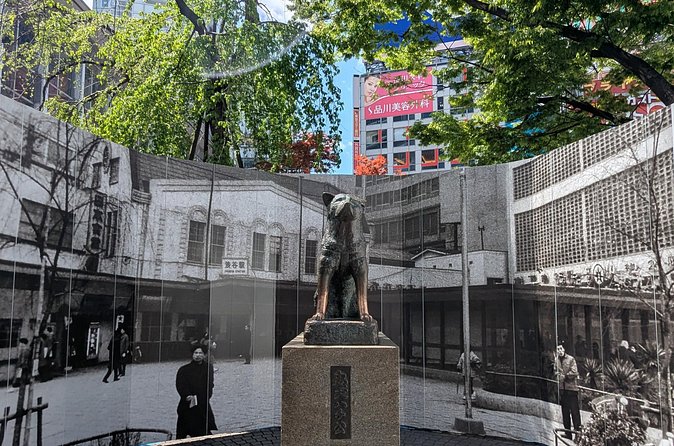
The tour begins at the Hachiko Statue near Shibuya Station. Hachiko is one of Japan’s best-known symbols of loyalty, and the small bronze statue is a natural meeting place in an area filled with people and signs.
You are given about 20 minutes here, which allows time for a commemorative photo. Come early. The statue is popular, and a line can form during busy periods. If your group wants a photo together, it is worth deciding in advance who will take it.
This stop is simple, but it gives you a clear starting point. Your guide can explain why Hachiko matters while helping your group gather before the pace picks up.
A few more Tokyo tours and experiences worth a look


Watching the Human Flow at Shibuya Crossing
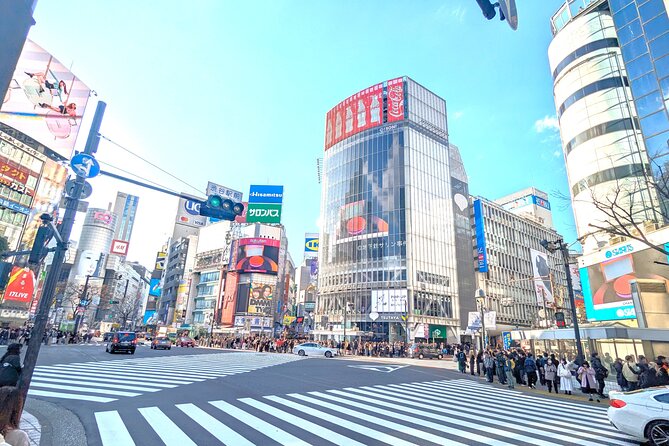
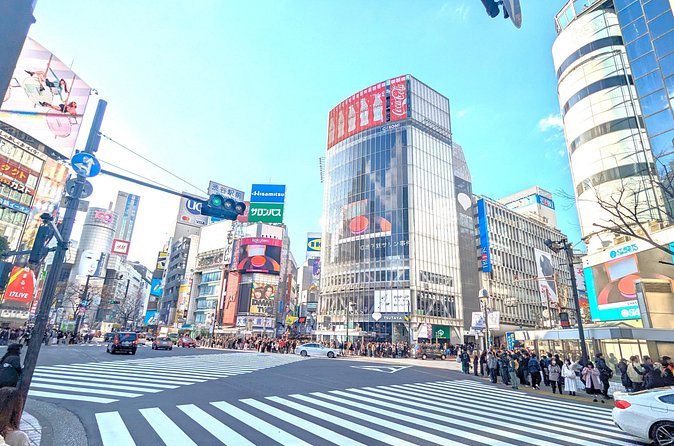
From Hachiko, you move to Shibuya Crossing. The crossing is famous because several streams of pedestrians move through the intersection at once, with as many as 3,000 people crossing during a signal change.
You have about 10 minutes here. That is enough for photos and video, but not enough for a long stop. I recommend filming one full crossing rather than snapping only a single image. The motion is the point, and video shows the unusual sight of people passing in many directions without obvious confusion.
Your guide can also help you choose where to stand and keep the group together. The stop is free, but the value comes from seeing it in context. Shibuya Crossing is not just a photo backdrop. It is the clearest sign of how the district mixes transport, shopping, office life, and entertainment in one tight space.
Center-gai and the Sound of Youth Culture
The next stop is Shibuya Center-gai, also called Center Street. You get about 15 minutes to walk through a commercial zone lined with international restaurants, clothing shops, general stores, game shops, and other businesses.
This is a good place to ask your guide about Japanese youth culture. Center-gai has long been connected with changing styles and popular entertainment, so it helps explain why Shibuya has such a strong pull for younger shoppers and trend-conscious visitors.
Fifteen minutes will not cover every side street. Think of this as a guided introduction, not a shopping session. If you want to buy clothes, browse game shops, or stop for food, tell your guide early so the route can be adjusted.
Miyashita Park and Shibuya Yokocho
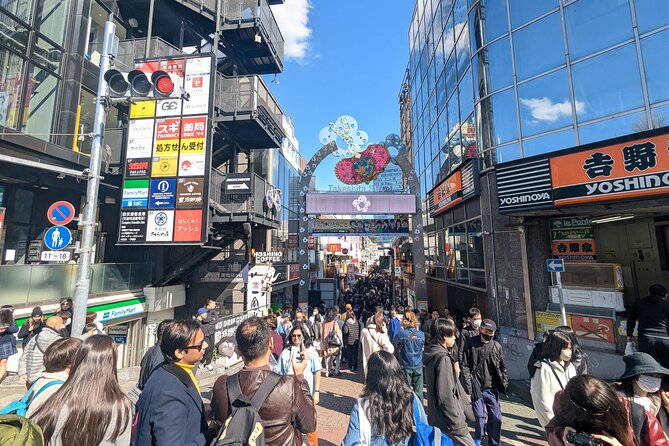
On the way to Miyashita Park, you pass Shibuya Yokocho, an area lined with red lantern izakayas and Japanese-style food and drink spots. The route then reaches Miyashita Park, a newer commercial complex with luxury brands, cafes, restaurants, and an open rooftop park space.
The stop lasts about 15 minutes. It gives you a quick look at a newer side of Shibuya, where shopping, dining, public space, and modern design share one development.
You might find this contrast useful after Center-gai. Center-gai feels tied to older youth culture, while Miyashita Park presents a more polished, current version of city life. The short stop is best for photos and orientation. It is not long enough to sit down for a meal or explore the shopping areas in detail.
Walking Cat Street Toward Harajuku
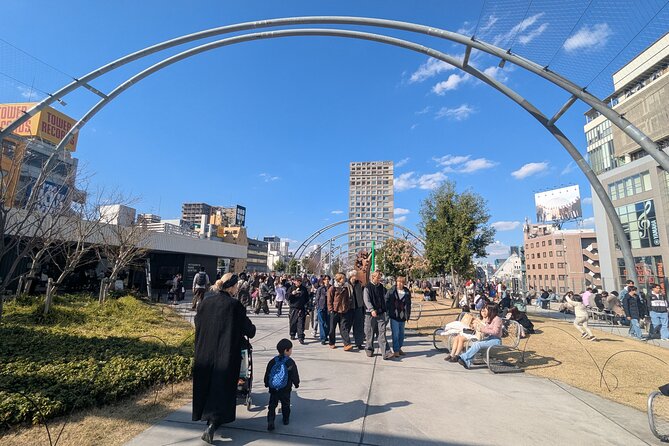
Cat Street connects the Shibuya and Omotesando areas along the route of the old Shibuya River. The walk takes about 15 minutes and passes street-brand shops, eyewear stores, stylish cafes, and other small businesses.
This part of the route is more about the feel of the neighborhood than one landmark. You get a chance to move between Shibuya and Harajuku while seeing a less overwhelming shopping street than the main crossing area.
The guide can help you decide which shops or storefronts deserve a closer look, but the schedule remains short. If you have a serious interest in fashion or design, ask about customizing the route. The tour is built to respond to requests, and Cat Street is one of the places most likely to benefit from extra time.
A few more Tokyo tours and experiences worth a look

Omotesando and the Route to Meiji Jingu
The route continues toward Meiji Jingu through Omotesando, known for its tree-lined avenue and large commercial buildings. You also pass the Tokyu-developed Omokado and Harakado buildings, which have distinctive designs and add a modern architectural note before the shrine visit.
This transition is one of the best parts of the experience. You move from shops and broad city streets into the approach to Meiji Jingu, where the mood changes quickly. A guide makes the shift easier to understand because you can ask questions while walking instead of stopping to read every sign.
The route is not only a collection of famous names. It shows how Tokyo places new retail projects beside old religious spaces and wooded paths. That contrast helps you understand the city better than a visit to one attraction alone.
A Green Pause at Meiji Jingu
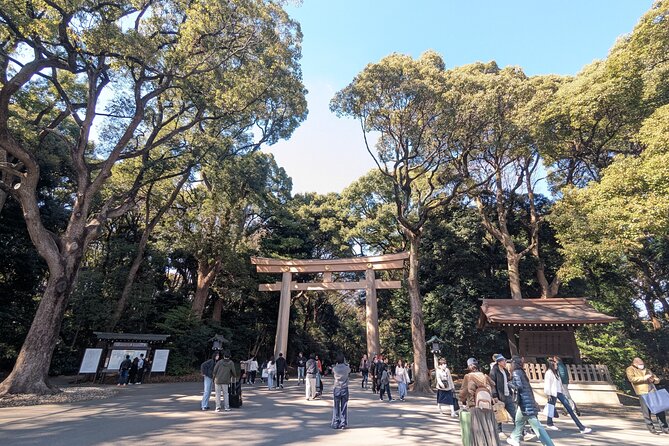
Meiji Jingu is the longest stop, at about 45 minutes. The shrine is known for having Japan’s highest visitor numbers and for its green setting in central Tokyo.
You visit the shrine grounds and have time for a commemorative photo in front of the torii gate. The forested approach offers a welcome change after the bright signs, shops, and traffic around Shibuya and Harajuku.
Keep your expectations realistic. Forty-five minutes is enough for a first visit and a peaceful walk, but it is not a detailed religious tour. The listing describes the shrine as a place of healing and spiritual energy, so your guide may provide cultural context as you go. Your time here will feel most valuable if you slow down rather than treat it as another quick photo stop.
Meiji Jingu also gives the tour a stronger cultural balance. Without it, the route would focus almost entirely on shopping, fashion, and city spectacle. With the shrine included, you see a quieter part of modern Tokyo that many first-time visitors might miss.
Takeshita Street and Harajuku Style
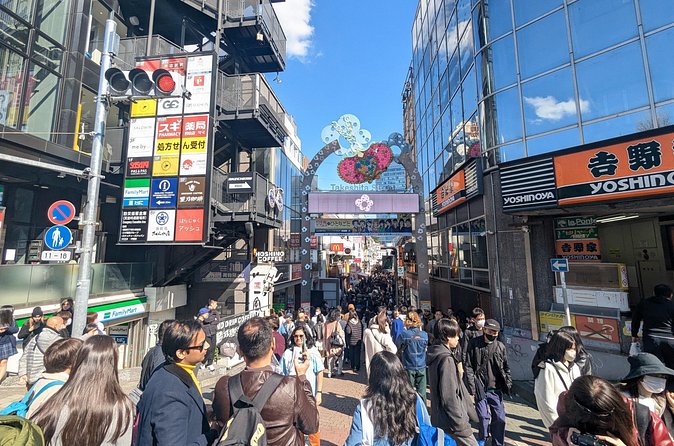
Takeshita Street gets about 20 minutes. This is the heart of Harajuku’s pop-culture image, with a reputation for kawaii fashion and styles described as edgy and gothic.
The street is a natural place to observe how Japanese youth fashion reaches an international audience. You can browse, take photos, and ask your guide about the styles and shops that make the area different from Center-gai.
Again, 20 minutes is a short window. It is enough to walk through and get your bearings, but not enough for a relaxed shopping trip. If your group wants snacks or purchases, you will need to manage the time carefully. Food, drinks, and shopping are not included.
One practical strength is the transfer afterward. The taxi from Takeshita Street to Shibuya Sky is included in the tour price. That avoids making you walk the entire distance back, and it gives the group a chance to reach the final stop without using more of its limited energy.
Finishing Above the City at Shibuya Sky
The final destination is Shibuya Scramble Square, home of Shibuya Sky. The guided portion ends there, and you can enter the observation deck if you have arranged a separate ticket.
Shibuya Sky tickets are not included. Adult admission costs 2,700 yen before 3 p.m. and 3,400 yen after 3 p.m. Child admission is listed at 1,200 yen. Ticket supply is limited, and tickets for the next 10 days may be sold out, so you should reply to the booking email if you want the provider to help secure entry.
The tour gives you about 20 minutes at the final stop, but the end of the guided experience is not the same as the end of your visit to Shibuya Sky. Plan to allow extra time if you want to enjoy the observation deck properly.
Timing matters here. A morning or early afternoon visit costs less for adults than admission after 3 p.m. The later price may still be worthwhile if you want a different view, but you should make the decision before booking because the tour timing and ticket availability need to match.
The rooftop viewpoint is a strong finish because it lets you look back at the district you have just walked through. You have seen the crossing from street level, then the shops and shrine approaches on foot. From above, those pieces become easier to place.
What $195.11 Buys Your Group
The $195.11 price covers the guide fee for a private group of up to six people. It does not cover food, drinks, shopping, or admission to Shibuya Sky.
For a full group, the cost works out to about $32.52 per person before the observation-deck ticket. That is a fairer value for six people than for one or two, since the price is per group rather than per person. Solo visitors and couples should compare it with a smaller shared tour or self-guided route.
The strongest value is not admission savings. Most stops are free. You are paying for route planning, a private guide, photo help, local suggestions, and the ability to change the outing around your interests.
The personal help can be useful. Berkay has helped a group choose a ramen restaurant and order there, and offered to send a slideshow of photos from the day. Mitsu is described as especially attentive and willing to fulfill custom requests. Bernal provided an easygoing route through Shibuya and advice for later sightseeing.
Those details suggest the experience can be more than a fixed walk, but you should state your priorities clearly. Ask for food help, more shopping time, extra photos, or a stronger focus on shrine culture when you book or when the guide contacts you.
Pace, Distance, and Practical Details
The tour lasts about three hours and begins at the Hachiko Statue, at 2 Chome-1 Dogenzaka in Shibuya. It ends at Shibuya Scramble Square, not back at the starting point.
The route includes several walking sections, and one booking account describes covering about 10 kilometers. That distance may vary with customization, but you should wear comfortable shoes and expect an active outing.
The tour is private, so only your group participates. Most people can take part, it is near public transportation, and service animals are allowed. A mobile ticket is provided, and booking confirmation is received at the time of booking.
The stated operating schedule lists Saturday and Sunday availability from 10 a.m. to 3 p.m. during the published operating period. Check the actual date and start time before paying, especially if you are trying to line up the tour with a Shibuya Sky reservation.
Free cancellation is available up to 24 hours before the start time for a full refund. A cancellation or change made less than 24 hours before the start time is not accepted for a refund. The experience depends on good weather, so a weather cancellation brings the choice of another date or a full refund.
Who Will Get the Most From This Route
I would choose this tour for a family, first-time visitor, or small group that wants a guide without joining a large bus or walking party. The route gives you the big Shibuya sights, but the private format lets you ask questions and shift the focus.
It also suits people who want photos. Hachiko, the crossing, Meiji Jingu’s torii, Takeshita Street, and Shibuya Sky all offer different settings, and guides have helped with photos during the outing.
You may want something else if you prefer slow exploration. The route moves quickly, and the short stops leave little time for shopping or a sit-down meal. A dedicated Harajuku fashion walk, shrine visit, or Shibuya food tour would give one interest more room.
Should You Book It?
Book this tour if you want an efficient first look at Shibuya and Harajuku, prefer a private guide, and value flexibility over a slow, highly focused visit. It is especially good for groups of four to six, where the per-person cost becomes more attractive.
Before booking, budget separately for Shibuya Sky and reply promptly to the booking email if you want help securing a ticket. Also tell the guide what matters most to you. With that small bit of planning, this tour can turn a confusing stretch of western Tokyo into a clear, lively introduction.
FAQ
How long does the Shibuya Highlights tour last?
The tour lasts approximately three hours.
How many people can join the private tour?
The price covers one private group of up to six people.
Where does the tour begin?
The meeting point is the Hachiko Statue at 2 Chome-1 Dogenzaka, Shibuya, Tokyo.
Where does the tour end?
The tour ends at Shibuya Scramble Square, where Shibuya Sky is located.
Is admission to Shibuya Sky included?
No. Shibuya Sky tickets are sold separately.
How much does Shibuya Sky admission cost?
Adult tickets cost 2,700 yen before 3 p.m. and 3,400 yen after 3 p.m. Child admission is listed at 1,200 yen.
Is transportation included?
The taxi fare from Takeshita Street to Shibuya Sky is included in the tour price. Food, drinks, and shopping are not included.
Can the route be customized?
Yes. The route and destinations can be adjusted to suit your requests, so you should tell the guide what you want to see or do.
What happens if the weather is poor?
If the experience is canceled because of poor weather, you can choose another date or receive a full refund. You can also cancel up to 24 hours before the start time for a full refund.
More Temples & Meditation in Tokyo
More Shibuya Tours in Tokyo


More tours in Tokyo we've reviewed


Shibuya Tours, compared.
 ★ 5.0Official Street Go-Kart in ShibuyaFrom $76
 ★ 4.9Tokyo: Street Kart Experience in ShibuyaFrom $741 hour
 ★ 5.0Shibuya Meltdown Nightlife Tour: All-You-Can-Drink Bar HoppingFrom $106
 ★ 5.0Shibuya Official Street Go-Kart in Shibuya AnnexFrom $69
 ★ 5.0Tokyo: Shibuya Food Tour (13 dishes and 4 Eateries)From $77
 ★ 5.0Best of Shibuya Food TourFrom $217