
Reviewed · TOKYO FOOD TOURS
Tsukiji Fish Market: Street Food Tour with Tasting
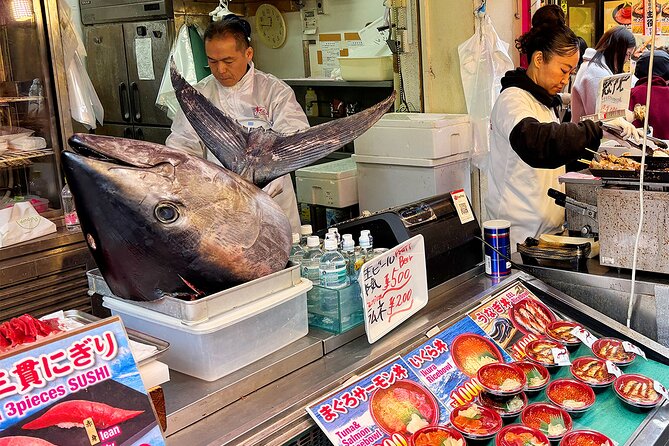
Tsukiji is best understood one bite at a time. This two-hour tour moves through the market with a local guide, pairing familiar Japanese foods with the small techniques that make them taste better. The special wasabi set is a clever touch, especially with raw fish, and the fish-cutting demonstration gives the market’s seafood trade a human face.
I like the wide tasting menu, which includes sushi or a seafood bowl, Wagyu, grilled eel, tamagoyaki, shumai, and dessert. I also like the practical guidance from Kawa and Tomo. Kawa can steer you through crowded lanes, while Tomo has asked stall owners follow-up questions for visitors who wanted more detail.
The main drawback is the price: $97.55 per person is a serious bill for two hours, particularly if you mainly want to graze at market stalls. The value improves if you want a structured introduction, several substantial tastings, a fish-cutting show, and cultural context without planning the route yourself.
In This Review
- Key points to know before booking
- What the $97.55 price buys you at Tsukiji
- Starting at Tsukiji Hongwanji Temple
- Tsukiji Jogai Market, where the tasting begins
- The wasabi set changes the seafood experience
- The fish-cutting demonstration and seafood bowl
- Inside the working market
- Why the short temple visit belongs here
- Timing, group size, and getting the most from the tour
- Who should book this Tsukiji food tour?
- Should you book the Tsukiji Fish Market street food tour?
- FAQ
- How long does the Tsukiji Fish Market food tour last?
- Where does the tour meet?
- Where does the tour end?
- What food is included?
- Is a fish-cutting demonstration included?
- How many people can join the tour?
- Can I cancel for a full refund?
Key points to know before booking
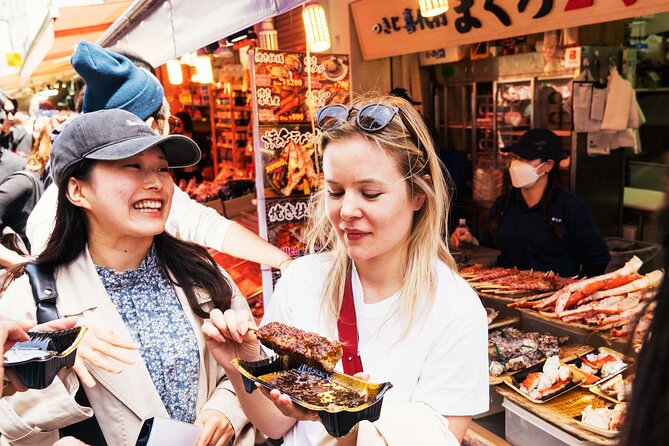
- A full Japanese tasting set: Expect premium sushi or a seafood rice bowl, Wagyu beef, menchi katsu, tamagoyaki, eel, shumai, and strawberry dessert.
- A traditional fish-cutting show: A skilled chef fillets a whole fish and explains the craft behind the seafood you eat.
- Fresh wasabi has a starring role: Your guide provides a wasabi set designed to sharpen and deepen the flavor of the food.
- Two guides receive special praise: Kawa is good at managing the market’s busy lanes, while Tomo helps with questions for stall owners.
- A small group format: The maximum is 15 people, enough for guidance without the scale of a large coach tour.
- A temple visit adds balance: Tsukiji Hongwanji gives you a short look at Japanese Buddhist culture after the food stops.
What the $97.55 price buys you at Tsukiji
At first glance, nearly $100 for a two-hour food walk can seem steep. Tsukiji has many stalls where you can buy food directly, and independent visitors can explore the market without paying an admission fee.
The useful question is not simply how much food you receive. It is what you would otherwise need to arrange yourself. This tour brings together several types of Japanese food, a fish-cutting presentation, a guided walk through the market, a special wasabi tasting, and a temple visit. You also get someone to help explain what you are seeing and tasting.
The food list is unusually broad for such a short outing. You are not limited to sushi. The menu includes a premium sushi serving or seafood rice bowl, a Wagyu skewer, Wagyu menchi katsu, tamagoyaki, grilled eel, shumai, and strawberry dessert.
That range matters because Japanese food culture is not one flavor or one cooking method. You get raw seafood, grilled food, fried meat, a sweet omelette, a dumpling, and dessert. The tour works best for someone who wants a guided sampler rather than a single signature dish.
The value is less convincing if you already know Tsukiji well, speak Japanese comfortably, and plan to choose your own stalls. It is also less appealing if your priority is a long, leisurely meal. The schedule is compact, and the food is spread across several parts of the experience.
A few more Tokyo tours and experiences worth a look

Starting at Tsukiji Hongwanji Temple
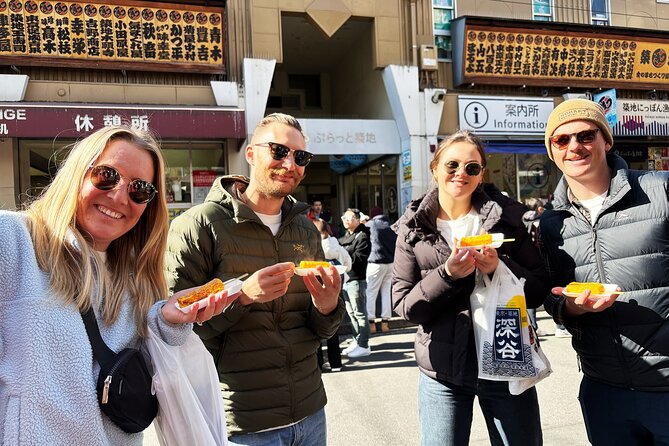
The meeting point is the main hall of Tsukiji Hongwanji Temple at 3-chōme-15-1 Tsukiji. This is a practical starting point because the temple itself becomes part of the visit, rather than being an unrelated landmark added at the end.
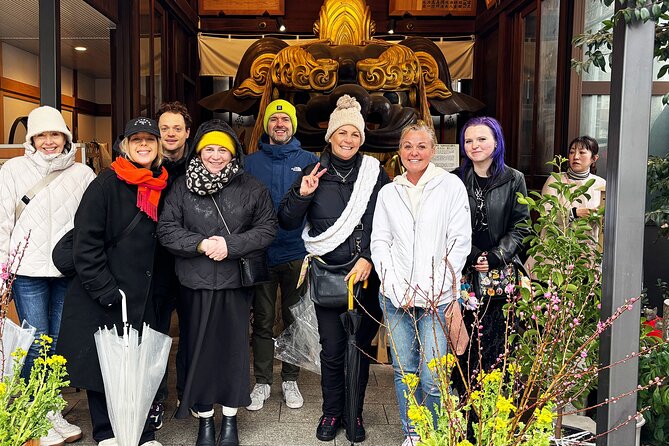
You begin with a short introduction to the temple and Japanese Buddhism. The temple stop lasts about 15 minutes, so do not expect a full religious tour or an extended architectural study. Think of it as a brief cultural frame for the market nearby.
That opening can help you see Tsukiji as more than a row of food stalls. The area connects commerce, daily eating habits, religious life, and the long practice of preserving and preparing food. Your guide explains the temple’s appeal and its place in Japanese culture before you move toward the market.
The exact order makes the temple either your first or final point in the practical flow of the tour, but the stated meeting and ending point are the same. You return to the meeting point when the activity ends, which makes the excursion easy to fit into a day of sightseeing.
Tsukiji Jogai Market, where the tasting begins
The main food portion takes place at Tsukiji Jogai Market, the outer market area. The first market segment lasts about 45 minutes and is built around walking, tasting, and learning from the guide.
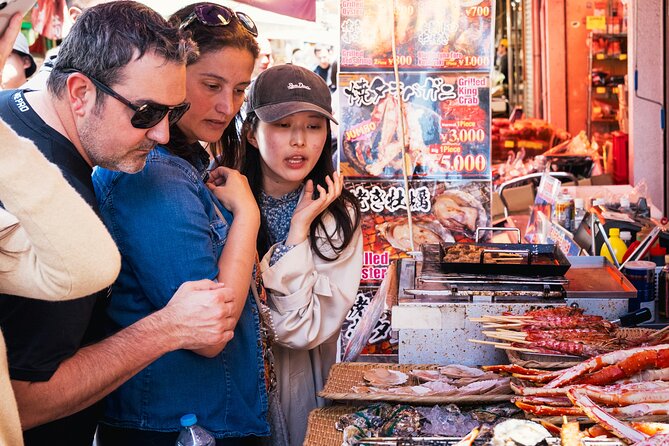
This is where a local guide can save you time and uncertainty. Market lanes can be busy, and Kawa is especially good at guiding a group through them. That matters when you are trying to watch where you step, keep up with the group, and pay attention to food being prepared in front of you.
You can expect the guide to introduce foods and explain how they fit into Japanese cooking. The tour focuses on artisan methods, flavor-enhancing techniques, and traditional preservation practices that bring out umami. Those details give each bite a little context instead of turning the outing into a simple checklist of snacks.
The tasting line-up is the tour’s main strength. Premium sushi or a seafood bowl gives you the central market experience, while the Wagyu skewer and Wagyu menchi katsu show how Japanese beef appears in both grilled and fried forms.
Tamagoyaki adds a different note. This sweet omelette is a familiar market food, but it also shows how a basic ingredient can become a carefully made specialty. Grilled eel brings a smoky, savory taste, while shumai offers a softer dumpling texture.
The strawberry dessert gives you a clear finish rather than ending on seafood or meat. It also helps keep the tasting varied. You will not spend the entire tour comparing raw fish, which is useful if your group has mixed food preferences.
Tomo’s guiding style is useful for curious eaters. She has shared details about the items on display and asked stall owners additional questions on behalf of visitors. That is a small service, but it can make a difference. You get a better chance to understand what you are eating instead of simply accepting a plate and moving on.
The wasabi set changes the seafood experience
The special wasabi set deserves more attention than its short description might suggest. Many people think of wasabi as a sharp green paste that accompanies sushi. Fresh wasabi can be more rounded and fragrant, and the guide uses the set to show how it can affect the flavor of raw fish.
This is not presented as a separate cooking class. It is a guided tasting lesson built into the market walk. You can compare the food with and without the wasabi and notice how the seasoning changes the overall taste.
The detail is especially useful for anyone who has only tried the common prepared version. It gives you a direct way to think about balance: the wasabi is not simply there to create heat. It can add aroma and a cleaner finish to seafood.
Since the tour includes either premium sushi or a seafood rice bowl, this tasting element fits naturally into the meal. It also gives the guide something specific to explain, rather than relying only on general facts about Japanese cuisine.
The fish-cutting demonstration and seafood bowl
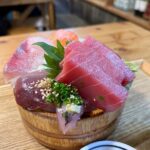
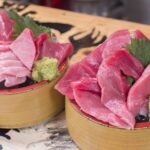
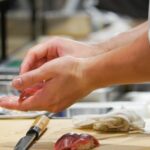
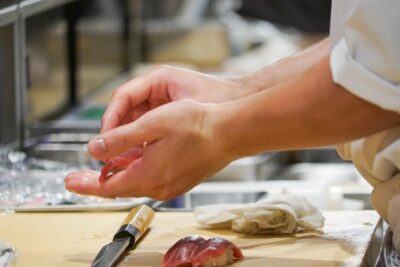
The second Tsukiji Jogai Market stop lasts about 30 minutes and centers on an exclusive fish-cutting show. A skilled chef fillets a whole fish using traditional techniques, then you enjoy a fresh seafood bowl.
This is a strong part of the tour for anyone interested in craftsmanship. Filleting a whole fish is not just a performance. It shows how much care goes into turning a market product into something ready to eat. The cuts, handling, and method connect directly to the seafood on your plate.
The demonstration also gives you a better sense of why traditional techniques matter. The experience explains how Japanese food makers preserve ingredients and bring out umami. You see the work behind the meal instead of encountering seafood only as a finished dish.
The seafood bowl afterward provides a clear payoff. It is not merely a visual demonstration followed by more walking. You get to eat a fresh seafood dish while the process is still fresh in your mind.
There is one practical limit here. The provided schedule does not name the fish or specify the exact bowl contents, so you should not book this expecting a particular species. The attraction is the preparation, freshness, and connection between the cutting show and the meal.
A few more Tokyo tours and experiences worth a look

Inside the working market
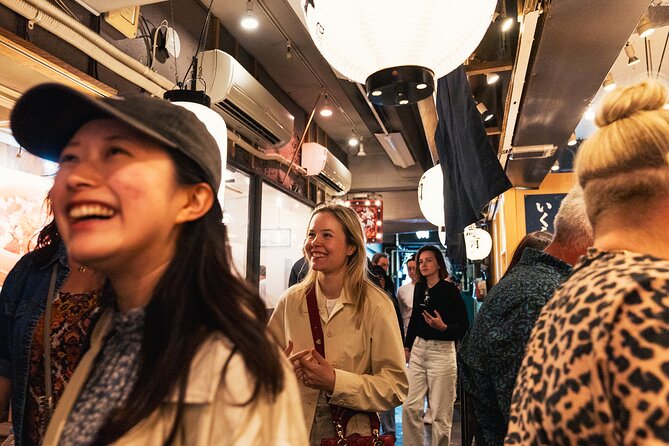
A separate 30-minute stop takes you into Tsukiji Fish Market, where professional traders operate. This portion shifts the mood from tasting to observation.
The important distinction is that you are not only visiting a food arcade designed for casual eating. You also get a look at the market as a place of trade. That adds useful context to the stalls and dishes you have already encountered.
Your guide can help you understand the market’s role in Japanese culinary life, including the work and traditions behind the food. You are likely to notice a different pace here than in the tasting areas, with business activity taking priority over sightseeing.
This is also where group size matters. The maximum is 15 people, which keeps the outing relatively manageable, though the lanes can still feel crowded. You should stay close to the guide and expect the route to move at a steady pace.
The market stop may be less satisfying for someone who wants to shop independently. The purpose is to see how the market functions with guidance, not to give you unlimited time at each stall.
Why the short temple visit belongs here
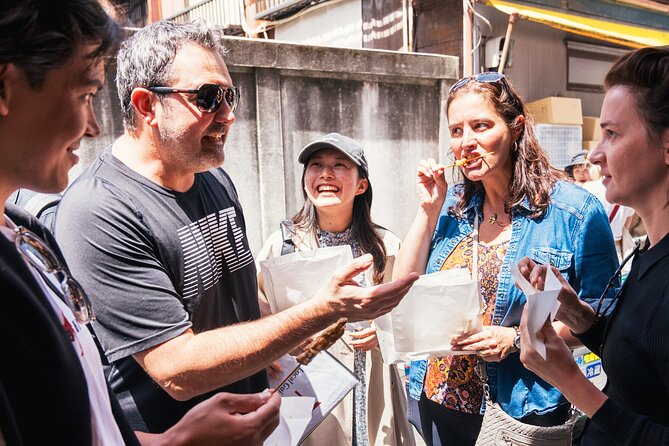
The 15-minute visit to Tsukiji Hongwanji Temple may seem secondary beside the food. I think it improves the structure of the tour.
Tsukiji can easily become a rapid series of tastings. The temple gives you a quiet cultural counterpoint and a chance to consider the area beyond eating. Your guide discusses Buddhism, the temple’s charm, and its place in Japanese culture.
The visit is brief, so keep your expectations in check. You will not receive a full history lecture or have time for a long independent exploration. But as part of a two-hour introduction, it adds variety and prevents the experience from feeling like an expensive snack crawl.
It also makes the meeting point more memorable. Starting and finishing at the same location helps with navigation, and the temple gives you a clear landmark in a busy part of Tokyo.
Timing, group size, and getting the most from the tour
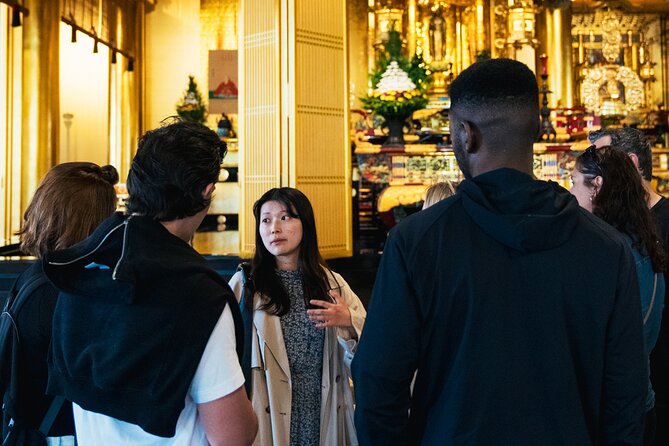
The activity lasts about two hours. That is enough time for a focused introduction, but not enough for a relaxed meal at every stop. You should arrive ready to keep moving between tastings and demonstrations.
The mobile ticket is convenient, and confirmation is provided at booking. The meeting point is near public transportation, which makes it practical to reach from other parts of Tokyo. The tour ends back at the starting point, so you do not need to solve a new transport problem immediately after the final stop.
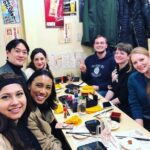
A maximum of 15 people offers a middle ground. You get the energy of a small group, but the guide may still need to repeat information or manage different food preferences. Kawa’s ability to navigate the busy market is especially useful here.
Tomo’s habit of asking stall owners extra questions is another detail worth valuing. If you are interested in ingredients, preparation, or the meaning of a dish, ask your guide directly. The experience is likely to be more rewarding when you treat it as a conversation rather than a passive tasting.
The tour is suitable for most people, and no special level of fitness is stated. Still, market visits involve walking and standing. The compact schedule means you should avoid planning another fixed appointment too close to the end, even though the official duration is about two hours.
Who should book this Tsukiji food tour?
I would recommend it to a first-time visitor who wants a clear introduction to Tsukiji without spending hours deciding where to eat. It is also a good match for food-focused visitors who want more than sushi, especially those interested in fish preparation, Wagyu, wasabi, and Japanese cooking methods.
Families and mixed groups may appreciate the variety. One person can focus on seafood, another on beef, and someone else can enjoy tamagoyaki, shumai, or dessert. The guide can also help explain unfamiliar foods.
You should think twice if you are on a tight budget. Nearly $100 is a lot when the market itself has no general admission charge. You should also look elsewhere if you want a long, slow lunch, extensive shopping time, or a highly specialized lesson on one ingredient.
Free cancellation up to 24 hours before the start gives you useful flexibility. Inside that 24-hour window, the payment is not refunded and changes are not accepted, so keep the local start time in mind when making plans.
Should you book the Tsukiji Fish Market street food tour?
Book this tour if you want variety, guidance, and context in a short visit. The combination of market food, a fish-cutting show, fresh wasabi, professional traders, and Tsukiji Hongwanji Temple gives you a broader picture than a simple stall-by-stall snack stop.
The price makes sense when you value the guide’s role. Kawa can manage the market’s crowded lanes, and Tomo can help you get answers from stall owners. Those services are particularly useful if you are new to Tokyo or unsure how to approach the market.
Skip it if you are comfortable exploring alone and would rather spend $97.55 on several self-selected meals. For everyone else, this is a compact, well-planned way to taste across Japanese food traditions while seeing how Tsukiji works behind the plate.
FAQ
How long does the Tsukiji Fish Market food tour last?
The experience lasts approximately two hours.
Where does the tour meet?
The meeting point is Tsukiji Hongwanji Temple, at 3-chōme-15-1 Tsukiji, Chuo City, Tokyo 104-0045, Japan.
Where does the tour end?
The activity ends back at the meeting point.
What food is included?
The tasting includes premium sushi or a seafood rice bowl, a Wagyu beef skewer, Wagyu menchi katsu, tamagoyaki, grilled eel, shumai, and a strawberry dessert.
Is a fish-cutting demonstration included?
Yes. A skilled chef fillets a whole fish using traditional techniques, followed by a fresh seafood bowl.
How many people can join the tour?
The activity has a maximum group size of 15 people.
Can I cancel for a full refund?
Yes. You can receive a full refund if you cancel at least 24 hours before the experience start time. Cancellations or changes made within 24 hours are not refunded or accepted.
More Food Experiences in Tokyo
More Tokyo Food Tours in Tokyo
More Tsukiji Market Tours in Tokyo
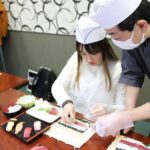
More tours in Tokyo we've reviewed










Tokyo Food Tours, compared.
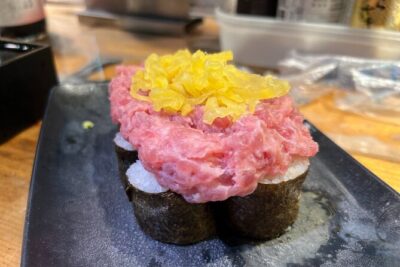 ★ 5.0Tokyo: Shinjuku Food Tour (13 Dishes at 4 Local Eateries)From $86
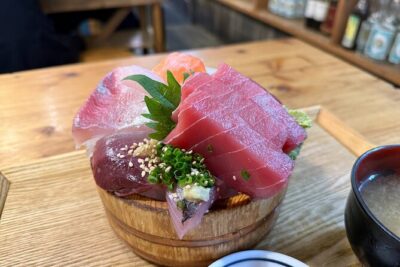 ★ 4.9Tokyo: Shinjuku Food Tour (15 Dishes and 4 Eateries)From $853 hours
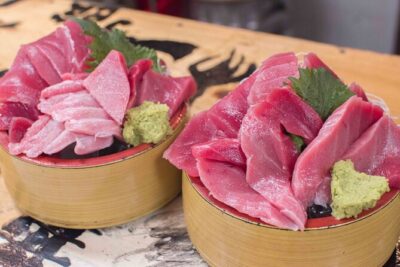 ★ 5.0Best of Shinjuku: Izakaya Food Tour (4 Stops, 14+ Tastings)From $92
 ★ 5.0Tokyo Night Foodie Tour in Shinjuku – Seasonal Sushi, Wagyu BeefFrom $111
 ★ 5.0Eat and Drink Like a Local: Tokyo Ueno Food Tour-Taverns&RamenFrom $95
 ★ 5.0Tokyo: Shibuya Food Tour (13 dishes and 4 Eateries)From $77