
Reviewed · TEMPLES & MEDITATION
Harajuku Meiji Shrine Walking Tour in Tokyo
Harajuku’s best trick is its sharp change of mood. One minute you are under towering torii gates in the quiet forest of Meiji Jingu, and soon after you are among colorful shops on Takeshita Street. I like that this $25 walking tour connects those two very different sides of Tokyo instead of treating Harajuku as only a shopping stop. I also like the small-group cap of 15, which gives you room to ask questions and hear the guide without fighting through a crowd.
The main consideration is pace. You cover three areas in roughly two hours, so this is an introduction rather than a slow, detailed visit. If you want lots of free time for shopping, photos, or shrine contemplation, you will need to return on your own.
In This Review
- Key points to know before you book
- Why this Harajuku route works so well
- Starting at Harajuku Station
- Entering the forest of Meiji Jingu
- Finding the pulse of Takeshita Street
- Reading Omotesando’s polished side
- What the guides add to the experience
- Is $25 a good value?
- Who will get the most from this walk?
- Practical details for a smoother morning
- Should you book the Harajuku Meiji Shrine Walking Tour?
- FAQ
- How long does the Harajuku Meiji Shrine Walking Tour last?
- How much does the tour cost?
- Where does the tour start?
- Where does the tour end?
- Which places are visited?
- How much time is planned at each stop?
- How large is the group?
- Is admission included?
- Can I cancel for a full refund?
Key points to know before you book
- Meiji Jingu begins the tour: Enter through torii gates and walk into a 70-hectare forested shrine setting.
- Takeshita Street brings the contrast: Spend about 30 minutes in Harajuku’s narrow pedestrian shopping lane, known for youth fashion, accessories, and themed shops.
- Omotesando finishes the route: See Tokyo’s polished side along a tree-lined avenue lined with designer stores and modern buildings.
- Miyu and Hiroko have led praised visits: Miyu is noted for clear history and useful tips, while Hiroko has helped first-time shrine visitors understand etiquette.
- The group stays fairly small: A maximum of 15 people makes questions easier than on a large city tour.
- You pay $25 for about two hours: The value comes from a planned route, local explanation, and the time saved researching where to go.
Why this Harajuku route works so well
Harajuku can feel confusing at first because its attractions are close together but very different in character. Meiji Jingu is quiet and shaded. Takeshita Street is compact, loud, and full of shops. Omotesando is broad, stylish, and architectural.
I like this route because it gives you a useful first read of the neighborhood. You are not simply ticking off three names on a map. The guide helps explain how a sacred Shinto site, a youth shopping street, and a luxury retail avenue fit into one Tokyo district.
The tour lasts about two hours, with roughly 40 minutes at Meiji Jingu, 30 minutes on Takeshita Street, and 20 minutes along Omotesando. The remaining time allows for walking between stops and guide explanations. That is enough time to get your bearings without taking up half a day.
You also avoid doing the basic research yourself. You do not need to decide which shrine entrance to use, how to connect the sites, or what details deserve your attention. For a first morning in Tokyo, that structure can be worth more than the low price alone.
A few more Tokyo tours and experiences worth a look

Starting at Harajuku Station
The meeting point is Harajuku Station at 1 Chome-18 Jingumae, in Shibuya. Starting here makes practical sense because the station places you close to Meiji Jingu and the main Harajuku sights.
You should confirm the exact meeting instructions when you book, since the station area can be busy and easy to misread on a first visit. The tour uses a mobile ticket, and booking confirmation is sent at the time of purchase.
The route ends at Tokyu Plaza Harajuku, known as HARAKADO, at Tokyu Plaza Harajuku in Jingumae. Ending there is useful if you want to continue exploring the area after the tour. You are not returned to the starting point, so plan your next stop from the finish rather than assuming you will end beside Harajuku Station.
The experience is near public transportation, and most people can take part. Service animals are allowed. The supplied information does not give a detailed walking-distance total or specify step-free access at every point, so anyone with mobility concerns should check before booking.
Entering the forest of Meiji Jingu
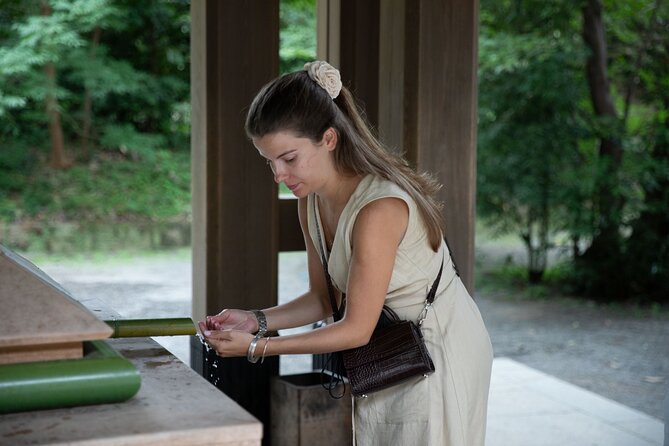
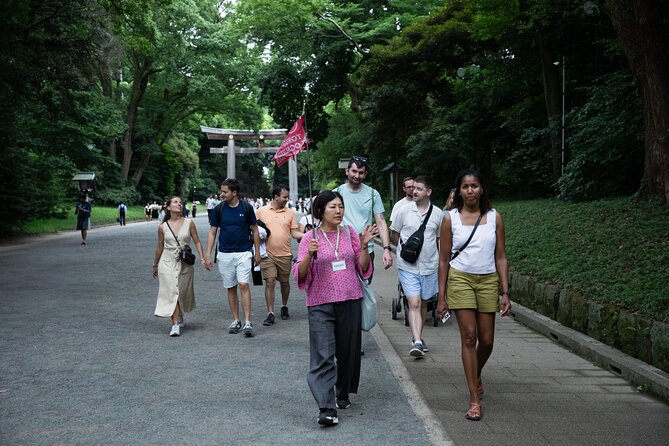
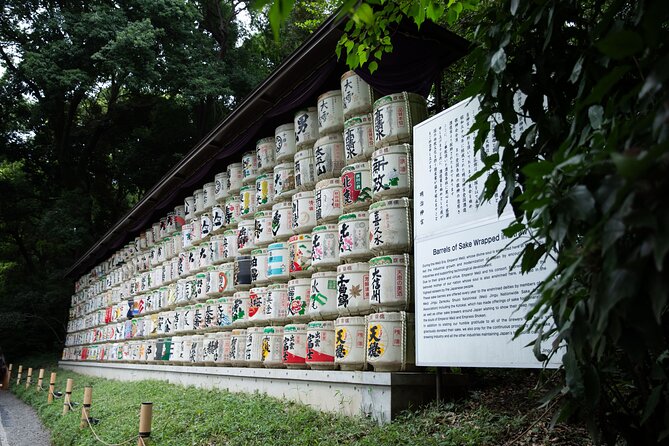
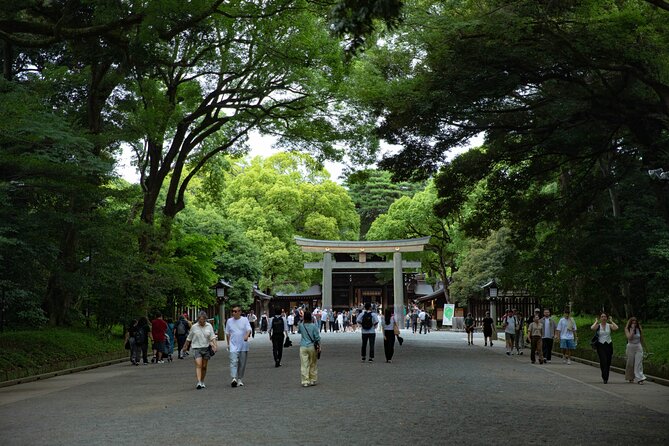
The first stop is Meiji Jingu, with about 40 minutes set aside for the visit. You enter through large torii gates and follow a tree-lined path into a 70-hectare forested area. The setting offers a striking pause from central Tokyo’s traffic and shops.
The guide’s role matters most here. A shrine visit can be confusing if you do not know what you are seeing or how to behave. Hiroko, one of the named guides, has been especially praised for explaining shrine etiquette to people making their first shrine visit in Japan. That kind of help is practical, not decorative. It lets you approach the site with more confidence and respect.
You can expect explanations about the shrine’s history, Shinto, and its place in Tokyo. Miyu has also been praised for explaining Japanese history and culture in a way that includes small details about daily life. The strongest part of this stop is likely the connection between the peaceful surroundings and the larger story of Japan.
Keep your expectations in check. Forty minutes is enough for an introduction and a guided look, but it is not a full study of the shrine grounds. The admission charge is listed as free, so the value here is not a ticket saving. It is the guide’s interpretation and the convenience of seeing the main setting without planning your own route.
Finding the pulse of Takeshita Street
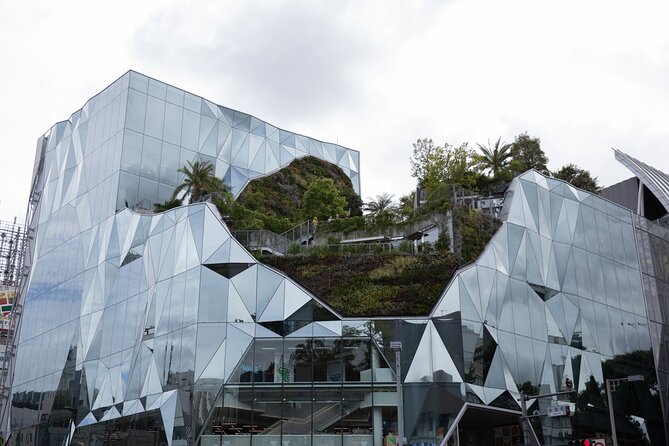
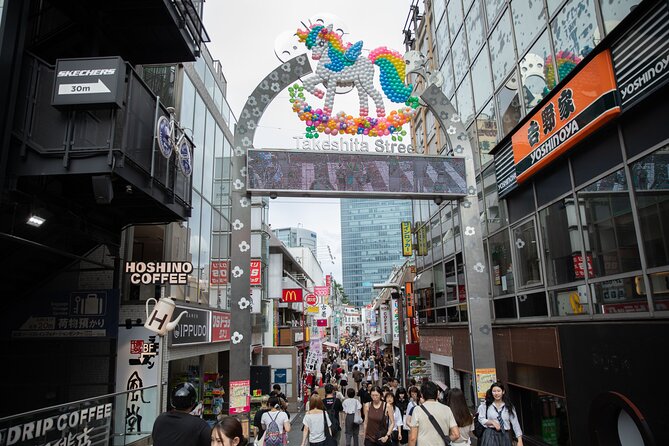
After Meiji Jingu, the change is immediate. Takeshita Street is a narrow, 400-meter pedestrian lane filled with trendy boutiques, accessory shops, themed businesses, and the energy of Harajuku’s youth culture.
About 30 minutes is planned here. That gives you time to see the street and understand its role in the neighborhood, but it is not enough for a serious shopping session. If you see a shop you like, make a mental note and return later. Trying to browse every storefront while keeping up with a walking group will be frustrating.
This is where the guide’s commentary helps. Without context, Takeshita Street can look like a string of colorful shops. With a local explanation, you get a better sense of why this lane became associated with youth style and creative expression.
The street may feel crowded, especially at busy times. The small group helps, but it cannot make a narrow public lane spacious. Stay close to the guide and wear comfortable shoes. The walk is described as not too strenuous, but the route still includes standing, pavement, and busy pedestrian areas.
I especially like the contrast between this stop and Meiji Jingu. The tour does not force Harajuku into one tidy identity. It shows you the quiet sacred side and the playful commercial side within the same neighborhood.
Reading Omotesando’s polished side
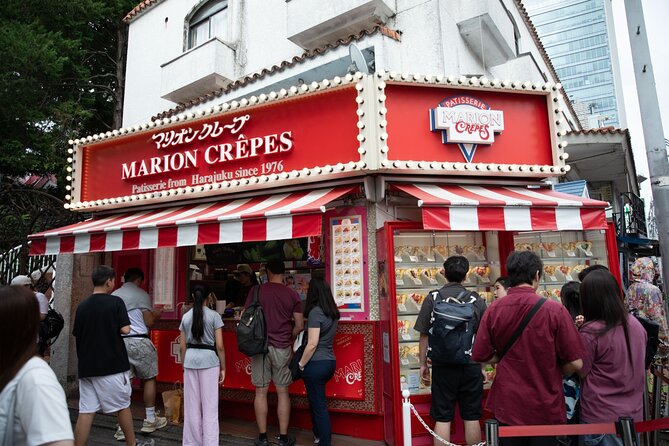
The final listed stop is Omotesando, with about 20 minutes on the route. Often compared with the Champs-Élysées of Tokyo, it is a broad, tree-lined avenue with high-end boutiques, designer flagships, and bold modern architecture.
This stop gives the tour a clean finish. After the shrine and Takeshita Street, Omotesando shows another part of Harajuku’s identity: fashion, design, and polished retail. You may find the street more enjoyable if you pay attention to the buildings as well as the shops.
Twenty minutes is brief, so the focus is likely on orientation and highlights rather than shopping. The tour ends at Tokyu Plaza Harajuku, HARAKADO, which gives you a clear place to continue on your own.
For me, Omotesando adds useful balance. If the route ended at Takeshita Street, you would leave with a narrow view of Harajuku as a youth shopping district. This final stretch shows how the area also attracts luxury brands and ambitious architecture.
Other walking tours we've reviewed in Tokyo



What the guides add to the experience
The guide can make or break a short walking tour, and the named guides here receive particularly strong praise for warmth, clarity, and useful explanations. Miyu is described as pleasant, passionate about Harajuku, and good at answering questions. Her explanations are also described as well paced, an important quality when a group includes several ages.
Hiroko is noted for making culture and history easy to understand for a family group. Her shrine etiquette explanation is especially useful for first-time visitors. You should not assume that every departure will feature Miyu or Hiroko, but their names give you a clear idea of the guiding style associated with this experience.
The best guide behavior here is not a long lecture. It is knowing when to explain and when to let you look. The route covers Japanese history, religion, modern life, and local culture, so the guide has to keep the information moving. The feedback supplied describes exactly that balance, with explanations that are informative without becoming too long.
A maximum of 15 people is another advantage. This is not a private tour, and 15 is still large enough that you may not have a personal conversation at every stop. Still, it is a far more manageable size than a large coach group, especially on narrow Takeshita Street.
Is $25 a good value?
At $25 per person, this is a reasonably priced introduction to one of Tokyo’s easiest areas to explore independently. Meiji Jingu, Takeshita Street, and Omotesando are all public places, and the shrine admission is free. You are paying mainly for the guide, the route planning, and the saved preparation time.
That makes the value strongest for a first visit. If you already know Harajuku well, you may prefer to walk independently and spend your money on food or shopping. If this is your first day in Tokyo, a short guided route can help you understand the area quickly and decide where to return.
The tour also includes admission along the way, although the listed stops themselves do not require an admission ticket. Do not book this expecting expensive entry fees or behind-the-scenes access. Book it for context, orientation, and a more meaningful first look.
The free cancellation policy adds useful flexibility. You can cancel up to 24 hours before the start time for a full refund. Changes or cancellations made less than 24 hours before the local start time are not accepted for a refund.
Who will get the most from this walk?
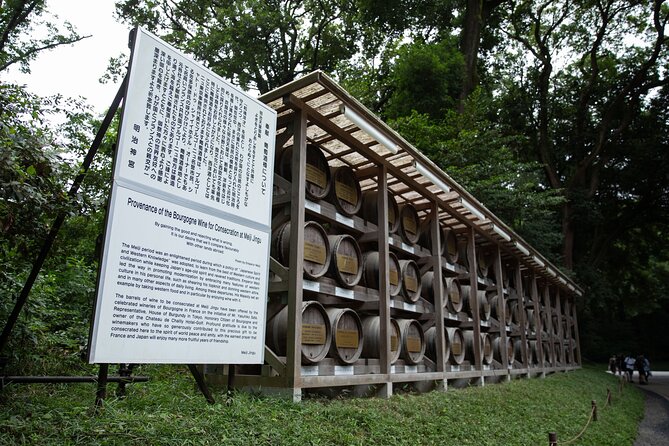
I would suggest this tour to first-time visitors who want a clear introduction to Harajuku without spending hours planning. It is also a good fit for families, since the route is short and the guides are praised for explaining complex cultural points in accessible ways.
It suits people who want history and modern Tokyo in the same outing. You get a Shinto shrine, a youth-oriented shopping lane, and a designer avenue, all in one compact route.
It may be less suitable if your main goal is shopping. The 30 minutes on Takeshita Street and 20 minutes on Omotesando are guided orientation time, not open-ended browsing time. Likewise, anyone wanting a long, quiet visit at Meiji Jingu may find the 40-minute stop too short.
The tour is also not designed as a food tour. The provider is Localized Walking & Food Tours, but the supplied details describe this experience as a Harajuku and Meiji Shrine walk, with no food tastings listed. Choose it for sightseeing and local explanation, not a meal-focused outing.
Practical details for a smoother morning
Use the mobile ticket and booking confirmation, and arrive with enough time to find the meeting point at Harajuku Station. The route finishes at HARAKADO rather than returning to the station, so decide in advance what you want to do afterward.
Comfortable shoes are sensible. The walk is considered manageable and not especially strenuous, but you will be on your feet through shrine paths, a pedestrian shopping street, and a broad urban avenue.
A small group does not remove the need to stay attentive. Takeshita Street is narrow, and the guide may need to keep the group moving. If you want a photo or shop stop, ask rather than drifting behind.
The tour is capped at 15 people and is offered near public transportation. Most people can participate, and service animals are permitted. The information does not state a minimum age, exact departure times, weather arrangements, or wheelchair details, so ask the provider if any of those points affect your plans.
Should you book the Harajuku Meiji Shrine Walking Tour?
Book it if you want a short, affordable introduction that explains the big contrast at the heart of Harajuku. The best reasons are the carefully connected route, the manageable group size, and the guide’s focus on shrine etiquette, Japanese history, modern life, and local tips.
I would be especially happy to take this early in a Tokyo stay. It gives you a quick sense of the neighborhood and leaves you at HARAKADO with time to continue exploring. Just remember that this is a guided overview, not a full shopping afternoon or an exhaustive shrine visit.
If you prefer total freedom, already know the area, or want to linger at every shop, skip the organized walk and explore alone. For most first-time visitors, though, $25 is a fair price for two hours of useful context and a route that makes Harajuku easier to understand.
FAQ
How long does the Harajuku Meiji Shrine Walking Tour last?
The tour lasts approximately two hours.
How much does the tour cost?
The listed price is $25 per person.
Where does the tour start?
The tour starts at Harajuku Station, at 1 Chome-18 Jingumae, Shibuya, Tokyo 150-0001, Japan.
Where does the tour end?
The tour ends at Tokyu Plaza Harajuku, also called HARAKADO, in Jingumae, Shibuya, Tokyo.
Which places are visited?
The route includes Meiji Jingu Shrine, Takeshita Street, and Omotesando.
How much time is planned at each stop?
The schedule allows about 40 minutes at Meiji Jingu Shrine, 30 minutes at Takeshita Street, and 20 minutes at Omotesando.
How large is the group?
The tour has a maximum of 15 travelers.
Is admission included?
Admission is included along the way. The listed Meiji Jingu stop also states that admission is free.
Can I cancel for a full refund?
Yes. You can cancel at least 24 hours before the experience start time for a full refund. Cancellations or changes made less than 24 hours before the start time are not accepted for a refund.
More Walking Tours in Tokyo
More Temples & Meditation in Tokyo
More tours in Tokyo we've reviewed






Temples & Meditation, compared.
 ★ 4.7Tokyo: Meiji Shrine, Asakusa, Skytree Bus Tour and CruiseFrom $12210 hours
 ★ 4.8Tokyo: Asakusa Walking Tour with Sensoji Temple VisitFrom $222 hours
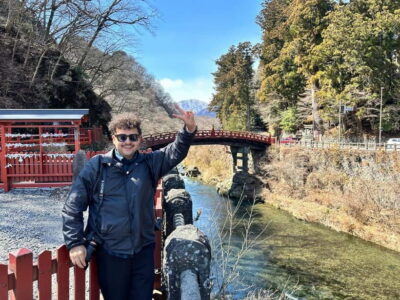 ★ 4.6Nikko: Kegon Falls, Lake Chuzenji & Toshogu TempleFrom $8911 hours
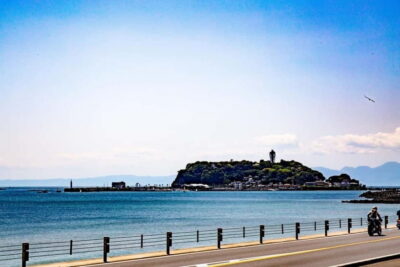 ★ 4.5Tokyo: Kamakura & Enoshima Day Trip including Temple TicketsFrom $589 hours - 570 minutes
 ★ 4.5Tokyo: Nikko Toshogu Shrine and Kegon Waterfall TourFrom $8410h 30m
 ★ 4.5Tokyo Panoramic 1 Day: Meiji Shrine, Asakusa, Odaiba and SKYTREE®From $85