
Reviewed · SUSHI MAKING CLASSES
Best Sushi Making Class in Tokyo: Sushi Making Class Shibuya
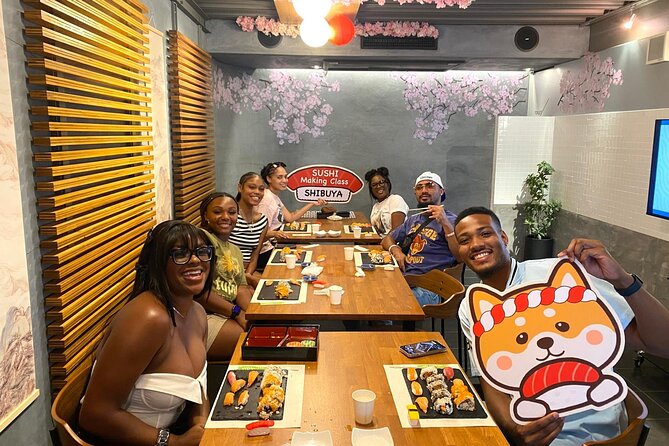
Making sushi is easy to watch and surprisingly tricky to shape. This 90-minute Shibuya class gives you a practical introduction, from washing your hands and seasoning your rice to rolling a California roll and forming traditional nigiri. You finish by eating what you make, with soy sauce, wasabi, and pickled ginger on the table.
I like the small maximum group of 14, which gives the staff room to help with the fiddly parts. I also like the mix of food and culture: the opening quiz adds context about sushi instead of treating the meal as a simple craft project. Kaito has earned particular praise for being friendly and helpful.
The main caution is value. At about $31.63 per person, this is a good price for a hands-on activity, but less convincing if you are judging it only by the amount of food. One session also started late and felt too scripted, so the experience may depend somewhat on the day’s staff and pace.
In This Review
- Key points before you book
- What the Shibuya sushi class is really offering
- Arriving in Nanpeidaichō and getting ready
- Starting with a quiz about sushi
- Rolling a California roll from the start
- Shaping traditional nigiri sushi
- Sitting down to eat what you made
- Dietary requests and who will enjoy it most
- Timing, location, and practical value
- Is Sushi Making Class Shibuya worth booking?
- FAQ
- Where does the sushi-making class take place?
- How long does the activity last?
- What types of sushi will I make?
- Do I eat the sushi I prepare?
- Are soy sauce, wasabi, and pickled ginger provided?
- Are vegan, vegetarian, and halal options available?
- How many people can join the class?
- Is transportation included?
- Can I cancel for a full refund?
Key points before you book
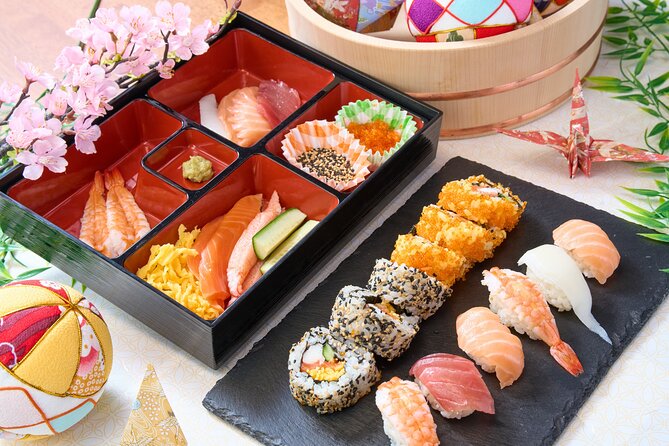
- You make two distinct sushi styles: a California roll first, followed by traditional nigiri.
- The class ends with a meal: you eat the sushi you prepare, with standard condiments provided.
- The format suits families and first-timers: demonstrations, help from staff, and a short quiz keep the session approachable.
- Kaito is a praised instructor: his friendly, helpful manner has made a strong impression on participants.
- Dietary requests are possible: vegan, vegetarian, and halal options can be arranged on request.
- The group can reach 14 people: small enough to feel manageable, though not necessarily private.
What the Shibuya sushi class is really offering
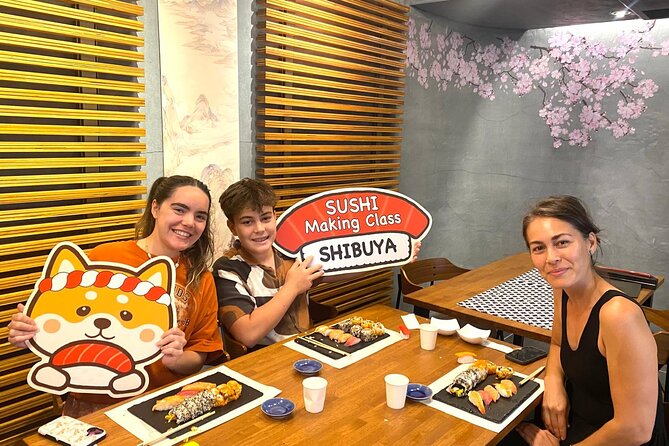
This is not a sushi restaurant meal with a quick explanation added on. You handle the ingredients, work through the basic forms, and sit down to eat the result. That distinction matters if you want an activity you can talk about afterward, rather than another meal in Tokyo.
The class takes place at 25 A-bandsビル in Nanpeidaichō, Shibuya, Tokyo 150-0036. It is near public transportation, making it a sensible stop before or after time in the Shibuya area. The activity begins and ends at the same meeting point, and private transportation is not included.
The advertised price is about $31.63 per person. I see that as fair for a short, organized food class, especially because your meal is included. It is not the cheapest way to eat sushi in Tokyo, and one participant felt the quantity did not fully match the cost. You are paying for instruction, the setting, the chance to make the food yourself, and the convenience of a planned 90-minute activity.
That makes the class a better choice for curious first-time sushi makers, families, and visitors who want a light cultural activity. If your only goal is to eat as much sushi as possible, spend the money at a local restaurant instead.
A few more Tokyo tours and experiences worth a look


Arriving in Nanpeidaichō and getting ready
On arrival, staff confirm your reservation and direct you to wash your hands before the session starts. That is a small step, but it sets the right tone. Sushi depends on clean, careful handling, and the class treats preparation as part of the craft rather than rushing straight to the food.
The group size can be as large as 14 people. That is not a private lesson, but it is still a controlled size for a class of this kind. You should expect a shared session with other participants, while staff move around to demonstrate techniques and offer help.
The best part of this format is that you are not left to guess what to do. Sushi looks simple because professional chefs make it look simple. Rice pressure, filling placement, and hand position all matter, so a demonstration followed by immediate practice is useful.
The tradeoff is that a group class has a set rhythm. If some people work slowly or the session begins late, the time available for personal coaching can shrink. One participant specifically found a late start frustrating. It did not ruin the activity, but it is worth keeping expectations realistic: this is a scheduled group lesson, not a private chef appointment.
Starting with a quiz about sushi
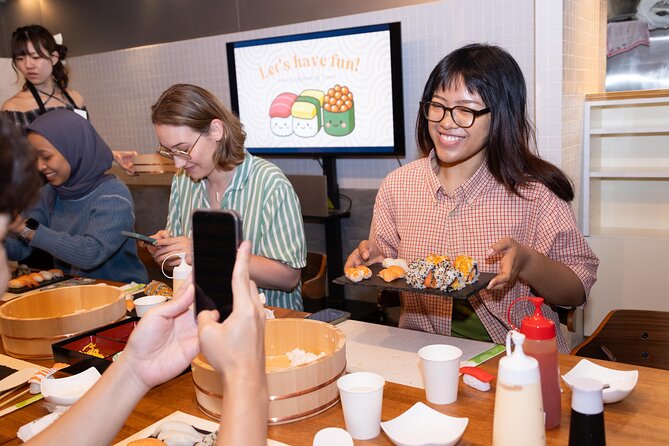
Before making food, you take part in a short quiz about the history of sushi and some surprising facts. This is a smart warm-up for two reasons. First, it gives you something to do while everyone settles in. Second, it adds cultural context before you start copying techniques.
The quiz is interactive, so it should feel lighter than a formal lecture. It also works well for families, since children can take part even if they have never handled sushi rice before. The class is not only about producing something edible. You get a basic sense of how sushi developed and why the forms you are making matter.
Still, the teaching style may not suit everyone. One participant described the session as relying heavily on a script and video, with less personal character than expected. If you want a loose, story-filled lesson led by a chef who adapts constantly to the room, this may feel more structured than personal.
I would think of the quiz as a short introduction, not a full food-history lesson. Its value is in making the hands-on work more meaningful without taking up most of your class time.
Rolling a California roll from the start
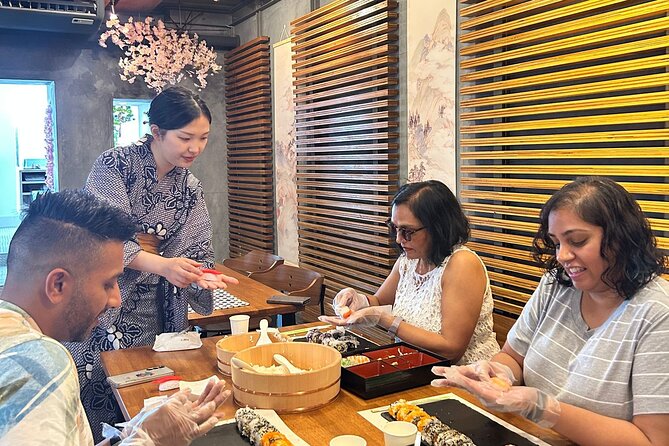
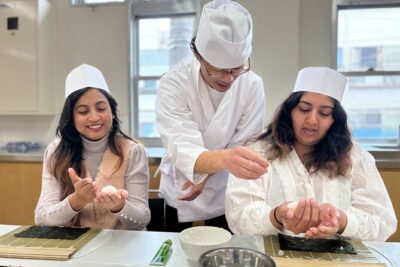
Your first practical task is a California roll, a modern sushi style that is now familiar around the world. Starting here makes sense because the process introduces several basic skills at once: handling rice, placing fillings, managing the seaweed, and creating a firm roll.
The California roll is also a forgiving entry point. You can see how the ingredients are arranged and how pressure affects the final shape. The instructor demonstrates the method, then you make your own version with staff nearby to guide you.
Do not expect your first roll to look like one prepared by a sushi chef. That is part of the point. The class lets you see the gap between knowing what to do and doing it neatly. A roll that looks a little uneven can still taste perfectly good, especially once it is cut and served with soy sauce, wasabi, and pickled ginger.
This portion is likely to be especially enjoyable for families. Everyone has a clear task, and the finished roll offers an immediate reward. It also gives you a useful foundation before the more traditional nigiri work begins.
Shaping traditional nigiri sushi
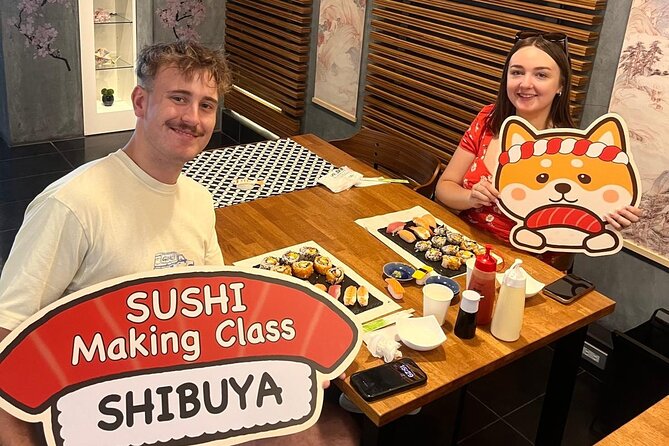
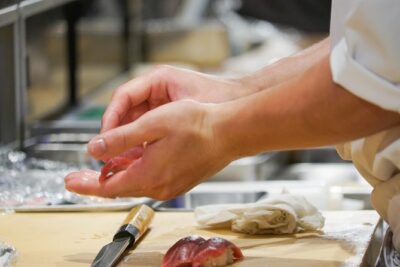
Next comes nigiri, the familiar sushi form made with hand-shaped rice topped with sliced fish or another topping. Compared with a roll, nigiri looks minimal. There is nowhere to hide an uneven rice shape or a topping that does not sit properly.
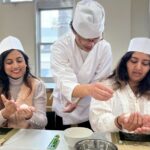
Staff demonstrate how to form the rice and place the topping, then help you create your own pieces. This is where hands-on guidance matters most. You can understand the basic motion quickly, but producing a compact piece that holds together takes care.
The class presents nigiri as a traditional sushi style, which balances the modern California roll nicely. You see two different approaches in one session: a rolled form with several components and a simpler form where rice and topping must work together.
The information provided does not specify the exact number or types of pieces you will make. Keep that in mind if you are booking mainly for the meal. You will prepare several types of sushi, but the main reward is learning the process rather than receiving a large restaurant-size platter.
The staff are described as warm and supportive, and Kaito is singled out for being friendly and helpful. That kind of attitude matters in a practical class. You should be able to ask for help without feeling awkward, especially when your rice refuses to cooperate.
A few more Tokyo tours and experiences worth a look

Sitting down to eat what you made
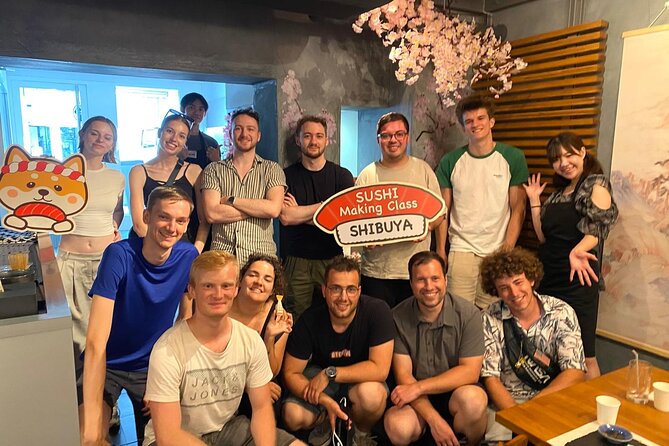
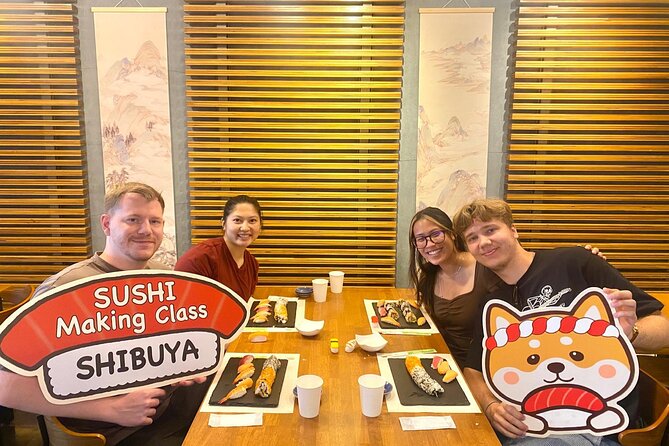
After the preparation, you sit down and eat your sushi. Meals are included, and soy sauce, wasabi, and pickled ginger are provided in the usual sushi-restaurant style.
Eating your own work changes the meal. Even an imperfect piece feels more interesting when you have handled the rice, rolled the seaweed, and tried to shape the topping. It also gives the class a clear finish, so you are not left wondering whether the food portion is separate.
The food itself has received strong praise, with participants calling the sushi delicious and very good. That said, the quantity is the point most likely to affect your decision. One person felt the food was good but questioned the price and suggested a supermarket could provide more food for less money.
That criticism is fair. This is not a bargain meal. It is a meal attached to an activity. I would book it before lunch if you want the sushi to feel like a proper finish, but I would not arrive expecting a long, filling restaurant sitting.
Dietary requests and who will enjoy it most
Vegan, vegetarian, and halal options are available on request. You should raise your needs when booking rather than assume the standard ingredients will suit you. The supplied details do not explain the exact substitutions, so ask the provider if you need to know precisely what will be served.
The class is a strong match for:
- Families wanting a shared activity that works for different ages.
- First-time visitors who want a simple introduction to sushi.
- Couples or friends looking for something more active than another restaurant meal.
- People who enjoy food workshops and do not mind a structured format.
- Visitors staying near Shibuya who want a short activity that fits around sightseeing.
It is less suitable for someone seeking a private lesson, a large tasting menu, or a detailed chef-led study of Japanese culinary tradition. The maximum of 14 people keeps the class manageable, but it does not guarantee a personal instructor at your side for every step.
Timing, location, and practical value
The class lasts approximately one hour and 30 minutes. That is long enough to cover the quiz, demonstrations, two sushi styles, and the meal without taking over your day. You can pair it with other plans in Shibuya, provided you allow enough time to reach the meeting point at Nanpeidaichō.
The activity starts and ends at the same location. No private transportation is included, but the venue is near public transportation. You receive booking confirmation at the time of reservation, and the ticket is mobile, so you can keep it on your phone.
The free cancellation policy gives you some useful flexibility. You can cancel at least 24 hours before the local start time for a full refund. Changes or cancellations made inside that 24-hour window are not accepted for a refund, so check your plans before the cut-off.
The overall rating is 4.7 from 28 reviews, with 93 percent recommending the activity. Those numbers fit the experience as described: most of the value comes from friendly instruction, a fun family-friendly format, and the pleasure of eating something you made yourself. The weaker points are the possibility of a late start, a scripted presentation, and a food portion that may feel modest for the price.
Is Sushi Making Class Shibuya worth booking?
I would book this class if you want a short, hands-on Tokyo activity and like the idea of eating your own California roll and nigiri. The friendly staff, including Kaito, appear to be a real strength, and the combination of quiz, demonstrations, practice, and meal gives the session a clear shape.
I would skip it if your priority is maximum food value or an intimate, highly personalized lesson. At about $32, you are buying an activity as much as dinner. For families, first-time sushi makers, and visitors with a free block in Shibuya, that is a reasonable exchange. For serious sushi fans, it may feel basic and somewhat scripted.
Book with your dietary needs noted in advance, arrive ready for a group class, and keep your expectations focused on learning and having fun. If that sounds right, this is an easygoing way to put a little more work into your Tokyo meal.
FAQ
Where does the sushi-making class take place?
The meeting point is at 25 A-bandsビル, Nanpeidaichō, Shibuya, Tokyo 150-0036, Japan.
How long does the activity last?
The class lasts approximately 1 hour and 30 minutes.
What types of sushi will I make?
You will make a California roll and traditional nigiri sushi.
Do I eat the sushi I prepare?
Yes. The class includes a meal, and you eat your sushi at the end of the session.
Are soy sauce, wasabi, and pickled ginger provided?
Yes. These condiments are provided for the meal.
Are vegan, vegetarian, and halal options available?
Yes. Vegan, vegetarian, and halal options are available on request.
How many people can join the class?
The activity has a maximum group size of 14 travelers.
Is transportation included?
No. Private transportation is not included. The meeting point is near public transportation, and the activity ends back at that location.
Can I cancel for a full refund?
Yes. You can cancel at least 24 hours before the experience start time for a full refund. Cancellations or changes made less than 24 hours before the start time are not accepted for a refund.
More Workshops & Classes in Tokyo

More Sushi Making Classes in Tokyo
More Shibuya Tours in Tokyo


More tours in Tokyo we've reviewed



Sushi Making Classes, compared.
 ★ 5.0Sushi Making Tokyo Roll and Authentic Japanese Sushi ClassFrom $59
 ★ 4.9Tokyo: Roll and Authentic Sushi Making Class in AsakusaFrom $581h 40m
 ★ 5.0Make Sushi and Create Unforgettable Memories in TokyoFrom $79
 ★ 4.9Tokyo: Sushi Making Class in a Happi Coat near a Famous SpotFrom $421h 30m
 ★ 5.0Tokyo Sushi Making Class in Tsukiji with Professional ChefFrom $49
 ★ 5.0Tokyo Night Foodie Tour in Shinjuku – Seasonal Sushi, Wagyu BeefFrom $111