
Reviewed · SHINJUKU TOURS
Tokyo: Shinjuku Walking Tour with Godzilla Head
Shinjuku’s best attractions are packed into two hours here, from a giant 3D cat perched above East Exit to Godzilla roaring from a rooftop. I like that the route mixes Tokyo’s polished future with old drinking alleys, and I like that every stop is free to enter. The walk gives you a quick, useful introduction to Kabukicho without asking you to plan every turn yourself.
The main drawback is pace. Two hours is enough for an overview, not a slow exploration of every bar, shop, or food stall. Don Quijote can also swallow time if you start shopping, so you’ll need to keep moving if you want to reach Omoide Yokocho at the end.
In This Review
- Key points to know before you book
- Why this two-hour Shinjuku walk works
- Starting beneath Shinjuku’s giant 3D cat
- Getting lost inside Don Quijote Shinjuku Kabukicho
- Walking the narrow lanes of Golden Gai
- Looking up at the Godzilla Head
- Seeing the new Kabukicho at Tokyu Kabukicho Tower
- Finishing with yakitori at Omoide Yokocho
- What $32 buys you
- Timing, walking, and who should book
- Should you book this Shinjuku walking tour?
- FAQ
- How long is the Shinjuku walking tour?
- How much does the tour cost?
- Where does the tour meet?
- Which languages does the guide speak?
- Are entrance fees included?
- Are food and drinks included?
- Is the tour wheelchair accessible?
Key points to know before you book
- The Godzilla Head roars hourly: You may hear the famous rooftop sound, but the timing of the walk matters.
- Golden Gai has more than 200 tiny bars: You see the narrow lanes by day, but this is mainly a walking introduction rather than a bar-hopping tour.
- The route links old and new Shinjuku: Tokyu Kabukicho Tower and the 3D cat contrast with postwar alleys and yakitori stalls.
- Don Quijote is part attraction, part shopping stop: Expect snacks, souvenirs, odd household goods, and a crowded store layout.
- The guide meets you at the East Exit: Look for the person holding a blue A4-sized board.
- The tour costs $32 per person: Since there are no entrance fees, you are mainly paying for local guidance, route planning, and explanations.
Why this two-hour Shinjuku walk works
Shinjuku can feel like several cities pressed into one district. Bright screens and department stores sit close to smoky food lanes, tiny bars, shrines, hotels, and the red-light district of Kabukicho. For a first visit, that mix is exciting but not always easy to read.
This walk gives you a clear line through the area. You meet at Shinjuku East Exit, visit several landmarks, and finish near Omoide Yokocho. You do not need to buy tickets for any stop, and all locations are within walking distance.
I see the tour as a useful orientation rather than a full cultural study. You will not spend long inside each place, but you will leave knowing where several of Shinjuku’s most talked-about sights are located. That matters in Tokyo, where a short distance on a map can involve confusing station exits, multilevel buildings, and crowded streets.
The guide speaks English or Japanese. Guide Tak is described as friendly, helpful, able to explain the district clearly, and able to adjust the experience to your interests. That flexibility may be especially useful if you want more focus on food, nightlife, shopping, or the changing face of Kabukicho.
A few more Tokyo tours and experiences worth a look

Starting beneath Shinjuku’s giant 3D cat
The meeting point is the Shinjuku East Exit Cat. Look for the guide holding a blue A4-sized board. This is an easy place to identify because the giant animated cat sits above the street on a large screen.
The cat is one of Tokyo’s newer pieces of public spectacle. From street level, the image appears to sit on the corner and look down toward the crowds. It is a quick stop, but a good one for understanding how Tokyo uses screens, buildings, and moving images to turn ordinary city blocks into attractions.
You should have your camera ready, though the group will not be here for a long time. The point is not a long presentation. It is a sharp opening to the tour and a way to get your bearings before moving into Kabukicho.
For families and first-time visitors, this stop has immediate appeal. It is visual, easy to understand, and does not require an entrance ticket. For returning visitors, it offers a look at a newer side of Shinjuku before the route shifts toward older streets.
Getting lost inside Don Quijote Shinjuku Kabukicho
Next comes Don Quijote Shinjuku Kabukicho Store, one of the district’s most entertaining shopping stops. The store is packed from floor to ceiling with snacks, souvenirs, and everyday goods. The atmosphere is loud, crowded, and deliberately chaotic.
I like this part because it shows a very practical side of modern Japan. You can see the kinds of packaged treats, novelty items, and small gifts that fill Japanese discount stores. It is also a good place to spot odd products that do not fit neatly into a standard souvenir shop.
The drawback is that Don Quijote can easily disrupt the tour’s rhythm. You might find yourself comparing snacks or trying to work out which floor contains what you want. The guide can take you through the store, but the two-hour schedule does not leave much room for a serious shopping session.
If you already know you want souvenirs, make a mental note of the store and return later. During the tour, treat it as a quick introduction. You can buy a few items if time allows, but do not let one clever snack display cost you the rest of Golden Gai.
Walking the narrow lanes of Golden Gai
Shinjuku Golden Gai is the most atmospheric stop on the route. More than 200 tiny bars are packed into a maze of narrow alleys. Many venues are so small that the entrance and a short row of seats may make up most of the room.
By day, Golden Gai gives you a calmer view of an area best known for nighttime drinking. The small buildings, tight passages, and aging feel offer a sharp contrast to the giant screens and broad commercial streets nearby. This is where the tour slows down visually, even if the walking pace remains brisk.
The area has long been linked with writers, artists, and people drawn to its intimate bar culture. You will hear about the district’s role as a gathering place for people who wanted something different from the large, polished nightlife venues. The setting is more important than any single shopfront.
You should not expect the tour to take you inside a string of bars. No food or drinks are included, and the experience is presented as a walk through the lanes. Some bars may be closed during the day, and many are private-feeling spaces rather than casual sightseeing venues.
That is not a weakness if you understand the purpose. You get a useful first look, learn how the neighborhood is arranged, and can decide if you want to return after dark. If Golden Gai is your main reason for visiting Shinjuku, you may want to come back separately with more time.
Looking up at the Godzilla Head
The Godzilla Head is the tour’s most obvious headline attraction. The giant figure watches over Kabukicho from a rooftop, creating one of those odd Tokyo scenes that works best when you see it in person: a monster from a film series looming over an ordinary city street.
The group looks up toward the rooftop and waits for the possibility of a roar. Godzilla roars every hour, so the exact tour start time affects your chance of hearing it. Check the available starting times when booking if this moment is important to you.
You should keep your expectations sensible. This is a viewing stop, not a full attraction with an entrance ticket or extended indoor visit. The value comes from the scale, the setting, and the surprise of finding Godzilla above the neon streets.
I like this stop because it captures Tokyo’s sense of humor. The city does not separate serious architecture, shopping, food, and pop culture into neat zones. They all occupy the same few blocks, and the Godzilla Head makes that point better than a long explanation could.
Other walking tours we've reviewed in Tokyo

Seeing the new Kabukicho at Tokyu Kabukicho Tower
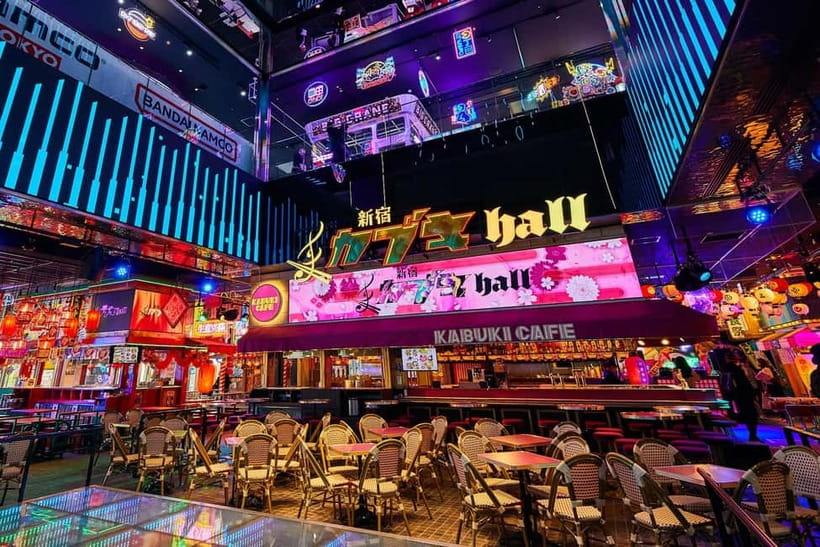
Tokyu Kabukicho Tower brings the route back to newer Shinjuku. The ultra-modern tower rises from the center of Kabukicho and gives you a chance to see how the district is changing.
You will step inside and take a look rather than spend a long period exploring the building. That makes this a short architectural pause between the Godzilla stop and the older food lanes at the end. It also helps you compare two versions of Kabukicho: the neon entertainment district many people picture, and the newer high-rise development built around it.
The tower is useful in the itinerary because it prevents the tour from becoming only a walk through old alleys. Shinjuku is not frozen in one era. The route shows you flashy screens, discount retail, compact bars, a film monster, and a modern tower within a small area.
You may find this stop less memorable than Golden Gai or Godzilla if you prefer street life to buildings. Still, it adds balance and gives you a quick look at one of Kabukicho’s newer landmarks without adding an admission cost.
Finishing with yakitori at Omoide Yokocho
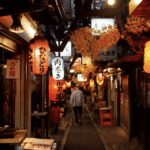
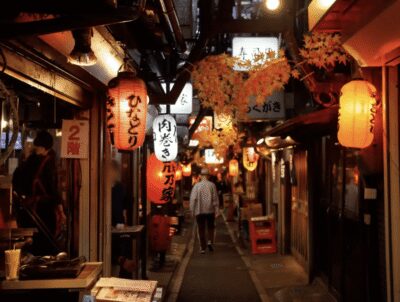
The tour ends at Omoide Yokocho, a narrow maze of yakitori stalls and small eateries with a strong postwar feel. The lanes are compact, smoky, and full of the kind of old-fashioned atmosphere that makes you want to return after dark.
This is a smart place to finish because it leaves you near food. You can end the walk, look around at the stalls, and decide if you want to eat there later. Food and drinks are not included, so anything you order will be an extra cost.
I would not treat the final stop as a guaranteed meal. The supplied details do not specify a reserved table, included tasting, or particular restaurant. Think of Omoide Yokocho as a useful introduction to the area, then choose your own next step.
The contrast with Tokyu Kabukicho Tower is the point. Within a short walk, you move from a new high-rise to tiny food stalls and a neighborhood atmosphere tied to an older Tokyo. If you enjoy places that feel lived-in rather than designed only for sightseeing, this may be the stop that stays with you.
What $32 buys you
At $32 per person, this tour is reasonably priced for a guided two-hour walk through a district that can be confusing at first. There are no entrance fees, so you are paying for the guide’s time, local explanations, and the convenience of linking six stops in a sensible order.
The value is strongest if you are new to Shinjuku or have limited time. You get a short route through several famous sights without spending your own morning working out where each one is. The guide can also answer questions and adjust the experience, which may add more value than a fixed audio route.
The value is weaker if you already know Shinjuku well and mainly want to shop or eat. You could visit these public locations without paying an admission fee, but you would give up the guide’s context and the structured route.
Bring money for food, drinks, and shopping. Don Quijote invites impulse purchases, and Omoide Yokocho is a natural place to continue the evening, but neither expense is part of the $32 price.
Timing, walking, and who should book
The advertised duration is two hours, and all stops are within walking distance in Shinjuku. You should wear comfortable shoes and expect city streets, crowded areas, narrow lanes, and frequent stops to look up, browse, or listen.
The route suits first-time visitors, pop culture fans, shoppers, photographers, and anyone who wants a quick introduction to Kabukicho. It also works well for families who want recognizable sights such as the 3D cat and Godzilla Head, although the atmosphere around nightlife districts may feel more adult than a standard sightseeing neighborhood.
Food lovers should book it as a preview, not a tasting tour. You see Omoide Yokocho and the yakitori stalls, but food and drinks are not included. Nightlife fans should also note that Golden Gai is visited by day, so the tour gives you the setting without promising a full evening inside its bars.
The activity is wheelchair accessible, according to the tour details. Since the route uses city streets and narrow areas, you may still want to confirm current conditions and the exact meeting arrangements when you book.
Free cancellation is available up to 24 hours in advance, and you can reserve now and pay later. Those terms are useful if your Tokyo plans are still shifting, especially because starting times depend on availability.
Should you book this Shinjuku walking tour?
Book it if you want a lively overview of Shinjuku with a real person leading the way. The combination of the 3D cat, Don Quijote, Golden Gai, Godzilla Head, Tokyu Kabukicho Tower, and Omoide Yokocho gives you a good sense of the district’s strange mix of old and new.
I would especially choose it early in a Tokyo stay, when you can use the tour to mark places for later visits. Listen closely during Golden Gai, note the route through Kabukicho, and save Omoide Yokocho for a return visit if you want dinner.
Skip it if you need a slow food experience, a long museum-style talk, or several hours inside Golden Gai. At two hours, this is a brisk introduction. For $32, it earns its price through guidance and variety, not through included meals or paid attractions.
FAQ
How long is the Shinjuku walking tour?
The tour lasts two hours.
How much does the tour cost?
The price is $32 per person.
Where does the tour meet?
The meeting point is the Shinjuku East Exit Cat. Look for the guide holding a blue A4-sized board.
Which languages does the guide speak?
The tour is available with a live guide in English or Japanese.
Are entrance fees included?
No entrance fees are required for any of the locations because the stops do not require admission.
Are food and drinks included?
No. Food and drinks are not included, including anything you may choose to buy at Don Quijote or Omoide Yokocho.
Is the tour wheelchair accessible?
Yes. The activity is listed as wheelchair accessible.
More Walking Tours in Tokyo
More Shinjuku Tours in Tokyo

More tours in Tokyo we've reviewed










Shinjuku Tours, compared.
 ★ 5.0Tokyo: Shinjuku Food Tour (13 Dishes at 4 Local Eateries)From $86
 ★ 5.0Tokyo Bar Hopping Tour in Shinjuku (All-You-Can-Drink + Dinner)From $106
 ★ 4.9Tokyo: Shinjuku Food Tour (15 Dishes and 4 Eateries)From $853 hours
 ★ 5.0Best of Shinjuku: Izakaya Food Tour (4 Stops, 14+ Tastings)From $92
 ★ 4.9Tokyo: Shinjuku Local Bar and Izakaya Guided Walking TourFrom $343 hours
 ★ 5.0Tokyo Shinjuku Chopsticks Making ClassFrom $20