
Reviewed · FULL-DAY
Full Day Private Tokyo Tour for Wheelchair Users
Tokyo can be a hard city to tackle by wheelchair, especially when you are trying to work out which sights, sidewalks, stations, and entrances will suit your needs. This private eight-hour tour removes much of that guesswork, using private transport and a guide who can shape the day around your interests.
I like the flexible route and the practical extras: bottled water, snacks, air conditioning, and WiFi in the vehicle. I also like that guides such as Umi, Roberto, and Gen have shown real care with mobility equipment. The main thing to consider is the price, $731.60 per group, plus the fact that several stops are viewed from the vehicle rather than explored on foot.
In This Review
- Key points to know before booking
- Why private transport changes a Tokyo sightseeing day
- Tsukiji Outer Market: a strong first stop for food lovers
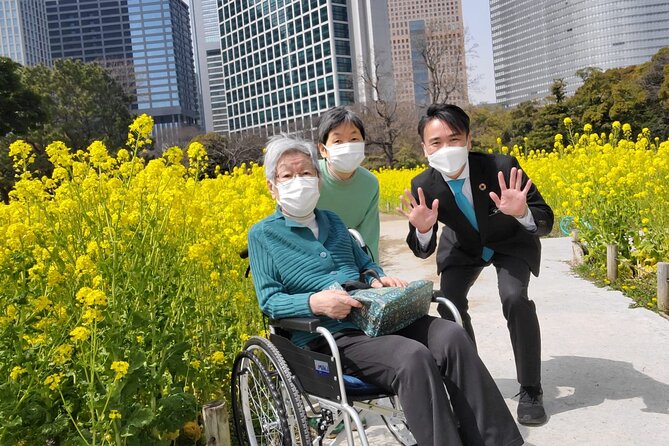
- Hama Rikyu Gardens: a quieter hour in central Tokyo
- Ginza, the Imperial Palace, and the National Diet Building
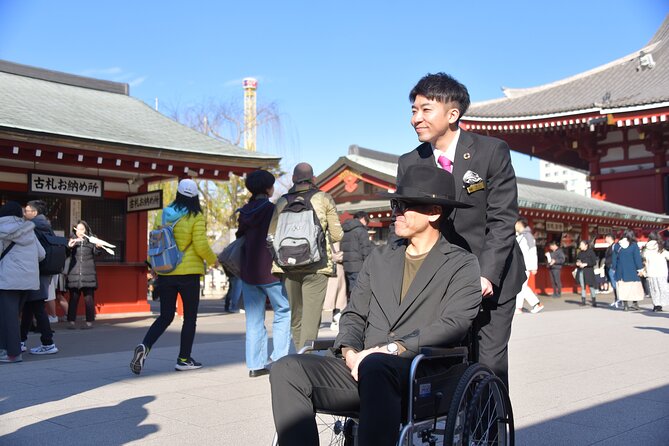
- Senso-ji in Asakusa: Tokyo’s oldest temple
- Omotesando and Harajuku: architecture, fashion, and youth culture
- Meiji Jingu Shrine: a calmer pause near Harajuku
- Shibuya Crossing and the west-side neighborhoods
- What the guides add to the day
- Comfort, timing, and practical value
- Who should book this Tokyo tour?
- Should you book it?
- FAQ
- How long does the Tokyo wheelchair tour last?
- How much does the private tour cost?
- Is the tour private?
- Where does the tour start?
- Where does the tour end?
- Is pickup available?
- Is public transportation required?
- Are food and drinks included?
- Does the vehicle have WiFi?
- Can the itinerary be customized?
- What is the cancellation policy?
Key points to know before booking
- The route can be tailored: You can focus on food, temples, gardens, shopping, modern Tokyo, or a mix of all four.
- Private transport saves energy: You avoid the need to navigate Tokyo’s trains and buses during a packed sightseeing day.
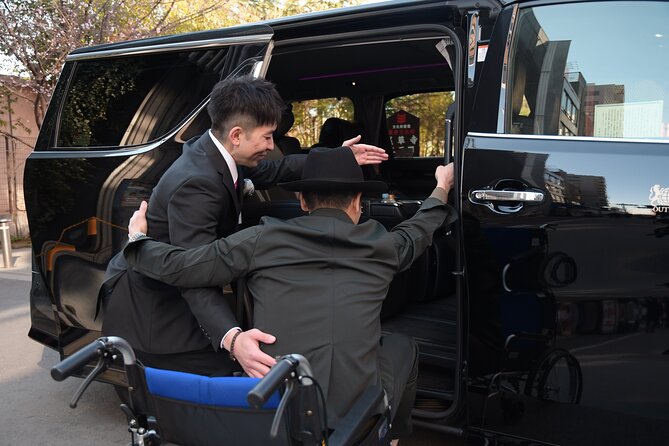
- The guide can help with mobility equipment: Umi and Roberto handled a mobility scooter for one group, reducing the physical and mental load on the guest.
- Several famous sights are drive-by stops: Ginza, the Imperial Palace, the National Diet Building, Omotesando, Harajuku, Shibuya Crossing, and Daikanyama are mainly seen from the car.
- The day includes useful comfort items: You receive bottled water and snacks, while the air-conditioned vehicle has WiFi.
- The group price works best for several people: At $731.60 for up to nine people, the per-person cost drops sharply when shared by a family or larger group.
Why private transport changes a Tokyo sightseeing day
Tokyo is huge, and its most interesting areas are spread far apart. On a normal independent day, you might spend time finding an accessible station entrance, waiting for a lift, changing lines, and working out whether a busy platform or narrow pavement will be manageable.
This tour gives you a private vehicle for the full day. That does not make every pavement or attraction accessible, but it does remove the need to make public transport the backbone of your sightseeing. You can move from Tsukiji to Hama Rikyu Gardens, then across central Tokyo to Asakusa, Harajuku, and Shibuya without repeatedly dealing with stations.
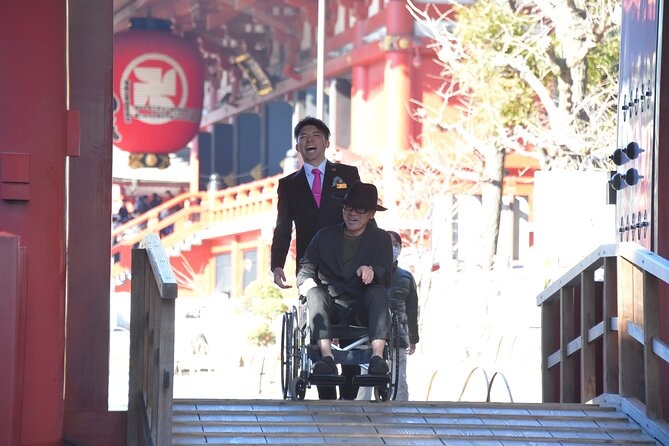
The private format matters even more if your group includes someone using a wheelchair or mobility scooter. You are not keeping pace with strangers, and you can tell the guide what feels realistic. One group specifically had guides Umi and Roberto handle a mobility scooter, which took pressure off the person responsible for it. That is the kind of practical help that can shape the whole day.
The experience is listed at $731.60 per group of up to nine. For one or two people, that is a serious expense. For a family or extended group, the price becomes easier to justify, particularly since private transportation, guide service, snacks, water, and WiFi are included. Lunch and dinner are not included, so keep room in your budget for meals.
Other private tours in Tokyo

Tsukiji Outer Market: a strong first stop for food lovers
The day begins at Tsukiji Jogai Market, the outer market that remains after the main Tsukiji wholesale market moved to Toyosu in 2018. You can spend about an hour among small food shops, restaurants, and stores selling Japanese cooking items and other interesting goods.
This is a useful place to begin because it gives you a quick hit of everyday Tokyo. You are not simply looking at grand monuments. You are seeing where food culture, shopping, and local business meet.
The market is also a good stop to discuss with your guide in advance. If you want to focus on food, this may deserve more time. If markets are difficult for you physically or sensory-wise, you may prefer a shorter visit and more time in the vehicle. The route is private, so you are not locked into giving every stop the same amount of attention.
Admission to the market itself is free. Food purchases are not included, so plan to pay separately if you want to sample something or buy a snack beyond what the tour provides.
Hama Rikyu Gardens: a quieter hour in central Tokyo
Hama Rikyu Gardens offers a change of pace after the market. The garden began as a feudal lord’s Tokyo residence and duck hunting ground between the 17th and 19th centuries, and it later became a public garden.
You are scheduled for about an hour here. I like this contrast: after the tight streets and shopfronts of Tsukiji, you get an open green setting close to Tokyo’s modern center. It gives the day some breathing room.
Admission is not included, so you should expect an extra entrance cost. The supplied details do not specify the exact accessible routes, surfaces, or restroom arrangements inside the garden. If you use a wheelchair or scooter, ask the guide about the planned path before entering. The tour is designed with accessibility in mind, but that does not mean every section of a historic garden will suit every mobility need.
Ginza, the Imperial Palace, and the National Diet Building
Ginza is allotted an hour, but this section is described as sightseeing through the car window. That makes the stop more of a guided city tour than a full shopping visit.
From the vehicle, you can take in Ginza’s mix of luxury boutiques, galleries, traditional Japanese crafts, restaurants, and modern architecture. If you want to shop or stop at a particular restaurant, tell the guide early. The private route can be adjusted, but the published plan does not promise extended time inside individual stores.
The Imperial Palace follows as a 30-minute drive-by stop. The site was once the castle of the Tokugawa shoguns, who held power from 1603 to 1868. It became the Imperial Palace after political power returned to Emperor Meiji.
The National Diet Building is another 30-minute sightseeing stop from the vehicle. Built in 1936, it is one of the few Tokyo buildings to survive the air raids of 1945. These two stops are best understood as city orientation and historical context, not as long interior visits.
This arrangement can be a benefit if you tire easily. You get to see important parts of central Tokyo without needing to transfer from pavement to entrance to interior. The tradeoff is clear: you will not have the same close-up experience as someone spending hours walking around the palace grounds or entering a building.
Senso-ji in Asakusa: Tokyo’s oldest temple
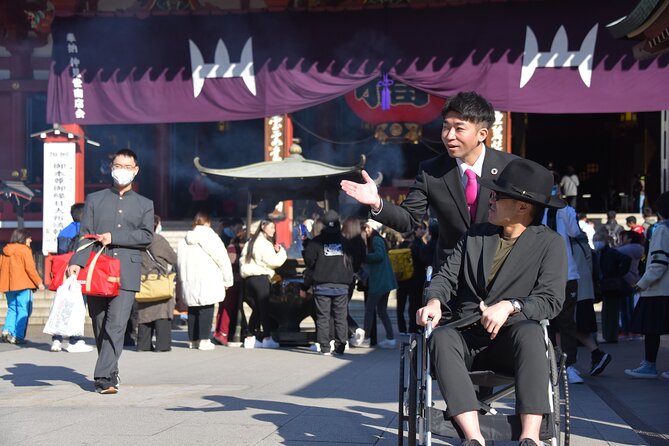
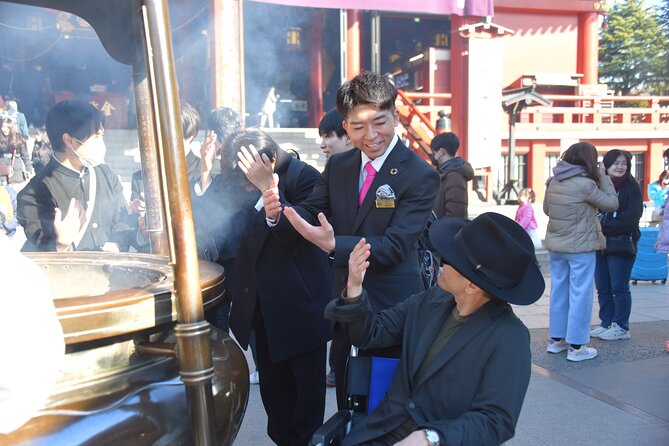
Senso-ji is one of the day’s main stops, with about an hour to explore. It is Tokyo’s oldest temple, linked to a small statue of Kannon said to have been found by two fishermen in 628. The name Asakusa appears in Japanese history from that same period.
This is the point where the tour shifts from modern central Tokyo to one of the city’s best-known traditional settings. You can look toward the temple buildings, take in the religious atmosphere, and experience one of Tokyo’s most recognizable districts.
The temple grounds are free to enter. The supplied details do not spell out which entrances or routes are best for a wheelchair, so use the private format to your advantage. Ask your guide to help choose the most workable approach and to adjust the visit if the area feels too tiring.
An hour is enough for a focused visit, but it may feel short if you want to linger, shop, or take your time around the temple area. If Senso-ji is a priority, ask whether another drive-by stop can be shortened.
A few more Tokyo tours and experiences worth a look
Omotesando and Harajuku: architecture, fashion, and youth culture
Omotesando is scheduled for 30 minutes of sightseeing through the car window. The avenue is known for buildings designed by leading architects, along with major fashion brands and Japanese design.
This is a good example of how the tour lets you sample Tokyo without requiring a long walk. You can see the broad character of the area from the vehicle, then ask for a brief stop if there is a particular shop or building you want to see more closely.
Harajuku receives another 30-minute drive-by segment. The area is associated with youth culture, unusual fashion, and bold building design. If you want a sense of the styles that make Tokyo feel different from other world capitals, this is a worthwhile inclusion.
The limitation is that a car-window visit gives you an overview, not the full street experience. Harajuku’s appeal is tied to its small shops and people-watching, and you will get less of that if the route stays entirely in the vehicle. This is one of the stops I would ask the guide to customize around your interests.
Meiji Jingu Shrine: a calmer pause near Harajuku
Meiji Jingu receives about an hour and is described as a pleasant break from the busy streets. The shrine is also a place where you might see a traditional Japanese wedding ceremony on a Saturday or Sunday.
I like the placement of this stop. It follows Harajuku, yet feels very different. You move from youth fashion and commercial streets to a Shinto shrine setting with a quieter mood.
Admission is free. The details provided do not list the exact accessible route through the shrine grounds, so ask your guide about the best entry and how much walking is involved. The guide’s ability to adapt the day is especially useful here. You may want a slower visit, a shorter route, or simply time to rest in a calmer setting.
Shibuya Crossing and the west-side neighborhoods
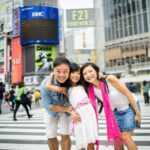
Shibuya Crossing is a 30-minute drive-by stop. It is often described as the busiest intersection in the world, and it is one of Tokyo’s clearest symbols of modern city life.
Because the stop is through the car window, you should not book this tour expecting a long stay at a crossing viewpoint or a dedicated pedestrian experience. You will get the guide’s take on the area and a look at the surrounding city scene. If crossing the intersection is important to you, ask in advance whether the route and your mobility needs allow for it.
The final listed neighborhood is Daikanyama, with another 30 minutes of sightseeing through the vehicle. Daikanyama and nearby Nakameguro are known for boutiques and cafes, with a slower feel than Tokyo’s most famous shopping areas.
This is a pleasant way to finish because it moves away from the biggest tourist names and toward a more relaxed part of the city. Again, you will see the area mainly from the car unless the guide changes the plan.
What the guides add to the day
The guide is central to the value here. The day is not just a driver taking you between landmarks. You have a private guide who can help decide what to see, how long to stay, and which parts of the route make sense for your group.
Umi is named in the feedback, along with Roberto and Gen. Umi and Roberto were praised for keeping a group comfortable on a very hot day, asking which Tokyo experiences mattered most, and handling a mobility scooter. Gen was praised for allowing a family to customize the tour and for his kind manner.
Those details point to the service’s strongest feature: personal attention. If heat, fatigue, or equipment handling is a concern, explain that clearly when you book and again at the start of the day. Guides can only adjust the experience when they know what you need.
You should also tell the guide which stops matter most. The schedule contains many locations, and several are brief drive-by visits. If your priorities are temples and gardens, you may want more time at Hama Rikyu, Senso-ji, and Meiji Jingu. If you care more about design and city neighborhoods, keep Ginza, Omotesando, Harajuku, Shibuya, and Daikanyama in the mix.
Comfort, timing, and practical value
The vehicle is air-conditioned, which matters during Tokyo’s hot periods. Bottled water and snacks are included, and onboard WiFi lets you get online while moving around the city.
The published operating hours are 7:00 AM to 2:00 PM every day during the stated booking periods. The tour lasts about eight hours and begins and ends at Tokyo Station, at 1 Chome-9 Marunouchi, Chiyoda City. Pickup is offered, but because the published meeting point is Tokyo Station, confirm the exact pickup arrangement before you finalize your plans.
The listed stop times add up to a very full day, especially when you include driving between districts. Some stops are one hour, while others receive only 30 minutes. That is not necessarily a flaw. For a wheelchair user, changing districts by private vehicle can be more practical than trying to explore fewer places through public transport. Still, you should treat the schedule as a framework rather than a promise to spend equal time everywhere.
Lunch and dinner are not included. The supplied information does not name a planned lunch stop, so ask how the meal break will fit into your preferred route. You receive snacks, but they are not a replacement for a proper meal during an eight-hour outing.
Free cancellation is available if you cancel at least 24 hours before the start time. Changes or cancellations made later are not accepted for a refund.
Who should book this Tokyo tour?
I see the best fit as a wheelchair user, mobility scooter user, or family group that wants to cover a lot of Tokyo without relying on trains and buses. It is also a strong option if your group has different interests, since the route can be changed to suit you.
The tour makes particular sense for a group of several people. At $731.60 for up to nine, the cost is easier to defend when divided among a family or larger party. For one or two people, you are paying a premium for privacy, transport, and the ability to shape the day.
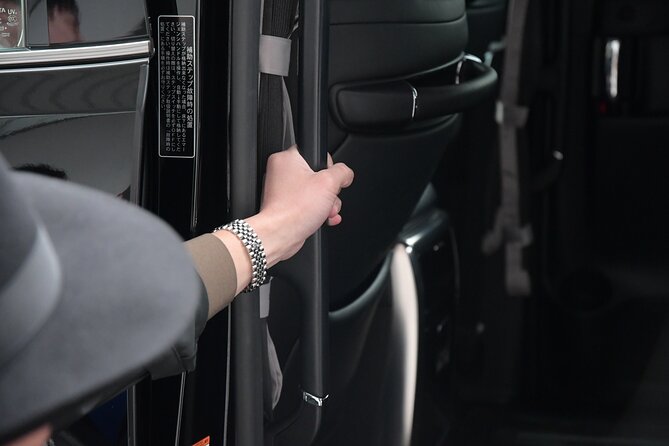
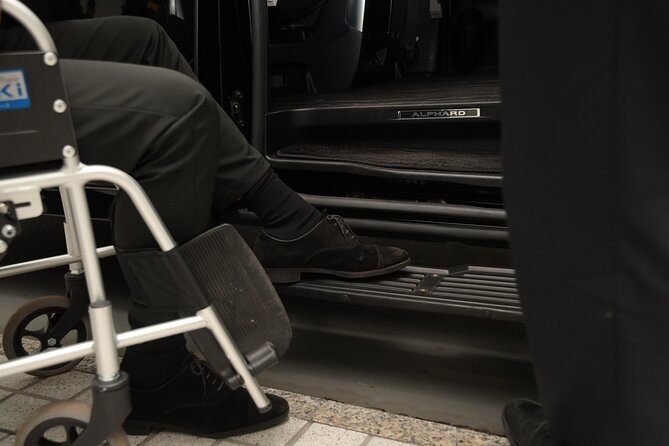
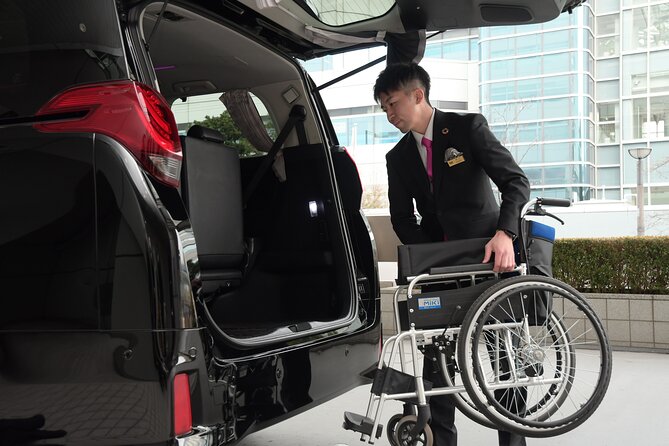
I would not choose it if your main goal is a slow, detailed visit inside every attraction. Several locations are viewed from the vehicle, and the day covers a wide stretch of Tokyo. I would also ask detailed questions before booking about the vehicle, boarding process, storage and handling of your specific wheelchair or scooter, and accessible routes at each stop. The tour is designed for wheelchair users, but the supplied information does not specify the exact equipment or access arrangements.
Should you book it?
Book this tour if independence from Tokyo’s transport system is your top concern and you want a guide who can adjust the day to your energy, interests, and mobility needs. The private vehicle, air conditioning, WiFi, snacks, and personal help with a scooter can make a major difference.
Think twice if you are traveling alone on a tight budget or want long, unhurried visits at each sight. Before paying, tell the operator exactly what mobility equipment you use, confirm pickup and vehicle details, and name your three highest-priority stops. With that preparation, this can be a practical way to see a wide slice of Tokyo in one carefully managed day.
FAQ
How long does the Tokyo wheelchair tour last?
The tour lasts approximately eight hours.
How much does the private tour cost?
The price is $731.60 per group, with up to nine people included.
Is the tour private?
Yes. Only your group participates in the activity.
Where does the tour start?
The published meeting point is Tokyo Station, at 1 Chome-9 Marunouchi, Chiyoda City, Tokyo 100-0005, Japan.
Where does the tour end?
The activity ends back at the meeting point.
Is pickup available?
Pickup is offered. The published start and end point is Tokyo Station, so confirm the exact pickup arrangement when booking.
Is public transportation required?
No. The tour includes private transportation, so you do not need to navigate Tokyo’s trains or buses during the sightseeing day.
Are food and drinks included?
Bottled water and snacks are included. Lunch and dinner are not included.
Does the vehicle have WiFi?
Yes. WiFi is available onboard the vehicle.
Can the itinerary be customized?
Yes. The route can be tailored to your interests and preferred schedule.
What is the cancellation policy?
You can cancel up to 24 hours before the experience start time for a full refund. Cancellations or changes made less than 24 hours before the start time are not accepted for a refund.
More Full-Day in Tokyo
More Private Tours in Tokyo

More tours in Tokyo we've reviewed









Full-Day, compared.
 ★ 4.5From Tokyo: Mount Fuji Full-Day Sightseeing TripFrom $6810 hours
 ★ 4.9Mount Fuji Full-Day Private Tour from Tokyo (Customizable)From $393
 ★ 5.0Tokyo Private Full-Day Tour by Car or VanFrom $321
 ★ 4.7From Tokyo: Must-Visit Mount Fuji Highlight Full-Day TourFrom $6911 hours
 ★ 4.5Mt. Fuji, Hakone Full-Day Private Tour with English Driver GuideFrom $495
 ★ 4.8From Tokyo: Mount Fuji Full-Day Customizable Private TourFrom $48310 hours