
Reviewed · GO-KARTS
Shibuya Kart: Premium Go-Karting Tour through Shibuya, Tokyo
Tokyo sightseeing usually means trains, sidewalks, and looking up. Shibuya Kart changes the angle completely, putting you low on the road as you pass Tokyo Tower, Roppongi, Omotesando, and Shibuya Scramble Crossing. It is part city tour, part amusement ride, and part costume parade.
I like the mix of real Tokyo streets and playful costumes, plus the fact that a guide handles the route while taking photos during stops. Guides including San, Omar, Alice, and Wataru are often praised for clear instructions and calm road leadership. The catch is simple: you must have the correct hard-copy driving permit, and the ride can feel cold, noisy, and exposed in bad weather.
In This Review
- Key points
- From Togoshi to Tokyo’s famous streets
- Tokyo Tower, seen from a tiny kart
- Roppongi and the city after dark
- Omotesando and the polished side of Tokyo
- The big moment at Shibuya Scramble Crossing
- Costumes, props, and the photo package
- Is the $63 price good value?
- Picking the best departure time
- The driving permit rules are not optional
- Who will enjoy this Tokyo activity?
- Booking flexibility and what to bring
- Should you book Shibuya Kart?
- FAQ
- How long does the Shibuya Kart tour last?
- Where does the tour start and finish?
- Which Tokyo sights can I see from the kart?
- What driving documents do I need?
- Are costumes and photos included?
- Can I cancel the booking?
Key points
- Tokyo from the driver’s seat: Cruise through Shibuya, Roppongi, Omotesando, and past Tokyo Tower instead of seeing them through a train window.
- A guide-led road experience: English and Japanese-speaking guides explain the karts, lead the route, manage traffic stops, and take pictures.
- Choose your own look: Costumes, hats, and props are included, with some special character costumes available for an extra charge.
- Three ride lengths: Pick a 45-minute, 60-minute, or 90-minute outing, depending on how much road time you want.
- Photos included: The guide takes pictures during the ride, with digital photo data provided afterward. Some outings also include printed pictures.
- Permit rules are strict: Bring your passport or ID and a physical international driving permit accepted in Japan. Digital copies are not accepted.
From Togoshi to Tokyo’s famous streets
The tour starts and ends at the Shibuya Kart shop in Togoshi. That detail matters because this is not a simple Shibuya neighborhood loop. You begin away from the main tourist core, then ride toward the city’s best-known streets with a guide leading the group.
Before you drive, staff provide safety instructions and explain how to operate the kart. This is one of the strongest parts of the experience. Several guides, including San, Omar, and Wataru, receive praise for making first-time drivers feel secure and explaining the rules clearly.
You are not sent into Tokyo traffic alone. The guide stays at the front of the group, controls the pace, and chooses the route. At traffic lights and other stops, the guide can take photos while you focus on driving. That setup makes the experience feel more organized than a free-form rental.
The exact route and timing can vary, but the main ride combines major city districts rather than focusing on just one crossing. You may pass Tokyo Tower, Roppongi, Omotesando, and Shibuya. The journey is about seeing the city while operating a small vehicle, not about racing other drivers.
A few more Tokyo tours and experiences worth a look
Tokyo Tower, seen from a tiny kart
Tokyo Tower is one of the ride’s clearest visual payoffs. Its bright orange structure rises above the city, and seeing it while seated in an open kart gives the landmark a different scale. You are not simply arriving at an observation deck or taking a photo from a pavement. You are approaching it as part of a moving city route.
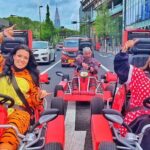
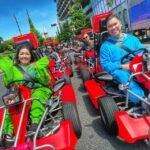
The group may stop near the tower for pictures. This is where the costumes make more sense. A standard sightseeing photo can look predictable, but a line of karts and riders in colorful outfits gives the scene a comic-book quality without requiring you to stage the shot yourself.
The tradeoff is that a road tour cannot promise a long sightseeing stop at every landmark. Your guide needs to keep the group moving and follow traffic conditions. Think of Tokyo Tower as a memorable passage and photo point, not a replacement for visiting the tower itself.
Roppongi and the city after dark
Roppongi brings a different mood. Its wide roads, bright signs, and nightlife reputation make it especially appealing on a later departure. The 90-minute night outing is the best fit if you want the city lights to be part of the experience, including views of Tokyo Tower lit up after dark.
Night rides also bring practical drawbacks. You have less daylight for taking in details, and the temperature can drop quickly in an open kart. One rider found the cold tough but appreciated the offered gloves and hat. Costumes can add a bit of warmth, but you should still dress for the weather rather than treating the outfit as your only outer layer.
A late ride can feel more dramatic, but a daylight departure may be easier for a first-time driver. You can see road markings and surrounding streets more clearly, and the ride may feel less intense. Both choices have value, so choose based on the kind of memory you want: clearer sightseeing in daylight or glowing city views at night.
Omotesando and the polished side of Tokyo
Omotesando gives the route a change of pace. The district is known for stylish buildings, shops, and broad tree-lined avenues. From a kart, you take in the architecture and street activity in quick bursts as the guide moves the group through the area.
This section is useful because it keeps the outing from becoming only a Shibuya photo stop. You get a wider look at central Tokyo, with each district offering a different visual feel. The ride is still fast enough to be exciting, but the guide’s job is to keep the group together and steer you along manageable roads.
Do not expect a detailed walking tour at each neighborhood. The guide may point out where you are and provide local context, but the main activity is driving. If your priority is museum-level detail about Tokyo’s history or design, book a dedicated walking tour separately. If you want a quick, memorable overview from the road, this route works well.
The big moment at Shibuya Scramble Crossing
Shibuya Scramble Crossing is the ride’s most recognizable stage. Crossing with the flow of traffic, surrounded by tall screens and dense city movement, gives you a view that pedestrians rarely get. You are part of the street scene instead of watching it from one corner.
This is also the section where you should pay the closest attention to the guide. Shibuya is visually distracting, and it is easy to focus on cameras, costumes, and people waving from sidewalks. Keep your eyes on the road and follow the instructions.
The crossing may be the highlight for many people, but it is not the whole tour. The route starts in Togoshi and includes several districts, so you should not book this solely as a guaranteed crossing photo. The appeal comes from the full sequence: leaving the shop, reaching central Tokyo, passing major sights, and returning with pictures of the entire outing.
A few more Tokyo tours and experiences worth a look
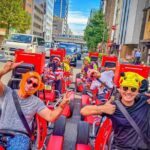
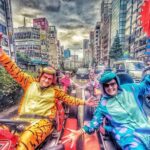
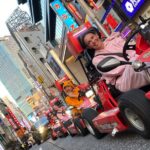

Costumes, props, and the photo package
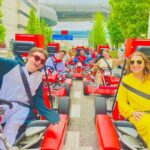
Costumes and accessories are included, along with hats and props. The selection adds a playful layer to the experience, especially for couples, families with licensed drivers, and groups of friends who want a shared theme.
Some special Nintendo or Mario-style costumes may cost extra. You do not need a character costume to enjoy the tour, and the basic costume choices already create fun pictures. Ask about any additional charge before choosing a premium outfit.
The guide takes photos during the ride, often at traffic stops or planned photo points, and digital photo data is provided afterward. Some riders also received printed pictures, though the supplied details guarantee digital data rather than a specific number of prints. If you want your own moving footage, an action camera may be useful. One rider wished they had brought a GoPro, while another preferred a 360-degree camera to a neck-mounted camera that sat too close to the face.
Remember that a camera should not distract you from driving. The included guide photos are useful because you can concentrate on the road and still leave with a record of the outing.
Is the $63 price good value?
At about $63 per person, the tour costs more than a basic amusement-park kart session. That comparison misses the main point. You are paying for a guide-led route through central Tokyo, kart rental, fuel, a safety briefing, costumes, lockers, insurance for the customer, and digital photos.
The value is strongest if you want an activity that combines transport, sightseeing, and entertainment. You see several well-known areas in one outing, and the guide handles the route. The photo service also saves you from trying to take pictures while driving.
The included insurance needs careful reading. Customer insurance is included, but kart insurance is not. The description specifies that kart insurance covers the kart only and does not replace personal insurance. Confirm what protection applies to you before booking, especially if your own travel insurance has driving exclusions.
The 45-minute option suits you if your schedule is tight or you mainly want a taste of the experience. An hour is enough for many people, particularly since one rider felt that an hour provided plenty of time. Choose 90 minutes if you want a longer night ride and more time on the road. The longer option may feel more worthwhile for the price, but it also means more exposure to cold, wind, traffic, and fatigue.
Picking the best departure time
The departure time changes the ride more than you might expect. A morning slot can mean lighter traffic and easier driving. A 10 a.m. outing was considered a good choice for seeing the streets without heavy traffic, and the calmer roads can help you concentrate on the kart.
A late afternoon departure gives you daylight first and city lights later. A 3:30 p.m. start was considered a good balance before darkness arrived. This can be an appealing middle ground if you want Tokyo Tower in daylight and the first glow of evening without committing to a full night ride.
Rush hour requires extra planning. Allow plenty of time to reach Togoshi, since crowded trains can slow you down. You need to arrive ready for the safety briefing, not rush in at the last moment. If you are late, staff may try to help, but you should not rely on that.
Weather is another factor. The tour operates in conditions that can include rain, and one rider still enjoyed the experience in wet weather. Rain, cold, and wind are more noticeable in an open kart than they would be on a bus. Sunglasses can help with wind in your eyes, and warm layers are sensible even if costumes and gloves are offered.
The driving permit rules are not optional
This is the most important booking point. You need your passport or ID card and a hard copy of an international driving permit accepted for Japan. Digital versions are not accepted.
Japan requires the correct permit under the 1949 Geneva Convention, and the permit is valid for one year. The name international driving permit is not enough by itself. If the document is the wrong type, you may not be allowed to drive.
Special rules apply to licenses issued in Switzerland, Germany, France, Taiwan, Belgium, and Monaco. Those drivers must obtain a Japanese translation from the Japan Automobile Federation, rather than relying on an international driving permit.
Licenses from countries outside the 1949 Geneva Convention system, including Mexico, Kuwait, China, Colombia, and Saudi Arabia, cannot be used to operate the kart in Japan under the stated rules. Indian license holders should contact the company before booking because different Indian permit types may or may not be legally valid.
There is no refund if you arrive without a permit valid in Japan. Check the document well before your Tokyo trip. This is not a minor formality to sort out at the shop.
Who will enjoy this Tokyo activity?
I would recommend Shibuya Kart most strongly to you if you want an active group outing rather than a quiet sightseeing tour. Friends can choose costumes together, couples can share the photo experience, and families can join if every driver meets the licensing requirements.
It also suits repeat visitors who have already seen Tokyo from trains and sidewalks. Driving through the city gives familiar districts a new viewpoint. You notice the road layout, traffic flow, and distance between neighborhoods in a way you do not get from a station platform.
You should think twice if you dislike driving in traffic, cold air, costumes, or attention from people along the street. The karts are described as fast, and the activity takes place on public roads. The guides are there to make the ride organized and safe, but you still need to stay alert and comfortable behind the wheel.
The ride is not suitable for anyone without a driver’s license. The supplied information does not establish a broad accessibility policy, so contact the operator directly if you have questions about physical requirements, vehicle fit, or other personal needs.
Booking flexibility and what to bring
You can cancel up to 24 hours before the activity for a full refund, and the reserve-now, pay-later option lets you keep your plans flexible. Check the available start times because the 45, 60, and 90-minute choices may not all run at the same time.
Bring:
- Your passport or ID card
- Your hard-copy international driving permit, if required for your country
- Warm clothing in cool weather
- Sunglasses for wind and glare
- A personal action camera if you want your own video
Do not arrive intoxicated, and do not bring drinks into the vehicle. Alcohol and drugs are not allowed.
The group can be small, which is useful if you want more direct attention from the guide. English and Japanese are available. Staff members such as San, Omar, Alice, Faiyaz, and Wataru have been singled out for friendly instruction, humor, route guidance, and photography, though the guide assigned to your departure will vary.
Should you book Shibuya Kart?
Book it if you want one of Tokyo’s most unusual sightseeing activities and you already have the correct driving documents. The strongest reasons are the mix of Shibuya Scramble Crossing, Tokyo Tower, Roppongi, and Omotesando, plus the guide support and included photos.
I would choose the 60-minute option for most people. It gives you enough time to enjoy the roads without making the ride feel drawn out. Pick 90 minutes for a night outing or if driving itself is the main attraction. Choose an early time for easier traffic, or around midafternoon for a balance of daylight and evening atmosphere.
This is touristy, loud, and a little silly by design. That is also why it works. If you want a polished cultural tour, spend your money elsewhere. If you want to put on a costume, follow San or another guide through Tokyo, pass the tower, cross Shibuya, and return with photos that prove you really did it, this is a strong choice.
FAQ
How long does the Shibuya Kart tour last?
You can choose a 45-minute, 60-minute, or 90-minute experience. Check the available start times when booking.
Where does the tour start and finish?
The tour starts and ends at the Shibuya Kart shop in Togoshi.
Which Tokyo sights can I see from the kart?
The route can include Tokyo Tower, Roppongi, Omotesando, Shibuya, and Shibuya Scramble Crossing.
What driving documents do I need?
Bring your passport or ID card and a hard-copy international driving permit that is valid for Japan. Digital versions are not accepted. Drivers from Switzerland, Germany, France, Taiwan, Belgium, and Monaco need a Japanese translation from the Japan Automobile Federation instead.
Are costumes and photos included?
Costumes, accessories, lockers, and guide-led photo shooting are included. Digital photo data is provided afterward. Some special character costumes may cost extra.
Can I cancel the booking?
You can cancel up to 24 hours in advance for a full refund. You can also reserve now and pay later.
More Go-Kart Tours in Tokyo
More Shibuya Tours in Tokyo

More tours in Tokyo we've reviewed


Go-Karts, compared.
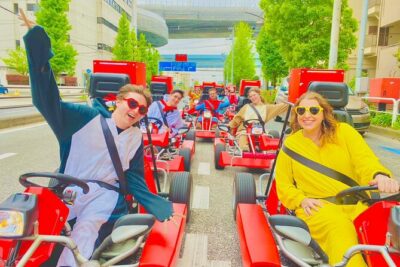 ★ 5.0Flagship 2-Hours Official Street Go-Kart Tour – Tokyo Bay ShopFrom $642 hours to 2 hours 30 minutes (approx.)
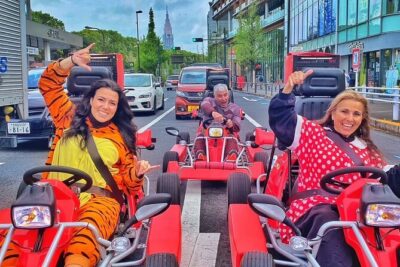 ★ 5.0Official Street Go-Kart in ShibuyaFrom $76
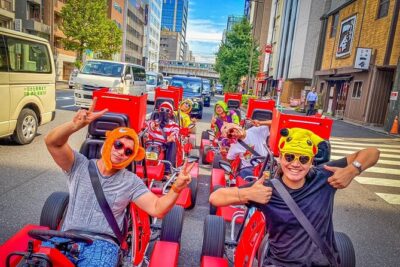 ★ 5.0Official Street Go-Kart Tour – AkihabaraFrom $61
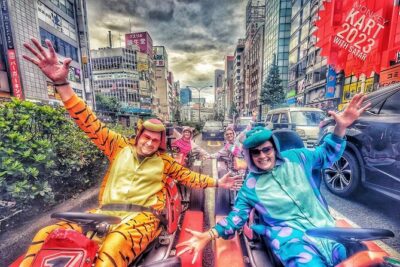 ★ 5.0Tokyo Go Kart: Asakusa, Skytree, and Akihabara **IDP MUST**From $99
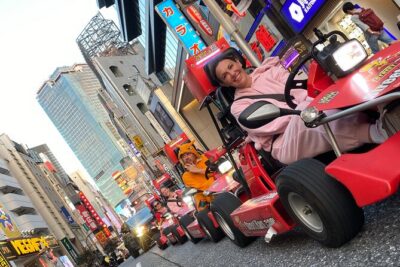 ★ 5.0Shibuya Official Street Go-Kart in Shibuya AnnexFrom $69
 ★ 4.7Tokyo: Asakusa, Skytree & Akhihabara Go-Kart City ExperienceFrom $961h 10m