
Reviewed · SUSHI MAKING CLASSES
Premium 14-Piece Sushi & Cultural Discovery with Chef Interaction
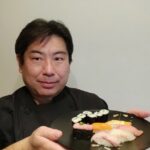
The most interesting part of this Tokyo experience is the access. You sit at an exclusive sushi counter and watch a professional chef prepare the food in front of you, with explanations of searing, simmering, marinating, wrapping, and rice preparation. This is not just a meal. It is a compact lesson in why sushi tastes the way it does.
I especially like the 14-piece premium tasting, which gives you enough food to make the $171.73 price feel substantial. I also like the ingredient comparisons, including freshly grated wasabi against standard paste and premium ingredients against more ordinary ones. These small tests help you notice details that are easy to miss when you simply eat sushi from a menu.
The main consideration is that the experience is built around seafood, rice, and soy. The provider cannot accommodate allergies or dietary restrictions involving those ingredients. Children also receive a different meal in the Kids’ Room, so families wanting the full counter course must book children under the adult plan.
In This Review
- Key points at a glance
- Starting in Kanda, near Ochanomizu and Akihabara
- Taking a seat at the sushi counter
- What the 14-piece course includes
- The comparison tastings make the meal more useful
- Edomae methods you can watch up close
- Tools, rice, and the craft behind the counter
- Sake, soft drinks, and what is not included
- The behind-the-counter photo opportunity
- Bringing children and handling dietary needs
- Who should book this sushi experience?
- Should you book the Premium Sushi Discovery?
- FAQ
- Where does the sushi experience start?
- How long does the experience last?
- How many people can join?
- Are drinks included?
- Do children receive the same sushi course as adults?
- Can the restaurant accommodate food allergies or dietary restrictions?
Key points at a glance
- Fourteen pieces of omakase sushi: The meal is generous enough to serve as lunch or dinner, not just a few sample bites.
- Chef demonstrations at the counter: Watch Edomae methods such as searing, simmering, marinating, and wrapping.
- Useful comparison tastings: See how rice, wasabi, and ingredient quality affect the final flavor.
- Small group setting: The experience has a maximum of five travelers, making direct questions practical.
- Behind-the-counter visit: Step into the chef’s workspace for photos at the end.
- Family arrangements differ: Children receive a kid-friendly meal and do not sit at the main sushi counter unless booked as adults.
Starting in Kanda, near Ochanomizu and Akihabara
You meet at 3-chōme-3-6 Kanda Surugadai, in Chiyoda City. The location sits in a useful central Tokyo zone, close to public transportation and within the broader Kanda, Ochanomizu, Akihabara, and Jimbocho area.
The activity begins inside an authentic sushi restaurant. An English-speaking guide welcomes you, explains how the session works, and seats you at the chef’s counter. The format is refreshingly direct: you are close enough to watch the preparation and ask questions rather than sitting in a separate classroom.
The published itinerary names several nearby areas: Chiyoda, Ochanomizu, Akihabara, Kanda, Tokyo Prefecture, and the Kanda Jimbocho Bookstore Area. Treat these as neighborhood references for the meeting location rather than a walking tour with several sightseeing stops. The food experience begins and ends at the same meeting point, and the standard session takes about two hours, with some sessions lasting up to two and a half hours.
That matters when planning your day. You do not need to set aside half a day, but you should avoid booking a train connection or another timed activity too tightly afterward. The end point is the start point, which keeps the logistics simple.
A few more Tokyo tours and experiences worth a look

Taking a seat at the sushi counter
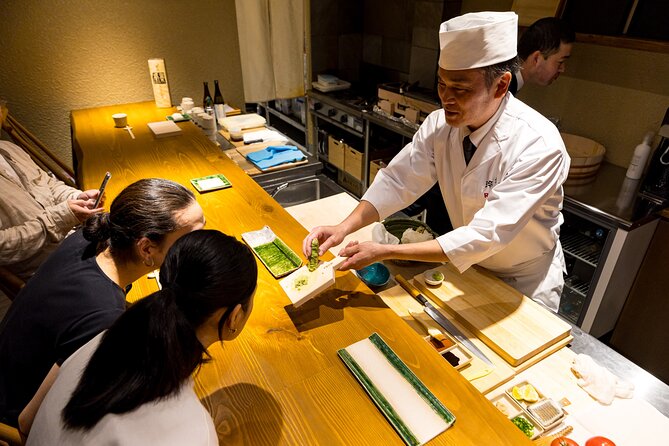
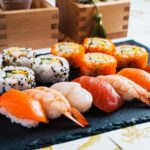
The chef’s counter is the heart of this experience. Sushi can feel mysterious when you only see the finished piece, but the counter lets you watch the small decisions that happen before the food reaches your plate.
You will see the chef work with tools and ingredients while the guide helps explain their purpose. The focus is on practical details, not only grand statements about Japanese food. You learn how preparation changes taste, why rice matters, and how certain tools support the chef’s work.
The direct chef interaction is valuable for first-time visitors because sushi etiquette and technique can otherwise feel intimidating. You do not need to arrive as a sushi expert. The session is designed to explain the process as you eat.
The group limit of five is another real advantage. A group this small gives you a better chance to hear the demonstrations and ask a question without turning the meal into a formal lecture. It also keeps the counter setting more personal than a large food tour.
What the 14-piece course includes
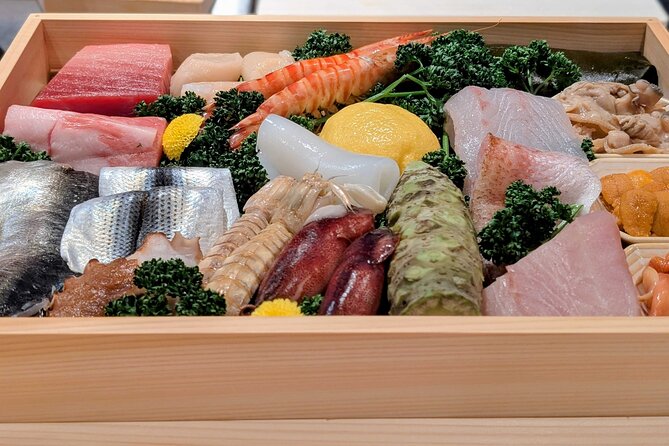
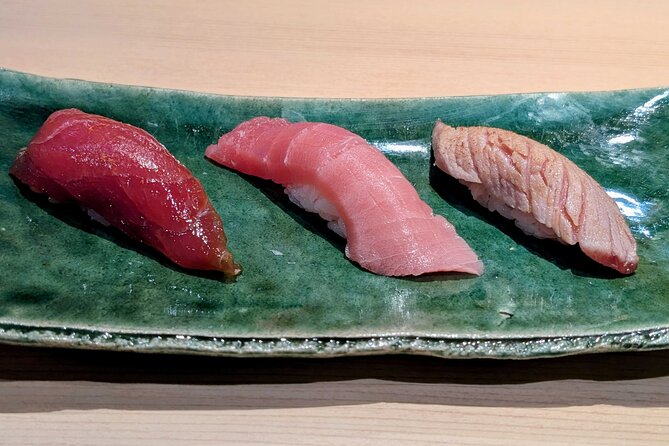
The main meal is a 14-piece premium omakase course. Omakase means the chef selects the sequence, so you are not choosing each piece from a menu. That format suits this experience because the meal is meant to show technique and ingredient differences in a planned order.
Fourteen pieces is a serious tasting. You should arrive ready for a full meal rather than a quick introduction to sushi. The course gives the chef room to show several methods, and it gives you enough samples to compare textures and flavors across the meal.
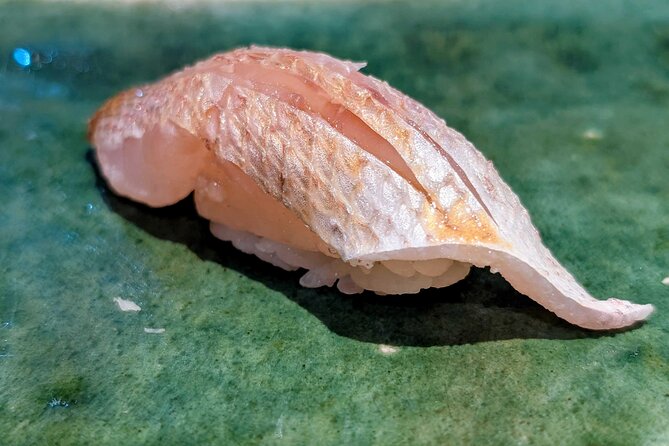
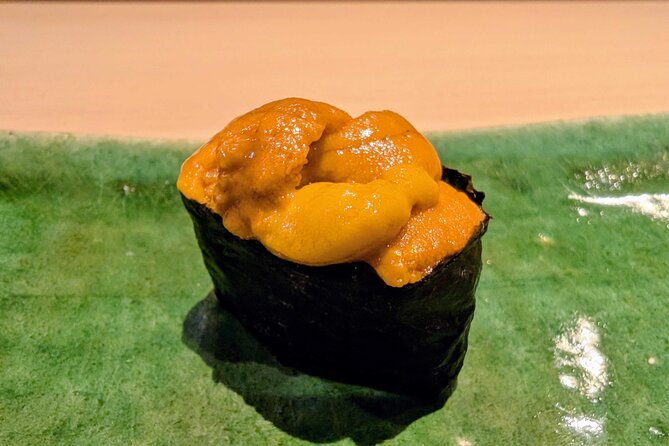
The exact fish selection is not provided, so you should not book this expecting particular species. The important point is the preparation: some pieces may be seared, marinated, simmered, or wrapped in ways that show how Edomae sushi developed as a craft.
One useful detail is that the food is not presented as a blind tasting alone. The guide and chef explain what you are eating and why it has been prepared that way. That makes the meal more useful for a visitor who wants to understand sushi rather than simply check it off a list.
The comparison tastings make the meal more useful
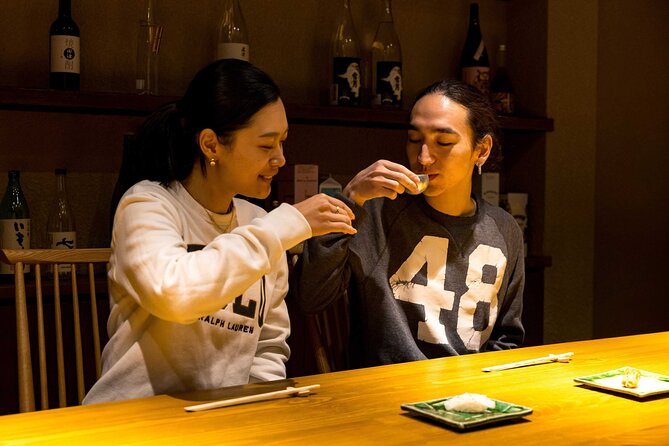
The strongest educational feature is the set of side-by-side comparisons. You can taste how premium and standard ingredients differ, rather than having to accept vague claims about quality.
Rice preparation receives special attention. Sushi rice is not just a neutral base for fish. Its seasoning, temperature, texture, and handling affect the balance of each piece. A comparison helps you notice why two similar-looking pieces can taste quite different.
The wasabi comparison is another practical touch. Freshly grated wasabi and standard prepared pastes can differ in aroma, heat, and finish. You may already think of wasabi as a sharp green condiment, but this tasting shows how much the form of the ingredient matters.
The visual aids and videos also help. The experience includes explanations of sushi history and technique supported by visual material, which is useful when a preparation step happens quickly at the counter. I like this approach because a short video can clarify what you just saw without interrupting the meal.
If you are not a lover of fish, the comparison format may still work for you, provided you can eat seafood, rice, and soy. One participant who went mainly for the sake found the dishes enjoyable and appreciated learning how authentic sushi is made. That is a useful sign for cautious eaters, but it is not a promise that every palate will enjoy the course.
Edomae methods you can watch up close
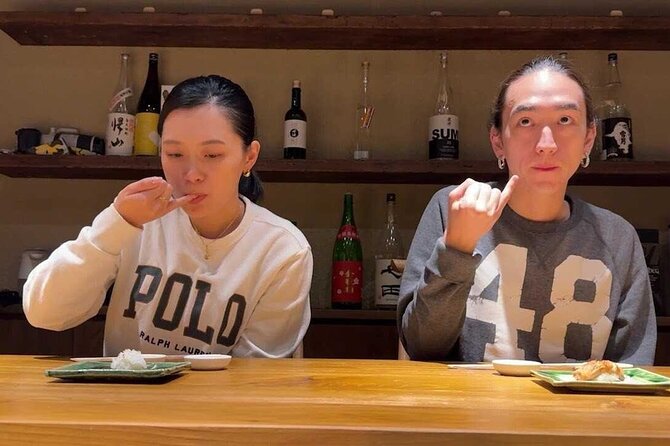
The demonstrations cover several classic techniques.
Searing can alter aroma and texture while adding a cooked surface to a raw or partly raw ingredient. At the counter, you get to see this happen rather than only taste the result.
Marinating shows how seasoning can be built into the ingredient before it becomes sushi. The point is not simply to add sauce at the table. Timing and preparation shape the final balance.
Simmering demonstrates that sushi can involve careful cooking as well as raw seafood. This is one reason the course is more varied than a lineup of identical raw fish pieces.
Wrapping highlights the chef’s control over shape and texture. The way an ingredient is enclosed or paired with rice can affect how the bite comes together.
These methods are part of the Edomae tradition associated with Tokyo-style sushi. You are not merely watching speed and knife work. You are seeing how preservation, seasoning, cooking, and presentation all support the finished bite.




Tools, rice, and the craft behind the counter
The experience includes an explanation of special sushi tools and equipment. That is a small detail with real value. A chef’s tools are not decorative props. They support precision, consistency, and the handling of delicate ingredients.
You can ask about the tools as they are used, which makes the information easier to remember. The session is especially well suited to curious cooks, food professionals, or anyone who has wondered why sushi chefs work with such focused care.
The rice discussion may be the most useful lesson for home cooks. Sushi often gets judged mainly by the fish, but rice controls the temperature, texture, acidity, and overall balance of the piece. Learning how rice preparation changes flavor gives you something to notice at other sushi restaurants in Japan.
The session also offers cultural context around sushi traditions. It does not turn the meal into a long academic talk, but it connects the techniques to the way sushi is made and served in Tokyo.
Sake, soft drinks, and what is not included
Beverages are not included in the $171.73 price. You can order sake pairings after arrival, with selected sake intended to complement the sushi, or choose soft drinks.
For many people, the sake option will be part of the appeal. One especially useful tip is to decide how much you want to spend on drinks before you arrive. The advertised price covers the 14-piece course and the guided experience, but alcohol adds to the final bill.
If you do not drink, the experience still works. The meal and demonstrations are the central features, and soft drinks are available. Just do not assume a beverage pairing is part of the booking.
At $171.73 per person, this is not a budget sushi lunch. The value depends on what you want. If you only want to eat sushi, a less expensive restaurant may suit you better. If you want a small-group meal, direct chef contact, guided comparisons, cultural explanation, and access behind the counter, the price is easier to justify.
The maximum group size of five strengthens the value. You are paying for more than food, but the experience is not diluted by a bus-sized crowd. The course also supplies enough pieces to function as a full meal.
The behind-the-counter photo opportunity
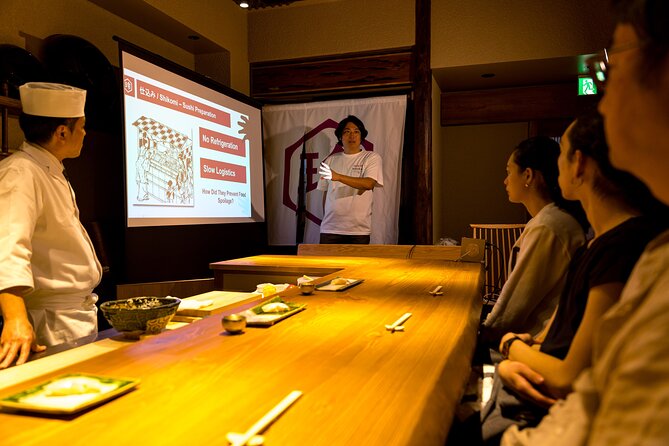
At the end, you can step behind the sushi counter into the chef’s workspace and take photos. This is a memorable finishing touch, especially if you are interested in the practical side of restaurant work.
The wording matters: this is a visit and photo opportunity, not a full hands-on sushi-making class. You watch the chef, interact with the team, and see the work area, but the supplied details do not promise that you will prepare your own pieces.
For many people, the photo is more meaningful after the explanations. You know what the tools and workspace are used for, so the picture records more than a meal at a counter.
Bringing children and handling dietary needs
Families have access to a Kids’ Room for children up to 12 years old. Child bookings include a kid-friendly meal and access to that room, but childcare is not provided. Parents remain responsible for supervision.
Children booked under the child plan do not receive the 14-piece premium sushi course. They also sit in the Kids’ Room or in a child-designated seat rather than at the sushi counter.
If your child wants the same 14-piece course and counter seating as the adults, you must book that child under the adult plan. This is an important detail to settle before paying, since the two plans are not interchangeable in practice.
The provider cannot accommodate allergies or dietary restrictions involving rice, soy, or seafood. If those ingredients are a concern, this is not a flexible dining option. Service animals are allowed, and the restaurant is near public transportation.
Who should book this sushi experience?
I would recommend it most strongly to someone who wants context with a special meal. It suits first-time visitors who want an introduction to Tokyo sushi, food-focused travelers who enjoy asking questions, and curious eaters who want to understand what separates ordinary sushi from carefully prepared sushi.
It can also work for a celebratory meal, especially if the behind-the-counter photo and sake pairing appeal to you. The small group keeps the occasion more personal than a large guided food walk.
You may want to skip it if you need a fully flexible menu, dislike seafood, or prefer to choose every piece yourself. It is also not the best fit for a family hoping to place children beside adults at the counter under the child fare.
The activity has free cancellation up to 24 hours before the start time. Changes or cancellations inside that window are not accepted for a refund, so keep the local Tokyo start time in mind when making plans.
Should you book the Premium Sushi Discovery?
Book this experience if you want a structured sushi lesson with a substantial meal. The 14-piece course, chef demonstrations, ingredient comparisons, visual aids, and small group make it more useful than a standard restaurant reservation.
The price is high, but the package includes food, instruction, cultural background, and access most diners do not receive. I would book it early, since it is commonly reserved well ahead of time, and I would leave room afterward in case the session runs closer to two and a half hours.
Skip it if your priority is the lowest-cost sushi in Tokyo or if rice, soy, seafood, or child seating arrangements create a problem. For everyone else, this is a focused way to turn one excellent meal into a better understanding of sushi craft.
FAQ
Where does the sushi experience start?
It starts at 3-chōme-3-6 Kanda Surugadai, Chiyoda City, Tokyo 101-0062, Japan. The activity ends back at the same meeting point.
How long does the experience last?
The standard duration is about two hours. The 14-piece omakase course may take up to two and a half hours.
How many people can join?
The maximum group size is five travelers.
Are drinks included?
No. Alcoholic drinks, sake pairings, and soft drinks can be ordered after arrival at the restaurant.
Do children receive the same sushi course as adults?
No. Child bookings include a kid-friendly meal and access to the Kids’ Room. Children do not receive the 14-piece sushi course or standard counter seating unless booked under the adult plan.
Can the restaurant accommodate food allergies or dietary restrictions?
The provider cannot accommodate allergies or dietary restrictions involving rice, soy, or seafood.
More Sushi Making Classes in Tokyo
More tours in Tokyo we've reviewed





Sushi Making Classes, compared.
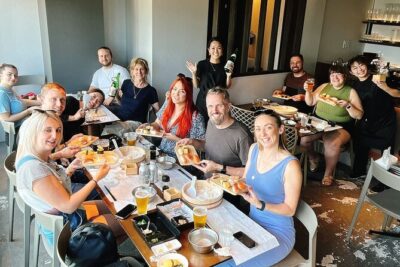 ★ 5.0Sushi Making Tokyo Roll and Authentic Japanese Sushi ClassFrom $59
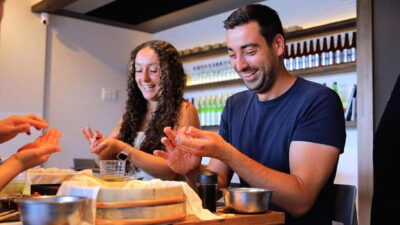 ★ 4.9Tokyo: Roll and Authentic Sushi Making Class in AsakusaFrom $581h 40m
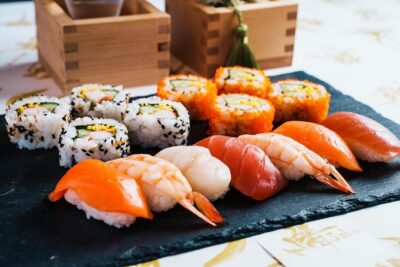 ★ 5.0Make Sushi and Create Unforgettable Memories in TokyoFrom $79
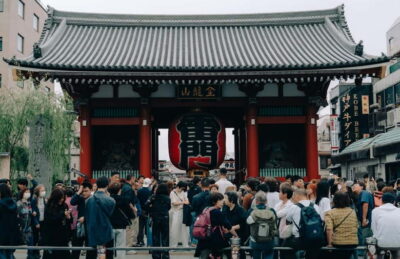 ★ 4.9Tokyo: Sushi Making Class in a Happi Coat near a Famous SpotFrom $421h 30m
 ★ 5.0Tokyo Sushi Making Class in Tsukiji with Professional ChefFrom $49
 ★ 5.0Tokyo Night Foodie Tour in Shinjuku – Seasonal Sushi, Wagyu BeefFrom $111