
Reviewed · JDM & CAR CULTURE
JDM Experience with Fast&Furious RX-7 (English speaking Driver)
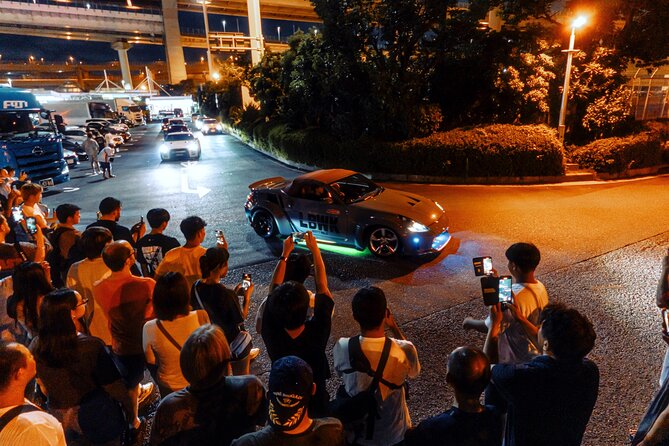
Tokyo’s JDM scene is best understood from the passenger seat of a tuned Japanese sports car. This 3 to 4-hour evening-style outing takes you through the city in an RX-7 or another featured car, then out to Daikoku Parking Area, where rows of Japanese performance cars gather under the lights.
I like the car-enthusiast guides, who explain the scene in clear English and adjust the conversation for serious fans or curious beginners. I also like the mix of driving, shopping, and people-watching at the meet, rather than spending the whole tour parked in one place. The main caution is the shared-car setup: seating can feel tight, and the $150 price may seem high if you expect a private car.
In This Review
- Key points at a glance
- What this Tokyo car tour really offers
- Starting in Shibuya and getting settled
- The Tokyo Drift moment
- Expressway views are part of the attraction
- Forty minutes at A-PIT Super Autobacs
- Ninety minutes at Daikoku Parking Area
- The guides make the difference
- Is $150 a fair price?
- Who should book this outing?
- Practical details before you book
- My call: book it for the car culture, not just speed
- FAQ
- How much does the JDM car tour cost?
- How long does the experience last?
- Where does the tour start?
- Is hotel pickup available?
- Which stops are included?
- Which car will I ride in?
- How many people can join the tour?
- What happens if the weather is poor?
Key points at a glance
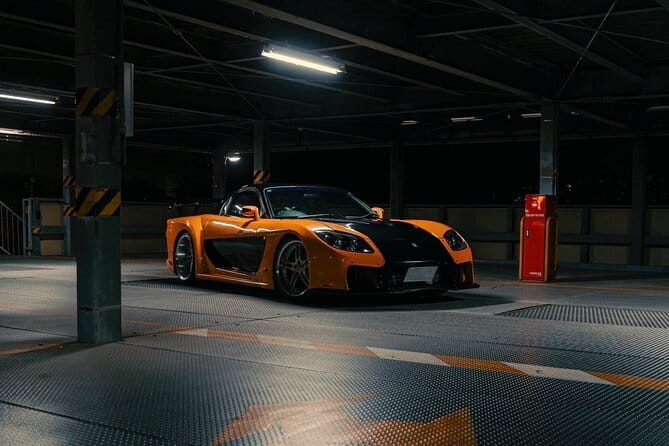
- Tokyo Drift-style RX-7 rides: Cruise in an iconic JDM car, with other cars such as Subaru WRX STI, Silvia S15, or S13 sometimes used.
- Daikoku for 90 minutes: Spend the longest stop among Japanese sports cars, classics, modified cars, and fan-built machines.
- A-PIT Super Autobacs: Browse tuning parts, car accessories, clothing, toys, Initial D items, and other JDM souvenirs.
- English-speaking driver-guides: Osama, Usama, Tariq, Osamu, and Tatsumichi have been praised for clear communication and a friendly approach.
- Tokyo from the expressway: The route can include views around the city, the Rainbow Bridge, Tokyo Tower, and other photo locations.
- Shared experience, not guaranteed private hire: The group limit is 15, so confirm the vehicle arrangement if personal space matters to you.
What this Tokyo car tour really offers
I would not book this simply as a fast ride. The better reason is the access to a corner of Tokyo that is hard to understand from a normal sightseeing bus or a visit to a car shop.
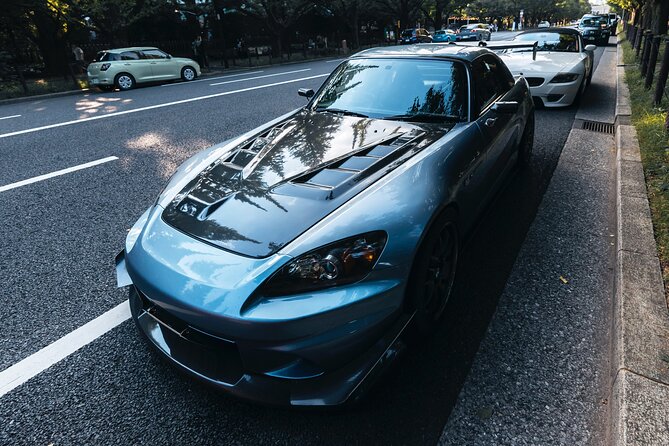
The tour connects three pieces of Japanese car culture. You get the car itself, the road experience, and the social side at Daikoku. That combination gives you a fuller picture of why the RX-7, Subaru STI, Nissan Silvia, Skyline, and Toyota Trueno mean so much to fans around the world.
The tone is informal. Your driver is not just there to steer. Guides such as Osama and Usama explain Japanese tuning culture, point out interesting cars, and keep conversation going during the drive. Tariq and Tatsumichi have also led outings in Subaru and other performance cars.
That personal connection is important. A polished RX-7 is fun to look at, but it is more useful when someone can explain what makes the car special, how Japanese owners modify their cars, and why certain models attract attention at a meet.
A few more Tokyo tours and experiences worth a look
Starting in Shibuya and getting settled
The listed starting point is 1-chōme-12-13 Jinnan in Shibuya, Tokyo. It is near public transportation, which helps if you are already in central Tokyo. Hotel pickup may also be possible, and free hotel drop-off is included, so confirm the exact arrangements with the provider before setting out.
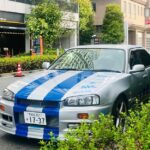
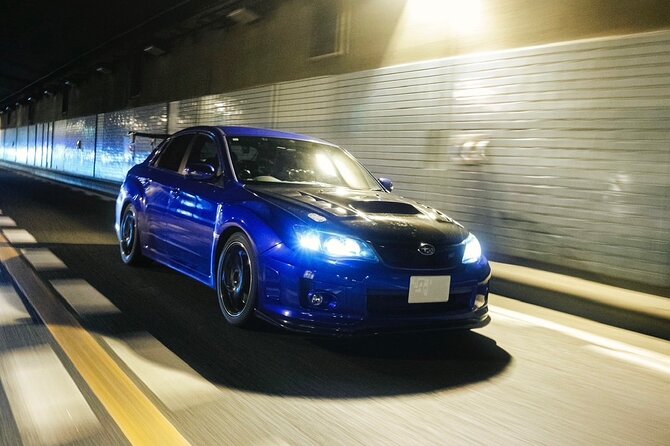
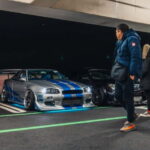
The first few minutes are worth using for practical questions. Ask which car you will ride in, how many people will share it, and how the seating will work. The experience is promoted around the RX-7, but the actual car can vary. Past outings have used a Veilside-style RX-7, Subaru Impreza WRX STI, Nissan Silvia S15, and Silvia S13.
This matters because the car is a major part of the price. If you are booking for a family or a pair who want plenty of room, do not assume you will have the car to yourselves. One unhappy booking involved five adults sharing one car, with the expectation that the price covered a private vehicle. That complaint is a useful warning, not a reason to dismiss the tour.
The maximum group size is 15 people. The number in your own car may be smaller, but it is not clearly guaranteed. If you care about driving in a specific model or having an exclusive ride, ask before payment.
The Tokyo Drift moment
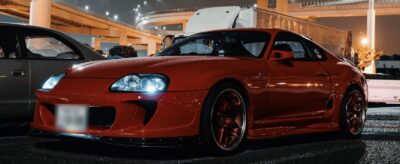
The opening ride aims to recreate the feeling of a movie car scene without pretending that Tokyo’s roads are a racetrack. You may find yourself cruising through the city in an RX-7, WRX STI, or another Japanese performance car while people on the street notice the vehicle and take photos.
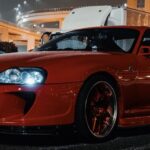
The appeal is visual and social as much as mechanical. You are not simply looking at a parked car. You see the bonnet and dashboard from inside, hear the engine, and watch Tokyo pass by from a low sports-car seat.
Some outings have included photo stops near Tokyo Tower and views around the Rainbow Bridge. The route also uses Tokyo’s expressways, giving you a different angle on the city than a subway ride provides. At night, the road lights and elevated views add to the film-like mood.
Keep your expectations sensible. This is a guided ride, not a driving lesson or a chance for you to operate the car. The driver controls the vehicle, and the experience is presented as a safe cruise through Tokyo. The best part is feeling the car move through the city while your guide points out the places and cars that matter.
Expressway views are part of the attraction
The expressway sections are not just transport between stops. They are a key part of the outing.
Tokyo’s elevated roads let you see the city in motion, with towers, bridges, traffic, and illuminated buildings appearing from a different height. The Rainbow Bridge has been part of some routes, and the city views can make the journey feel like a sightseeing tour with a very unusual seat.
I like this part because it breaks up the stop-and-look format common on city tours. You spend time moving, then time exploring. The driver can also explain local car habits and point out the kinds of vehicles you might otherwise overlook.
There is a trade-off. Expressway traffic affects the timing, and the total 3 to 4 hours includes travel time. You should not expect three or four full hours at attractions. The route may run longer on a particularly enjoyable evening, but the stated duration is approximate.
Forty minutes at A-PIT Super Autobacs
The first formal stop is A-PIT Super Autobacs, with about 40 minutes provided. This is a practical stop for anyone who wants to take home a piece of the scene.
You can browse tuning parts and car accessories, along with JDM souvenirs such as T-shirts, toys, and Initial D merchandise. Some outings have also found a cafe inside, which adds a useful break during the route. Even if you know little about modifications, the shop helps explain how car culture becomes part of everyday retail in Japan.
For serious fans, the parts section is the draw. You may see equipment and styling items that are difficult to find at home. For everyone else, the clothing and toy sections are easier ways to browse without needing technical knowledge.
Forty minutes is enough for a focused look, but not a long shopping session. If you want to compare products carefully, you may feel rushed. The stop works best when you treat it as a lively introduction to Japan’s car retail world, not as a full shopping trip.
It is also a good place to buy a small souvenir before Daikoku. A shirt, model, or Initial D item can make the outing feel more personal without requiring you to purchase expensive parts.
A few more Tokyo tours and experiences worth a look
Ninety minutes at Daikoku Parking Area
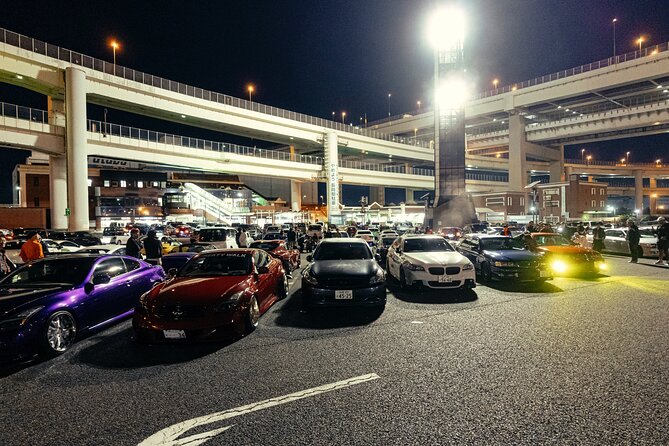
Daikoku Parking Area is the heart of the tour. You get roughly 1 hour and 30 minutes here, far more time than at A-PIT, and for good reason.
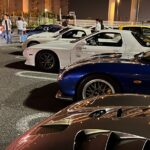
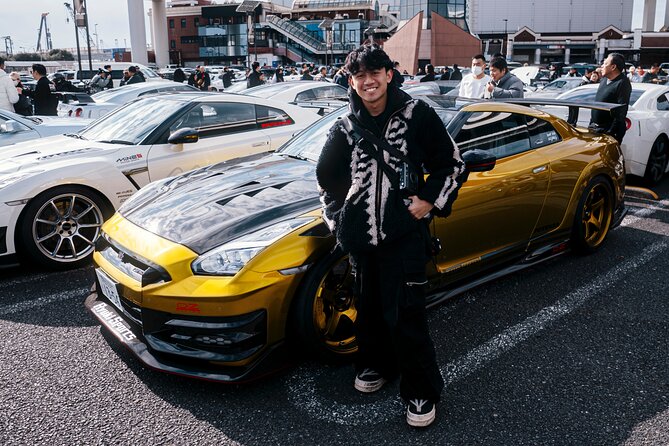
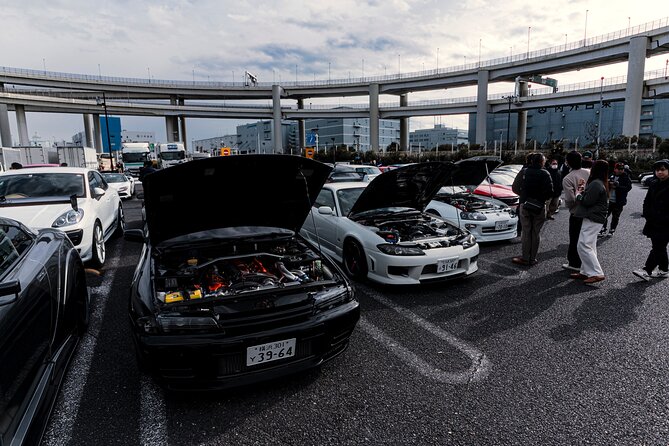
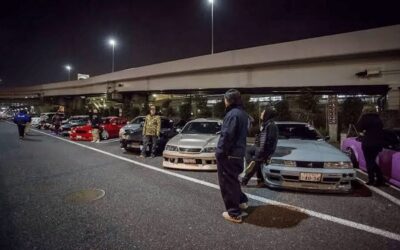
Daikoku is known for gatherings where many cars appear in one place. The exact mix changes, so you cannot order a particular model like a menu item. You might find classic Japanese cars, new performance models, modified street cars, GT-Rs, RX-7s, Subaru vehicles, Toyota Truenos, and colorful custom builds.
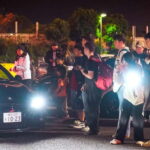
That uncertainty is part of the fun. A meet can be modest on one night and packed on another. Some outings have seen roughly 250 to 300 cars, while others have focused on a smaller but still varied group. The provider cannot control who arrives, what cars appear, or how busy the area will be.
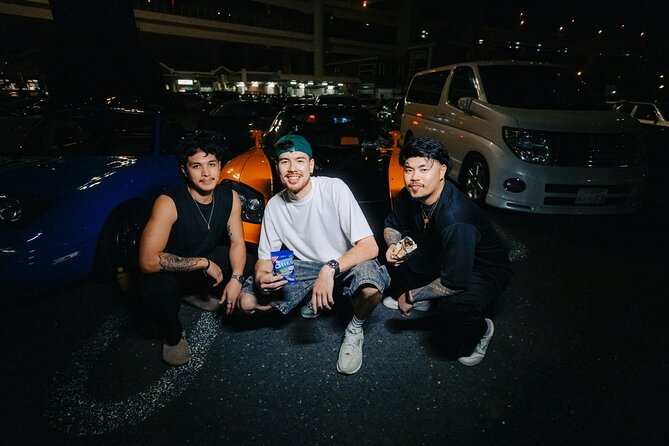
Your guide makes the stop more useful. Instead of wandering past a row of cars without context, you can ask why one model matters, what a modification does, or which car deserves a closer look. Guides have also helped with photographs and made sure each person gets time near the featured cars.
Daikoku is especially good for people who like taking pictures or making short videos. The parking area gives you many subjects in a compact space, and arriving in an RX-7 or STI can make your own group part of the visual scene. Still, you should behave respectfully. This is a working parking area and a real gathering, not a set built for tourists.
The stop may be less exciting if your interest in cars is limited. You can enjoy the spectacle for a while, but 90 minutes is a long time to spend comparing vehicles if you do not care about engines, body kits, wheels, or Japanese models. For a true JDM fan, however, this is the part that justifies the booking.
The guides make the difference
The strongest feature is the human side of the outing. The guides are described as friendly, fluent in English, professional, and comfortable with different levels of car interest.
Osama and Usama have led outings that felt personal rather than scripted. They have explained the local scene, helped with photographs, and kept shared groups involved. Osamu has been praised for clear English, polite service, and comments about Tokyo landmarks during the ride.
Tariq has driven a Subaru STI on some occasions, and Tatsumichi has also taken groups out in an Impreza STI. These names do not guarantee who will lead your departure, but they show the kind of driver-guide the company uses: someone connected to the cars, not a generic city guide assigned to a route.
This is useful for mixed groups. One person may know every generation of GT-R, while another may simply like the look of an RX-7. The guides can talk at both levels. Families have also found the experience comfortable, including groups with teenagers.
The quality of the evening depends partly on communication. Since the tour is shared and the route can change with traffic, weather, and the car meet, a guide who explains what is happening matters a lot.
Is $150 a fair price?
At $150 per person, this is not a cheap way to see Tokyo. You are paying for more than a transfer to Daikoku, though. The fee covers the car experience, an English-speaking certified guide, an air-conditioned vehicle, the A-PIT visit, the Daikoku stop, and the route through Tokyo.
I think the value is strong for a committed JDM fan who would struggle to reach Daikoku, identify the cars, and make the evening feel special alone. The guide, the featured vehicle, and the chance to ride through Tokyo are the parts you cannot easily reproduce with a normal train ticket.
The value is weaker if you mainly want a quick look at sports cars. You could spend far less visiting a car shop or browsing automotive areas on your own. You also need to accept that the featured car and group arrangement may vary.
For a couple, the price buys a memorable shared activity. For a family, the total cost rises quickly, so check the seating plan before booking. If privacy is important, ask about a private option rather than assuming it is included.
Coffee and tea are not included. That is a small point, but it is worth knowing because the tour can run several hours and the A-PIT stop may be your only convenient break.
Who should book this outing?
I would recommend it most strongly to:
- JDM fans who want to see Japanese cars in their local setting
- Fast and Furious or Tokyo Drift fans who want the movie mood without a film-set tour
- Visitors who enjoy photography, short-form video, and unusual city views
- Families with older children or teenagers who can appreciate cars and a late outing
- Beginners who want a friendly introduction rather than a technical lecture
You do not need expert car knowledge. The guides can explain the basics, and the range of vehicles gives you plenty to look at. Still, the more interest you bring, the more you will get from the conversation at Daikoku.
I would think twice if you dislike shared vehicles, need a fixed schedule, or expect to drive the car yourself. This is a passenger experience, and traffic takes up part of the time.
Practical details before you book
The activity uses a mobile ticket and is near public transportation at the Shibuya meeting point. The stated duration is approximately 3 to 4 hours, including travel time, and the tour can take up to 15 people.
Hotel pickup is possible, and free hotel drop-off is included. Since the standard end point is listed as the meeting point, confirm your exact pickup and return plan in advance. This is especially useful if your accommodation is outside central Tokyo.
Most people can take part, but no detailed vehicle accessibility information is supplied. Ask the provider directly if you need a particular seating arrangement.
Confirmation normally arrives at booking. If you reserve within 10 hours of departure, confirmation comes as soon as possible and depends on availability. You can cancel for a full refund up to 24 hours before the start time. Changes or cancellations inside 24 hours are not accepted for a refund.
Good weather is required. If poor weather forces cancellation, you will be offered another date or a full refund. That policy matters because the route depends on outdoor car gatherings and photo stops.
My call: book it for the car culture, not just speed
I would book this tour if Daikoku, Japanese performance cars, and the chance to ride through Tokyo in an RX-7 or STI are high on your list. The strongest parts are the long stop at Daikoku, the English-speaking driver-guides, and the blend of driving with real car-meet culture.
Before you pay, confirm three things: the exact car, the number of people sharing it, and the pickup and drop-off plan. Those details shape the value more than the advertised headline.
If you want a private sports-car hire or a driving lesson, this is not the right choice. If you want a friendly guide, Tokyo expressway views, A-PIT shopping, and a genuine chance to see Japanese cars gathered at Daikoku, it is a very good use of an evening in Tokyo.
FAQ
How much does the JDM car tour cost?
The price is $150 per person.
How long does the experience last?
The tour lasts approximately 3 to 4 hours, including travel time.
Where does the tour start?
The listed starting point is 1-chōme-12-13 Jinnan, Shibuya, Tokyo 150-0041, Japan.
Is hotel pickup available?
Hotel pickup is possible, and free hotel drop-off is included. Confirm the exact arrangements with the provider before departure.
Which stops are included?
The route includes A-PIT Super Autobacs for about 40 minutes and Daikoku Parking Area for about 1 hour and 30 minutes. The ride also includes Tokyo expressway views and car-related photo opportunities.
Which car will I ride in?
The experience features an iconic JDM car such as an RX-7, but vehicles can vary. Past outings have used cars including Subaru WRX STI, Subaru Impreza STI, Nissan Silvia S15, and Silvia S13.
How many people can join the tour?
The activity has a maximum group size of 15 people. The exact number sharing one vehicle is not specified.
What happens if the weather is poor?
The experience requires good weather. If it is canceled because of poor weather, you will be offered a different date or a full refund.
More Private Drivers in Tokyo
More JDM & Car Culture in Tokyo
More tours in Tokyo we've reviewed


JDM & Car Culture, compared.
 ★ 4.7FAST&FURIOUS EXPERIENCE Tokyo Car Club membershipFrom $138
 ★ 4.8GT-R35 800hp Club Membership – secret underground car meetFrom $205
 ★ 4.8Tokyo: Fast & Furious Tokyo Drift 3 Experience (Kaila Yu SP)From $157
 ★ 4.8Tokyo: Daikoku JDM Car Meet & Night Car Culture TourFrom $984 hours
 ★ 4.8Secret Car Meet: R34 Skyline Car Club MembershipFrom $236
 ★ 4.7Tokyo Drift: Daikoku PA Supreme Car Experience 大黒PAFrom $583 hours