
Reviewed · SUSHI MAKING CLASSES
Tokyo: Wagyu and Sushi Gastronomic Journey
Shinjuku’s best food story is told in small bites: carefully prepared sushi, richly marbled Wagyu, and the smoky comfort food of narrow alleyways. This three-hour evening tour connects those tastes with Kabukicho, Hanazono Shrine, Omoide Yokocho, and Golden Gai, so you get more than a meal.
I like the mix of expert food guidance and old-school Shinjuku streets. I also like the small group size, capped at 10, which makes it easier to ask questions and keep up in the tight lanes. The main drawback is the price: at $154 per person, it makes sense only if you want dinner, drinks, and a guided night out rather than a simple restaurant meal.
In This Review
- Key points to know before you book
- What this Shinjuku food tour really offers
- Wagyu: more than simply expensive beef
- Sushi with a closer look at technique
- Kabukicho after dark
- Omoide Yokocho and Tokyo comfort food
- Golden Gai: tiny bars and a very different Tokyo
- Guide quality and group size
- Is $154 a fair price?
- Practical details that affect your night
- Who will enjoy this experience most?
- Should you book the Wagyu and sushi journey?
- FAQ
- Where does the tour start?
- Where does the tour finish?
- How long does the experience last?
- What food is included?
- Are drinks included?
- Is transportation included?
- Can I cancel the booking?
Key points to know before you book
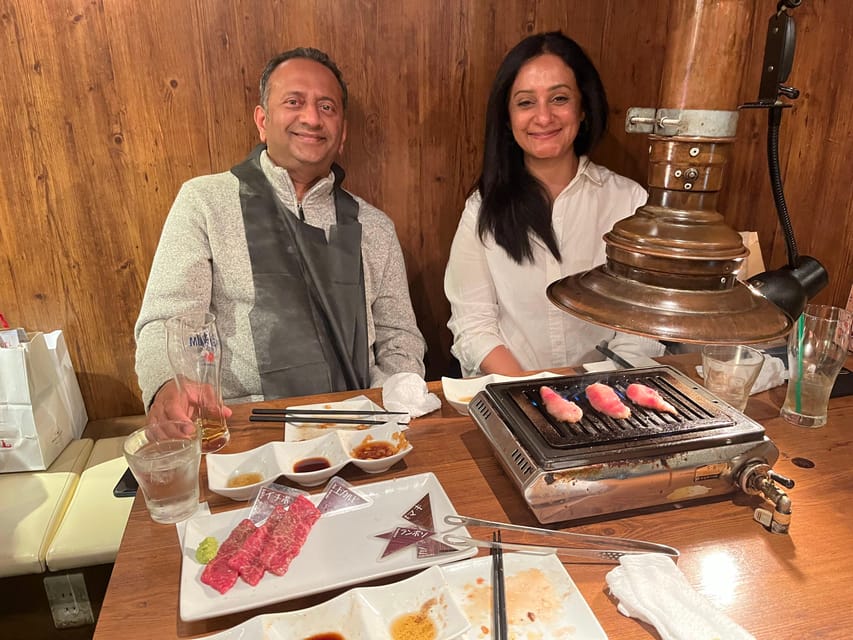
- Wagyu and sushi share the spotlight, giving you two of Japan’s most famous foods in one evening.
- The route links modern and older Shinjuku, from Kabukicho’s neon signs to Hanazono Shrine and Golden Gai’s tiny bars.
- Dinner is included at two food venues, along with alcoholic drinks for participants aged 20 and above.
- The group is limited to 10 people, a useful advantage in narrow alleys and small eateries.
- The tour ends in Golden Gai, so you can continue exploring the area after the guide says goodbye.
- Allow 3 to 3.5 hours, and budget another 200 to 800 yen for transportation because local transit is not included.
What this Shinjuku food tour really offers
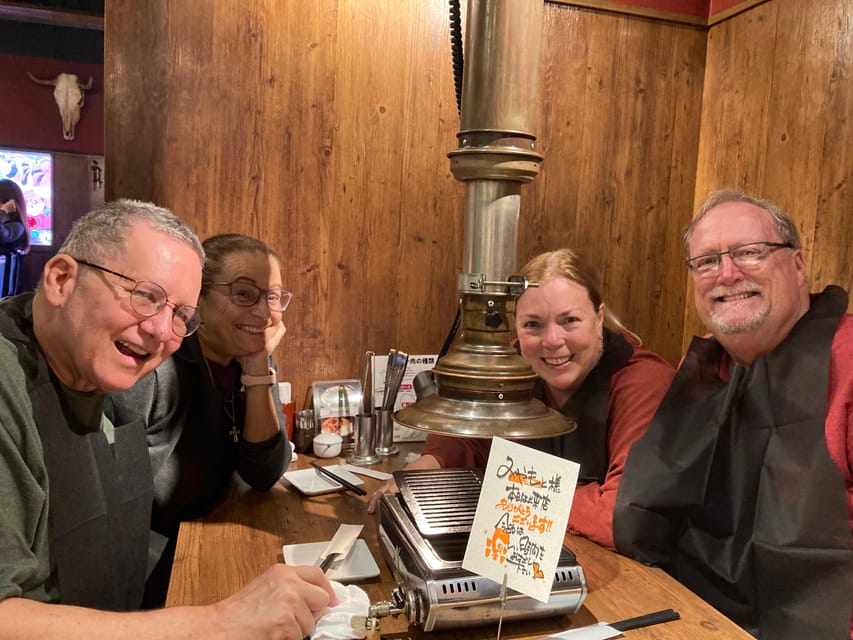
This is not just a sushi stop followed by a steak dinner. The evening is built around the way food, nightlife, religion, and postwar Tokyo overlap in Shinjuku.
You meet in front of The 3rd Burger at 7-chōme-10-5 Nishishinjuku. From there, the guide leads you toward Kabukicho and the surrounding streets before continuing through the lanes of Golden Gai. The food visits are paired with neighborhood walks, so the meal has a sense of place.
That format matters in Tokyo. You can find excellent sushi and Wagyu on your own, but it is harder to understand what you are eating, why it costs what it does, and how the restaurant fits into the neighborhood. An English-speaking local guide helps with those small points that a menu alone cannot explain.
The evening usually takes 3 to 3.5 hours, even though the advertised duration is three hours. You should not schedule a train connection or another timed activity immediately afterward. The route ends at Shinjuku Golden Gai, not back at the starting point.
A few more Tokyo tours and experiences worth a look
Wagyu: more than simply expensive beef
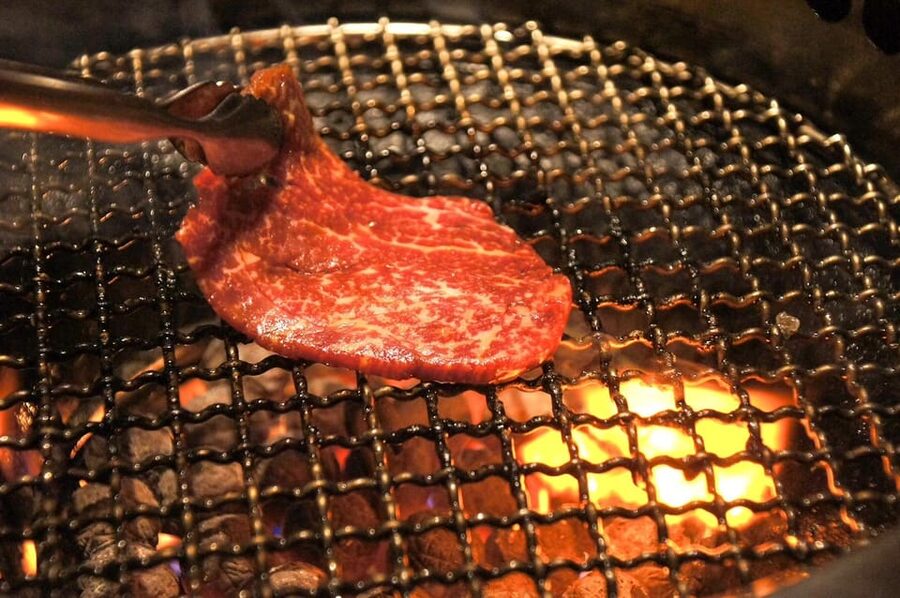
The Wagyu portion is a major reason to book this experience. You learn about the beef’s background, flavor, and regional differences while tasting it in a Japanese dining setting.
Wagyu is known for its fine marbling, which gives the meat a soft texture and full flavor. That does not mean every Wagyu dish tastes the same. The cut, preparation, and balance of fat all affect the experience. A guide can point out those differences as you eat rather than leaving you to guess.
One useful feature here is the contrast between Wagyu and sushi. Wagyu is warm, rich, and deeply savory. Sushi depends on freshness, rice texture, temperature, and restraint. Tasting both in the same evening gives you a quick lesson in two very different ideas of Japanese cooking.
The food is served as dinner, not merely as a token sample. Still, you should not assume that $154 buys an unlimited feast. The information confirms dinner at two distinct food venues, but it does not give a full menu or exact portion count. If you have a large appetite, keep your expectations sensible.
The strongest praise for this part of the evening centers on tender beef and the thrill of trying Japanese barbecue for the first time. If Wagyu is high on your Tokyo wish list, the guided explanation adds value that a solo meal may not provide.
Sushi with a closer look at technique
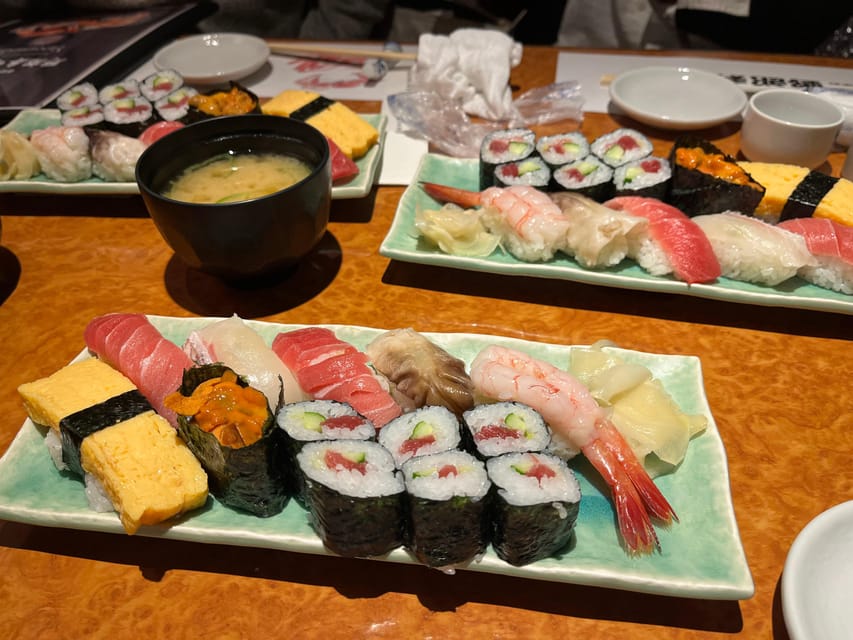
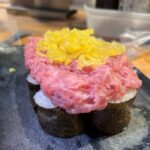
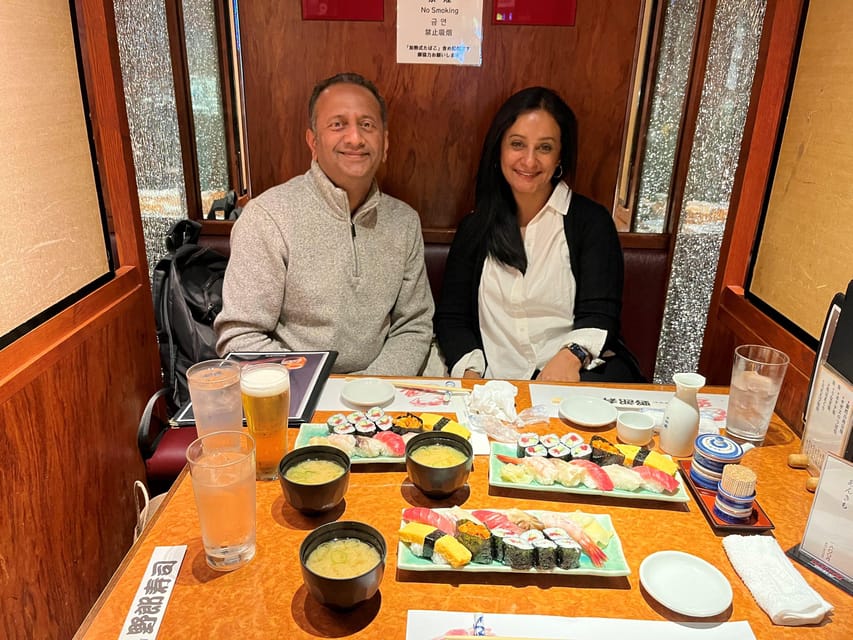
The sushi stop focuses on freshness, seasonal ingredients, and the precision of the chef’s work. You watch the preparation and receive guidance on the pieces you taste.
That explanation can change how you approach sushi. Instead of treating each piece as a generic seafood bite, you can pay attention to the rice, the topping, the cut, and the seasoning. The guide also helps you understand dining customs and offers context about Japanese food beyond the plate.
The supplied details do not name the sushi restaurant or list the exact fish. That is worth keeping in mind if you have allergies, strong preferences, or a specific seafood wish list. You should ask the provider about ingredients before booking if your diet is restricted.
The food praise is unusually consistent here. The sushi is repeatedly described as fresh, flavorful, and carefully prepared. That makes this tour a good fit for someone who wants an introduction to sushi without spending the evening trying to decode a menu alone.
At the same time, serious sushi fans may want more control over the selection. A specialist sushi tour or an omakase reservation could offer a more focused meal. This experience spreads its attention across sushi, Wagyu, neighborhood history, and nightlife.
Kabukicho after dark
Kabukicho is Shinjuku’s famous entertainment district, packed with bright signs, restaurants, bars, and nightlife. The tour gives you about 1.5 hours of guided exploration in this part of Shinjuku.
The appeal is not simply the neon. Kabukicho shows you Tokyo’s modern night face, where huge buildings, animated signs, and small food businesses sit close together. The guide helps you read the district rather than merely walk through it.
You also see the Godzilla Head above the Shinjuku Toho Building. It is an easy-to-spot symbol of Tokyo pop culture and a fun photo stop, especially if this is your first night in Shinjuku.
The area can feel loud and crowded. That is part of its character, but it may not suit you if you prefer quiet streets or a slow meal with little walking. The route also moves through entertainment zones, so you should expect plenty of signage and nightlife activity.
Hanazono Shrine offers a useful change of pace. The shrine is a calm religious site amid Shinjuku’s busy streets, giving you a chance to see a more traditional side of the district. The contrast is the point: Tokyo does not separate old and new into neat sections. A shrine, a skyscraper, a tiny bar, and a giant monster sign can all appear within the same evening.
Omoide Yokocho and Tokyo comfort food
Omoide Yokocho is a narrow alley known for tiny bars and eateries serving yakitori and other familiar Japanese foods. It is one of the route’s most atmospheric stops.
The alley is compact, informal, and close to the street. You get a feel for the small-scale dining culture that can be missed in larger restaurants and polished food halls. Yakitori, grilled chicken on skewers, is especially tied to this kind of setting, though the included dinner is described as taking place at two distinct food venues and does not promise a specific Omoide Yokocho meal.
That distinction matters. The itinerary highlights Omoide Yokocho as part of the neighborhood walk, while Wagyu and sushi are the central food experiences. Think of Omoide Yokocho as an introduction to Shinjuku’s food lanes, not a guarantee of a full yakitori dinner there.
The tight passageways may be difficult for anyone who dislikes crowded urban spaces. You should also wear comfortable shoes, since the evening combines several walking sections with standing at food stops.
Golden Gai: tiny bars and a very different Tokyo
The tour finishes in Shinjuku Golden Gai, a maze of narrow lanes lined with more than 200 small bars. Each place can have its own style and theme, and many are intimate enough to feel like a private room even when they are open to the street.
Golden Gai has a strong link to postwar Tokyo. Its small buildings and close-set bars offer a sharp contrast to the large commercial towers nearby. The area is not polished in the usual tourist sense, and that is precisely why it is interesting.
The tour includes alcoholic beverages for participants aged 20 and above. The supplied details do not specify the exact bar, drink choices, or whether a separate cover charge applies, so you should confirm those points if they matter to your budget.
The guide’s role is especially useful here. Golden Gai can be confusing on your own, and some bars may have particular entry rules or limited space. A small group is a practical advantage, since a party of 10 is already substantial in a very small room.
You finish in Golden Gai, which gives you a choice. You can head back to your hotel, continue to another bar, or simply walk through the lanes again with a better sense of where you are. The tour does not include hotel drop-off, so plan your return route before the evening starts.
Guide quality and group size
The experience depends heavily on the guide because the evening combines food service with neighborhood interpretation. Emma receives especially warm praise for her friendly manner, food explanations, and stories about dining in Tokyo and her time in the United States.
Other feedback highlights guides who make the evening feel personal and who explain each dish rather than simply pointing out the next stop. That is important here. The food is a major draw, but the guide is what ties the separate parts together.
The group limit of 10 is another practical plus. In a large Tokyo nightlife district, a smaller group can cross streets more easily, fit into tighter spaces, and keep conversation flowing. It does not guarantee a private tour, but it is far more manageable than a large coach-style outing.
The tour is offered in English. If you want detailed explanations about Japanese dining habits, Wagyu varieties, and the history of the neighborhoods, an English-speaking guide makes the evening easier to follow.
Is $154 a fair price?
At $154 per person, this is a premium evening. You are paying for more than the food itself: a local guide, dinner, alcoholic drinks for adults, visits to two food venues, and a planned route through several parts of Shinjuku.
The value is strongest if you would otherwise book separate meals and spend time figuring out where to go. You also get help with ordering and context about what is on the table. For a first night in Shinjuku, that convenience can be worth real money.
The value is weaker if you already know Tokyo’s food scene, speak Japanese comfortably, or mainly want the largest possible meal. You could spend less by choosing one restaurant and walking Kabukicho or Golden Gai independently.
I would view this as a food-and-neighborhood orientation rather than a bargain dinner. It suits someone who wants a guided introduction to two famous Japanese foods and the character of Shinjuku in one compact evening.
Practical details that affect your night
The meeting point is directly in front of The 3rd Burger at 7-chōme-10-5 Nishishinjuku. Arrive with enough time to identify the spot and locate your guide. The provider notes that if there is no contact from you by the day of the tour, the booking may be canceled, with a full refund in that situation.
Transportation is not included. The stated local transport cost ranges from 200 to 800 yen, so keep a little cash or a usable payment option ready. Hotel pickup and drop-off are also not included.
Alcohol is available only to participants aged 20 and above. The tour includes dinner, but the exact dishes, restaurant names, and drink list are not provided. If you need vegetarian food, have allergies, or avoid alcohol, contact the provider before reserving rather than assuming substitutions are available.
Free cancellation is available up to 24 hours before the start for a full refund. You can also reserve now and pay later, which helps if your Tokyo schedule is still shifting.
Who will enjoy this experience most?
I would recommend this tour to first-time Tokyo visitors who want an easy way into Shinjuku after dark. It is also a strong choice for couples, small friend groups, and food lovers who want both Wagyu and sushi without planning several reservations.
It suits adults especially well because alcohol is part of the offering for those aged 20 and above. The route also works for anyone who likes cultural context with dinner, including the contrast between Hanazono Shrine, Kabukicho’s pop culture, and Golden Gai’s postwar bar streets.
You may want another option if you dislike walking, tight alleys, busy nightlife areas, or fixed food selections. It is also not the best fit for someone seeking a quiet, formal sushi meal. The night is social, urban, and varied.
Should you book the Wagyu and sushi journey?
Book it if you want a guided evening that combines high-quality Wagyu and sushi with Shinjuku’s most distinctive streets. The strongest reasons are the small group, the clear food focus, and the guide-led access to places that can feel confusing on your own.
Skip it if your priority is low cost, a long single-course dinner, or complete control over every dish. At $154, the tour earns its price through the combination of food, drinks, guiding, and neighborhood access.
For many visitors, this is a smart first-night introduction to Shinjuku. You eat well, learn what is on your plate, see the city’s neon side, and finish in Golden Gai with the rest of the night still in your hands.
FAQ
Where does the tour start?
The meeting point is just in front of The 3rd Burger at 7-chōme-10-5 Nishishinjuku.
Where does the tour finish?
The tour finishes at Shinjuku Golden Gai.
How long does the experience last?
The scheduled duration is three hours, but the provider notes that the actual duration can be about 3 to 3.5 hours.
What food is included?
Dinner is included, with Wagyu beef and sushi as the main food experiences. The tour visits two distinct food venues.
Are drinks included?
Alcoholic beverages are included for participants aged 20 and above.
Is transportation included?
No. Transportation costs are not included and are stated to range from 200 to 800 yen. Hotel pickup and drop-off are also not included.
Can I cancel the booking?
Yes. You can cancel up to 24 hours in advance for a full refund. Reserve now and pay later is also available.
More Sushi Making Classes in Tokyo
More tours in Tokyo we've reviewed


Sushi Making Classes, compared.
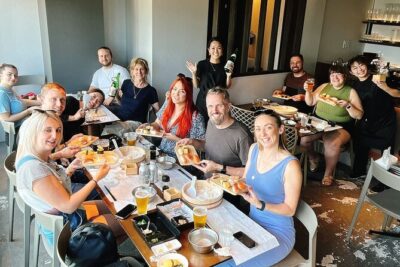 ★ 5.0Sushi Making Tokyo Roll and Authentic Japanese Sushi ClassFrom $59
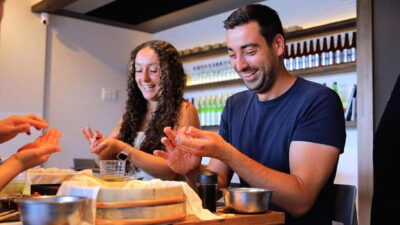 ★ 4.9Tokyo: Roll and Authentic Sushi Making Class in AsakusaFrom $581h 40m
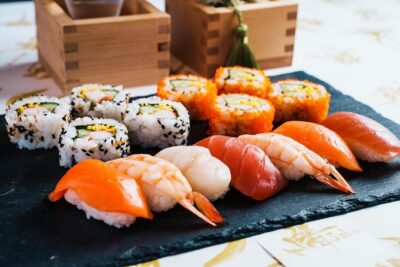 ★ 5.0Make Sushi and Create Unforgettable Memories in TokyoFrom $79
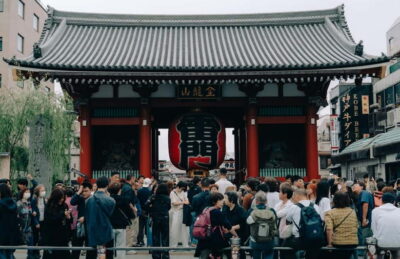 ★ 4.9Tokyo: Sushi Making Class in a Happi Coat near a Famous SpotFrom $421h 30m
 ★ 5.0Tokyo Sushi Making Class in Tsukiji with Professional ChefFrom $49
 ★ 5.0Tokyo Night Foodie Tour in Shinjuku – Seasonal Sushi, Wagyu BeefFrom $111