
Reviewed · TOKYO
Hop-On Hop-Off Tokyo Bus by Skyhop Bus
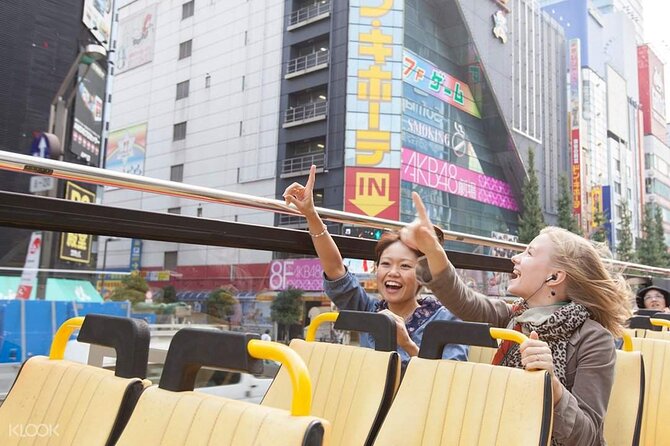
Tokyo’s SkyHop Bus gives you a quick way to see three very different sides of the city without learning the rail system on your first day. From the open upper deck, you pass Tokyo Tower, Senso-ji Temple country around Asakusa, Ueno, Akihabara, Shinjuku, Shibuya, and the Odaiba waterfront.
I like the all-routes ticket, since you can move from old Tokyo to modern Tokyo without buying separate fares. I also like the freedom to use the pass for one or two consecutive days. The main caution is service reliability: buses may be widely spaced, audio can be unclear or absent, and some passengers have had trouble getting third-party vouchers accepted.
In This Review
- Key points
- What this Tokyo bus tour actually gives you
- The Red route: Tokyo Tower, Ginza, and the city center
- The Green route: Kodemmacho, Ryogoku, Asakusa, and Ueno
- The Blue route: Shinjuku, Shibuya, and Tokyo Tower
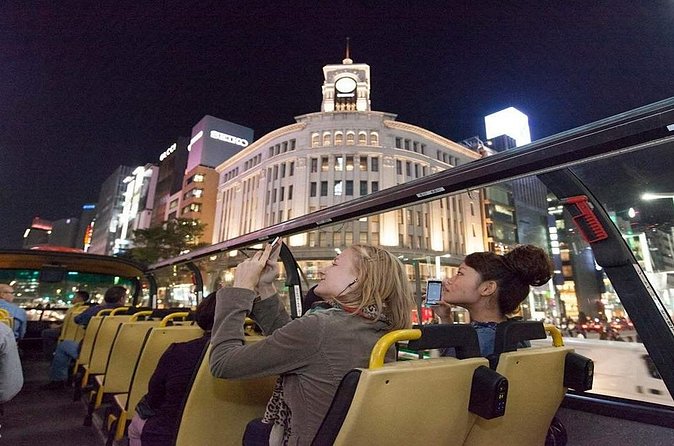
- Open-air views are the strongest reason to ride
- Audio commentary needs a backup plan
- Timing, bus gaps, and the smart way to use the pass
- Ticket exchange deserves special attention
- Who will get the most from this $48.99 ticket?
- My call: book only with a flexible plan
- FAQ
- How much does the Hop-On Hop-Off Tokyo Bus cost?
- How long is the tour?
- Can I use the ticket on all routes?
- How many routes does the bus cover?
- Where can I exchange my voucher?
- Is WiFi included?
- Is an audio guide included?
- Are raincoats provided?
- Can I cancel the booking for a refund?
Key points
- Three routes cover three sides of Tokyo: central skyscrapers, historic eastern districts, and Odaiba’s waterfront.
- The two-day option gives you breathing room: use the first day for a broad city survey, then return to favorite areas the next day.
- The open-top deck is the main attraction: you get broad views that are hard to match from a subway platform.
- Audio service is inconsistent: bring your own city guide or map if sightseeing commentary matters to you.
- Bus gaps can be long: one report describes waiting up to 1 hour and 45 minutes for a Blue route bus.
- Voucher exchange needs care: redeem it with staff or a driver at a SkyHop stop, or at the Skybus Ticket Center in the Marunouchi Mitsubishi Building.
What this Tokyo bus tour actually gives you
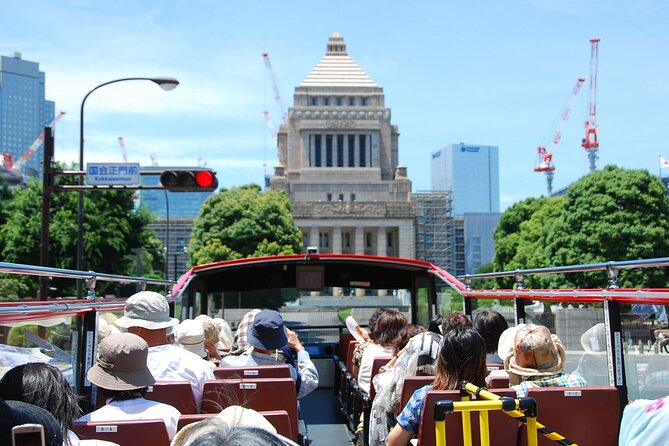
This is not a single 1-hour-and-57-minute guided ride with a fixed start and finish. It is a hop-on hop-off pass covering three routes, with the ticket valid for one or two consecutive days from the first day of use through the last bus on the following day.
That distinction matters. You are paying for the ability to make a broad circuit, leave the bus near a sight, spend time there, and continue later. If you remain seated for only one short loop, the value is limited. If you use the pass as a sightseeing framework, it becomes more useful.
The bus has an open upper deck, WiFi, and an audio guide system. A local staff member or guide may answer questions, but the quality of the spoken commentary is not guaranteed. Some buses have had no audio, while other passengers found the commentary difficult to understand and the music too prominent.
The ticket costs $48.99 per person. That is not cheap for a transport pass, so I would not buy it simply to get from one neighborhood to another. Tokyo’s trains are generally the better tool for efficient point-to-point travel. The SkyHop Bus makes more sense if you want the view, the open air, and a simple first look at several districts.
If you're still narrowing it down, here are other tours in Tokyo we've reviewed.
The Red route: Tokyo Tower, Ginza, and the city center
The first route includes Tokyo Tower, Zojo-ji Temple and Tokyo Prince Hotel, Fuji Television Network, Tokyo Teleport Station, and Ginza Capital Hotel Akane. The stop order shown for the routes can be confusing, so check the route map and current departure information when you exchange your voucher.
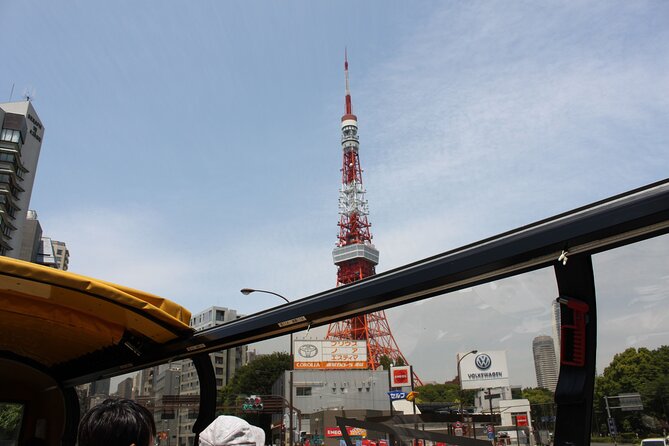
Tokyo Tower is the obvious headline stop. You can use it as a photo point or as a base for seeing the nearby Zojo-ji Temple. The temple and tower make a classic Tokyo pairing: one represents older religious Tokyo, while the other gives you the familiar orange-and-white modern landmark.
Ginza offers a different mood, with department stores, high-end shopping, and broad central avenues. The bus is useful here if you want to look at the city from above street level without planning a train connection. It is less useful if your aim is to spend a full day shopping, since you may want to stay in the district longer than the next bus interval allows.
The Odaiba portion includes Fuji Television Network and Tokyo Teleport Station. This is the modern waterfront side of the route, with large-scale buildings and open views. The route is especially helpful if Odaiba is on your list but you prefer not to work out the connections yourself.
There is a practical catch. The Red route may feel less rewarding as a sightseeing loop because much of it is made up of central-city towers and roads. One experienced user found the Green route more interesting and considered the Blue route mainly useful for reaching Odaiba-area hotels. I would treat the Red route as a connector between major sights rather than the best ride to take from end to end.
The Green route: Kodemmacho, Ryogoku, Asakusa, and Ueno
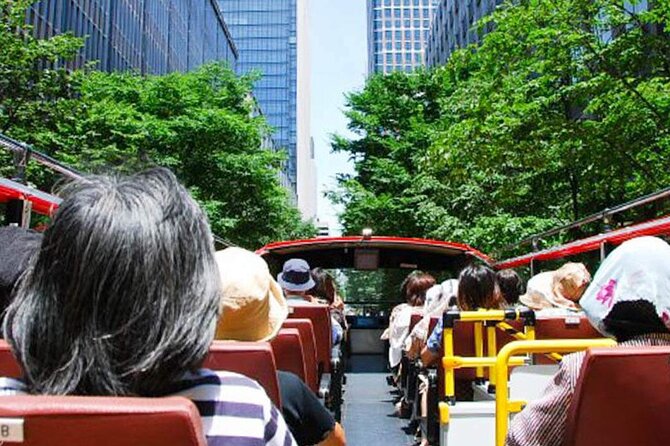
The Green route is likely the strongest choice for first-time sightseeing. It links Kodemmacho Station, the Ryogoku Edo-Tokyo Museum, Tokyo Skytree Station, Asakusa-Hanakawado, Asakusa-Kotobukicho, Ueno Station, Ueno-Matsuzakaya, Akihabara at Suehirocho, and Shin-Nihombashi Station.
Ryogoku is associated with sumo and old Tokyo traditions. The Edo-Tokyo Museum stop is particularly useful for anyone who wants historical context, though the attraction itself may have its own opening arrangements that you should check separately. Even without entering, this part of town gives the route a different feel from Ginza or Shinjuku.
Tokyo Skytree Station puts you near one of the city’s most recognizable modern towers. Asakusa then shifts the focus to temples, old shopping streets, and the traditional side of Tokyo. The Asakusa-Hanakawado and Asakusa-Kotobukicho stops serve slightly different parts of the area, so check which one is closer to your intended visit.
For many people, Asakusa will be the best hop-off point on the whole network. Senso-ji Temple is not named as an official stop, but the Asakusa stops are the practical choice for reaching it. Allow yourself time on foot. The bus does not deliver you to every attraction entrance, and one satisfied passenger specifically advised being ready to walk because the drop-offs are somewhat restricted.
Ueno gives you museums, shopping, and access to one of Tokyo’s best-known public areas. Ueno-Matsuzakaya is a useful city landmark, especially if you want a clear meeting point near the department store and the station area.
Akihabara at Suehirocho shifts the route again, this time toward electronics, anime, games, and brightly lit shopping streets. The bus cannot replace time on foot here. It can, however, help you link Akihabara with Asakusa and Ueno without making several rail transfers.
The Green route has the best mix of older neighborhoods, cultural sights, shopping, and recognizable Tokyo scenes. If you have only one day, I would give this route first priority and use the other routes only after checking departure gaps.
The Blue route: Shinjuku, Shibuya, and Tokyo Tower
The third route covers Shinjuku Gyoen National Garden, JR Shinjuku Station Southeast Exit Plaza, Shinjuku Station West, Shibuya City Hall Hatsudai Branch, and Tokyo Tower.
Shinjuku is Tokyo at its most vertical and energetic, with a maze of rail lines, department stores, offices, and entertainment streets. The two Shinjuku stops let you approach the district from different sides. JR Shinjuku Station Southeast Exit Plaza is a useful place for the station area, while Shinjuku Station West serves the western side.
Shinjuku Gyoen National Garden gives you a calmer stop. It is a good contrast to the surrounding high-rise district, though the garden itself requires time on foot. Do not plan to hop off, take a quick photo, and be back in five minutes.
The Shibuya City Hall Hatsudai Branch stop is not the same as a stop directly at Shibuya Crossing. That is an important planning detail. The route may help you reach the wider Shibuya area, but you should confirm the walking connection before counting on it for a tight schedule.
The Blue route returns to Tokyo Tower, making it possible to connect the western city with the tower area. One concern is frequency. A long wait can erase the convenience of hop-on hop-off travel, especially if you have already finished sightseeing and simply want to get back to your hotel.
For this reason, I would use the Blue route selectively. Pick one or two stops, then use Tokyo’s regular rail network if the next bus is too far away. The pass gives you flexibility, but it does not require you to stay loyal to the bus all day.
Open-air views are the strongest reason to ride
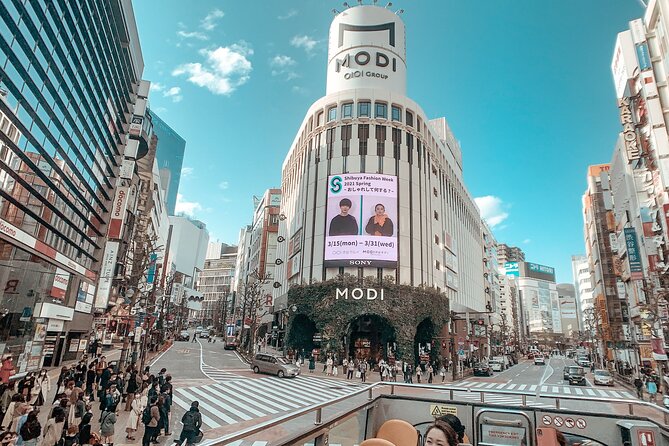
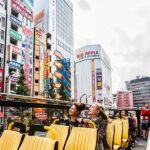
The upper deck is where the SkyHop Bus earns its place. You see Tokyo as a connected city rather than a series of underground stations. The views change from temple districts and older commercial streets to office towers, shopping avenues, and waterfront buildings.
That view is especially helpful on your first day. You can get a rough sense of where Asakusa sits in relation to Ueno, how far Shibuya is from Shinjuku, and how Odaiba differs from the central districts. It is not a substitute for exploring, but it can help you decide where to spend the rest of your trip.
The open deck also creates a weather problem. The tour requires good weather, and service may be canceled in poor conditions. During the rainy season, ponchos or raincoats are provided, but rain still affects visibility and comfort. Take the weather seriously before committing your only Tokyo sightseeing day to this bus.
The included WiFi is a useful extra, especially when checking maps or route information. I would not make the booking decision based on WiFi alone. The view and the route coverage are the real reasons to pay for this experience.


Audio commentary needs a backup plan
A sightseeing bus normally earns part of its price by explaining what you are seeing. Here, that feature appears uneven. Some rides have an audio guide and occasional staff commentary. Other rides have had no audio at all, while one particularly poor experience included music and a garbled voice.
That means you should not depend on the commentary for basic context. Download a Tokyo map, carry a guidebook, or prepare a short list of the places along each route. You will get more from the ride if you know why a stop matters before you arrive.
The problem is not just missing information. If the system is unclear, you may spend the ride wondering if your earbuds are working. Ask staff or the driver for help when you board. The included audio equipment may need to be requested rather than automatically handed to you.
There are also reports of rude or inefficient staff at some points. Other passengers had a better experience, including help from a local guide who answered questions. I would approach the service as functional rather than polished, and leave extra time for ticket questions and route changes.
Timing, bus gaps, and the smart way to use the pass
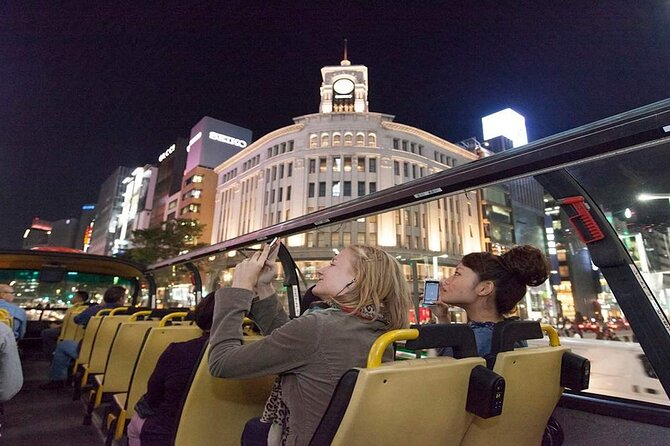
The stated ride duration is approximately 1 hour and 57 minutes, but that does not tell you how long a full day will take. The real issue is the gap between buses. Capacity can be lower than demand, and one account describes waiting 1 hour and 45 minutes for a Blue route bus.
I would not build a tightly timed itinerary around the next bus. Use the route as a loose sightseeing spine. If you see a bus arriving and you are ready to move, board it. If the wait is long, take the train and save your time.
The two-day ticket is the better value for a relaxed visit. On day one, ride enough of each route to understand the city. On day two, return to Asakusa, Ueno, Shinjuku, or Odaiba and hop off for the places that interested you most.
The one-day ticket can still work if your goal is a broad overview rather than many stops. Start early, prioritize the Green route, and avoid promising yourself that you will complete every line. Three routes, walking time, and bus gaps can quickly turn a simple plan into a day of waiting.
Ticket exchange deserves special attention
You can exchange your voucher at the Marunouchi ticket counter, located at the Skybus Ticket Center on the first floor of the Marunouchi Mitsubishi Building. You can also redeem it with staff or the bus driver at a SkyHop stop along the route.
This is where the booking channel becomes important. Several serious complaints describe third-party vouchers being refused, with passengers then buying a second ticket directly from SkyHop. Another complaint involved a last-minute cancellation when the tour was sold out for the rest of the person’s stay.
The supplied information says confirmation is received at booking, but confirmation does not guarantee a smooth handoff at the stop. I would save the voucher offline, arrive early, and ask staff to confirm acceptance before planning your day around the ride. If you have a choice, booking directly with the operating company may reduce confusion, though the experience information provided here does not guarantee that every direct booking will have perfect service.
The cancellation policy is strict. The experience is non-refundable and cannot be changed for personal reasons. If poor weather causes the operator to cancel, you are offered another date or a full refund.
Who will get the most from this $48.99 ticket?
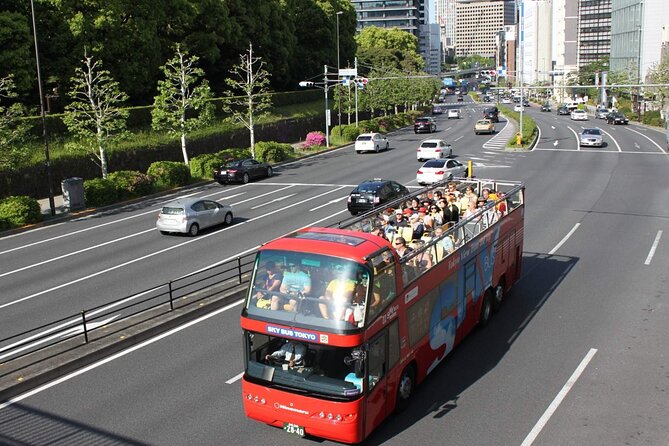
I would recommend the SkyHop Bus to you if you want an easy visual introduction to Tokyo, enjoy open-air sightseeing, and have enough time to cope with delays. It suits a first day in the city, especially if you are still learning the rail system or want to compare several districts before choosing where to return.
It can also suit families or mixed-age groups who prefer a seated overview to repeated station changes. Most people can participate, and the stops are near public transportation, so you are not trapped if you decide to continue by train.
I would hesitate if you have only a few hours, need precise departure times, or care deeply about detailed narration. At $48.99, the ticket is expensive if you use it as ordinary transport. The value improves when you ride several sections, make meaningful stops, and use the pass on two consecutive days.
The experience has an overall rating of 1.8 from 24 reviews, with a few strong five-star accounts praising the chance to use all three routes and see many parts of Tokyo. The low overall score is hard to ignore. The repeated concerns are not about Tokyo itself, but about voucher acceptance, staff behavior, missing audio, late buses, and long waits.
My call: book only with a flexible plan
I would book this bus for the views and the broad route coverage, not for punctual transport or polished guiding. Make the Green route your priority, use the Red route for Tokyo Tower and Odaiba, and treat the Blue route as optional unless its timing works well.
Before paying, confirm how and where your voucher will be exchanged. Once in Tokyo, keep your rail pass or train fare available as a backup. If you can accept that flexibility, the SkyHop Bus may give you a pleasant city overview. If you need dependable service for a fixed sightseeing schedule, Tokyo’s trains are the safer choice.
FAQ
How much does the Hop-On Hop-Off Tokyo Bus cost?
The listed price is $48.99 per person.
How long is the tour?
The approximate duration is 1 hour and 57 minutes. The ticket itself can be used for one or two consecutive days, depending on the option purchased.
Can I use the ticket on all routes?
Yes. The ticket can be used on all routes during its valid period.
How many routes does the bus cover?
The itinerary covers three routes, including stops in Tokyo Tower and Ginza, Ryogoku and Asakusa, Ueno and Akihabara, Shinjuku, Shibuya, and Odaiba.
Where can I exchange my voucher?
You can exchange it at the Marunouchi ticket counter, located at the Skybus Ticket Center on the first floor of the Marunouchi Mitsubishi Building. You can also redeem it with the driver or staff at a SkyHop stop.
Is WiFi included?
Yes. WiFi on board is included.
Is an audio guide included?
Audio commentary is part of the sightseeing service, but the quality and availability may vary by bus. Some rides have had no audio, so bring your own guide or map if commentary is important to you.
Are raincoats provided?
A poncho or raincoat is provided during the rainy season. The experience also requires good weather, and poor weather may lead to cancellation.
Can I cancel the booking for a refund?
The experience is non-refundable and cannot be changed for personal reasons. If the operator cancels because of poor weather, you are offered a different date or a full refund.
More tours in Tokyo we've reviewed






Tokyo, compared.
 ★ 5.0Mt Fuji and Hakone 1-Day Bus Tour Return by Bullet TrainFrom $163
 ★ 5.01-Day Tokyo Bus TourFrom $129
 ★ 4.6Tokyo: teamLab Planets TOKYO Digital Art Museum Entry TicketFrom $251 day
 ★ 4.0Mt Fuji & Hakone Cruise, Drum Show Bullet Train 1 Day from TokyoFrom $149
 ★ 5.0Tokyo: Shinjuku Food Tour (13 Dishes at 4 Local Eateries)From $86
 ★ 4.4Tokyo Mt Fuji 5th St & Hakone Cruise Bus Tour w/Bullet TrainFrom $15410 hours