
Reviewed · TSUKIJI MARKET TOURS
Tokyo: Tsukiji Fish Market Sushi Making Class with Pro Chef
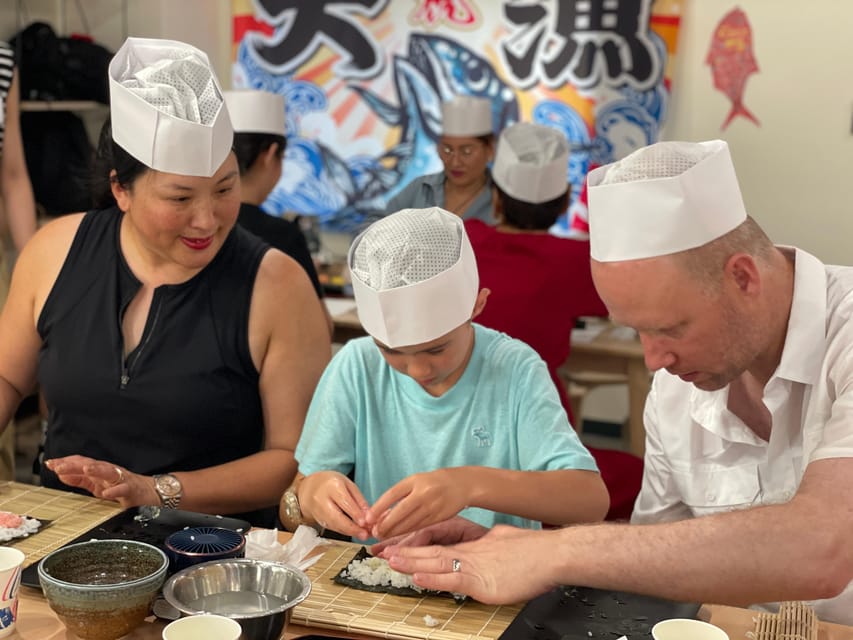
Tsukiji is the right place to learn sushi. This class takes you into a traditional Japanese building above the outer market, where a professional chef demonstrates fish preparation, explains Japanese knives, and teaches you to shape four nigiri and one maki sushi. You do not just watch a chef work. You handle the rice, fish, seaweed, and tools yourself.
I like the class’s fresh Tsukiji ingredients and the patient, hands-on teaching. I also like the small-group feel reported by many participants, with hosts such as Yuko, Satoko, AJ, Ike, Kate, and Tanaka helping people keep up in English. The main catch is practical: the classroom is on the third floor with stairs only, and the meeting point and total duration can vary by option.
In This Review
- Key things to know before booking
- Why Tsukiji is a smart place to learn sushi
- The opening fish-cutting demonstration
- Learning the difference between nigiri and maki
- The best part is eating your own work
- What the English support is really like
- How long you should set aside
- What is included, and what is not
- Dietary limits and accessibility
- Who will enjoy this most
- Tips for making the class better
- Should you book this Tsukiji sushi class?
- FAQ
- Where does the sushi class take place?
- How long does the experience last?
- How much does the class cost?
- Is an English-speaking instructor available?
- What sushi will I make?
- Can I eat the sushi I make?
- Are tea and soup included?
- Is a market tour included?
- Can vegetarians or vegans join?
- Is the class accessible for wheelchair users?
Key things to know before booking
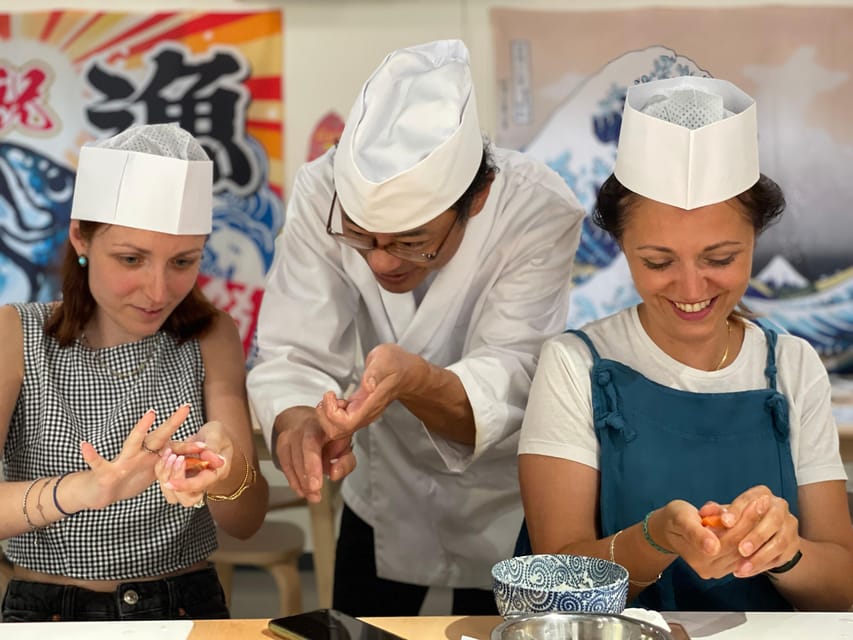
- You make five types of sushi: Four pieces of nigiri and one maki roll are included, along with extra sushi prepared by the chef.
- A real sushi master leads the lesson: Chef names vary by session, but past classes have included Tanaka, Kate, Koro, Kana, and Ike.
- The fish-cutting demonstration adds real skill: You see how a fish is prepared for sushi and learn why Japanese knives matter.
- The class takes place in Tsukiji’s outer market: You can explore the market before or after, but market guidance is not included in every booking.
- English support is built in: An English-speaking host interprets, explains cultural points, and helps you follow the chef’s instructions.
- It is best for curious eaters who can use stairs: Children under four, wheelchair users, vegans, and vegetarians cannot join.
Why Tsukiji is a smart place to learn sushi
Sushi can look simple on the plate. A slice of fish, a little rice, perhaps a strip of seaweed. The class shows you why that simplicity takes practice.
You begin in Tsukiji’s outer fish market, a food district packed with shops and small restaurants. The classroom sits in a traditional Japanese building in the center of the market area. That setting matters. You are not learning sushi in a generic cooking studio far from the food trade. You are surrounded by the neighborhood that gives the class its ingredients and its character.
The building has no elevator, and the classroom is on the third floor. If stairs are a problem, skip this activity. For everyone else, the climb leads to a small, classic-style room set up with proper sushi tools and tableware supplied by local shops.
The market itself is not automatically part of the lesson. Guidance through the market is listed as an extra rather than a standard inclusion, and the meeting point can change with the option you choose. Read the booking details closely. If you want a guided market walk, select an option that clearly includes one.
A few more Tokyo tours and experiences worth a look



The opening fish-cutting demonstration
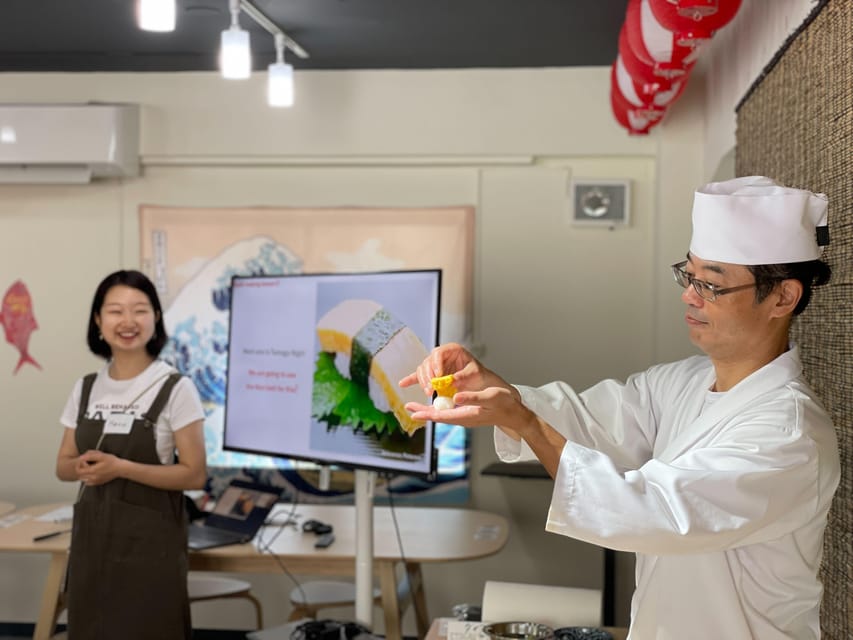
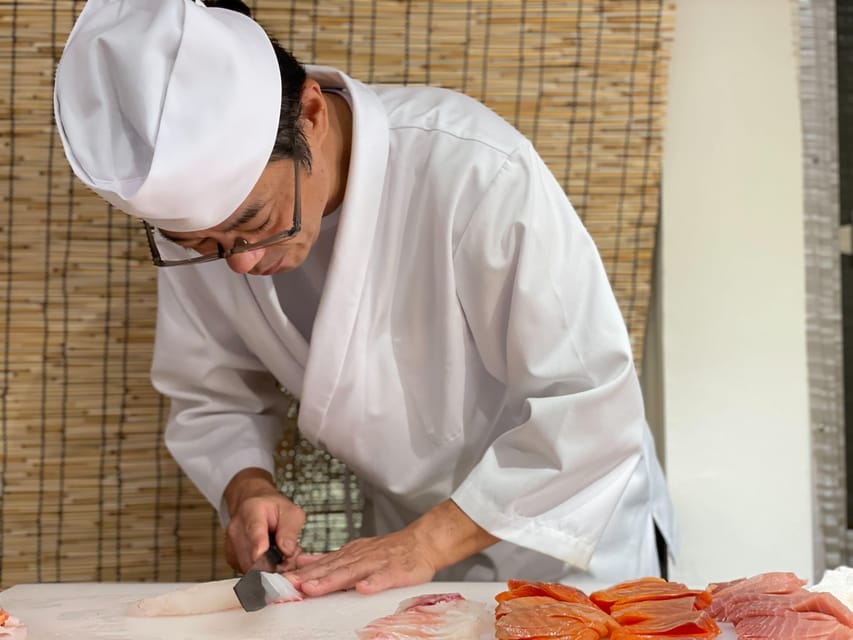
The class begins with a demonstration by the sushi chef. You watch the chef break down fish and explain the steps used to prepare it for sushi. This is more useful than a quick roll-making lesson because it shows the work behind the neat pieces served at a sushi counter.
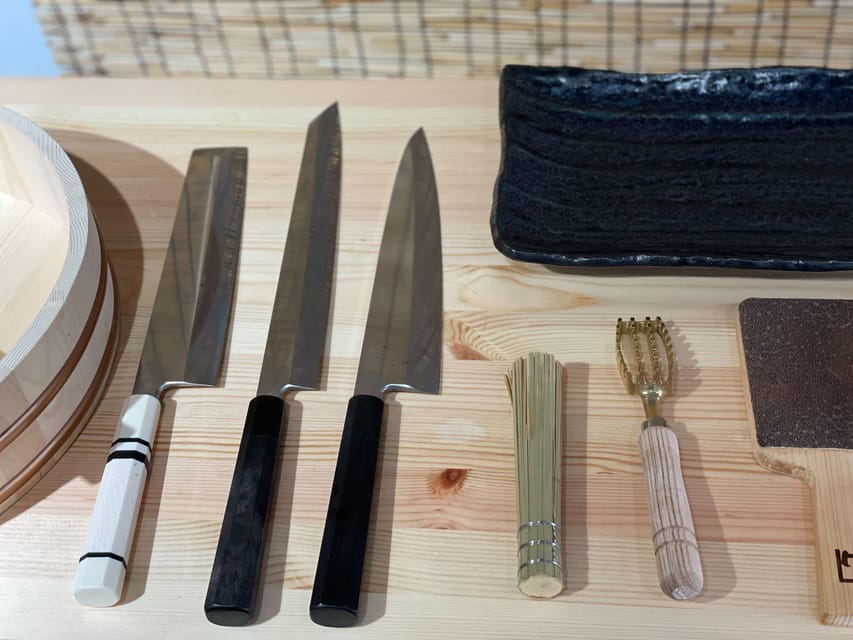
The chef also discusses Japanese knives. You will not become a fishmonger in 90 minutes, but you will see why knife shape, sharpness, and cutting direction affect the final piece. The demonstration gives you a better eye for sushi preparation, especially if you have only thought of sushi as a finished dish.
The English-speaking host helps interpret the chef’s explanations. Past sessions have been led by hosts including Yuko, Satoko, AJ, Shoko, Micky, and Ike, while chefs have included Tanaka, Kate, Koro, Kana, and others. Names vary, but the setup is consistent: one chef demonstrates, and an English-speaking host keeps the lesson clear.
This part is also useful for people who are unsure about raw fish. The class focuses on how the ingredients are prepared and handled. One participant specifically joined despite not usually eating raw fish and found the fresh sushi approachable. That does not promise the same reaction for everyone, but it gives cautious eaters a reason to consider the class.
Learning the difference between nigiri and maki
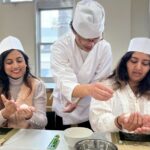
After the demonstration, you learn the basics of sushi itself. The chef explains how to prepare and shape nigiri, the hand-formed rice topped with fish, and maki, the rolled sushi wrapped in seaweed.
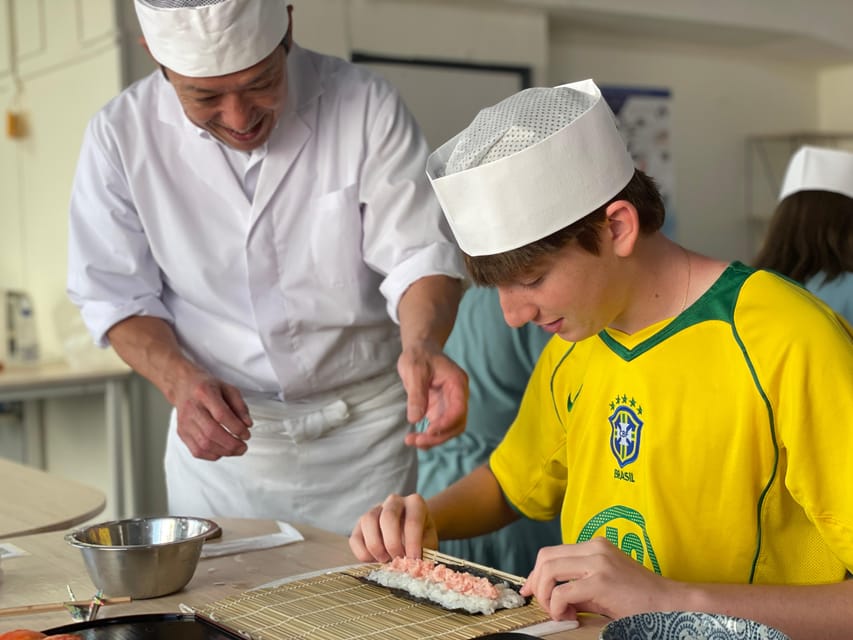
Nigiri is harder than it looks. You must use enough rice to create a soft shape without crushing it. You also need the fish and rice to sit together neatly. The chef guides you through the movements step by step, correcting your shape and answering questions as you work.
The maki portion offers a different lesson. You learn to arrange the filling, handle the seaweed, and roll the sushi into a firm cylinder. It is a friendly introduction rather than professional training, but you leave with skills you can try again at home.
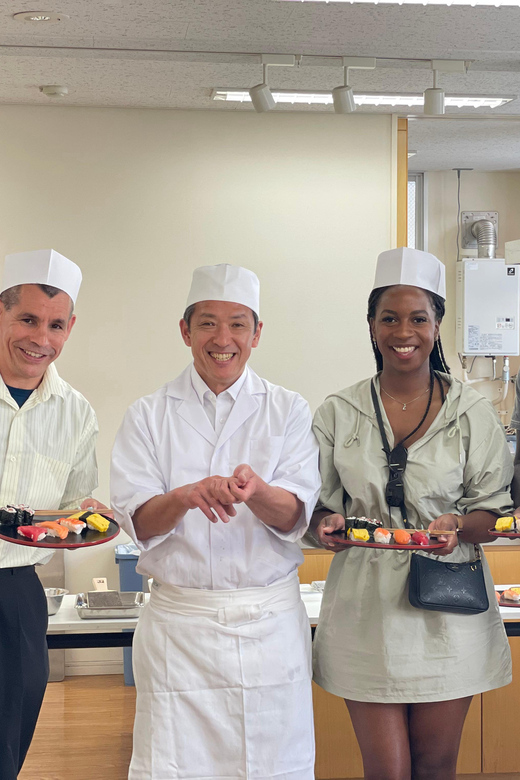
The included food is substantial for a short class: four different nigiri sushi and one maki sushi made by you. The chef also prepares additional sushi for you to taste. This gives you a useful comparison between a beginner’s work and the fast, polished movements of a professional.
The best part is eating your own work
At the end, you sit down with the sushi you made. Traditional dashi soup and green tea are served with it, giving the meal a proper Japanese touch rather than treating the food as a quick sample.
The chef prepares another piece while you eat. Watch the hands closely. The speed, pressure, and precision make a clear point: sushi is not only about fresh fish. It is also about rice texture, portion size, knife work, and repetition.
The food is served with wasabi prepared by the sushi master. You can taste the difference between adding a large amount of condiment and using it with care. The meal is simple, but that is part of the lesson. You get to focus on the ingredients and the technique.
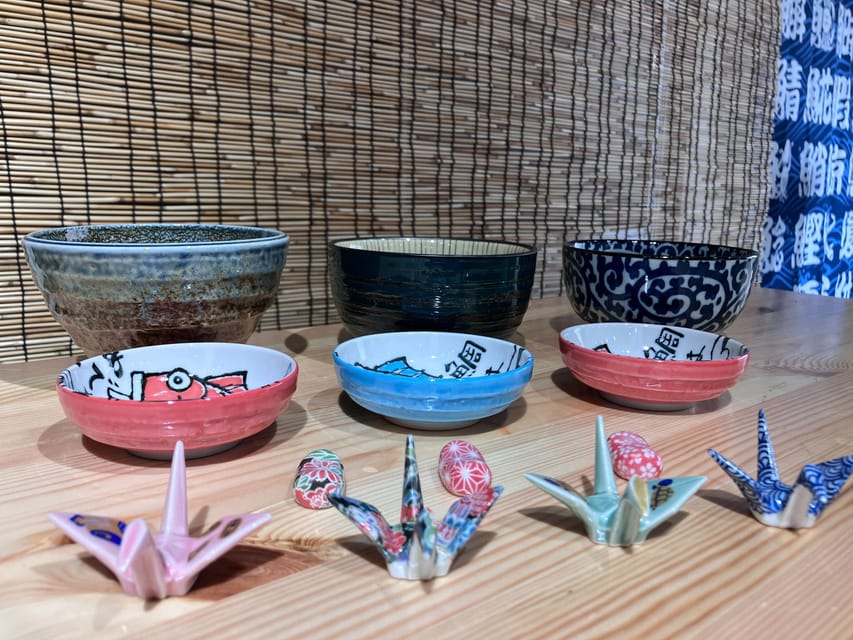
A hat is included, along with the utensils and tableware needed for the workshop. The traditional dishes and tools make the class more enjoyable for photographs, but they also help you understand the usual presentation of sushi.
What the English support is really like
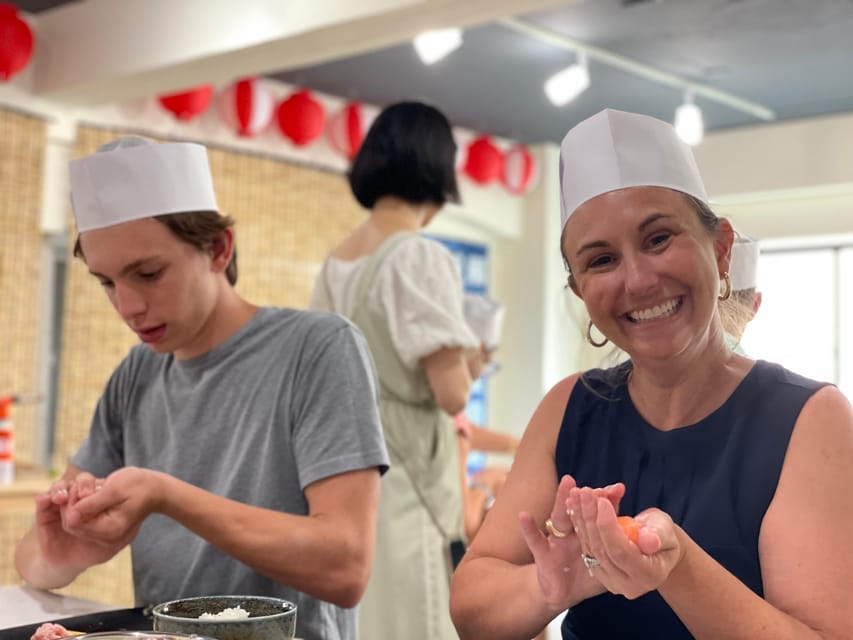
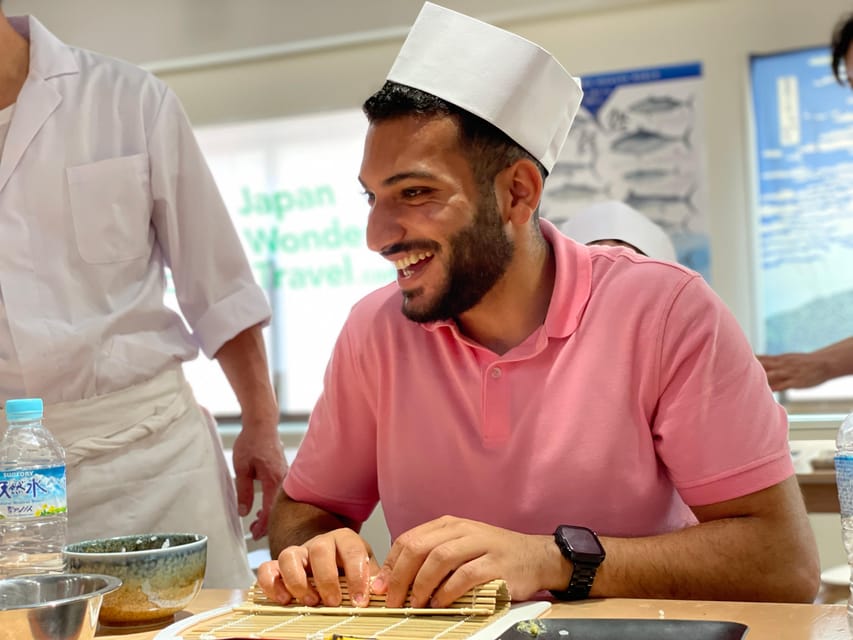
The chef may have limited English, so the host plays an important role. The host translates instructions, explains cultural points, and makes sure nobody gets lost during the practical work.
The strongest sessions seem to depend on that partnership. The chef brings the sushi skills, while the host keeps the room relaxed and easy to follow. Hosts such as Yuko and AJ have been praised for clear explanations and warm humor, while guides including Satoko and Ike have helped beginners feel comfortable asking questions.
This is not a silent demonstration where you sit at the back and copy what you can. The class is designed to be interactive. You can ask about types of fish, sushi customs, how to eat the finished pieces, and the reasons behind each step.
Several families and groups have found the lesson easy for children old enough to pay attention. One family joined with a 10-year-old, and another brought children aged nine and thirteen. The formal age restriction excludes children under four, but the more important question is patience. A child who enjoys hands-on food work should do well. A child who cannot sit, listen, or handle instructions may make the lesson harder for everyone.
A few more Tokyo tours and experiences worth a look

How long you should set aside
The advertised duration ranges from 90 minutes to four hours. That wide range suggests different booking options, possibly with added market activities or different formats. Check the exact start and end time for your chosen option before you pay.
The 90-minute class is enough for the core lesson, fish demonstration, sushi making, and meal. If you add a market walk or another activity, plan for more time. The experience may also run past its scheduled end, so do not book a tight restaurant reservation, train connection, or airport transfer immediately afterward.
The class works well in a morning plan for Tsukiji. You can explore the outer market before or after, but arrive with the correct meeting point in hand. The market area can be confusing, and the classroom is in a local building rather than an obvious tourist venue.
If you are choosing between a basic class and an option with a market walk, think about your priorities. The class alone is the better choice if you mainly want sushi instruction. The longer option makes more sense if you want help understanding the food shops and nearby sights as well.
What is included, and what is not
For $63 per person, you receive the teaching, ingredients, utensils, your sushi, extra sushi made by the chef, tea, soup, and a hat. That is a fair price for a Tokyo activity that combines instruction and a full tasting meal.
The value is strongest for people who want to do something rather than simply eat. A restaurant meal might cost less, especially if you choose a modest sushi set, but it will not teach you how the fish is prepared or let you work with the tools. You are paying for the chef’s time, the host’s English support, the ingredients, and the chance to take a practical skill home.
Extra food and drinks are not included. Hotel pickup and drop-off are also not included. Most importantly, do not assume that someone will lead you around the market. Guidance through Tsukiji must be part of the option you book.
The class includes a proper amount of food, but it is not an all-day food tour. If you have a large appetite, plan to eat more in the market afterward. That is easy to do, since the classroom is located in the outer market area.
Dietary limits and accessibility
This is a sushi class built around fish and seafood. Vegans and vegetarians cannot participate, and the activity does not accommodate halal, kosher, or gluten-free requests as a standard matter.
Allergy information should be supplied when you reserve. The team may try to help with allergy-related needs, but accommodation is not guaranteed. Do not wait until the day of the class to explain a serious allergy.
The stairs are a firm limitation. The room is on the third floor in a traditional building with stairs only. The activity is not suitable for wheelchair users or people with mobility impairments.
Children under four cannot join. For older children, use your judgment. The lesson can work well for families, school groups, and older children who enjoy food and can listen to instructions.
Who will enjoy this most
I would choose this class if you want a first practical look at Japanese food culture. It suits couples, solo visitors, small groups, and families with school-age children. The format gives you something to talk about and do together, rather than leaving you to stare at a plate.
It is also a good fit for sushi fans who want to understand technique. You will not train to become a sushi chef, but you will learn why professional sushi looks and feels different from a homemade roll.
The class is less suitable if you want a quiet, formal meal, a long market tour, or a flexible menu. It is also a poor choice if you avoid raw fish or need strict dietary substitutions.
Group size can affect the feel of the lesson. A small session of around six people allows everyone to hear, ask questions, and receive feedback. Larger groups may feel less personal, although the English host and assistants are there to help.
Tips for making the class better
- Wear comfortable clothes: You will work with food and sit through a hands-on lesson, so choose practical clothing rather than something delicate.
- Leave time after class: The session can run long, and the surrounding market deserves time for browsing and eating.
- Confirm the option carefully: Meeting points and durations vary, and a market guide is not always included.
- Tell the operator about allergies early: The team may help, but special requests cannot be guaranteed.
- Ask questions: The best part of the class is the access to a working sushi chef. Ask about fish, knives, rice, wasabi, and presentation.
- Watch the chef’s hands: The demonstration may seem quick, but it reveals the small movements that make professional sushi neat.
Should you book this Tsukiji sushi class?
Book it if you want fresh food, direct instruction, and a useful activity in one of Tokyo’s best-known food districts. The combination of a professional chef, English-speaking host, traditional utensils, fish preparation, and a meal makes $63 reasonable for a 90-minute experience.
I would be especially keen to book this for a family with older children, a couple looking for a shared activity, or anyone who plans to explore Tsukiji anyway. Choose a longer option only if you want a market walk or extra time built into the experience.
Skip it if you need wheelchair access, a vegetarian or vegan menu, strict halal or kosher food, or guaranteed gluten-free preparation. Also skip it if your schedule is packed immediately afterward. For everyone else, this is a friendly, practical way to see the skill behind sushi and leave Tokyo with something you can attempt at home.
FAQ
Where does the sushi class take place?
The class takes place in a traditional Japanese-style building on the third floor in the center of Tsukiji’s outer fish market.
How long does the experience last?
The advertised duration ranges from 90 minutes to four hours, depending on the option booked. Check the available starting times and exact duration when reserving.
How much does the class cost?
The listed price is $63 per person.
Is an English-speaking instructor available?
Yes. An English-speaking host interprets and guides you throughout the class, while the professional sushi master teaches the preparation techniques.
What sushi will I make?
You will make four different nigiri sushi and one maki sushi.
Can I eat the sushi I make?
Yes. The sushi you prepare is included, along with additional sushi made by the professional chef.
Are tea and soup included?
Yes. Green tea and traditional dashi soup are included with the sushi.
Is a market tour included?
Guidance through the market is not included as a standard part of the activity. Some booking options may differ, so check the details of your selected option.
Can vegetarians or vegans join?
No. The activity is not suitable for vegans or vegetarians.
Is the class accessible for wheelchair users?
No. The classroom is on the third floor and can be reached only by stairs. The activity is not suitable for wheelchair users or people with mobility impairments.
More Shopping Tours in Tokyo
More Sushi Making Classes in Tokyo
More Tsukiji Market Tours in Tokyo
More tours in Tokyo we've reviewed











Tsukiji Market Tours, compared.
 ★ 5.0Tokyo Tsukiji Fish Market Food and Culture Walking TourFrom $99
 ★ 5.0Tokyo: Tsukiji Fish Market Food and Walking tourFrom $30
 ★ 4.9Tokyo: Tsukiji Fish Market Guided Walking TourFrom $222 hours
 ★ 5.0Tokyo Sushi Making Class in Tsukiji with Professional ChefFrom $49
 ★ 5.0Tsukiji Fish Market Guided Tour and Sushi Making with Pro ChefFrom $104
★ 4.7Tokyo: Tsukiji Fish Market Food and Culture Walking TourFrom $963 hours
★ 5.0Tsukiji Fish Market Guided Tour and Sushi Making with Pro ChefFrom $104
★ 4.7Tokyo: Tsukiji Fish Market Food and Culture Walking TourFrom $963 hours