
Reviewed · TOKYO FOOD TOURS
Tokyo Food Tour Taste Fresh Delights at Tsukiji Market
Tsukiji is easy to enjoy badly. You can wander past dozens of counters, miss the best bites, and spend half your morning trying to work out what you are looking at. This 2.5-hour small-group food walk gives you a clear route through the Outer Market, with a guide handling the ordering and explaining what makes each stop special.
I like the generous range of food, which can include sushi, oysters, miso cod, tamago, puffer fish, ice cream, and drinks. I also like the personal touch: guides such as Keiko and Miyu adjust the stops to suit the group and help you find room to eat in a crowded market. The main consideration is price. At $90 per person, this is not a cheap snack crawl, though the amount of food and guidance can make it good value if you want an organized introduction.
In This Review
- Key points to know before booking
- Why a guide helps at Tsukiji Outer Market
- The first bites: sushi and fresh seafood
- More than sushi: unusual dishes and market snacks
- Keiko, Miyu, and the value of a small group
- A shrine, a knife shop, and the culture around food
- A moving brunch that can fill you up
- Who will get the most from this $90 tour
- Timing, meeting point, and practical details
- What to do after the tour ends
- Should you book this Tsukiji food tour?
- FAQ
- How long does the Tsukiji food tour last?
- How much does the tour cost?
- How many food tastings are included?
- What foods might be included?
- Where does the tour begin?
- Where does the tour end?
- How large is the tour group?
- Can I cancel for a full refund?
Key points to know before booking
- Five to eight tastings are included, and the food can range from sushi and oysters to puffer fish, tamago, sweets, and drinks.
- Keiko is a frequent guide, praised for clear English, patience, market knowledge, and her ability to guide both adults and young children.
- The group is capped at 12 people, small enough for questions and easier movement through tight market lanes.
- The tour ends inside Tsukiji Outer Market, leaving you in a useful spot for more shopping and eating afterward.
- A shrine, knife shop, and rooftop lunch may be part of the experience, depending on the route and group.
- Come very hungry, since the tastings are substantial enough to replace brunch for many people.
Why a guide helps at Tsukiji Outer Market
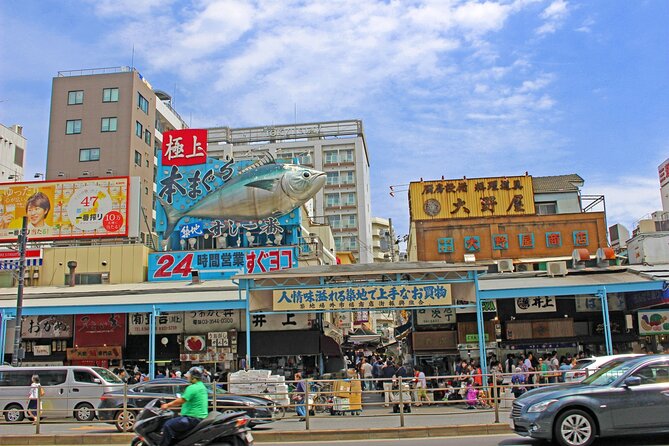
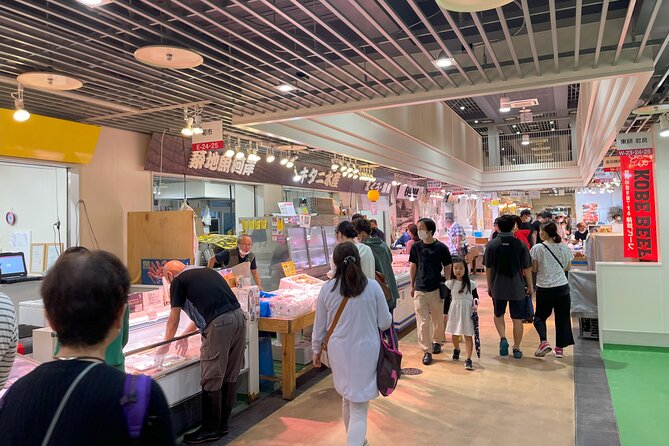
Tsukiji Outer Market is not a single restaurant or neatly arranged food hall. It is a maze of food shops, counters, stalls, and narrow walking routes. The tour begins at the LAWSON Tsukiji 4 Chome Store at 4-chōme-8-1 Tsukiji, then moves through the surrounding market on foot.
That starting point matters. You are not asked to meet inside a confusing stall or hunt for a particular vendor. After meeting your guide, you can leave the navigation to them and focus on the food.
I like this format for a first visit because the market rewards confidence. A guide can point out what to try, explain how a food fits into Japanese cooking, and manage purchases at places where the signs may not be easy to read. You also avoid the common problem of buying one large item early, then discovering several better stops later.
The market can still feel crowded. Your guide may need to pause the group, secure space at a counter, or move you along so you do not block shoppers. That is part of the setting, not a flaw in the tour, but you should expect a walking meal rather than a quiet sit-down brunch.
A few more Tokyo tours and experiences worth a look

The first bites: sushi and fresh seafood
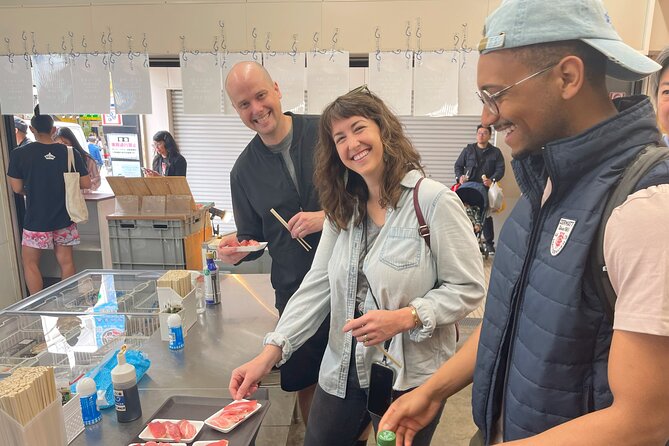
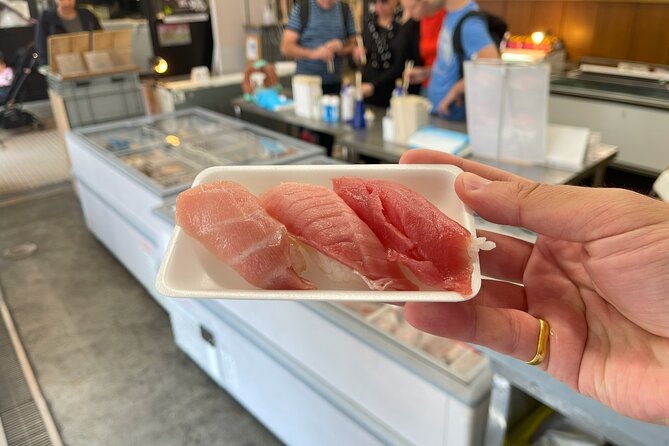
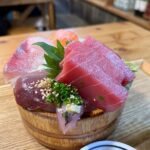
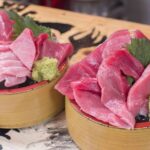
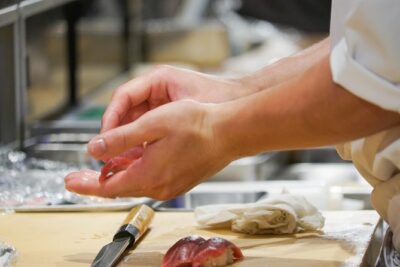
The food usually begins with seafood, and sushi is one of the clearest reasons to choose this tour. The exact menu can change, but the tastings described include very fresh tuna, oysters, and other seafood dishes.
You may already know sushi from restaurants at home. The value here is seeing it in the setting of a famous Japanese market and learning how different products are sold and enjoyed. Your guide can give context about the market and the story of sushi while you eat, turning each bite into part of a larger lesson.
Oysters bring a different texture and taste, while tuna offers a familiar entry point for people who are less adventurous. If you are excited about seafood, tell your guide early. The tour is designed to adapt to likes and dislikes, and the food stops are largely fish-based.
That last point is worth taking seriously. This is not a general Tokyo food tour with equal attention to noodles, meat, and desserts. Seafood is the center of the experience. People who dislike fish or avoid raw food may find the $90 price harder to justify, even though the group can adjust some choices.
More than sushi: unusual dishes and market snacks
The best part of the route is the variety. Tastings may include miso cod, tamago, puffer fish, drinks, ice cream, and other foods you might walk past on your own.
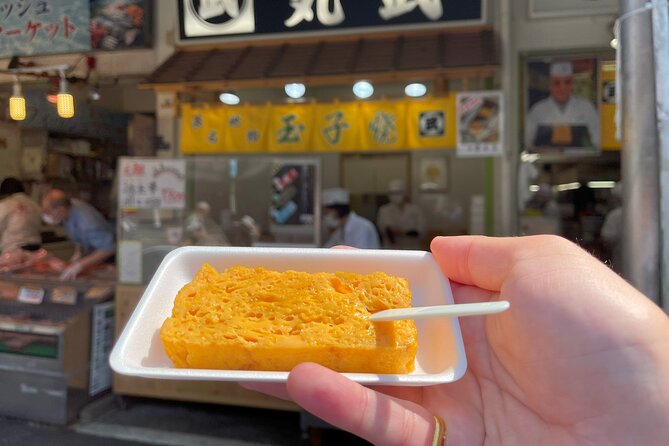
Tamago is a useful stop for first-time visitors because the sweet, layered Japanese omelet is approachable and easy to compare with more familiar egg dishes. Miso cod gives you a different style of preparation, with a savory sweetness that shows how much variety exists within market food.
Puffer fish is the more unusual tasting. Its inclusion depends on the route, but it has been part of the experience for some groups. If you are curious about trying something unfamiliar, this is the kind of detail that makes a guided market walk more memorable than simply ordering a sushi set.
The food is not limited to fish. Ice cream and unusual drinks help break up the seafood stops. One especially distinctive drink is a black tea described as tasting like vanilla despite its dark appearance. These smaller surprises keep the meal from feeling like the same seafood plate repeated again and again.
Because the tour includes around five to eight samples, the portions may vary, and the precise menu is not guaranteed. Think of it as a moving tasting route, not a fixed restaurant menu. Come hungry, but do not plan a large lunch immediately afterward.
Keiko, Miyu, and the value of a small group
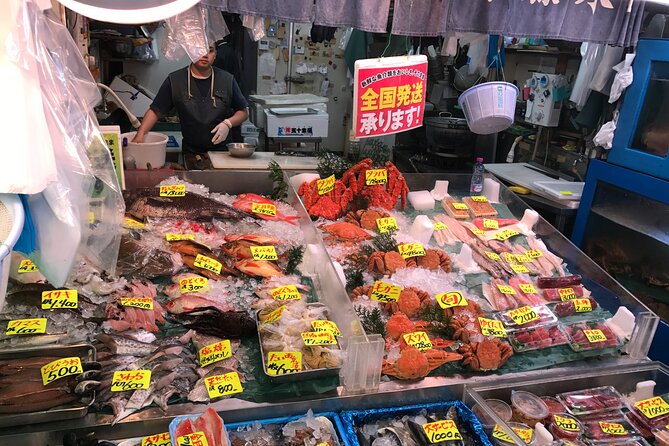
The guide can make or break a market tour. Keiko receives especially strong praise for her warm manner, clear English, patience, and ability to answer questions about Japanese food and culture. She is also described as comfortable with children, including toddlers and a 10-year-old, which makes this a practical option for families.
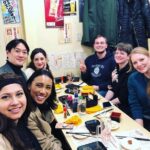
Miyu also leads the experience and brings a strong focus on food explanation. The tour is capped at 12 people, so you are not dealing with a large flag-following crowd. A smaller group makes it easier to hear the guide, ask about ingredients, and receive help choosing foods.
I would still treat the group limit as a maximum, not a promise of a private tour. You may be sharing the walk with several other people, and busy market lanes can make conversation harder at certain points. The benefit is personal attention without paying the much higher price of a private guide.
The guides also handle much of the food ordering. That is useful when you want to sample several things but do not know the right portion, price, or ordering method. It also means you can spend your attention on the market instead of fumbling with translations or pointing at random dishes.
A shrine, a knife shop, and the culture around food
This experience is not only about eating. The walk can include a shrine visit, which gives the route a cultural pause between food stops. The shrine adds useful context, especially if you are using the tour as an early introduction to Tokyo.
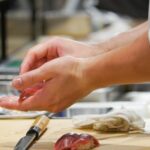
A Japanese knife shop may also be included. One group found this a memorable final stop, and it gives you a look at the tools behind the cuisine. You do not need to buy a knife for the visit to be worthwhile, though the shop may tempt serious home cooks.
The tour also explains the market’s past and the role of fish markets in Japanese food culture. The original Tsukiji wholesale market is no longer the same as the Outer Market area, so it is important to understand that this is a walking food tour of the Outer Market. You are visiting shops and food counters, not taking a tour of a working wholesale auction floor.
That distinction helps set expectations. If you want a quiet museum-style lesson, this will feel too active. If you want to see food being sold, prepared, and eaten in real time, the format makes sense.
A few more Tokyo tours and experiences worth a look

A moving brunch that can fill you up
Brunch is included, and the tasting sequence can be surprisingly generous. The route may end with a rooftop lunch, along with enough earlier samples that you should not plan to eat a full breakfast beforehand.
I like the idea of using brunch as the backbone of the tour. You are not stopping only for token bites. The food forms a complete morning meal, with seafood, savory dishes, sweets, and drinks appearing along the route.
Still, the word brunch can mean different things to different people. This is not necessarily one plated meal served at a single table. It is a collection of tastings taken at different food shops, with walking in between.
That setup is ideal if you want to sample broadly. It is less suitable if you have limited mobility, dislike eating while standing, or need a predictable meal at a fixed time. The tour is designed around the market’s movement and atmosphere.
Who will get the most from this $90 tour
At $90 per person, the tour is best for someone who values guidance and variety more than the lowest possible food bill. You could spend less by walking through Tsukiji on your own, but you would need to choose the shops, understand the menu, manage portions, and find your way around.
Here, you are paying for:
- Five to eight food samples
- Brunch
- A guide for roughly two and a half hours
- Market history and food explanations
- Help navigating crowded indoor and outdoor areas
- A route that may include seafood, sweets, drinks, a shrine, and a knife shop
The value improves if you are new to Japanese cuisine or only have a short time in Tokyo. The tour can help you decide which foods deserve a second visit, and the market remains available after the official walk ends.
It is also a strong choice for families who want structure. The guides have handled groups with young children, and the food variety gives children more than one chance to find something they like. Parents should still expect crowds, walking, and a meal that unfolds at several stops.
Food-focused visitors will get the most pleasure from the tour. If your main goal is photography, shopping, or a historical tour with little eating, another experience may suit you better.
Timing, meeting point, and practical details
The activity lasts about 2 hours and 30 minutes. It begins at the LAWSON Tsukiji 4 Chome Store, 4-chōme-8-1 Tsukiji, Chuo City, Tokyo. The end point is in Tsukiji Outer Market, where you can continue shopping or find another meal.
No private transportation is included. That is not a serious drawback here, since the route is a walking tour within the market area, but you should be ready to walk between stops.
A mobile ticket is provided, and booking confirmation arrives at the time of booking. The experience is near public transportation, and most people can take part. Service animals are allowed.
Good weather is required. If poor weather cancels the tour, you are offered another date or a full refund. You can also cancel for a full refund up to 24 hours before the start time. Changes or cancellations inside that 24-hour window are not accepted, so keep the local cut-off time in mind.
What to do after the tour ends
Do not rush away when the tour finishes. Ending in the Outer Market is one of the practical strengths of the route. You can revisit a stall, buy ingredients or kitchen goods, and browse for gifts while the food stops are still fresh in your mind.
A knife shop visit may also help you decide if Japanese kitchen tools are worth investigating further. The tour does not promise a shopping itinerary, so you should use the final market time for your own interests rather than expect the guide to continue with you.
The market is also a useful place to return later in your Tokyo stay. After the guided route, you will have a better sense of which foods you liked and which stalls deserve another look.
Should you book this Tsukiji food tour?
Book it if you want a guided first taste of Tokyo, enjoy seafood, and prefer trying many small portions to ordering one meal. It is especially useful for families, curious eaters, and people who find market food counters intimidating.
The strongest reasons to go are the range of tastings, the small group, and the chance to explore with guides such as Keiko or Miyu. The main reasons to skip it are the $90 cost, the fish-heavy menu, and the busy walking-and-eating format.
My practical advice is simple: schedule it early in your Tokyo visit, arrive hungry, and leave room in your afternoon for more market browsing. If you want to understand Tsukiji through its food rather than merely photograph it, this tour is a sensible and flavorful choice.
FAQ
How long does the Tsukiji food tour last?
The tour lasts approximately 2 hours and 30 minutes.
How much does the tour cost?
The listed price is $90 per person.
How many food tastings are included?
Around five to eight food samples are included, along with brunch.
What foods might be included?
Possible tastings include sushi, oysters, tuna, miso cod, tamago, puffer fish, ice cream, and drinks. The exact selection can vary.
Where does the tour begin?
The meeting point is the LAWSON Tsukiji 4 Chome Store at 4-chōme-8-1 Tsukiji, Chuo City, Tokyo 104-0045, Japan.
Where does the tour end?
The tour ends at Tsukiji Outer Market, where you can continue shopping afterward.
How large is the tour group?
The maximum group size is 12 people.
Can I cancel for a full refund?
Yes. You can cancel at least 24 hours before the experience start time for a full refund. Cancellations or changes made less than 24 hours before the start time are not refunded or accepted.
More Food Experiences in Tokyo
More Tokyo Food Tours in Tokyo
More Tsukiji Market Tours in Tokyo
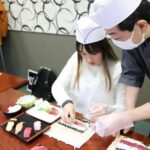
More tours in Tokyo we've reviewed











Tokyo Food Tours, compared.
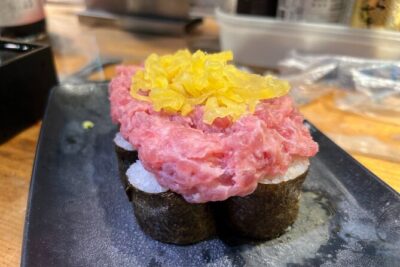 ★ 5.0Tokyo: Shinjuku Food Tour (13 Dishes at 4 Local Eateries)From $86
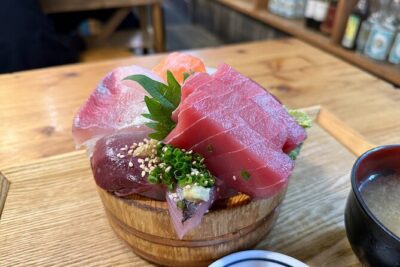 ★ 4.9Tokyo: Shinjuku Food Tour (15 Dishes and 4 Eateries)From $853 hours
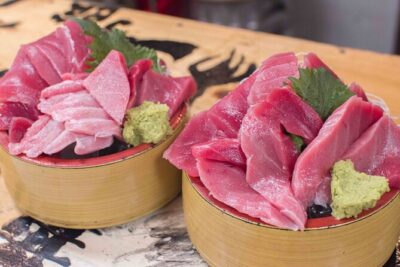 ★ 5.0Best of Shinjuku: Izakaya Food Tour (4 Stops, 14+ Tastings)From $92
 ★ 5.0Tokyo Night Foodie Tour in Shinjuku – Seasonal Sushi, Wagyu BeefFrom $111
 ★ 5.0Eat and Drink Like a Local: Tokyo Ueno Food Tour-Taverns&RamenFrom $95
 ★ 5.0Tokyo: Shibuya Food Tour (13 dishes and 4 Eateries)From $77