
Reviewed · TSUKIJI MARKET TOURS
Tokyo Tsukiji Fish Market Tour and Sushi Making Lesson
Tokyo Tsukiji Fish Market Tour and Sushi Making Lesson review
Tsukiji is best understood with a guide who can explain the odd-looking foods and point you toward the best samples. This three-hour experience pairs a walk through the Outer Market with a cooking lesson at ABC Cooking Studio, where you may prepare sushi, tamagoyaki, miso soup, and side dishes.
I like the small maximum group of six, which gives you room to ask questions and work at the counter without feeling lost. I also like the practical format: you see Japanese ingredients in their market setting, then sit down and use cooking techniques you can repeat at home.
The main caution is value. At $99.49 per person, the experience makes the most sense if you want both a guided market visit and a cooking class. If you already know Tsukiji or have made basic sushi, the class may feel too simple, and the market visit does not include the famous tuna auction.
In This Review
- Key points to know before booking
- Starting beneath the unusual Tsukiji Hongwanji Temple
- Reading the Tsukiji Outer Market
- What the market tour does not include
- Riding to ABC Cooking Studio
- Making sushi, tamagoyaki, and washoku basics
- Eating what you prepare
- How much value do you get for $99.49?
- Practical details that can affect your morning
- Who will enjoy this experience most?
- Should you book the Tsukiji and sushi class?
- FAQ
- Where does the tour begin?
- Does the tour include the tuna auction?
- How long does the experience last?
- What food will I make?
- Is the experience suitable for children?
- Can I cancel for a full refund?
Key points to know before booking
- Tsukiji Outer Market, not the tuna auction: You explore the public shopping area and tasting stalls, but auction viewing is not included.
- A short, useful cooking lesson: Expect about 90 minutes at ABC Cooking Studio, with recipes such as sushi rolls and tamagoyaki.
- English support matters: Guides such as Akiko, Lucy, Miho, Nobu, Yoko, and Shitomi have led this experience, helping with market questions and language barriers.
- Small groups help: The maximum is six people, though the tour requires at least two participants to operate.
- Good for families with older children: The minimum age is 9, and the minimum height is 130 centimeters.
- Plan for a different ending point: The tour begins at Tsukiji Hongwanji Temple and ends elsewhere after the cooking class.
Starting beneath the unusual Tsukiji Hongwanji Temple
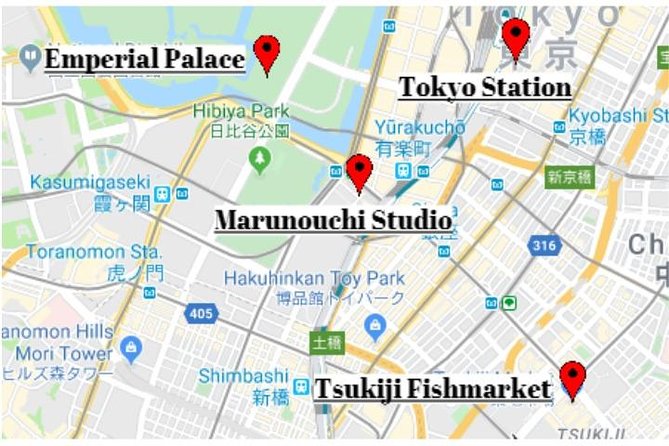
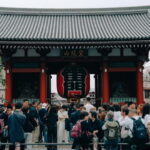
You meet your guide outside Tsukiji Hongwanji Temple, at 3-chome-15-1 Tsukiji. This is a sensible meeting place because the temple is easy to recognize and gives you a quick cultural introduction before the food begins.
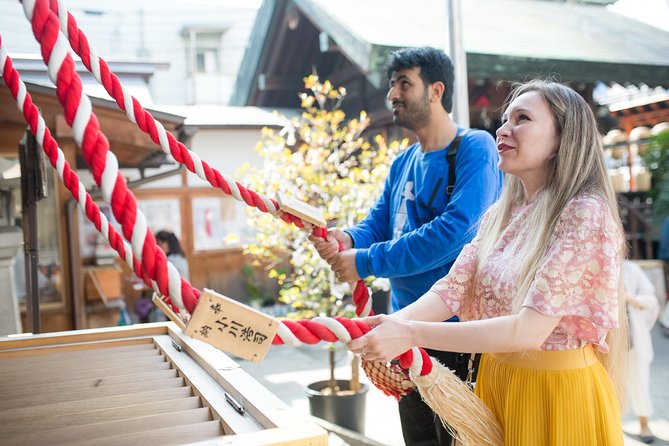
Allow a few minutes to look at the temple exterior. Its design has strong South Asian and Indian touches, while the inside feels different again. The temple visit is brief, about five minutes, but it gives the morning a better opening than simply meeting beside a market sign.
Your English-speaking guide is the key to this first part. Guides named Akiko, Lucy, Miho, Nobu, Yoko, and Shitomi have led sessions, though the person assigned to your group can vary. The strongest guide reports describe clear explanations, warm conversation, and help choosing foods to taste.
Do not expect a formal lecture on every shop. The appeal is more personal and practical. You can point at an unfamiliar ingredient, ask what it is, and get help understanding how it is used or eaten. That small service can change Tsukiji from a confusing collection of stalls into a place you can read.
A few more Tokyo tours and experiences worth a look


Reading the Tsukiji Outer Market
The market portion lasts about an hour, although the operator notes that the group may spend roughly 70 minutes in the outer shopping area instead. You walk through narrow aisles lined with seafood, produce, dried foods, snacks, kitchen goods, and prepared bites.
This is not the old wholesale market experience many people still picture. The wholesale operation moved to Toyosu, while Tsukiji’s Outer Market remains a public food district with shops and tasting spots. You may see displays of tuna, sea urchin, octopus, dried seafood, beans, and other Japanese ingredients.
The guide helps you understand what is worth stopping for. Specific tastings reported on the route include tamagoyaki served on a stick, strawberry-filled red bean mochi, dried scallops, dried soybeans, and small dried crabs with a spicy cracker-like flavor. The exact choices depend on the season, supplies, and shop availability, so treat these as examples rather than promises.
I like this part best when you arrive hungry enough to taste but not so hungry that you rush. One person who enjoyed the outing wished they had eaten less breakfast, since the market samples added up. You do not need to buy every interesting item, but you should leave room for small bites.
The market also gives you a close look at ingredients used in everyday Japanese cooking. The point is not just to identify fish. You begin to see how dried seafood, stock ingredients, eggs, rice, seaweed, and seasonings fit into the food you later prepare.
The guide may also add a nearby shrine or a short walk through the Ginza area if time allows. That is a pleasant bonus, but it should not be treated as a fixed part of the route. The core plan is Tsukiji followed by the cooking studio.
What the market tour does not include
You will not watch the tuna auction. The famous early-morning auction is not part of this activity, and the meeting time and route focus on the Outer Market instead.
That is not necessarily a weakness. The public market is easier to fit into a normal Tokyo morning, and the guide can spend time translating signs, explaining foods, and helping you sample items. Still, if the auction is your main reason for visiting Tsukiji, book a separate activity or plan that portion on your own.
You should also understand that the ingredients seen in the market may not be the ingredients used in class. The cooking menu changes with the season, the arrival of ingredients, and what the school can obtain. The operator allows requests for alternate ingredients, but you should ask in advance if you have a serious dietary concern.
Riding to ABC Cooking Studio
After the market, transportation to the cooking studio is included. The group has been taken by bus, and some routes include a walk through the Ginza shopping district on the way.
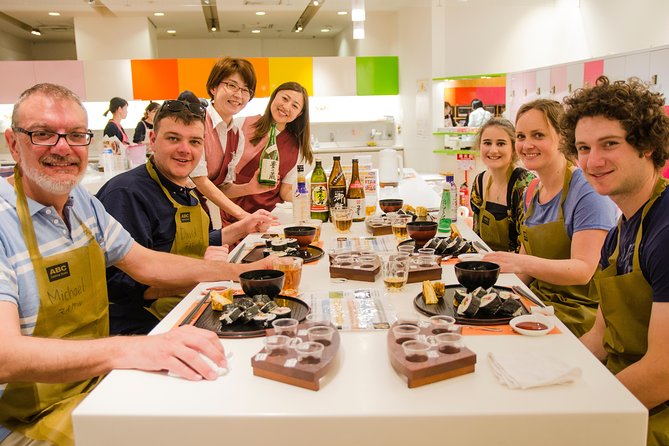
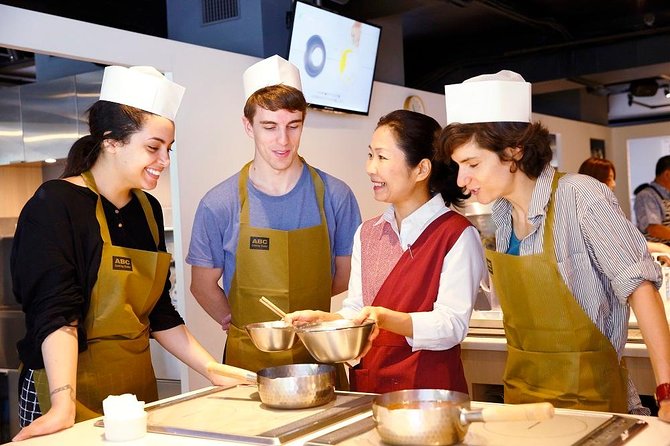
The studio is part of ABC Cooking Travel and belongs to one of Japan’s large cooking-school networks. The setting is bright, clean, and organized, with aprons supplied for the lesson and drinking water available.
The change of setting is useful. Tsukiji is crowded, noisy, and full of distractions. The studio gives you a clean work area where an instructor can slow things down and show each step. The cooking lesson takes about an hour and a half, making it the largest single part of the experience.
The cooking teacher varies. Names appearing in past sessions include Miwako, Miwa, Masayo, and Hiromi. The best sessions pair the instructor with the market guide, so you have help with both technique and language. English ability can vary by instructor, however, and one less positive account found the explanations limited. If detailed culinary instruction is important to you, keep that in mind.
Making sushi, tamagoyaki, and washoku basics
The menu usually centers on two washoku recipes and accompanying items. Washoku is a broad term for traditional Japanese cooking, with attention to simple preparation, balance, seasonal ingredients, and homemade technique.
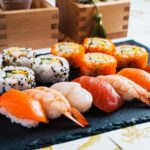
Typical work includes a sushi roll, nigiri or other sushi pieces, Japanese omelet called tamagoyaki, miso soup, and side dishes. The precise menu changes, so do not book expecting a fixed restaurant-style meal.
Tamagoyaki is especially fun for first-time cooks. You cook thin layers of seasoned egg and roll them into a compact omelet. It looks easy until you try to keep the layers even, which makes the lesson satisfying without requiring advanced skill.
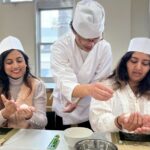
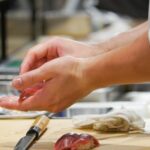
Sushi preparation is similarly approachable. You may shape rice, handle fillings, roll maki, and prepare nigiri. The useful part is learning the basic sequence and proportions, not mastering restaurant-level knife work in one morning.
The lesson is hands-on, but the amount of work can vary by group and instructor. Some people describe preparing a full sushi meal and soup, while others felt the food was too basic or that they did not make enough. That difference is important at this price. The experience is better suited to someone who wants a friendly introduction than to an experienced home sushi maker seeking advanced technique.
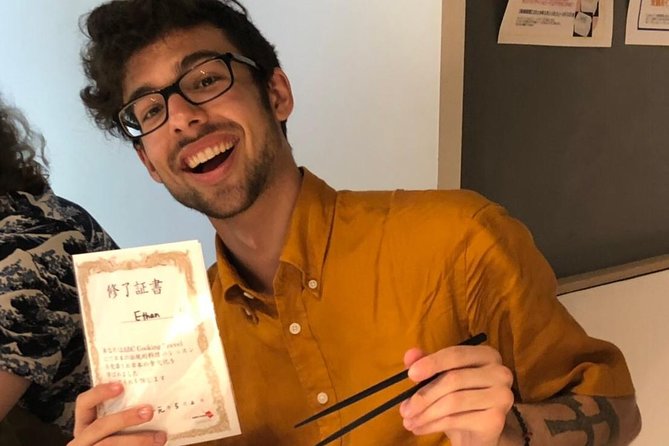
A family group with children and teenagers found the format kept everyone involved. One young participant became so interested in tamagoyaki that she wanted a special pan at home. The minimum age is 9, and the minimum height is 130 centimeters, so check both rules before booking for children.
A few more Tokyo tours and experiences worth a look

Eating what you prepare
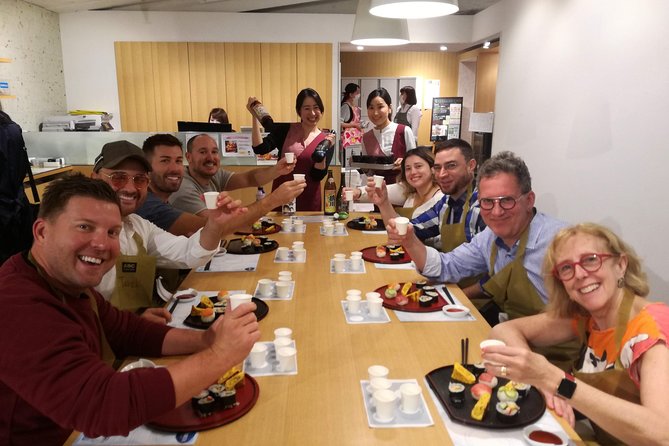
The class ends with lunch made from your work. You can accompany it with wine, plum sake, or soft drinks, according to the tour details.
That final meal gives the class a clear payoff. Instead of watching a demonstration and leaving with a recipe sheet, you sit down and see how the separate parts fit together. It also lets you judge your own sushi and omelet while the process is still fresh.
Do not expect an elaborate omakase meal. This is a lesson, not a sushi-bar tasting menu. The food is meant to show you how familiar Japanese items are put together, and the recipes are simple enough to try again at home.
If you hope to cook with fish purchased at Tsukiji, adjust your expectations. The market walk and cooking class are connected by theme, but the group does not generally shop for the exact ingredients used later. This was a specific source of disappointment for some participants.
How much value do you get for $99.49?
The $99.49 price buys about three hours of guided activity, market interpretation, transportation between the market and studio, an apron, drinking water, instruction, and the food and drink served during lunch.
That is a fair package if you value convenience and personal help. A guide can save you the trouble of guessing what to taste, explain unfamiliar products, and help you communicate at the stalls. The small group limit also makes the price easier to accept than it would be for a large walking tour.
The value drops if you mainly want to stroll through Tsukiji. The Outer Market is open to the public, and you can explore it without paying for a tour. You could also find a simpler sushi class for less money, especially if you do not need market guidance.
I would book this for the combination, not for either part alone. You get a cultural food walk, tasting opportunities, a short transfer, a professional kitchen, and a meal you help prepare. That combination is hard to compare directly with a basic market visit.
The experience has a reported rating of 4.9 from 390 reviews, with 97 percent recommending it. Those figures point to strong consistency, but the lower ratings identify the main risk clearly: some people want more history, more sushi tradition, more sashimi, or more advanced cooking than the format provides.
Practical details that can affect your morning
The tour runs for approximately three hours. The starting point is Tsukiji Hongwanji Temple, and the activity ends at a different location after the class, so do not schedule a tight appointment immediately afterward.
Meet near public transportation and arrive ready to walk through narrow market aisles. Wear comfortable shoes and keep your hands free. Strollers and luggage are not allowed, which matters if you are coming directly from a hotel or train station with bags.
A mobile ticket is provided, and confirmation arrives at booking. At least two people are required for the tour to operate, and the group maximum is six. If the minimum is not reached, the operator may offer another date or activity, or a full refund.
The experience requires good weather. If poor weather forces cancellation, you can choose a different date or receive a full refund. For your own plans, it is wise to leave some flexibility around the booking.
The cancellation rule is simple but firm: cancel at least 24 hours before the local start time for a full refund. Changes or cancellations made inside that window are not accepted and are not refunded.
The operator may take photographs during the activity and use them on its website, social media, or advertisements. If that concerns you, ask about the photo policy before the tour begins.
Who will enjoy this experience most?
I would recommend it to first-time visitors who want a guided introduction to Japanese food without spending a full day on a formal culinary course. It works especially well for couples, small groups of friends, and families with older children.
It is also a good choice if you are nervous about ordering or tasting food in an unfamiliar market. An English-speaking guide can explain what you are seeing and help you make choices instead of leaving you to decode every stall alone.
You may want another option if you have already made sushi many times. The techniques are basic, and the class may not offer enough background on sushi customs or Japanese culinary traditions for an experienced cook.
I would also skip it if your priority is the tuna auction, a long market breakfast, or a high-end sushi meal. This tour gives you a broad introduction, not a specialist food expedition.
Should you book the Tsukiji and sushi class?
Book it if you want to connect the ingredients of Tsukiji with a simple meal you prepare yourself. The strongest parts are the small group size, the friendly guide support, the chance to sample unusual market foods, and the practical work with sushi and tamagoyaki.
Before booking, accept three limits: the menu changes, the auction is excluded, and the cooking may feel introductory. If you want a more personal market visit, request a small group and arrive with room for tastings. If you are booking for several family members or two separate groups, put everyone on one reservation when possible so you stay together.
For a first food-focused morning in Tokyo, I think the package earns its price. For a serious sushi student or an independent market explorer, it may be better to visit Tsukiji alone and choose a more advanced class.
FAQ
Where does the tour begin?
The meeting point is outside Tsukiji Hongwanji Temple at 3-chome-15-1 Tsukiji, Chuo City, Tokyo 104-8435, Japan.
Does the tour include the tuna auction?
No. Tuna auction watching is not included. The activity focuses on Tsukiji Outer Market and its shopping and tasting areas.
How long does the experience last?
The tour lasts approximately three hours. The market portion takes about one hour, and the cooking class takes about one hour and 30 minutes, with transportation between them.
What food will I make?
The menu typically includes sushi rolls and tamagoyaki, or Japanese rolled omelet. Depending on the season and ingredient supply, you may also prepare nigiri sushi, miso soup, stock, and side dishes.
Is the experience suitable for children?
The minimum age is 9, and the minimum height is 130 centimeters. Strollers are not allowed.
Can I cancel for a full refund?
Yes. You must cancel at least 24 hours before the experience start time for a full refund. Poor weather or failure to meet the minimum group size may also lead to a different date or a full refund.
More Shopping Tours in Tokyo
More Sushi Making Classes in Tokyo
More Tsukiji Market Tours in Tokyo
More tours in Tokyo we've reviewed










Tsukiji Market Tours, compared.
 ★ 5.0Tokyo Tsukiji Fish Market Food and Culture Walking TourFrom $99
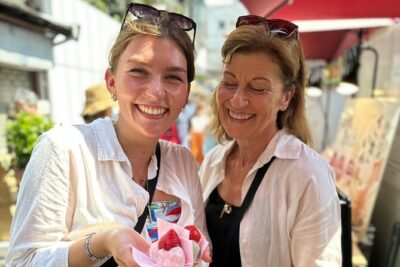 ★ 5.0Tokyo: Tsukiji Fish Market Food and Walking tourFrom $30
 ★ 4.9Tokyo: Tsukiji Fish Market Guided Walking TourFrom $222 hours
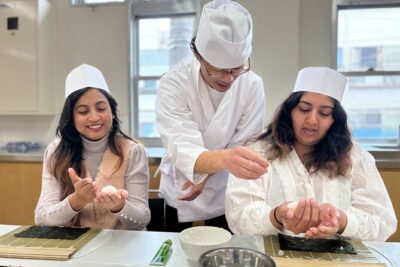 ★ 5.0Tokyo Sushi Making Class in Tsukiji with Professional ChefFrom $49
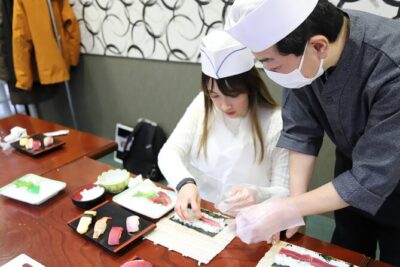 ★ 5.0Tsukiji Fish Market Guided Tour and Sushi Making with Pro ChefFrom $104
★ 4.7Tokyo: Tsukiji Fish Market Food and Culture Walking TourFrom $963 hours
★ 5.0Tsukiji Fish Market Guided Tour and Sushi Making with Pro ChefFrom $104
★ 4.7Tokyo: Tsukiji Fish Market Food and Culture Walking TourFrom $963 hours