
Reviewed · SHIBUYA TOURS
Tokyo: Shibuya Highlights Walking Tour & Secret View Spot
Shibuya Crossing is the headline, but the better reason to book this tour is the way it connects famous sights with corners you might miss on your own. In 90 minutes, you’ll move from the world’s busiest crossing to Nonbei Yokocho, Miyashita Park, Center-gai, and the lower levels of Shibuya Mark City. The promised secret view spot adds a useful bird’s-eye look at this maze of streets.
I like the compact route and the English-speaking local guide, especially for a first visit. I also like the personal touch: guides such as Hannah and Mao have been praised for good stories, helpful suggestions, and taking photos at the crossing.
The main caution is simple: confirm the viewpoint before booking. The tour description includes an observation deck, but one guest reported that no panoramic view was provided. The group size also needs checking, since one part of the information says up to 10 people while the booking details allow as many as 20.
In This Review
- Key points to know before you book
- Why this short Shibuya walk works
- Shibuya Crossing: the famous ten-minute start
- The observation deck and the question of the promised view
- Nonbei Yokocho: a small taste of older Shibuya
- Miyashita Park: modern public space for 20 minutes
- Center-gai: the main streets in a compact dose
- Shibuya Mark City and the lower-level finish
- What the guide adds to the experience
- Group size, timing, and practical value
- Who should book this Shibuya walk?
- Should you book the Shibuya Highlights Walking Tour?
- FAQ
- How long does the Shibuya walking tour last?
- How much does the experience cost?
- Where does the tour start?
- Where does the tour end?
- Is Shibuya Crossing included?
- Is there an observation deck on the tour?
- Which other places does the tour visit?
- Is the tour conducted in English?
- What is included in the price?
- Can I cancel for a full refund?
Key points to know before you book
- Shibuya Crossing anchors the route: You get time at Tokyo’s signature intersection, with a guide to help you understand where to go and take photos.
- The route mixes new and old Shibuya: Miyashita Park and modern shopping areas sit alongside the narrow, nostalgic Nonbei Yokocho.
- A guide saves you from wandering: The tour covers several separate areas in a short time, including Center-gai and Shibuya Mark City.
- The tour stays short and focused: At about 1 hour 30 minutes, it fits well before lunch, dinner, or another Tokyo activity.
- The viewpoint needs clarification: A high observation stop is described, but its availability may not be consistent.
- The price is modest for a guided orientation: At $25.20 per person, you are paying mainly for local guidance, route planning, photos, and context rather than admission tickets.
Why this short Shibuya walk works
Shibuya can feel like several districts compressed into one station area. You have huge signs, department stores, side streets, elevated walkways, narrow alleys, parks, and underground passages all close together. A map shows the location, but it does not always explain how these pieces fit.
This tour gives you a quick orientation. The guide leads you from the meeting point at SHIBU HACHI BOX, at 2-chōme-1-1 Dōgenzaka, then returns you there at the end. That matters because Shibuya’s station works on several levels, and a first visit can easily turn into a hunt for the correct exit.
The pace is brisk but not extreme. The listed stops add up to about 90 minutes, with the longest visits at Miyashita Park, Center-gai, and Mark City. You are not signing up for a long lecture or a full-day tour. You are getting a practical introduction, a handful of photo stops, and enough local explanation to make later exploring easier.
I would book it early in your Tokyo stay. After the walk, you will have a better sense of where to return for shopping, food, nightlife, or another look at the crossing. The activity has been booked more than 20 times in a recent week, and the 5 out of 5 score from 287 reviews suggests strong demand, so last-minute availability may not be dependable.
A few more Tokyo tours and experiences worth a look



Shibuya Crossing: the famous ten-minute start
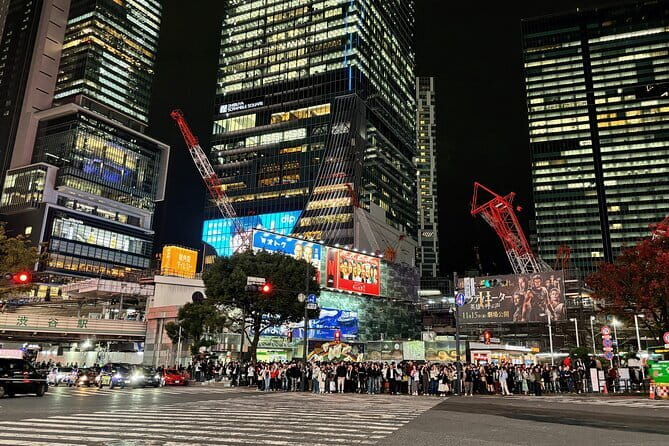
The first stop is Shibuya Crossing, with about 10 minutes set aside. This is the moment most people picture when they think of Shibuya: traffic pauses, several streams of people move across the intersection, and the city’s large screens frame the scene.
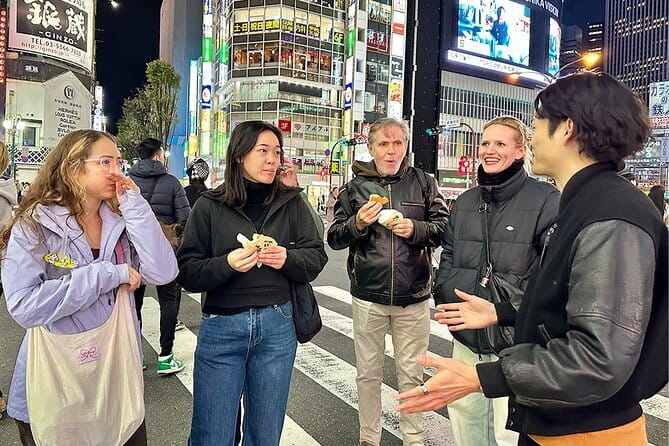
The guide’s value here is practical. You do not have to work out the best place to stand, how to move with the group, or where to get a photo. Mao, one of the guides, has been praised for leading the group through the crossing and taking photos along the way. That service is useful if you are traveling alone or want a picture with the crossing behind you.
Ten minutes is enough for an introduction, but not a long photography session. If you want repeated crossings, wide city views, or time to watch the flow from several angles, plan to return on your own. This tour gives you the first look, not an extended photo workshop.
Your guide also helps explain why this intersection matters to Shibuya’s identity. The commentary turns a quick stop into more than a snapshot. You get a sense of the district’s layout before heading into its streets.
The observation deck and the question of the promised view
The next listed stop is Shibuya Scramble Square, with 10 minutes for a panoramic view from an observation deck. From above, you should be able to see how the crossing connects with the station, surrounding roads, and dense commercial blocks.
This is potentially the most valuable part of the route because it gives you a visual map. Street level Shibuya can seem confusing. A high viewpoint helps you understand the relationship between the station, the crossing, and the surrounding district before you continue walking.
There is an important catch. The experience description includes the observation deck, but one guest said the panoramic view was not included on their tour. The supplied details do not explain why the experience differed. It may relate to access, timing, or a change in the route, but I cannot confirm the reason.
For that reason, I would ask the operator, Local Guide Stars, to confirm the current viewpoint arrangement before paying. If the observation deck is essential to your plans, do not treat it as guaranteed without checking. If you see it as a bonus, the rest of the walking route still has value.
Nonbei Yokocho: a small taste of older Shibuya
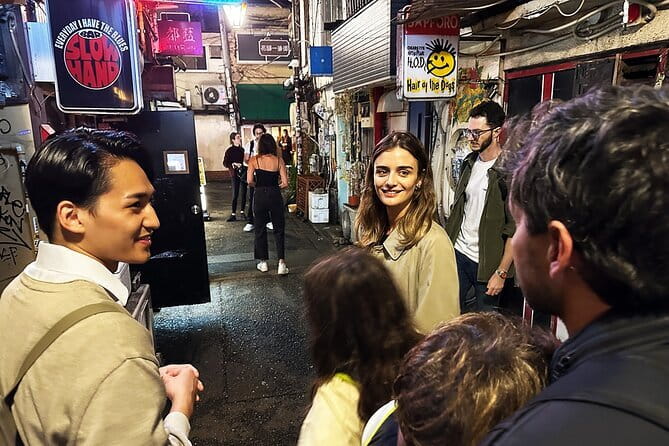
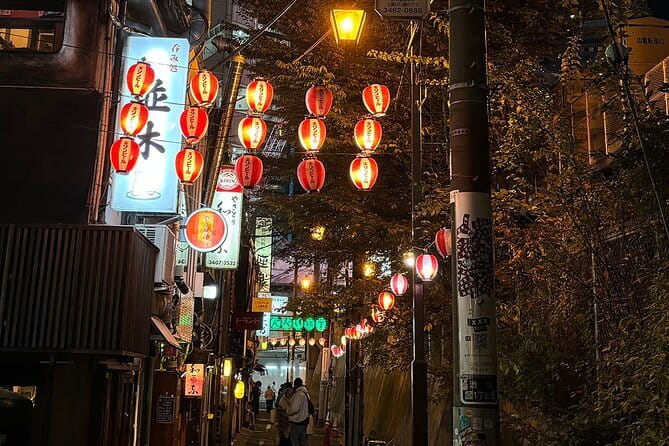
Nonbei Yokocho receives about 10 minutes. This narrow area is presented as a place to experience the nostalgic feel of traditional izakaya. Its small drinking establishments offer a sharp contrast to Shibuya’s giant screens and broad commercial streets.
You will not have time for a full meal or a long evening here. The stop works more like a visual and cultural pause. Your guide can point out how this compact alley differs from the newer parts of the district and explain why it feels so different from the nearby station area.
I like this inclusion because it keeps the tour from becoming a march between large landmarks. Shibuya is not only a modern shopping center. Its smaller lanes give you another side of the neighborhood, even if the short visit only offers a glimpse.
If you hope to eat or drink at Nonbei Yokocho, treat the tour as a scouting visit. You can return later, but the activity does not include food, drinks, or time for an extended stop.
Miyashita Park: modern public space for 20 minutes
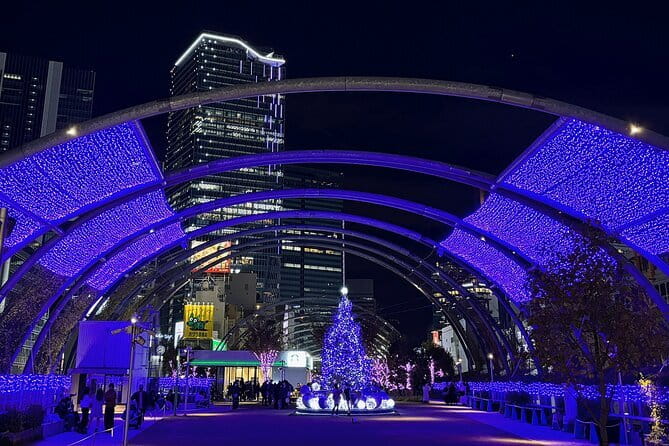
The longest single stop is Miyashita Park, with about 20 minutes. The park is known here for its illuminations and its appeal among younger people. It gives the route a change of rhythm after the crossing, viewpoint, and tight alleyways.
Miyashita Park is useful for showing how Shibuya combines public space with new commercial development. You get room to pause, look around, and listen to the guide without standing in the middle of a major intersection.
The exact lighting and atmosphere can vary with the time of day and season, so I would not book this tour solely for illuminations. Still, the park gives you a more relaxed section of the walk and a chance to see a part of Shibuya that is different from Center-gai.
Twenty minutes is long enough for a proper look, but not enough for a detailed exploration of every feature. The guide will likely keep the group moving so the rest of the route stays on schedule.
Other walking tours we've reviewed in Tokyo



Center-gai: the main streets in a compact dose
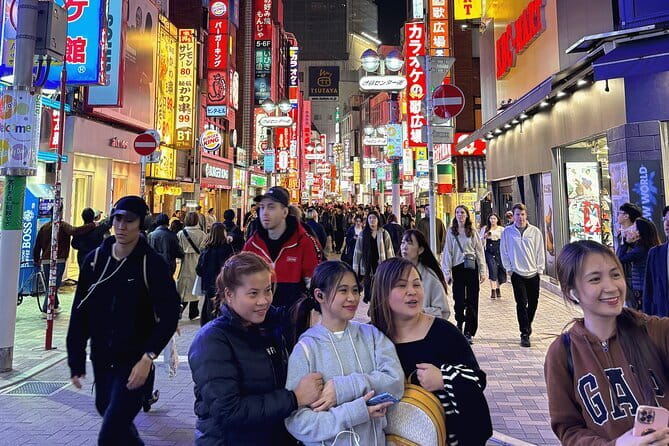
The tour then spends about 20 minutes exploring Shibuya Center-gai. This is the district’s main commercial zone, with streets built for shopping, eating, meeting friends, and people-watching.
The guide’s commentary is especially useful here because the area can seem like a wall of signs and storefronts. You can learn how the main streets fit into the wider Shibuya area instead of simply walking through without a sense of direction.
Twenty minutes gives you an introduction, not a shopping session. If you want to browse stores or stop for snacks, you will need extra time afterward. That is not a flaw in the tour. It is a reminder that this experience is designed to show you the area, not replace an afternoon of independent exploring.
One of the strongest points of the activity is that it covers Center-gai without making the whole tour about the obvious main streets. The route also includes the quieter alley, the park, and the station area, giving you several distinct views of Shibuya.
Shibuya Mark City and the lower-level finish
The final listed stop is Shibuya Mark City, with about 20 minutes to explore the basement floor. This is another useful change of setting. Instead of looking only at Shibuya’s outdoor streets, you get a look at how the district works below street level.
The basement portion may be particularly helpful if you plan to use Shibuya’s station and connected shopping areas later. Tokyo’s major hubs often link shops, walkways, and station passages in ways that are not obvious on a first visit. A guide can make this part feel less confusing.
The tour ends back at the original meeting point. That makes the activity easy to pair with plans in central Shibuya, though you should allow a little extra time if you have a strict reservation immediately afterward. The listed duration is approximate, and walking tours can run a bit longer when the group pauses for photos or questions.
What the guide adds to the experience
This is not a self-guided checklist. The main product is the person leading you through the district. Commentary covers local history and the character of the neighborhoods, while the route removes much of the planning work.
Hannah received especially warm praise for being friendly, attentive, helpful, and generous with local suggestions. The same feedback described her as accommodating and good at sharing places the guest might not have found alone. Mao was praised for good stories, clear local knowledge, and handling the crossing photo stop well.
Those details matter because a short tour depends on the guide’s judgment. At 90 minutes, there is no room for long detours or unclear explanations. A strong guide keeps the route moving while still answering questions and showing you why each stop matters.
The tour includes photos taken during the experience, which adds value for solo visitors and couples. It also means you can pay attention to the surroundings instead of constantly setting up your phone at the crossing.
Group size, timing, and practical value
The listed price is $25.20 per person. There are no major attraction admission charges included because the route is primarily an outdoor walking experience, so the price reflects the guide, planning, commentary, photos, and the convenience of seeing several areas in one pass.
For a first-time visitor, that is a fair price if you value orientation and local explanation. You could walk through Shibuya for free, but you might miss the connections between the stops or spend time figuring out where to go. The tour also gives you a tested route in a short window.
The group-size information is not perfectly consistent. The highlights describe a limit of 10 people, while the additional booking information says the activity can have up to 20 participants. I would confirm the expected group size if a small group is important to you.
A smaller group usually makes it easier to hear the guide, ask questions, and stay together in crowded streets. A group of up to 20 can still work, but the experience may feel less personal, especially at Shibuya Crossing.
The tour requires no private transportation. You meet near public transportation, and the guide leads you on foot. Most people can participate, but you should be comfortable walking for about 90 minutes and keeping up through busy public areas.
Mobile tickets make the booking simple. Confirmation arrives at the time of booking. The activity also requires good weather, so keep the cancellation terms in mind: you can receive a full refund if you cancel at least 24 hours before the start time. Changes or cancellations inside 24 hours are not refunded, and poor weather may lead to a new date or full refund.
Who should book this Shibuya walk?
I would recommend it most strongly to first-time visitors who want a fast introduction before exploring alone. It also suits solo visitors who want photos, couples who want a simple orientation, and anyone with only a short window in Tokyo.
It is a good choice if you enjoy learning as you walk. The route gives you useful context without demanding half a day. It also works well for people who would rather follow a local guide than plan a route through station passages and side streets.
You may want something else if you already know Shibuya well, want extensive shopping time, or expect a long visit at each attraction. The tour is too short for deep exploration, and its value depends heavily on the guide and the exact viewpoint access.
The activity is also less suitable if the panoramic observation deck is your main reason for booking. Ask Local Guide Stars to confirm that part before committing, since access was not consistent for every guest.
Should you book the Shibuya Highlights Walking Tour?
Book it if you want a focused first look at Shibuya with a guide, photos, and a route that covers both famous sights and less obvious stops. The $25.20 price is reasonable for the time saved and the local explanation, especially early in a Tokyo visit.
I would make two checks before booking: ask about the current viewpoint stop and clarify whether your group will be capped at 10 or could reach 20. If those details work for you, this is a practical, well-priced way to get your bearings before returning to Shibuya on your own.
FAQ
How long does the Shibuya walking tour last?
The tour lasts approximately 1 hour 30 minutes.
How much does the experience cost?
The listed price is $25.20 per person.
Where does the tour start?
The meeting point is SHIBU HACHI BOX, 2-chōme-1-1 Dōgenzaka, Shibuya, Tokyo 150-0043, Japan.
Where does the tour end?
The activity ends back at the meeting point.
Is Shibuya Crossing included?
Yes. Shibuya Crossing is the first stop, with about 10 minutes scheduled there.
Is there an observation deck on the tour?
The route includes Shibuya Scramble Square and describes a panoramic view from an observation deck. Confirm current access with the operator because this was not provided on at least one tour.
Which other places does the tour visit?
The route includes Nonbei Yokocho, Miyashita Park, Shibuya Center-gai, and the basement floor of Shibuya Mark City.
Is the tour conducted in English?
Yes. An expert English-speaking local guide is included.
What is included in the price?
The tour includes entrance and experience fees, photos taken during the tour, and an English-speaking local guide. Private transportation is not included.
Can I cancel for a full refund?
Yes. You can cancel at least 24 hours before the start time for a full refund. Cancellations or changes made less than 24 hours before the start time are not refunded. If poor weather causes the operator to cancel, you will be offered another date or a full refund.
More Walking Tours in Tokyo
More Shibuya Tours in Tokyo


More tours in Tokyo we've reviewed










Shibuya Tours, compared.
 ★ 5.0Official Street Go-Kart in ShibuyaFrom $76
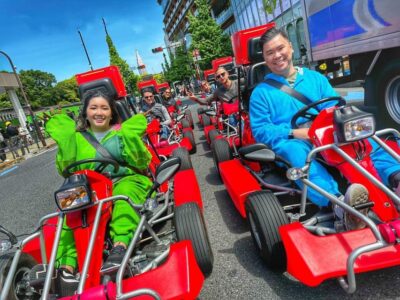 ★ 4.9Tokyo: Street Kart Experience in ShibuyaFrom $741 hour
 ★ 5.0Shibuya Meltdown Nightlife Tour: All-You-Can-Drink Bar HoppingFrom $106
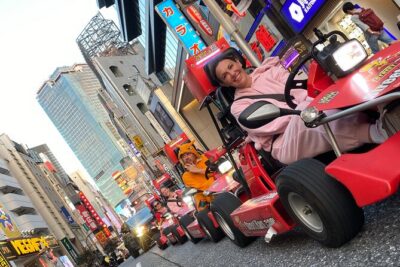 ★ 5.0Shibuya Official Street Go-Kart in Shibuya AnnexFrom $69
 ★ 5.0Tokyo: Shibuya Food Tour (13 dishes and 4 Eateries)From $77
 ★ 5.0Best of Shibuya Food TourFrom $217